
Janáček and Tchaikovsky
Saturday 30 September, 7.30pm
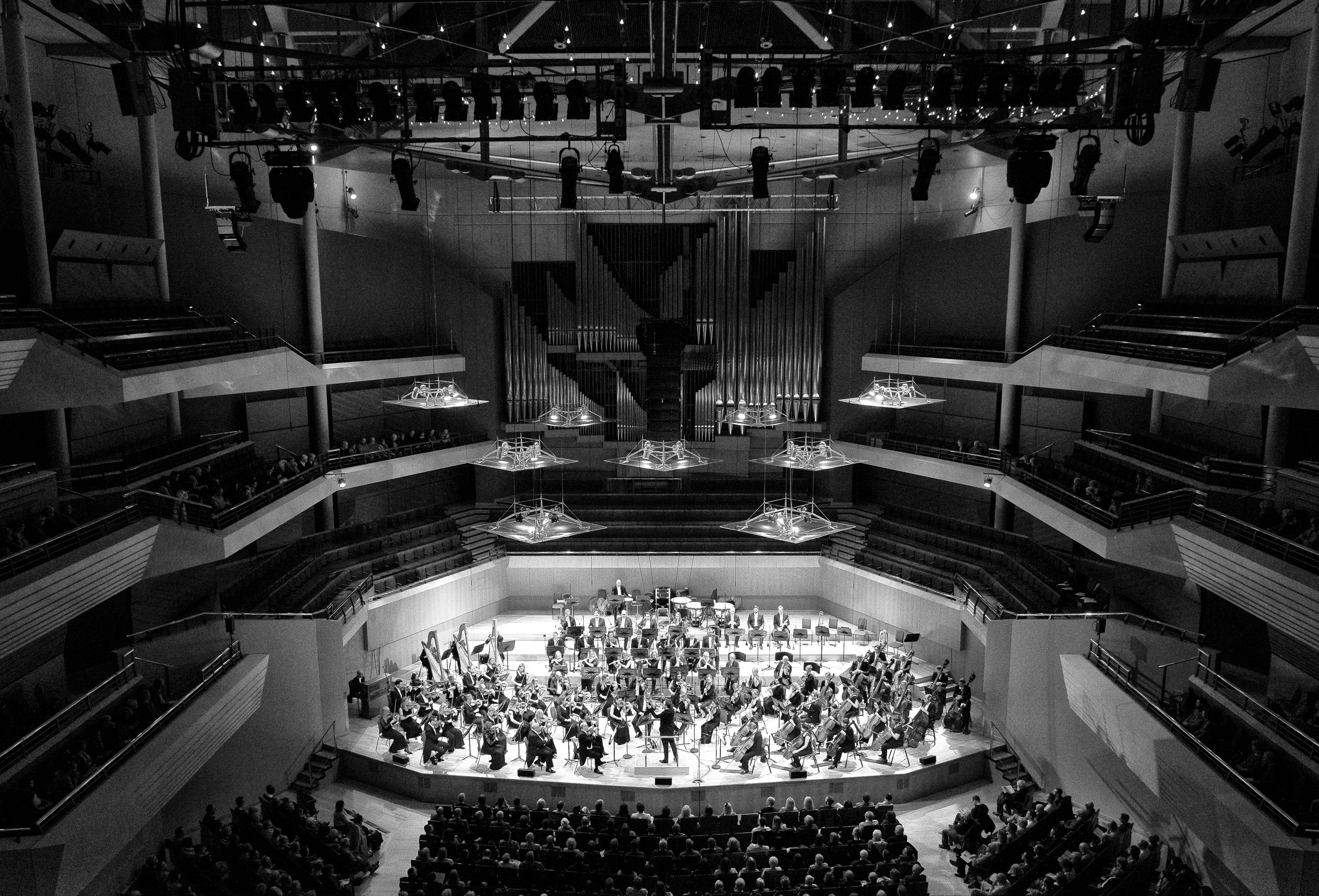
The Bridgewater Hall, Manchester


Welcome to tonight’s performance
Chief Conductor John Storgårds opens the BBC Philharmonic’s 2023/24 Bridgewater Hall season with Janáček’s gargantuan Sinfonietta. Brimming with brass and bold melodies, its galvanising energy acts as a foil to the emotional outpourings of Tchaikovsky’s swansong, his Sixth Symphony. Premiered only days before the composer’s death, the symphony remains an enigma – but, as enigmatic as it is, no one can dispute its passion. In between these titanic works, Dame Sarah Connolly joins us for an exploration of some of history’s less well-trodden territory in a collection of Alma Mahler-Werfel’s songs.
Our relationship with BBC Radio 3
As the BBC’s flagship orchestra for the North, almost all of the BBC Philharmonic’s concerts are recorded for broadcast on Radio 3. Tonight you will see a range of microphones on the stage and suspended above the orchestra. We have a Producer, Assistant Producer and Programme Manager at the orchestra who produce our broadcasts.
We seek to bring a diverse and risk-taking range of repertoire to our audiences, including our concert-goers here in Manchester, as well as the two million listeners who tune in to BBC Radio 3.
Please do not take flash photographs during the performance as this is very distracting to the artists. Audio and video recording is strictly prohibited.
To ensure that everyone can enjoy the concert, please either turn off your phone and any other electronic devices before it begins or ensure that they are turned to silent.

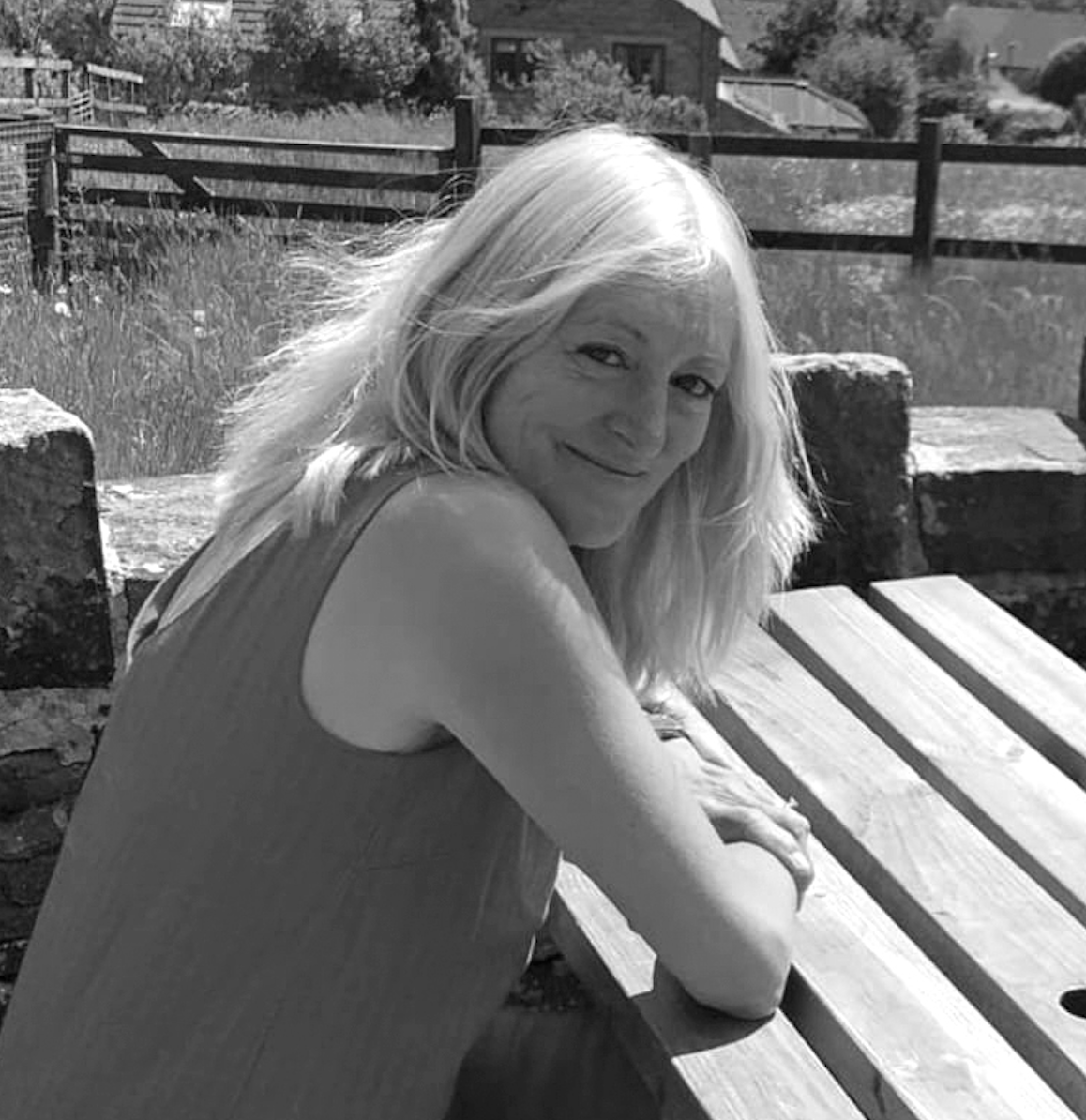
Tonight’s concert is dedicated to the memory of BBC Philharmonic violinist Clare ‘Clara’ Dixon (1966–2023)

Leoš Janáček
Sinfonietta 25’
Alma Mahler-Werfel, orch. Colin and David Matthews
Six Orchestral Songs 18’
INTERVAL: 20 MINUTES
Pyotr Tchaikovsky
Symphony No. 6 in B minor, ‘Pathétique’ 45’
Dame Sarah Connolly mezzo-soprano
BBC Philharmonic
John Storgårds conductor


Tonight’s concert is being recorded by BBC Radio 3 for broadcast in Radio 3 in Concert on Tuesday 3 October at 7.30pm. It will be available for 30 days after broadcast via BBC Sounds, where you can also find podcasts and music mixes.
Help us Improve Our Online Programmes.
Please take this 5-minute survey and let us know what you think of these notes.
Programme Survey
Leoš Janáček (1854–1928)
Sinfonietta (1926)

1 Allegretto: Fanfares
2 Andante: ‘The Castle’
3 Moderato: ‘The Queen’s Monastery’
4 Allegretto: ‘The Street Leading to the Castle’
5 Andante con moto: ‘The Brno Town Hall’
The son of a Moravian schoolteacher, Leoš Janáček first began to compose while already working as a choirmaster. He was later Director of the Organ School in Brno, which subsequently became the town’s conservatory. He pursued an enthusiastic interest in folk music and held strong anti-Wagnerian opinions about the direction of contemporary music. Having inherited the Czech style developed by Smetana and Dvořák, Janáček carried the idiom to new heights, taking inspiration from the Czech language itself: he frequently modelled musical motifs upon its speech patterns.
Most of Janáček’s masterpieces were written in the final decade or so of his life, when his long infatuation with a younger married woman, Kamila Stösslová, helped to spark works such as The Diary of One who Disappeared, the opera Katya Kabanova and the string quartet ‘Intimate Letters’. The 1920s brought him belated fame, with The Cunning Little Vixen, the Sinfonietta, the Glagolitic Mass and his last opera, From the House of the Dead.
Walking together in a park in 1925, Janáček and Stösslová came across a military band performing an outdoor concert. Janáček later wrote to her that he was working on ‘a beautiful little Sinfonietta with fanfares’ inspired by the occasion. But the five-movement Sinfonietta, composed in 1926, is scarcely ‘little’; it is the closest thing the composer created to an actual symphony.
Its opening fanfares were written initially for a gymnastics festival promoted by the ‘Sokol’ (‘falcon’) movement that celebrated youth, sport and independent nationhood. Janáček wrote that the music symbolised ‘contemporary free man, his spiritual beauty and joy, his strength, courage and determination to fight for victory’. The dedicatee: the Czechoslovak Armed Forces. They were going to need all that nationalistic confidence in the years ahead: this was just 13 years before Nazi Germany invaded Czechoslovakia and sparked the Second World War.
The opening is a sunburst of brass fanfares, a prelude to the rest of the work. Each of the ensuing four movements bears a title connected to Janáček’s home city, Brno. ‘The Castle’ incorporates elements of folk dance, scherzo and aria, plus more fanfares. ‘The Queen’s Monastery’ is elegiac, full of richly harmonised lyricism; a contrasting brass idea begins in an apparently comical mood, but turns tense and threatening before it subsides again. ‘The Street Leading to the Castle’ is bustling and full of conversation between the instruments; and finally the magnificent ‘The Brno Town Hall’ culminates in the return of the opening fanfares, bringing the work rousingly full circle.
Programme note © Jessica Duchen
Jessica Duchen’s music journalism appears in The Sunday Times, the i and BBC Music Magazine. She is the author of seven novels, three plays, biographies of Fauré and Korngold and the librettos for Roxanna Panufnik’s operas Silver Birch and Dalia, commissioned by Garsington Opera.
Leos Janáček
Born in the northern Moravian village of Hukvaldy, Janáček trained as a teacher and organist, and was choirmaster at an Augustinian monastery before becoming choirmaster of the Brno Philharmonic Society. He achieved recognition late in life with the first Prague performance of his opera Jenůfa (1894–1903) in 1916, when he was 62. His new-found success, and his intense infatuation with Kamila Stösslová, a married woman 38 years his junior, resulted in a highly productive dozen years before his death, during which he wrote his operas Katya Kabanova (1919–21), The Cunning Little Vixen (1921–3) and The Makropulos Affair (1923–5), two string quartets (1923 and 1928), and the blazing Sinfonietta and Glagolitic Mass (both 1926). He was a passionate Czech nationalist and collected Moravian folk songs earlier in his career, but worked in a more modern idiom than his compatriots Smetana and Dvořák. He was intrigued by everyday sounds and by nature, and made a particular study of Czech speech-rhythms, which characterised his vocal and non-vocal writing.
Profile © Edward Bhesania
Edward Bhesania is Editorial Manager, BBC Proms Publications.
Alma Mahler-Werfel (1879–1964), orch. Colin and David Matthews (1996)
Six Orchestral Songs

1 Die stille Stadt [The Silent Town] (No. 1 from Five Lieder, pubd. 1910)
2 Laue Sommernacht [Mild summer night] (No. 3 from Five Lieder)
3 Licht in der Nacht [Light in the Night] (No. 1 from Four Lieder, pubd. 1915)
4 Waldseligkeit [Woodland Rapture] (No. 2 from Four Lieder)
5 In meines Vaters Garten [In my father’s garden] (No. 2 from Five Lieder)
6 Bei dir ist es traut [I feel warm and close with you] (No. 4 from Five Lieder)
Dame Sarah Connollymezzo-soprano
Only 17 of Alma Mahler-Werfel’s songs survive today. They have little in common with her husband Gustav Mahler’s, other than a sensual, hot-house atmosphere distinctly characteristic of fin-de-siècle Vienna. Instead, the impact of Wagner – whose music she lived and breathed in her youth – is frequently palpable, along with that of Schumann, whose songs she loved. Many begin with a strophic format, but depart from it to suit the intense expression of the words. As she did not write dates on her manuscripts, scholars have found it tricky to determine which song was written exactly when, though four of this evening’s – ‘Die stille Stadt’, ‘Laue Sommernacht’, ‘In meines Vaters Garten’ and ‘Bei dir ist es traut’ – are from the collection initially edited by Mahler and published in 1910.
‘Die stille Stadt’ (The Silent Town) sets a poem by Richard Dehmel, depicting a foggy night in a quiet town, into which a child’s hymn brings a thread of light. The song shows Wagnerian influences with strong outlines and turbulent, ingenious textures. The harmony balances on the cusp between major and minor, an ambiguity that continues into the tender postlude.
‘Laue Sommernacht’ (Mild summer night), setting Otto Julius Bierbaum’s Gefunden (‘Found’), again finds Mahler-Werfel embracing a poem that depicts intense darkness illuminated by hope – this time, love. A questing vocal line delineates the lovers’ search in the starless woods; intriguingly, the song leaves its final cadence unresolved.
‘Licht in der Nacht’ (Light in the Night) shows Alma Mahler-Werfel at her darkest, influenced on the one hand by Wagner and on the other by the fervid and gloomy atmosphere of Weltschmerz (melancholy and world-weariness), so typical of Vienna in the early 20th century; Stefan Zweig described the city in this time as ‘sticky, perfumed, sultry, unhealthy’. ‘Licht in der Nacht’ is the first of the group of four songs that Mahler-Werfel published in 1915, but it was written in 1911, the year of her husband’s death. The song sets again the poetry of Otto Julius Bierbaum and reflects its anguished emotion in musical language full of dissonance and continually evolving, searching harmonies.
‘Waldseligkeit’ (Woodland Rapture) is the second of the four songs published in 1915; its exact date of composition is uncertain beyond being sometime between 1901 and 1911. It unveils the composer’s sensual side, responding with ecstatic melodiousness to the poetry of Richard Dehmel as the protagonist, alone in the woods at nightfall, dreams in solitary passion of her beloved. The setting’s rich harmonic twists seem influenced by Mahler-Werfel’s teacher, Zemlinsky, and sometimes lean more towards Debussy than to Wagner.
‘In meines Vaters Garten’ (In my father’s garden) is based on a ballad-like poem by Otto Erich Hartleben: three sleeping sisters dream that their beloveds must go away to war. After a deceptively diatonic opening, the harmonic sound-world follows the text’s emotional progression from innocence to dread, with the background dissolving into tremolandos in the Colin and David Matthews orchestration that we hear tonight.
‘Bei dir ist es traut’ (I feel warm and close with you) matches Rainer Maria Rilke’s sentiments with a suitably intimate setting. The Matthews’ delicate orchestration involves slender strings and spotlit splashes of woodwind.
Programme note © Jessica Duchen
Alma Mahler-Werfel
Alma Mahler-Werfel, daughter of the Viennese artist Emil Jakob Schindler, started composing aged 9. Yet in adulthood her devotion to music was complemented by her ability to inspire obsessive passion in artistic men – notably Gustav Klimt and her composition teacher Alexander Zemlinsky – before she married Gustav Mahler in 1902. Regrettably, Mahler urged her to stop composing and devote herself to supporting his talent.
After their older daughter Maria died in childhood, Alma sought solace in an affair with the architect Walter Gropius. This crisis prompted Mahler to encourage her composing: he edited five of her songs. Alma continued to write music sporadically until 1915: her output included more songs, piano pieces, chamber works and an operatic scene, though today most are lost.
Following Mahler’s death in 1911, Alma had an affair with Oskar Kokoschka before marrying Gropius. They divorced after their daughter, Manon, died aged 18. Alma’s final husband was the writer Franz Werfel, whom she married in 1929. Upon the Anschluss in 1938, the couple fled to France; in 1940 they again escaped the Nazis, crossing the Pyrenees on foot before travelling to Los Angeles. Alma spent her last years in New York. She died there in 1964.
Profile © Jessica Duchen
INTERVAL: 20 minutes
Pyotr Tchaikovsky (1840–93)
Symphony No. 6 in B minor, Op. 74, ‘Pathétique’ (1893)

1 Adagio – Allegro non troppo
2 Allegro con grazia
3 Allegro molto vivace
4 Finale: Adagio lamentoso
Was it a grand musical suicide note, a submission to the forces of ‘fate’ that he’d struggled with for his whole life, even an admission of his homosexuality, and that it could no longer be tolerated in St Petersburg society? Few pieces have provoked quite as much speculation and rumour about secret meanings as Tchaikovsky’s Sixth Symphony.
In many ways, however, Tchaikovsky has only himself to blame. It was he who famously called it ‘a symphony with a secret programme’ (or story) in a letter to pianist Alexander Ziloti in 1892, also writing to his friend Konstantin Romanov (grandson of Tsar Nicholas I) that ‘I have put my whole soul into this symphony’. A few days after its premiere, in October 1893, Tchaikovsky contracted cholera. It is widely thought that he’d been drinking unboiled water while the disease was circulating in St Petersburg, and by the time he allowed doctors to see him, it was too late.
Some have suggested that his fateful sip was the deliberate act of a depressive, or even that he was forced into a Socratic suicide by a kangaroo court of St Petersburg bigwigs after a homosexual affair was discovered. If not, why name the symphony the ‘Pathétique’?
In fact, the symphony’s title was his brother Modest’s idea, and the original Russian means something closer to ‘passionate’ or ‘emotional’ rather than simply ‘pathetic’. And, in truth, there’s little evidence to back up any of these far-fetched theories. Tchaikovsky had suffered depressive episodes throughout his life, but felt that working on the Sixth Symphony had actually raised his spirits. He began an E flat Symphony (later reworked into his Third Piano Concerto) but abandoned it when he realised it wasn’t what he hoped to express. When he arrived on the ideas for what became the ‘Pathétique’, however, he attacked his work with passion. He’d grappled with ‘fate’ in earlier works, too – most overtly in his Fourth and Fifth Symphonies. The difference here was that Tchaikovsky portrayed fate winning the day, in a revolutionary denial of a conventional triumphant finale that would pave the way for symphonies by Mahler, Shostakovich and many others.
Rather than conveying a secret story, the true power of the ‘Pathétique’ lies in its audacious determination to replace the public optimism and joy of earlier symphonies with very private pain and sorrow. Its fundamental battle is launched in the first movement’s collision of hope and despair, energy and agony. Its two central movements serve almost as interludes, the second a lopsided but nonetheless sensual waltz in 5/4 time, the third offering an ironically hollow doppelgänger of a conventional triumphant finale. The symphony’s devastating true finale demonstrates Tchaikovsky at his most radical, as the music returns inescapably to its sorrowful opening theme, before simply slipping into silence at its close.
Programme note © David Kettle
David Kettle is an Edinburgh-based writer and editor who contributes regularly to The Scotsman, The Daily Telegraph, The List and The Strad.
Pyotr Tchaikovsky
After study at the School of Jurisprudence and four years working in the Ministry of Justice, Tchaikovsky enrolled at the newly founded St Petersburg Conservatory (1862–5). He came into contact with ‘The Five’, whose leader, Balakirev, supervised Tchaikovsky’s Romeo and Juliet overture (1869), which already displayed a gift for tragic lyricism. Despite his homosexuality, he married a young female admirer in 1877, which proved disastrous after a matter of weeks. That year also saw the beginning of a 14-year association with Nadezhda von Meck: though they never met, she acted as Tchaikovsky’s benefactress and soulmate by correspondence, and the ballet Swan Lake, the Fourth Symphony and the opera Eugene Onegin were the results of her support. A fallow period followed the successful Violin Concerto (1878), lasting until the symphony Manfred (1884). Between 1890 and 1892 he wrote two further ballets, The Sleeping Beauty and The Nutcracker, demonstrating a skill and seriousness of purpose in the medium unusual for a composer principally renowned for his symphonies. He died, possibly through suicide, within 10 days of conducting the premiere of his Sixth Symphony.
Profile by Edward Bhesania © BBC
Biographies
John Storgårds conductor
John Storgårds is Chief Conductor of the BBC Philharmonic, Principal Guest Conductor of the National Arts Centre Orchestra, Ottawa, and Artistic Director of the Lapland Chamber Orchestra, as well as being a concert violinist.
He has appeared with the Berlin, Munich, London and Netherlands Philharmonic orchestras, Bamberg, BBC, Berlin Radio, RAI National and Vienna Radio Symphony orchestras, Leipzig Gewandhaus Orchestra and French National Orchestra, as well as all major Nordic orchestras. Further afield, he has conducted the Boston, Chicago, Melbourne, NHK, Sydney and Yomiuri Nippon Symphony orchestras, Cleveland Orchestra and New York Philharmonic.
As well as his debut with the Berlin Philharmonic, highlights from last season included the world premiere production of Tapio Tuomela’s The Fur Hat Opera, a return to Finnish National Opera with Shostakovich’s The Lady Macbeth of the Mtsensk District, a debut with the Tokyo Metropolitan Symphony Orchestra and return engagements with, among others, the Atlanta, Bamberg and Toronto Symphony orchestras and Helsinki and Royal Stockholm Philharmonic orchestras.
His discography includes recordings of works by Beethoven, Haydn, Mahler, Mozart, Schumann, Sibelius and Vasks. His latest project with the BBC Philharmonic, recording the late symphonies of Shostakovich, began in April 2020 with the release of the Symphony No. 11.
Dame Sarah Connollymezzo-soprano
Dame Sarah Connolly studied piano and singing at the Royal College of Music, of which she is now a Fellow.
She has sung at the Aldeburgh, Edinburgh, Lucerne, Salzburg and Tanglewood festivals and the BBC Proms, where she was soloist at the Last Night in 2009. Operatic engagements have taken her around the world, from the Metropolitan Opera, New York, to the Royal Opera, Covent Garden, the Paris Opéra, La Scala, Milan, the Vienna and Munich State Operas and the Aix-en-Provence, Bayreuth and Glyndebourne festivals.
Recent concert appearances include Mahler’s Second Symphony on tour with the London Symphony Orchestra under Sir Simon Rattle and Das Lied von der Erde with the Dresden Staatskapelle under Daniel Harding, the Orchestre National de Lille under Alexandre Bloch and the Boston Philharmonic under Benjamin Zander; Elgar’s The Kingdom with the Hallé under Sir Mark Elder; and Tippett’s A Child of Our Time with the London Philharmonic Orchestra under Edward Gardner and the BBC Symphony Orchestra under Sir Andrew Davis.
Future highlights include Mendelssohn’s Elijah with the LSO and recitals at the Wigmore Hall, Amsterdam Concertgebouw and the Leeds and the Oxford Lieder festivals. She returns to Dutch National Opera as Jocasta (Oedipus rex) and sings the title-role in the world premiere of Lee Bradshaw’s opera Zarqa al-Yamama.
BBC Philharmonic
The BBC Philharmonic is reimagining the orchestral experience for a new generation – challenging perceptions, championing innovation and taking a rich variety of music to the widest range of audiences.
Along with around 35 free concerts a year at its MediaCityUK studio in Salford and a series of concerts at Manchester’s Bridgewater Hall, the orchestra broadcasts concerts on BBC Radio 3 from venues across the North of England, annually at the BBC Proms and from its international tours. Its performances are broadcast on BBC Radio 3 and available on BBC Sounds. The orchestra also records regularly for the Chandos label and has a catalogue of over 300 discs and digital downloads.
Championing new music, the orchestra has recently given world premieres of works by Anna Appleby, Gerald Barry, Erland Cooper, Tom Coult, Emily Howard, Robert Laidlow, Grace-Evangeline Mason, David Matthews, Outi Tarkiainen and Anna Thorvaldsdottir, with the scope of the orchestra’s output extending far beyond standard repertoire.
The BBC Philharmonic’s Chief Conductor is John Storgårds, with whom the orchestra has enjoyed a long association. French conductor Ludovic Morlot is the orchestra’s Associate Artist, while Anna Clyne, one of the most in-demand composers of the day, is its newly appointed Composer in Association.
In 2020 the BBC Philharmonic entered the UK Top 40 charts with Four Notes: Paul’s Tune and last year it released The Musical Story of the Gingerbread Man – a unique musical retelling of the classic children’s tale narrated by BBC Radio 5 Live’s Nihal Arthanayake. In May it performed at the 2023 Eurovision Song Contest, both at a free concert with previous Ukrainian winner Jamala and in the final itself with Italian artist Mahmood, for a rendition of John Lennon’s ‘Imagine’ during the Liverpool Songbook medley.
Through all its activities, the BBC Philharmonic is bringing life-changing musical experiences to audiences across Greater Manchester, the North of England, the UK and around the world.
Chief Conductor
John Storgårds
Associate Artist
Ludovic Morlot
Composer in Association
Anna Clyne
First Violins
Yuri Torchinsky Leader
Midori Sugiyama Assistant Leader
Thomas Bangbala Sub Leader
Alison Fletcher*
Kevin Flynn †
Austeja Juskaite-Igl
Anna Banaszkiewicz-Maher
Martin Clark
Julian Gregory
Karen Mainwaring
Catherine Mandelbaum
Anya Muston
Toby Tramaseur
Mansell Morgan
Sarah White
Alison Williams
Second Violins
Lisa Obert*
Glen Perry ‡
Lily Whitehurst †
Sub Principal
Rachel Porteous
Gemma Bass
Claire Sledd
Simon Gilks
Christina Knox
Rebecca Mathews
Alyson Zuntz
Matthew Watson
Zhivko Georgiev
Anna O’Brien
Sian Goodwin
Violas
Steven Burnard*
Sarah Greene
Bernadette Anguige
Kathryn Anstey
Matthew Compton
Ruth Montgomery
Nicholas Howson
Rachel Janes
Roisin Ni Dhuill
Fiona Dunkley
Amy Hark
Rosalyn Cabot
Cellos
Peter Dixon*
Maria Zachariadou ‡
Steven Callow †
Jessica Schaefer
Rebecca Aldersea
Melissa Edwards
Elinor Gow
Miriam Skinner
Elise Wild
Peggy Nolan
Double Basses
Ronan Dunne*
Mark O’Leary ‡
Alce Durrant †
Miriam Shaffoe
Andrew Vickers
Peter Willmott
Richard English
Ben du-Toit
Flutes
Alex Jakeman*
Victoria Daniel †
Claire Duggan
Piccolo
Jennifer Hutchinson
Oboes
Kenny Sturgeon
Mary Gilbert
Cor Anglais
Gillian Callow
Clarinets
John Bradbury*
Fraser Langton
Elizabeth Jordan
Bass Clarinet
Elliot Gresty
Bassoons
Roberto Giaccaglia*
Angharad Thomas
Horns
Christopher Gough #
Rebecca Levis ¥
Phillip Stoker
Jonathan Barrett
Jenny Cox
Trumpets
Tom Fountain*
Gary Farr †
Tim Barber
Trombones
Richard Brown*
Gary MacPhee
Bass Trombones
Russell Taylor
Mark Frost
Contrabass Trombone
Christian Jones
Tuba
Ben Thomson
Timpani
Paul Turner
Percussion
Paul Patrick*
Geraint Daniel
Tim Williams
Harp
Clifford Lantaff*
Fanfare Brass
Trumpets
Jack Wilson
James Fountain
Will Morley
Kaitlin Wild
Stephen Murphy
Hannah Mackenzie
Ben Jarvis
Rebecca Goodwin
Peter Mainwaring
Euphoniums
Duncan Wilson
Beth Calderbank
Bass Trumpets
Christopher Binns
Gemma Riley
* Principal
† Sub Principal
‡ Assistant Principal
§ Guest Principal
¥ Associate Principal
The list of players was correct at the time of publication
Orchestra Director Beth Wells
Orchestra Manager Tom Baxter
Assistant Orchestra Manager Stefanie Farr
Orchestra Personnel Manager Helena Nolan
Audience Development Manager Shelagh Bourke
Orchestra Assistant Maria Villa
Senior Producer Mike George
Programme Manager Stephen Rinker
Assistant Producer Kathy Jones
Marketing Executive Emma Naylor
Marketing Assistant Kate Highmore
Learning and Digital Manager Jennifer Redmond
Learning Project Co-ordinators Youlanda Daly
Librarian Edward Russell
Senior Stage Manager Thomas Hilton
Transport Manager Will Southerton
Team Assistant Diane Asprey
Keep up to date with the
BBC Philharmonic
Listen to our BBC Radio 3 broadcasts via the BBC Sounds app. Visit our website and follow us on Twitter, Facebook and Instagram and sign up to the newsletter
To help us improve our online concert programmes, please take this 5-minute survey
Produced by BBC Proms Publications