
Hearing Places
Friday 17/2/23, 7.30pm


Maurice Ravel, orch. Percy Grainger
Miroirs – ‘La vallée des cloches’ 6’
Steve Reich
City Life 24’
INTERVAL: 20 minutes
George Gershwin
Second Rhapsody 15’
Colin Riley
Hearing Places world premierec30’
Freddy Kempf piano
Matthew Cooreyconductor


This concert is being recorded by BBC Radio 3 for future broadcast in Afternoon Concert and the New Music Show. It will be available to stream or download for 30 days after broadcast via BBC Sounds, where you can also find podcasts and music mixes. Visit bbc.co.uk/now for more information on future performances.
Introduction

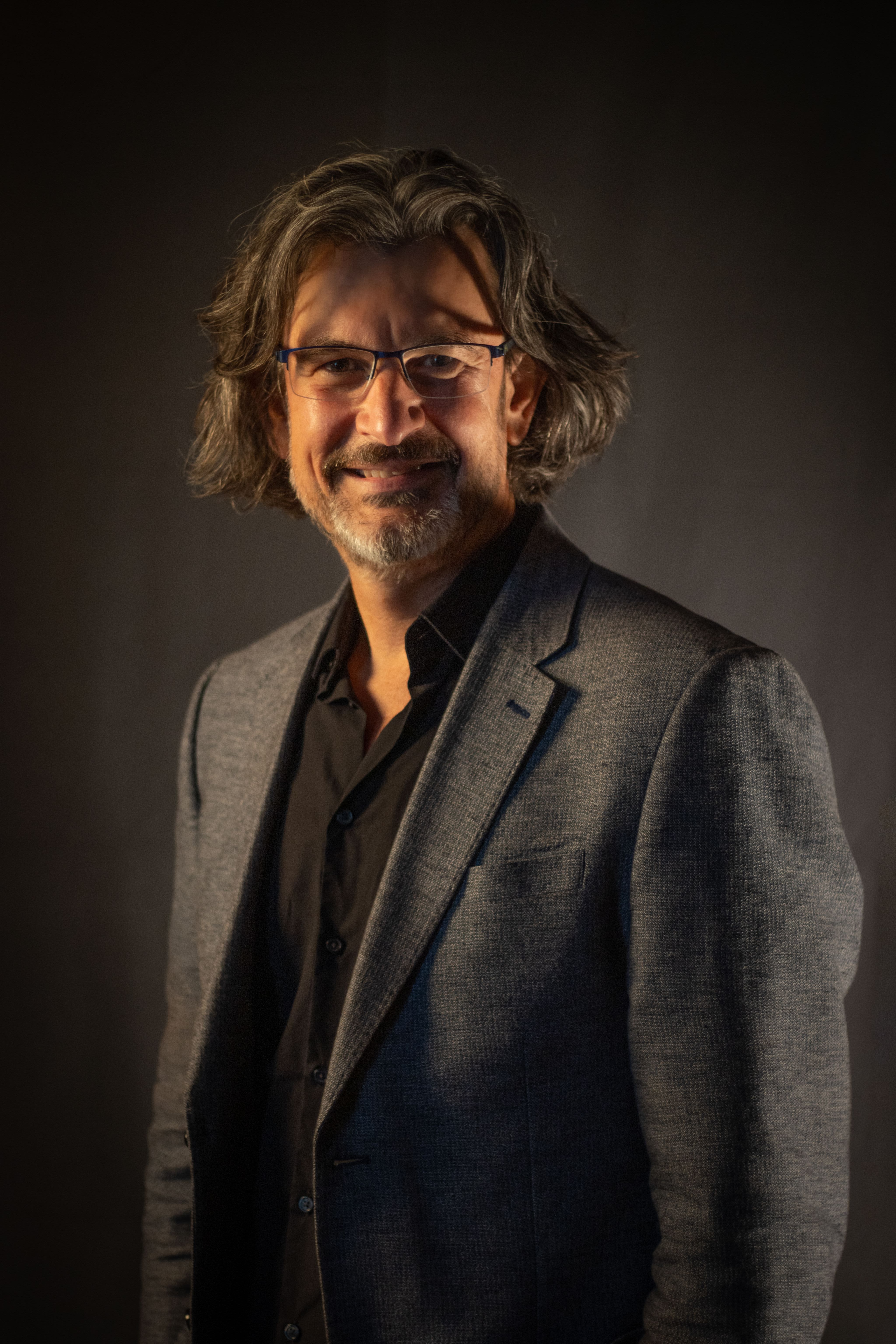
Welcome to tonight’s concert, for which BBC NOW is joined by Australian conductor Matthew Coorey.
Our programme is a fascinating exploration of music that takes its inspiration from the world around us. In the case of Steve Reich’s City Life and Gershwin’s Second Rhapsody it’s the clamour of New York that provides the starting point for music that is by turns fantastically energised and exuberantly cacophonous.
For Ravel, it was the sound of bells that inspired the last piece in his piano suite Miroirs. And, though the original is highly evocative, the version we hear tonight, orchestrated by Percy Grainger, is arguably even more vivid.
The second part of the programme sees the world premiere of Colin Riley’s Hearing Places, in which the composer uses field recordings made in Welsh settings ranging from steel works to streams and sets out to ‘capture both the fragility and massive power of our world’.
Enjoy!
Matthew Wood
Head of Artistic Production
Please respect your fellow audience members and those listening at home. Turn off all mobile phones and electronic devices during the performance. Photography and recording are not permitted.
Maurice Ravel (1875–1937) orch. Percy Grainger (1882–1961)
Miroirs (1904–5) ‘La vallée des cloches (orch. 1944)

We do not know for sure that ‘La vallée des cloches’ (the last movement of the solo-piano suite Miroirs) was directly inspired by the Javanese gamelan music that Ravel heard at the 1889 Universal Exposition in Paris, but the piece certainly makes a special feature of bell sounds. They are heard in different colours, their individual rhythmic or melodic identities ringing out simultaneously in an apparently haphazard ensemble.
For Percy Grainger, an enthusiast of the gamelan and what he called ‘tuneful [ie tuned] percussion’, it was irresistible. He had already taken Debussy’s piano piece ‘Pagodes’ (from Estampes) and restored it to its gamelan origins in an arrangement for percussion in 1928 and now, in 1944, he set out to perform much the same service for ‘La vallée des cloches’.
Grainger begins by allocating a different bell or bell-like instrument (such as celesta, marimba, vibraphone, tubular bell) to each of the five layers of Ravel’s texture. Whatever the added value of Grainger’s chiming and clanging colours here, they are exceeded in the middle section where – against a background of continuing bell sounds – violins and violas take up and sustain, as no piano can, one of the most sublime and most extended of all Ravel’s melodies.
Programme note © Gerald Larner
Further Listening: City of Birmingham Symphony Orchestra/Sir Simon Rattle (Warner Classics 9029517356)
Further Reading: Ravel Roger Nichols (Yale UP)
Steve Reich (born 1936)
City Life (1995)
1 Check it out
2 Pile driver/alarms
3 It’s been a honeymoon – Can’t take no mo’
4 Heartbeats/boats and buoys
5 Heavy smoke
Reich’s music is inseparable from the city of his birth and long-term residence – from its race of vehicular and pedestrian tempos, its mix of traditions, its grid of blocks. City Life, which he completed in 1995, is his affectionate and amused, yet also at times darkening, portrait of New York.
The work brings the sounds of the city into the concert hall by means of recordings to be played by two performers at keyboard samplers. Fragments of speech, traffic noises, subway bells, heartbeats and sirens can thus be introduced into the orchestral texture alongside figures on pianos, strings or woodwinds, and the two kinds of sound, recorded and instrumental, can enjoy the same sort of rhythmic flexibility.
Of the five movements, the second and fourth are slow, include no speech and involve a regular rhythmic background, suggestive of a heartbeat in the second movement and then actualised as such in the fourth. In contrast, the middle movement starts out as a speech duet and has speech sounds continuing all through it, imitated and developed by the instruments. As in It’s Gonna Rain, his earliest acknowledged composition, created 30 years earlier, Reich found his material at an outdoor gathering of Black Americans – this time a political rally near City Hall (not far from his apartment).
The first movement – within a hymnlike enfolding that might be a homage to an earlier New Yorker’s vision of home, Copland’s Quiet City – is guided by a street vendor calling: ‘Check it out!’ Technology allows the man’s speech melody to change its key. The finale again includes intermittent words, but the mood is very different. Here Reich drew on the Fire Department’s field communications at the time of the ineffective 1993 bombing of the World Trade Center, and the voices have to be made out through hazes of instrumental and recorded sounds.
Such an intimate combination of speech fragments with instrumental lines seems to answer an expressive impulse to deal at once with the city’s actuality and with its myth. Commissioned by a consortium of European ensembles, including the London Sinfonietta, City Life is directed at an audience familiar with New York from a distance, a distance mediated by films, novels, poetry and other music. At the same time, it contains awkward edges of the real city, some of which now appear in a different light than they did in 1995.
Programme note © Paul Griffiths
Further Listening: The Steve Reich Ensemble/Steve Reich (Nonesuch 0349709176)
Further Reading: Writings on Music, 1965–2000 Steve Reich (OUP)
Website: https://stevereich.com
INTERVAL: 20 minutes
George Gershwin (1898–1937)
Second Rhapsody (1931)

Freddy Kempf piano
If you weren’t aware that George Gershwin had followed up his renowned Rhapsody in Blue with a Second Rhapsody – well, you’re far from alone. In comparison with its witty, jazzy, immensely popular predecessor, Gershwin’s Second Rhapsody is rarely performed – and comparisons with that earlier piece are perhaps largely to blame. It’s quite a different work, darker and with a bolder expressive intensity, while it continues the Rhapsody in Blue’s deft blend of jazz licks and classical forms. Indeed, Gershwin himself only adopted the follow-up Second Rhapsody title as a perhaps more fitting alternative to his original name for the piece, the unlikely Rhapsody in Rivets.
The rivets in question are being driven into metal girders during the construction of New York’s skyscrapers, pictured in an extended, dream-like sequence in the 1931 movie Delicious. George and his brother Ira Gershwin had been summoned to Hollywood the previous year to write songs for the romantic comedy, and director David Butler had an additional request: for a longer instrumental piece that would accompany the film’s heroine, played by Janet Gaynor, as she wandered among the skyward-rising edifices of Manhattan.
Gershwin was delighted at the opportunity to display his musical prowess in a larger-scale work, though only six minutes of his piece ended up in the movie’s final cut. He’d always intended it to have an additional life as a concert work, however, and it received its live premiere in January 1932 from the Boston Symphony Orchestra under Serge Koussevitzy, with Gershwin himself at the piano – the occasion for which he renamed it, after considering several options, the perhaps more concert-friendly Second Rhapsody.
The rivets of the Rhapsody’s original name, however, are clear to hear in the percussive, repeated-note theme that the solo piano introduces right at the start, and which goes on to dominate the work’s fast opening section, coupled with a jaunty, Latin-influenced trumpet tune. After a slower central interlude based around a bluesy melody first heard in the violins, Gershwin cunningly combines his themes in his bracing final section – doffing his cap to the Second Rhapsody’s illustrious forebear in its final moments.
Programme note © David Kettle
Further Listening: Freddy Kempf; Bergen Philharmonic Orchestra/Andrew Litton (BIS BISSACD1940)
Further Reading: George Gershwin Rodney Greenberg (Phaidon)
Colin Riley (born 1963)
Hearing Places (2022–3)
world premiere

1 Steel and Steam
2 Wind Rattle
3 Pale Rain with Birds
4 Out of the Machinery
5 Water Songs
6 Hive
7 Winter Sunrise
In my seven-movement suite Hearing Places I am aiming for a new kind of symphonic experience, one that involves immersive listening and a way of sharing in the noticing of often inconsequential, yet hugely beautiful sounds. The music aims to capture both the fragility and the massive power of our world, and to illustrate simply what we stand to lose in the environment crisis we are now in. I hope that, by noticing our surroundings, we can begin to value our world more. Natural elements are frequently referenced in the music (weather, times of day, natural phenomena and the changing seasons), as are the human imprints left on our world (machinery, vehicles, pattern-making, conversation).
Hearing Places celebrates the rich audio and visual patterns found all around us: I’ve spent the last year travelling to all corners of Wales collecting field recordings and video clips of interesting places that have captured my imagination. These small building blocks of pitch, rhythm and pattern then became the materials for the creation of the music itself. Sometimes I simply took a natural emotional response in terms of mood and feeling, while at others my approach was more forensic. The audio forms a strand of the orchestral fabric, woven differently in each movement, and is ‘played’ from within the orchestra by the keyboard player. Similarly, the video clips form an additional textural layer for the audience, and likewise are triggered by the keyboard in different ways. Sometimes a place may be recognisable, but very often it remains abstract and mysterious.
1 Steel and Steam
Seen on the first video clip, the might of this huge industrial structure set against the sky forms one element of the music. The ever-changing clouds of steam emitted from the chimneys forms the other. This movement is a fusion of these two elements: everything grows inexorably from the low rumble of the factory, captured in the fading evening light. The field recording and video were made at Port Talbot Steelworks, West Glamorgan (August 2022).
2 Wind Rattle
The capricious clangs and rattles from moored boats in a harbour create a sound that has fascinated me for some time. The rhythms are intoxicating and yet random. These sounds will have been heard through the centuries and represent a poetic intervention of humans in the landscape – weather and technology in a kind of musical marriage, if you like. The field recording and video were made in Porthmadog Harbour, Gwynedd (November 2022).
3 Pale Rain with Birds
On a wet afternoon I visited the Dylan Thomas writing hut in Laugharne that looks down on the shifting panorama of the Tâf estuary. An estuary is a point of constant comings and goings – tides, gatherings of birds and weather conditions. In ‘Poem in October’ Thomas describes the melancholy sounds from the harbour and the neighbouring wood: sounds of seagulls, rooks, blackbird and larks. ‘Pale rain over the dwindling harbour and over the sea wet church’. I took my title for this movement from a line of this poem, as it seemed to be the kind of title for a painting: this music is like a slow-moving painting. The field recording and video were made at Laugharne, Carmarthenshire (August 2022).
4 Out of the Machinery
Here the whole orchestra becomes a giant rhythm section, and through four passages of interwoven grooves the music builds, forming increasingly tightly knitted and energised textures. It was important for me to break down the complex machinery of the woollen mill, with its shuttles, cogs and wheels, into tiny individual blocks of audio Lego. From here I could then rebuild the machine into a reimagined version of itself. Similarly, small video images of the mechanisms are playfully woven to form a funky visual component. The field recording and video were made in the Solva Woollen Mill, Pembrokeshire (August 2022).
5 Water Songs
If you sit quietly within nature, gradually it comes to you. The details become more acute and you seem to absorb all manner of sights, sounds, smells and feelings. The sound of a stream has been the source of inspiration for many composers over centuries. This musical meditation draws attention to the tiny hidden repeating melodies that you can often hear inside the sound of the trickles and eddies, if you take the time to listen. The field recording and video were made in the Brecon Beacons, Powys (August 2022).
6 Hive
After just a few minutes standing in a busy place where all around you is in a constant state of motion and busyness, you become somehow absorbed into the place. Your own stillness is accentuated by the ‘hive of activity’ around you. I was fortunate to have the opportunity to look down on Central Square in Cardiff from high up. This revealed to me the grid system of the square heightening the sense of those walking across it being in a kind of game of pathways, traces and collisions. It’s a beautiful happenstance, and the interconnectedness of us all is there every day of the week, if we care to notice it. Recordings of everyday conversations collide with the sounds of bikes, skateboards, building site drills and car horns to form a sound-picture of the heart of Cardiff. The field recording and video were made in Central Square, Cardiff (October 2022).
7 Winter Sunrise
There is something about the sounds of birds and bells that have deep emotional resonance for us. In their very different ways they chime with a deep melancholy, but also a strong sense of hope. This final movement brings together these two elements in a journey from dark stillness to a rapturous outpouring of light and joy. As with many of the pieces that make up this suite, the music is transformed from the small to the large, reflecting something of our beautiful insignificance in time and space. The field recording and video were captured in Denbighshire at St Mwrog & St Mary’s Church Llanfwrog and St Peter’s Church, Ruthin (December 2022).
My thanks to:
Jeevan Rai for designing/programming the keyboard patches and for his additional sonic processing and manipulation.
Anna Grime for allowing the recording and filming at Solva Woollen Mill.
Peter Furniss for guiding me up the bell towers of Ruthin.
The North Wales Association of Church Bell Ringers for their support and knowledge.
Yusef Bastawy at BBC NOW for filming with me in Cardiff Central Square.
Programme note © Colin Riley
Website: www.colinriley.co.uk
Help us Improve Our Online Programmes.
Please take this 5-minute survey and let us know what you think of these notes.
Programme Survey
Biographies
Matthew Coorey conductor

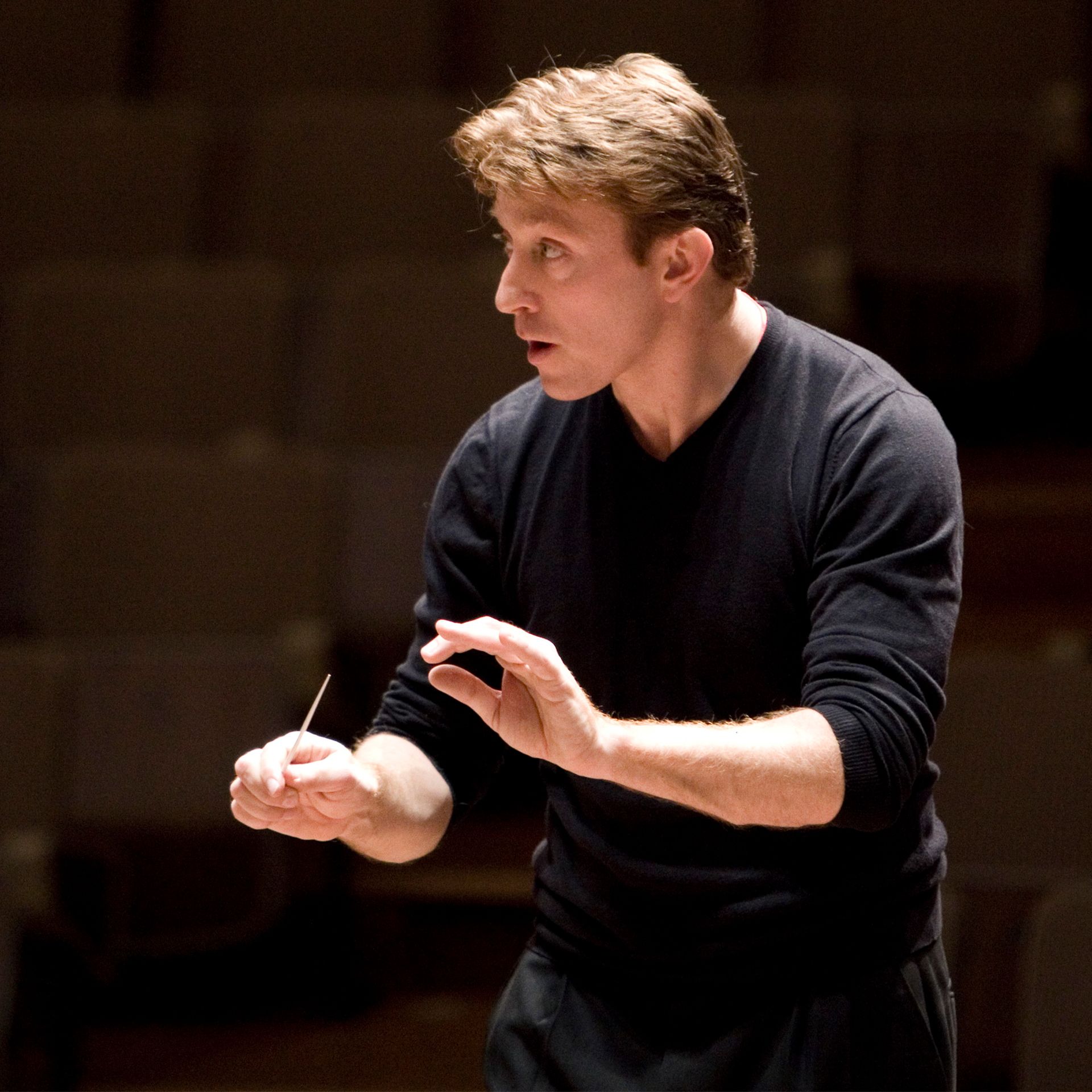
Photo: Benjamin Ealovega
Photo: Benjamin Ealovega
Matthew Coorey began his conducting career in 2003 when he was appointed Assistant Conductor of the Royal Liverpool Philharmonic Orchestra, then becoming the RLPO’s first Conductor-in-Residence.
Debuts soon followed with the London Philharmonic Orchestra, Sydney Symphony, Philharmonia, Hallé, Ensemble 10:10 and London Mozart Players.
More recent highlights include debuts with the Royal Philharmonic Orchestra, Polish National Radio Orchestra, Adelaide, Antalya, Darwin and Slovenian Radio Symphony orchestras and Auckland Philharmonia, and an appearance at the London Festival of Contemporary Music.
His wide-ranging artistic interests have led to collaborations with Rosas Dance Company and Ictus Ensemble; rock bands including These New Puritans and Efterklang; and Wynton Marsalis and the Lincoln Center Jazz Orchestra.
He has collaborated with artists such as Sarah Chang, Freddy Kempf, Steven Osborne, Yevgeny Sudbin, the Jussen brothers, Roderick Williams, Emma Matthews, Olena Tokar and Pieter Wispelwey.
He has a strong commitment to nurturing younger musicians and regularly works at the Royal Northern College of Music in Manchester. He has also conducted the orchestras of the Royal College of Music and Trinity-Laban in London and the Felix Mendelssohn Hochschule in Leipzig.
He began his career as a horn player and, after studying at the Sydney Conservatorium of Music, performed regularly with the Australian Chamber Orchestra, Brandenburg Orchestra and Sydney and Tasmanian Symphony orchestras.
Initially self-taught as a conductor, he auditioned for Seiji Ozawa and was invited to the Tanglewood Music Festival, where he worked with Jorma Panula, who became his principal conducting teacher. He additionally studied with David Zinman.
Freddy Kempf piano
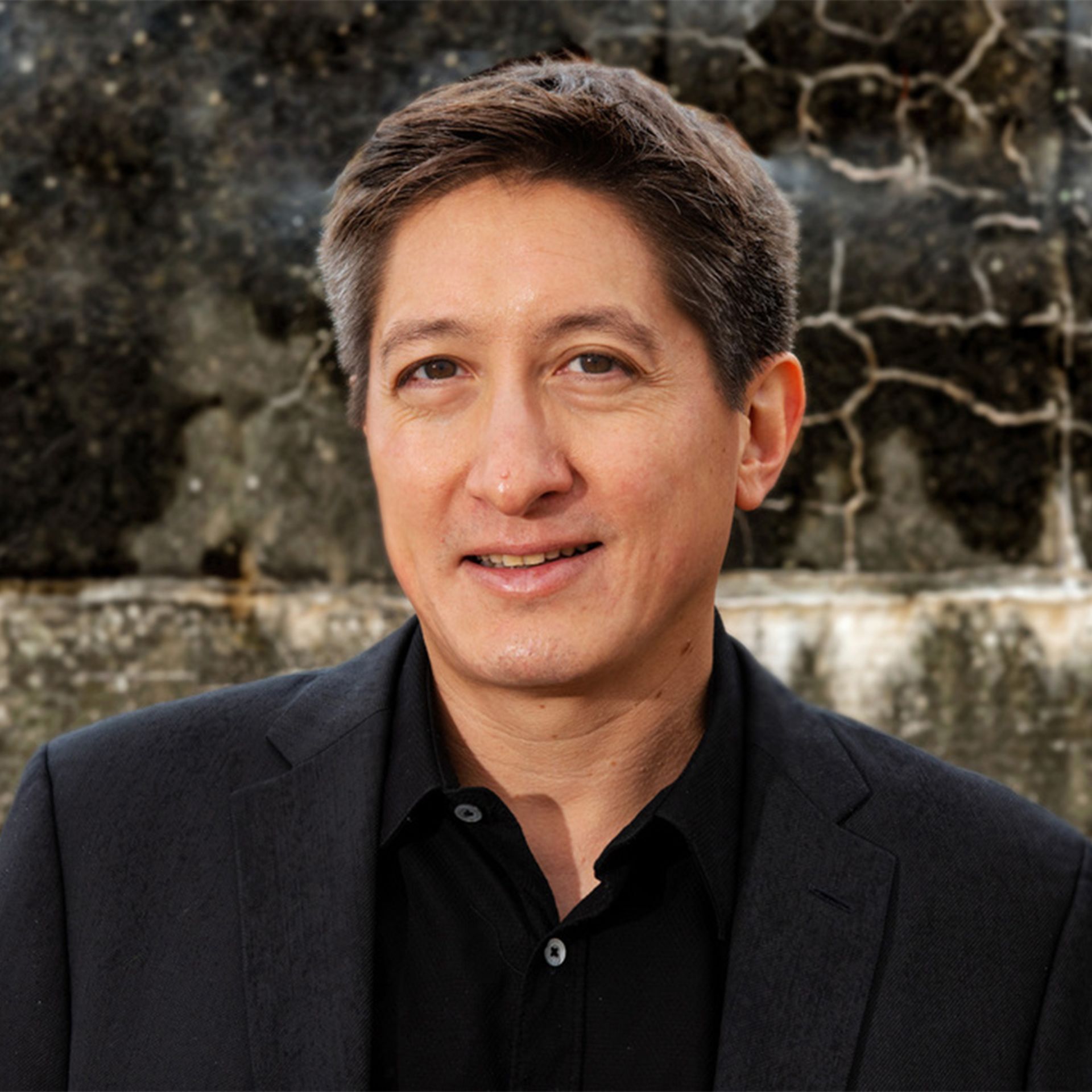
Freddy Kempf is one of today’s most sought-after pianists, with an unusually broad repertoire.
He has collaborated with leading conductors, including Alain Altinoglu, Vladimir Ashkenazy, Riccardo Chailly, Thomas Dausgaard, Charles Dutoit, Sakari Oramo, Vasily Petrenko, Kurt Sanderling, Wolfgang Sawallisch and Yuri Temirkanov. He has worked with some of the world’s most prestigious ensembles, including the Bergen, Buenos Aires, Dresden, La Scala, Royal and St Petersburg Philharmonic orchestras, City of Birmingham, Gothenburg, Moscow State, NHK and San Francisco Symphony orchestras, Philadelphia Orchestra and Zurich Tonhalle Orchestra.
Recent and current highlights include his debut at the BBC Proms; tours to South Korea, Singapore and Japan; appearances at the Malta, Pharos Chamber, Buxton and King’s Lynn festivals; and concerts with the Armenian and Regensburg Philharmonic orchestras and Scottish National Jazz Orchestra, and a return to the Armenian Philharmonic.
As a recitalist, he has appeared at many of the world’s leading concert halls, including the Great Hall of the Moscow Conservatoire, Berlin Konzerthaus, Milan’s Sala Verdi, the Amsterdam Concertgebouw, London’s Cadogan and Barbican halls, Manchester’s Bridgewater Hall, the Sydney Opera House and Tokyo’s Suntory Hall.
He is a prolific recording artist and among recent releases are Prokofiev’s piano sonatas.
He was born in London and made his concerto debut with the Royal Philharmonic Orchestra at the age of 8; he came to national prominence in 1992 when, aged 14, he won BBC Young Musician of the Year.
BBC National Orchestra of Wales
For over 90 years, BBC National Orchestra of Wales has played an integral part in the cultural landscape of Wales, occupying a distinctive role as both broadcast and national symphony orchestra. Part of BBC Wales and supported by the Arts Council of Wales, it has a busy schedule of live concerts throughout Wales and the rest of the UK. The orchestra is an ambassador of Welsh music and champions the works of contemporary composers.
It performs annually at the BBC Proms and biennially at the BBC Cardiff Singer of the World competition, and can be heard regularly across the BBC: on Radio 3, Radio Wales and Radio Cymru, as well as providing the soundtracks for some of your favourite television programmes.
Highlights of this season include the Elemental Explorations concerts in Brecon and Newport with Nil Venditti, Disney’s Fantasia in concert, Britten and Elgar with the orchestra’s much-loved Conductor Laureate Tadaaki Otaka, an all-new Gaming concert with gaming music legend Eímear Noone and a CoLaboratory concert with the sensational cellist Abel Selaocoe.
Alongside its busy schedule of live concerts, BBC NOW works closely with schools and music organisations throughout Wales, regularly delivering workshops, side-by side performances and young composer initiatives to inspire and encourage the next generation of performers, composers and arts leaders and make music accessible to all. To find out more visit bbc.co.uk/bbcnow
Patron
HM King Charles III KG KT PC GCB
Principal Conductor
Ryan Bancroft
Conductor Laureate
Tadaaki Otaka CBE
Composer-in-Association
Gavin Higgins
Composer Affiliate
Sarah Lianne Lewis
First Violins
Lesley Hatfield leader
Nick Whiting associate leader
Shana Douglas
Terry Porteus
Suzanne Casey
Carmel Barber
Anna Cleworth
Juan Gonzales
Anthony Wing Poon
Aliayta Foon-Dancoes
Paul Mann
Gary George-Veale
Second Violins
Anna Smith *
Ruth Heney
Ros Butler
Vickie Ringguth
Joseph Williams
Michael Topping
Beverley Wescott
Sellena Leony
Lydia Caines
Elizabeth Whittam
Violas
Rebecca Jones *
Peter Taylor
Tom Congdon
Catherine Palmer
Laura Sinnerton
Robert Gibbons
Natalia Solis Paredes
Amir Liberson
Cellos
Alice Neary *
Keith Hewitt #
Jessica Feaver
Carolyn Hewitt
Rachel Ford
Alistair Howes
Sarah Berger
Double Basses
David Stark *
Christopher Wescott
Nathan Night
Flutes
John Hall
Charlotte Thomas
Lindsey Ellis
Piccolo
Lindsey Ellis †
Oboes
Steve Hudson *
Amy McKean
Sarah-Jayne Porsmoguer
Cor Anglais
Sarah-Jayne Porsmoguer †
Clarinets
Nick Carpenter
Will White
Lenny Sayers
Bass Clarinet
Lenny Sayers †
Bassoons
Guylaine Eckersley
Jo Shewan
David Buckland
Contra-Bassoon
David Buckland †
Horns
Tim Thorpe *
Meilyr Hughes
Neil Shewan †
Dave Ransom
John Davy
Trumpets
Philippe Schartz *
Robert Samuel
Holly Clark
Trombones
Donal Bannister *
Karapet Harutyunyan
Bass Trombone
Darren Smith †
Tuba
Daniel Trodden †
Timpani
Rhys Matthews
Percussion
Chris Stock *
Phil Girling
Phil Hughes
Andrea Porter
Christina Slominska
Harp
Valerie Aldrich-Smith †
Keyboards
Clive Williamson
Catherine Roe Williams
Chris Williams
Dawn Hardwick
* Section Principal
† Principal
‡ Guest Principal
# Assistant Principal
The list of players was correct at the time of publication
Director Lisa Tregale +
Orchestra Manager Vicky James **
Assistant Orchestra Manager Nick Olsen
Orchestra Coordinator, Operations Kevin Myers
Business Coordinator Caryl Evans
Head of Artistic Production Matthew Wood
Artists and Projects Manager Eleanor Phillips
Orchestra Librarian Eugene Monteith **
Producer Mike Sims
Broadcast Assistant Jacob Perkins
Head of Marketing and Audiences Sassy Hicks +
Marketing Coordinator Amy Campbell +
Digital Producer Yusef Bastawy
Social Media Coordinator Harriet Baugh
Education Producers Beatrice Carey, Rhonwen Jones **
Audio Supervisors Simon Smith, Andrew Smillie
Production Business Manager Lisa Blofeld
Stage and Technical Manager Steven Brown
Assistant Stage and Technical Manager Dave Rees
BBC Wales Apprentices Josh Gill, Analese Thomas-Strachan, Jordan Woodley
+ Green Team member
** Diversity & Inclusion Forum


