
‘Grace’
Thursday 2/11/23, 7.30pm
BBC Hoddinott Hall, Cardiff


Sarah Lianne Lewis
The sky didn’t fall * world premiere c8’
Kaija Saariaho
Émilie Suite UK premiere25’
INTERVAL: 20 minutes
Grace Williams
Symphony No. 2 40’
Martyn Brabbinsconductor
*Emilie Godden conductor
Emma Tring soprano


This concert is being broadcast live by BBC Radio 3 inRadio 3 in Concert and being livestreamed via the BBC NOW website.
Introduction
A warm welcome to tonight’s concert, in which BBC National Orchestra of Wales is joined by not one but two conductors. Emilie Godden begins the evening by forsaking her usual desk among the first violins to direct the world premiere of the poignantly titled The sky didn’t fall by Sarah Lianne Lewis. Its title comes from a poem by Kerry Hardie exploring the nature of grief.
Martyn Brabbins then picks up the baton, first for the UK premiere of the Émilie Suite by the much-missed Kaija Saariaho. This is a distillation for soprano and orchestra of her opera inspired by the life of a remarkable 18th-century French noblewoman, Émilie Le Tonnelier de Breteuil, who defied the expectations of her sex to become one of the leading scientists of her era.
To end, Grace Williams’s magnificent Second Symphony, a work that was unveiled at the 1957 Swansea Festival of Music and the Arts, and which is full of her characteristic strength of narrative and flair for colour.
Enjoy!
Please respect your fellow audience members and those listening at home. Turn off all mobile phones and electronic devices during the performance. Photography and recording are not permitted.
Sarah Lianne Lewis (born 1988)
The sky didn’t fall(2019–23)
world premiere

The piece takes inspiration from the opening lines of Kerry Hardie’s poem ‘After My Father Died’: ‘The sky didn’t fall. It stayed up there, luminous, tattered with crows …’ (Kerry Hardie, The Sky Didn’t Fall, The Gallery Press, 2003). It explores the oppressive, overwhelming nature of grief, juxtaposed with the banal normality as everyone surrounding you continues the pattern of their lives. The sharp rays of each morning sun, marking another day that cannot be shared. The colours of the seasons seeming that much brighter even in the persistent shadow of loss.
The work begins by exploring pitchless (or virtually unpitched) material, passed around the orchestra, wisps of cloud shifting, dissipating and combining. As the pitched material becomes more prevalent, the mood becomes increasingly heavy and oppressive. The introduction of an ostinato led by the harp – joined by other instruments as the piece progresses – returns persistently, creating moments of clarity and brightness within an increasingly dense backdrop.
The sky didn't fall was originally written for the Royal Scottish National Orchestra’s Composers’ Hub in 2019, and subsequently revised prior to tonight’s premiere.
Programme note © Sarah Lianne Lewis
Kaija Saariaho (1952–2023)
Émilie Suite(2008, arr. 2011)
UK premiere
1 Pressentiments
2 Interlude I
3 Principia
4 Interlude II
5 Contre l’oubli
Emma Tringsoprano
When Kaija Saariaho died at the age of 70 earlier this year, she had made a major contribution to the opera and music theatre repertoire, culminating in her direct and devastating last opera Innocence, with its large, multilingual cast of singers, actors and chorus plus full symphony orchestra.
Saariaho’s 2008 opera Émilie is a more compressed affair, scored for chamber orchestra, electronics and a single performer – a soprano – taking the title-role.
In 2011 Saariaho distilled Émilie even further, making the 80-minute opera into a 25-minute suite for the concert hall. This consists of five movements: three songs and two orchestral interludes.
Émilie Le Tonnelier de Breteuil, Marquise du Châtelet-Lomont (1706–49), used the freedoms of her aristocratic status to live a sexually liberated life and also to become one of the most prominent mathematicians and physicists of her time. She was Voltaire’s lover and intellectual companion, wrote a major work called The Foundations of Physics and, shortly before her death following the birth of a child by another lover, Marquis Jean François de Saint-Lambert, she made the definitive translation of Newton’s Principia into French.
The action begins with the pregnant Émilie writing a letter to Saint-Lambert, who has abandoned her. The harpsichord in the orchestra places us in the period of the drama. The mood is tense and foreboding as Émilie predicts her own death.
Although Saariaho has eliminated electronics from the suite, the First Interlude shows her using the full sound spectrum of the orchestra to create a sense of the infinite.
In Émilie’s second song, ‘Principia’, the mood is impatient as she writes that her greatest fear is of dying before she can finish her translation of Newton. She writes about her working routine and quotes Newton’s scientific laws.
In the Second Interlude, the terrestrial and the infinite come together, with ticking mechanical rhythms led by the harpsichord and long lines in the winds and strings of the orchestra suggesting the heavens.
Émilie’s final song sees her facing death more directly, taking comfort in the fact that her book will be her legacy. The music expresses her wonder in contemplating her spirit in the stars, but also her fear and despair at leaving the world behind and sinking into oblivion.
Programme note © Gillian Moore
1 Pressentiments
A Monsieur de Saint-Lambert,
Ce lundi soir, premier de septembre,
Mil sept cent quarante-neuf.
Je ne sais, mon ami, si je vous écrirai encore,
J’ai des pressentiments …
J’ai des pressentiments, mais ils peuvent mentir.
J’ai encore le coeur à vivre,
J’ai encore le goût d’écrire,
Et j’ai même le goût d’aimer,
De vous aimer avec fureur;
Je n’ai jamais appris à aimer autrement.
Et vous, mon ami?
Je vous écris de longues pages,
Vous répondez en quatre lignes.
Pourtant vous jurez que vous m’aimez encore,
Et je veux bien vous croire.
Que serait la réalité du monde
Sans la parure de l’illusion?
Moi je garde jalousement mes illusions;
Si l’on m’enchante, je me laisse enchanter.
Un jour, je ne l’ignore point, nos amours finissent,
Mais nous serions cruels envers nous-mêmes
Si nous passions nos nuits d’amour
A guetter la fin de l’amour,
Ou notre propre fin.
Ce détestable pressentiment!
Je le chasse de mes pensées,
Il y revient, comme une mouche.
3 Principia
Ce n’est pas tant la mort que je redoute,
Ce qui m’angoisse, ce n’est pas non plus votre … tiédeur,
Saint-Lambert, mon ami, mon amant,
Bien que j’en souffre.
Mon angoisse, ma frayeur,
Et j’en rirais presque,
C’est de mourir sans achever
Ma traduction de Newton.
Philosophiae Naturalis Principia Mathematica
Je ne songe plus à rien d’autre!
Je me lève à neuf heures, quelquefois à huit,
A trois heures, je m’interromps pour un café;
Je reprends le travail à quatre heures.
La Lune gravite vers la Terre, et par la
force de la gravité elle est continuellement
retirée du mouvement rectiligne et retenue
dans son orbite.
Je m’arrête à dix heures, je dîne,
Voltaire assiste à mon souper,
Nous causons jusqu’à minuit.
Ensuite je me remets à l’ouvrage
Jusqu’à cinq heures du matin.
La force qui retient la Lune dans son
orbite est en raison réciproque du carré
de la distance des lieux de la Lune au
centre de la Terre.
C’est à cela que je m’acharne,
Et que j’épuise mes dernières forces.
Fluxum et refluxum Maris ab actionibus
Solis ac Lunae oriri debere.
Il y a deux espèces de marées, solaires
et lunaires, qui peuvent se former indépendamment …
J’ai quasiment fini.
Je dois encore revoir mes épreuves,
Ajouter quelques commentaires,
Mais l’essentiel est fait;
Si mes funestes pressentiments
S’avèrent mensongers,
Bientôt je porterai mon livre dans mes bras.
Principes Mathématiques de la
Philosophie naturelle
5 Contre l’oubli
Et si je ne me relevais pas,
Le livre paraîtra quand même
Principes Mathématiques …
Par feue la Marquise du Châtelet
Ouvrage posthume
Toujours la mort triomphe au dernier acte,
Mais qu’elle me laisse terminer mon livre,
Pour qu’on se souvienne de moi.
Jusqu’au dernier moment j’aurai une plume à
la main,
La tête haute,
Le coeur amoureux,
L’esprit dans les étoiles.
Monsieur Newton explique que le Soleil
est jaune parce que sa lumière abonde
en rayons de cette couleur. Il est possible
que dans d’autres systèmes il y ait des
soleils verts, ou bleus, ou violets, ou
rouges-sang; et qu’il y ait même aux
confins de la Nature d’autres couleurs
que celles que nous connaissons dans
notre monde-ci.
Les couleurs me manquent déjà,
Les rêves me manquent,
La vie me manque,
Et je redoute de sombrer
Avec livre et enfant
Dans le vertige de l’inconscience,
Dans le puits de l’oubli.
Text © Amin Maalouf
1 Forebodings
To Monsieur de Saint-Lambert,
Monday evening, the first of September 1749.
I do not know, my friend, if I will write to you again,
I have forebodings …
I have these forebodings, but they can be false
I still have the heart to live,
I still have the will to live,
I still have the will to write,
I still have the will to love,
to love you with ferocity;
I have never learned to love otherwise.
And you, my friend?
I write to you long pages,
you reply with four lines.
Nonetheless you swear you still love me,
and I am eager to believe you.
What would the reality of the world be without
the decoration of illusion?
I protect my illusions jealously:
if someone enchants me, I let myself be enchanted.
One day, I don’t ignore it, our loves will end,
but we would be cruel to ourselves
if we spent our nights of love waiting on
love’s end,
or our own end.
This horrible foreboding!
I chase it from my thoughts,
it returns, returns like a pesky fly.
3 Principia
What gives me anguish,
it is not your indifference,
Saint-Lambert, my friend, my lover,
although I do suffer from it.
My anguish, my terror,
– and I almost laugh at it –
is to die without have finished my translation
of Newton.
Philosophiae Naturalis Principia Mathematica
I dream of nothing else!
I get up at 9:00, sometimes at 8:00
at 3:00, I stop for coffee;
I start working again at 4:00.
The moon gravitates towards the
Earth, and by the force of gravity it
is continually pulled from rectilinear
movement and retained in its orbit.
I stop at 10:00, I dine,
Voltaire joins me for supper,
we chat until midnight.
Afterwards I get back to my work
until 5:00 in the morning.
The force that keeps the moon in its
orbit is reasoned to be the inverse of the
square of the distance of the moon to the
centre of the earth.
It is that which relentlessly drives me
and for which I spend my last energy.
Fluxum et refluxum Maris ab actionibus
Solis ac Lunae oriri debere.
There are two types of tides, solar and
lunar, that can form independently …
I have almost finished.
I still must review my drafts,
add some commentary,
but it is essentially done;
if my dire forebodings
prove to be false,
soon I will carry my book in my arms.
Mathematical Principles of Natural Philosophy
5 Against Oblivion
And if I do not survive,
it will appear in any event
Mathematical Principles …
By the late Marquise du Châtelet
A posthumous work.
Death always triumphs in the last act,
but may death let me finish my book,
so that I am remembered.
Up to the last moment I will have a pen in my hand,
the head high,
the heart aflame,
my spirit in the stars.
Mr Newton explains that the sun is
yellow because its light abounds in rays
of that colour. It is possible that in other
systems there are some green suns, or
blue, or violet or blood red; and that even
within the confines of nature there are
other colours than those we know in our
world here.
I already miss the colours,
I miss the dreams,
I miss life,
and I am afraid of sinking
with book and child
into the vertigo of unconsciousness,
into the pit of oblivion.
Translation © Amin Maalouf
INTERVAL: 20 minutes
Grace Williams (1906–77)
Symphony No. 2 (1956, rev. 1975)

1 Allegro marciale
2 Andante sostenuto
3 Allegro scherzando – Andante cantabile – Allegro scherzando
4 Largo – Andante con moto – Allegro marciale
Grace Williams composed her Symphony No. 2 in 1956 in response to a commission from the Welsh Committee of the Arts Council of Great Britain; it was premiered by the Hallé Orchestra at the Swansea Festival of Music and the Arts on 8 October 1957. The powerful and darkly hued symphony is indisputably one of Williams’s major achievements and yet the circumstances of its premiere were traumatic for her. During rehearsals, the Hallé’s bullying conductor George Weldon demanded that she make cuts to the slow movement, and the symphony was premiered in this shortened form. Williams ensured that the music that had been cut was reinstated in subsequent performances and made several new revisions to the piece two years before her death. Her final version of the score is the one performed tonight.
In contrast to the First Symphony (Symphonic Impressions, 1943), which had been directly inspired by Shakespeare’s portrayal of Welsh hero Owain Glyndŵr in his Henry IV, Part 1, Williams did not give her Second Symphony a narrative programme.
It opens with a dramatic call to arms – a marciale trumpet theme that is then commented on by the woodwind and pizzicato strings before being extensively explored by the orchestra. A brief misterioso passage introduces the Allegro’s second subject, a gentler but still agitated theme in 6/8 played by the woodwind, and both themes are explored and extended in the development section. The marciale theme returns at the beginning of the recapitulation – this time, played by oboe and bassoon – and the movement closes with a varied and forceful statement of the theme in strings and brass.
Williams described the rhythmic characteristics of the oboe melody that opens the Andante sostenuto as being ‘distinctly Welsh’ and, as this beautiful movement unfolds, this pastoral theme is stated in muted trumpet above which the oboe plays a penillion-like melody. The Andante’s mood of serenity is soon dispelled by the vigorous Allegro scherzando, a movement Williams affectionately referred to as being ‘a bit of an ugly duckling’. The scherzo’s swift dynamic changes, rhythmic élan and agitated drive are slightly eased by the slower trio section, but the restless scherzo returns and rushes on to a brisk, blazing conclusion.
The slow, solemn fugato that opens the finale is, in contrast, elegiac and tranquil in character. After the fugato melody is explored by the orchestra, a second theme consisting of three fleeting motifs (played, in turn, by oboe, muted horn and flute) is introduced. The orchestra reflects on these themes in the ensuing Andantesection, but the debate is interrupted by the surprising return of the first movement’s marciale theme – at first, stated quietly by muted trumpet as if coming from afar. As the pace quickens, varied and increasingly assertive statements of the marciale theme are combined with rhapsodic passages based on the fugato melody and other themes. An ease in musical tension briefly recaptures the tranquil mood of the finale’s opening, but the symphony ends ferociously with a sudden crescendo and pounding, fortissimo chords played con forza by the orchestra.
Programme note © Rhiannon Mathias
Help Us Improve Our Online Programmes.
Please take this 5-minute survey and let us know what you think of these notes.
Programme Survey
You may also like:
Playing Picasso
Friday 8/12/23, 7.30pm
BBC Hoddinott Hall, Cardiff
Stravinsky Pulcinella
Satie Parade
Stravinsky Ragtime
Falla The Three-Cornered Hat – Suite No. 2
Ryan Bancroftconductor
Katharine Dain soprano
Jorge Navarro Colorado tenor
Michel de Souzabaritone
COLOURFUL | IMPASSIONED | ENLIGHTENING
Pablo Picasso is one of the most influential artists of the 20th century, famed, not least, for co-founding the Cubist movement; surprisingly less known is his close involvement in the costume designs for many ground-breaking ballets. His creative union with ballet impresario Serge Diaghilev was one of the most potent collaborations of the 20th century, not only altering the nature of ballet, but for Picasso opening up a whole new world of artistic exploration.
Fifty years after Picasso’s death we celebrate his legacy in a concert of music from the ballets he designed. These range from Stravinsky’s Pulcinella, in which traditional stories are ‘entirely transformed into striking modernist masterpieces, reimagining the ballet as a site for clashing avant-garde styles, shapes and forms’ through Picasso’s sets and costume designs, to Satie’s angular, confrontational and avant-garde Parade and Falla’s Three-Cornered Hat, telling a Spanish love story set within the Andalusian mountains.
Jurassic Park in Concert
Wednesday 13/12/23, 7.30pm
Venue to be confirmed
Thursday 14/12/23, 7.30pm
Brangwyn Hall, Swansea
Benjamin Popeconductor
MULTIGENERATIONAL | NOSTALGIC | THRILLING
Who can forget the earth-quaking, thunderous plod of a T rex, or the terrifying sounds of a velociraptor? Join BBC NOW this December for Jurassic Park live in concert.
Follow the story of Dr Alan Grant and Ellie Sattler as they battle for survival on Isla Nublar when the theme park’s newly revived dinosaurs escape their enclosures and seek to rule the earth once more. Featuring stunning visual imagery and ground-breaking special effects, this action-packed adventure may not be your typical Christmas concert, but with BBC National Orchestra of Wales performing John Williams’s epic score live to film, it is a more than fitting way to celebrate the 30th anniversary of the iconic film!
Folk Fusions – Japan meets Eastern Europe
Saturday 24/2/24, 7.30pm
BBC Hoddinott Hall, Cardiff
Takemitsu Three Film Scores
Kikuko Kanai Okinawa Fantasy Suite UK premiere
Liszt Piano Concerto No. 2
Dvořák The Wood Dove
Nodoka Okisawa conductor
Iyad Sughayer piano
STRIKING | REVERENTIAL | INSPIRATIONAL
In a programme inspired by folk music, we’re delighted to welcome Japanese conductor Nodoka Okisawa to the podium. Jazz and blues-style writing meets funeral music and an unusually melancholic yet cheerful waltz in Three Film Scores by herfellow Japanese musician Tōru Takemitsu. Kikuko Kanai developed her own unique compositional voice, being one of the first Japanese women to compose Western classical music, while retaining her Okinawan musical heritage. She transcribed many Japanese folk songs, some of which found use as the basis for her own works, including her Okinawa Fantasy Suite.
Franz Liszt also found inspiration in his Hungarian heritage, often drawing on it in his own music. He was of course renowned as a consummate concert pianist, so it’s no wonder his piano concertos are among his most performed works today. With heady Romanticism, transformative melodies and fiery cadenzas, his Second Concerto is brought to life by award-winning Jordanian-Palestinian pianist Iyad Sughayer. Native Czech grittiness, fanciful programmatic titling and a love of Karel Erben’s folk ballads shine through Dvořák’s The Wood Dove, with its evocative orchestrations colouring its many melodies, in which light contrasts with shade, grief with love, chorales with dances – simply put, symphonic storytelling at its best.
Biographies
Martyn Brabbinsconductor

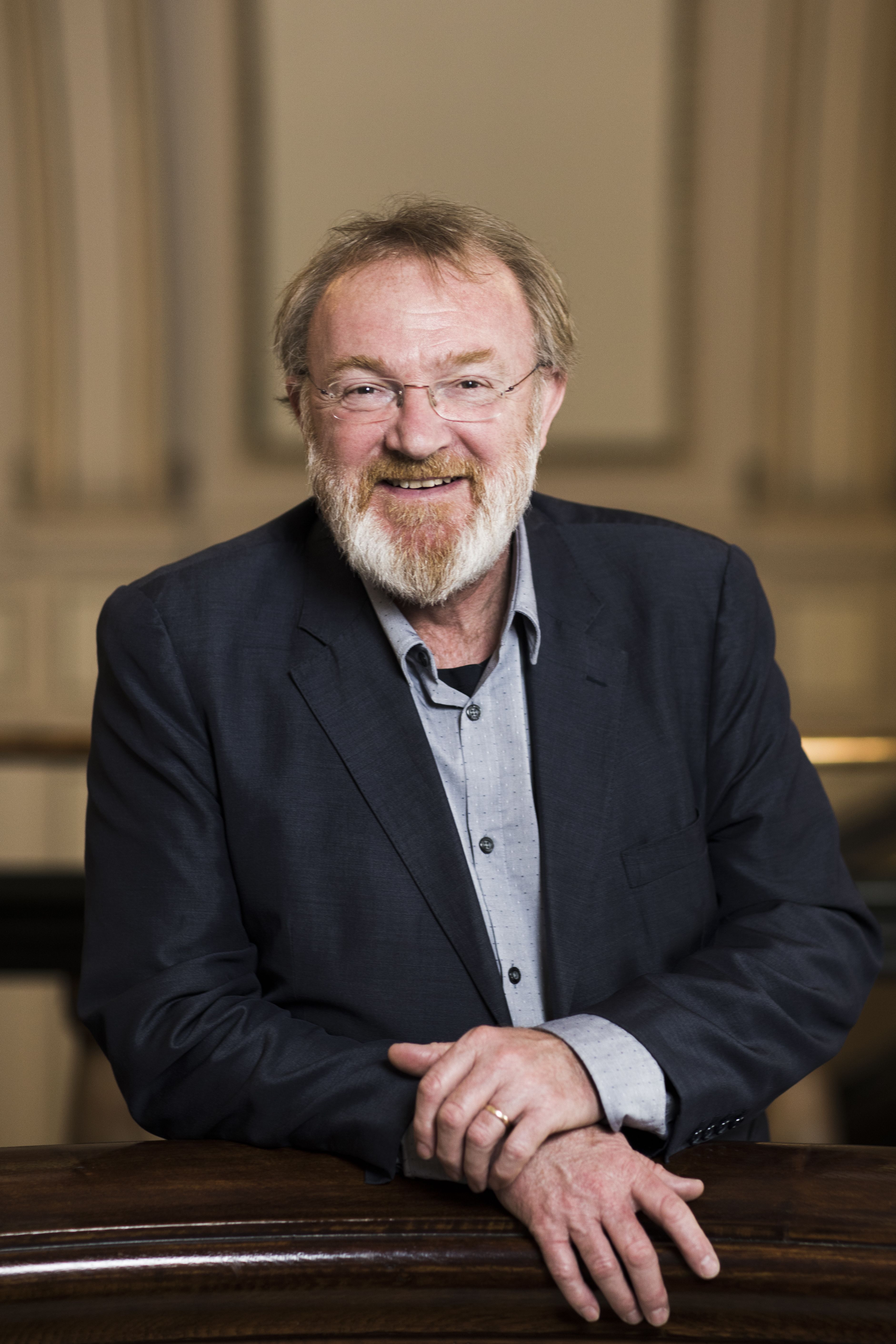
Benjamin Ealovega
Benjamin Ealovega
Martyn Brabbins is former Music Director of English National Opera. An inspirational force in British music, he has had a busy opera career since his early days at the Kirov and more recently at La Scala, the Bayerische Staatsoper, and regularly in Lyon, Amsterdam, Frankfurt and Antwerp.
He appears as a guest conductor with top international orchestras, including the Royal Concertgebouw, San Francisco and Tokyo Metropolitan Symphony orchestras and Deutsches Symphonie-Orchester Berlin, as well as the Philharmonia, BBC Symphony Orchestra and most of the other leading UK orchestras. He is a popular figure at the BBC Proms, which, in 2019, commissioned 14 living composers to write a birthday tribute to him. Known for his advocacy of British composers, he has conducted hundreds of world premieres across the globe. He has recorded nearly 150 CDs to date, including prize-winning discs of operas by Korngold, Birtwistle and Harvey. Earlier this year he received the RPS Conductor Award for his ‘colossal’ contribution to UK musical life.
He was Associate Principal Conductor of the BBC Scottish Symphony Orchestra (1994–2005), Principal Guest Conductor of the Royal Flemish Philharmonic (2009–15), Chief Conductor of the Nagoya Philharmonic (2012–16) and Artistic Director of the Cheltenham International Festival of Music (2005–7). He is Prince Consort Professor of Conducting at the Royal College of Music, Visiting Professor at the Royal Scottish Conservatoire and Artistic Advisor to the Huddersfield Choral Society; he has for many years supported professional, student and amateur music-making at the highest level in the UK.
Emilie Goddenconductor


Emilie has just completed the two-year Leverhulme Conducting Fellowship through the Royal Conservatoire of Scotland, in association with the BBC Scottish Symphony Orchestra. She is mentored by Martyn Brabbins. Through the association with the BBC SSO, she regularly assisted Chief Conductor Ryan Wigglesworth.
Recent engagements include schools concerts with BBC National Orchestra of Wales, a performance of the Glière Horn Concerto with Richard Watkins and the BBC Scottish Symphony Orchestra and studio recordings for Radio 3. She was the second conductor for performances of Tableau No. 6 from Messiaen’s Francois d’Assise with Ryan Wigglesworth and the BBC SSO. She also assisted Ryan Wigglesworth with the BBC SSO at this year’s Proms, and assisted Martyn Brabbins with the National Youth Orchestra of Scotland last summer.
As part of the Leverhulme Fellowship she conducted wind players from the Scottish Chamber Orchestra alongside conservatoire students in a side-by-side performance of Eleanor Alberga’s Nightscape. She has worked as assistant conductor at Grange Park Opera, on Janáček’s The Excursions of Mr Brouček to the Moon and the 15th century. She also conducted the opening concert at the 2022 St Endellion Summer Festival in Cornwall.
Forthcoming engagements include concerts with the St Woolos Sinfonia in Newport Cathedral and the Bath Symphony Orchestra.
Emma Tringsoprano

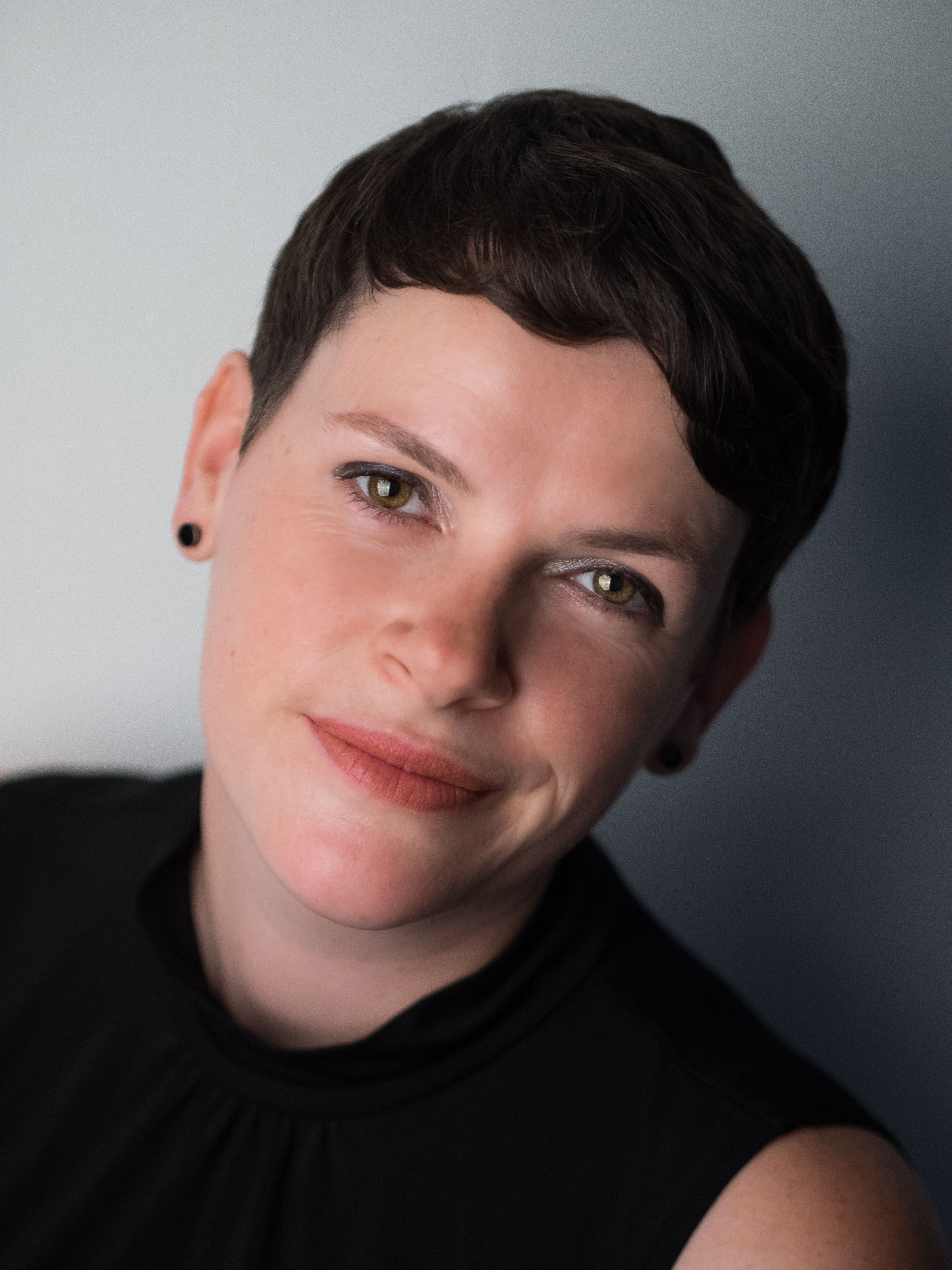
Emma Tring is a classically trained soprano based in South London. She studied at the Guildhall School of Music & Drama and has a particular love of singing new repertoire; she has premiered pieces by Nicholas Korth, John Pickard, Gabriel Jackson, David Goode and Michael Finnissy.
She has been a soprano with the BBC Singers for over a decade, developing her versatility in a wide range of repertoire. She is also a member of Exaudi, a group specialising in contemporary music.
She has appeared as a concert soloist with English Sinfonia, New London Sinfonia, BBC Symphony Orchestra, BBC Concert Orchestra, Ensemble Intercontemporain, Mahler Chamber Orchestra, Orchestra of Opera North, Royal Philharmonic Orchestra, Orchestra of the Age of Enlightenment, Britten Sinfonia, St James Baroque, the Hanover Band and the Bristol Ensemble.
BBC National Orchestra of Wales
For over 90 years, BBC National Orchestra of Wales has played an integral part in the cultural landscape of Wales, occupying a distinctive role as both broadcast and national symphony orchestra. Part of BBC Wales and supported by the Arts Council of Wales, it has a busy schedule of live concerts throughout Wales, the rest of the UK and the world.
The orchestra is an ambassador of Welsh music and champions contemporary composers and musicians; its concerts can be heard regularly across the BBC – on Radio 3, Radio Wales and Radio Cymru.
BBC NOW works closely with schools and music organisations throughout Wales and regularly undertakes workshops, side-by-side performances and young composer initiatives to inspire and encourage the next generation of performers, composers and arts leaders.
The orchestra is based at BBC Hoddinott Hall in Cardiff Bay, where its purpose-built studio not only provides the perfect concert space, but also acts as a broadcast centre from where its live-streamed concerts and pre-recorded content are presented as part of its popular Digital Concert Series.
For further information please visit the BBC National Orchestra and Chorus of Wales's website: bbc.co.uk/now
Patron
HM King Charles III KG KT PC GCB
Principal Conductor
Ryan Bancroft
Conductor Laureate
Tadaaki Otaka CBE
Composer-in-Association
Gavin Higgins
Composer Affiliate
Sarah Lianne Lewis
First Violins
Lesley Hatfield leader
Nick Whiting associate leader
Lowri Porter
Terry Porteus
Ruth Heney
Rebecca Totterdell
Carmel Barber
Zanete Uskane
Anna Cleworth
Alejandro Trigo
Amy Fletcher
Anya Birchall
Peter Povey
Catherine Fox
SecondViolins
Anna Smith *
Ros Butler
Sheila Smith
Michael Topping
Lydia Caines
Ilze Abola
Roussanka Karatchivieva
Vickie Ringguth
Beverley Wescott
Joseph Williams
Katherine Miller
Sebastian Canellis
Violas
Catherine Marwood ‡
Alex Thorndike #
Tetsuumi Nagata
Peter Taylor
Catherine Palmer
Robert Gibbons
Liam Brolly
James Drummond
Daire Roberts
Carl Hill
Cellos
Alice Neary *
Jessica Feaver
Sandy Bartai
Carolyn Hewitt
Rachel Ford
Keith Hewitt
Katy Cox
Tabitha Selley
DoubleBasses
David Stark *
Christopher Wescott
Richard Gibbons
Antonia Bakewell
Alex Verster
Fabian Galeana
Flutes
Fiona Fulton ‡
John Hall †
Charlotte Thomas
Piccolos
Fiona Fulton
Charlotte Thomas
Alto Flute
Fiona Fulton
Oboes
Steve Hudson *
Sarah-Jayne Porsmoguer
Clarinets
William Knight ‡
William White
Lenny Sayers
Bass Clarinet
Lenny Sayers †
Bassoons
Jarosław Augustyniak *
Alexandra Davidson
David Buckland
Contrabassoon
David Buckland †
Horns
Tim Thorpe *
John Davy
Neil Shewan †
Jack Sewter
Lynn Henderson
Trumpets
Philippe Schartz *
Robert Samuel
Lewis West
Trombones
Donal Bannister*
Robb Tooley
Bass Trombone
Darren Smith †
Tuba
Daniel Trodden †
Timpani
Christina Slominska
Percussion
Phil Hughes *
Harry Lovell-Jones
Harp
Valerie Aldrich-Smith †
Harpsichord
Satoko Doi-Luck
* Section Principal
† Principal
‡ Guest Principal
# Assistant String Principal
The list of players was correct at the time of publication
Director Lisa Tregale
Orchestra Manager Vicky James
Assistant Orchestra Manager Nick Olsen
Orchestra Coordinator, Operations Kevin Myers
Business Coordinator Caryl Evans
Orchestra Administrator Eleanor Hall
Head of Artistic Production Matthew Wood
Artists and Projects Manager Eleanor Phillips
Orchestra Librarian Eugene Monteith **
Producer Mike Sims
Broadcast Assistant Kate Marsden
Head of Marketing and Audiences Sassy Hicks
Marketing Coordinator Amy Campbell +
Digital Producer Yusef Bastawy
Social Media Coordinator Harriet Baugh
Education Producers Beatrice Carey, Rhonwen Jones **
Audio Supervisors Simon Smith, Andrew Smillie
Production Business Manager Lisa Blofeld
Stage and Technical Manager Steven Brown +
Assistant Stage and Technical Manager Josh Mead
BBC Wales Apprentices Analese Thomas-Strachan, Jordan Woodley
+ Green Team member
** Diversity & Inclusion Forum