Ustvolskaya, Shostakovich, Dvořák
Saturday 5 February, 7.30pm
The Bridgewater Hall, Manchester


Welcome to tonight’s performance
Antonín Dvořák’s only Cello Concerto is an intensely personal work, inspired in part by the fading health of his first love. Soloist Leonard Elschenbroich, a former BBC Radio 3 New Generation Artist, brings his trademark flair to this towering tour de force. Also tonight, conductor Anja Bihlmaier takes us to Russia: first with the witty Suite by Galina Ustvolskaya, a pupil of Shostakovich, and then with Shostakovich’s own brilliantly irreverent Ninth Symphony.
Our relationship with BBC Radio 3
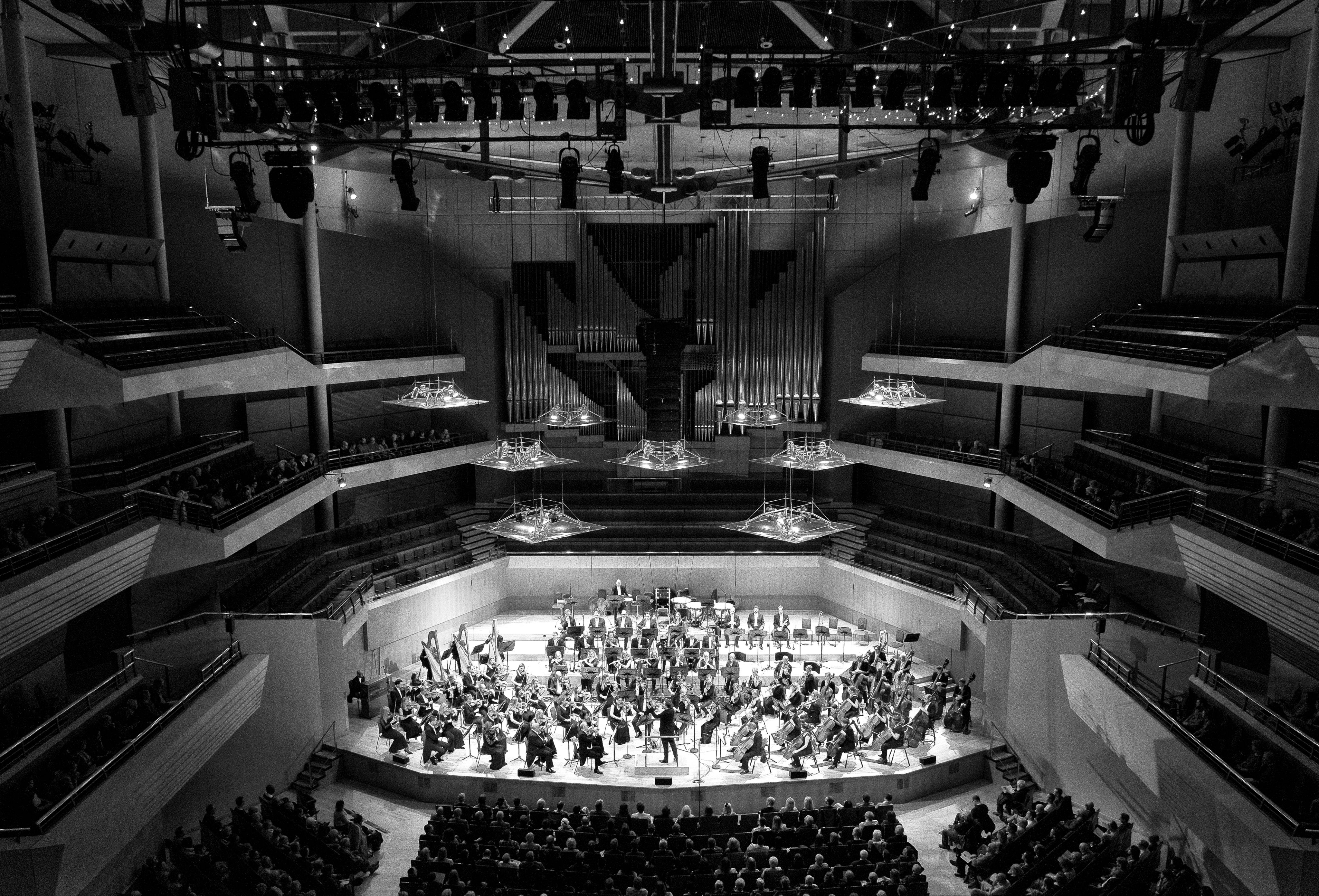
As the BBC’s flagship orchestra for the North, almost all of the BBC Philharmonic’s concerts are recorded for broadcast on Radio 3. Tonight you will see a range of microphones on the stage and suspended above the orchestra. We have a Producer, Assistant Producer and Programme Manager at the orchestra who produce our broadcasts.
We seek to bring a diverse and risk-taking range of repertoire to our audiences, including our concert-goers here in Manchester, as well as the two million listeners who tune in to BBC Radio 3.
Please do not take flash photographs during the performance as this is very distracting to the artists. Audio and video recording is strictly prohibited.
To ensure that everyone can enjoy the concert, please either turn off your phone and any other electronic devices before it begins or ensure that they are turned to silent.

Galina Ustvolskaya
Suite 12’
Dmitry Shostakovich
Symphony No. 9 in E flat major 25’
INTERVAL: 20 minutes
Antonín Dvořák
Cello Concerto in B minor 39’
Leonard Elschenbroich cello
BBC Philharmonic
Anja Bihlmaier conductor


Tonight’s concert is being recorded by BBC Radio 3 for future broadcast. It will be available for 30 days after broadcast via BBC Sounds, where you can also find podcasts and music mixes.
Help us Improve Our Online Programmes.
Please take this 5-minute survey and let us know what you think of these notes.
Programme Survey
Galina Ustvolskaya (1919–2006)
Suite (1959)

1 Very quickly, cheerfully
2 Moderately, briskly
3 Melodiously, at a leisurely pace
4 Quickly
5 Quickly
6 Moderately
7 Very quickly, cheerfully
8 Moderately, briskly –
9 Finale
Galina Ustvolskaya rejected many of the early works she was required to write according to the demands of Soviet Socialist Realism. One of the works that she did retain, however, was the orchestral Suite of 1959, originally titled Sportivnaya (‘Sports Suite’). The connection to athleticism is borne out in her tempo indications for each movement: ‘Very quickly, cheerfully’, ‘Moderately, briskly’ and ‘Melodiously, at a leisured pace’ repeat throughout the work’s nine movements and five ‘da capos’. The lightness and brisk touch may come as a shock to listeners familiar with the much more sombre moods of Ustvolskaya’s post-1962 works. Indeed, she had to be persuaded by her husband that this piece, which she had really only written for the money, was worthy of inclusion in her official catalogue.
As is typical of Ustvolskaya, the Suite is rather short for its title: in roughly 12 minutes the listener is taken from the first movement to the last. Even Ustvolskaya’s ‘leisured pace’ is more like another composer’s gallop. Nonetheless, there are a number of interesting compositional choices for those ears that can keep up with Ustvolskaya’s pacing. The sparseness of orchestral texture and amusing effects illustrating an athlete’s rapid and repetitive movements might bring about a comparison with Erik Satie and his witty miniatures, but there’s a personality here that is unique to Ustvolskaya.
Perhaps this is the real reason she eventually decided to include the work in her official catalogue (though she quite literally cut out the ‘sports’ title-page of the original manuscript before submitting it to the publishers). Though formed by the demands of Socialist Realism, its glimmers of originality hint at Ustvolskaya’s ‘hidden’, more avant-garde side.
Galina Ustvolskaya
A great number of Russian artists have made their home in St Petersburg (or Leningrad, as it was called in Soviet times), most notably the author Fyodor Dostoyevsky, whose Crime and Punishment so vividly describes the city. Another was the composer Galina Ustvolskaya, who, like her literary counterpart, combined an idiosyncratic spirituality with a unique artistic vision.
Ustvolskaya studied at the Leningrad Conservatory, where she became Dmitry Shostakovich’s only female composition student in 1939. Though she was Shostakovich’s pupil, he considered her an artistic equal. (Some have even suggested they had a romantic relationship.) Like her teacher, Ustvolskaya was not free to express herself fully. The ideological strictures placed upon artists during the period of Socialist Realism, prevalent from the early 1920s to the late 1950s, meant that Ustvolskaya, among many others, had to compose ‘for the people and the money’ (as he herself said) rather than to fulfil her own artistic aims.
Around 1962 Ustvolskaya decided to compose according to her own true ‘spiritual but non-religious creativity’. Among her unique qualities were her use of repeated blocks of sound, unusual instrumentations, sparse textures and regular rhythms. All of her works have a sense of grand scale, even those for chamber ensembles. It was these unique, ‘hidden’ works that Ustvolskaya promoted as truly ‘hers’ when the West discovered her in the 1980s. She denounced nearly all the music that she had composed for the Soviet public.
Programme note and profile © Margaret Frainier
Margaret Frainier recently earned her PhD from the University of Oxford, studying 19th-century Russian music and culture. Having worked as an opera singer, academic and teacher, she now works as a researcher for the Library of Congress in Washington, DC.
Dmitry Shostakovich (1906-75)
Symphony No. 9 in E flat major, Op. 70 (1945)

1 Allegro
2 Moderato
3 Presto –
4 Largo –
5 Allegretto – Allegro
Shostakovich originally announced that his Ninth Symphony would be a celebration of the Soviet victory over the Nazis, in true Socialist Realist heroic style. Indeed, his Seventh and Eighth symphonies had both been massive in scale, so his listeners probably expected something similar in scope and grandeur. The symphony that eventually emerged, however, was quite different. It was short, for one thing – the entire symphony lasts less time than single movements of the Seventh and Eighth. It was small in scale, too – indeed, it was given the label ‘Classical’ because of its form and character. It was hardly the heroic symphony with which Shostakovich had teased the public, and the composer knew it. ‘Musicians will love to play it, and critics will love to blast it,’ Shostakovich breezily said.
The Classicism of this symphony is most obvious in its first movement, which follows the strict 18th-century sonata form right down to the repeated exposition. This movement is as spirited and humorous as Ustvolskaya’s Suite. Most notably, the trombone repeats a miniature fanfare often exactly when it shouldn’t, as when it interrupts the high piccolo’s introduction of the movement’s second theme. Here it’s as if the composer winks: ‘Sure, I can follow the rules – sometimes.’
The second movement is darker, though how dark and sombre is in practice left to the conductor. Still, it provides a contrast to the merry first movement, if still rooted in a kind of dance world. The clarinet’s repeating theme could almost be a waltz, except that the rhythm is sometimes interrupted by a tentative, one-beat hesitation. Here it’s as if the composer drags his feet: ‘Oh, all right, I suppose I’ll follow the rules.’
The final three movements are played uninterrupted. The scherzo-like Presto moves exceptionally quickly from faint and fleeting to brassy and assertive, but it dies away into nothing almost as quickly as it builds up. The Largo then blasts away all remnants of the previous melody, trombones and tubas (of all things!) intoning sombrely ahead of a soulful bassoon solo. This procedure then repeats, the bassoon solo lightening up into a jaunty Allegretto that can’t seem to decide whether to be a dance, like the symphony’s opening, or a march. ‘At last,’ the composer seems to sigh, ‘here’s that hero I promised – maybe.’
Dmitry Shostakovich
Dmitry Shostakovich has emerged as one of the 20th century’s greatest composers, but his standing is bound up with his biography, the oppression of the Stalin regime, and the politics of the Cold War. He was a musical prodigy, and his graduation work, the First Symphony, soon won him international fame. At home, he became the No. 1 composer, the most admired and best paid. Even so, he also suffered from harsh official censure, beginning in 1936, when his internationally acclaimed opera The Lady Macbeth of Mtsensk was withdrawn from Soviet stages. His Seventh Symphony, written during the siege of Leningrad (St Petersburg), became an international symbol of resistance to Nazism but it prompted sneers from Western composers like Stravinsky, who though that art serving any kind of politics was distasteful. After Shostakovich’s death, his work was mined for messages of resistance to the regime, and such messages can indeed be found, next to ciphers and hidden quotations related to his private life. Shostakovich’s massive output, including the monumental cycles of 15 symphonies and 15 string quartets, thus remains a magnet for intense engagement, and not only for the reasons of its transcendent beauty and power.
Programme note and profile © Marina Frolova-Walker
Marina Frolova-Walker is Professor of Music History at the University of Cambridge and Fellow of Clare College, Cambridge. She is the author of Russian Music and Nationalism from Glinka to Stalin and Stalin’s Music Prize: Soviet Culture and Politics.
INTERVAL: 20 minutes
Antonín Dvořák(1841–1904)
Cello Concerto in B minor, Op. 104 (1894–5)

1 Allegro
2 Adagio ma non troppo
3 Finale: Allegro moderato
Leonard Elschenbroich cello
In his Cello Concerto Antonín Dvořák can be heard gazing across vast distances with homesick longing. He wrote it in New York, during his third year as Director of Manhattan’s newly established National Conservatory of Music. He’d greatly enjoyed his first two years in the role, as he demonstrated in the awe and wonder of his ‘New World’ Symphony and the warm contentment of his ‘American’ Quartet. By his third year, however, he found himself increasingly missing Bohemia. It was a situation made worse by some worrying news: his sister-in-law, Josefína Kaunitzová (née Čermáková), was gravely ill. Some 30 years earlier, the young Dvořák had been passionately in love with Josefína, then one of his piano pupils. When she didn’t return his affections, however, he eventually married her younger sister Anna. But it’s widely believed that his feelings hardly changed across the intervening decades.
Nonetheless, it was an American inspiration that prompted Dvořák to write his Cello Concerto. Earlier in his career, the eminent Czech cellist Hanuš Wihan had badgered the composer repeatedly for a cello concerto but, after an abortive attempt to compose one, Dvořák had remained dubious about the cello’s suitability as a concerto instrument. But when, in March 1894, he heard the Second Cello Concerto by Victor Herbert, one of his Conservatory colleagues, he was immediately inspired, writing his own piece in just three months between November 1894 and February 1895. Nor did he forget about the ailing Josefína: he incorporated a quotation from his song ‘Leave me alone’ (‘Kéž duch můj sám’), one of her favourites, into the concerto’s lyrical slow movement.
Dvořák eventually returned to Bohemia in April 1895 and, just a month later, Josefína died. In response, the composer threw himself back into his Cello Concerto, replacing its original celebratory ending with a quiet memory of his song ‘Leave me alone’. When Wihan, the work’s dedicatee, demanded a showy solo cadenza to demonstrate his exceptional skills in the final movement, Dvořák refused, even going as far as emphasising his wishes in a note to his publisher: ‘I must insist that my work be published just as I have written it. I give you my work only if you promise me that no one – not even my esteemed friend Wihan – shall make any alteration in it without my knowledge and permission, also that there be no cadenza such as Wihan has made in the last movement.’
Despite its stormy drama, the concerto is often contemplative in tone, with soloist and orchestra equally matched as partners rather than adversaries. Its assertive opening movement gives way to pastoral tranquillity in the central slow movement. Dvořák’s otherwise exuberant Finale unexpectedly immerses listeners in bittersweet melancholy just before its close.
Programme notes and profile © David Kettle
David Kettle is an Edinburgh-based writer and editor who contributes regularly to The Scotsman, The Daily Telegraph, The List and The Strad.
Antonín Dvořák
It was Brahms who recognised Dvořák’s talent when, around 1875, he recommended the 33-year-old Czech composer to his own publisher, Simrock. Born in a village north of Prague in 1841, Dvořák worked as a viola player at the Provisional Theatre, then as an organist. The success of tours in the 1880s (including several visits to England) led to his wider recognition and to his appointment in 1891 as Director of the newly founded Conservatory of Music in New York. During his three years in America he was influenced by African American spirituals and indigenous American music, composing the ‘New World’ Symphony and the ‘American’ Quartet (Op. 96). But the pull of his homeland, whose folk music and pastoral beauty are reflected strongly in his music, drew him back to Bohemia. He returned to a post at the Prague National Conservatory, late becoming its Director.
Dvořák never achieved the success of his compatriot Smetana in the field of opera, but he wrote nine symphonies, three concertos (for violin, cello and piano) and some fine string quartets. He also established the Czech oratorio with his Stabat mater in 1883. Alongside the more popular of his symphonies, he is best known for his sets of Slavonic Dances, originally for piano duet and later arranged for orchestra.
Profile © Edward Bhesania
Edward Bhesania is Editorial Manager, BBC Proms Publications, and reviews for The Stage and The Strad. He has written for The Observer, Country Life, The Tablet and International Piano.
Biographies
Anja Bihlmaier conductor

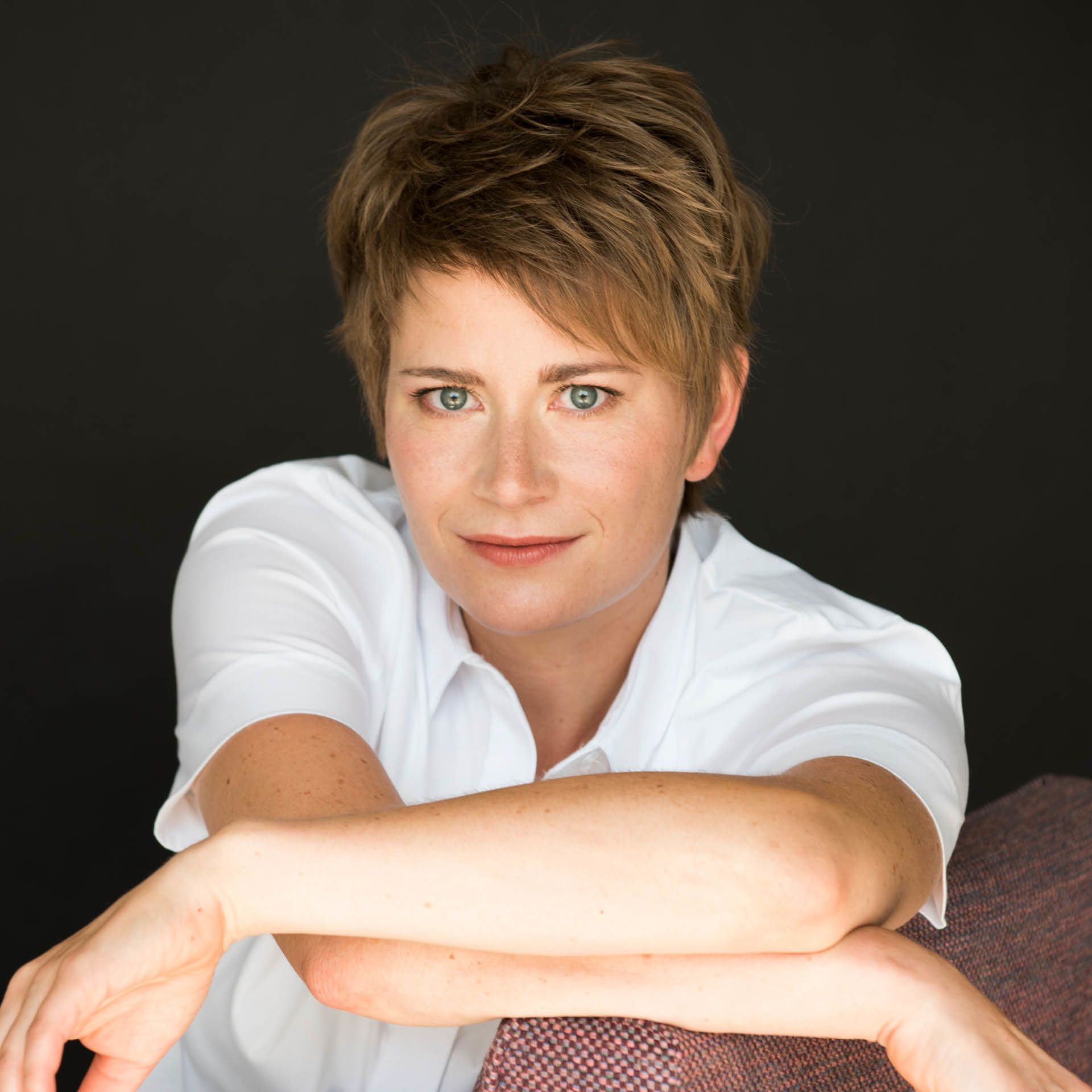
Photo: Nikolaj Lund
Photo: Nikolaj Lund
Anja Bihlmaier is Chief Conductor of the Residentie Orchestra, The Hague, and Principal Guest Conductor of the Lahti Symphony Orchestra. She studied at the Freiburg Conservatory of Music before winning a scholarship to study with Dennis Russell Davies and Jorge Rotter at the Mozarteum University Salzburg. She won further scholarships from the Johannes Brahms Foundation and was admitted onto the German Conductors’ Forum.
Recent engagements include the BBC Scottish and City of Birmingham Symphony orchestras, Deutsche Symphonie-Orchester Berlin, NDR Radio Philharmonic and Royal Stockholm Philharmonic Orchestra. With a passion for opera, Bihlmaier has also amassed 15 years of experience from positions at the Hanover Staatsoper, Trondheim Opera, Malmö Opera, Vienna Volksoper, Theater Chemnitz and Staatstheater Kassel.
Highlights this season with the Residentie Orchestra include the opening concert at the orchestra’s new hall, Amare, and a performance at the Bodensee Festival in Germany. Programmes include Mahler’s Symphony No. 4, Sibelius’s Symphonies Nos. 2 and 5 and Verdi’s Requiem, plus recordings of Schumann’s symphonies. Elsewhere she conducts the BBC, Danish National, Finnish Radio, Iceland, Pacific, Swedish Radio and SWR Symphony orchestras – all for the first time. She also returns to the Barcelona and Gothenburg Symphony orchestras and Spanish National Orchestra.
Leonard Elschenbroich cello
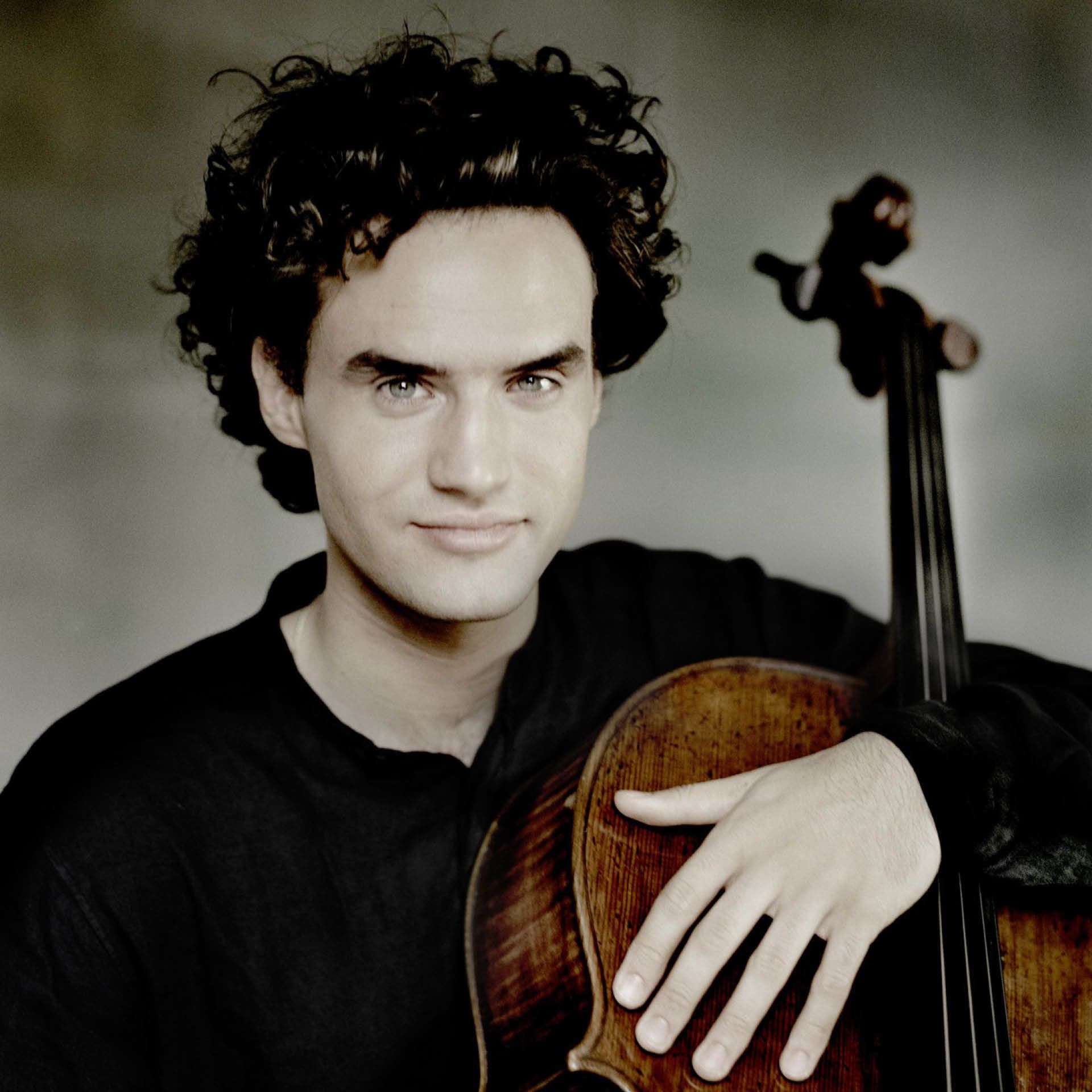
Photo: Felix Broede
Photo: Felix Broede
Born in 1985 in Frankfurt, Leonard Elschenbroich received a scholarship to study at the Yehudi Menuhin School in Surrey and continued his studies with Frans Helmerson at the Cologne Academy of Music. He gave his Vienna Musikverein debut on a European tour with the Staatskapelle Dresden, his US debut with the Chicago Symphony Orchestra, his Asian debut at Suntory Hall in Tokyo and has appeared five times at the BBC Proms.
He has performed with orchestras including the Bergen, Japan, London, Netherlands, St Petersburg and Warsaw Philharmonic orchestras, BBC, Chicago, New Zealand, Polish National Radio, Swedish Radio, Tasmanian and WDR Symphony orchestras, Berlin Konzerthaus Orchestra, Residentie Orchestra, The Hague, and Orchestre Philharmonique de Radio France.
A committed chamber musician, he performs regularly with Alexei Grynyuk and Nicola Benedetti. He is also a champion of contemporary music, giving the world premiere of Mark Simpson’s Cello Concerto – written specially for him – in 2018. He has also performed concertos by Gilbert Amy, Magnus Lindberg, Colin Matthews, Mark-Anthony Turnage and Pēteris Vasks.
Leonard Elschenbroich’s recordings include a cycle of Beethoven Cello Sonatas, Kabalevsky’s Cello Concerto No. 2, a homage to Schnittke and concertos by Dutilleux and Saint-Saëns.
BBC Philharmonic
The BBC Philharmonic is reimagining the orchestral experience for a new generation – challenging perceptions, championing innovation and taking a rich variety of music to the widest range of audiences.
The orchestra usually performs around 100 concerts every year, the vast majority broadcast on BBC Radio 3. Along with around 35 free concerts a year at its MediaCityUK studio in Salford and a series of concerts at Manchester’s Bridgewater Hall, the orchestra performs across the North of England, at the BBC Proms and internationally, and records regularly for the Chandos label.
The BBC Philharmonic’s Chief Conductor is Omer Meir Wellber. Described by The Times’s Richard Morrison as ‘arguably the most inspired musical appointment the BBC has made for years’, Israeli-born Wellber burst into his new role at the 2019 BBC Proms and has quickly built an international reputation as one of the most exciting young conductors working today. The orchestra also has strong ongoing relationships with its Chief Guest Conductor John Storgårds and Associate Artist Ludovic Morlot. Last May the orchestra announced young British composer and rising star Tom Coult as its Composer in Association.
The scope of the orchestra’s programme extends far beyond standard repertoire. Over the past few years it has collaborated with artists as varied as Clean Bandit, Jarvis Cocker and The Wombats; played previously unheard music by writer-composer Anthony Burgess in a unique dramatisation of A Clockwork Orange; joined forces with chart-toppers The 1975 at Blackpool’s Tower Ballroom; premiered The Arsonists by composer Alan Edward Williams and poet Ian McMillan, the first opera ever written to be sung entirely in a Northern English dialect; and broadcast on all seven BBC national radio networks, from BBC Radio 1 to BBC Radio 6 Music and the BBC Asian Network. Last year the orchestra also entered the UK Top 40 singles chart with ‘Four Notes: Paul’s Tune’.
The BBC Philharmonic is pioneering new ways for audiences to engage with music and places learning and education at the heart of its mission. Outside of the concert hall, it is passionate about taking music off the page and into the ears, hearts and lives of listeners of all ages and musical backgrounds – whether in award-winning interactive performances, schools’ concerts, Higher Education work with the Royal Northern College of Music or the creation of teacher resources for the BBC’s acclaimed Ten Pieces project. Through all its activities, the BBC Philharmonic is bringing life-changing musical experiences to audiences across Greater Manchester, the North of England, the UK and around the world.
First Violins
Midori Sugiyama
Assistant Leader
Alison Fletcher *
Kevin Flynn †
Austeja Juskaityte
Anna Banaszkiewicz-Maher
Martin Clark
Julian Gregory
Karen Mainwaring
Catherine Mandelbaum
Anya Muston
Robert Wild
Toby Tramaseur
Ian Flower
Sarah White
Second Violins
Lisa Obert *
Glen Perry ‡
Rachel Porteous
Lucy Flynn
Sophie Szabo
Christina Knox
Rebecca Mathews
Alyson Zuntz
Claire Sledd
Matthew Watson
Adam Riding
Oliver Morris
Hannah Padmore
Violas
Steven Burnard *
Kimi Makino ‡
Carol Ella
Bernadette Anguige †
Kathryn Anstey
Matthew Compton
Ruth Montgomery
Nicholas Howson
Rachel Janes
Fiona Dunkley
Cheryl Law
Cellos
Peter Dixon *
Maria Zachariadou ‡
Steven Callow †
Jessica Schaefer
Rebecca Aldersea
Elinor Gow
Marina Vidal Valle
Elise Wild
Double Basses
Ronan Dunne *
Miriam Shaftoe
Andrew Vickers
Peter Willmott
Tom Neil
Bryn Davies
Flutes
Alex Jakeman *
Victoria Daniel
Piccolo
Jennifer Hutchinson
Oboes
Jennifer Galloway *
Kenny Sturgeon
Clarinets
John Bradbury *
Fraser Langton
Bassoons
Roberto Giaccaglia *
Corrine Crowley
Contrabassoon
Bill Anderson
Horns
Ben Hulme *
Rebecca Hill ¥
Phillip Stoker
Tom Kane
Jonathan Barrett
Trumpets
Christopher Deacon §
Gary Farr
Graham South
Trombones
Richard Brown *
Gary MacPhee
Bass Trombone
Russell Taylor
Tuba
Christopher Evans
Timpani
Mark Wagstaff
Percussion
Paul Patrick *
Geraint Daniel
Oliver Patrick
Harry Percy
Harp
Clifford Lantaff *
Piano/Celesta
Darius Battiwalla
* Principal
† Sub Principal
‡ Assistant Principal
§ Guest Principal
¥ Associate Principal
The list of players was correct at the time of publication
Director
Simon Webb
Orchestra Manager
Tom Baxter
Assistant Orchestra Manager
Stefanie Farr/Beth Wells
Orchestra Personnel Manager
Helena Nolan
Orchestra Administrator
Maria Villa
Senior Producer
Mike George
Programme Manager
Stephen Rinker
Assistant Producer
Katherine Jones
Marketing Manager
Amy Shaw
Marketing Executive
Jenny Whitham
Marketing Assistant
Kate Highmore
Manager, Learning and Digital
Jennifer Redmond/
Beth Wells
Project Co-ordinator, Learning
Youlanda Daly/
Róisín Ní Dhúill
Librarian
Edward Russell
Stage Manager
Thomas Hilton
Transport Manager
Will Southerton
Team Assistant
Diane Asprey
Keep up to date with the
BBC Philharmonic
Listen to our BBC Radio 3 broadcasts via the BBC Sounds app. Visit our website and follow us on Twitter, Facebook and Instagram and sign up to the newsletter
To help us improve our online concert programmes, please take this 5-minute survey
Produced by BBC Proms Publications