Sofi Jeannin conducts Stravinsky,
Ravel & Boulanger
Saturday 26/11/22, 7.30pm


Maurice Ravel
L’aurore * (9’)
Igor Stravinsky
Symphonies of Wind Instruments (1947 version) (12’)
Lili Boulanger
Vieille prière bouddhique ** (9’)
INTERVAL (20’)
Maurice Ravel
Le tombeau de Couperin (17’)
Igor Stravinsky
Symphony of Psalms (21’)
Sofi Jeannin Conductor
BBC National Chorus of Wales
Roland GeorgeTenor*
Deryck WebbTenor **


The concert is being recorded by BBC Radio 3 for future broadcast in Afternoon Concert and filmed for future release in the BBC NOW Digital Concert Series. It will be available for 30 days after broadcast via BBC Sounds, where you can also find podcasts and music mixes. Visit bbc.co.uk/now for more information on future performances.
Introduction


For tonight’s concert we welcome back our superb chorus to perform alongside the wonderful BBC National Orchestra of Wales under the direction of Sofi Jeannin.
All of the music on tonight’s programme dates from the first part of the 20th century. We begin with a real rarity – Ravel’s L’aurore, written as he attempted (and failed) to win the coveted Prix de Rome. Much more familiar is Ravel’s Le tombeau de Couperin, originally a piano suite composed during the First World War to commemorate fallen friends. At exactly the same time as Ravel was working on Tombeau, the tragically short-lived, immensely gifted Lili Boulanger was writing her Vieille prière boudddhique, a setting of an ancient prayer that is instantly recognisable as French from its luminous harmonies.
Stravinsky once observed: ‘good composers borrow, great composers steal’. He unashamedly fell into the latter category, as the two works here demonstrate, bringing together music ancient and modern to utterly distinctive effect.
Enjoy!
Matthew Wood
Head of Artistic Production
Please respect your fellow audience members and those listening at home. Turn off all mobile phones and electronic devices during the performance. Photography and recording are not permitted.
Maurice Ravel (1875–1937)
L’aurore (1905)

Roland George tenor
BBC National Chorus of Wales
Ravel’s L’aurore (‘Dawn’) is a rarity indeed. It was composed in 1905 during a difficult time for the Ravel family, as in that year a ‘Whirlwind of Death’ ride invented by the composer’s father was launched at the Casino de Paris but was soon shut down following a fatal accident.
This short piece for solo tenor, mixed choir and orchestra was composed for the preliminary round of the Prix de Rome, the most prestigious competition at the Paris Conservatoire. Ravel transcends the dull poem by an anonymous author with imaginative instrumental touches and shimmering textures; it builds up to a dramatic climax and ends suddenly.
Despite his confident handling of the large forces, Ravel was not selected as a finalist for the competition. In fact, unlike Ravel, all six of the successful competitors were students of Charles Lenepveu, who just happened to be on the jury. Ravel would also have been aware that he was occasionally breaking the rules of traditional harmonic part-writing, and he was even criticised for using trombones in a quiet passage: Lenepveu believed the heavy brass should only be used at loud volume. Nevertheless, L’aurore can now be considered characteristic of French music of the turn of the 20th century and an intriguing addition to Ravel’s worklist.
Programme note © Caroline Potter
Further Listening: Mathys Lagier; Choeur & Orchestre National des Pays de la Loire/Pascal Rophé (BIS BIS2582)
Further Reading: Ravel Roger Nichols (Yale UP)
Igor Stravinsky (1882–1971)
Symphonies of Wind Instruments (1920, rev. 1947)

Stravinsky would sometimes use the word ‘symphony’ in the Ancient Greek sense, meaning simply ‘sounding together’, rather than a traditional developing form. The Symphonies of Wind Instruments is the most extreme example of this, akin to a compositional treatise on how to layer the orchestral woodwind and brass in striking and colourful ways. It is constructed from highly contrasted blocks of sound, which are often quite static and austere in effect.
Stravinsky wrote Symphonies a few years after The Rite of Spring, and concurrently with his initial attempts to complete Les noces, for which he struggled to decide on an instrumentation (he eventually settled on a solution with no wind instruments, and in fact no sustaining instruments at all – the complete inverse of Symphonies).
Like those two great ballets, Symphonies is interlaced with folk tunes (or rather authentic-sounding forgeries that Stravinsky wrote himself). These mimic the playful stress patterns of Russian speech, and create unpredictable rhythms and changes in metre. While this technique conjures up chaos and brutality in The Rite and a wild celebratory atmosphere in Les noces, here these melodies are melancholic and eerie, meandering between the denser textures.
Symphonies ends with a reworking of Stravinsky’s recent piano piece in memory of Debussy, who had died in 1918, giving this otherwise abstract piece an elegiac profundity and, perhaps more importantly for Stravinsky, the sense of a ritual or, better still, a rite.
Programme note © Tom Owen
Further Listening: Berliner Philharmoniker/Sir Simon Rattle (Warner Classics 7236112)
Further Reading: Stravinsky: A Creative Spring: Russia and France 1882–1934 Stephen Walsh (Pimlico)
Lili Boulanger (1893–1918)
Vieille prière bouddhique (1914–17)
Deryck Webbtenor
BBC National Chorus of Wales
Started in Rome in 1914 and completed in Arcachon in 1917, Vieille prière bouddhique sets a French translation of an old Buddhist prayer. Lili Boulanger’s friend Suzanne Karpelès, who was reading Oriental Studies at the Sorbonne, introduced the composer to the text and was also responsible for the translation from Pali, the Buddhist sacred language. Its subtitle ‘Prière quotidienne pour tout l’univers’ (Daily prayer for the whole universe) is an apt introduction to the flavour of the work. The theme of universal fellowship is conveyed through choral writing that is simple, direct and often in octaves, with everyone singing the same line. Modal touches, for instance in the main melody, move the musical language away from something specifically Western classical in style to something less time- and place-bound.
The most obviously ‘exotic’ element of Vieille prière bouddhique is the long flute solo that is both an elaboration of previously heard choral material and an evocation of an imagined alien culture in its incantatory style and rhythmic flexibility. The work was premiered on 9 June 1921 under the misleading title ‘Prière hindoue’ at Paris’s Salle Pleyel, conducted by Henri Busser; the performers on this occasion included Lili’s sister Nadia Boulanger at the piano.
Lili Boulanger loved word games, ciphers and musical puns, and at the start of her 1912 diary she noted fragments of a private language, some of which is based on musical notes. One cipher represents the name ‘Lili’: do–sol–do–sol (C–G–C–G), a set of four notes which is prominent in Vieille prière bouddhique. This suggests that this choral piece is not only a universal prayer, but also an intensely personal work.
Programme note © Caroline Potter
Further Listening: Martial Defontaine; Namur Symphonic Choir; Luxembourg Philharmonic Orchestra/Mark Stringer (Timpani 1C1148)
Further Reading: Nadia and Lili Boulanger Caroline Potter (Routledge)
INTERVAL: 20 minutes
Maurice Ravel
Le tombeau de Couperin (1914–17, orch. 1919)

1 Prélude
2 Forlane
3 Menuet
4 Rigaudon
Le tombeau de Couperin began life as a suite for piano. Ravel started work on it in 1914, but the First World War interrupted his progress and the piece was not completed until 1917. Six movements – Prélude, Fugue, Forlane, Rigaudon, Menuet and Toccata – were modelled on French Baroque dances and dedicated collectively to the memory of his friends killed in the war. In 1919, the composer scored four of these movements for a small orchestra.
How can musical works best commemorate loved ones? Ravel’s Tombeau is not a series of elegies. Nor is it intended as a series of personal portraits. Instead, there is the intangible sense of nostalgia, of lost worlds and things ethereal. Ravel’s sophisticated tributes honour the memories of people without encasing them in amber, and the result is often moving in both senses of the word.
In the Prélude, the constant flow of notes resembles a perpetual motion. The Forlane was a lively, quick-paced folk dance associated with Venice but Ravel’s version is distinguished by a moderate tempo, lilting rhythms and slightly slurred articulation. The Menuet is both affectionate and stately. Notwithstanding a pastoral middle section, the Rigaudon is characterised by bright sonorities and high-stepping gestures, which bring the work to an exuberant conclusion.
Programme note © Lucía Camacho Acevedo
Further Listening: Les Siècles/François-Xavier Roth (Harmonia Mundi HMM905281)
Igor Stravinsky
Symphony of Psalms (1930)
1 Exaudi orationem meam, Domine –
2 Expectans expectavi Dominum –
3 Alleluia. Laudate Dominum
BBC National Chorus of Wales
The Symphony of Psalms was written during the most productive years of what is often referred to as Stravinsky’s Neoclassical period – although the term is a loose one here, as the composer pilfered from such a wide range of antiquated styles and forms, and found so many inventive ways to transform them. Indeed, the string of works from Oedipus rex (1927) to Perséphone (1933) – via Apollo and the Violin Concerto – features an extraordinary range of compositional approaches. The Symphony of Psalms comes in the middle of this sequence and is perhaps the most stylistically enigmatic.
Stravinsky’s constantly shifting idiom was sometimes met with confusion during this period, with critics accusing him of relying too much on musical masks and disguises. But there’s no doubting the sincerity of this work: an attempt to declare his faith as something personal and inspiring. While his earlier pieces for the Ballets Russes had been closer to pageantry, in which Russian tropes were exaggerated for the Parisian audience, the Symphony of Psalms dates from more than 15 years into his time as a cosmopolitan exiled in France, and is a more heartfelt, serious assertion of his Russian Orthodox heritage. It may not be the festive piece Serge Koussevitzky hoped for when he commissioned it (to celebrate the Boston Symphony Orchestra’s 50th anniversary), but it has a life-affirming grandeur simmering just below the surface.
The orchestration lacks clarinets, violins and violas, and at times creates a haunting, hollow sound. Elsewhere, Stravinsky makes percussive use of two orchestral pianos, energising the passages where the vocal lines sound like ritualistic chant.
While psalm settings are often exercises in direct, obvious word-painting, Stravinsky avoids such clichés, refraining in the third movement from depicting the instruments mentioned in Psalm 150. Here it becomes clear that, for this composer, praise and worship are in fact very calm and reflective states. At the beginning of the second movement, Psalm 40 proclaims that the Lord ‘hath put a new song in my mouth’, but this is sung while a most archaic device, a stunning double fugue, is unfolding. The first movement is the most reminiscent of Stravinsky’s ‘Russian phase’, with its syncopations and obsessive repetitions of just one or two notes.
Like the Symphonies of Wind Instruments, it is a monumental work rather than a symphony in the traditional sense – a huge framing device for the sounds made by the singing of the psalms.
Programme note © Tom Owen
Further Listening: Rundfunkchor Berlin; Berliner Philharmoniker/Pierre Boulez (DG E4576162)
Help us Improve Our Online Programmes.
Please take this 5-minute survey and let us know what you think of these notes.
Programme Survey
Biographies
Sofi Jeannin conductor

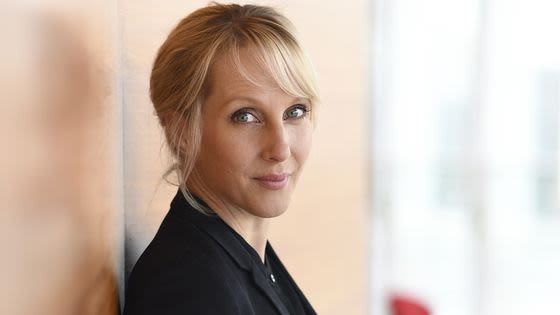
Swedish-born Sofi Jeannin is renowned for her clear and succinct technique and formidable repertoire knowledge. She has established herself as one of the most respected choral specialists around today.
She is currently Chief Conductor of the BBC Singers (since 2018) and Music Director of La Maîtrise de Radio France (since 2008), having previously been Music Director of the Choeur de Radio France. Through her association with the latter, she has worked with leading figures such as Gustavo Dudamel, Bernard Haitink and Christoph Eschenbach.
During her time with La Maîtrise de Radio France she has commissioned many new works, collaborating with composers such as Kaija Saariaho, Peter Eötvös, John Adams and Thierry Escaich, and has given regular broadcasts on France Musique. She has also conducted regularly at the St Denis Festival.
Recent and forthcoming highlights with the BBC Singers include appearances at the BBC Proms; a collaboration with the Academy of Ancient Music and South Asian dance company Akademi juxtaposing the dances of Rameau with classical and contemporary Indian dance; Poulenc’s Figure humaine with jazz interpolations and Fauré’s Requiem alongside music by Bach, Isabella Leonarda and Reena Esmail at Milton Court Concert Hall in London; and Betsy Jolas’s Concerto-Fantaisie (with the pianist Nicolas Hodges) and Schnittke’s Choir Concerto.
She is also in demand as a guest conductor, with recent and future highlights including appearances with the Hallé, New Japan and Royal Liverpool Philharmonic orchestras, Norrköping and Singapore Symphony orchestras and Auckland Philharmonia.
Sofi Jeannin studied conducting and singing at the Stockholm Royal College of Music, the Nice Conservatoire and then at London’s Royal College of Music with Paul Spicer.
Her education and outreach work has taken her to Kinshasa, Congo, and she has been involved in Greece’s El Sistema since 2017. In addition, she regularly gives workshops and masterclasses around the world.
Deryck Webb tenor

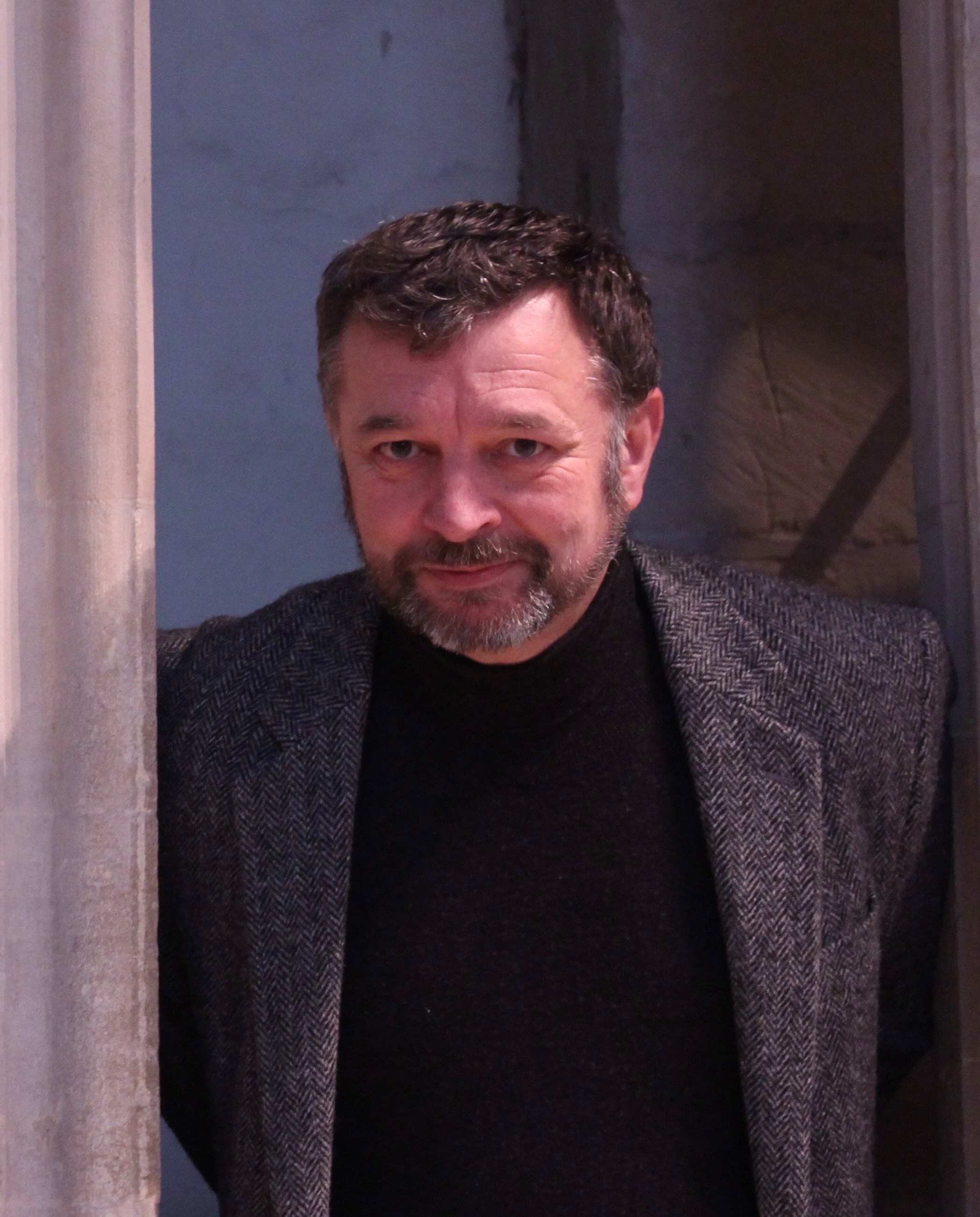
Deryck Webb was born in West Wales. His earliest experiences as a young adult singer were with the John S. Davies Singers and Côr Dyfed (with which he made his BBC radio debut as the Messenger in a performance of Handel’s Samson conducted by Roger Norrington). He studied at what is now the Royal Birmingham Conservatoire, where he was a member of the Opera School, which led him to become a member of the English National Opera. There he made his solo operatic debut as the Rooster in David Pountney’s production of Janáček’s TheCunning Little Vixen, conducted by Charles Mackerras.
He left the company in 1992 to continue his career in Europe, working with William Christie and Les Arts Florissants and pursuing a varied career as singer, teacher and conductor. He returned to the UK in 2013 and now serves as a lay clerk at Gloucester Cathedral under the direction of Adrian Partington.
Roland George tenor

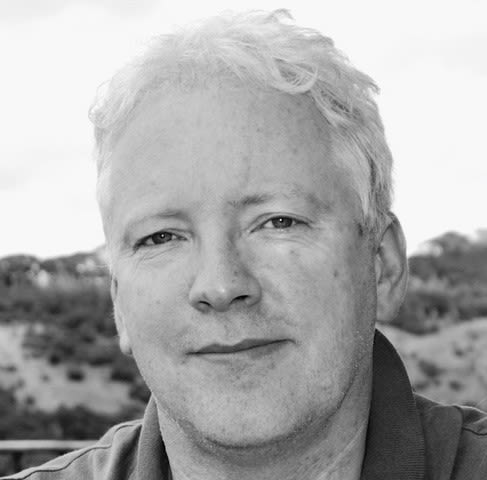
Roland George was raised in the Rhondda and began singing at an early age with his sister, the folk singer Siwsann George. He studied singing with Paul Deegan at the Royal Irish Academy of Music and was a member of the RTÉ Chamber Choir.
On stage he has sung principal roles in works such as Gilbert & Sullivan’s Pirates of Penzance, Iolanthe, The Mikado and The Gondoliers; Wallace’s Maritana; Sondheim’s Follies; and Bock’s Fiddler on the Roof. His concert performances include Messiah, Haydn’s Theresienmesse and Bach’s St John Passion and Magnificat. He has also broadcast on radio and television.
He sings regularly with a number of choral groups, including BBC National Chorus of Wales, the John S. Davies Singers and CÔR, recently appearing with the last of these in a performance of Tosca at the Abu Dhabi Festival with Sir Bryn Terfel.
BBC National Chorus of Wales
BBC National Chorus of Wales is one of the leading mixed choruses in the UK and, while preserving its amateur status, works to the highest professional standards under Artistic Director, Adrian Partington.
Based at BBC Hoddinott Hall in Cardiff Bay, the chorus, formed in 1983, works regularly alongside BBC National Orchestra of Wales, as well as performing concerts in its own right. It is made up of over 150 singers: a mix of amateur choristers alongside students from both the Royal Welsh College of Music & Drama and Cardiff University.
Recent highlights include a six-day tour to Rennes for four performances of Mozart’s Requiem with the Orchestre Symphonique de Bretagne, a much-delayed performance of Bach’s St Matthew Passion with Harry Bicket and annual engagements at the BBC Proms, with recent appearances including Vaughan Williams’s A Sea Symphony with Andrew Manze, Mozart’s Requiem from memory with Nathalie Stutzmann and Mahler’s Eighth Symphony under former BBC NOW Principal Conductor Thomas Søndergård.
This season sees the chorus perform Fauré’s Requiem and Messiaen’s O sacrum convivium under Ludovic Morlot, Haydn’s ‘Nelson’ Mass under Christian Curnyn and Stanford’s Elegiac Ode and Te Deum under Adrian Partington.
The chorus is committed to promoting Welsh and contemporary music and in 2016 gave the first revival of Grace Williams’s Missa Cambrensis, 45 years after its premiere. It has premiered works by a wide range of composers, including a special performance of Kate Whitley’s Speak Out, setting the words of Malala Yousafzai’s 2013 UN speech.
The chorus can be heard on BBC Radio 3, BBC Radio Wales and BBC Radio Cymru, and recently featured in Paul Mealor’s soundtrack for BBC Wales’s Wonders of the Celtic Deep.
Soprano 1
Elizabeth Aitken
Jessica Baber
Emma Davidson
Madeline Eaton
Bethan M. Evans
Sally Glanfield
Sarah Jane Griffiths
Claire Hardy
Imogen Hollins
Vanessa John-Hall
Rebecca Jolliffe
Lucie Jones
Kizzy Lumley-Edwards
Joanna Osborn
Maisie O’Shea
Elizabeth Philips
Angharad Phillips
Katherine Reid
Olivia Stacey
Ellen Steward
Morgan Summers
Helen Thomas
Hannah Willman
Soprano 2
Natalie Abad Merritt
Kate Bidwell
Denise Cook
Rhiannon Humphreys
Mags Lake
Elizabeth Linney
Rosanna Lowe
Devon Macadam- Sutton
Niamh Pragnell Toal
Marie Quemerais
Louisa Ridge
Chloe Riordan
Melanie Taylor
Hannah Williams
Katherine Woolley
Alto 1
Ceri-Ann Absalom
Atiyeh Dast Afkan
Alison Davies
Nicole Dickie
Giselle Dugdale
Glesni Edwards
Rachel Farebrother
Kathrin Hammer
Naomi Hitchings
Emilia Hubbard
Rhian-Carys Jones
Livia Malkin
Elizabeth Metcalf
Shanta Miller
Cristina Negoescu
Sara Peacock
Kate Reynolds
Amy Roberts
Esyllt Thomas
Emma Thorpe
Vicki Westwell
Alto 2
Heledd Evans
Annette Hecht
Yvonne Higginbottom
Rhi Humphreys
Mattina Keith
Sian Schutz
Julie Wilcox
Sarah Willmott
Tenor 1
Keith Davies
Philip Holtam
Orlando Vas
Deryck Webb
Nicholas Willmott
Tenor 2
Aidan Atkinson
Michael Ennis
Roland George
Richard Shearman
Richard Wilcox
Michael Willmott
Bass 1
Peter Cooke
David Davies
John Davies
Billy Donaghy
Rafael Grigoletto
David Hopkins
Geraint Jones
Nathan Luck
Lucas Maunder
Ramzy Mechergui
Ben Pinnow
Jez Piper
David Stephens
Allan Waters
Daniel Williams
Bass 2
Stuart Hogg
Harry Matthews
Joseff Morris
Gareth Nixon
Mike Osborn
The list of singers was correct at the time of publication
BBC National Orchestra of Wales
For over 90 years, BBC National Orchestra of Wales has played an integral part in the cultural landscape of Wales, occupying a distinctive role as both broadcast and national symphony orchestra. Part of BBC Wales and supported by the Arts Council of Wales, it has a busy schedule of live concerts throughout Wales and the rest of the UK. The orchestra is an ambassador of Welsh music and champions the works of contemporary composers.
It performs annually at the BBC Proms and biennially at the BBC Cardiff Singer of the World competition, and can be heard regularly across the BBC: on Radio 3, Radio Wales and Radio Cymru, as well as providing the soundtracks for some of your favourite television programmes.
Highlights of this season include the Elemental Explorations concerts in Brecon and Newport with Nil Venditti, Disney’s Fantasia in concert, Britten and Elgar with the orchestra’s much-loved Conductor Laureate Tadaaki Otaka, an all-new Gaming concert with gaming music legend Eímear Noone and a CoLaboratory concert with the sensational cellist Abel Selaocoe.
Alongside its busy schedule of live concerts, BBC NOW works closely with schools and music organisations throughout Wales, regularly delivering workshops, side-by-side performances and young composer initiatives to inspire and encourage the next generation of performers, composers and arts leaders and make music accessible to all. To find out more visit bbc.co.uk/bbcnow
Patron
HM King Charles III KG KT PC GCB
Principal Conductor
Ryan Bancroft
Conductor Laureate
Tadaaki Otaka CBE
Composer-in-Association
Gavin Higgins
Composer Affiliate
Sarah Lianne Lewis
First Violins
Nick Whiting leader
Martin Gwilym- Jones sub-leader
Gwenllian Hâf MacDonald
Terry Porteus
Juan Gonzalez
Ruth Heney
Carmel Barber
Anna Cleworth
Kerry Gordon- Smith
Gary George-Veale
Zanete Uskane
Amy Fletcher
Second Violins
Anna Smith *
Emre Engin
Ros Butler
Sheila Smith
Vickie Ringguth
Joseph Williams
Michael Topping
Katherine Miller
Beverley Wescott
Sellena Leony
Barbara Zdziarska
Jane Sinclair
Violas
Rebecca Jones *
Tetsuumi Nagata
Peter Taylor
Catherine Palmer
Laura Sinnerton
Ania Leadbeater
Robert Gibbons
Sara Sheppard
Cameron Campbell
Mirka Hoppari
Cellos
Benjamin Hughes ‡
Keith Hewitt #
Raphael Lang
Sandy Bartai
Alistair Howes
Rachel Ford
Carolyn Hewitt
Kathryn Graham
Double Basses
Lynda Houghton ‡
Christopher Wescott
Claire Whitson
Richard Gibbons
David F. C. Johnson
Imogen Fernando
Flutes
Matthew Featherstone *
Liz May
Jack Welch
Leila Marshall
Fiona Slominska
Piccolo
Fiona Slominska
Oboes
Steve Hudson *
Amy McKean
Alec Harmon
Felicity Cowell
Sarah-Jayne Porsmoguer
Cor Anglais
Sarah-Jayne Porsmoguer †
Clarinets
Peter Sparks ‡
Emily Wilson
Lenny Sayers
Bass Clarinet
Lenny Sayers †
Bassoons
David Hubbard ‡
Alanna Pennar- McFarlane
Chris Vale
David Buckland
Contra-Bassoon
David Buckland †
Horns
Tim Thorpe *
Dave Ransom
Neil Shewan †
William Haskins
Tom Taffinder
Trumpets
Ben Jarvis ‡
Robert Samuel
Gabriel Diaz
Giovanni Re
Maya Ross
Trombones
Donal Bannister *
David Roode
Bethany Peck
Bass Trombone
Darren Smith †
Tuba
Daniel Trodden †
Timpani
Rhys Matthews
Percussion
Mark Walker †
Andrea Porter
Harps
Valerie Aldrich-Smith †
Marged Hall
Pianos
Catherine Roe Williams
Chris Williams
Celesta
Catherine Roe Williams
* Section Principal
† Principal
‡ Guest Principal
# Assistant Principal
The list of players was correct at the time of publication
Director Lisa Tregale +
Orchestra Manager Zoe Poyser +
Assistant Orchestra Manager Vicky James **
Orchestra Administrator Nick Olsen
Orchestra Coordinator, Operations Kevin Myers
Business Coordinator Caryl Evans
Head of Artistic Production Matthew Wood
Artists and Projects Manager Eleanor Phillips
Orchestra Librarian Eugene Monteith **
Producer Mike Sims
Broadcast Assistant Jacob Perkins
Head of Marketing and Audiences Sassy Hicks
Marketing Coordinator Amy Campbell +
Digital Producer Yusef Bastawy
Social Media Coordinator Harriet Baugh
Education Producers Beatrice Carey, Rhonwen Jones **
Audio Supervisors Simon Smith, Andrew Smillie
Production Business Manager Lisa Blofeld
Stage and Technical Manager Steven Brown
Assistant Stage and Technical Manager Dave Rees
+ Green Team member
** Diversity & Inclusion Forum