
Antony Hermus Conducts …
Friday 22/9/23, 7.00pm
BBC Hoddinott Hall, Cardiff
Saturday 23/9/23, 3.00pm
Hafren, Newtown


Johan Wagenaar
Overture ‘Cyrano de Bergerac’ 14’
Wolfgang Amadeus Mozart
Oboe Concerto 21’
INTERVAL: 20 minutes
Jean Sibelius
Symphony No. 2 43’
Steven Hudson oboe
Antony Hermusconductor


The concert in Cardiff is being recorded by BBC Radio 3 for future broadcast inAfternoon Concert.
Introduction
A warm welcome to today’s concert, in which BBC National Orchestra of Wales is conducted by Antony Hermus. We begin with music by his compatriot, Dutch composer Johan Wagenaar, whose stirring Cyrano de Bergerac overture brings alive the deeds of the 17th-century hero from which it takes its name.
Mozart wrote only one oboe concerto, but he shows an innate understanding of the instrument in a piece that is by turns playful and profoundly lyrical. Stepping into the limelight today is Steven Hudson, BBC NOW’s Principal Oboe.
To end, a symphonic masterpiece, Sibelius’s Second. He wrote much of it in Italy, where he was staying to escape the bleak Finnish winter. Despite that, the work has an abiding sense of brooding unease, with little sunshine on display until its closing moments, which are all the more potent for being hard-won.
Enjoy!
Please respect your fellow audience members and those listening at home. Turn off all mobile phones and electronic devices during the performance. Photography and recording are not permitted.
Johan Wagenaar (1862–1941)
Overture ‘Cyrano de Bergerac’ (1905)

Although the composer, organist and teacher Johan Wagenaar had a successful career in his native Netherlands, he never got over the sting of being born out of wedlock – hardly an issue these days, but a major social stigma in the late 19th century. Wagenaar’s wealthy upper-class father never married his far more socially humble mother. While he did support and encourage his clearly very talented son, it seems that, for Johan, this was never quite enough.
Was that one of the things that drew Wagenaar to Edmond Rostand’s play Cyrano de Bergerac? Though its hero Cyrano is a nobleman, a brave soldier and a gifted poet and musician, his bizarrely huge nose makes him insecure socially, and he convinces himself that no woman will ever love him, which leads to all sorts of tragi-comic misadventures. And yet Wagenaar’s Cyrano de Bergerac overture (1905) is far stronger on comedic exuberance than on romantic pathos. Though he had little sympathy for the languishing, erotically charged melancholy of his great near-namesake Richard Wagner, Wagenaar was clearly more impressed by his near-contemporary Richard Strauss. The opening of the Cyrano overture has the same irrepressible sense of setting out on an adventure as Strauss’s tone-poem Don Juan. And, where the Strauss ends with a bleak vision of the great seducer’s empty heart, Wagenaar’s hero goes from strength to strength, in sections headed ‘Rejoicing’, ‘Strength of Character’, ‘Cheerfulness’, ‘Humour’ and ‘Satire’. There are more reflective episodes, but this Cyrano has little time for lachrymose brooding, and there’s no foreshadowing of the play’s tragic ending. The will to live life to the full is victorious at the end.
Programme note © Stephen Johnson
Wolfgang Amadeus Mozart (1756–91)
Oboe Concerto in C major, K314 (1777)

1 Allegro aperto
2 Adagio non troppo
3 Rondo: Allegretto
Steven Hudson oboe
Although Mozart was principally associated as a performer with the piano and the violin, he maintained a lifelong interest in writing for woodwind instruments. As well as incorporating them into his orchestral textures in innovative and pioneering ways that profoundly influenced Beethoven and the Romantics, he composed at least one concerto – and much chamber music – for each of the principal wind instruments, always managing both to challenge and to flatter his soloists. His first woodwind concerto was the alternately songful and whimsical Bassoon Concerto, K191 of 1774, while the last and greatest is the blissful Clarinet Concerto, K622, completed during the final months of his short life. In between came concertos for oboe and for flute, as well as no fewer than four for horn.
The composition of the Oboe Concerto came about in summer 1777 following the arrival in Salzburg of an Italian oboist, one Giuseppe Ferlendis (1755–1810), who nevertheless left the court orchestra a little over a year later. Mozart’s father Leopold conveyed the news of his departure in a letter of June 1778, noting that ‘during the last two months, whenever Ferlendis played a concerto, the Archbishop had been in the habit of giving him one or two ducats. Moreover, he was the favourite in the orchestra.’ Mozart remained fond of his concerto and later, in Mannheim, offered it to the virtuoso oboist Friedrich Ramm (1741–1813), who performed it widely; the composer reported to his father back in Salzburg that Ramm ‘plays very well and has a delightful pure tone’.
The Oboe Concerto – which was later transcribed for flute, up a tone in D rather than C major – is cast in the traditional three movements. The opening Allegro aperto (‘open’) allows the oboist to show off his or her dexterity and lyricism, while the central Adagio is a sustained aria exploiting the player’s breath control and tonal quality. The soloist kicks off the playful closing Allegretto, a march-like Rondo offering a mix of poise, agility and skill.
Programme note © David Threasher
INTERVAL: 20 minutes
Jean Sibelius (1865–1957)
Symphony No. 2 in D major, Op. 43 (1901–2, rev. 1903)

1 Allegretto
2 Tempo andante, ma rubato
3 Vivacissimo – Lento e soave –
4 Finale: Allegro moderato
When things got bad for Sibelius in Finland, the composer would often make for Italy – either alone or with his family. In 1901, this time with his family in tow, Sibelius escaped the Finnish winter in Rapallo, a small town on the north-west coast of Italy, not far from Genoa.
Sibelius borrowed a room surrounded by ‘magnolia, cypresses, vine, palm trees and a manifold variety of flowers’. In this Mediterranean setting he was reminded of the legend of Don Juan, and began to sketch a symphonic poem on the subject of the legendary philanderer.
Despite his idyllic surroundings, Sibelius was in crisis. His daughter Ruth was recovering from a dangerous illness, while Finland’s journey towards freedom had suffered yet another blow. The Russians had begun the process of incorporating the Finnish army into their own, crippling Finland’s autonomy.
Back home in May 1901, Sibelius resumed work on the piece he’d conceived amid the flowers of Rapallo – now a symphony without a narrative, but still cast in the bright key of D major.
By the following spring, the symphony was finished. Sibelius conducted four performances of the work in Helsinki, giving the premiere on 8 March. His colleague Robert Kajanus concluded that the work was an ode to Finnish nationalism – a stirring hymn to bolster the widespread programme of passive resistance. According to Sibelius, though, Kajanus was way off the mark. The composer’s annotations reveal rather more personal struggles. The second theme of the second movement was apparently inspired by Ruth’s recovery. The more subdued, lamenting theme of the final movement commemorated Elli Järnefelt, Sibelius’s sister-in-law, who had recently committed suicide.
In more abstract terms, the piece consolidates techniques that were fast becoming Sibelian hallmarks: his use of looping and layering patterns in the strings, his fondness for stepwise melodies and the overall coherence of his themes, which relate naturally to one another as if they were tributaries of the same river. We hear that in the opening movement, which is controlled entirely by the three adjacent pitches (F sharp–G–A) heard right at the start.
The residue of the Don Juan project is felt amid the conflicts of the second movement. Sibelius pits a theme he called ‘death’ (first heard on bassoons playing an octave apart) against one he called ‘Christus’ (the Ruth theme, which emerges from jagged strings).
The third movement is a stormy dance that works its way back to the three adjacent notes that opened the piece.
From here, the symphony slips into its final movement with the mustering of a heroic tune dressed first in cautious harmonies and then in brilliant, triumphant ones. The tune, again born of those three adjacent notes, lightens the dark shadows of the troubling Elli Järnefelt theme to suggest the blossoming of new life.
Programme note © Andrew Mellor
Help Us Improve Our Online Programmes.
Please take this 5-minute survey and let us know what you think of these notes.
Programme Survey
You may also like:
CoLaboratory: Fiona Monbet
Thursday 19/10/23, 7.30pm
BBC Hoddinott Hall, Cardiff
Ibert Divertissement
Satie La belle excentrique
Tailleferre Petite Suite
Milhaud Le boeuf sur le toit
Bernstein Three Dance Episodes from ‘On the Town’
Monbet Suite for Orchestra and Jazz Trio world premiere
Fiona Monbetviolin/director
Zacharie Abrahamdouble bass
Auxane Cartignypiano
Philippe Maniezdrum kit
VIBRANT | INTIMATE | ENTRANCING
Fusing American jazz and traditional folk with her trademark French flair, violinist and composer Fiona Monbet joins BBC NOW in our first CoLaboratory of the 2023/24 season.
Her programme opens with a set of pieces inspired by French burlesque of the 1920s and 1930s, whose composers – Jacques Ibert, Erik Satie, Germaine Tailleferre and Darius Milhaud – all had one thing in common: alongside their more traditional compositions, they were all great early film music writers, so it is no wonder their music is so vivid and pleasantly picturesque.
For the second half we leave France and voyage to the jazz-drenched streets of New York and to another brilliant film composer, Leonard Bernstein, with his ‘Three Dance Episodes’ from On the Town, before the world premiere of Fiona Monbet’s new work for violin, double bass, piano, drum kit and orchestra.
With BBC Hoddinott Hall set up in cabaret style, bring your drink in and enjoy this concert up close and personal.
Scheherazade
Saturday 11/11/23, 7.30pm
St David’s Hall, Cardiff
Dukas The Sorcerer’s Apprentice
Grieg Piano Concerto
Rimsky-Korsakov Scheherazade
Lionel Bringuierconductor
Zee Zeepiano
MAGICAL | CAPTIVATING | DAZZLING
This concert is imbued with an air of magic, kicking off with The Sorcerer’s Apprentice byDukas. Remarkable musical storytelling depicts an enchanted broom and the chaos that ensues. Truly spellbinding!
From the unmistakable introduction to the original quality of its writing, it’s easy to understand why Grieg’s Piano Concerto is considered such a masterpiece; with its dazzling virtuosity and strong Norwegian identity, the composer’s affinity with folk song is ever present. Then Rimsky-Korsakov takes up the mantle with music of seduction and adventure in Scheherazade,his version of A Thousand and One Nights. This dazzlingly opulent work is full of colour, rhythmic vitality and flavours of the Orient.
Dvořák 8 with Ryan Bancroft
Thursday 30/11/23, 7.30pm
Aberystwyth Arts Centre
Friday 1/12/23, 7.30pm
Prichard-Jones Hall, Bangor
Hannah Kendall TheSpark Catchers
Glazunov Violin Concerto
Dvořák Symphony No. 8
Ryan Bancroftconductor
Benjamin Beilmanviolin
ENERGETIC | ROUSING | DYNAMIC
Principal Conductor Ryan Bancroft joins us on the road again this autumn, kicking off the programme with Hannah Kendall’s The Spark Catchers. It is based on Lemn Sissay’s poem of the same name and shares its dynamism in music that ranges from liveliness and rhythmic drive to brooding melodiousness and gleaming delicacy.
Glazunov’s Violin Concerto, although written over a century before Hannah Kendall’s work, possesses a similar lyricism and rhythmic liveliness. It combines soloistic virtuosity and deep emotion, with the contrasts in moods and tempos between the three movements creating a perfectly balanced whole. Dvořák reflects sheer joy of the natural world in his rhythmically buoyant and melodious Eighth Symphony. Low, dark-hued chorales give way to heroic woodwind solos, while melancholic eloquence is succeeded by dance-tinged joy in this rousingly dramatic symphony.
Jurassic Park in Concert
Wednesday 13/12/23, 7.30pm
St David’s Hall, Cardiff
Thursday 14/12/23, 7.30pm
Brangwyn Hall, Swansea
Benjamin Popeconductor
MULTIGENERATOINAL | NOSTALGIC | THRILLING
Who can forget the earth quaking, thunderous plod of a T-rex, or the terrifying sounds of a velociraptor? Join BBC NOW this December for Jurassic Park live in concert.
Follow the story of Dr Alan Grant and Ellie Sattler as they battle for survival on Isla Nublar when the theme park’s newly revived dinosaurs escape their enclosures and seek to rule the earth once more. Featuring stunning visual imagery and ground-breaking special effects, this action-packed adventure may not be your typical Christmas concert, but with BBC National Orchestra of Wales performing John William’s epic score live to film, it is a more than fitting way to celebrate the 30th anniversary of the iconic film!
Biographies
Antony Hermusconductor

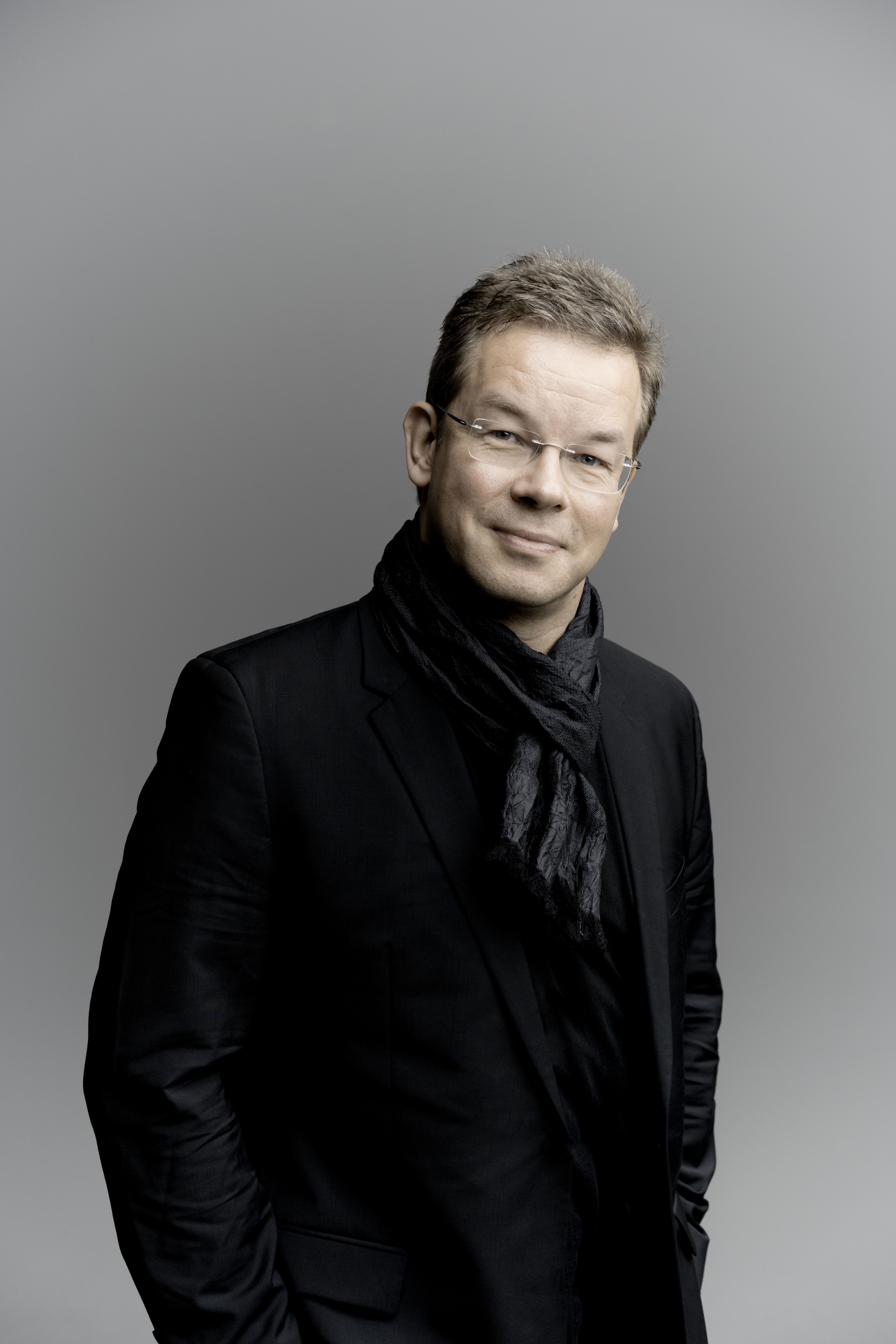
Photo: Marco Borggreve
Photo: Marco Borggreve
Antony Hermus is Chief Conductor of the Belgian National Orchestra and conducts the orchestra in its Brussels home, BOZAR, as well as on tour internationally. He also holds the posts of Principal Guest Conductor of the North Netherlands Orchestra and Principal Guest Conductor of Opera North. He is a leading figure in Dutch musical life, conducting all its major orchestras, including the Royal Concertgebouw, Netherlands Radio and Rotterdam Philharmonic orchestras and the Residentie Orkest. Recent highlights include Ariadne auf Naxos with Opera North and Mahler’s Symphonies Nos. 9 and 10 in Holland.
Contemporary music is an important strand of his activities and he enjoys a particularly close relationship with Unsuk Chin, whose works he has conducted in concerts with the Helsinki and Radio France Philharmonic orchestras and Swedish Radio Symphony Orchestra.
He is in demand as a guest conductor, working regularly with orchestras such as the Royal Philharmonic, Orchestre National de Lyon and BBC Scottish and Danish National Symphony orchestras. Last season he made his North American debut, conducting the Oregon Symphony Orchestra.
He has worked in opera houses across Europe, notably in Stuttgart, Strasbourg, Gothenburg, Berlin and Essen. He was Music Director in Dessau (2009–15), ending his tenure with his first Ring cycle and promotion to Honorary Conductor.
His discography includes works by Auber, Diepenbrock, Hausegger, Klughardt and Wagenaar.
Pushing the boundaries of traditional concert programming has led him to projects such as Ligeti at the Lowlands rock festival, as well as initiating the award-winning Scratch concerts and giving the first performances in Germany of Tweetfonie (52 world premieres in a day) during his residency at the International Kurt Weill Festival.
Antony Hermus started playing the piano at the age of six, studying the instrument with Jacques de Tiège at the Brabant Conservatory and conducting with Jac van Steen and Georg Fritzsch. He is a visiting professor at the Amsterdam Conservatory and Artistic Advisor of the National Youth Orchestra of the Netherlands.
Steven Hudson oboe

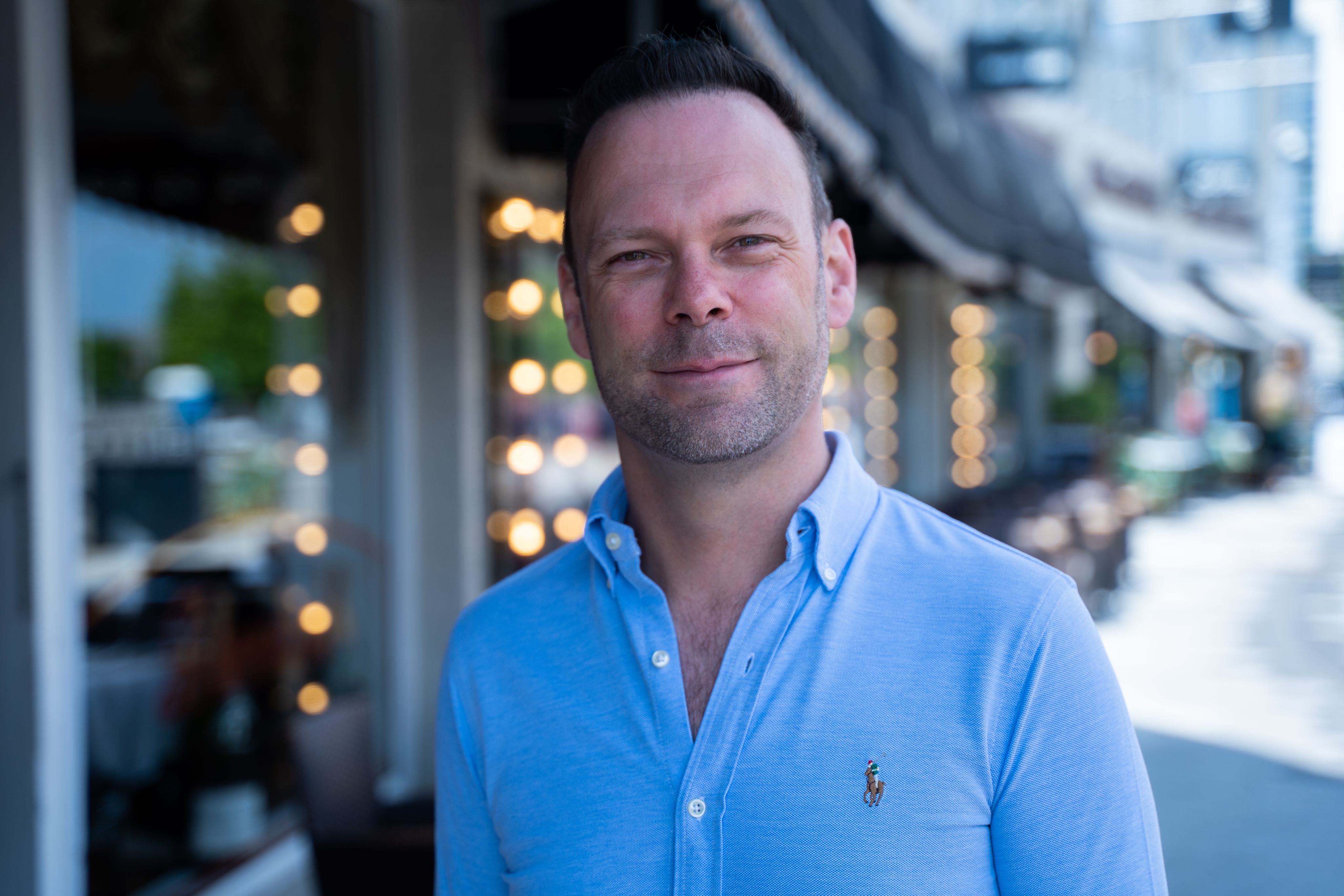
Steven Hudson is Section Principal Oboe of BBC National Orchestra of Wales and a professor of oboe at both the Guildhall School of Music & Drama and Royal Welsh College of Music & Drama.
He was born and raised in North Yorkshire and began learning the oboe at 16. He went on to study at the Guildhall with Gordon Hunt and Richard Simpson, before further studies at the Paris Conservatoire, Royal Academy of Music and Royal College of Music. During this time he was also a member of the Verbier Festival Orchestra.
He was appointed Section Leader Oboe of Royal Northern Sinfonia, where highlights included performances of Vaughan Williams’s Oboe Concerto, a tour of Brazil as soloist in Albinoni’s Oboe Concerto in D minor and dressing up as a bird in the Ross Edwards oboe concerto Bird Spirit Dreaming.
He is active as a chamber musician, and has given broadcasts, recitals and chamber music performances at the BBC Proms, in France, Japan, China and South America. He made regular appearances at the late Lars Vogt’s Spannungen Chamber Music Festival in Germany. He is also in demand as a guest principal with many of the UK’s major orchestras.
Aside from his teaching commitments he has given classes at the Royal Academy of Music, Royal College of Music, Royal Conservatoire of Scotland and Sage Gateshead. In 2017 he was made an Associate of the Royal Academy of Music.
BBC National Orchestra of Wales
For over 90 years, BBC National Orchestra of Wales has played an integral part in the cultural landscape of Wales, occupying a distinctive role as both broadcast and national symphony orchestra. Part of BBC Wales and supported by the Arts Council of Wales, it has a busy schedule of live concerts throughout Wales, the rest of the UK and the world.
The orchestra is an ambassador of Welsh music and champions contemporary composers and musicians; its concerts can be heard regularly across the BBC – on Radio 3, Radio Wales and Radio Cymru.
BBC NOW works closely with schools and music organisations throughout Wales and regularly undertakes workshops, side-by-side performances and young composer initiatives to inspire and encourage the next generation of performers, composers and arts leaders.
The orchestra is based at BBC Hoddinott Hall in Cardiff Bay, where its purpose-built studio not only provides the perfect concert space, but also acts as a broadcast centre from where its live-streamed concerts and pre-recorded content are presented as part of its popular Digital Concert Series.
For further information please visit the BBC National Orchestra and Chorus of Wales's website: bbc.co.uk/now
Patron
HM King Charles III KG KT PC GCB
Principal Conductor
Ryan Bancroft
Conductor Laureate
Tadaaki Otaka CBE
Composer-in-Association
Gavin Higgins
Composer Affiliate
Sarah Lianne Lewis
First Violins
Martin Gwilym-Jones leader
Shana Douglas
Terry Porteus
Suzanne Casey
Juan Gonzalez
Ruth Heney
Emilie Godden
Laura Embrey
Carmel Barber
Anna Cleworth
Amy Fletcher
Barbara Zdziarska
Anna Szabo **
Gary George-Veale **
SecondViolins
Jens Lynen ‡
Sheila Smith
Roussanka Karatchivieva
Lydia Caines
Joseph Williams
Michael Topping
Vickie Ringguth
Katherine Miller
Ilze Abola
Beverley Wescott
Elizabeth Whittam **
Catherine Fox **
Violas
Rebecca Jones *
Alex Thorndike #
Peter Taylor
Laura Sinnerton
Catherine Palmer
Robert Gibbons
Abby Bowen
James Drummond
Carl Hill **
Lucy Theo **
Cellos
Tim Gill ‡
Keith Hewitt #
Raphael Lang
Sandy Bartai
Rachel Ford
Carolyn Hewitt
Alistair Howes
Katy Cox **
DoubleBasses
David Stark *
Christopher Wescott
Richard Gibbons **
Richard Lewis
Mike Chaffin
Alex Verster
Flutes
John Hall †
Lindsey Ellis
Gabriella Alberti
Piccolo
Lindsey Ellis †
Oboes
Amy McKean †
Anna Seaton
Clarinets
Tim Lines ‡
Lenny Sayers
Bassoons
Jarosław Augustyniak *
Alex Davidson
Horns
Tim Thorpe *
Meilyr Hughes
Neil Shewan †
Tom Findlay
John Davy
Trumpets
Ben Jarvis
Robert Samuel
Alexander Morgan
Trombones
Donal Bannister*
Cillian Ó Ceallacháin
Bass Trombone
Darren Smith †
Tuba
Daniel Trodden †
Timpani
James Bower ‡
Percussion
Phil Hughes ‡
* Section Principal
† Principal
‡ Guest Principal
# Assistant String Principal
** Hoddinott Hall concert only
The list of players was correct at the time of publication
Director Lisa Tregale
Orchestra Manager Vicky James
Assistant Orchestra Manager Nick Olsen
Orchestra Coordinator, Operations Kevin Myers
Business Coordinator Caryl Evans
Orchestra Administrator Eleanor Hall
Head of Artistic Production Matthew Wood
Artists and Projects Manager Eleanor Phillips
Orchestra Librarian Eugene Monteith **
Producer Mike Sims
Head of Marketing and Audiences Sassy Hicks
Marketing Coordinator Amy Campbell +
Digital Producer Yusef Bastawy
Social Media Coordinator Harriet Baugh
Education Producers Beatrice Carey, Rhonwen Jones **
Audio Supervisors Simon Smith, Andrew Smillie
Production Business Manager Lisa Blofeld
Stage and Technical Manager Steven Brown +
Assistant Stage and Technical Manager Josh Mead
BBC Wales Apprentices Analese Thomas-Strachan, Jordan Woodley
+ Green Team member
** Diversity & Inclusion Forum