
A London Afternoon – Grace Williams, Vaughan Williams & Britten
Wednesday 3 November 2021, 2.00pm

Benjamin Britten
Prelude and Fugue, Op. 29 9’
Grace Williams
Violin concerto 21’
INTERVAL: 20 minutes
Ralph Vaughan Williams
Symphony No. 5 39’
Madeleine Mitchell violin
BBC National Orchestra of Wales
Jamie Phillips conductor


The concert is being broadcast live on BBC Radio 3 and recorded for future broadcast on BBC Radio Cymru, after which it will be available to stream or download for 30 days via BBC Sounds, where you can also find podcasts and music mixes. Visit bbc.co.uk/now for more information on future performances.
Introduction
A warm welcome to BBC Hoddinott Hall for today’s concert of British music conducted by Jamie Phillips.
The three works on the programme were all written within a few years of each other. Britten’s Prelude and Fugue of 1943 was a 10th birthday present for the Boyd Neel String Orchestra, with the composer skilfully taking into account its depleted line-up in war-torn Britain, designing it for 18 virtuoso string players.
Grace Williams’s Violin Concerto (1950) explores the lyrical possibilities of the solo instrument; today’s soloist Madeleine Mitchell is a great advocate of Williams’s music, having previously recorded a disc of her chamber works.
Vaughan Williams’s Fifth Symphony, completed a year after the Violin Concerto we’ve just heard, is a work of profound depth and beauty.
Please respect your fellow audience members and those listening at home. Turn off all mobile phones and electronic devices during the performance. Photography and recording are not permitted.
Benjamin Britten (1913–76)
Prelude and Fugue, Op. 29 (1943)

Britten wrote his Prelude and Fugue as a short new celebratory piece to mark the 10th anniversary of the Boyd Neel String Orchestra, and the group duly gave the work’s premiere at London’s Wigmore Hall on 23 June 1943.
With the Second World War still raging, the Boyd Neel players were inevitably depleted in number – but 18 were mustered for the special concert and Britten typically made a virtue of this restriction by writing parts for each available performer!
The Prelude opens with an impassioned declamation in the upper strings and broadens into an eloquent yet troubled melody that has little to do with any sense of occasional celebration.
The Fugue is a veritable whirlwind of multiple voices in which each individual participant is briefly propelled to the forefront. This music has a real sense of exhilaration and of holding on by the seat of its pants. This energy is suddenly interrupted to allow for a reflective return of the opening before a final triumphant flourish.
Programme note © Geraint Lewis
Further Listening: Norwegian Chamber Orchestra/Iona Brown (Simax PSC1111)
Further Reading: Benjamin Britten: A Life in the Twentieth Century Paul Kildea (Penguin)
Grace Williams (1906–77)
Violin Concerto (1950)

1 Liricamente
2 Andante sostenuto –
3 Allegro con spirito
Madeleine Mitchell violin
Grace Williams’s Violin Concerto was premiered on 30 March 1950 by the Welsh violinist Granville Jones and the BBC Welsh Orchestra (which later became BBC NOW), conducted by Mansel Thomas. The concert was broadcast live on the BBC’s Welsh Home Service.
Williams had been based in London during the war but in 1947 she took the decision to return home to Barry. She took on a number of different musical jobs, and in 1949 became the first British female composer to write music for a feature film when she provided the score for Blue Scar.
The same year Williams told her friend Enid Parry that she longed to compose a Violin Concerto as a vehicle for the ‘lyricism that had been building up’ within her during previous months. That powerful impulse determined the shape of the piece. In contrast to the usual quick–slow–quick movement pattern, her concerto opens with a slow movement, which is followed by a central slow movement and a quick finale.
The opening movement takes the form of an extended rhapsody. There are episodes of yearning intensity – including the soloist’s cadenza – but it is the lyrical thread that prevails.
The Andante sostenuto is serene and contemplative. A phrase from the Welsh hymn tune Yr Hen Dderby is used as the movement’s point of departure, a tune Williams had used in her score for Blue Scar, although this particular sequence was edited out in the film’s final version. Soloist and orchestra incant, elaborate and develop aspects of the tune, conjuring an enchanting musical landscape.
The spell is broken by the Allegro finale, which follows without a break. It is dramatic in tone but also contains witty exchanges between soloist and orchestra, and a brilliant solo cadenza. Even in this brisk-paced movement, however, the overall lyrical ethos of the concerto is not entirely dispelled.
Programme note © Rhiannon Mathias
Further Reading:Lutyens, Maconchy, Williams and Twentieth-Century British Music: A Blest Trio of Sirens Rhiannon Mathias (Routledge)
INTERVAL: 20 minutes
Ralph Vaughan Williams (1872–1958)
Symphony No. 5 In D Major (1938–43, Rev. 1951)

1 Preludio: Moderato
2 Scherzo: Presto misterioso
3 Romanza: Lento
4 Passacaglia: Moderato
The premiere of Vaughan Williams’s Fifth Symphony, at the 1943 BBC Proms, came as a surprise for many. After the abrasive Fourth Symphony (1934) and the sombre choral work Dona nobis pacem (1936), there was some speculation as to whether Vaughan Williams had left the contemplative, folk-inflected language of the TallisFantasia and The Lark Ascending behind him. This new Vaughan Williams seemed to be less the nature visionary, creator of musical landscapes in the spirit of Constable, Turner or Samuel Palmer, and more the kind of artist who held a mirror up to increasingly troubled times. What the Fifth Symphony embodied, however, was not so much a return to the old ways as an enrichment and development of them. The beautifully evocative passages are there, but they acquire extra power through the way the composer expertly places them within a subtle and cogently worked-out symphonic argument; the experience of concentrating his thoughts in the Fourth Symphony had had a lasting, beneficial effect.
Almost the first thing we hear are soft horn calls; but, underneath, cellos and basses add a gently clashing tension. This ambiguity is worked through in a variety of ways and only finds its full resolution in the symphony’s serene ending.
A flowing, ghostly Scherzo follows, scored with great delicacy in its outer sections – though brass and timpani manage to suggest something more heavy-footed in the central Trio section. At the end the muted opening string figures disappear deliciously into a single pianissimo timpani stroke, like a candle being snuffed out.
Then comes the Romanza, the heart of the symphony. Some of the ideas of this movement stem from Vaughan Williams’s major operatic project The Pilgrim’s Progress (composed between 1925 and 1952). Vaughan Williams was no conventional believer but he turned repeatedly to religious themes in his music. Clearly he found some kind of transcendent meaning in John Bunyan’s famous tale of the Christian ‘Pilgrim’ and his spiritual journey, and he distils its essence movingly in this movement – offering it, perhaps, as a word of comfort and encouragement to a country then in the midst of war.
The finale is described as a Passacaglia – a movement built up over a constantly repeated theme, first presented here in the cellos. This eventually reaches a grand climax at which the symphony’s opening horn calls return, played by full orchestra in great waves of sound. As in the great visionary climax in the first movement, the splendour fades, but this time it is followed by radiant, tranquil music led by strings – one may be reminded of a choir singing an Elizabethan anthem in an English cathedral. From here on there is no more ambiguity. The serene final cadence comes as near to perfect peace as can be found in any 20th-century symphony.
Programme note © Stephen Johnson
Further Listening: BBC Symphony Orchestra/Martyn Brabbins (Hyperion CDA 68325)
Further Reading: Vaughan Williams: Composer, Radical, Patriot Keith Alldritt (Robert Hale),
Website: https://rvwsociety.com
Biographies
Jamie Phillips conductor

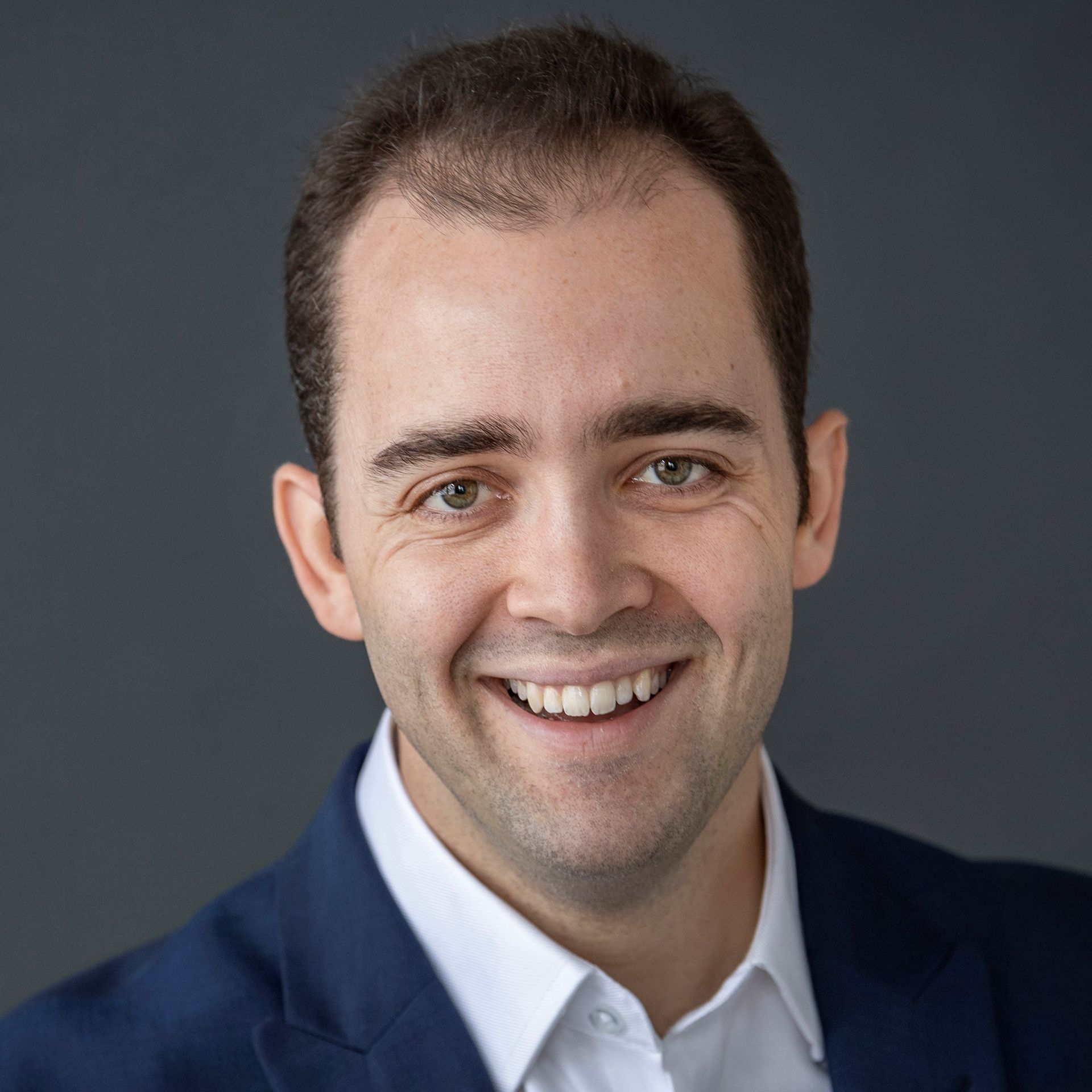
Photo: Sim Canetty-Clarke
Photo: Sim Canetty-Clarke
Jamie Phillips is in demand as a guest conductor and recently conducted the Philharmonia, Arnhem, London, Oslo, Royal and South Netherlands Philharmonic orchestras, Antwerp, Odense and Polish National Radio Symphony orchestras, Vienna Tonkünstler Orchestra, Lausanne and Munich Chamber orchestras, Camerata Salzburg and the Orchestre National d’Île-de-France.
He enjoys a close association with the Hallé: following his successful appointment as Assistant Conductor (aged 20), the orchestra created the title of Associate Conductor for him and he returns to conduct subscription concerts in May. Other highlights this season include engagements with the Bournemouth Symphony Orchestra, German Radio, North West German, Royal and Württemberg Philharmonic orchestras and the Glyndebourne Tour orchestra.
His repertoire ranges from the Baroque to the present day, and his discography includes works by Tarik O’Regan and Helen Grime; last year he released a disc of 11 new works inspired by Bach’s Goldberg Variations.
While at the Royal Northern College of Music, he was a semi-finalist in the 2011 Besançon Competition and came second in the 2012 Nestlé Salzburg Festival Young Conductors Award. In 2016 he received a Dudamel Fellowship from the Los Angeles Philharmonic.
Madeleine Mitchell violin
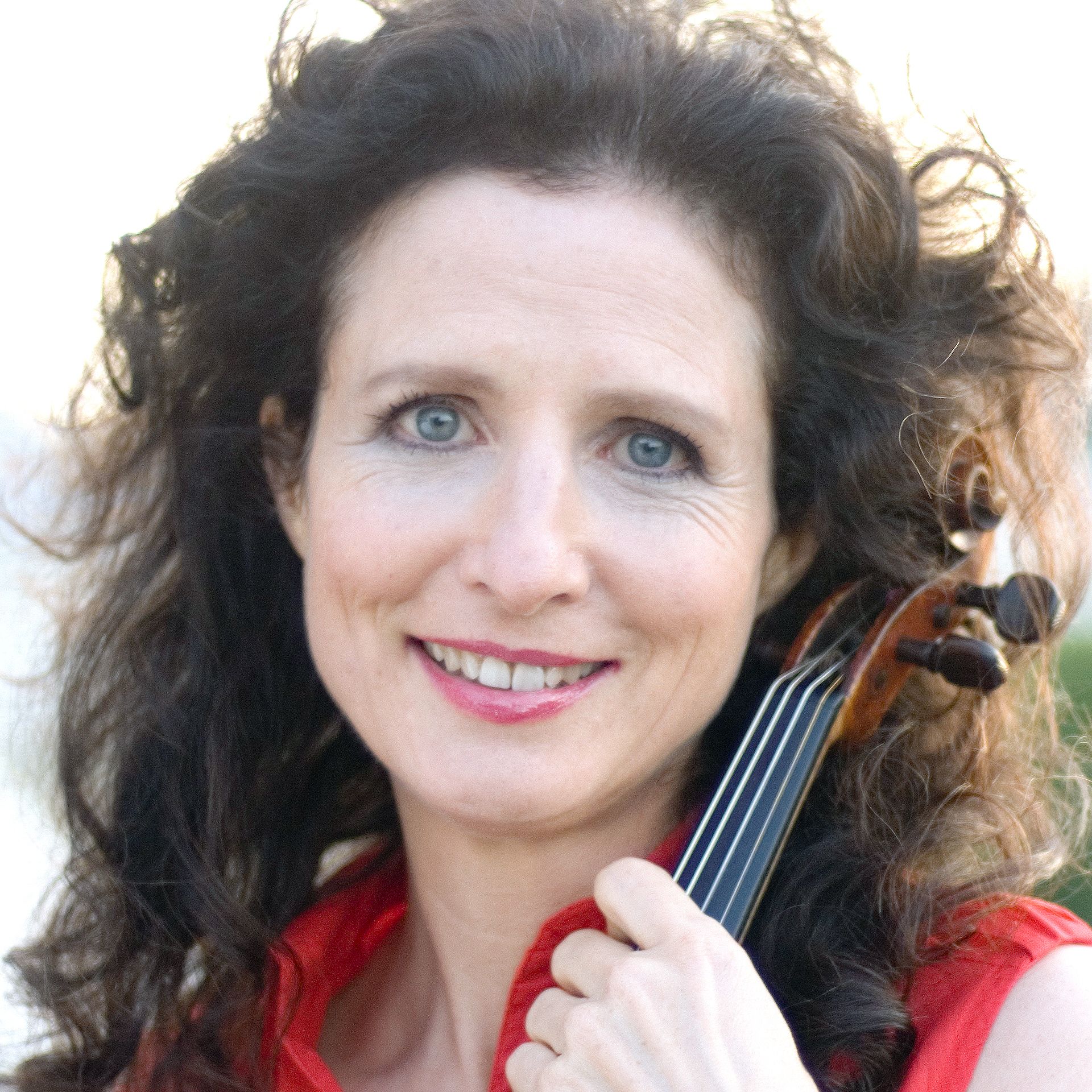
Madeleine Mitchell has appeared as a soloist and chamber musician in some 50 countries in a wide range of repertoire.
Major venues at which she has performed include Lincoln Center, New York, London’s Wigmore Hall and Southbank Centre, Seoul Centre for the Arts and Sydney Opera House. She has appeared with leading orchestras, including the Royal and St Petersburg Philharmonic orchestras, Czech Radio Symphony Orchestra and the BBC ensembles. Current and future highlights include a tour to Japan and a return to the USA.
Her acclaimed discography includes works written for her by composers such as Guto Puw, Sir James MacMillan and Howard Blake. She recently released a disc of Grace WiIliams’s chamber music, which has been warmly received.
In 1997 she devised the Red Violin festival under Yehudi Menuhin’s patronage, the first international celebration exploring the fiddle across the arts, which took place throughout Cardiff.
This year she received an award from the Royal Philharmonic Society’s Enterprise Fund.
BBC National Orchestra of Wales
For over 90 years, BBC National Orchestra of Wales has played an integral part in the cultural landscape of Wales, occupying a distinctive role as both broadcast and national symphony orchestra. Part of BBC Wales and supported by the Arts Council of Wales, it performs a busy schedule of live concerts throughout Wales, the rest of the UK and the world. The orchestra is an ambassador of Welsh music and champions contemporary composers and musicians.
The orchestra performs annually at the BBC Proms and biennially at the BBC Cardiff Singer of the World competition, and its concerts can be heard regularly across the BBC: on Radio 3, Radio Wales and Radio Cymru.
BBC NOW works closely with schools and music organisations throughout Wales and regularly undertakes workshops, side-by-side performances and young composer initiatives to inspire and encourage the next generation of performers, composers and arts leaders.
During the recent lockdowns, BBC NOW has continued to record and film behind closed doors at BBC Hoddinott Hall and has produced videos, soundtracks and weekly digital concerts that have been seen by 14 million people globally, including an extremely popular video of the Doctor Who soundtrack. Plans for the orchestra include live-streamed concerts and events, tours to different communities throughout Wales and education and community development schemes to include everyone in music-making. To find out more visit bbc.co.uk/bbcnow
Patron
HRH The Prince of Wales KG KT PC GCB
Principal Conductor
Ryan Bancroft
Conductor Laureate
Tadaaki Otaka CBE
Composer-in-Association
Gavin Higgins
Composer Affiliate
Sarah Lianne Lewis
First Violins
Lesley Hatfield leader
Martin Gwilym-Jones †
Terry Porteus
Suzanne Casey
Anna Cleworth
Carmel Barber
Robert Bird
Gary George-Veale
Anna Szabo
Richard Newington
Second Violins
Anna Smith *
Jane Sinclair #
Ros Butler
Sheila Smith +
Vickie Ringguth
Joseph Williams
Michael Topping
Katherine Miller
Beverley Wescott **
Sellena Leony
Violas
Rebecca Jones *
Peter Taylor
Ania Leadbeater
Robert Gibbons
Catherine Palmer
Laura Sinnerton
Cellos
Alice Neary *
Jessica Feaver **
Sandy Bartai
Carolyn Hewitt
Rachel Ford
Kathryn Graham
Double Basses
David Stark *
Ben Burnley
Christopher Wescott
Richard Gibbons
Flute
Matthew Featherstone *
Flute
Lindsey Ellis †
Oboe
Steve Hudson *
Oboe/Cor Anglais
Sarah-Jayne Porsmoguer †
Clarinets
Maura Marinucci ‡
Lenny Sayers + **
Bassoons
Jarosław Augustiniak
David Buckland
Horns
Tim Thorpe *
Meilyr Hughes
Neil Shewan †
William Haskins
Trumpets
Mark O’Keefe
Cai Isfryn
Trombones
Simon Baker ‡
Huw Evans
Bass Trombone
Darren Smith †
Timpani/Percussion
Rhys Matthews
Percussion
Mark Walker
Phil Hughes
Harp
Valerie Aldrich-Smith †
* Section Principal
† Principal
‡ Guest Principal
# Assistant Principal
The list of players was correct at the time of publication
Director Lisa Tregale +
Orchestra Manager Zoe Poyser +
Assistant Orchestra Manager Vicky James **
Orchestra Coordinator, Operations Kevin Myers
Orchestra Administrator Rhonwen Jones **
Head of Artistic Production Matthew Wood
Artists and Projects Manager Victoria Massocchi
Orchestra Librarian Eugene Monteith **
Producer Mike Sims
Broadcast Assistant Emily Preston **
Head of Marketing and Audiences Sassy Hicks
Marketing Coordinators Amy Campbell +, Caroline Richards **
Digital Producer Yusef Bastawy
Education Producer Beatrice Carey
Chorus Manager and Outreach Coordinator Osian Rowlands **
Audio Supervisors Andrew Smillie, Simon Smith
Production Business Manager Lisa Blofeld
+ Green Team member
** Diversity & Inclusion Forum