
BBC NOW – NOW!
Friday 26/1/24, 7.30pm
BBC Hoddinott Hall, Cardiff


Gavin Higgins
Sarabande BBC commission: world premiere c6’
Tan Dun
Three Muses in Video Game UK premiere 22’
INTERVAL: 20 minutes
Anna Whitcombe
And the Skies Became Vermillion 6’
Ross Edwards
Chorale and Ecstatic Dance UK premiere12’
Sir James MacMillan
Her tears fell with the dews at even UK premiere12’
Jordan de Souzaconductor
Jrgen van Rijen trombone


The concert is being recorded by BBC Radio 3 for future broadcast inAfternoon Concertand the New Music Show.
Introduction
Welcome to tonight’s concert, a celebration of the music of today, conducted by the exciting young Canadian Jordan de Souza, who is making his debut with BBC NOW.
We begin with a Sarabande by BBC NOW’s Composer-in-Association Gavin Higgins, in which he takes inspiration from the dance’s long history, but makes it all his own in its rhythmic fluidity and shifting colours.
Tan Dun draws together ancient and contemporary in a typically unorthodox way in his Three Muses in Video Game; this was inspired by the prodigious musicianship of trombonist Jörgen van Rijen, for whom the piece was written. Each movement is inspired by an ancient Chinese instrument but into the mix the composer brings his own take on video game music, and its constant changeability. Inspiration for Anna Whitcombe’s And the Skies Became Vermillion lies rather closer to home: a walk along the Pembrokeshire coast path.
There’s plenty of contrast in the two pieces that make up Australian Ross Edwards’s Chorale and Ecstatic Dance, which ranges from the meditative to the celebratory. To end, Sir James MacMillan offers in Her tears fell with the dews at even a meditation on grief, inspired by the words of Alfred, Lord Tennyson.
Enjoy!
Matthew Wood
Head of Artistic Production
Please respect your fellow audience members and those listening at home. Turn off all mobile phones and electronic devices during the performance. Photography and recording are not permitted.
Gavin Higgins (born 1983)
Sarabande(2020–22)
BBC commission: world premiere

Originally a fast, lascivious Spanish dance that was considered disreputable and even banned in Spain in 1538, the sarabande was later slowed down and incorporated into Baroque dance suites. Often found at the heart of the suite, or surrounded by lively courantes and gigues, the sarabande as we now know it is a slow, processional, courtly dance in binary (AB) form and triple metre that begins without an upbeat.
My Sarabande is generally in triple time – though my approach to its rhythmic structure is far more fluid: it does not start on an up-beat – in fact the ‘down-beat’ moves subtly throughout the piece; and the piece is broadly in binary form, though I add a short coda at the end.
The first part primarily features the string section – muted and played dolce espressivo – with the main theme of the piece heard in the opening bars: a simple motif of a rising minor sixth that falls a minor third (D–B flat–G).
The second part sees a series of florid woodwind solos – piccolo, oboe, flute, clarinet, cor anglais and, finally, bassoon and bass clarinet – that builds to an ecstatic climax for full orchestra, with brass double-tonguing ‘as fast as possible’.
The piece ends with a brief coda where the material from the opening is brought back – a mere shadow of the opening bars – this time played on harp harmonics with the strings played with the bow col legno tratto, ‘half wood and half hair’.
In many ways my Sarabande is not a sarabande at all, but rather a response to the structural parameters laid out above. In it, I have attempted to capture the stately nature of the Baroque version of the dance, but also – perhaps – some of the passion and sensuality of its original form.
Programme note © Gavin Higgins
Tan Dun (born 1957)
Three Muses in Video Game (2021)
UK premiere
1 Muse of Bili
2 Muse of Xiqin
3 Muse of Sheng
Jörgen van Rijen trombone
The ancient and the dazzlingly modern have long lived provocatively side by side in the music of Tan Dun, surely the most accomplished and prominent Chinese-born composer writing today. Raised in Hunan, and now based in New York, Tan has drawn heavily on the millennia-old music and rituals of his birth country across his many works for the concert hall and the opera house, bringing together traditional Chinese and Western instruments, as well as composing concertos for what he calls ‘organic instruments’ – paper, water, stone and ceramics. All of his historical references, however, are embedded within a musical language of such richness and complexity that it could only come from a 21st-century composer.
Tan Dun wrote his Three Muses in Video Game in 2021, specifically for Dutch trombonist Jörgen van Rijen (tonight’s soloist), whose playing and personality had inspired him after several encounters in the Netherlands and Shanghai. In the piece Tan’s historic inspirations come courtesy of three ancient Chinese instruments, which he saw depicted among the intricate stone carvings of the Mogao Caves in Dunhuang, northern China. The bili is a reed instrument a bit like an oboe; the xiqin is a forerunner of the better-known Chinese erhu, a two-stringed fiddle played vertically like a cello; and the sheng is an elegant collection of vertical pipes forming a kind of mouth organ, producing distinctively luminous harmonies. Each of these instruments acts as a ‘muse’ to one of the concerto’s movements, and Tan incorporates their distinctive musical personalities into his writing for both solo trombone and orchestra.
By way of complete contrast, however, Tan Dun’s setting for these ancient inspirations is something bang up-to-date: video game music. He was particularly inspired, he has said, by the central role that technology took during the Covid-19 pandemic in connecting people and – yes – entertaining them, too. There’s no intention to depict a particular game, however. Instead, the composer was interested in games music’s switchback shifts in mood and direction, its powerful repetitions, and its brilliantly vivid colours and gestures – something he emulates in the concerto’s luxurious orchestration, shot through with glittering and pounding percussion.
Indeed, it’s thunderous Chinese drums that propel the soloist into action at the very beginning of the opening movement, and rhythm drives the movement through to its surprisingly reflective close, the trombonist’s expressive sliding capturing a distinctive playing style of the oboe-like bili. After the slower, xiqin-inspired second movement, orchestral trombones intone solemn harmonies (inspired by those of the sheng mouth organ) to launch the ritualistic finale, which unfolds as a series of climaxes until it reaches its outspoken conclusion.
Programme note © David Kettle
INTERVAL: 20 minutes
Anna Whitcombe
And the Skies Became Vermillion (2023)
And the Skies Became Vermillion is a piece inspired by a walk on the Pembrokeshire coast path as the sun was setting.
As the piece progresses, the cold and light-textured nature of the opening gives way to warmer colours and denser textures – my attempt to replicate the colour transition of the sky from blue to a lush vermillion.
The piece features delicate orchestration, with small melodic fragments scattered throughout to herald shifts in textures.
Programme note © Anna Whitcombe
Ross Edwards (born 1943)
Chorale and Ecstatic Dance (1993, rev. 1995)
UK premiere
Ross Edwards is one of Australia’s most distinctive and recognisable musical voices, with a career that has spanned nearly six decades. Last year he celebrated his 80th birthday, with performances of his music taking place across Australia and the rest of the world.
Chorale and Ecstatic Dance is part of a series of works originally bearing the title Enyāto. According to Edwards, ‘enyāto’ simply means ‘contrast’, often between the composer’s introverted, meditational sacred style and his extrovert, dance-chant maninya style. Chorale and Ecstatic Dance (Enyāto I) was the first in the Enyāto series, initially a string quartet commission for the Balanescu Quartet in 1993. A version for full orchestra (which we hear today) followed in 1995, commissioned for the Sydney Symphony Orchestra’s European tour that year under Edo de Waart. A third version was later made for string orchestra.
The music of Chorale and Ecstatic Dance presents an immediately attractive surface to the listener. The Chorale is a simple, austere and drone-based piece in which medieval European church modes are inflected with South East Asian colours. The harmony remains fairly static, with most of the harmonic activity restricted to the central section. The melodic contours are reminiscent of plainchant and early string music but, rather than imply a Western sense of polyphony, these layers tend to calmly co-exist and intersect with one another. The overall effect is one of ritual and meditation.
The Ecstatic Dance originated as a flute duo contributed by Edwards in 1979 to a garland of miniatures by Australian composers in celebration of Peter Sculthorpe’s 50th birthday. He was one of Edwards’s earliest teachers and mentors and he drew much inspiration from the traditional musics of Bali and Japan, including their use of pentatonic scales. This is reflected throughout the Ecstatic Dance, in which Edwards blends pentatonic modes with sparkling cross-rhythms.
Ecstatic Dance has special significance for Edwards as the earliest manifestation of his maninya style – the extrovert antithesis of the contemplative music he had been writing throughout the 1970s. Radiant and insistently melodic, as befits its original celebratory function, it has become one of the composer’s most popular compositions and exists in many versions for ensemble and instrumental duo, including the orchestral one heard tonight.
Programme note © Bernard Rofe
Sir James MacMillan (born 1959)
Her tears fell with the dews at even(2020)
UK premiere

The title of this one-movement orchestral piece is a poetic snapshot from ‘Mariana', the first great poem by Alfred, Lord Tennyson, published in 1830. This short handful of words encapsulates a moment of grief which is the basis of the enfolding music – an extended distillation of this particular emotion. The work begins with a series of isolated, short but dense chords on double basses, wind, violins, cellos, violas and other instruments before a solo flute takes over with an expressive and highly ornamented modal melody.
In fact, the solo flute is the most important element in this piece, and carries a lot of its thematic and emotional core. Other solo instruments gradually emerge as counterpoints as the music heads to an early climactic outburst: all the brass instruments play exaggeratedly extrovert material which is marked ‘blaring, like a primeval fanfare’.
The strings then take over with complex heterophonic lines, punctuated with soft chords in the brass and rippling roulades on woodwind. The flute comes back into focus in a new variation of the material, this time accompanied by delicate chamber-like touches throughout the orchestra. Waves of string arpeggios lead the music to its main climax in a repeated lamenting figure on brass and wind, interrupted by virtuosic episodes for the flute alone.
This settles into an intense and introverted coda for the flute accompanied by cellos, before the opening pulsing chords return, as the music reaches a desolate and resigned conclusion.
Programme note © James MacMillan
Help Us Improve Our Online Programmes.
Please take this 5-minute survey and let us know what you think of these notes.
Programme Survey
You may also like:
Folk Fusions – Japan Meets Eastern Europe
Saturday 24/2/24, 7.30pm
BBC Hoddinott Hall, Cardiff
Takemitsu Three Film Scores
Kikuko Kanai Okinawa Fantasy Suite UK premiere
Liszt Piano Concerto No. 2
Dvořák The Wood Dove
Nodoka Okisawa conductor
Iyad Sughayer piano
STRIKING | REVERENTIAL | INSPIRATIONAL
In a programme inspired by folk music, we’re delighted to welcome Japanese conductor Nodoka Okisawa to the podium. Jazz and blues-style writing meets funeral music and an unusually melancholic yet cheerful waltz in Three Film Scores by herfellow Japanese musician Tōru Takemitsu. Kikuko Kanai developed her own unique compositional voice, being one of the first Japanese women to compose Western classical music, while retaining her Okinawan musical heritage. She transcribed many Japanese folk songs, some of which found use as the basis for her own works, including her Okinawa Fantasy Suite.
Franz Liszt also found inspiration in his Hungarian heritage, often drawing on it in his own music. He was of course renowned as a consummate concert pianist, so it’s no wonder his piano concertos are among his most performed works today. With heady Romanticism, transformative melodies and fiery cadenzas, his Second Concerto is brought to life by award-winning Jordanian-Palestinian pianist Iyad Sughayer. Native Czech grittiness, fanciful programmatic titling and a love of Karel Erben’s folk ballads shine through Dvořák’s The Wood Dove, with its evocative orchestrations colouring its many melodies, in which light contrasts with shade, grief with love, chorales with dances – simply put, symphonic storytelling at its best.
Stardust and Souls
LIVESTREAM
Thursday 18/4/24, 7.30pm
BBC Hoddinott Hall, Cardiff
Alexander Campkin Sounds of Stardust world premiere
Dani Howard Percussion Concerto world premiere
Poulenc Stabat mater
Sofi Jeannin conductor
Dame Evelyn Glennie percussion
Julieth Lozano soprano
BBC National Chorus of Wales
ETHEREAL | ATMOSPHERIC | MYSTERIOUS
To conduct a concert featuring two world premieres and a gem of the choral repertoire, we’re delighted to welcome back the inimitable Sofi Jeannin alongside the BBC National Orchestra and Chorus of Wales, Dame Evelyn Glennie and BBC Cardiff Singer of the World Audience Prize winner Julieth Lozano for an evening of musical exploration and discovery.
First a world premiere from Alexander Campkin: his Sounds of Stardust. Dame Evelyn Glennie, percussionist extraordinaire, takes to the stage for the world premiere of Dani Howard’s new percussion concerto, before we celebrate Poulenc’s sacred vocal masterpiece. The Stabat mater was written in response to the death of his close friend, the artist Christian Bérard, and it embraces both light and dark – a true representation of the composer’s devout Catholicism, yet witty and effervescent personality.
A Little Night Music
Thursday 16/5/24, 7.30pm
BBC Hoddinott Hall, Cardiff
Fauré Pelléas et Mélisande – suite
Stephen McNeff The Celestial Stranger world premiere
Schoenberg Verklärte Nacht (1943 version)
Joana Carneiro conductor
Gavan Ring tenor
REVOLUTIONARY | PROFOUND | ILLUMINATING
Celestial, sparking lights glitter in this evening of ground-breaking music. Fauré’s suite from Pelléas et Mélisande opens in resplendent yet tumultuous style – the first musical setting of Maurice Maeterlinck’s play of the same name, which would inspire other composing greats, including Debussy, Sibelius and Schoenberg.
We move to more ethereal heights with the world premiere of Stephen McNeff’s The Celestial Stranger; then, 150 years since the birth of Schoenberg, we celebrate this radical composer with a performance of Verklärte Nacht, an early work that first made the name of a man who would change the course of musical history when he created dodecaphonic music, more commonly known as serialism. To conduct BBC NOW for the first time we welcome the wonderful Portuguese conductor Joana Carneiro.
Biographies
Jordan de Souzaconductor

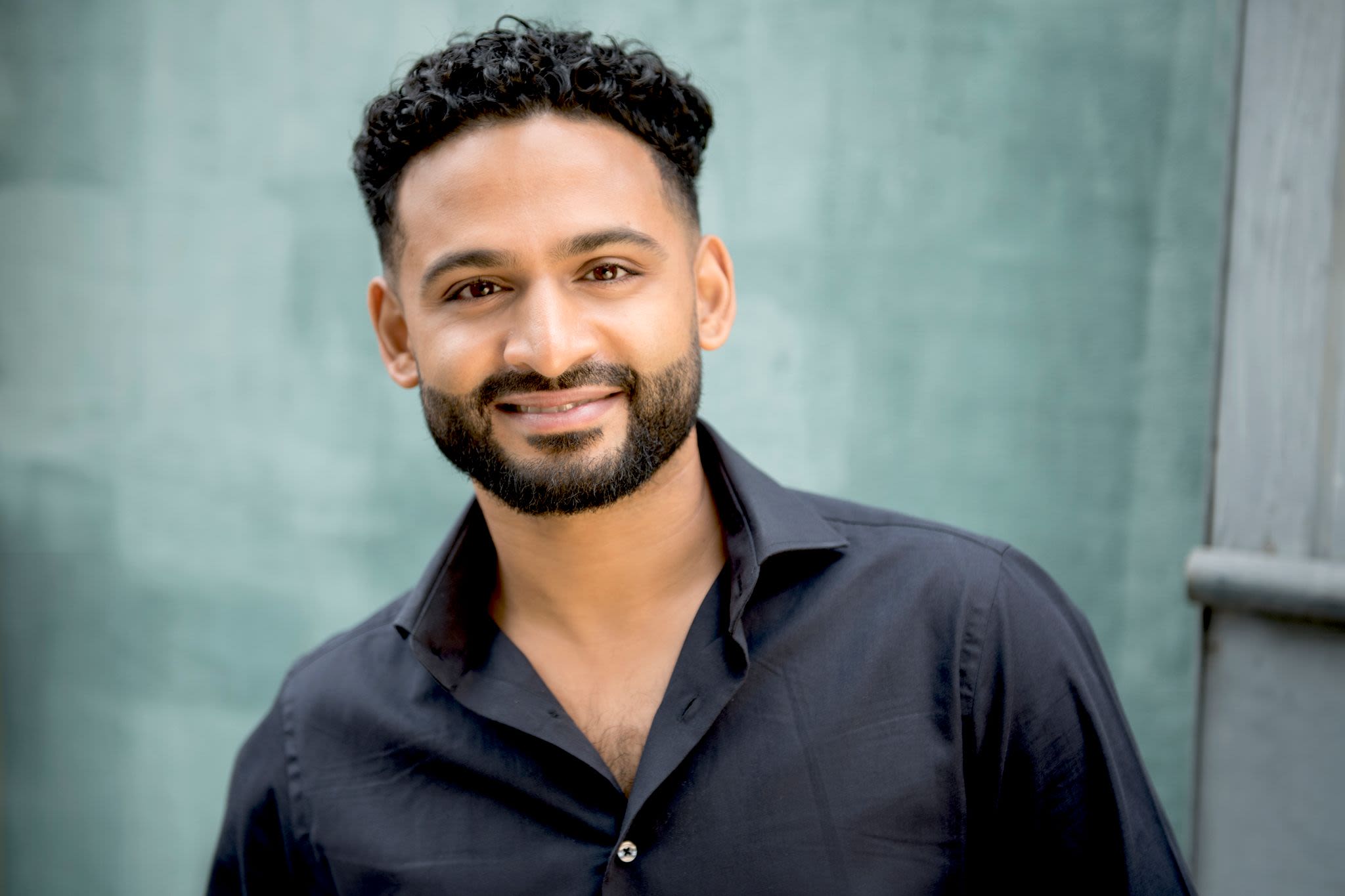
Canadian conductor Jordan de Souza becomes General Music Director of Theater Dortmund and Chief Conductor of the Dortmund Philharmonic Orchestra in August 2025.
This season he returns to Canadian Opera for La bohème, Opéra de Montréal for La traviata and the Philharmonia Orchestra for a concert at the Royal Festival Hall. He also makes debuts with the Royal Philharmonic Orchestra and Santa Fe Opera, conducting the world premiere of Gregory Spears’s The Righteous. Further ahead, he returns to Chicago Lyric Opera, Deutsche Oper Berlin and Glyndebourne Festival.
Highlights in his native Canada have included concerts with the Montreal and Vancouver Symphony orchestras and Ottawa National Arts Centre Orchestra. He has also appeared at the Grant Park Music Festival in Chicago and conducted Tristan and Isolde at Seattle Opera and Rigoletto for Houston Grand Opera.
In Europe his opera engagements have included The Magic Flute at the Bavarian State Opera and Cologne Opera; Carmen at Dutch National Opera; The Flying Dutchman at Mannheim’s Nationaltheater; and La périchole at Theater an der Wien. He also conducted La bohème at Glyndebourne and made his Italian debut conducting the Orchestra della Toscana in a programme of Brahms and Mendelssohn.
He was born in Toronto and studied conducting at McGill University, Montreal; after graduation he joined the McGill faculty (2011–15), where he conducted major sacred choral works by J. S. Bach, Fauré, Mozart and Verdi. During this time he was also Conductor-in-Residence with Tapestry Opera in Toronto. He then moved to Europe to join the staff of the Komische Oper Berlin, where he remained until 2020; while there, he collaborated with director Barrie Kosky on critically acclaimed new productions of Weinberger’s Frühlingsstürme, Pelléas and Mélisande, La bohème and Candide.
Jörgen van Rijentrombone

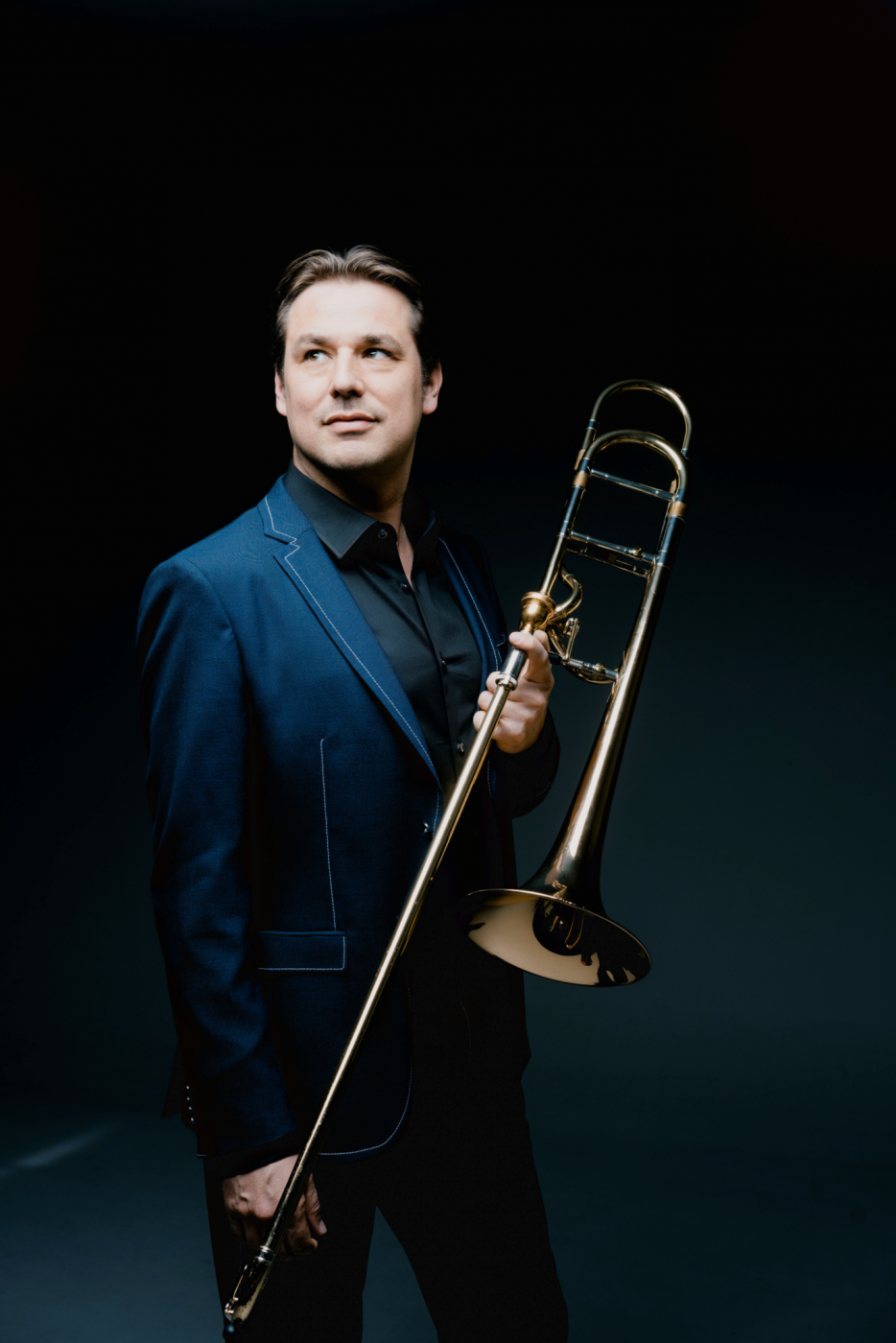
Marco Borggreve
Marco Borggreve
Jörgen van Rijen is in demand as a soloist admired for his commitment to promoting his instrument, developing new repertoire and bringing the existing repertoire to a broader audience. He is a specialist on both the modern and Baroque trombone. He has performed as a soloist in most European countries, as well as the United States, Canada, Japan, China, Korea, Russia, Singapore and Australia. He has played concertos with leading orchestras, including the Royal Concertgebouw Orchestra (of which he is Principal trombonist), the Czech, Nagoya, Rotterdam and Taiwan Philharmonic orchestras, Antwerp, BBC Scottish, Dallas and Tokyo Metropolitan Symphony orchestras and Orchestre de la Suisse Romande.
Recent highlights include the premieres of Bryce Dessner’s Trombone Concerto (2020) and Tan Dun’s Three Muses in Video Game (2021).
Notable among his many awards are the 2004 Netherlands Music Prize and, two years later, a Borletti–Buitoni Trust Award, as well as first prizes at the Toulon and Guebwiller international trombone competitions.
Among the many new pieces written for him are trombone concertos by Kalevi Aho, Sir James MacMillan and Theo Verbey and works by Nico Muhly and Tan Dun.
In coming seasons he will appear as a soloist with the Royal Concertgebouw Orchestra, Hong Kong Philharmonic, Philharmonie du Luxembourg, Orchestre National de France and Toronto Symphony Orchestra, among others.
Jörgen van Rijen teaches at the Amsterdam Conservatory and has been appointed International Visiting Professor at London’s Royal Academy of Music. He is also an active chamber musician in ensembles such as the New Trombone Collective, RCO Brass and Brass United.
Jörgen van Rijen has released five albums, including Fratres with members of the Royal Concertgebouw Orchestra, which he recently performed at the Bach Festival in Dordrecht. He plays exclusively on instruments built by Antoine Courtois.
BBC National Orchestra of Wales
For over 90 years, BBC National Orchestra of Wales has played an integral part in the cultural landscape of Wales, occupying a distinctive role as both broadcast and national symphony orchestra. Part of BBC Wales and supported by the Arts Council of Wales, it has a busy schedule of live concerts throughout Wales, the rest of the UK and the world.
The orchestra is an ambassador of Welsh music and champions contemporary composers and musicians; its concerts can be heard regularly across the BBC – on Radio 3, Radio Wales and Radio Cymru.
BBC NOW works closely with schools and music organisations throughout Wales and regularly undertakes workshops, side-by-side performances and young composer initiatives to inspire and encourage the next generation of performers, composers and arts leaders.
The orchestra is based at BBC Hoddinott Hall in Cardiff Bay, where its purpose-built studio not only provides the perfect concert space, but also acts as a broadcast centre from where its live-streamed concerts and pre-recorded content are presented as part of its popular Digital Concert Series.
For further information please visit the BBC National Orchestra and Chorus of Wales's website: bbc.co.uk/now
Patron
HM King Charles III KG KT PC GCB
Principal Conductor
Ryan Bancroft
Conductor Laureate
Tadaaki Otaka CBE
Composer-in-Association
Gavin Higgins
Composer Affiliate
Sarah Lianne Lewis
First Violins
Lesley Hatfield leader
Nick Whiting associate leader
Martin Gwilym-Jones sub-leader
Fiona McCapra
Terry Porteus
Suzanne Casey
Ruth Heney
June Lee
Rebecca Totterdell
Carmel Barber
Anna Cleworth
Gary George-Veale
Amy Fletcher
Zhivko Georgiev
SecondViolins
Peter Campbell-Kelly ‡
Sheila Smith
Joseph Williams
Michael Topping
Roussanka Karatchivieva
Lydia Caines
Beverley Wescott
Ilze Abola
Katherine Miller
Vickie Ringguth
Jane Sinclair
Elizabeth Whittam
Violas
Max Mandel ‡
Alex Thorndike #
Tetsuumi Nagata
Peter Taylor
Lydia Abell
Catherine Palmer
Robert Gibbons
Lowri Thomas
Charlotte Limb
Lucy Theo
Cellos
Jessica Burroughs ‡
Raphael Lang
Sandy Bartai
Rachel Ford
Alistair Howes
Keith Hewitt
Carolyn Hewitt
Kathryn Graham
Double Basses
Alexander Jones #
Christopher Wescott
Richard English
Antonia Bakewell
Matt Clarkson
Thea Sayer
Richard Gibbons
Mike Chaffin
Flutes
Matthew Featherstone *
John Hall †
Lindsey Ellis
Piccolo
Lindsey Ellis †
Oboes
James Hulme ‡
Vanessa Howells
Amy McKean †
Cor anglais
Amy McKean
Clarinets
Nick Carpenter *
Isaac Prince
Lenny Sayers
Bass Clarinet
Lenny Sayers †
Bassoons
Jarosław Augustiniak *
Jamie King
David Buckland
Contrabassoon
David Buckland †
Horns
Tim Thorpe *
Meilyr Hughes
Neil Shewan †
Tom Findlay
John Davy
Trumpets
Philippe Schartz *
Robert Samuel
Will Morley
Trombones
Donal Bannister *
Jake Durham
Bass Trombone
Darren Smith †
Tuba
Aled Meredith-Barrett
Timpani
Steve Barnard *
Percussion
Phil Girling *
Phil Hughes
Rhydian Griffiths
Harry Lovell-Jones
Andrea Porter
Harp
Kathryn Rees
Piano
Catherine Roe Williams
* Section Principal
† Principal
‡ Guest Principal
# Assistant String Principal
The list of players was correct at the time of publication
Director Lisa Tregale
Orchestra Manager Vicky James
Assistant Orchestra Manager Nick Olsen
Orchestra Coordinator, Operations Kevin Myers
Business Coordinator Caryl Evans
Orchestra Administrator Eleanor Hall +
Head of Artistic Production Matthew Wood
Artists and Projects Manager Victoria Massocchi **
Orchestra Librarian Katie Axelsen (paternity cover)
Producer Mike Sims
Broadcast Assistant Kate Marsden
Head of Marketing and Audiences Sassy Hicks
Marketing Coordinator Amy Campbell-Nichols +
Digital Producer Yusef Bastawy
Social Media Coordinator Harriet Baugh
Education Producers Beatrice Carey, Rhonwen Jones **
Audio Supervisors Simon Smith, Andrew Smillie
Production Business Manager Lisa Blofeld
Stage and Technical Manager Steven Brown +
Assistant Stage and Technical Manager Josh Mead
BBC Wales Apprentice Jordan Woodley
+ Green Team member
** Diversity & Inclusion Forum