Ralph Vaughan Williams
Saturday 19 March, 7.30pm
The Bridgewater Hall, Manchester

Welcome to tonight’s performance
‘The greatest symphony since Beethoven’, reckoned William Walton of Vaughan Williams’s Fourth – fierce, earthy and compelling music, brought to vivid life tonight by Sir Andrew Davis as we continue our joint celebration with the Hallé of 150 years since the composer’s birth. A soaring setting of Walt Whitman’s journey into the eternal beyond presents a very different side to Vaughan Williams, as does the dramatic yet balletic sweep of Job: A Masque for Dancing, a masterly interpretation of the battle between God and Satan as viewed through the prism of the servant who never quite lost his faith.
This concert is part of Toward the Unknown Region – RVW150. Building upon our acclaimed collaborations, we’re once again joining forces with the Hallé to celebrate the 150th anniversary of Ralph Vaughan Williams’s birth by sharing a complete cycle of his symphonies.
Our relationship with BBC Radio 3
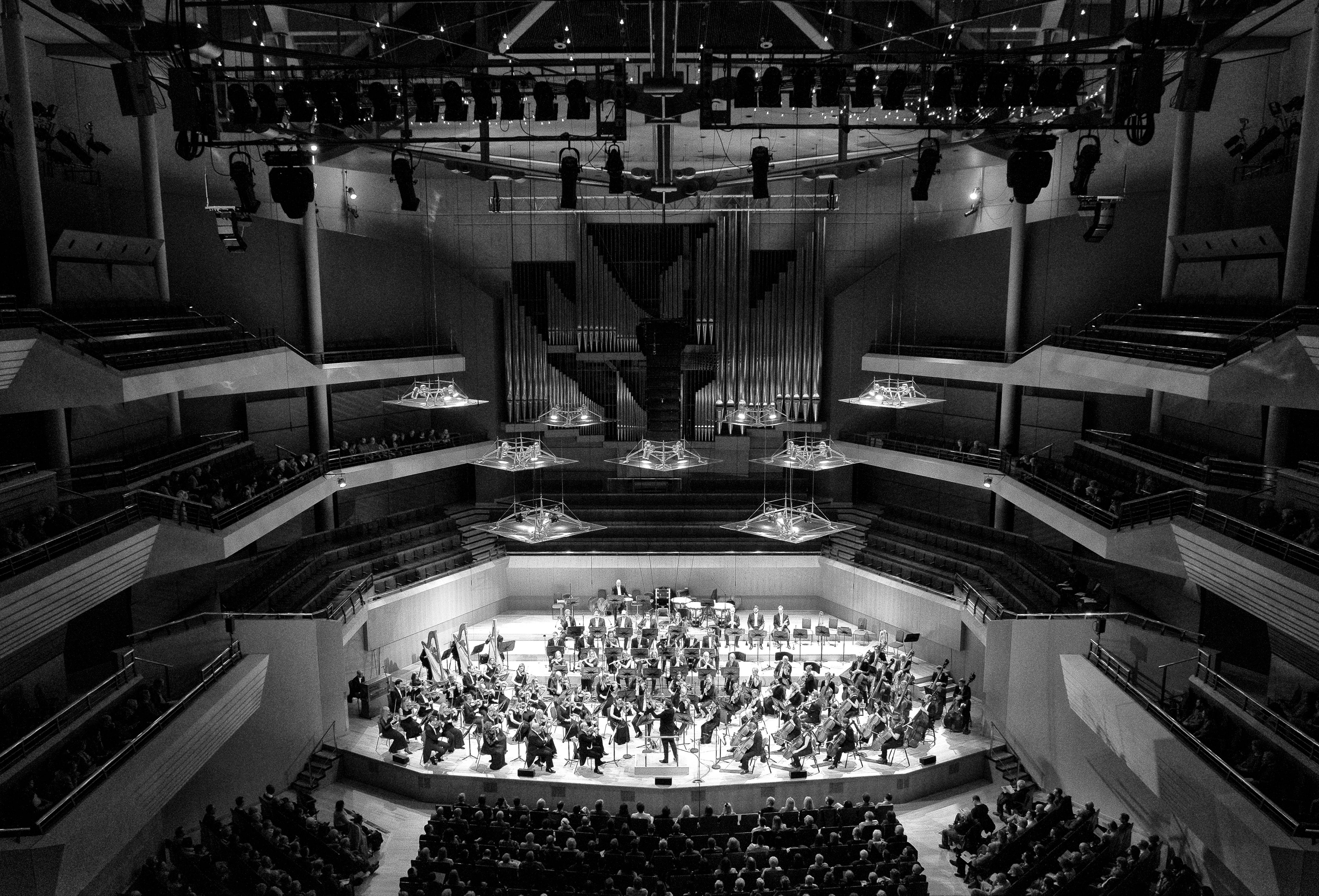
As the BBC’s flagship orchestra for the North, almost all of the BBC Philharmonic’s concerts are recorded for broadcast on Radio 3. Tonight you will see a range of microphones on the stage and suspended above the orchestra. We have a Producer, Assistant Producer and Programme Manager at the orchestra who produce our broadcasts.
We seek to bring a diverse and risk-taking range of repertoire to our audiences, including our concert-goers here in Manchester, as well as the two million listeners who tune in to BBC Radio 3.
Please do not take flash photographs during the performance as this is very distracting to the artists. Audio and video recording is strictly prohibited.
To ensure that everyone can enjoy the concert, please either turn off your phone and any other electronic devices before it begins or ensure that they are turned to silent.

Ralph Vaughan Williams
Toward the Unknown Region 12’
Symphony No. 4 in F minor 31’
INTERVAL: 20 minutes
Ralph Vaughan Williams
Job: A Masque for Dancing 45’
Hallé Choir
Sir Andrew Davis conductor
BBC Philharmonic


Tonight’s concert is being recorded for broadcast on Tuesday 29 March at 7.30pm on BBC Radio 3. It will be available to stream or download for 30 days after broadcast via BBC Sounds, where you can also find podcasts and music mixes.
Help us improve our online programmes
Please take this five-minute survey and let us know what you think of these notes.
Programme survey
Ralph Vaughan Williams (1872–1958)
Toward the Unknown
Region (1904–6)

Hallé Choir
Throughout his long adult life, Vaughan Williams was repeatedly drawn to religious or mystical writings; yet his attitude to religious belief was ambiguous – or, one could say, refreshingly honest. He knew that, on some mysterious level, there were deep truths in great mystical texts, although belief in an omnipotent loving God made little sense to him. As a young man he found a reflection of his mixed feelings in the writings of the American poet Walt Whitman. Whitman’s hatred of hypocrisy and blind tradition, his impassioned conviction of the brotherhood of man and above all his nature-filled mysticism appealed strongly to Vaughan Williams. At the same time Whitman’s radically free verse, its ‘vista, music, half-tints, and even less than half-tints’, would prove another liberating influence, leading away from the Germanic models dominant in England at that time.
So it’s highly appropriate that Vaughan Williams’s first significant large-scale work, Toward the Unknown Region, should be a Whitman setting. It begins with a challenge: ‘Darest thou now, O soul, walk out with me toward the unknown region …?’ The dark tone and sombre funereal tread suggest that the ‘unknown region’ of the title is death. But Whitman seems to have something else in mind: the possibility of spiritual death and rebirth in this life. Could that, rather than some conventional comforting notion of the soul’s immortality, be the message behind Vaughan Williams’s joyously affirmative conclusion? If so, that message is still more explicit in Vaughan Williams’s next Whitman setting, A Sea Symphony (Symphony No. 1, 1903–9), and in many works to come. As the composer’s biographer Michael Kennedy observed, ‘toward the unknown region’ could stand as a motto for Vaughan Williams’s entire life’s work.
Ralph Vaughan Williams
Unlike Elgar before him, Vaughan Williams received a traditional musical education at the Royal College of Music in London, but he also studied abroad – in Berlin with Bruch and in Paris with Ravel. Soon after his return came the Fantasia on a Theme by Thomas Tallis (1910) and A Sea Symphony (1903–9). He was active as a collector of folk music and edited The English Hymnal (1906). After completing his second symphony, A London Symphony (1911–13), he joined the army. As well as choral works such as Sancta civitas (1923–5) and Serenade to Music (1938), he wrote a Mass and made many choral arrangements of English folk songs. Apart from The Lark Ascending (1914) for violin and orchestra, his concerto-type works – for viola (Flos campi), piano, oboe and tuba – remain rarely performed. After the death of his first wife he remarried aged 80, and he produced two more symphonies before his death.
Profile by Edward Bhesania © BBC
Ralph Vaughan Williams
Symphony No. 4 in F minor (1931–4)

1 Allegro
2 Andante moderato
3 Scherzo: Allegro molto –
4 Finale con epilogo fugato: Allegro molto
‘I don’t know whether I like it, but it’s what I meant’ was Vaughan Williams’s verdict during rehearsals for the first performance of his Fourth Symphony in 1935. Since then there has been a lot of speculation and argument about what he ‘meant’. The dissonance and abrasive orchestration, the sense of elemental rage and desolation took many by surprise. Why, wrote one friend, was there ‘no beauty’ in the work? Vaughan Williams’s reply contrasts intriguingly with the remark quoted above:
‘When you say you do not think my F mi[nor] symph. beautiful my answer must be that I do think it beautiful – not that I did not mean it to be beautiful because it reflects unbeautiful times – because we know that beauty can come from unbeautiful things … I wrote it not as a definite picture of anything external – e.g. the state of Europe – but simply because it occurred to me like this – I can’t explain why …’
Even so, Vaughan Williams hinted that the idea for the symphony came to him after reading a review in The Times of the 1931 Festival of the International Society of Contemporary Music. The reviewer wrote that the composers ‘all rely on the same order of stimuli. The hearer is prodded into activity by dissonance, soothed by sentiment, overwhelmed by the power of a battering climax. The appeal is primarily sensuous, even though the composer makes play with formal processes of thematic development, such as fugato, basso ostinato or variations …’
The Fourth Symphony opens with a ‘battering’ dissonant onslaught from the full orchestra. Most of the symphony’s leading themes derive from ideas flung out here. The second theme (massed strings) is more lyrical, if still troubled, but at length this morphs into a fast, strutting march tune, still predominantly loud and forceful. Then a long, ominous crescendo leads to a compact but violently intense return of the first two themes. This builds to one last cathartic climax, then the ghost of the march tune returns on icy muted strings, leading to a weirdly calm ending.
Next, chordal figures on muted brass and woodwind set in motion a walking bass line (the ‘basso ostinato’ cited in the Times review) on pizzicato cellos and basses with strings entering in imitation, their harmonies clashing uneasily. Much of this Andante moderato is restless, nervously searching. Even the ending (low flute and hushed muted trombones) is strangely unresolved.
The Scherzo is all demonic humour, violent one moment, playfully subversive the next, with a galumphing Trio section led off by tuba and bassoons. At length a long crescendo transition (shades of Beethoven’s Fifth Symphony) sweeps straight into the Finale. But, if there is triumphalism here, it is crude, strutting, ominous – let’s not forget that some very ‘unbeautiful’ things were happening in Beethoven’s homeland in the early 1930s. Midway through, there is a reminder of the eerie stillness that ended the first movement; but the finale erupts again, precipitating the ‘Epilogo fugato’, at once rigidly formal and mercilessly violent, culminating in a ferociously condensed return of the symphony’s opening. Then, with a brutal fff thud, the symphony is over.
INTERVAL: 20 minutes
Ralph Vaughan Williams
Job: A Masque for Dancing (1927–30)
Scene I Introduction. Pastoral Dance. Satan’s appeal to God. Saraband of the Sons of God
Scene II Satan’s Dance
Scene III Minuet of the sons and daughters of Job
Scene IV Job’s Dream. Dance of plague, pestilence, famine and battle
Scene V Dance of the Messengers
Scene VI Dance of Job’s comforters. Job’s curse. A vision of Satan
Scene VII Elihu’s dance of youth and beauty. Pavane of the Sons of the Morning
Scene VIII Galliard of the Sons of the Morning. Altar dance and heavenly pavane
Scene IX Epilogue
The biblical book of Job has fascinated some commentators, horrified others. Satan challenges God to put his servant Job to a series of terrible tests. Will Job keep the faith? At first he does so heroically, but then comes a terrifying moment when Job, strained to breaking point, curses the day he was born. Eventually God appears to him in a whirlwind and lectures him about the greatness of his own achievements and, humbled, Job is restored to health and happiness. For the philosopher Søren Kierkegaard, this was a beautiful demonstration of the need to trust not our own flawed reason but God’s higher wisdom; to the psychologist Carl Jung, it looked a lot like bullying.
Vaughan Williams’s attitude to religion was complex and nuanced. He knew there was something important in it but that it couldn’t be what it literally claimed to be. So when, in 1928, he was approached to write music for a ballet based on William Blake’s Illustrations of the Book of Job, he responded enthusiastically. Blake’s mysticism, reflected in his poetry and engravings, appealed to Vaughan Williams throughout his adult life, but so too did Blake’s refreshingly original, unorthodox take on religion. For Blake, the God of the Old Testament was a highly questionable figure, and his illustrations movingly reflect the troubling but endlessly absorbing elements of the biblical story. As a ballet, Vaughan Williams’s Job was judged a failure at its premiere in 1931, but as music it was instantly welcomed as one of his richest and most profound achievements. Its grand symphonic sweep is compelling and the themes are wonderfully characterful, but there’s also a refined sense of orchestral colour and atmosphere that Vaughan Williams rarely matched elsewhere: Blake’s haunting visual imagery has been translated lovingly into music.
The Introduction reveals Job in contemplation to the veiled tones of low strings, harp and low flutes, leading to archaic-sounding reedy pastoral sounds. Satan’s entry is unmissable: sinister, angular dissonant figures on low woodwind and pizzicato cellos and basses. God’s response is grandly impassive (‘All that [Job] hath is in thy power’), then the Sons of the Morning (angels) dance a saraband in God’s honour. In Satan’s Dance, the diabolical adversary seizes God’s now empty throne and dances in obscene triumph. The destruction of Job’s wealth and family are depicted grimly in the Minuet of the sons and daughters of Job. Job’s Dream begins in moving, hushed dignity but the dream itself is a nightmare; messengers bring news of death and destruction, yet the dignified hushed music endures as Job continues to bless God. But his patience is finally destroyed by the three false ‘comforters’, their tones caught to perfection by an unctuous alto saxophone. In despair Job curses God; then the heavens open and Job sees Satan seated on God’s throne (full orchestra and organ). The healing process is initiated by the young, beautiful Elihu (solo violin), then the stately Pavane of the Sons of the Morning heralds God’s return and the end of Satan’s reign. Satan is banished and a robust galliard depicts the rebuilding of Job’s fortunes. (Strikingly, God’s sermon from the whirlwind is omitted.) The music from the Introduction returns, showing Job humbled and serene, and leads to a touching final benediction.
Pogramme notes © Stephen Johnson
Stephen Johnson is the author of books on Bruckner, Wagner, Mahler and Shostakovich and a regular contributor to BBC Music Magazine. For 14 years he was a presenter of BBC Radio 3’s Discovering Music. He now works both as a freelance writer and as a composer.
Biographies
Sir Andrew Davis conductor

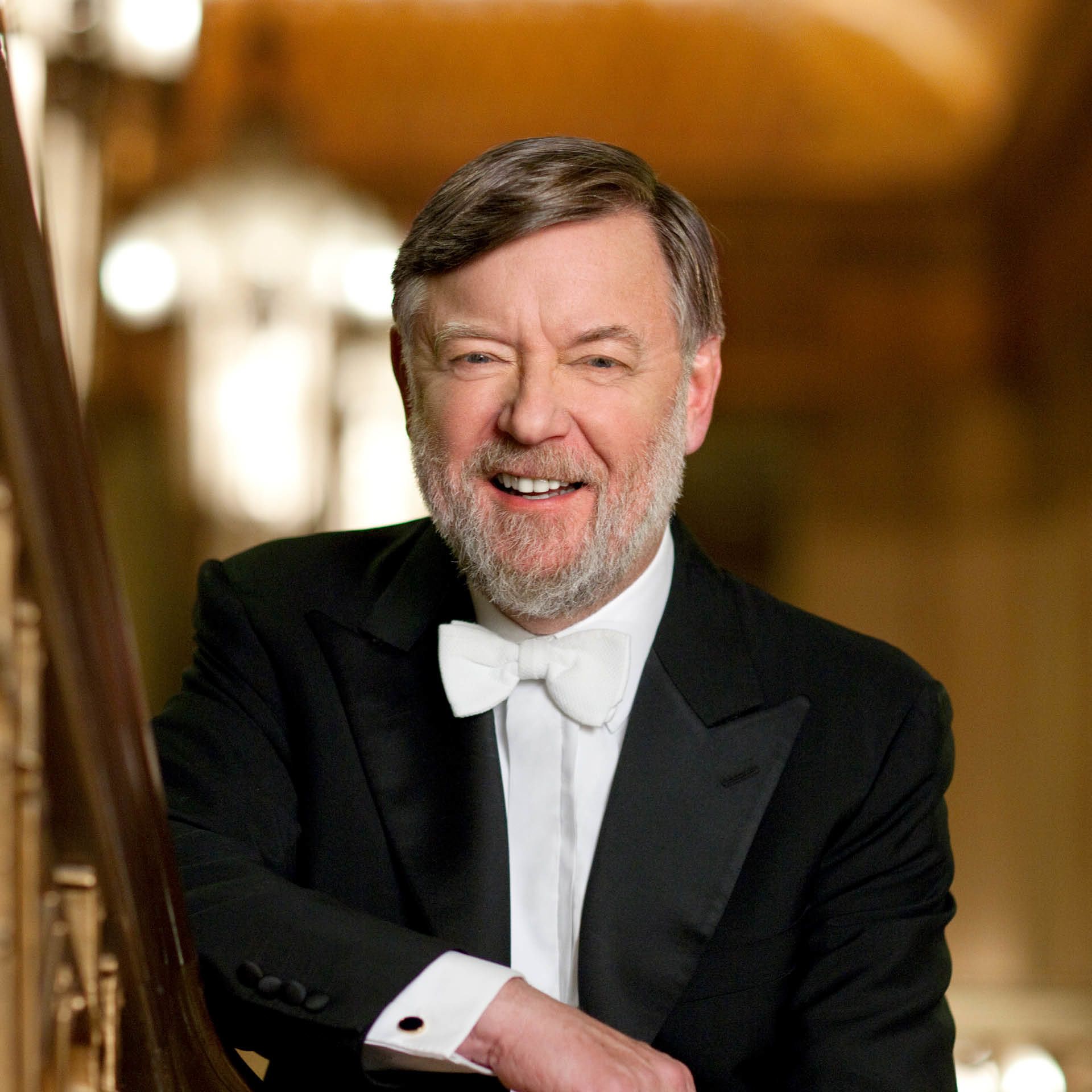
Photo: Dario Acosta
Photo: Dario Acosta
Sir Andrew Davis was Organ Scholar at King’s College, Cambridge, before taking up conducting. During his 50-year career he has held positions with Chicago Lyric Opera (Music Director and Principal Conductor, 2000–21), the BBC Symphony Orchestra (Chief Conductor, 1991–2004, and now Conductor Laureate), Glyndebourne Festival Opera (Music Director, 1988–2000), Melbourne Symphony Orchestra (Chief Conductor, 2013–19, and now Conductor Laureate) and the Toronto Symphony Orchestra (Principal Conductor, 1975–88, and now Conductor Laureate). Additionally, he is Conductor Emeritus with the Royal Liverpool Philharmonic Orchestra and President of the BBC Symphony Chorus.
He has led performances at many of the world’s leading opera houses, among them the Metropolitan Opera, New York, La Scala, Milan, the Royal Opera, Covent Garden, Bayreuth Festival and the major companies of Munich, Paris, San Francisco and Santa Fe. He has appeared with virtually every other internationally prominent orchestra, including the Berlin and Rotterdam Philharmonic orchestras, the Royal Concertgebouw Orchestra and all the major British orchestras.
This season sees his return to the Toronto Symphony Orchestra and to Chicago Lyric Opera, where he conducts Beethoven’s Ninth Symphony. Other engagements include concerts with the Royal Scottish National Orchestra, LA Colburn School of Music, Berlin Radio Symphony Orchestra and Baltimore Symphony Orchestra.
Recent recording highlights include Massenet’s Thaïs with the Toronto SO, the third volume in his project to record the complete orchestral works of Eugene Goossens with the Melbourne Symphony Orchestra, and orchestral works by Berlioz, Bliss and Elgar. His series of recordings with the BBC Symphony Orchestra and Chorus celebrating British composers was recently reissued as a 16‑CD retrospective collection.
Sir Andrew Davis was appointed CBE in 1992 and knighted in the 1999 New Year Honours List. He has also received an honorary doctorate from Knox College in Galesburg, Illinois..
Hallé Choir
Founded alongside the Orchestra by Charles Hallé in 1858, the Hallé Choir usually gives around 15 concerts a year, as well as featuring regularly on the Hallé’s award-winning CD label.
Pre-pandemic highlights for the choir included featuring in the Hallé’s Beethoven 250 celebrations in early 2020, a concert performance of Act 2 of Fidelio, Schoenberg’s Gurrelieder, Berlioz’s The Damnation of Faust (both in Manchester and at the Edinburgh Festival), and Elgar’s The Dream of Gerontius and Act 3 of Wagner’s Parsifal in York Minster. In 2019 the choir toured to Spain, where it gave two concerts with the Orquesta Sinfónica de Castilla y León and an a cappella concert of English music. The choir has performed regularly at the BBC Proms, and in the 2019–20 season performed Tippett’s A Child of Our Time in Sheffield and Mahler’s ‘Resurrection’ Symphony in Nottingham.
Made up of 170 singers from all over the North-West and from all walks of life, the Hallé Choir offers a range of additional activities, including individual coaching and social events, as well as regular rehearsals.
The singing didn’t stop for the Hallé Choir during the pandemic. Rehearsals moved online and the choir practised every chorus in Handel’s Messiah before creating a virtual performance of Beethoven’s cantata Calm Sea and Prosperous Voyage. A brief return to socially distanced, in‑person rehearsals in September 2020 enabled the choir to take part in the Hallé’s digital Christmas Concert but the return to live performance in October 2021 felt like a true renaissance.
Highlights of the current season include Stravinsky’s Symphony of Psalms, Handel’s Messiah and Mahler’s Third Symphony, as well as three carol concerts and a performance for John Williams’s 90th birthday. The choir will continue to feature in the Vaughan Williams symphony cycle, appearing with both the BBC Philharmonic and the Hallé.
Choral Director
Matthew Hamilton
Accompanist
David Jones
Vocal Coaches
Margaret McDonald
Richard Strivens
Associate Choral Director
Fanny Cooke
Head of Ensembles
Naomi Benn
Choir Manager
Alison Megicks
Chair
Lizzy Allerton
Secretary
Sammy Matthewson
Treasurer
Steve Best
Sopranos
Elaine Evans
Merryl Webster
Rebecca Montgomery
Alice Henery
Maeve Whittaker
Jenny Lucking
Rosemary Pires
Barbara Barratt
Charlotte FitzGerald
Elinor Wolstenholme
Tamandra Ford
Charlotte Stevenson
Cathy Riddington
Claire Harbourne
Ruth Broadfield
Mabel Wright
Tracey Adlem
Meg Parnell
Rachel Grimshaw
Lizzy Allerton
Eirwen Roberts
Isabelle Milner
Sarah Harding
Alison Lloyd Williams
Emily Ley
Claire Claymore
Elinor Jenkins
Kitty Barraclough
Judith Greenwood
Sarah Bunting
Ruth Taylor
Yvonne Flood
Claire Croft
Laura Roberts
Annie Rogers
Kathryn Smethurst
Emelie Harding
Dawn Ashworth
Elizabeth Conway
Sarah Taylor
Jean Tracy
Clare MacKinnon
Helen Smithurst
Rebecca Woolley
Eleanor Hobbs
Jo Sharples
Daphne Dawson
Janet Brown
Ruth Jones
Rhiannon Jones
Altos
Gillian Gibson
Elizabeth Scott
Katherine Seddon
Judith Newton
Tiffany Griffiths
Maureen Rammell
Lynne Hughes
Martha Hulme
Anna Strowe
Barbara Oxley
Linda Edmondson
Angela Partington
Alice Beckwith
Marion Ridd
Kate Milner
Sue Stirzaker
Elizabeth Alberti
Rachel Hopper
Sara Holroyd
Rowena Cockerham
Libby Clarence
Tessa Quayle
Merel-Magali Cox
Elizabeth Murray
Joanna Brown
Susan Oates
Laurie Bailey
Damson Tregaskis
Dorothy Stoddard
Alison Playfoot
Rachel Glascott
Chris Hughes
Judy Paskell
Clare Knight
Andrea Murray
Jocelyn Lavin
Virginia Lloyd
Eileen Lee
Jill Wills
Georgina Crosswell
Gay Morton
Gill Faragher
Sue McKinlay
Maryna Brochwicz-Lewinski
Lorna Reader
Elizabeth Threlfall
Wendy Walker
Grace Card
Kate Fuggle
Tenors
John Elliott
Sam Horton
David Evans
Thomas Winstanley
Christopher Hopper
Graham Rogers
Steve Best
Sammy Matthewson
Max Noble
Andrew Lunn
Jasper Brownrigg
Graham Keen
Paul Brennan
Jonny Downing
Andrew McClarty
Andrew Paterson
Paul Beswick
Basses
Simon Goldring
Alexander Oldroyd
Rob Kerr
Chris Holroyd
Vin Allerton
John Ward
Colin Scales
Stuart Fielding
David Metcalfe
Chris Green
Eugene Pozniak
Jonathan Barber
Owen Hewson
Jim Cowell
David Burgess
Tony Flynn
Peter Aldred
Philip Dobson
John Piper
Ian Wood
Graham Worth
William Jowett
Cliff Tinker
Stuart Perkins
Andrew Kyle
Ian Dayes
John Smith
Darcey Durham Grigg
BBC Philharmonic
The BBC Philharmonic is reimagining
the orchestral experience for a new generation – challenging perceptions, championing innovation and taking a rich variety of music to the widest range of audiences.
The orchestra usually performs around 100 concerts every year, the vast majority of which are broadcast on BBC Radio 3. Along with around 35 free concerts a year at its MediaCityUK studio in Salford and a series of concerts at Manchester’s Bridgewater Hall, the orchestra performs across the North of England, at the BBC Proms and internationally, and records regularly for the Chandos label.
The BBC Philharmonic’s Chief Conductor is Omer Meir Wellber. Described by The Times’s Richard Morrison as ‘arguably the most inspired musical appointment the BBC has made for years’, Israeli-born Wellber burst into his new role at the 2019 BBC Proms and has quickly built an international reputation as one of the most exciting young conductors working today. The orchestra also maintains strong relationships with its Chief Guest Conductor John Storgårds and Associate Artist Ludovic Morlot. In May last year the orchestra announced young British composer and rising star Tom Coult as its Composer in Association.
The scope of the orchestra’s programme extends far beyond standard repertoire. Over the past few years it has collaborated with artists as varied as Clean Bandit, Jarvis Cocker and The Wombats; played previously unheard music by writer-composer Anthony Burgess in a unique dramatisation of A Clockwork Orange; joined forces with chart-toppers The 1975 at Blackpool’s Tower Ballroom; premiered The Arsonists by composer Alan Edward Williams and poet Ian McMillan, the first opera ever written to be sung entirely in a Northern English dialect; and broadcast on all seven BBC national radio networks, from BBC Radio 1 to BBC Radio 6 Music and the BBC Asian Network. Last year the orchestra also entered the UK Top 40 singles chart with ‘Four Notes: Paul’s Tune’.
The BBC Philharmonic is pioneering new ways for audiences to engage with music and places learning and education at the heart of its mission. Outside of the concert hall, it is passionate about taking music off the page and into the ears, hearts and lives of listeners of all ages and musical backgrounds – whether in award-winning interactive performances, schools’ concerts, Higher Education work with the Royal Northern College of Music or the creation of teacher resources for the BBC’s acclaimed Ten Pieces project. Through all its activities, the BBC Philharmonic is bringing life-changing musical experiences to audiences across Greater Manchester, the North of England, the UK and the rest of the world.
Chief Conductor
Omer Meir Wellber
Chief Guest Conductor
John Storgårds
Associate Artist
Ludovic Morlot
Composer in Association
Tom Coult
First Violins
Yuri Torchinsky leader
Thomas Bangbala sub-leader
Alison Fletcher *
Kevin Flynn †
Austeja Juskaityte
Anna Banaszkiewicz-Maher
Martin Clark
Julian Gregory
Karen Mainwaring
Catherine Mandelbaum
Anya Muston
Robert Wild
Toby Tramaseur
Mansell Morgan
Sarah White
Paula Smart
Second Violins
Glen Perry ‡
Lily Whitehurst
Rachel Porteous
Lucy Flynn
Sophie Szabo
Christina Knox
Alyson Zuntz
Claire Sledd
Matthew Watson
Natalie Purton
Sian Goodwin
Hannah Padmore
William Chadwick
Violas
Kimi Makino ‡
Alex Mitchell
Bernadette Anguige †
Kathryn Anstey
Matthew Compton
Ruth Montgomery
Nicholas Howson
Rachel Janes
Roisin Ni Dhuill
Fiona Dunkley
Amy Hark
Carolyn Tregaskis
Cellos
Peter Dixon *
Maria Zachariadou ‡
Steven Callow †
Jessica Schaefer
Rebecca Aldersea
Melissa Edwards
Elinor Gow
Miriam Skinner
Marina Vidal Valle
Elise Wild
Double Basses
Ronan Dunne *
Alice Durrant †
Miriam Shaftoe
Daniel Whibley
Peter Willmott
Ivor Hodgson
Mhairi Simpson
Aaron Barrera Reyes
Flutes
Alex Jakeman *
Victoria Daniel †
Piccolo
Jennifer Hutchinson
Oboes
Rainer Gibbons §
Will Oinn
Cor Anglais
Gillian Callow
Clarinets
John Bradbury *
Fraser Langton
Bass Clarinet
Matthew Dunn
Alto Saxophone
Anthony Brown
Bassoons
Roberto Giaccaglia *
Charlotte Cox
Contrabassoon
Bill Anderson
Horns
Ben Hulme *
Rebecca Hill ¥
Phillip Stoker
Jonathan Barrett
Trumpets
Christian Barraclough §
Gary Farr †
Stephen Murphy
Tim Barber
Trombones
Richard Brown *
Gary MacPhee
Bass Trombone
Russell Taylor
Tuba
Christopher Evans
Timpani
Paul Turner *
Percussion
Paul Patrick *
Geraint Daniel
Oliver Patrick
Sophie Hastings
Harps
Clifford Lantaff *
Eleanor Hudson
Organ
Darius Battiwalla
* Principal
† Sub-Principal
‡ Assistant Principal
§ Guest Principal
¥ Associate Principal
The list of players was correct at the time of publication
Keep up to date with the
BBC Philharmonic
Listen to our BBC Radio 3 broadcasts via the BBC Sounds app. Visit our website and follow us on Twitter, Facebook and Instagram and sign up to the newsletter
To help us improve our online concert programmes, please take this five-minute survey
Produced by BBC Proms Publications