
Romance & Riots
Thursday 6/10/22, 7.30pm


Sergey Rachmaninov
Piano Concerto No. 3 (39’)
INTERVAL (20’)
Igor Stravinsky
The Rite of Spring (33’)
Ryan Bancroft Conductor
Yeol Eum Son Piano


This concert is being broadcast live by BBC Radio 3 in Radio 3 in Concert and filmed for future broadcast on BBC Four’s Inside Classical. It will be available to stream or download for 30 days after broadcast via BBC Sounds, where you can also find podcasts and music mixes. Visit bbc.co.uk/now for more information on future performances.
Introduction
Welcome to tonight’s concert, the first of the new season here at St David’s Hall, in which BBC National Orchestra of Wales is conducted by its Principal Conductor Ryan Bancroft.
Two mighty masterpieces feature, beginning with Rachmaninov’s Third Piano Concerto, a work whose extreme difficulty and ambitious length allied to lustrous melodies have long made it a favourite among audiences and a rite of passage for pianists. Today taking on the solo part is the gifted South Korean Yeol Eum Son.
Stravinsky’s Rite of Spring was finished a mere four years aftter Rachmaninov’s concerto, yet it couldn’t occupy a more different sonic landscape, with its pagan-inspired energy and its complex cross-rhythms, illustrating the most brutal of tales as a young girl dances herself to death.
Please respect your fellow audience members and those listening at home. Turn off all mobile phones and electronic devices during the performance. Photography and recording are not permitted.
Sergey Rachmaninov (1873–1943)
Piano Concerto No. 3 in D minor,
Op. 30 (1909)

1 Allegro ma non tanto
2 Intermezzo: Adagio – Un poco più mosso –
3 Finale: Alla breve
Yeol Eum Sonpiano
Rachmaninov completed his First Piano Concerto in 1891, when he was a student and still in his teens. His Second, so much better known today, followed a decade later. His Third was composed during the summer of 1909, in prospect of a tour he was to make the following winter of the United States, the country that would be his home for the last quarter-century of his life.
He spent the Atlantic crossing at a dummy keyboard, practising silently so as not to disturb other passengers – and needing to practise, for with this work he had set himself a formidable task. He gave the first performance in New York on 28 November 1909, at the New Theatre (justly named, for it had opened that year). After visiting other cities, he was back in New York for a second performance on 16 January 1910. The conductor was Gustav Mahler, whose care over the score greatly impressed him.
It is with a gentle throb from the orchestra that the work begins, but soon the soloist is there with a theme, very Russian-sounding and possibly based on an old chant. This is developed by pianist and orchestra, who work more together than against one another in this concerto, their common goal being to set forth as radiantly as possible the almost continuous melody. After a couple of minutes, leaving the piano behind for a moment, the orchestra turns the music from minor to major. It is as if the sun has come out. In this new light the piano can be playful but also passionate. Everything is then developed, with surges of power on the way to a solo cadenza that certainly has power of its own. Eventually the work’s opening comes back, but the reprise is compact, and leaves much more to be said.
For the slow movement Rachmaninov offers a set of variations, begun by the orchestra alone. The piano joins in and very soon makes the music even more romantic. Turning brilliant, the piano chases off in the manner of a scherzo. The movement then seems set to end as it began …
It does not, however, because the piano bounces back to lead everyone directly into a vigorous finale. This has elements of a march, with fanfares, but a lot of the ideas come out of the first movement, now delivered with new rapture.
Programme note © Paul Griffiths
INTERVAL: 20 minutes
Igor Stravinsky (1882–1971)
The Rite of Spring (1911–13)

Part 1: Adoration of the Earth
Introduction – Auguries of Spring – Dances of the Young Girls – Game of Capture – Spring Round-Dances – Games of the Rival Tribes – Procession of the Sage – Adoration of the Earth – The Sage – Dance of the Earth
Part 2: The Sacrifice
Introduction – Mystic Circles of the Young Girls – Glorification of the Chosen One – Evocation of the Ancestors – Ritual Action of the Ancestors – Sacrificial Dance of the Chosen One
If you want to see into the future, your best course may be to look deep into the past. Authors of fantasy novels know this. So did those artists who, just over a century ago, revolutionised European culture by setting their sights on early times. The Rite of Spring provides a key example: Stravinsky’s aim here was to put on stage a spring ritual such as pagan people of the Russian steppe might have enacted, ending with the sacrifice of a chosen maiden who dances herself to death. He and his colleagues – Nicholas Roerich for the scenario and designs, Vaclav Nijinsky for the choreography – had to use their imaginations here, but they also did their research. Stravinsky, for instance, sought out ancient songs on which to base his music.
We hear one of them right away, high on a bassoon at the start of the ‘Introduction’, which evokes pipes calling across an empty landscape. The expectant calm is cut off by the pounding rhythm of ‘Auguries of Spring – Dances of the Young Girls’. This section accumulates layers, then breaks into a racing speed for the ‘Game of Capture’. The ‘Spring Round-ances’ move conversely at a heavy rhythm towards a threatening climax, from which the music bursts off again rapidly. A restart then leads to the exuberant ‘Games of the Rival Tribes’, with hurtling gestures and stand-offs. An awesome, menacing march is started by trombones, advancing to ‘Procession of the Sage’. There is a pause. Four quiet bars – ‘The Sage’ – suggest a moment of anticipation and a crucial act, marked by a chord for string soloists playing harmonics. This unleashes the mighty ‘Dance of the Earth’.
The second part is launched by an ‘Introduction’, a forest of colour. Trumpets sound a warning note, and horns announce the ‘Mystic Circles of the Young Girls’. Brass warnings interrupt, and a steady barrage of drumming leads into the quick slicing movements and rushes of ‘Glorification of the Chosen One’. The end is being prepared. Almost all the wind instruments lift their voices together in ‘Evocation of the Ancestors’, followed by ‘Ritual Action of the Ancestors’, which begins ominously and develops immense power. Its energy is left swilling around a few low woodwind instruments, then slips into the final ‘Sacrificial Dance of the Chosen One’.
There was a riot in the theatre when the work was first performed, in Paris on 29 May 1913. On the back of prehistory, something excitingly, disturbingly modern had arrived.
Programme note © Paul Griffiths
Biographies
Ryan Bancroft conductor

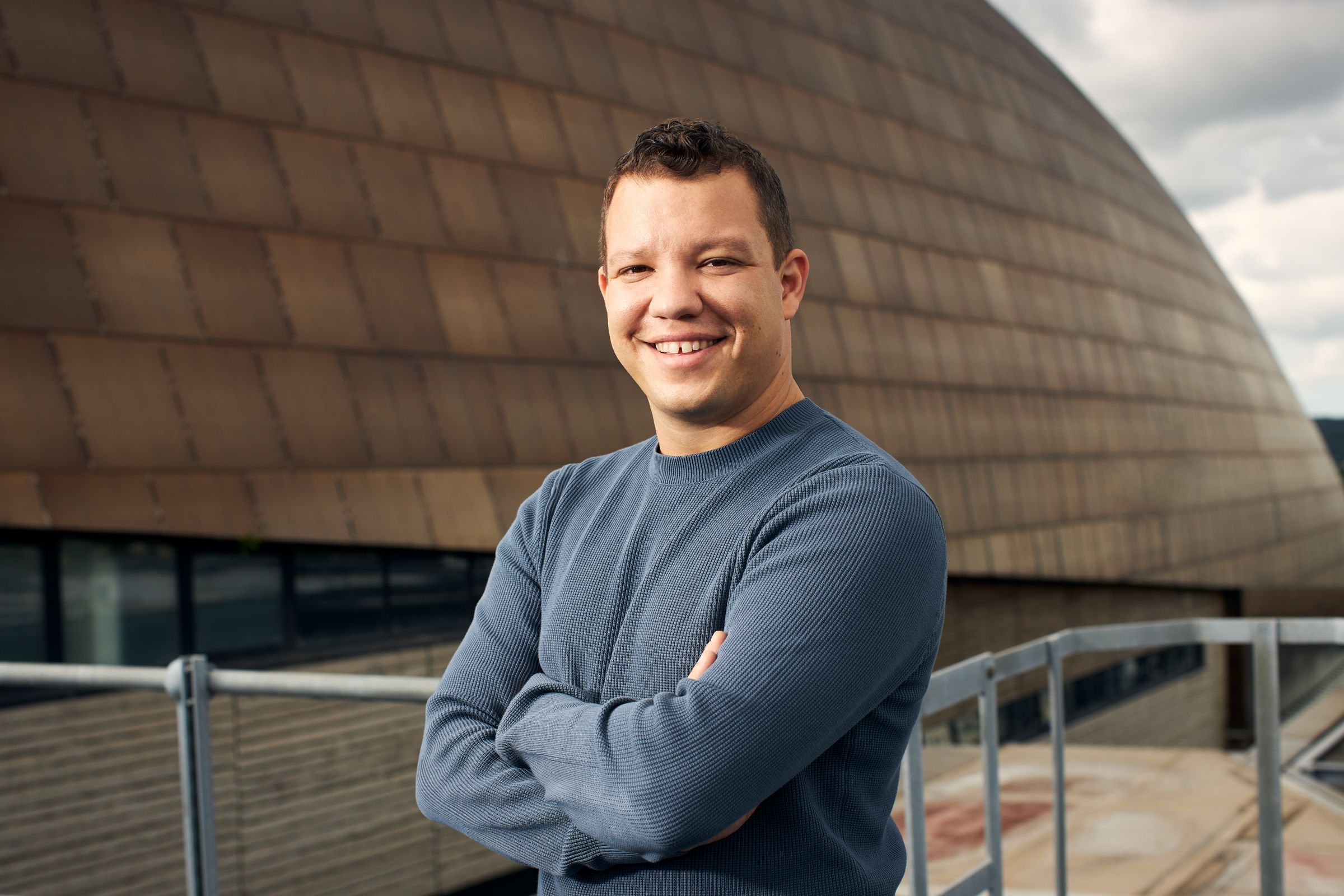
Photo: Benjamin Ealovega
Photo: Benjamin Ealovega
Ryan Bancroft grew up in Los Angeles and first came to international attention in April 2018, when he won both First Prize and Audience Prize at the prestigious Malko Competition for Young Conductors in Copenhagen. Since September 2021 he has been Principal Conductor of BBC National Orchestra of Wales. Following his first visit to work with the Tapiola Sinfonietta he was invited to become its Artist-in-Association from the 2021–22 season. Last year he was announced as Chief Conductor Designate of the Royal Stockholm Philharmonic Orchestra and will take up the position next September.
He has made debuts with a number of leading European orchestras, including the Philharmonia, London and Rotterdam Philharmonic, BBC, Danish National and Swedish Radio Symphony orchestras, Toulouse Capitole Orchestra, RAI Turin and Ensemble Intercontemporain. In North America he has worked with the Baltimore, Houston and Toronto Symphony orchestras and this season makes debuts with the Dallas Symphony and Minnesota Orchestra. He also appears for the first time at Suntory Hall with the New Japan Philharmonic and Midori, at the Royal Festival Hall with the Philharmonia and Sir Stephen Hough and at the Royal Concertgebouw with the Netherlands Philharmonic. He also returns to the City of Birmingham, Gothenburg and Malmö Symphony orchestras.
He has a passion for contemporary music and has performed with Amsterdam’s Nieuw Ensemble, assisted Pierre Boulez in a performance of his Sur incises in Los Angeles, premiered works by Sofia Gubaidulina, Cage, Tenney and Anne LeBaron, and has worked closely with improvisers such as Wadada Leo Smith and Charlie Haden. He returns to work with the Ensemble Intercontemporain in March.
He studied at the California Institute of the Arts, Royal Conservatoire of Scotland and in the Netherlands.
Yeol Eum Son piano

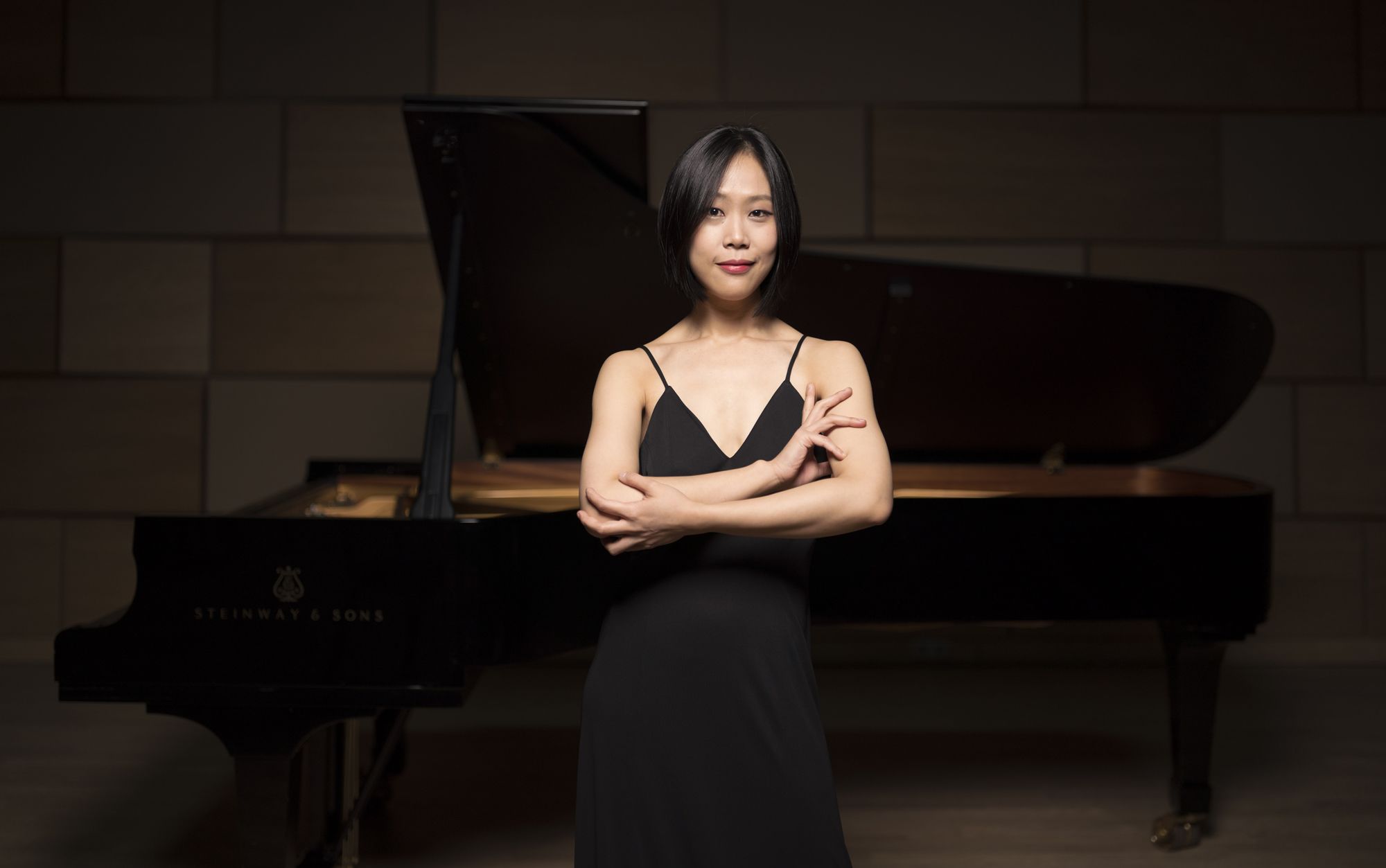
Multi-award-winning South Korean pianist Yeol Eum Son is acclaimed for the power and poetry of her playing. She performs all over the world as a recitalist and concerto soloist. She is also a keen chamber musician and in 2018 was appointed Artistic Director of Music in PyeongChang festival.
Her repertoire ranges from Bach and Mozart to Ligeti and Esa-Pekka Salonen, and she has appeared with leading orchestras, including the Bergen, Czech, Dresden, New York, St Petersburg and Sofia Philharmonic orchestras, Mariinsky Theatre Orchestra, Konzerthausorchester Berlin, Tonkunstler Orchestra, City of Birmingham Symphony Orchestra, Aurora Orchestra, Orchestre de la Suisse Romande and Moscow Virtuosi.
Conductors with whom she has worked include Ryan Bancroft, Dmitri Kitayenko, Valery Gergiev, Vasily Petrenko, Vladimir Spivakov, Andrew Manze, Susanna Mälkki, Krzysztof Urbański, Omer Meir Wellber, Pietari Inkinen, Jonathan Nott, Mikko Franck, Nicholas Collon, Jaime Martín, Roberto González-Monjas, Jonathon Heyward, Joana Carneiro, Pablo González, Jun Märkl, Case Scaglione, Edo de Waart, Gergely Madaras, Anja Bihlmaier and Rune Bergmann.
This season she is Artist-in-Residence with the Hague Residentie Orchestra. Other highlights include tonight’s debut with BBC National Orchestra of Wales, as well as with the Saint Paul and Scottish Chamber orchestras, Detroit, Finnish Radio, Melbourne, Singapore, Sydney and Tasmanian Symphony orchestras, NDR Radiophilharmonie Hanover, Orquesta Sinfónica del Principado de Asturias and Musikkollegium Winterthur.
Her most recent recordings include recitals of music by Kapustin and Schumann.
BBC National Orchestra of Wales
For over 90 years, BBC National Orchestra of Wales has played an integral part in the cultural landscape of Wales, occupying a distinctive role as both broadcast and national symphony orchestra. Part of BBC Wales and supported by the Arts Council of Wales, it has a busy schedule of live concerts throughout Wales and the rest of the UK. The orchestra is an ambassador of Welsh music and champions the works of contemporary composers.
It performs annually at the BBC Proms and biennially at the BBC Cardiff Singer of the World competition, and can be heard regularly across the BBC: on Radio 3, Radio Wales and Radio Cymru, as well as providing the soundtracks for some of your favourite television programmes.
Highlights of this season include the Elemental Explorations concerts in Brecon and Newport with Nil Venditti, Disney’s Fantasia in concert, Britten and Elgar with the orchestra’s much-loved Conductor Laureate Tadaaki Otaka, an all-new Gaming concert with gaming music legend Eímear Noone and a CoLaboratory concert with the sensational cellist Abel Selaocoe.
Alongside its busy schedule of live concerts, BBC NOW works closely with schools and music organisations throughout Wales, regularly delivering workshops, side-by-side performances and young composer initiatives to inspire and encourage the next generation of performers, composers and arts leaders and make music accessible to all. To find out more visit bbc.co.uk/bbcnow
Patron
HM King Charles III KG KT PC GCB
Principal Conductor
Ryan Bancroft
Conductor Laureate
Tadaaki Otaka CBE
Composer-in-Association
Gavin Higgins
Composer Affiliate
Sarah Lianne Lewis
First Violins
Lesley Hatfield Leader
Nick Whiting AssociateLeader
Martin Gwilym-Jones Sub-Leader
Gwenllian Hâf Macdonald
Terry Porteus
Suzanne Casey
Anna Cleworth
Denis Bernier-Martin
Carmel Barber
Kerry Gordon-Smith
Juan Gonzalez
Gary George-Veale
Zhivko Georgiev
Paul Mann
Amy Fletcher
Catherine Fox
Second Violins
Anna Smith *
Ruth Heney
Ros Butler
Sheila Smith
Elliot Kempton
Katherine Miller
Beverley Wescott
Barbara Zdziarska
Sellena Leony
Joseph Williams
Vickie Ringguth
Michael Topping
Jane Sinclair
Elizabeth Whittam
Violas
Rebecca Jones *
Alex Thorndike #
Tetsuumi Nagata
Peter Taylor
Laura Sinnerton
Catherine Palmer
Robert Gibbons
Ania Leadbeater
Sara Roberts
Linda Kidwell
Sharada Mack
Liam Lynch
Cellos
Alice Neary *
Keith Hewitt #
Jessica Feaver
Sandy Bartai
Carolyn Hewitt
Rachel Ford
Alistair Howes
Katy Cox
Katie Tertell
Jacky Phillips
Double Basses
David Stark *
Alexander Jones
Christopher Wescott
Laura Murphy
Richard Gibbons
Chris Kelly
Michael Chaffin
Albert Dennis
Flutes
Matthew Featherstone *
Oliver Roberts
Liz May
Alto Flute
John Hall
Piccolos
Lindsey Ellis †
Liz May
Oboes
Steve Hudson *
Amy Mckean
Emily Cockbill
Adrian Rowlands
Cors Anglais
Sarah-Jayne
Porsmoguer †
Adrian Rowlands
Clarinets
Natalie Harris
Jennie Joy Porton
Steve Morris
E Flat Clarinet
Will White
Bass Clarinets
Lenny Sayers †
Steve Morris
Bassoons
Vahan Khourdoian ‡
Gareth Humphreys
Jo Shewan
Chris Vale
Contra-Bassoons
David Buckland †
Chris Vale
Horns
Tim Thorpe *
Tom Taffinder
Neil Shewan †
Craig Macdonald
Michael Gibbs
Alistair Rycroft
John Davy
William Haskins
Nathan Barker
Wagner Tubas
John Davy
William Haskins
Piccolo Trumpet
Philippe Schartz *
Trumpets
Dean Wright
Robert Samuel
Stuart Essenhigh
Jaco Roseberg
Bass Trumpet
Christopher Augustine
Trombones
Donal Bannister *
Anders Østergaard Frandsen
Christopher Augustine
Bass Trombone
Darren Smith †
Tubas
Daniel Trodden †
Pete Smith
Timpani
Steve Barnard *
Christina Slominska
Percussion
Chris Stock *
Mark Walker †
Phil Girling
Phil Hughes
* Section Principal
† Principal
‡ Guest Principal
# Assistant Principal
The list of players was correct at the time of publication
Director Lisa Tregale +
Orchestra Manager Zoe Poyser +
Assistant Orchestra Manager Vicky James **
Orchestra Administrator Nick Olsen
Orchestra Coordinator, Operations Kevin Myers
Business Coordinator Caryl Evans
Head of Artistic Production Matthew Wood
Artists and Projects Manager Eleanor Phillips
Orchestra Librarian Eugene Monteith **
Producer Mike Sims
Broadcast Assistant Jacob Perkins
Head of Marketing and Audiences Sassy Hicks
Marketing Coordinator Amy Campbell +
Digital Producer Yusef Bastawy
Social Media Coordinator Harriet Baugh
Education Producers Beatrice Carey, Rhonwen Jones **
Audio Supervisors Simon Smith, Andrew Smillie
Production Business Manager Lisa Blofeld
Stage and Technical Manager Steven Brown
Assistant Stage and Technical Manager Dave Rees
+ Green Team member
** Diversity & Inclusion Forum