
Playing Picasso
Friday 8/12/23, 7.30pm
BBC Hoddinott Hall


Igor Stravinsky
Pulcinella 48’
INTERVAL: 20 minutes
Erik Satie
Parade 17’
Igor Stravinsky
Ragtime 4’
Manuel de Falla
The Three-Cornered Hat – Suite No. 2 12’
Ryan Bancroftconductor
Katharine Dain soprano
Jorge Navarro Colorado tenor
Michel de Souzabaritone


This concert is being recorded by BBC Radio 3 for future broadcast inRadio 3 in Concert, livestreamed via the BBC NOW website, and the Satie and Falla pieces are being filmed for future release in the BBC NOW Digital Concert Series.
Introduction
Welcome to tonight’s concert, in which BBC NOW’s Principal Conductor Ryan Bancroft presents a programme celebrating the genius of Picasso 50 years after his death.
It was thanks to the great impresario Serge Diaghilev, who’d taken Paris by storm with his Ballets Russes, that Picasso got involved with an already impressive roster of visual artists, composers and choreographers.
Picasso created designs for works as different as Pulcinella, Parade and The Three-Cornered Hat. For the first of these Stravinsky wrote the music, though it’s very different in style from his previous Ballets Russes collaborations (most famously The Rite of Spring). Instead, for Pulcinella, inspiration came from 18th-century Italy. Stravinsky was a veritable musical magpie and his utterly different Ragtime picked up on the craze sweeping the dance halls of the era, though making it unmistakably his own in the process.
Erik Satie and Jean Cocteau entered the fray with Parade, in which, together with Picasso, they produced something entirely anarchic.
To end, the Second Suite from Manuel de Falla’s ballet The Three-Cornered Hat, in which high jinks and a love triangle are underpinned by the Spaniard’s evocative scoring.
Enjoy!
Please respect your fellow audience members and those listening at home. Turn off all mobile phones and electronic devices during the performance. Photography and recording are not permitted.
Igor Stravinsky (1882–1971)
Pulcinella(1919–20, rev. 1965)

1 Overture: Allegro moderato
2 Serenata: Larghetto: ‘Mentre l’erbetta’ –
3 Scherzino: Allegro –
4 Allegro –
5 Andantino –
6 Allegro –
7 Ancora poco meno: ‘Contento forse vivere’ –
8 Allegro assai –
9 Allegro (alla breve) ‘Con queste paroline’ –
10 Andante: ‘Sento dire no’ncè pace’ – Allegro: ‘Ncè sta quaccuna po’ – Presto: ‘Una te fallan zemprecce’ – Larghetto –
11 Allegro – Alla breve –
12 Tarantella –
13 Andantino: ‘Se tu m’ami’ –
14 Allegro –
15 Allegro –
16 Gavotta con due variazioni: Allegro moderato – Allegretto – Allegro più tosto moderato – Vivo –
17 Tempo di minuetto: ‘Pupillette, fiammette d’amore’ –
18 Finale: Allegro assai
Katharine Dain soprano
Jorge Navarro Colorado tenor
Michel de Souzabaritone
Serge Diaghilev was an art connoisseur before he became founder-manager of the Ballets Russes, in which role he concerned himself with sets and costumes as much as music and choreography. For a while he called on the Russian artists he had brought with him to western Europe, but then the art scene in Paris claimed his attention, and Picasso was one of the first non-Russian artists he commissioned, first for Parade in 1916–17, then for The Three-Cornered Hat in 1919 and Pulcinella in 1919–20.
This last ballet was entirely Diaghilev’s idea, its score to consist of sonata movements and arias by the Neapolitan composer Giovanni Battista Pergolesi (1710–36) orchestrated by his pet composer Stravinsky. Cut off from Russia by the Revolution of October 1917, Stravinsky was uncertain how to proceed, and this seemed as good a proposition as any.
Pergolesi’s music remained immensely popular for decades after his early death, and a lot that was published under his name was discovered in the later 20th century to be not by him at all – including most of the pieces Stravinsky used. But, in a sense, this feels right: Stravinsky’s score is a flamboyant pretence: 18th-century music brought spankingly up to date. It turns out to be a fake based on fakes.
Stravinsky knew he was playing a game: changing the placing of chords, splicing fragments together (Cubism in time), giving the music brash new instrumental colours and spectacular solo parts. He was making everything his own, shining his particular bright light through the 18th-century pages. And from what might have seemed at the time a sideline, arranging another composer’s music, he learnt something: he discovered the pleasure of working with a musical system of the past. Pulcinella became, he said, his ‘passport’ to a neo-Classical future that would embrace many works of the next 30 years.
He began the score in September 1919 and finished it the following April, producing a sequence of short movements that display at once variety of scoring and consistency of tone. Three singers – tenor, soprano and baritone – are left over from the original vocal pieces, as if stranded out of the framework they knew. Sometimes, as when the tenor offers a serenade early on, what they sing pertains to the action of the ballet, which was based on Italian street theatre of the period. (Pulcinella – ancestor of our own Mr Punch – is a character who always manages to come out on top.) But the singers do not represent characters per se, and Stravinsky intended them to be placed in the pit, along with the rest of his exuberant musical action.
Programme note © Paul Griffiths
Italian Lyrics
Tenor
Mentre l’erbetta
pasce l’agnella,
sola, soletta
la pastorella
tra fresche frasche
per la foresta
cantando va.
Soprano
Contento forse vivere
nel mio martir potrei,
se mai potessi credere
che, ancor lontan, tu sei
fedele all’amor mio,
fedele a questo cor.
Baritone
Con queste paroline
così saporitine
il cor voi mi scippate
dalla profondità.
Bella, restate quà,
che se più dite appresso
io cesso morirò.
Cosi saporitine
con queste paroline
il cor voi mi scippate,
morirò, morirò.
Soprano, Tenor, Baritone
Sento dire no’ncè pace.
Sento dire no’ncè cor,
ma chiù pette, no, no,
no’ncè pace chiù pe’tte.
Tenor
Chi disse cà la femmena
sacchiù de farfariello
disse la verità, disse la verità.
Soprano, Tenor
Ncè sta quaccuna pò
che a nullo vuole bene
è à ciento frisco tene
schitto pe scorco glià,
é à tant’antre malizie
chi mai le pò conta.
Tenor
Una te fallan zemprecce
ed è maleziosa,
n’antra fa la schefosa
e bò lo maritiello,
ncè stà quaccuno pò
che a nullo ude tene
chia chillo tene’ncore,
è à chisto fegne amore
è cienton frisco tene
schitto pe scorco glià
è tane antre malizie
chi mai le pò contà.
Soprano
Se tu m’ami, se tu sospiri
sol per me, gentil pastor,
ho dolor de’ tuoi martiri,
ho diletto del tuo amor,
ma se pensi che soletto
io ti debba riamar,
pastorello, sei soggetto
facilmente a t’ingannar.
Bella rosa porporina
oggi Silvia sceglierà,
con la scusa della spina
doman poi la sprezzerà.
Ma degli uomini il consiglio
io per me non seguirò.
Non perchè mi piace il giglio
gli altri fiori sprezzerò.
Soprano, Tenor, Baritone
Pupillette, fiammette d’amore,
per voi il core struggendo si va.
Anonymous text
English Translation
Tenor
While the lamb grazes
on the fresh grass,
the shepherdess,
all alone
amid the leafy groves,
goes singing
through the wood.
Soprano
Perhaps I might live
content in my torment
if I could but believe
that, though far away,
you were faithful to my love,
faithful to this heart.
Baritone
With such delightful
sweet words as these
you tear out my heart
from its very roots.
Fair one, stay here,
for if you speak on
I shall certainly die.
With such delightful
sweet words as these
you tear out my heart;
I shall die, I shall die.
Soprano, Tenor, Baritone
I hear it said there’s no peace,
I hear it said there’s no heart;
for you, alas, no, never,
there’s no more peace.
Tenor
He who says that a woman
is more wily than the devil
speaks the truth, the very truth.
Soprano, Tenor
There are some women
who love no-one
and keep a hundred on a string,
openly deceiving them all,
and up to so many tricks,
so many, many tricks,
that no-one could count them.
Tenor
One woman feigns innocence
yet is cunning,
another acts hard to please
yet longs for a husband.
There are some, too,
who love no-one – listen to me –
who hold on tight to one man
and make eyes at another,
and keep a hundred on a string,
openly deceiving them all,
and up to so many tricks,
so many, many tricks,
that no-one could count them.
Soprano
If you love me, if for me alone
you sigh, gentle shepherd,
I grieve for your suffering,
I delight in your love.
But if you think that in return
I should love you alone,
dear shepherd, you’re likely
to be easily proved wrong.
Today Sylvia may select
a beautiful crimson rose,
but tomorrow will spurn it
on the pretext of a thorn.
But, for my part,
I won’t follow men’s advice:
just because I like the lily
I won’t scorn other flowers.
Soprano, Tenor, Baritone
Fair eyes, sparkling with love,
for you my heart languishes.
Translation © Sony Classical
INTERVAL: 20 minutes
Erik Satie (1866–1925)
Parade (1916–17)
1 Choral [Chorale]
2 Prélude du rideau rouge [Red Curtain Prelude]
3 Prestidigitateur chinois [Chinese Conjuror]
4 Petite fille américaine [Young American Girl] – Rag-time du paquebot [Steamboat Ragtime]
5 Acrobates [Acrobats]
6 Final [Finale]
7 Suite au Prélude du rideau rouge [More Red Curtain Prelude]
Every Ballets Russes production brought together its outstanding – even outrageous – talents, but none more than Parade. First there was the young poet and gadfly Jean Cocteau, who had for years wanted to instigate a work for the company. A lover of popular theatre, he had the idea of making a show out of publicity for a show. Music-hall performers are out on the street trying to attract an audience for the evening’s entertainment. They show their tricks, which the crowd take for the actual show and move on. It all therefore ends before it could really begin. The music would be by Satie, the designs by Picasso, both of whom Cocteau introduced to Diaghilev. The choreography would have to be by Léonide Massine, who was Diaghilev’s chief choreographer, and who fulfilled the same function on Pulcinella and The Three-Cornered Hat.
Picasso’s set and Satie’s score made a perfect match. Like a Cubist canvas, the music does away with traditional perspective. Instead of progressing continuously and evoking depth, it presents a flat surface of repetitions and jump cuts. And, like the collages into which Picasso pasted pieces of wallpaper or newsprint, it incorporates elements from real life, the orchestra including a manual typewriter, a revolver and a fog horn.
The music of Parade also prefigures the neo-Classicism that both Picasso and Stravinsky were soon to adopt, its initial ‘Chorale’ being followed by a touch of fugue when the ‘Red Curtain Prelude’ begins. Revolving melody, at first on clarinets, opens the ‘Chinese Conjuror’ scene and remains a while, to be followed by a succession of other elements that stay briefly before passing on. A deflation ending in ragtime introduces the ‘Young American Girl’, and it is in this section that we hear the typewriter and the revolver, as if these were sound effects for a silent film. Next comes a more extended ragtime, nominally of a steamboat and bringing in the fog horn. The deflation passage again takes us to ‘Acrobats’, whom we might imagine leaping and bounding in Picasso’s azure and white skintight onesies. Music from the start filters back into the final sections.
Programme note © Paul Griffiths
Igor Stravinsky
Ragtime (1917–18)

Late in 1915 Stravinsky enthused to an interviewer about the ‘veritable art’ that was entering European record shops and dance halls from the United States. Two years later he was at work on Ragtime, his own ebullient and delightfully cockeyed tribute, which he wrote out first as a piano piece, completing it in March 1918. He then scored it as a four-and-a-half-minute concerto for cimbalom (a case of taut strings struck with hammers) and mixed ensemble. Into the mix with ragtime clichés, therefore, went a central European instrument and memories of Russian folk music that were never far from Stravinsky’s mind at this juncture. The whole thing jostles along in 4/4 time, a bit like a musical pinball game, bouncing off in curious directions from one frustrated cadence to another.
Programme note © Paul Griffiths
Manuel de Falla (1876–1946)
The Three-Cornered Hat – Suite No. 2 (1919)
1 The Neighbours’ Dance (Seguidillas)
2 The Miller’s Dance (Farruca)
3 Final Dance (Jota)
Artists from around Europe were drawn in the early 20th century to Paris, a city boiling at the time with ideas and opportunities. Picasso went there in 1900 and settled permanently four years later. Other Spaniards followed, including in 1907 Manuel de Falla, who, besides meeting Debussy, Dukas and Ravel, got to know Picasso and Stravinsky. At the outbreak of war, in 1914, he went back to Spain, only to find the Ballets Russes people travelling in the same direction two years later. By then he was working on music for a play, The Magistrate and the Miller’s Wife, and Diaghilev seized on this score as material for a ballet. In the summer of 1917 Diaghilev made a tour of Spain to attend dance performances with his choreographer Massine and his newfound composer Falla, who then worked on developing The Magistrate and the Miller’s Wife into The Three-Cornered Hat. Picasso was engaged for the designs, and the ballet had its first staging in London in 1919.
The story is the same as that of the original play, involving a magistrate whose intentions on a miller’s wife are scotched, partly thanks to what happens when the two men exchange clothes. This second suite brings together three dances from the latter part of the ballet, all of them traditional Spanish types. First comes a seguidilla, in unhurried triple time. Neighbours are arriving at the miller’s house for an evening party; Falla in parallel keeps bringing in his main theme, often on a solo woodwind instrument standing out within the lustrous orchestration. The second dance, preceded by an introduction, is a farruca, traditionally a solo male flamenco dance. Here the dancer is the miller. The third – a jota in fast triple time – lasts as long as the first two dances together, and is superbly colourful as it swings through a medley of tunes back to its heady beginning. All present have hold of a blanket in which to toss the foolish magistrate.
Programme note © Paul Griffiths
Help Us Improve Our Online Programmes.
Please take this 5-minute survey and let us know what you think of these notes.
Programme Survey
You may also like:
Jurassic Park in Concert
Wednesday 13/12/23, 7.30pm
Utilita Arena Cardiff
Thursday 14/12/23, 7.30pm
Brangwyn Hall, Swansea
Benjamin Popeconductor
MULTIGENERATIONAL | NOSTALGIC | THRILLING
Who can forget the earth-quaking, thunderous plod of a T rex, or the terrifying sounds of a velociraptor? Join BBC NOW this December for Jurassic Park live in concert.
Follow the story of Dr Alan Grant and Ellie Sattler as they battle for survival on Isla Nublar when the theme park’s newly revived dinosaurs escape their enclosures and seek to rule the earth once more. Featuring stunning visual imagery and ground-breaking special effects, this action-packed adventure may not be your typical Christmas concert, but with BBC National Orchestra of Wales performing John Williams’s epic score live to film, it is a more than fitting way to celebrate the 30th anniversary of the iconic film!
Shostakovich 13 with Ryan Bancroft
Saturday 10/2/24, 7.30pm
Brangwyn Hall, Swansea
Sunday 11/2/24, 3pm
BBC Hoddinott Hall, Cardiff
Beethoven Piano Concerto No. 1
Shostakovich Symphony No. 13, ‘Babi Yar’
Ryan Bancroft conductor
Jonathan Bisspiano
James Platt bass
BBC National Chorus of Wales
RADICAL | DRAMATIC | VIBRANT
From its bold and assertive opening phrase to the whimsical and playful finale, Beethoven’s Piano Concerto No. 1 is one of the most grand and daring works of its era. It was first performed in 1798 by Beethoven himself, but its origin remains mainly unknown; although we do know that this concerto was actually his second, it just happened to be published first, hence its numbering as Concerto No. 1.
Often banished to the Soviet doghouse for his overt displays of self-expression, combined with his choice of literary inspiration, Shostakovich had gained a reprieve with his purely orchestral 11th and 12th Symphonies; but the inspiration which ignited the narrative for his 13th was once again to upset the proverbial apple cart.
Often referred to by its nickname ‘Babi Yar’, Shostakovich’s theatrical, bitterly humorous and transcendent 13th Symphony sets the words of Yevgeny Yevtushenko. Nikita Khrushchev objected, almost cancelling the premiere, and banning any press coverage. After suffering neglect for some decades, this symphony finally gained recognition in the late 20th century – unsurprising, given the ingenuity of Shostakovich’s sharp contrasting music, ranging from quick wit, via emotional ambivalence to a Romantic yearning.
Stardust and Souls
LIVESTREAM
Thursday 18/4/24, 7.30pm
BBC Hoddinott Hall, Cardiff
Alexander Campkin Sounds of Stardust world premiere
Dani Howard Percussion Concerto world premiere
Poulenc Stabat mater
Sofi Jeannin conductor
Dame Evelyn Glennie percussion
Julieth Lozano soprano
BBC National Chorus of Wales
ETHEREAL | ATMOSPHERIC | MYSTERIOUS
To conduct a concert featuring two world premieres and a gem of the choral repertoire, we’re delighted to welcome back the inimitable Sofi Jeannin alongside the BBC National Orchestra and Chorus of Wales, Dame Evelyn Glennie and BBC Cardiff Singer of the World Audience Prize winner Julieth Lozano Rolong for an evening of musical exploration and discovery.
First a world premiere from Alexander Campkin: his Sounds of Stardust. Dame Evelyn Glennie, percussionist extraordinaire, takes to the stage for the world premiere of Dani Howard’s new percussion concerto, before we celebrate Poulenc’s sacred vocal masterpiece. The Stabat mater was written in response to the death of his close friend, the artist Christian Bérard, and it embraces both light and dark – a true representation of the composer’s devout Catholicism, yet witty and effervescent personality.
Biographies
Ryan Bancroftconductor

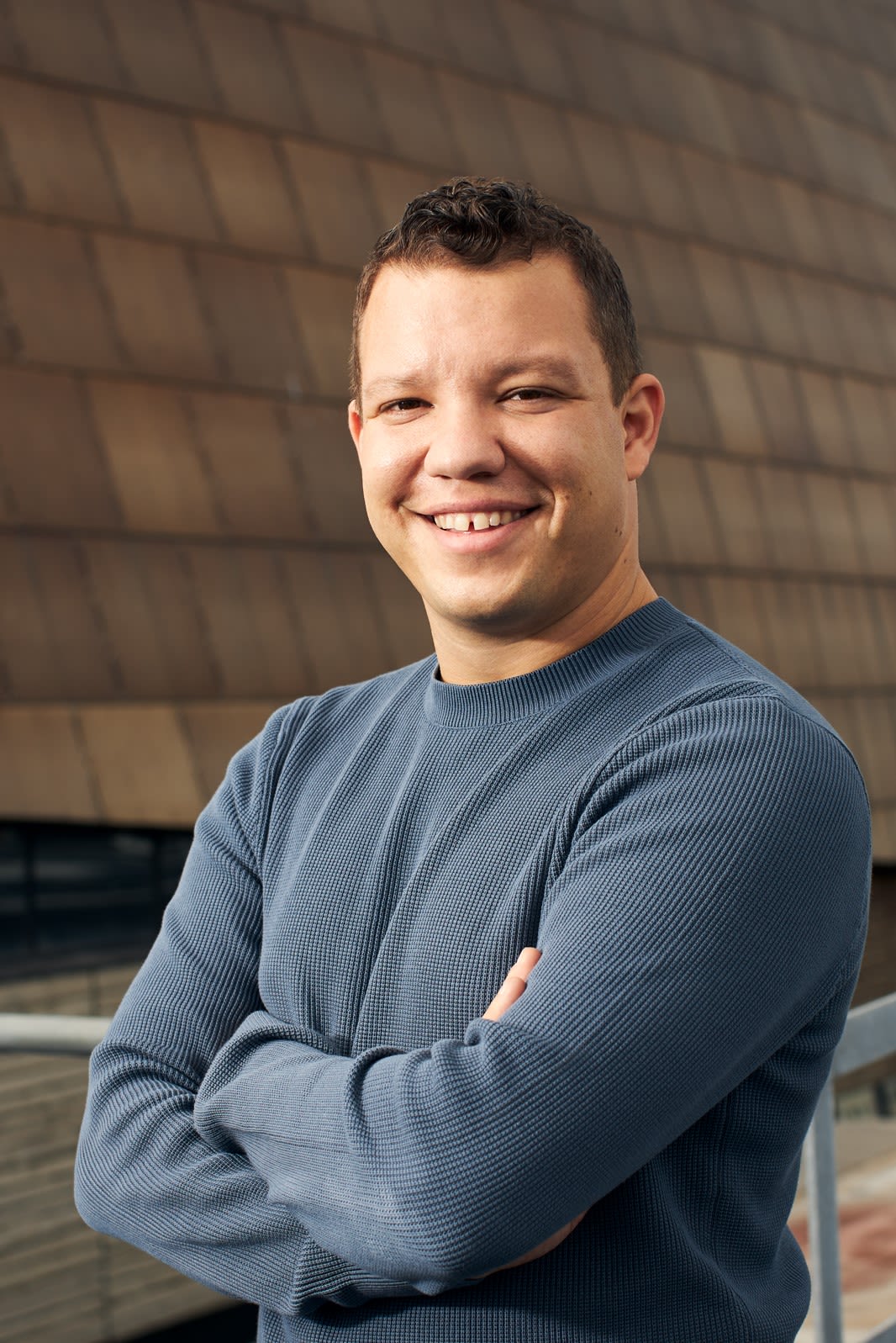
Benjamin Ealovega
Benjamin Ealovega
Ryan Bancroft grew up in Los Angeles and first came to international attention in April 2018, when he won both First Prize and Audience Prize at the prestigious Malko Competition for Young Conductors in Copenhagen. Since September 2021 he has been Principal Conductor of BBC National Orchestra of Wales. Following his first visit to work with the Tapiola Sinfonietta, he was invited to become its Artist-in-Association from the 2021/22 season. In September he became Chief Conductor of the Royal Stockholm Philharmonic Orchestra.
His new role as Chief Conductor in Stockholm saw him open the season with the orchestra’s first performance of Sven-David Sandström’s The High Mass and highlights include premieres of pieces by Daniel Börtz and Anders Hillborg, and concerts with Emanuel Ax and Seong-Jin Cho.
This summer he made his Hollywood Bowl debut with the Los Angeles Philharmonic; this season he also makes debuts with the Cleveland Orchestra, San Francisco and Cincinnati Symphony orchestras, NDR Elbphilharmonie Orchestra, Orquesta Sinfónica Castilla y León and Netherlands Radio Philharmonic Orchestra, as well as returning to the Toronto Symphony Orchestra and Philharmonia Orchestra.
He has a passion for contemporary music and has performed with Amsterdam’s Nieuw Ensemble, assisted Pierre Boulez in a performance of his Sur incises in Los Angeles, premiered works by Sofia Gubaidulina, John Cage, James Tenney and Anne LeBaron, and has worked closely with improvisers such as Wadada Leo Smith and Charlie Haden.
He studied at the California Institute of the Arts, Royal Conservatoire of Scotland and in the Netherlands.
Katharine Dainsoprano

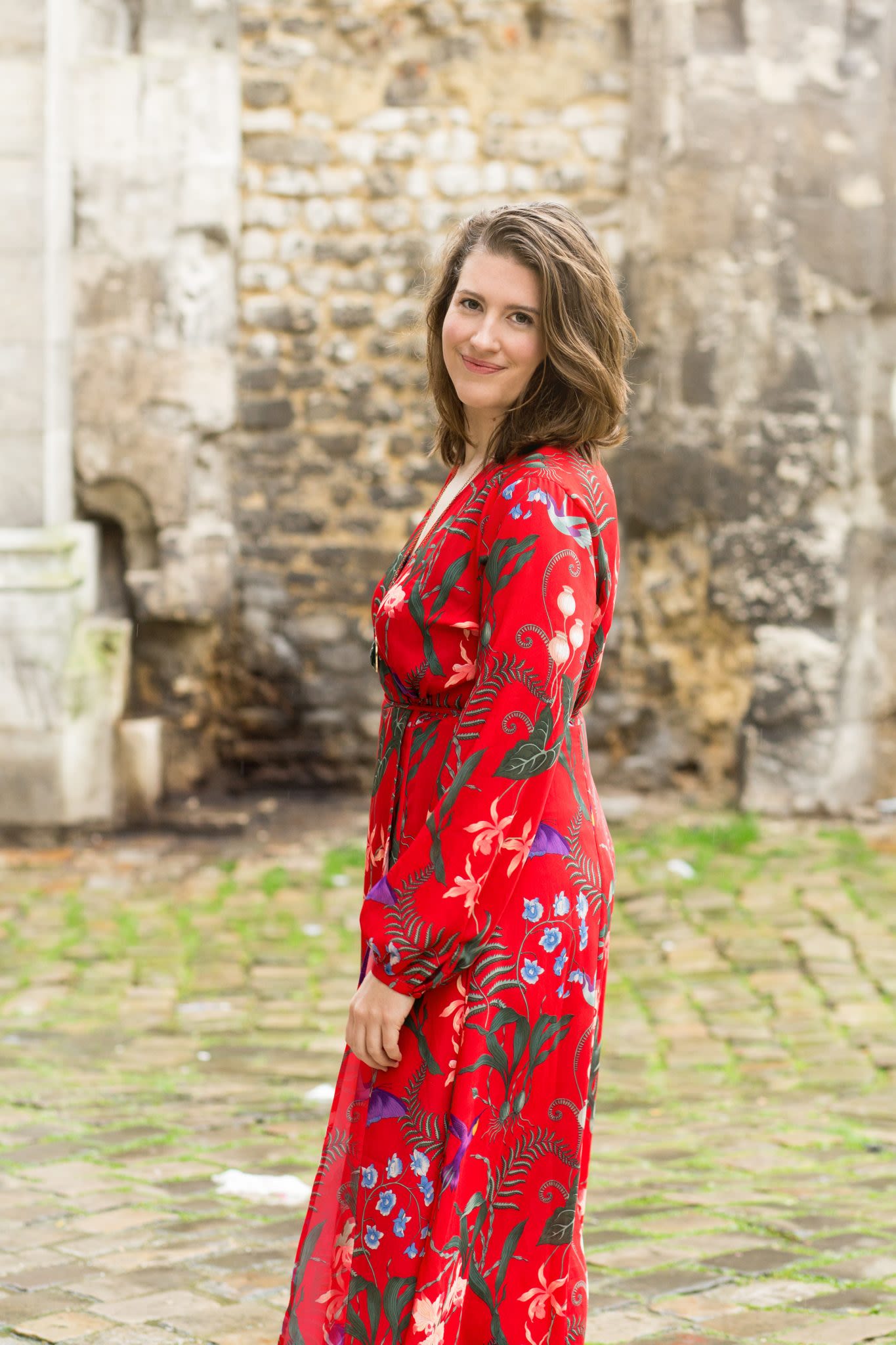
Soprano Katharine Dain performs opera, chamber music and orchestral repertoire on international stages, as well as collaborating on a wide variety of creative projects.
Highlights of recent seasons include being named artist-in-residence with the Tapiola Sinfonietta; ongoing collaborations with the Orchestra of the 18th Century and Netherlands Chamber Orchestra; performances of Mozart’s Don Giovanni, Die Entführung aus dem Serail and Così fan tutte in the Netherlands, Belgium, France, Hungary and Ecuador; and projects with the Royal Concertgebouw Orchestra, Rotterdam Philharmonic Orchestra and BBC Scottish Symphony Orchestra. Her album Regards sur l’Infini with pianist Sam Armstrong won an Edison Award for Best Debut album in 2021.
She has a particular affinity with music of the 20th and 21st centuries: she made her debut with Dutch National Opera in Claude Vivier’s Kopernikus and recently was both singer and co-creator on I have missed you forever for the same company and at Amsterdam’s Opera Forward Festival. Her repertoire interests in song range from the Baroque to the present day (including many pieces commissioned for her), and she is a frequent guest at leading festivals, including Aldeburgh, Holland Festival, West Cork, International Lied Festival Zeist and Wonderfeel.
She is equally at home in oratorio, with highlights including Bach’s St Matthew Passion with the Academy of Ancient Music and Choir of King’s College Cambridge, Messiah at Carnegie Hall, Stravinsky’s Les noces with the New York City Ballet and Mozart’s Requiem and Beethoven’s Ninth Symphony with the Orchestra of the 18th Century and Cappella Amsterdam.
Katharine Dain holds degrees from Harvard University, Guildhall School of Music & Drama and Mannes College of Music. A dual citizen of the Netherlands and the USA, she currently lives in Rotterdam.
Jorge Navarro Coloradotenor

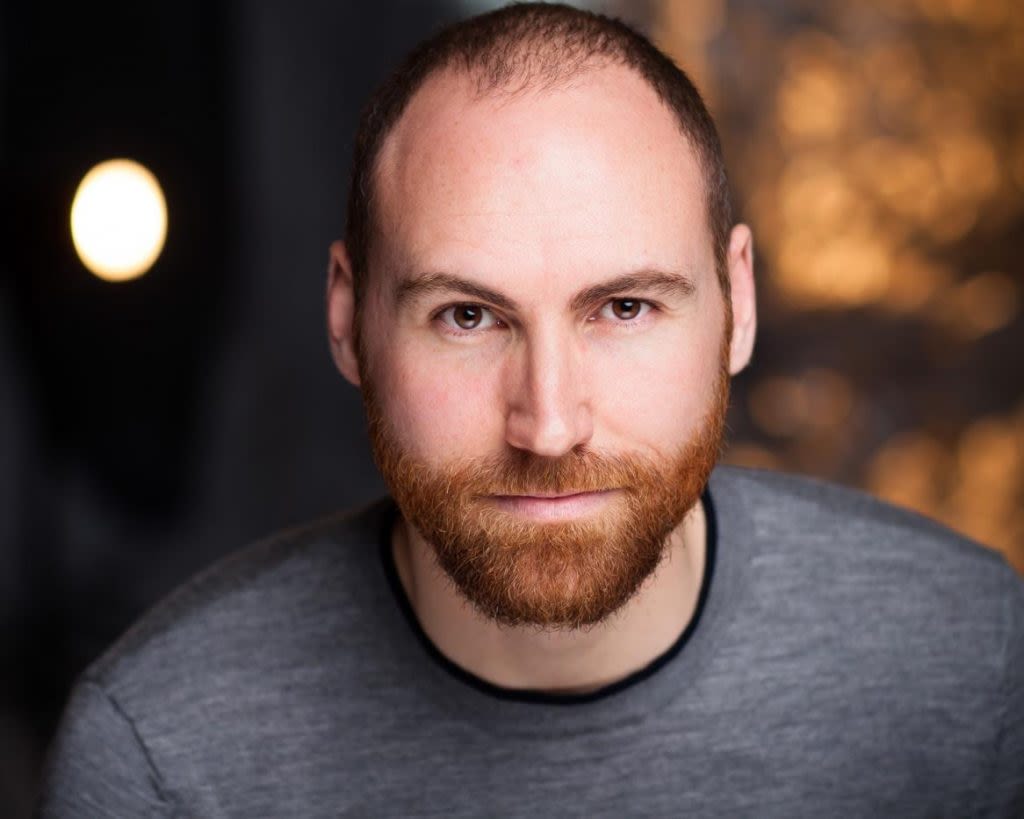
Jamie Capewell
Jamie Capewell
Jorge Navarro Colorado studied singing and opera at the Guildhall School of Music & Drama in London, and completed his training in the Britten–Pears and Samling programmes.
Highlights of current and recent seasons include his debut at the Grand Théâtre de Genève as Telemaco (Monteverdi’s Il ritorno d’Ulisse in patria) directed by Fabio Biondi, with further performances in Madrid and Barcelona; Mozart’s Requiem with the Barcelona Symphony Orchestra under Trevor Pinnock; his debut at Venice’s La Fenice as Gualtiero (Vivaldi’s Griselda) under Diego Fasolis; a recital of Baroque arias as part of the London Handel Festival; the tenor roles in Lotario, Rodrigo and Ariodante at the Göttingen Handel Festival conducted by Laurence Cummings; Haydn’s The Creation with the Barcelona Symphony Orchestra and National Orchestra of Catalonia in Barcelona; and Rinaldo with Capella Cracoviensis at the Halle Handel Festival and Scipione with the Early Opera Company at the London Handel Festival.
His discography includes Handel’s Lotario, Rodrigo andPoro, re dell’Indie, German cantatas for voice and violin with Ensemble Diderot and Johannes Pramsohler, and Infinite Refrain: Music of Love’s Refuge, a recital album of arias and duets with Randall Scotting and the Academy of Ancient Music led by Laurence Cummings.
Michel de Souzabaritone

Michel de Souza was born in Brazil and won the Maria Callas Vocal Competition in São Paulo, before joining the Jette Parker Young Artists Programme at the Royal Opera House, Covent Garden.
He was an Emerging Artist with Scottish Opera, singing roles including Escamillo (Carmen), Forester (The Cunning Little Vixen) and Marullo (Rigoletto). At Covent Garden his roles have included Schaunard (La bohème), Moralès (Carmen), Angelotti (Tosca) Mandarin and Ping (Turandot), Captain (Eugene Onegin) and Flemish Deputy (Don Carlo). At the Grand Théâtre de Genève he appeared as Schaunard, Baron Grog (La Grande-Duchesse de Gérolstein), Leuthold (William Tell) and Starveling (A Midsummer Night’s Dream). At Grange Park Opera he has sung Sonora (La fanciulla del West) and High Priest (Samson et Dalila). For Chelsea Opera he appeared as Athanaël (Thaïs) and he was Paradies (The Intelligence Park) for Music Theatre Wales.
In South America he has sung Guglielmo (Così fan tutte) at Teatro Argentino de la Plata and Belcore (L’elisir d’amore) and Count Robinson (Il matrimonio segreto) at Theatro São Pedro, as well as Crown (Porgy and Bess) at Grande Teatro Belo Horizonte. At Teatro Municipal de São Paulo he has appeared as Papageno (The Magic Flute), Figaro (The Barber of Seville), Prus (The Makropulos Affair) and Nick Shadow (The Rake’s Progress) and, most recently, Guglielmo.
For his debut at the Grand Théâtre de Luxembourg, Michel de Souza sang both Emperor Overall (Der Kaiser von Atlantis) and the Politician (En vertu de). He sang his first Marcello (La bohème) for English Touring Opera, appeared as Figaro (The Barber of Seville) for Nevill Holt Opera and as Viko in The Gods of the Game – a football opera for Grange Park Opera, which was also filmed for Sky Arts.
BBC National Orchestra of Wales
For over 90 years, BBC National Orchestra of Wales has played an integral part in the cultural landscape of Wales, occupying a distinctive role as both broadcast and national symphony orchestra. Part of BBC Wales and supported by the Arts Council of Wales, it has a busy schedule of live concerts throughout Wales, the rest of the UK and the world.
The orchestra is an ambassador of Welsh music and champions contemporary composers and musicians; its concerts can be heard regularly across the BBC – on Radio 3, Radio Wales and Radio Cymru.
BBC NOW works closely with schools and music organisations throughout Wales and regularly undertakes workshops, side-by-side performances and young composer initiatives to inspire and encourage the next generation of performers, composers and arts leaders.
The orchestra is based at BBC Hoddinott Hall in Cardiff Bay, where its purpose-built studio not only provides the perfect concert space, but also acts as a broadcast centre from where its live-streamed concerts and pre-recorded content are presented as part of its popular Digital Concert Series.
For further information please visit the BBC National Orchestra and Chorus of Wales's website: bbc.co.uk/now
Patron
HM King Charles III KG KT PC GCB
Principal Conductor
Ryan Bancroft
Conductor Laureate
Tadaaki Otaka CBE
Composer-in-Association
Gavin Higgins
Composer Affiliate
Sarah Lianne Lewis
First Violins
Lesley Hatfield leader
Nick Whiting associate leader
Martin Gwilym-Jones sub-leader
Shana Douglas
Terry Porteus
Anna Cleworth
Ruth Heney
Alejandro Trigo
Emilie Godden
Carmel Barber
Rebecca Totterdell
Paul Mann
Amy Fletcher
Emma Menzies
SecondViolins
Anna Smith *
Sheila Smith
Lydia Caines
Ilze Abola
Michael Topping
Katherine Miller
Joseph Williams
Beverley Wescott
Vickie Ringguth
Roussanka Karatchivieva
Jane Sinclair
Gary George-Veale
Violas
Joel Hunter ‡
Alex Thorndike #
Tetsuumi Nagata
Peter Taylor
Catherine Palmer
Lowri Thomas
Robert Gibbons
Laura Sinnerton
Ania Leadbeater
Anna Growns
Cellos
Alice Neary *
Jessica Feaver
Sandy Bartai
Rachel Ford
Alistair Howes
Carolyn Hewitt
Keith Hewitt
Kathryn Graham
Double Basses
David Stark *
Fabian Galeana
Christopher Wescott
David F. C. Johnson
Richard Gibbons
Mike Chaffin
Flutes
Matthew Featherstone *
John Hall †
Lindsey Ellis
Piccolo
Lindsey Ellis †
Oboes
Steve Hudson *
Amy McKean †
Sarah-Jayne Porsmoguer
Cor anglais
Sarah-Jayne Porsmoguer †
Clarinets
Nick Carpenter *
Bethany Crouch
Lenny Sayers
E flat Clarinet
Bethany Crouch
Bassoons
Jarosław Augustiniak *
Jo Shewan
Horns
Richard Bayliss ‡
Meilyr Hughes
Neil Shewan †
Jenny Cox
Dave Ransom
Trumpets
Philippe Schartz *
Robert Samuel
Tim Barber
Trombones
Donal Bannister *
Dafydd Thomas
Bass Trombone
Darren Smith †
Tuba
Daniel Trodden †
Timpani
Matt Hardy
Percussion
Phil Hughes *
Andrea Porter
Max Ireland
Harry Lovell-Jones
Sarah Mason
Harp
Valerie Aldrich-Smith †
Piano/Celesta
Catherine Roe Williams
Organ
William Haskins
Cimbalom
Edward Cervenka
* Section Principal
† Principal
‡ Guest Principal
# Assistant String Principal
The list of players was correct at the time of publication
Director Lisa Tregale
Orchestra Manager Vicky James
Assistant Orchestra Manager Nick Olsen
Orchestra Coordinator, Operations Kevin Myers
Business Coordinator Caryl Evans
Orchestra Administrator Eleanor Hall
Head of Artistic Production Matthew Wood
Artists and Projects Manager Victoria Massocchi
Orchestra Librarian Katie Axelsen (paternity cover)
Producer Mike Sims
Broadcast Assistant Kate Marsden
Head of Marketing and Audiences Sassy Hicks
Marketing Coordinator Amy Campbell-Nichols +
Digital Producer Yusef Bastawy
Social Media Coordinator Harriet Baugh
Education Producers Beatrice Carey, Rhonwen Jones **
Audio Supervisors Simon Smith, Andrew Smillie
Production Business Manager Lisa Blofeld
Stage and Technical Manager Steven Brown +
Assistant Stage and Technical Manager Josh Mead
BBC Wales Apprentice Jordan Woodley
+ Green Team member
** Diversity & Inclusion Forum