Father John Misty sings Scott Walker with Jules Buckley and the BBC Symphony Orchestra
Friday 19 May 2023, 7.30pm


Prologue 1, 2
Montague Terrace (in Blue)
It’s Raining Today
Rosemary
Jo
Boy Child 5
The Seventh Seal
Copenhagen 6
Thanks for Chicago Mr. James 1, 6
The Old Man’s Back Again (Dedicated to the Neo-Stalinist Regime)
The Electrician 3, 7
Two Ragged Soldiers
Sleepwalkers Woman
On Your Own Again 6
Such a Small Love 5
Duchess 5
Farmer in the City 4, 8
Father John Misty
BBC Symphony Chorus (Grace Rossiter chorus-master)
BBC Symphony Orchestra
Jules Buckley conductor
Tracks composed by Scott Walker, except (1) Scott Walker/Ady Semel
Original arrangements by Angela Morley, except (2) Angela Morley/Peter Knight, (3) Dave MacRae, (4) Brian Gascoigne
Transcriptions and additional arrangements by Jules Buckley, except (5) Tom Trapp, (6) Stefan Behrisch, (7) Peter Riley, (8) Jochen Neuffer
There will be no interval


Highlights of this concert will be broadcast by BBC Radio 6 Music in the Gideon Coe show next Thursday at 9.00pm. Please save your applause for the end of each song.
This will be available for 30 days after broadcast via BBC Sounds, where you can also find podcasts and music mixes.
Help us Improve Our Online Programmes.
Please take this 5-minute survey and let us know what you think of these notes.
Programme Survey
THE SOUND OF SCOTT
Jules Buckley introduces tonight’s special musical tribute


It’s truly difficult to sum up in words the impact Scott Walker’s work has had on so many people, from artists to fans around the globe.
The imagination and genius of Scott’s darkly humorous and melancholic tales, combined with Angela Morley’s absolutely sublime orchestral arrangements have been an ongoing lesson to me, both as an arranger and as a fan. To be so bold and to write against the grain like this, with such restraint, at a time when pop music in this broader instrumental setting was often so binary and light, is truly unique and visionary.
Tonight’s concert has given both Father John Misty and myself a platform to collaborate and find a set of Scott’s vast work that inspires artist, orchestra and, hopefully, all of you listening.
It’s impossible to present this music without a killer orchestra and we couldn’t be in finer company tonight than with the BBC Symphony Orchestra and BBC Symphony Chorus. Furthermore, Scott’s music would not be complete without a great rhythm section at its core, and I would like to give special mention to Matt Calvert, Tom Trapp (who has also made orchestrations), Rob Gentry, Tom Mason and John Blease for their commitment to the detail and care required to help present the word of Scott Walker.
We hope you enjoy the concert.
Conductor and arranger Jules Buckley is also Creative Artist in Association with the BBC Symphony Orchestra
Great Scott!
Dick Hovenga traces the path of Scott Walker after the singer-songwriter’s move away from the Walker Brothers
Scott Walker was born in Hamilton, Ohio, as Noel Scott Engel 80 years ago. He changed his name to Walker after he met up with John Maus, who had used ‘Walker’ as a fake ID because he was too young to perform in clubs. Scott (voice, bass), John (voice, guitar) and Gary Leeds (drums) started The Walker Brothers in Los Angeles in 1964 but moved to London as the musical climate seemed more suited to them. With legendary hits such as ‘Make It Easy on Yourself’ and ‘My Ship Is Coming In’, with Scott singing lead with his beautiful baritone voice, they became big pop stars. Their repertoire was firmly based on Phil Spector’s ‘wall of sound’ with a high-impact orchestra, and the success of The Walker Brothers continued over three albums. As Scott was in charge of not only picking the songs, but also organising the studio sessions and helping out in production, it was no surprise that after three albums Scott decided to go and work by himself. His first solo album, released in 1967 and entitled simply Scott, was a move away from the sound of his former band. The orchestra was still there but the songs were more intimate and darker, and they allowed more focus on Scott’s amazing voice. Featuring interpretations of songs by Belgian singer/composer Jacques Brel, movie songs and contemporary covers, as well as his brilliant self-penned songs, Scott was a masterful treat. Within a year he recorded and released Scott 2, following the same mix of music but with even more confidence in his own songwriting.
It was with Scott 3 (1969) that Scott showed how gloriously accomplished he had become as a songwriter. All beautiful, self-penned, timeless songs, dripping in melancholy, combined with stunning strings and Scott’s heart-breaking voice (never sounding better). The album ends with three Brel items and the deeply poignant ‘If You Go Away’ as its closing track. Scott 3 sees Scott at the top of his game. Scott 4 (also 1969) saw the rich vein of his earlier albums continue and now all the material was written by Scott. It not only made him a music legend but also influenced David Bowie and Radiohead (to name but two) in a major way. More stripped-down yet more political and socially aware than any of his other albums, it remains a true, timeless masterpiece.
Dick Hovenga is a Dutch music writer and was co-artistic director with Jules Buckley of the 2017 BBC Prom concert celebrating Scott Walker
Coming up at the Barbican
Friday 26 May 2023, 7.30pm
Symphonies of the Human Spirit
The BBC Symphony Chorus sings Stravinsky’s Symphony of Psalms, at the heart of a life-affirming debut concert from guest conductor Dima Slobodeniouk.
Book tickets


Biographies
Father John Misty

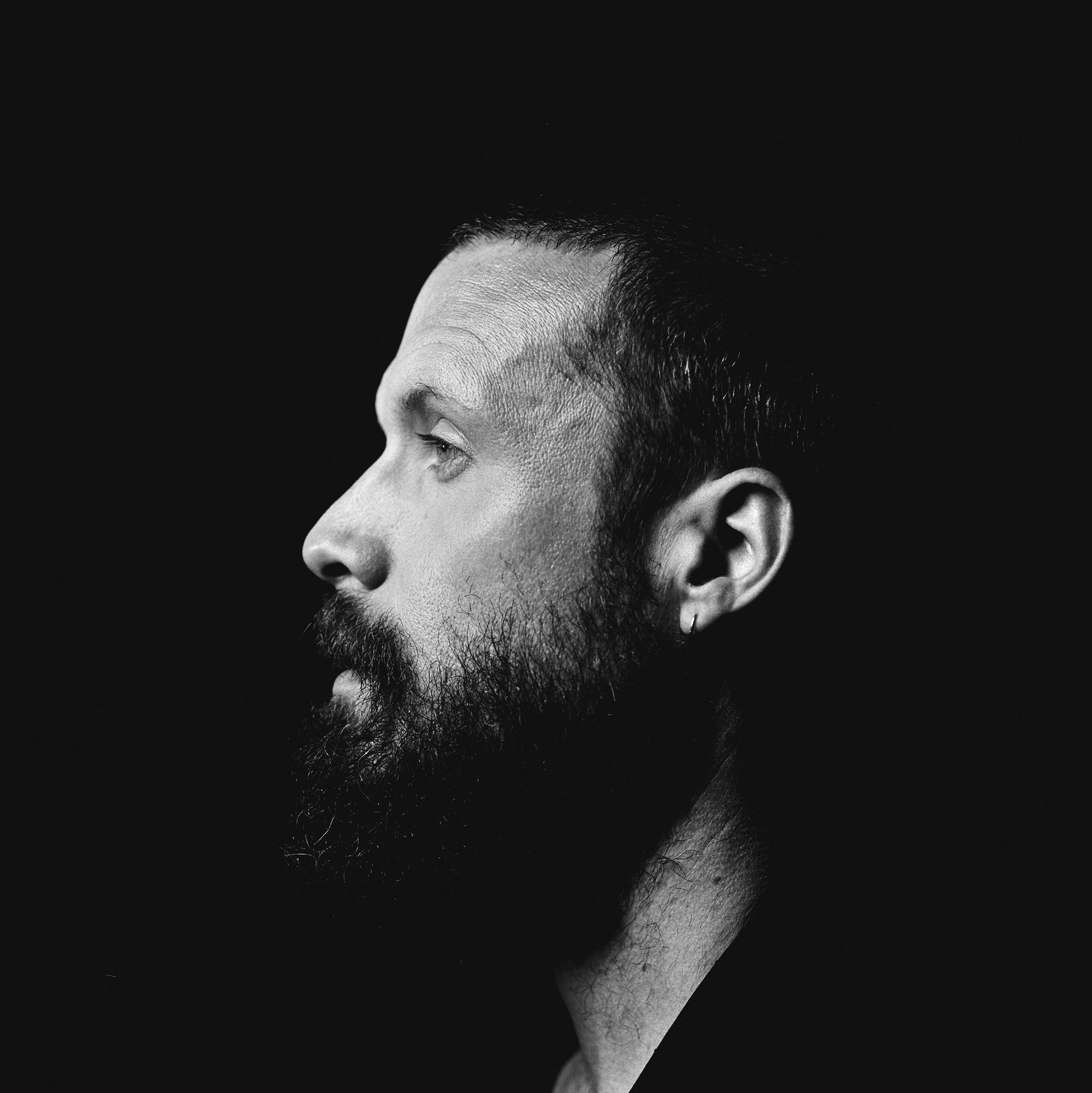
American singer, songwriter and producer Father John Misty (real name Josh Tillman) has emerged as a leading artist of the past decade, his five albums to date all receiving critical acclaim.
He was born to evangelical Christian parents in Rockville, Maryland, and played drums in the folk rock band Fleet Foxes before launching his solo career in 2012. That year he released his first solo album, Fear Fun. After his 2015 release I Love You, Honeybear, his third album, Pure Comedy (2017), won Best Alternative Music Album at the 2018 Grammy Awards.
Following God’s Favourite Customer (2018), his most recent LP is Chloë and the Next 20th Century, which entered the UK Albums Chart in April last year at No. 2. Father John Misty was nominated both for the International Male Solo Artist BRIT Award in 2016 and for Best International Solo Artist at the 2018 NME Awards. In March he gave a sold-out performance at London’s Eventim Apollo, Hammersmith.
Jules Buckley conductor

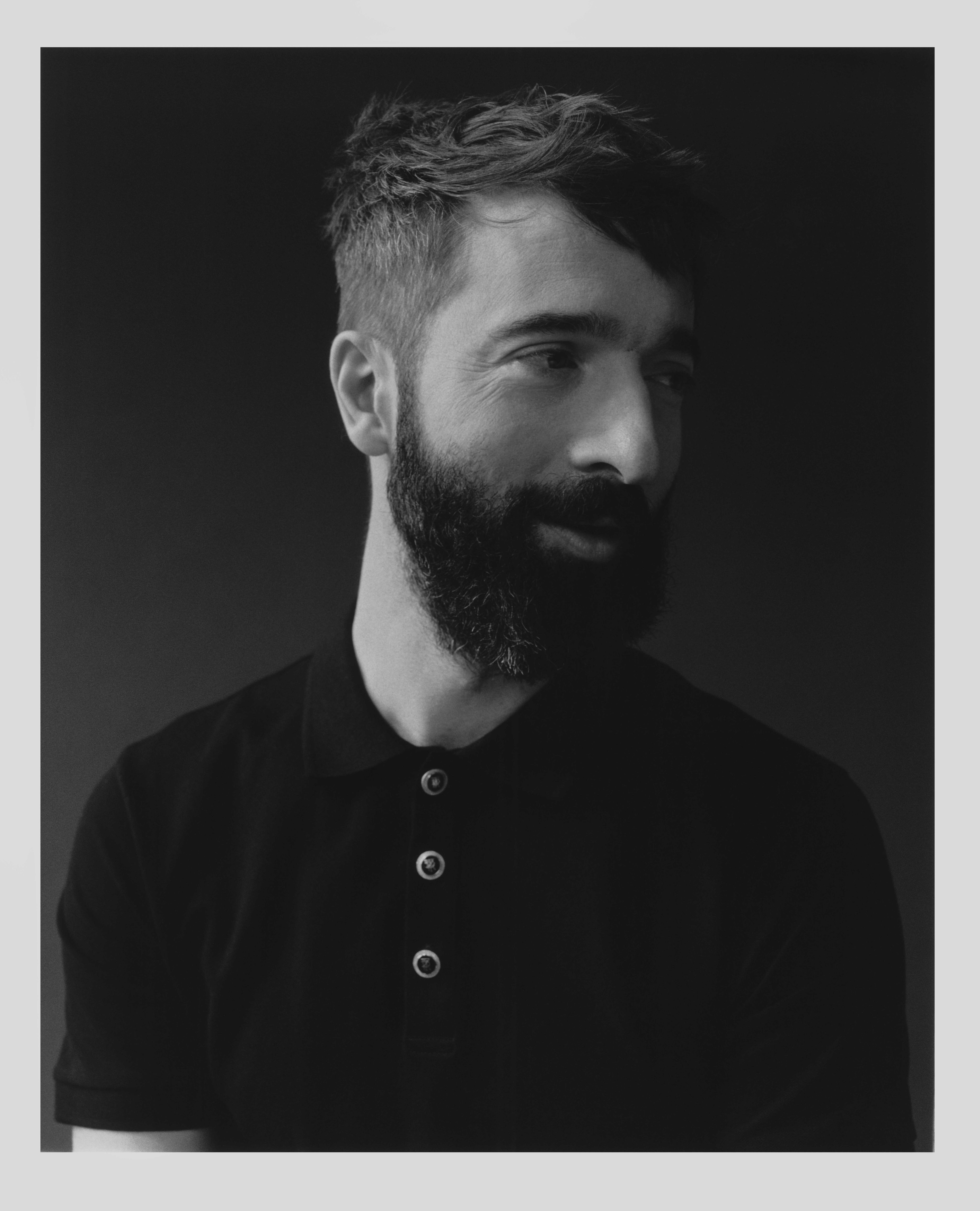
Grammy Award-winning composer, arranger, curator and conductor Jules Buckley has collaborated with some of music’s biggest names, with a discography spanning over 70 albums. He is Creative Artist in Association with the BBC Symphony Orchestra, a role that has seen him lead the orchestra in a range of innovative collaborations. He is also Honorary Conductor of the Netherlands-based Metropole Orkest, following a seven-year tenure as Chief Conductor (2013–20). Last summer he appeared at the BBC Proms with the Jules Buckley Orchestra, making its Proms debut in an Aretha Franklin tribute featuring American singer Sheléa.
Jules Buckley is in demand as arranger and conductor for some of the biggest names in music, collaborating with artists including Tori Amos, Arctic Monkeys, Basement Jaxx, John Cale, Chaka Khan, Anna Calvi, Laura Mvula, Massive Attack, Professor Green, Anoushka Shankar, Skepta, Snarky Puppy, Stormzy and Paul Weller.
Previous Proms projects include ‘New York: Sound of a City’; appearances with Jacob Collier, Jamie Cullum, Laura Mvula and Anoushka Shankar; tributes to Charles Mingus, Nina Simone and Scott Walker; and, last year, in addition to his appearance with his own orchestra, Proms featuring indie band Public Service Broadcasting.
BBC Symphony Orchestra
The BBC Symphony Orchestra has been at the heart of British musical life since it was founded in 1930. It plays a central role in the BBC Proms, including appearances at the First and Last Nights, and is an Associate Orchestra at the Barbican in London. Its commitment to contemporary music is demonstrated by a range of premieres each season, as well as Total Immersion days devoted to specific composers or themes.
Highlights of this season at the Barbican have included Total Immersion days exploring the music of George Walker, Kaija Saariaho and Jean Sibelius, the last two led by Chief Conductor Sakari Oramo, who also conducted concerts showcasing the music of Grażyna Bacewicz.
A literary theme has run through the season, including a new version of Arthur Conan Doyle’s The Hound of the Baskervilles and the world premiere of Iain Bell’s Beowulf, featuring the BBC Symphony Chorus. In March Ian McEwan joined the orchestra to read from his own works, with music curated around his readings.
Among this season’s world and UK premieres have been Victoria Borisova-Ollas’s A Portrait of a Lady by Swan Lake, Kaija Saariaho’s Saarikoski Songs and Valerie Coleman’s Umoja (Anthem of Unity). The season comes to a close on
23 June with the UK premiere of Joby Talbot’s opera Everest.
The vast majority of the BBC SO’s performances are broadcast on BBC Radio 3 and a number of studio recordings each season are free to attend. These often feature up-and-coming talent, including members of BBC Radio 3’s New Generation Artists scheme. All broadcasts are available for 30 days on BBC Sounds, and the BBC SO can also be seen on BBC TV and BBC iPlayer, and heard on the BBC’s online archive, Experience Classical.
The BBC Symphony Orchestra and Chorus – alongside the BBC Concert Orchestra, BBC Singers and BBC Proms – also offer innovative education and community activities and take a lead role in the BBC Ten Pieces and BBC Young Composer programmes.
Chief Conductor
Sakari Oramo
Principal Guest Conductor
Dalia Stasevska
Günter Wand Conducting Chair
Semyon Bychkov
Conductor Laureate
Sir Andrew Davis
Creative Artist in Association
Jules Buckley
First Violins
Stephen Bryant leader
Jeremy Martin
Jenny King
Celia Waterhouse
Colin Huber
Shirley Turner
Ni Do
James Wicks
Kirsty MacLeod
Sophie Mather
Zanete Uskane
Thea Spiers
Veronica Marziano
Tim Warburton
Second Violins
Heather Hohmann
Daniel Meyer
Vanessa Hughes
Danny Fajardo
Lucy Curnow
Rachel Samuel
Tammy Se
Caroline Cooper
Victoria Hodgson
Lucica Trita
Eleanor Bartlett
Ruth Funnell
Violas
Edward Vanderspar
Philip Hall
Joshua Hayward
Nikos Zarb
Audrey Henning
Natalie Taylor
Michael Leaver
Carolyn Scott
Mary Whittle
Peter Mallinson
Cellos
Miwa Rosa
Tamsy Kaner
Mark Sheridan
Clare Hinton
Michael Atkinson
Morwenna Del Mar
Anna Beryl
Helen Rathbone
Double Basses
Chris West
Richard Alsop
Anita Langridge
Michael Clarke
Beverley Jones
Elen Pan
Flute
Michael Cox
Oboe
Alison Teale
Clarinet
Richard Hosford
Bass Clarinet
Thomas Lessels
Bassoon
Julie Price
Horns
Nicholas Korth
Michael Murray
Mark Wood
Nicholas Hougham
Trumpets
Philip Cobb
Martin Hurrell
Joseph Atkins
Trombones
Helen Vollam
Dan Jenkins
Bass Trombone
Robert O'Neill
Tuba
Jon Riches
Timpani
Alasdair Kelly
Percussion
David Hockings
Alex Neal
Fiona Ritchie
Harp
Elizabeth Bass
Piano/Synth/Hammond Organ
Rob Gentry
ElectricGuitar
Matt Calvert
Acoustic Guitar/Electric Guitar/Mandolin
Tom Trapp
Bass Guitar
Tom Mason
Drum Kit
John Blease
The list of players was correct at the time of publication.
BBC Symphony Chorus
Founded in 1928, the BBC Symphony Chorus is one of the UK’s leading choirs and performs, records and broadcasts a diverse range of large-scale choral repertoire alongside the BBC Symphony Orchestra and internationally acclaimed conductors and soloists. It plays an important role in the BBC Proms, and most performances are broadcast on BBC Radio 3.
The BBC Symphony Chorus’s early performances included Mahler’s Symphony No. 8, Stravinsky’s Persephone and Walton’s Belshazzar’s Feast, and this commitment to new music continues today.
Highlights of this season performing alongside the BBC Symphony Orchestra at the Barbican have included the UK premiere of George Walker’s Mass for soloists, chorus and orchestra conducted by Alpesh Chauhan and Szymanowski’s Symphony No. 3, ‘The Song of the Night’, conducted by Sakari Oramo. Next Friday they will perform Stravinsky’s Symphony of Psalms conducted by Dima Slobodeniouk.
The BBC Symphony Chorus’s performances at this summer’s BBC Proms feature the First and Last Nights of the Proms, as well as Beethoven’s Symphony No. 9, Rachmaninov’s The Bells, Walton’s Belshazzar’s Feast and Mahler’s Symphony No. 3.
In addition to featuring in studio recordings for BBC Radio 3, the chorus has also made a number of commercial recordings, including a Grammy-nominated release
of Holst’s First Choral Symphony and a Gramophone Award-winning disc of Elgar’s The Dream of Gerontius conducted by Sir Andrew Davis.
Forthcoming releases include premiere recordings of Vaughan Williams’s The Future and The Steersman conducted by Martin Yates and A Child of Our Time conducted by Sir Andrew Davis.
President
Sir Andrew Davis
Director
Neil Ferris
Deputy Director
Grace Rossiter
Vocal Coach
Katie Thomas
Accompanist
Paul Webster
Sopranos
Helena Bartley
Kate Chudakova
Josceline Dunne
Lizzie Fletcher
Helen Jorgensen
Mackenzie Kavanagh
Bridget McNulty
Julia Neate
Hannah Savignon-Smythe
Sheila Wood
Altos
Hannah Bishay
Kirsty Carpenter
Joanna Dacombe
Kate Hampshire
Ruth James
Regina Ohak
Elisabeth Storey
Helen Tierney
Anna Williams-Haines
Tenors
Stephen Horsman
Liam Lichy-Lightman
Tony Madgwick
Simon Naylor
Simon Pickup
Philip Rayner
Ethan Reeves
Richard Salmon
Greg Satchell
Jonathan Williams
Tony Wren
Basses
Sam Brown
George Dorgan
David England
Mark Graver
Louis Girling
Leon Groz
Alex Hardy
Caspar Herberg
Michael Martin
John McLeod
Nigel Montagu
Jordi Piqué-Sellés
The list of singers was correct at the time of publication.