
Literary Inspirations
Friday 9/12/22, 7.30pm


Ludwig Van Beethoven
Overture ‘Coriolan’ (8’)
György Ligeti
Violin Concerto (28’)
INTERVAL (20’)
Robert Schumann
Symphony No. 4 (29’)
Ryan BancroftConductor
Anthony MarwoodViolin


This concert is being recorded by BBC Radio 3 for future broadcast in Radio 3 in Concert. It will be available to stream or download for 30 days via BBC Sounds, where you can also find podcasts and music mixes. Visit bbc.co.uk/now for more information on future performances.
Introduction

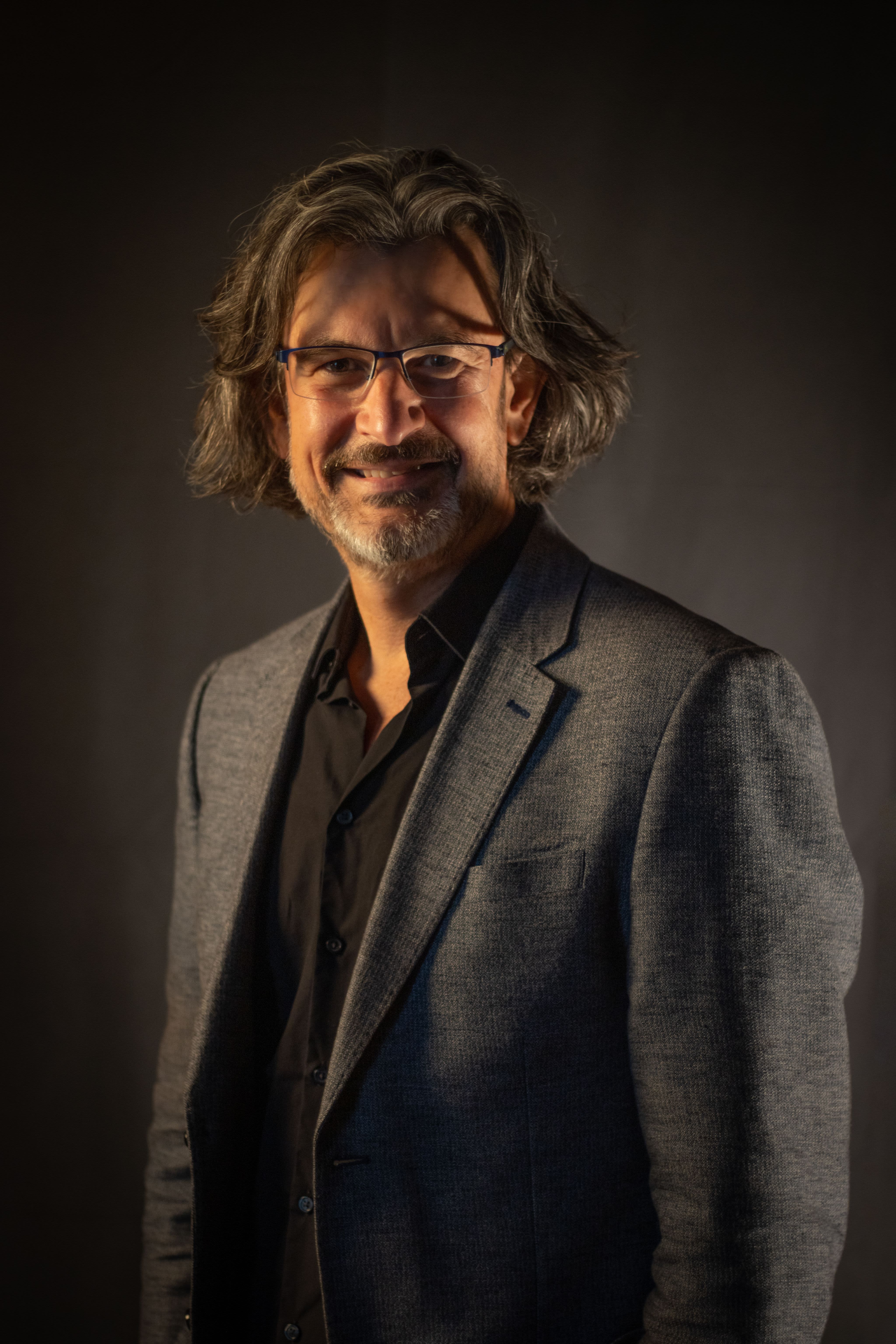
Welcome to tonight’s concert, for which BBC NOW is joined by our Principal Conductor Ryan Bancroft.
The evening begins in truly dramatic fashion with Beethoven’s Coriolan overture, a work full of energy and dramatic changeability that encapsulates an entire play in a mere eight minutes.
Ligeti didn’t believe in making life easy for his performers but, even in the most complex of music, his anarchic sense of humour was never far beneath the surface. The Violin Concerto demands of its soloist an awesome level of virtuosity and stamina, and tonight we’re delighted to welcome one of the work’s great champions – Anthony Marwood.
To end, Schumann’s turbulent Fourth Symphony, a work that challenges received opinion just as surely as Ligeti’s concerto does. It was a piece that Schumann originally wrote in 1841, revising it considerably a decade later. Tonight we hear it in its original version as favoured by Johannes Brahms – who helped get it published it in 1891 – and by this evening’s conductor.
Enjoy!
Matthew Wood
Head of Artistic Production
Please respect your fellow audience members and those listening at home. Turn off all mobile phones and electronic devices during the performance. Photography and recording are not permitted.
Ludwig Van Beethoven (1770–1827)
Overture ‘Coriolan’, Op. 62 (1807)

It was presumably for an 1807 revival of Heinrich von Collin’s 1802 play Coriolan that Beethoven wrote his Coriolan overture. The play is based on the same subject as Shakespeare’s Coriolanus, though the subject is handled rather differently. It concerns a Roman hero who, when banished, joins the enemy and threatens Rome; confronted by pleas from his mother and his wife, he breaks down and kills himself.
Beethoven incorporates the strong emotions of the play – which contains important elements of heroism, feminine pleading and impending doom – and exploits them vividly in an impassioned and stirring overture. This type of approach can be a problem with an opera overture: sometimes the overture seems to say everything; but with a spoken play such as Coriolan the whole drama can be encapsulated in musical terms without this risk.
The opening of the overture is deceptive, since it sounds like a slow introduction but soon proves to be a series of long chords and rests within an underlying fast tempo. The main theme contrasts these powerful, jagged chords with nervous quaver figures, but the second theme is a complete contrast – a gentle, lyrical line that is repeated in a rising sequence and presumably portrays the increasingly desperate pleading of Coriolanus’s wife and mother. A short development section using the heartbeat rhythms of one of the earlier figures leads to a return of the whole opening part. The coda brings back the ‘feminine’ second theme before the jagged opening theme reappears, finally disintegrating and dissolving into nothing as the hero expires. The overture as a whole is one of Beethoven’s most intense expressions of raw emotion.
Programme note © Barry Cooper
Further Listening: The Orchestra of the 18th Century/Frans Brüggen (Philips 4340872)
Further Reading: Beethoven (Master Musicians) Barry Cooper (OUP)
György Ligeti (1923–2006)
Violin Concerto (1990–92)

1 Praeludium: Vivacissimo luminoso –
2 Aria, Hoquetus, Choral: Andante con moto –
3 Intermezzo: Presto fluido
4 Passacaglia: Lento intenso
5 Appassionato: Agitato molto
Anthony Marwoodviolin
You could convincingly argue that Hungarian/Austrian composer György Ligeti was as much a musical joker as he was a fully signed-up, radical member of the 20th-century avant-garde. Just think of the car horns that parp a prelude to his only opera, Le Grand Macabre, or the 100 metronomes he sets clicking cacophonously in his Poème symphonique – set against such modernist innovations as the clouds of teeming micropolyphony he conjures in otherworldly works such as Atmosphères.
By the time he came to embark on his Violin Concerto, however, Ligeti had mellowed and had even begun looking back to more traditional musical ideas such as melody and consonant harmony that might have shocked his younger self. ‘I wanted to write a highly virtuoso work in the tradition of the great violin concertos,’ the composer said in a 1995 interview, two years after the premiere of the concerto’s final five-movement version. And there’s plenty about the piece that directly recalls earlier violin masterpieces: exuberant and fiendishly difficult virtuosity; an apparently folk-tinged melody running through the second movement (it’s actually by Ligeti himself, lifted from his 1953 Bagatelles for wind quintet); and even a showy solo cadenza in its traditional location just before the concerto’s close.
But it’s also a work in which Ligeti the joker and Ligeti the radical seem to come together, most evidently over the question of tuning. The composer had long challenged the dominance of equal temperament, the tuning we’re all used to from a piano keyboard. His 1982 Horn Trio, for example, uses no fewer than three separate tuning systems simultaneously. In his Violin Concerto, Ligeti took things even further, with results that are quietly pioneering, deeply unconventional and often bizarrely comic too. Right at the start of his opening movement, he reveals a host of detuned doppelgängers for his violin soloist across the other players in his string section, creating a bafflingly rich texture of fast-moving lines. The ‘folk’ melody of his second movement – introduced by the violin soloist – later returns in a strange, shrill harmonisation from a quartet of ocarinas. (‘I looked for imprecise intonation and a dirty sound,’ Ligeti admitted about this section in the same interview.) In his exotic, richly scored third movement – the Concerto’s original finale – Ligeti underscores the soloist’s long, singing line with scurrying, increasingly menacing scales from the orchestra. The ocarinas return to upset the harmonic equilibrium again in the slow-moving fourth movement, and the fifth offers a brief survey of the Concerto’s earlier music, before a flamboyant farewell from the soloist and an off-the-cuff sign-off.
There’s plenty to amuse in the concerto, but it’s nonetheless a piece with a deeply serious intent, its chaotic collisions of styles, moods and backward glances held together firmly by Ligeti’s remarkable sonic imagination.
Programme note © David Kettle
Further Listening: Patricia Kopatchinskaja; Ensemble Modern/Peter Eötvös (Naïve V5285)
Further Reading: György Ligeti: Music of the Imagination Richard Steinitz (Faber)
INTERVAL: 20 minutes
Robert Schumann (1810–56)
Symphony No. 4 in D minor (1841)

1 Andante con moto – Allegro di molto –
2 Romanza: Andante –
3 Scherzo: Presto –
4 Largo – Allegro vivace
What we now know as Robert Schumann’s Fourth Symphony should probably by rights be called his Second. He wrote it – or at least its first version – between June and October 1841, buzzing from the huge success of his First Symphony, which had been premiered by the Leipzig Gewandhaus Orchestra under Felix Mendelssohn in January that year. Another reason for his elation, however, was his long-hoped-for marriage to his beloved Clara Wieck in September 1840 – following a five-year courtship, and then a protracted legal battle after her father banned their relationship (which Robert and Clara eventually won). Indeed, Schumann originally dubbed the work his ‘Clara Symphony’, though the name didn’t stick – it perhaps felt like something of an inappropriate epithet for what the composer had in mind.
For, following his bright, buoyant, eternally optimistic ‘Spring’ Symphony (No. 1), and despite his high spirits, Schumann set his sights on music that was far darker and more turbulent in his new work; in it he also challenged symphonic conventions. Rather than a work with the traditional four free-standing movements, he’d create a pioneering symphony that not only ran those movements together in a single span, but also shared themes and ideas between them, bringing a groundbreaking unity to his creation.
The radical new work received its premiere on 6 December 1841, again from the Leipzig Gewandhaus Orchestra. It went down well, but it was hardly the roof-raising success that Schumann had hoped for. Rather downhearted, he set it aside.
It wasn’t until a decade later that the composer, inspired by his new role as Director of Music for the city of Düsseldorf, unearthed the symphony again, thickening its originally light and nimble orchestration, also clarifying divisions between the piece’s movements. This revised (and, it has to be said, more conventional) rethink, premiered there in 1852, is the version more commonly heard today.
But it’s the pioneering original version – conceived as a single stretch of music, and teeming with intricate cross-references – that we hear in tonight’s concert. His first movement is more of a free-flowing fantasia than a conventional symphonic beginning, with the theme from its slow, portentous opening developed further in its main faster section, where new melodies also arise. Entitled ‘Romanze’, the slower second movement follows without a break, beginning with a melancholy, song-like melody for oboe and solo cello. The music of the first movement’s brooding opening returns, however, to cast a dark shadow over its central section, before it’s dispelled by a lilting theme for solo violin. That lilting theme itself returns in the central section of Schumann’s third movement, a playful but also somewhat troubled scherzo, and makes another reappearance to lead the work towards its finale. There, the composer returns to a striding, martial theme first heard in the opening movement, though it’s a newly introduced, sweetly lyrical melody passed between strings and woodwind that eventually propels the symphony towards its joyful but increasingly frenetic conclusion.
Programme note © David Kettle
Further Listening: Gürzenich-Orchester Köln/François-Xavier Roth (Myrios MYR028)
Further Reading: Schumann (Master Musicians) Eric Frederick Jensen (OUP)
Help us Improve Our Online Programmes.
Please take this 5-minute survey and let us know what you think of these notes.
Programme Survey
Biographies
Ryan Bancroft conductor

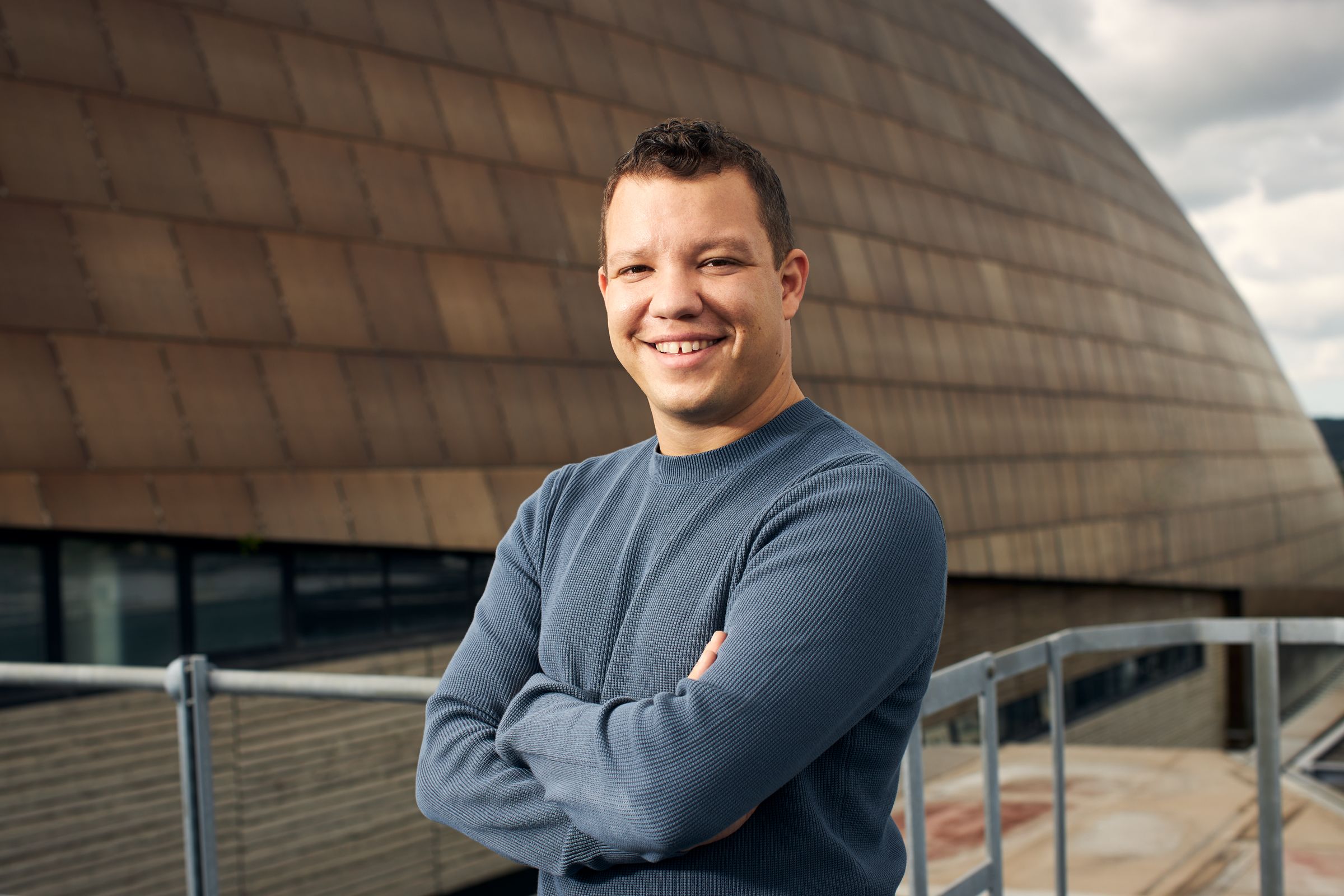
Photo: Benjamin Ealovega
Photo: Benjamin Ealovega
Ryan Bancroft grew up in Los Angeles and first came to international attention in April 2018, when he won both First Prize and Audience Prize at the prestigious Malko Competition for Young Conductors in Copenhagen. Since September 2021 he has been Principal Conductor of BBC National Orchestra of Wales. Following his first visit to work with the Tapiola Sinfonietta he was invited to become its Artist-in-Association from the 2021–22 season. Last year he was announced as Chief Conductor Designate of the Royal Stockholm Philharmonic Orchestra and will take up the position next September.
He has made debuts with a number of leading European orchestras, including the Philharmonia, London and Rotterdam Philharmonic, BBC, Danish National and Swedish Radio Symphony orchestras, Toulouse Capitole Orchestra, RAI Turin and Ensemble Intercontemporain. In North America he has worked with the Baltimore, Houston and Toronto Symphony orchestras and this season makes debuts with the Dallas Symphony and Minnesota Orchestra. He also appears for the first time at Suntory Hall with the New Japan Philharmonic and Midori, at the Royal Festival Hall with the Philharmonia and Sir Stephen Hough, and at the Royal Concertgebouw with the Netherlands Philharmonic. He also returns to the City of Birmingham, Gothenburg and Malmö Symphony orchestras.
He has a passion for contemporary music and has performed with Amsterdam’s Nieuw Ensemble, assisted Pierre Boulez in a performance of his Sur incises in Los Angeles, premiered works by Sofia Gubaidulina, Cage, Tenney and Anne LeBaron, and has worked closely with improvisers such as Wadada Leo Smith and Charlie Haden. He returns to work with the Ensemble Intercontemporain in March.
He studied at the California Institute of the Arts, Royal Conservatoire of Scotland and in the Netherlands.
Anthony Marwood violin

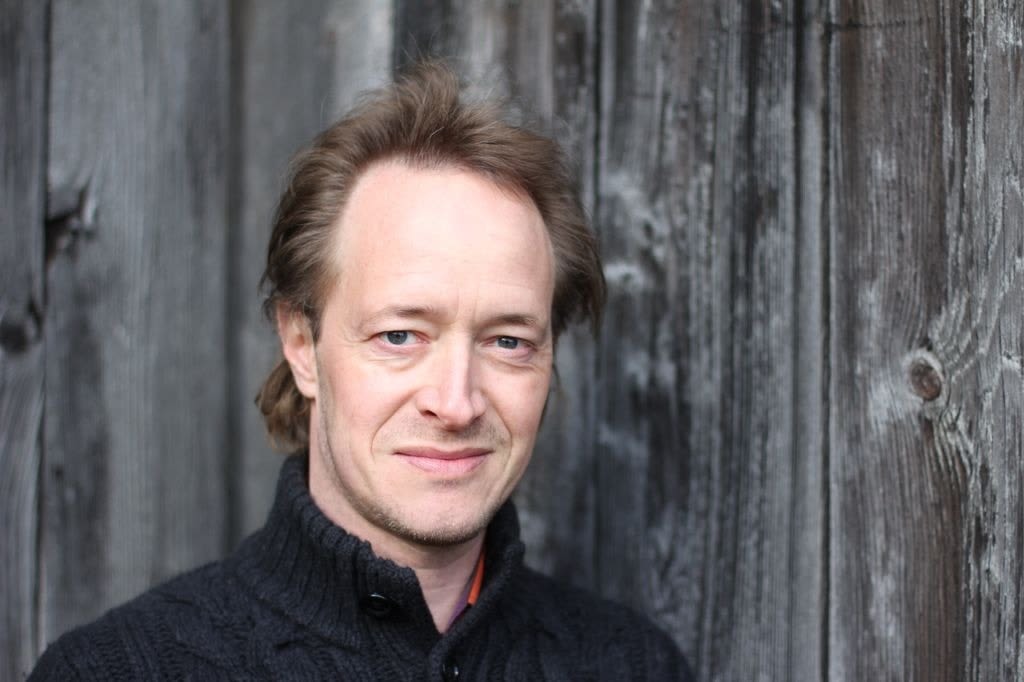
Photo: Felix Van Dijk
Photo: Felix Van Dijk
Anthony Marwood enjoys a wide-ranging international career as soloist, director and chamber musician. Recent solo engagements include performances with the Adelaide, Boston, New World, St Louis and Sydney Symphony orchestras, Leipzig Gewandhaus Orchestra, London Philharmonic and Spanish National Orchestra.
In summer 2021 he received acclaim for his performance of the Ligeti Violin Concerto with Thomas Adès and the Tanglewood Music Center Orchestra.
As director and soloist he has appeared with many of the leading chamber orchestras, including the Academy of St Martin in the Fields, Amsterdam and Tapiola sinfoniettas, Australian, Irish, Norwegian and Paris Chamber orchestras and Les Violons du Roy.
As a chamber musician he regularly collaborates with Steven Isserlis, Aleksandar Madžar, Inon Barnatan, Alexander Melnikov, Dénes Várjon and James Crabb, among others. He was for 16 years the violinist of the Florestan Trio.
Leading composers who have written concertos for him include Thomas Adès, Steven Mackey, Sally Beamish and Samuel Carl Adams. He is also a prolific recording artist, and his newest album – Beautiful Passing, featuring works for violin and orchestra by Steven Mackey – is released this month.
He is Co-Artistic Director of the Peasmarsh Chamber Music Festival in East Sussex, which celebrated its 20th anniversary in 2018. He also performs annually at the Yellow Barn Festival in Vermont and enjoys a close association with the Australian National Academy of Music in Melbourne.
He studied with Emanuel Hurwitz and David Takeno in London. He was appointed an MBE in the 2018 Queen’s New Year Honours List and was made a Fellow of the Guildhall School of Music & Drama in 2013.
He uses a bow by Joseph René LaFleur and plays a 1736 Carlo Bergonzi violin, kindly bought by a syndicate of purchasers, and a 2018 violin made by Christian Bayon.
BBC National Orchestra of Wales
For over 90 years, BBC National Orchestra of Wales has played an integral part in the cultural landscape of Wales, occupying a distinctive role as both broadcast and national symphony orchestra. Part of BBC Wales and supported by the Arts Council of Wales, it has a busy schedule of live concerts throughout Wales and the rest of the UK. The orchestra is an ambassador of Welsh music and champions the works of contemporary composers.
It performs annually at the BBC Proms and biennially at the BBC Cardiff Singer of the World competition, and can be heard regularly across the BBC: on Radio 3, Radio Wales and Radio Cymru, as well as providing the soundtracks for some of your favourite television programmes.
Highlights of this season include the Elemental Explorations concerts in Brecon and Newport with Nil Venditti, Disney’s Fantasia in concert, Britten and Elgar with the orchestra’s much-loved Conductor Laureate Tadaaki Otaka, an all-new Gaming concert with gaming music legend Eímear Noone and a CoLaboratory concert with the sensational cellist Abel Selaocoe.
Alongside its busy schedule of live concerts, BBC NOW works closely with schools and music organisations throughout Wales, regularly delivering workshops, side-by-side performances and young composer initiatives to inspire and encourage the next generation of performers, composers and arts leaders and make music accessible to all. To find out more visit bbc.co.uk/bbcnow
Patron
HM King Charles III KG KT PC GCB
Principal Conductor
Ryan Bancroft
Conductor Laureate
Tadaaki Otaka CBE
Composer-in-Association
Gavin Higgins
Composer Affiliate
Sarah Lianne Lewis
First Violins
Nick Whiting Leader
Martin Gwilym- Jones Sub-Leader
Gwenllian Hâf MacDonald
Terry Porteus
Suzanne Casey
Carmel Barber
Anna Cleworth
Kerry Gordon-Smith
Juan Gonzales
Jane Sinclair
Amy Birse
Paul Mann
Second Violins
Anna Smith *
Ruth Heney
Ros Butler
Sheila Smith
Vickie Ringguth
Joseph Williams
Michael Topping
Katherine Miller
Beverley Wescott
Sellena Leony
Ilza Abola
Violas
Rebecca Jones *
Tetsuumi Nagata
Peter Taylor
Robert Gibbons
Ania Leadbeater
Laura Sinnerton
Cameron Campbell
Cellos
Alice Neary *
Keith Hewitt #
Jessica Feaver
Sandy Bartai
Carolyn Hewitt
Rachel Ford
Alistair Howes
Double Basses
David Stark *
Fabian Galeana
Christopher Wescott
Elen Roberts
Flutes
Matthew Featherstone *
John Hall
Alto Flute
John Hall †
Piccolo
Lindsey Ellis †
Oboes
Richard Simpson ‡
Amy McKean †
Clarinets
Tim Lines ‡
Lenny Sayers
Will White
E Flat Clarinet
Tim Lines
Bass Clarinet
Lenny Sayers †
Bassoons
Paul Boyes ‡
David Buckland
Treble Recorder
John Hall
Descant Recorder
Lindsey Ellis
Sopranino Ocarina In F
Tim Lines
Sopranino Ocarina In C
Steve Hudson
Paul Boyes
Alto Ocarina In G
Lenny Sayers
Horns
Tim Thorpe *
James Mildred
Neil Shewan †
William Haskins
John Davy
Trumpets
Philippe Schartz *
Robert Samuel
Trombones
Donal Bannister *
Sakari Makimattila
Bass Trombone
Darren Smith †
Timpani
Steve Barnard *
Percussion
Chris Stock *
Mark Walker †
Phil Girling
Andrea Porter
* Section Principal
† Principal
‡ Guest Principal
# Assistant Principal
The list of players was correct at the time of publication
Director Lisa Tregale +
Orchestra Manager Zoe Poyser +
Assistant Orchestra Manager Vicky James **
Orchestra Administrator Nick Olsen
Orchestra Coordinator, Operations Kevin Myers
Business Coordinator Caryl Evans
Head of Artistic Production Matthew Wood
Artists and Projects Manager Eleanor Phillips
Orchestra Librarian Eugene Monteith **
Producer Mike Sims
Broadcast Assistant Jacob Perkins
Head of Marketing and Audiences Sassy Hicks
Marketing Coordinator Amy Campbell +
Digital Producer Yusef Bastawy
Social Media Coordinator Harriet Baugh
Education Producers Beatrice Carey, Rhonwen Jones **
Audio Supervisors Simon Smith, Andrew Smillie
Production Business Manager Lisa Blofeld
Stage and Technical Manager Steven Brown
Assistant Stage and Technical Manager Dave Rees
+ Green Team member
** Diversity & Inclusion Forum