
Creatures of Dust and Dreams
Friday 10 December, 2.00pm
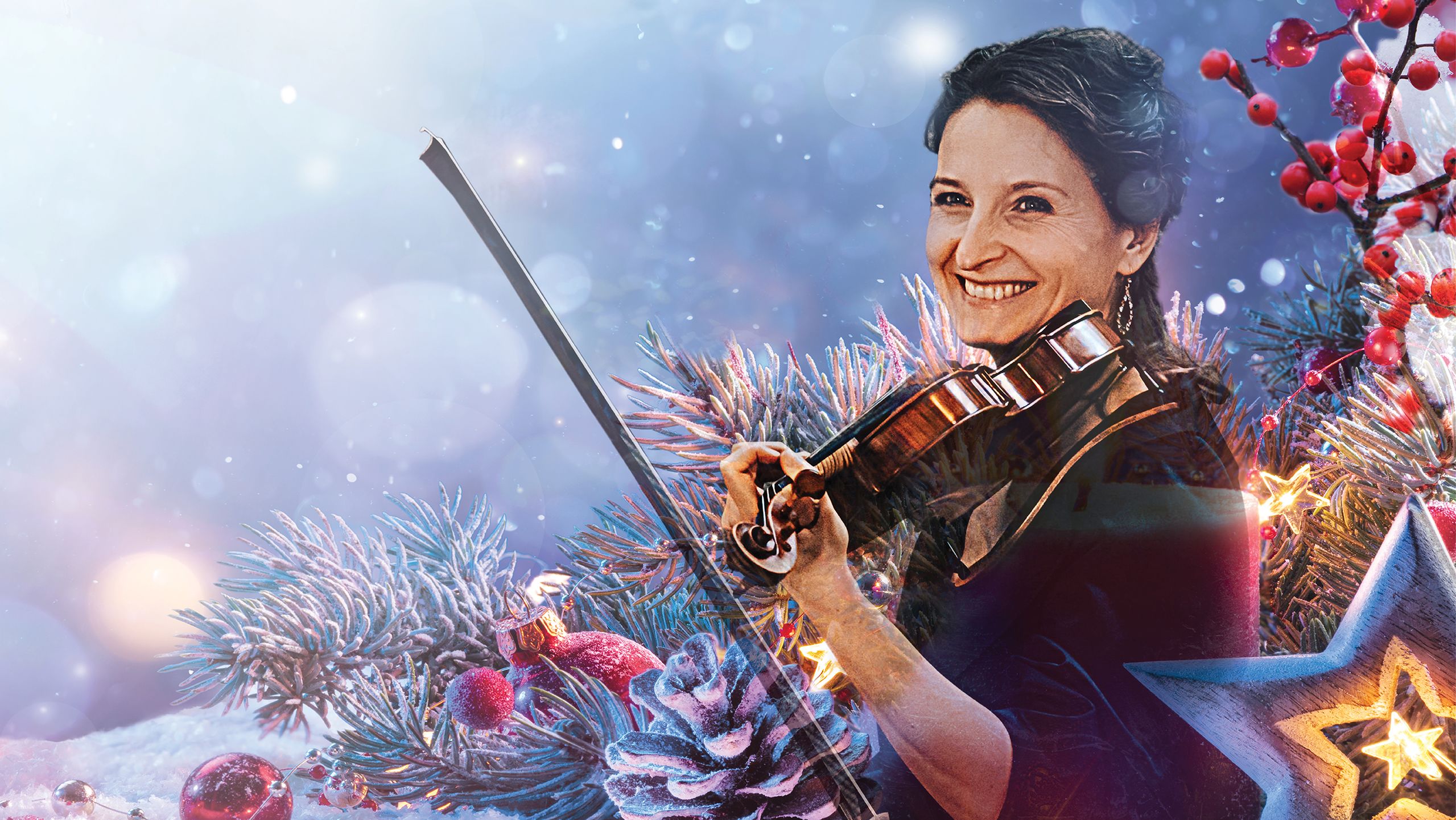

Sarah Lianne Lewis
Creatures of Dust and Dreams c10’
world premiere
John Woolrich
Viola Concerto 20’
INTERVAL: 15 minutes
Maurice Ravel
Mother Goose – Ballet 30’
Timothy Ridout viola (BBC Radio 3 New Generation Artist)
Finnegan Downie Dearconductor


This concert is being broadcast live on BBC Radio 3, after which it will be available to stream or download for 30 days via BBC Sounds, where you can also find podcasts and music mixes. Visit bbc.co.uk/now for more information on future performances.
Introduction
Welcome to today’s concert at BBC Hoddinott Hall, in which we’re joined by exciting young conductor Finnegan Downie Dear. New music is a particular enthusiasm of his, and we start with the world premiere of Creatures of Dust and Dreams byBBC NOW Composer Affiliate, Sarah Lianne Lewis. She has written of it being a reflection of human frailty and vulnerability. There’s a melancholy, too, to John Woolrich’s lyrical Viola Concerto, which draws inspiration from the works of other composers, yet recolours them in a highly personal way. The soloist today is Timothy Ridout, one of the most outstanding string players of his generation and currently a BBC Radio 3 New Generation Artist.
Finally, a masterpiece from more than a century ago. Ravel’s Mother Goose started out as a piano duet for two young children but became, in its ballet incarnation, a glitteringly beautiful evocation of a magical world.
Please respect your fellow audience members and those listening at home. Turn off all mobile phones and electronic devices during the performance. Photography and recording are not permitted.
Sarah Lianne Lewis (born 1988)
Creatures of Dust and Dreams (2020–21)
world premiere


Creatures of Dust and Dreams is a playful, exuberant piece, opening with spinning, whirling figures throughout the orchestra, with microtonality (pitches outside the traditional Western 12-tone equal temperament) featuring throughout. The use of quarter-tones creates a forced brightness during the opening section, and a descent to a darker, warmer yet mysterious tone within in the middle section.
The initial idea for this piece can be found in the middle section. There are certain multiphonics played on the clarinet (where two or more notes sound from using non-standard ways of playing). Chords in the strings emerge cloud-like from these multiphonics. To either side of this section, the musical material whirls, building and collapsing in on itself.
On the surface this piece could be seen as a departure from my earlier output. A lot of my work over the last few years has been spent exploring the smaller details and sounds of individual instruments, and the slow, focused unravelling of musical motifs. The best analogy I can make is that it’s like going for a walk with the music; you can stop to look at a certain view, or occasionally wander away from the path, but you always have the end point in mind, a destination to guide the purposeful meandering. While this piece feels different in nature, the compositional approach is the same. There’s a playful curiosity to the way the material is explored. Each musician becomes a soloist within the larger body of the orchestra – if only for a few seconds at a time.
The work reflects on our inevitable human frailty and vulnerability, of falling and failing, and the choice to reach out and not only seek help from – but also offer help to – those around us in order to grow and achieve more together than is possible individually. Though the piece’s origins – and indeed title – were imagined back in spring 2019, with the initial sketching of ideas and structure taking place well before the worldwide pandemic, the title remains apt, particularly in the light of what we have collectively experienced over the last couple of years.
In the initial sketches for Creatures I wrote the following lines:
‘… but if I must first fall, then let me do so gently; my bones are fragile, for we are made only of dust and dreams.’
Programme note © Sarah Lianne Lewis
John Woolrich (born 1954)
Viola Concerto (1993)
1 Soave sia il vento –
2 Torna il tranquillo al mare –
3 Distant –
4 Placido e il mar … –
5 Tristansburg –
6 Chorale –
7 O sia tranquillo il mare
Timothy Ridout viola
Born in 1954, John Woolrich attracted wide attention in the 1990s with a series of orchestral commissions which included his exquisitely melancholic Viola Concerto. It was composed for Paul Silverthorne, who premiered it at the 1995 Cheltenham Festival with the BBC Philharmonic, conducted by Yan Pascal Tortelier.
A critic described the piece at the time as ‘soft, pungent music, dense with thoughtful feeling but transparently scored … quite original’. This was no vehicle for bravura display as might traditionally be expected from a concerto. Rather, Woolrich has created a deftly subtle work in which soloist and orchestra explore the line between public and private expression.
The composer writes: ‘My concerto is really a cycle of seven bleak and brooding songs-without-words. The viola sings, and the orchestra echoes its song in predominantly soft and gentle colours.’
Those songs are also, in effect, songs about songs, in that the fabric of the piece is woven from a series of finely drawn allusions to vocal music by composers of the past, while remaining very much in Woolrich’s own, distinctive voice. Such allusions are typical in his music – and indeed the concerto in part recalls his 1989 Ulysses Awakes, a reworking of a Monteverdi aria for viola and strings.
Each song/section moves seamlessly from one to the next via a horn transcription of the ‘lebewohl’ (farewell) motif from Beethoven’s Piano Sonata No. 26, ‘Les adieux’. All share an impassioned yearning and a rapt, rocking quality. This last often evokes movements of wind and sea alongside the missing of loved ones via elusive drifts of Mozart, Wagner, Schumann (himself echoing Beethoven) and Monteverdi.
Crucially, the piece has a strong sense of personality which doesn’t rely on the listener recognising the quotations. More important is the way the composer’s love of the viola shines through, as a ‘dark, nocturnal’ purveyor of ‘acoustical mysteries’.
Programme note © Steph Power
Further Listening: Lars Anders Tomter; BBC Symphony Orchestra/Martyn Brabbins (NMC NMCD071)
Website: http://www.johnwoolrich.com
INTERVAL: 15 minutes
Maurice Ravel (1875–1937)
Mother Goose – Ballet (1908–10, Rev. & Orch. 1911)
1 Prélude
2 Danse du rouet [Dance of the Spinning Wheel] – Scène [Scene] –
3 Pavane de la Belle au bois dormant [Pavane of the Sleeping Beauty] – Transition –
4 Les entretiens de la Belle et de la Bête [Conversation between Beauty and the Beast] – Transition –
5 Petit Poucet [Hop-o’-My-Thumb] – Transition –
6 Laideronnette, Impératrice des Pagodes – Transition – [Little Ugly, Empress of the Pagodas]
7 Apothéose: Le jardin féerique [Apotheosis: The Fairy Garden]
Ravel possessed one of the most refined gifts for orchestration in the history of music, which is what made him such a remarkable arranger both of the works of others (Mussorgsky’s Pictures at an Exhibition, for instance) and of his own output. Several of his works that started life for piano were transformed in this way, and none more scintillatingly than Mother Goose. This was originally a suite for piano duet for the two young, and obviously talented, children of close friends of his. The five original pieces are piquantly coloured portraits of fairy-tale figures that would have been very familiar to the children, Beauty and the Beast and Sleeping Beauty among them. That was in 1910; a year later Ravel orchestrated the five pieces and then extended them into a ballet that was premiered at the Théâtre des Arts in Paris in January 1912.
In order to transform Mother Goose from suite to ballet Ravel not only had to extend the music, but he also reordered some of the original numbers to make more of a coherent narrative, centred around the story of Princess Florine, the ‘Sleeping Beauty’, who duly pricks her finger on the spinning wheel and, as she falls asleep, is visited in her dreams by the mythical characters of Ravel’s original suite.
This was exactly the kind of subject matter that Ravel adored – and that world is vibrantly conjured in the new Prélude, with a twinkling, far-away kind of magic that immediately transports the listener from the everyday. The newly composed ‘Dance of the Spinning Wheel’ comes next, and Ravel wonderfully conveys a darker undertone beneath its outward simplicity, as the Princess encounters an old woman at a spinning wheel. She trips and pricks her finger on the spindle. In the Pavane, which has a grave beauty to it, the old woman reveals herself to be the Good Fairy. As two servants appear, she bids them guard the Princess and ensure sweet dreams.
The third scene contrasts Beauty and the Beast, the one featuring two clarinets, elegant in waltz rhythm, the other the stuttering awkardness of a contrabassoon. But, as the Beast is turned by Beauty’s love into a handsome Prince, Ravel underlines that transformation with a refulgent harp glissando. ‘Hop-o’-My Thumb’ – or Tom Thumb as we tend to know him – enters next. It is nightfall, on the edge of the forest. Tom scatters breadcrumbs so as not to get lost, but the birds eat them, and the halting progress of the music – again – tells a tale that needs no explanation. We travel to the mystical East in ‘Little Ugly’, Ravel conjuring the exoticism of his subject matter with the use of pentatonic scales and bell-like sounds.
As we come to ‘The Fairy Garden’ it is dawn, and Prince Charming arrives to awake the Sleeping Beauty with a kiss. This is one of Ravel’s most magical soundscapes, full of delicacy and other-worldly tenderness; as the Good Fairy appears and blesses the couple, the ballet closes in the manner of all the best fairy tales, with the Prince and Princess living happily ever after.
Programme note © Harriet Smith
Further Listening: London Symphony Orchestra/Claudio Abbado (DG E4159722)
Further Reading: Ravel Roger Nichols (Yale UP)
Help us Improve Our Online Programmes.
Please take this 5-minute survey and let us know what you think of these notes.
Programme Survey
Biographies
Finnegan Downie Dear conductor

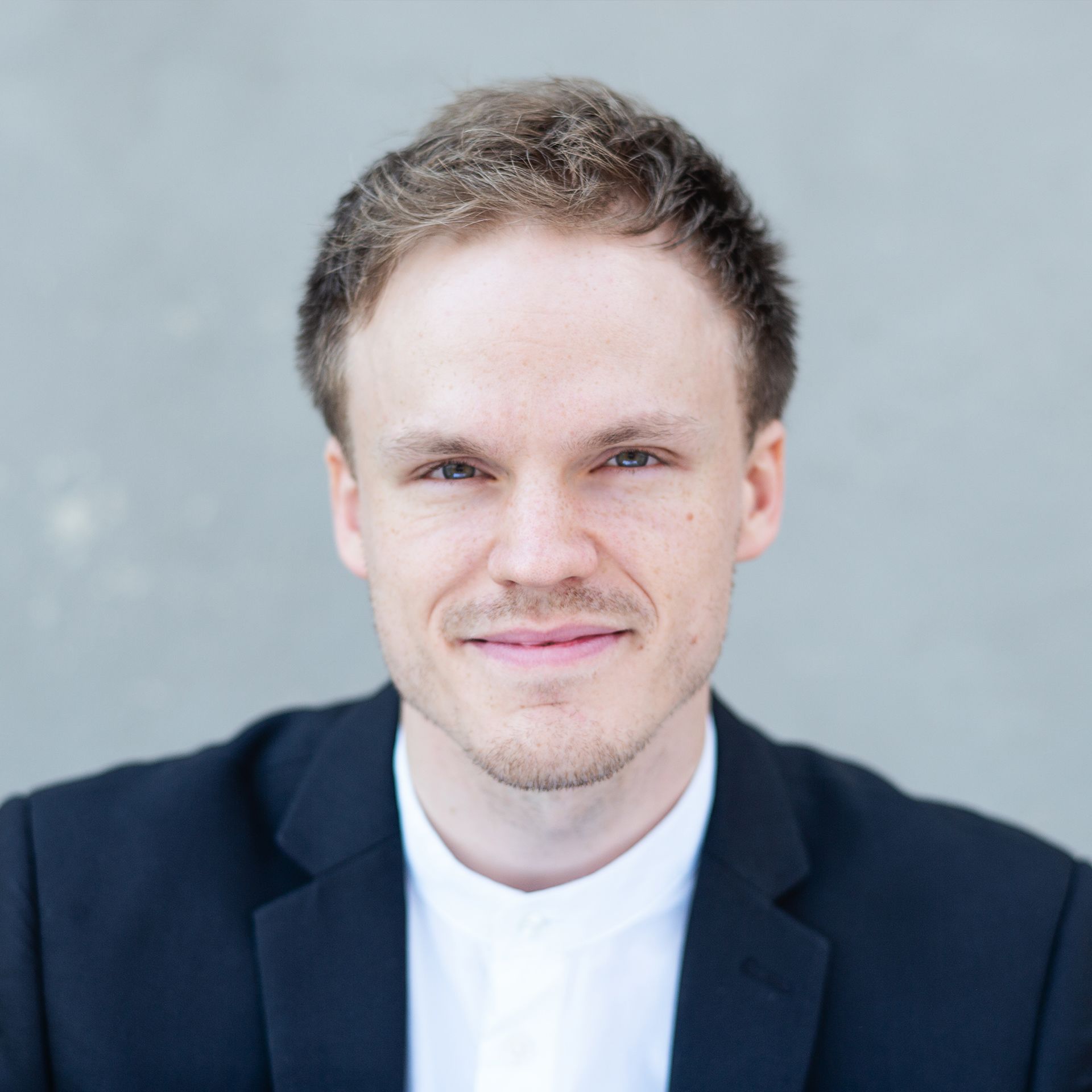
Photo: Frank Bloedhorn
Photo: Frank Bloedhorn
Finnegan Downie Dear won the 2020 Mahler Competition. He studied at Cambridge University and the Royal Academy of Music, subsequently working as a conducting assistant to Simone Young, Thomas Adès, Daniel Harding, Matthias Pinscher and Richard Baker.
He has recently made debuts with the Gothenburg, Korea and Swedish Radio Symphony orchestras, KoŠice State and Luxembourg Philharmonic orchestras, Munich Radio Orchestra, Haydn Orchestra, Ensemble Resonanz, Klangforum Wien, BBC Concert Orchestra and the RTÉ National Symphony and Concert orchestras. He returns this season to the Bamberg Symphony Orchestra for concerts and fully staged performances of Knussen’s Where the Wild Things Are.
Future symphonic engagements include performances with the London Philharmonic Orchestra, Baltimore, City of Birmingham, Melbourne and Sydney Symphony orchestras, Sinfonieorchester Basel, Deutsches Symphonie-Orchester Berlin and the NDR Elbphilharmonie Orchestra.
Recent operatic highlights include engagements at the Royal Opera House, Covent Garden, Nevill Holt Opera, Polish National Opera, Deutsche Oper am Rhein, Korean National Opera and Scottish Opera. He is also Music Director of the award-winning Shadwell Opera.
Timothy Ridout viola
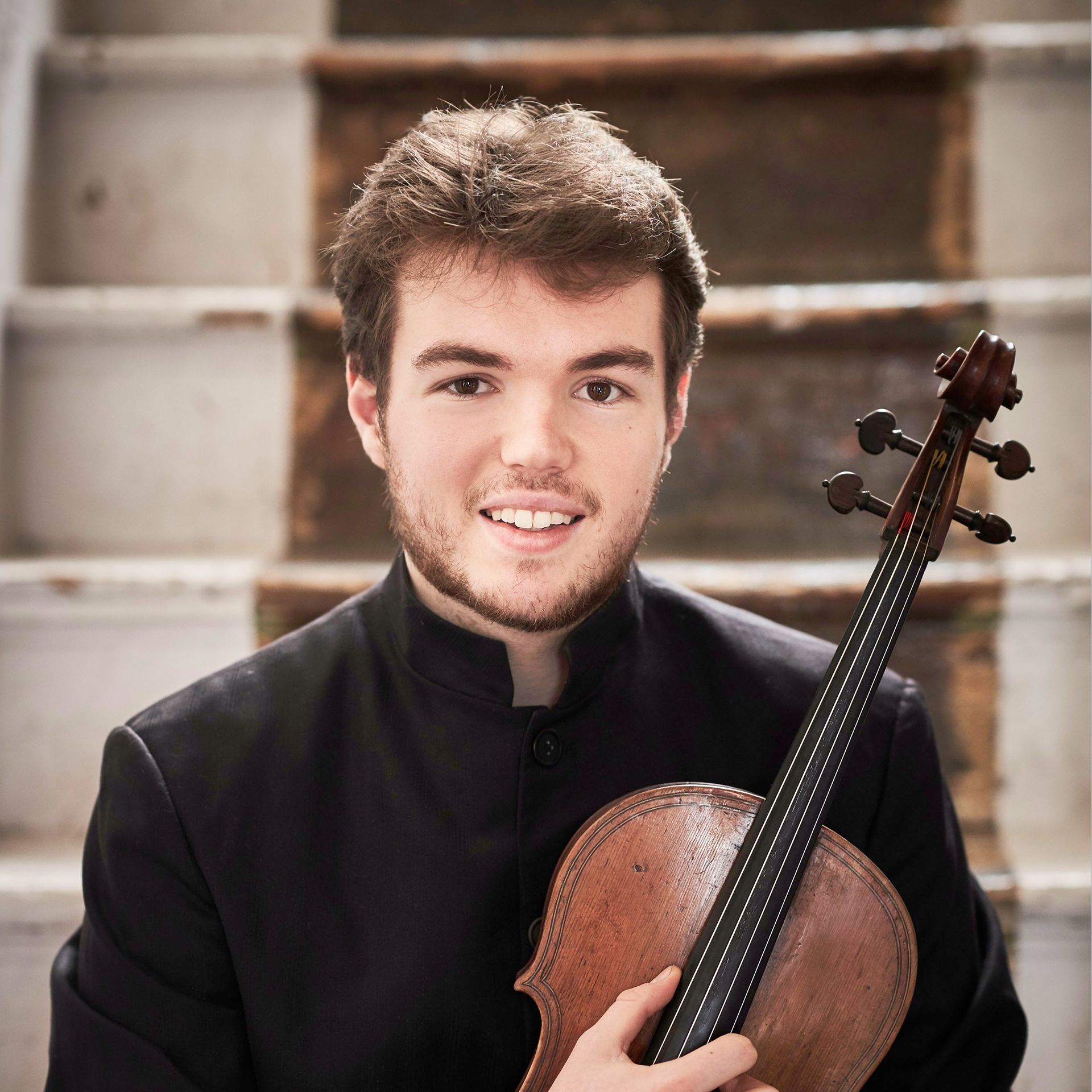
Photo: Kaupo Kikkas
Photo: Kaupo Kikkas
Timothy Ridout is a BBC Radio 3 New Generation Artist and Borletti–Buitoni Trust fellow.
Current and recent highlights include an appearance at the BBC Proms, and concerts with the Paris Chamber Orchestra, Strasbourg Philharmonic Orchestra, Lucerne Symphony Orchestra and the Hallé, as well as his debut at the Vienna Konzerthaus. He also gives concerts at the Wigmore Hall, Vienna Musikverein, Amsterdam Concertgebouw and Madrid’s Auditorio Nacional de Música. Last year he won the Hamburg Symphony Orchestra’s inaugural Sir Jeffrey Tate Prize and this year joined the Bowers Program of the Chamber Music Society of the Lincoln Center.
He has worked with leading conductors, including Christoph Eschenbach, David Zinman, Sakari Oramo, Gabor Takács-Nagy, Sylvain Cambreling, Nicholas Collon and Martyn Brabbins. As a chamber musician he regularly collaborates with leading artists, such as Steven Isserlis, Joshua Bell, Janine Jansen, Isabelle Faust, Kian Soltani, Benjamin Grosvenor, Lars Vogt, Nicolas Altstaedt and Christian Tetzlaff.
His latest album, A Poet’s Love, was recorded with pianist Frank Dupree and features music by Prokofiev and Schumann.
He plays on a viola by Peregrino di Zanetto c1565–75, on loan from a generous patron of Beare’s International Violin Society.
BBC National Orchestra of Wales
For over 90 years, BBC National Orchestra of Wales has played an integral part in the cultural landscape of Wales, occupying a distinctive role as both broadcast and national symphony orchestra. Part of BBC Wales and supported by the Arts Council of Wales, it performs a busy schedule of live concerts throughout Wales, the rest of the UK and the world. The orchestra is an ambassador of Welsh music and champions contemporary composers and musicians.
The orchestra performs annually at the BBC Proms and biennially at the BBC Cardiff Singer of the World competition, and its concerts can be heard regularly across the BBC: on Radio 3, Radio Wales and Radio Cymru.
BBC NOW works closely with schools and music organisations throughout Wales and regularly undertakes workshops, side-by-side performances and young composer initiatives to inspire and encourage the next generation of performers, composers and arts leaders.
During the recent lockdowns, BBC NOW has continued to record and film behind closed doors at BBC Hoddinott Hall and has produced videos, soundtracks and weekly digital concerts that have been seen by 14 million people globally, including an extremely popular video of the Doctor Who soundtrack. Plans for the orchestra include live-streamed concerts and events, tours to different communities throughout Wales and education and community development schemes to include everyone in music-making. To find out more visit bbc.co.uk/bbcnow
Patron
HRH The Prince of Wales KG KT PC GCB
Principal Conductor
Ryan Bancroft
Conductor Laureate
Tadaaki Otaka CBE
Composer-in-Association
Gavin Higgins
Composer Affiliate
Sarah Lianne Lewis
First Violins
Lesley Hatfield Leader
Cellerina Hyojung Park
Gwenllian Hâf MacDonald
Terry Porteus
Suzanne Casey
Carmel Barber
Anna Cleworth
Juan Gonzalez
James Wicks
Zanete Uskane
Ana Do Vale
Gary George-Veale
Richard Newington
Second Violins
Anna Smith *
Jane Sinclair #
Ros Butler
Sheila Smith
Vickie Ringguth
Joseph Williams
Michael Topping
Katherine Miller
Beverley Wescott **
Laurence Kempton
Elizabeth Whittam
Violas
Rebecca Jones *
Alex Thorndike #
Tetsuumi Nagata
Peter Taylor
Robert Gibbons
Catherine Palmer
Ania Leadbeater
Laura Sinnerton
Dáire Roberts
Cellos
Alice Neary *
Keith Hewitt #
Raphael Lang
Sandy Bartai
Rachel Ford
Carolyn Hewitt
Alistair Howes
Double Basses
Lynda Houghton
Piotr Hetman
Christopher Wescott
Richard Gibbons
Claire Whitson
Flutes/Piccolo
Matthew Featherstone *
Lindsey Ellis
Alto Flute/Piccolo
John Hall
Oboes
Steve Hudson *
David Hedley
Oboe/Cor Anglais
Sarah-Jayne Porsmoguer †
Clarinet
Nick Cox ‡
Clarinet/E Flat Clarinet
Will White
Clarinet/Bass Clarinet
Alison Lambert
Bassoons
Jarosław Augustyniak *
Joanna Shewan
Bassoon/Contra-bassoon
David Buckland †
Horns
Neil Shewan †
Meilyr Hughes
Hugh Seenan
Kirsty Howe
Trumpets
Philippe Schartz *
Robert Samuel
Andy Everton †
Trombones
Donal Bannister*
Simon Wills
Bass Trombone
Darren Smith †
Tuba
Daniel Trodden † **
Timpani
James Bower
Percussion
Chris Stock *
Mark Walker †
Phil Hughes
Rhydian Griffiths
Harp
Valerie Aldrich- Smith †
Celesta
Catherine Roe Williams
* Section Principal
† Principal
‡ Guest Principal
# Assistant Principal
The list of players was correct at the time of publication
Director Lisa Tregale +
Orchestra Manager Zoe Poyser +
Assistant Orchestra Manager Vicky James **
Orchestra Coordinator, Operations Kevin Myers
Orchestra Administrator Rhonwen Jones **
Head of Artistic Production Matthew Wood
Artists and Projects Manager Victoria Massocchi
Orchestra Librarian Eugene Monteith **
Producer Mike Sims
Broadcast Assistant Emily Preston **
Head of Marketing and Audiences Sassy Hicks +
Marketing Coordinators Amy Campbell +, Caroline Richards **
Digital Producer Yusef Bastawy
Education Producer Beatrice Carey
Chorus Manager and Outreach Coordinator Osian Rowlands **
Audio Supervisors Andrew Smillie, Simon Smith
Production Business Manager Lisa Blofeld
+ Green Team member
** Diversity & Inclusion Forum