
St David's Day: Welsh Myth and Legend – Past and Present
Wednesday 1/3/23, 7.30pm


Gavin Higgins
The Faerie Bride 40’
INTERVAL: 20 minutes
Arwel Hughes
Dewi Sant – ‘Molwn Di’ 6’
Grace Williams
Four Illustrations for the Legend of Rhiannon 35’
Gareth Glyn
Gwlad y Gân 10’
James James, Arr. Jeffrey Howard
Mae hen wlad fy nhadau 4’
Marta Fontanals-Simmons mezzo-soprano
Paul Carey Jones bass-baritone
Carys Eleri narrator
BBC National Chorus of Wales
Jac van Steenconductor


This concert is being broadcast live on BBC Radio Cymru and recorded by BBC Radio 3 for future broadcast in Afternoon Concert. It will be available for 30 days after broadcast via BBC Sounds, where you can also find podcasts and music mixes. Visit bbc.co.uk/now for more information on future performances.
Introduction


A very warm welcome to tonight’s concert celebrating that most special moment in the calendar – St David’s Day. To conduct, we’re delighted to welcome back a very good friend of the orchestra, former Principal Guest Conductor Jac van Steen.
Here in Wales we have always enjoyed a particularly strong tradition of storytelling in both our myths and our music and that is celebrated in the two most substantial pieces on the programme.
Common to both The Faerie Bride by our Composer-in-Association Gavin Higgins (a cantata premiered only last year), and Grace Williams’s 1939 Four Illustrations for the Legend of Rhiannon are exceptionally strong female central characters. Alongside these works are traditional St David’s Day favourites – Arwel Hughes’s rousing ‘Molwn Di’ from his oratorio Dewi Sant and Gareth Glyn’s irresistible medley Gwlad y Gân.
Enjoy – and Happy St David’s Day!
Matthew Wood
Head of Artistic Production
Please respect your fellow audience members and those listening at home. Turn off all mobile phones and electronic devices during the performance. Photography and recording are not permitted.
Gavin Higgins (born 1983)
The Faerie Bride (2021)

Prologue
Part 1: The Lake
Part 2: Spring
Part 3: Summer
Part 4: Autumn
Part 5: Winter
Epilogue
Marta Fontanals-Simmons mezzo-soprano
Paul Carey Jonesbass-baritone
BBC National Chorus of Wales
The Faerie Bride is a cantata for two singers and orchestra inspired by the Welsh myth of the Lady of Llyn y Fan Fach and with a text by Francesca Simon. The Man sees a Woman sitting on the lake. Over three days he tries to woo her with bread – hard, soft, and half-baked – before The Woman finally agrees to marry him, on one condition: that he shall not strike her ‘three blows’. If he does, she will return to the lake forever. He agrees and she leaves the lake followed by a motley procession: a dowry of cows, sheep, horses and pigs.
The two marry and have children, but The Villagers do not like her. One summer they go to a wedding, but The Woman, rather than singing and dancing, sits quietly – she has faerie sight and can see an unhappy future for the couple. The Villagers gossip suspiciously while The Man questions her behaviour, shaming her for her ‘faerie ways’ and thus causes the first ‘heart blow’.
One autumn they go to the christening of the couple’s new child, but The Woman, rather than celebrating, cries and weeps – she has faerie sight and can see the child does not have long for this world. The Villagers chatter and The Man chides her for her behaviour. Shaming her for her ‘faerie ways’ he strikes the second ‘heart blow’.
One winter they attend the funeral of the child. Rather than crying, The Woman laughs and sings – she has faerie sight and can see the child is in a better place now with the Tylwyth teg (the Fair Folk). The Man is horrified and confronts her, landing the final ‘heart blow’. She turns and walks back to the lake calling her dowry and children to follow – sheep and cattle leave the fields, a little black calf jumps down from the meat hook, her sons stop working the land and follow her into the lake forever.
The Welsh ‘lady of the lake’ myths are among many ‘watery wife’ tales from northern Europe that include the Mermaids of Ireland, the Kelpies of Scotland and the Selkies of the Shetlands and Scandinavia. However, in each of those the women are portrayed as either malevolent (pulling hapless men to their deaths), have something magical stolen from them (their seal skin, red cap or silver bridle), or is captured by a man and kept in human form. The Faerie myths of Wales are unique in that the woman sets clear conditions under which she agrees to marry the man (he shall not strike her three blows or hit her with clay), the breaking of which will result in her returning to the lake forever. The Welsh myths are empowering, with strong female characters who set their own agenda. There is no coercion, theft or kidnap – instead there are misunderstandings and cultural differences.
The Faerie Bride is about compromise and respect in relationships, suspicion and fear of the outsider and the societal pressures to conform in insular communities, something this faerie refuses to do.
Programme note © Gavin Higgins
Website: www.gavinhiggins.com
INTERVAL: 20 minutes
Arwel Hughes (1909–88)
Dewi Sant – ‘Molwn Di’ (1950)

BBC National Chorus of Wales
Arwel Hughes was born in the mining village of Rhosllanerchrugog, near Wrexham, and rose to the position of the BBC’s Welsh Head of Music, combining the roles of administrator, conductor and composer. He was thus a natural choice to compose a grand oratorio as Wales’s musical contribution to the Festival of Britain in 1951. St David was the natural subject for such a work – and, of course, St David’s Cathedral in Pembrokeshire was the natural venue for its premiere! The choral high point of the oratorio, ‘Molwn Di’ (We praise Thee), sums up with gusto the work’s spirit of praise and devotion to the Welsh patron saint.
Programme note © David Threasher
Further Listening: BBC Welsh Chorus & Symphony Orchestra/Owain Arwel Hughes (Chandos CHAN8890)
Grace Williams (1906–77)
Four Illustrations for the Legend of Rhiannon (1939)

1 The Conflict
2 The Nuptial Feast
3 The Penance
4 The Return of Pryderi
Carys Eleri narrator
Grace Williams composed her Four Illustrations for the Legend of Rhiannon in response to a BBC commission for an orchestral suite ‘on a Welsh subject’. Her piece was scheduled for broadcast performance in 1939, but the BBC Welsh Orchestra was disbanded in September of that year following the outbreak of war. The promised performance went ahead, however, when the suite was premiered by the BBC Symphony Orchestra, conducted by Idris Lewis, on 24 October 1939.
Williams’s remarkable gift as a musical dramatist is very apparent in this suite. She turned to Welsh mythology for her subject, and each movement illustrates an episode in the goddess Rhiannon’s life, as detailed in the Mabinogion tale ‘Pwyll, Prince of Dyfed’. The combative themes, martial drumbeats and fiery climaxes of ‘The Conflict’ vividly illustrate the rivalry between Rhiannon’s suitors – Pwyll, the royal favourite, and the scheming Gwawl. Pwyll wins this battle, and the trumpet and woodwind fanfares that open the second movement herald ‘The Nuptial Feast’ in the royal couple’s palace, Williams here conjuring up an enchanting ceremonial occasion as well as, perhaps, more mirthful after-dinner celebrations.
In contrast, the third movement focuses on a tragic event in Rhiannon’s tale. Her son, Pryderi, vanishes on the night of his birth, and Rhiannon is accused by her servants of his murder. Williams uses the Welsh hymn-tune Yr Hen Ddarbi, first stated con dolore (sorrowfully) by cor anglais and solo cello, to illustrate the penance Rhiannon must undertake for her presumed crime: she is forced to tell her story to all who pass though the palace gate.
This ends when it is revealed that her baby has in fact been snatched by a demon. Her son is rescued by Teyrnon, Prince of Gwent, after he realises the boy’s resemblance to his father, Pwyll. The Allegro finale portrays ‘The Return of Pryderi’ to his parents in the palace. The brilliant use of the Welsh air Cainc Dafydd Broffwyd, played by a glittering celesta, immediately suggests the innocence of divine youth, and Williams goes on to draw on the full colours of the orchestra in this captivating portrait of the celebratory homecoming.
Programme note © Rhiannon Mathias
Further Reading: Lutyens, Maconchy, Williams and Twentieth-Century British Music: A Blest Trio of Sirens Rhiannon Mathias (Routledge)
Gareth Glyn (born 1951)
Gwlad y Gân
BBC National Chorus of Wales
Gwlad y Gân (‘Land of Song’) presents five much-loved Welsh songs and melodies, arranged for mixed choir and orchestra, and linked by short instrumental transitions. All the melodies are traditional, except for the 20th-century hymn tune which brings the work to a close.
The stirring march ‘Rhyfelgyrch Gwŷr Harlech’ (‘The March of the Men of Harlech’) is an ancient folk melody (though the music did not appear in print, and then as a harp tune, until 1794). It was apparently inspired by the siege of Harlech Castle during the Wars of the Roses in the 15th century. Many poets have set words to the melody: the dramatic – and not a little bloodthirsty – lyrics in this arrangement are by John Ceiriog Hughes.
‘Mil Harddach Wyt’ (‘Fairer by Far’) is a lullaby in which the melody, with its characteristic (and unusual, for a Welsh folk song) upward leap of a seventh, is paired with poetry of exceptional tenderness.
It contrasts markedly with the song that follows – one in praise of the holly tree without a single mention of Christmas! It was the custom at one time for poets to write on this none-too-obvious subject, and always in the same metre.
A short orchestral link slows down the tempo for a love song, ‘Ar Lan y Môr’ (‘On the Seashore’, where the poet’s sweetheart is to be found). Once again, a simple folk melody offers a wealth of harmonic and textural possibilities, including close-harmony singing, chromaticism and polyphony.
The sequence closes with a hymn of great power, a perennial choice for hymn-singing festivals. The words ‘Mawr oedd Crist yn nhragwyddoldeb’ (‘Great was Christ in eternity’) are mostly by Titus Lewis, and are notable for their emphasis on the word ‘mawr’ (mighty), which is heard numerous times in the hymn’s 18 lines. The hymn tune itself, entitled ‘Bryn Myrddin’ (‘Merlin’s Fort’, an ancient hill-fort near Carmarthen), is by John Morgan Nicholas (1895–1963), a revered composer, conductor, adjudicator, organist, teacher and administrator. The vocal parts of the first verse of this arrangement are his originals; the melody is then presented as the bass line for the second verse, and a new harmonisation is presented for the final stanza. An extended ‘Amen’ is a sine qua non in arrangements of this kind, bringing the piece to an exultant conclusion.
Programme note © Gareth Glyn
Website: garethglyn.info
James James (1833–1902), Arr. Jeffrey Howard
Mae Hen Wlad fy Nhadau
Mae hen wlad fy nhadau yn annwyl i mi,
Gwlad beirdd a chantorion, enwogion o fri;
Ei gwrol ryfelwyr, gwladgarwyr tra mâd,
Tros ryddid collasant eu gwaed.
Gwlad, Gwlad, pleidiol wyf i’m gwlad,
Tra môr yn fur i’r bur hoff bau,
O bydded i’r heniaith barhau.
Hen Gymru fynyddig, paradwys y bardd,
Pob dyffryn, pob clogwyn i’m golwg sydd hardd;
Trwy deimlad gwladgarol, mor swynol yw si
Ei nentydd, afonydd, i mi.
Os treisiodd y gelyn fy ngwlad tan ei droed,
Mae heniaith y Cymry mor fyw ag erioed,
Ni luddiwyd yr awen gan erchyll law brad,
Na thelyn berseiniol fy ngwlad.
Help us Improve Our Online Programmes.
Please take this 5-minute survey and let us know what you think of these notes.
Programme Survey
Biographies
Jac van Steen conductor

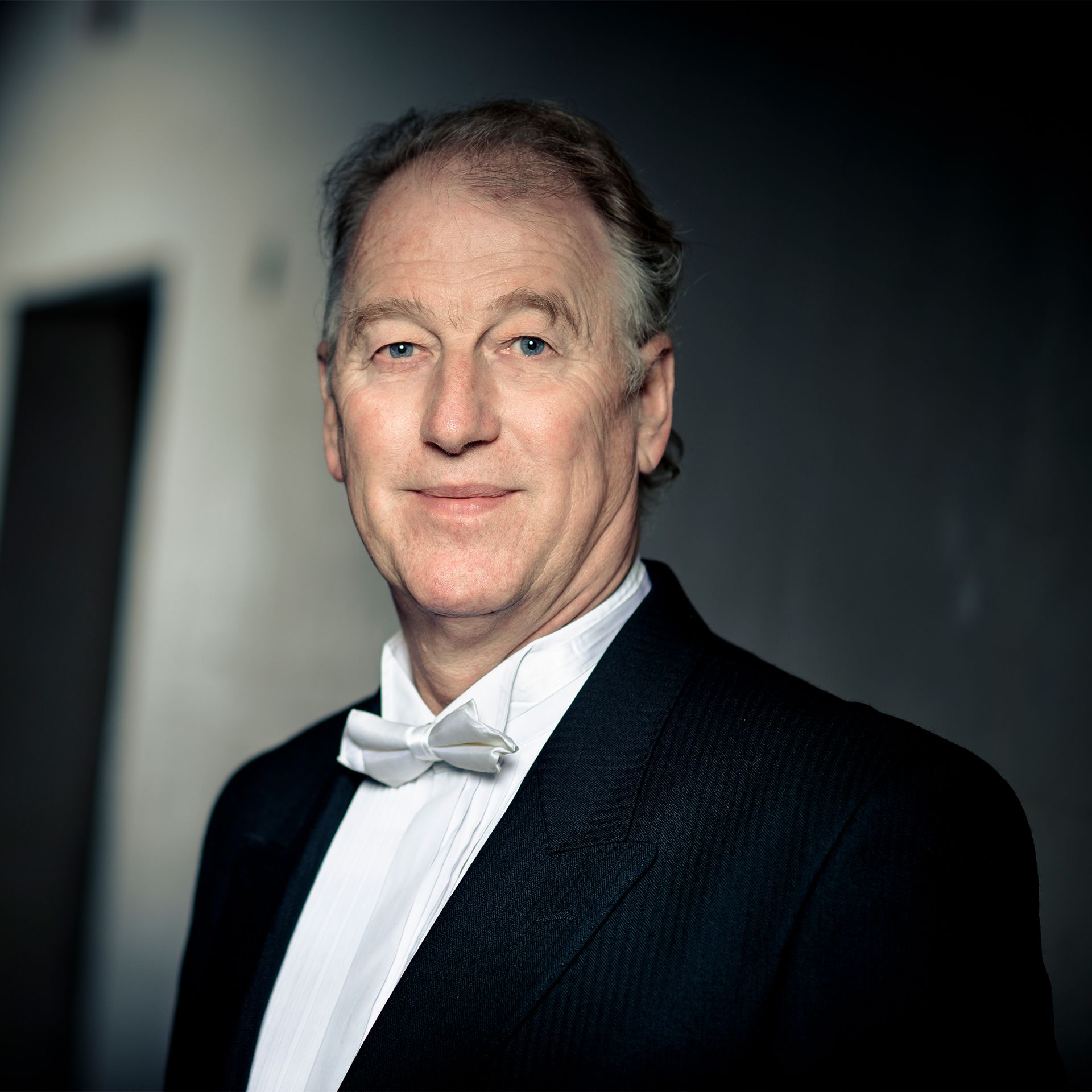
Photo: Simon van Boxtel
Photo: Simon van Boxtel
Jac van Steen was born in the Netherlands and studied orchestra and choir conducting at the Brabant Conservatory of Music.
Since participating in the BBC Conductors’ Seminar in 1985, he has enjoyed a very busy career. He has worked with leading orchestras in Europe, holding the posts of Music Director and Chief Conductor of the Netherlands National Ballet, the orchestras of Bochum and Nuremberg, Weimar Staatskapelle, Dortmund Opera and Philharmonic Orchestra and Musikkollegium Winterthur, as well as being Principal Guest Conductor of BBC National Orchestra of Wales. He is currently Principal Guest Conductor of the Ulster Orchestra and Prague Symphony Orchestra.
He is also in demand in the opera house, having made notable debuts with the Vienna Volksoper and Opera North (both 2013) and Garsington Opera (2015) and developed close relationships with all three. In the 2018–19 season he made his debut with Oslo Opera.
He visits the UK regularly, conducting the Philharmonia, City of Birmingham Symphony Orchestra and Royal Philharmonic. Other highlights include his debut in Tokyo with the New Japan Philharmonic and the Malaysian Philharmonic Orchestra.
His substantial discography covers a wide range of repertoire with various orchestras.
Besides his activities as conductor, he is dedicated to teaching and is Professor of Conducting at the Royal Conservatory of Music in The Hague. He also regularly works with the Royal Northern College of Music, Royal Academy and Royal College of Music. In 2018 he led the Royal Opera’s Jette Parker Young Artists showcase.
Marta Fontanals-Simmons mezzo-soprano
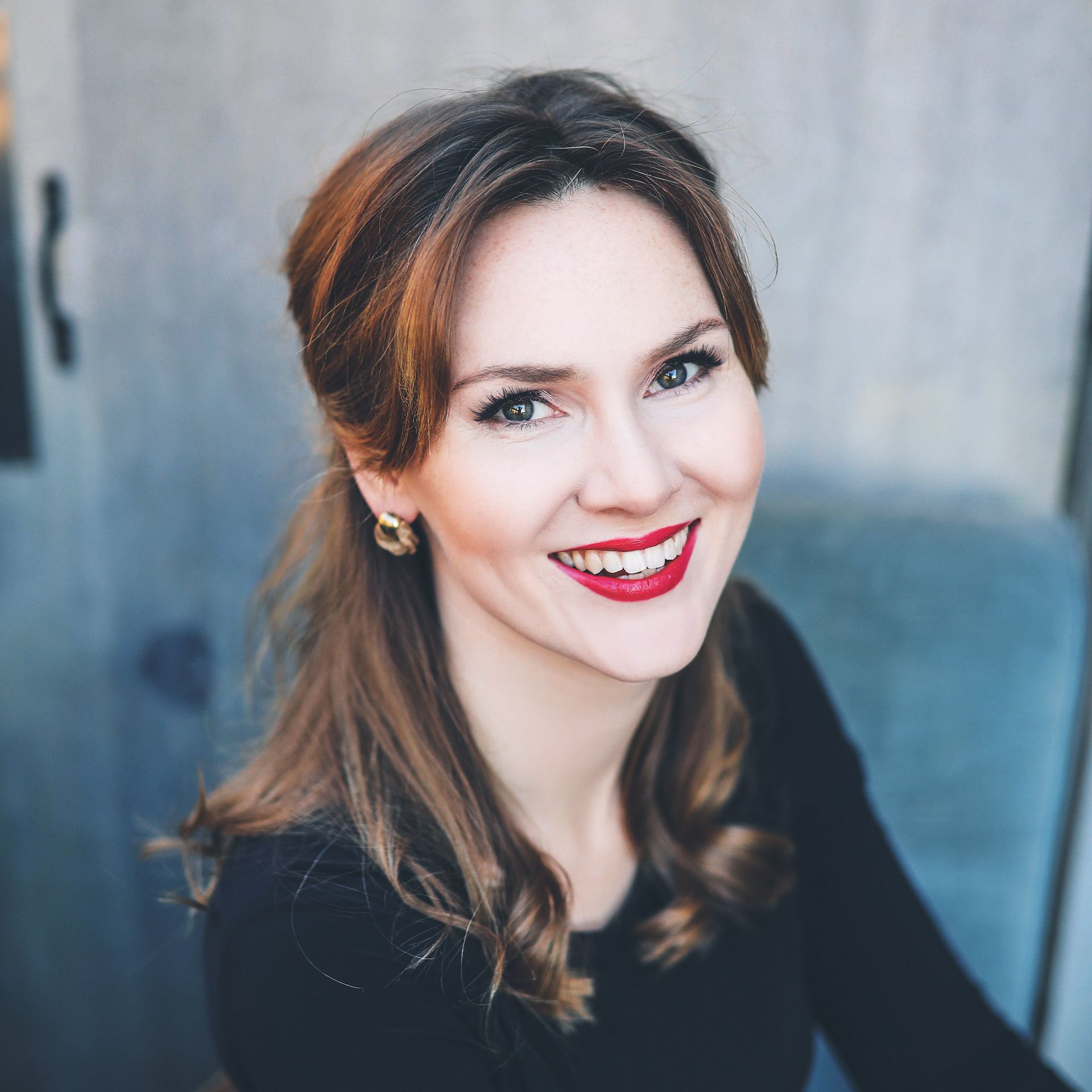
Photo: Victoria Cadisch
Photo: Victoria Cadisch
British-Spanish mezzo-soprano Marta Fontanals-Simmons recently made critically acclaimed house and role debuts at the Royal Opera House, Covent Garden, as Siébel (Gounod’s Faust) and created the role of Hel in the world premiere of Gavin Higgins’s The Monstrous Child at the ROH Linbury Theatre.
This season she sings Jack (Smyth’s The Wreckers) with the Deutsches Symphonie Orchester Berlin; gives recitals with Iain Burnside at Wigmore Hall and the Lammermuir Festival; and sings Elgar’s The Dream of Gerontius with the Worcester Festival Choral Society.
Recent operatic highlights include Matriosha in a new Calixto Bieito production of Prokofiev’s War and Peace at Grand Théâtre de Genève, Jack at Glyndebourne Festival and her house and role debut at ENO as Eurydice Woman in Harrison Birtwistle’s The Mask of Orpheus. On the recital platform, she has recently performed at Wigmore Hall, the Oxford Lieder, Zeist Lieder and Aldeburgh festivals and with the Royal Philharmonic Orchestra, Philharmonia Orchestra and BBC and City of Birmingham Symphony orchestras.
In 2019 she released her debut album, I and Silence: Women’s Voices in American Song, which was warmly received.
Marta Fontanals-Simmons is a graduate of the Guildhall School of Music & Drama, where she was awarded the Gold Medal; she was a Jerwood Artist at Glyndebourne for the 2015–16 season.
Paul Carey Jones bass-baritone


Welsh-Irish bass-baritone Paul Carey Jones was born in Cardiff and studied at Ysgol Gymraeg Melin Gruffydd, Ysgol Gyfun Gymraeg Glantaf, Queen’s College, Oxford, the Royal Academy of Music and the National Opera Studio. Over the past quarter of a century he has appeared as a principal guest artist for opera companies across the UK and Europe. He was winner of the 2013 Wagner Society Singing Competition and was recently elected an Associate of the Royal Academy of Music.
Since 2015 he has built a particular reputation in the role of Wotan in Wagner’s Ring cycle, with his performance in Longborough Festival Opera’s 2022 production of Siegfried garnering much praise. His other operatic work includes appearances with Welsh National Opera, the Royal Opera, Covent Garden, Wexford Festival Opera, Teatro Comunale di Bologna, Gothenburg Opera and Icelandic Opera, among others.
He is a committed advocate of 20th-century and contemporary music, giving world premieres of works by Stuart MacRae, John Metcalf, Jonathan Dove, Stephen McNeff, Sadie Harrison, Brian Irvine and Emily Hall. His extensive discography includes three solo song albums: Enaid: Songs of the Soul, Songs Now and Song Lied Cân.
Plans include a return to Opera Holland Park as the Father (Hansel and Gretel), world premieres of works by Stephen McNeff and Gareth Glyn and the culmination of his recent work at Longborough as Wotan in its full Ring cycle in the summer of 2024.
Carys Eleri narrator

Carys Eleri is an actor, presenter, singer, writer and composer from Carmarthenshire. She has been twice BAFTA Cymru-nominated (as Best Actress and Best Presenter). She presented a programme on BBC Radio 4, The Medieval Feminist, exploring the sexually bombastic works of medieval Welsh poet Gwerful Mechain, which won a Prix Marulić award. Her one-woman-comedy-science-music-show ‘Lovecraft (Not the sex shop in Cardiff)’ won Best Cabaret at the Adelaide Fringe Festival.
Her Welsh heritage is very important to her, and today’s exploration of Rhiannon’s story within the Mabinogi offers, she feels, many important lessons. She explains, ‘It is a joy for me to breathe the feminine into Rhiannon’s life’s story. The Mabinogi is a collection of stories told by, and handed down from man to man, as the word “Mab” (meaning “son”) suggests. Through the majestic work of Grace Williams, Rhiannon is presented as an incredibly powerful figure, a woman whose remarkable inner strength reminds us that we, too, can do extraordinary things.’
BBC National Chorus of Wales
BBC National Chorus of Wales is one of the leading mixed choruses in the UK and, while preserving its amateur status, works to the highest professional standards under Artistic Director Adrian Partington.
Based at BBC Hoddinott Hall in Cardiff Bay, the chorus, formed in 1983, works regularly alongside BBC National Orchestra of Wales, as well as giving concerts in its own right. It is made up of over 150 singers: a mix of amateur choristers and students from both the Royal Welsh College of Music & Drama and Cardiff University.
Recent highlights include a six-day tour to Rennes for four performances of Mozart’s Requiem with the Orchestre Symphonique de Bretagne, a much-delayed performance of Bach’s St Matthew Passion with Harry Bicket and annual engagements at the BBC Proms, with recent appearances including Vaughan Williams’s A Sea Symphony with Andrew Manze, Mozart’s Requiem from memory with Nathalie Stutzmann and Mahler’s Eighth Symphony under former BBC NOW Principal Conductor Thomas Søndergård.
This season sees the chorus perform Fauré’s Requiem and Messiaen’s O sacrum convivium under Ludovic Morlot, Haydn’s ‘Nelson’ Mass under Christian Curnyn and Stanford’s Elegiac Ode and Te Deum under Adrian Partington.
The chorus is committed to promoting Welsh and contemporary music and in 2016 gave the first revival of Grace Williams’s Missa Cambrensis, 45 years after its premiere. It has premiered works by a wide range of composers, including a special performance of Kate Whitley’s Speak Out, setting the words of Malala Yousafzai’s 2013 UN speech.
The chorus can be heard on BBC Radio 3, BBC Radio Wales and BBC Radio Cymru, and recently featured in Paul Mealor’s soundtrack for BBC Wales’s Wonders of the Celtic Deep.
Soprano 1
Elizabeth Aitken
Charlotte Amodeo
Jess Baber
Eve Bennett
Anwen Boyce
Beth Bradfield
Bethan J. Evans
Sally Glanfield
Claire Hardy
Caitlin Hockley
Vanessa John-Hall
Rebecca Jolliffe
Lucie Jones
Katherine Meredith
Leora Molnar
Rosie Moore
Maisie O’Shea
Angharad Phillips
Elizabeth Phillips
Ellen Steward
Morgan Summers
Hannah Willman
Soprano 2
Kate Bidwell
Angela Contestabile
Rhian Davies
Emily Hopkins
Rhiannon Humphreys
Victoria Illsley
Julie Jones
Margaret Lake
Elinor Lloyd
Devon Macadam-Sutton
Marie Quemerais
Melanie Taylor
Niamh Pragnell Toal
Hannah Williams
Katherine Woolley
Alto 1
Atiyeh Dast Afkan
Anna Beresford
Catherine Bradfield
Yasmin Browne
Alison Davies
Nicole Dickie
Catherine Duffy
Giselle Dugdale
Glesni Edwards
Rachel Farebrother
Kathrin Hammer
Naomi Hitchings
Lisa May
Lizzie Metcalf
Shanta Miller
Sara Peacock
Heather Price
Rhian Pullen
Kate Reynolds
Zozi Sookanadenchetty
Cerys Thomas
Rachel Waters
Emily West
Vicki Westwell
Jessica Williams
Alto 2
Alex Butler
Heledd Evans
Annette Hecht
Yvonne Higginbottom
Rhi Humphreys
Mattina Keith
Josie Nemeth
Sian Schutz
Julie Wilcox
Tenor 1
Keith Davies
Huw Llywelyn
Orlando Vas
Nicholas Willmott
Tenor 2
Rhys Archer
Michael Ennis
Roland George
Philip Holtam
Owen Parsons
Sam Proll
Richard Wilcox
Bass 1
David Davies
Billy Donaghy
Rafael Grigoletto
Emyr Wynne Jones
Lucas Maunder
Jez Piper
David Stephens
Allan Waters
Alun Williams
Daniel Williams
Bass 2
Stuart Hogg
Gruffudd Hughes
Joseff Morris
Gareth Nixon
The list of singers was correct at the time of publication.
BBC National Orchestra of Wales
For over 90 years, BBC National Orchestra of Wales has played an integral part in the cultural landscape of Wales, occupying a distinctive role as both broadcast and national symphony orchestra. Part of BBC Wales and supported by the Arts Council of Wales, it has a busy schedule of live concerts throughout Wales and the rest of the UK. The orchestra is an ambassador of Welsh music and champions the works of contemporary composers.
It performs annually at the BBC Proms and biennially at the BBC Cardiff Singer of the World competition, and can be heard regularly across the BBC: on Radio 3, Radio Wales and Radio Cymru, as well as providing the soundtracks for some of your favourite television programmes.
Highlights of this season include the Elemental Explorations concerts in Brecon and Newport with Nil Venditti, Disney’s Fantasia in concert, Britten and Elgar with the orchestra’s much-loved Conductor Laureate Tadaaki Otaka, an all-new Gaming concert with gaming music legend Eímear Noone and a CoLaboratory concert with the sensational cellist Abel Selaocoe.
Alongside its busy schedule of live concerts, BBC NOW works closely with schools and music organisations throughout Wales, regularly delivering workshops, side-by-side performances and young composer initiatives to inspire and encourage the next generation of performers, composers and arts leaders and make music accessible to all. To find out more visit bbc.co.uk/bbcnow
Patron
HM King Charles III KG KT PC GCB
Principal Conductor
Ryan Bancroft
Conductor Laureate
Tadaaki Otaka CBE
Composer-in-Association
Gavin Higgins
Composer Affiliate
Sarah Lianne Lewis
First Violins
Lesley Hatfield leader
Nick Whiting associate leader
Martin Gwilym-Jones sub-leader
Helena Smart
Suzanne Casey
Carmel Barber
Kerry Gordon-Smith
Anna Cleworth
Juan Gonzalez
Ruth Heney
Zanete Uskane
Second Violins
Anna Smith *
Jane Sinclair
Joseph Williams
Michael Topping
Katherine Miller
Beverley Wescott
Sellena Leony
Ilze Abola
Gary George-Veale
Marike Krupp
Violas
Rebecca Jones *
Alex Thorndike #
Tetsuumi Nagata
Peter Taylor
Ania Leadbeater
Robert Gibbons
Catherine Palmer
Laura Sinnerton
Cellos
Alice Neary *
Keith Hewitt #
Jessica Feaver
Carolyn Hewitt
Rachel Ford
Alistair Howes
Double Basses
Louis van der Mespel ‡
Christopher Wescott
Richard Gibbons
Elen Roberts
Flutes
Harry Winstanley ‡
John Hall
Lindsey Ellis
Piccolo
Lindsey Ellis †
Oboes
Steve Hudson *
Amy McKean
Sarah-Jayne Porsmoguer
Cor Anglais
Sarah-Jayne Porsmoguer †
Clarinets
Nick Carpenter ‡
Hannah Morgan
Lenny Sayers
Bass Clarinet
Lenny Sayers †
Bassoons
Jarosław Augustyniak *
Rosemary Cow
Llinos Owen
Gareth Humphreys
Contra-Bassoon
Gareth Humphreys
Horns
Tim Thorpe *
Meilyr Hughes
Neil Shewan †
William Haskins
John Davy
Trumpets
Philippe Schartz *
Robert Samuel
Sam Kinrade
Trombones
Cillian Ó Ceallacháin
Jake Durham
Bass Trombone
Darren Smith †
Tuba
Daniel Trodden †
Timpani
Steve Barnard *
Percussion
Chris Stock *
Mark Walker †
Phil Girling
Harp
Valerie Aldrich-Smith †
Celesta
Chris Williams
* Section Principal
† Principal
‡ Guest Principal
# Assistant Principal
The list of players was correct at the time of publication
Director Lisa Tregale +
Orchestra Manager Vicky James **
Assistant Orchestra Manager Nick Olsen
Orchestra Coordinator, Operations Kevin Myers
Business Coordinator Caryl Evans
Head of Artistic Production Matthew Wood
Artists and Projects Manager Eleanor Phillips
Orchestra Librarian Eugene Monteith **
Producer Mike Sims
Broadcast Assistant Jacob Perkins
Head of Marketing and Audiences Sassy Hicks +
Marketing Coordinator Amy Campbell +
Digital Producer Yusef Bastawy
Social Media Coordinator Harriet Baugh
Education Producers Beatrice Carey, Rhonwen Jones **
Audio Supervisors Simon Smith, Andrew Smillie
Production Business Manager Lisa Blofeld
Stage and Technical Manager Steven Brown
Assistant Stage and Technical Manager Dave Rees
BBC Wales Apprentices Josh Gill, Analese Thomas-Strachan, Jordan Woodley
+ Green Team member
** Diversity & Inclusion Forum