
A Masterpiece Rediscovered
Friday 26 November 2021, 7.30pm


A PDF version of this programme can be viewed here:
Ludwig van Beethoven
Violin Concerto in D major, Op. 61 44’
INTERVAL: 20 minutes
Dora Pejačević
Symphony in F sharp minor, Op. 41 47’
Vilde Frang violin
BBC Symphony Orchestra
Sakari Oramo conductor
Please note the change to the previously advertised programme: Stravinsky’s Violin Concerto has been replaced with Beethoven’s Violin Concerto, and Beethoven’s ‘Egmont’ overture will now not be performed.


This concert is being broadcast live by BBC Radio 3 in 'Radio 3 in Concert’. It will be available for 30 days after broadcast via BBC Sounds, where you can also find podcasts and music mixes.
Tonight the BBC Symphony Orchestra and Chief Conductor Sakari Oramo are joined by Norwegian violinist Vilde Frang for Beethoven’s Violin Concerto. Though now one of the cornerstones of the violin repertoire, it didn’t really gain a foothold until later in the 19th century, when the advocacy of the great violinist Joseph Joachim helped to put it on the map.
From around a century later comes the first modern Croatian symphony, by the noblewoman and composer Dora Pejačević. Late-Romantic in style and rich with strong musical themes, it’s a compelling example of the 100-plus works written by this overlooked composer, who has recently started to win the recognition she deserves.
Ludwig van Beethoven (1770–1827)
Violin Concerto in D major, Op. 61 (1806)


1 Allegro ma non troppo
2 Larghetto –
3 Rondo: Allegro
Vilde Frang violin
By the time Beethoven composed his first – and only – complete concerto for the violin, he was already a master of writing for the instrument. He had under his belt a series of nine sonatas for violin and piano, two solo Romances for violin and orchestra and the start of a youthful Violin Concerto in C major, WoO 5. So it is surprising that the reception at the premiere of his Violin Concerto in D major was lukewarm at best. ‘The concerto enjoyed no great success,’ wrote his biographer, Anton Schindler. ‘It was totally ignored: violinists … rejected the work as unrewarding.’
It was not until 1844, when the 12-year old Joseph Joachim resurrected the concerto under Mendelssohn’s direction to ‘frenetic applause’, that the work became firmly established within the repertoire. By then, tastes had changed and features that nearly 40 years earlier had been regarded as ‘risky’ and ‘disconcerting’ were now deemed more acceptable. The mysterious strokes on the timpani at the opening no longer seemed bizarre. The concerto’s surprising length – at 15 minutes longer than any of Mozart’s own for the violin – was now more in keeping with the extended nature of the Romantic concerto. And the dazzling virtuosity of the solo violin part was a real draw for audiences, who were now accustomed to inspiring and impressive musical feats within the concert hall.
That said, Beethoven’s Violin Concerto as we know it today is thought to be considerably revised from the version heard at the 1806 premiere. According to Carl Czerny, Beethoven completed the work in haste at the request of Franz Clement, the concerto’s dedicatee and commissioner. Clement wanted a new concerto to perform at a benefit concert in Vienna in December 1806 and reports suggest that the score was barely finished before the first rehearsals began – to the extent that Clement was all but sight-reading at the premiere. The work underwent several revisions before its publication, including its transformation into a concerto for piano.
Like the knocking of ‘Fate’ at the start of the Fifth Symphony, the timpani beats with which the work opens form the foundations of the Violin Concerto. These five simple strokes saturate the opening movement, intertwining themselves with the first theme and underpinning the accompaniment of the second, alternating between ominous and celebratory at every turn.
This expansive first movement, wrought with dense thematic interplay and dramatic dynamic contrasts, is quite at odds with the stillness of the central Larghetto– a series of ethereal variations in which the soloist appears to extemporise freely over muted strings. This quiet corner of the concerto has none of the showmanship of the outer movements, with its serene, bird-like utterances that seem to prefigure those of Vaughan Williams’s The Lark Ascending by more than 100 years.
The finale, by contrast, is a riot of drama and colour, bursting out of the Larghetto without pause. A pastoral solo violin melody is quickly taken up by the full orchestra and with every repetition this simple country theme becomes increasingly virtuosic, eventually leading to a climactic coda packed full of exhilarating showmanship.
Programme note © Jo Kirkbride
Jo Kirkbride is Chief Executive of the Edinburgh-based Dunedin Consort and a freelance writer on classical music. She studied Beethoven’s slow movements for her PhD and writes regularly for the London Symphony Orchestra, London Philharmonic Orchestra, London Sinfonietta and Snape Proms.
Ludwig van Beethoven
In his early twenties Beethoven left his native Bonn for Vienna, where he became established in fashionable circles as a composer, piano virtuoso and improviser. Largely following the Classical models of Haydn and Mozart in his ‘early’ period, he recognised signs of his impending deafness as early as 1796. In 1802 he revealed his suffering and alienation, as well as a creative resolve, in his Heiligenstadt Testament. His middle period was characterised by a broadening of form and an extension of harmony to suit his proto-Romantic expression, spawning the Symphonies Nos. 2 to 8, notable piano sonatas, several string quartets and his only opera, Fidelio. From 1812 to 1818 he produced little music, but his last years saw his mould-breaking ‘Choral’ Symphony, and an exploration of increasing profundity in the more intimate mediums of the string quartet and piano sonata.
Profile by Edward Bhesania © BBC
INTERVAL: 20 MINUTES
Dora Pejačević (1885–1923)
Symphony in F sharp minor, Op. 41 (1916–17, rev. 1920)


1 Andante maestoso – Allegro con moto
2 Andante sostenuto
3 Scherzo. Molto allegro
4 Allegro appassionato
At the height of the First World War, the Croatian composer Dora Pejačević experienced a reality known to few of her sheltered fellow aristocrats when she volunteered to nurse wounded soldiers arriving at Našice, her home village. Always sensitive, introspective and compassionate, Pejačević was greatly affected by what she saw first-hand of the grotesque human wreckage of war. Her biographer Koraljka Kos believes that she composed ‘vigorously during the war years perhaps out of the need to fence herself off from some of the awful reality she witnessed daily’.
Although Pejačević was interested in emerging musical trends, she never abandoned tonality. She began work on her Symphony in F sharp minor early in 1916 and completed the first version on 25 August 1917. A partial premiere of two movements took place in Vienna on 25 January 1918 under Oskar Nedbal. Soon thereafter she revised the work, compressing some sections and basically rewriting the final movement. The full work was performed in Dresden on 10 February 1920, conducted by Edwin Lindner. The audience and critics were moved by the power, beauty and drama of the symphony. Later Arthur Nikisch added it to the repertoire of the Leipzig Gewandhaus Orchestra but he died before he had a chance to conduct it.
The carefully crafted design of the score reflects the inner turmoil and conflicting emotions spawned by the heart-wrenching times in which Pejačević lived.
The first movement is rich in late-Romantic harmony, colour and atmosphere. The thunderous opening sets a dramatic tone that dominates the movement. The drama of the first theme is lightened by a wistful, lyrical theme that glides along, rising and falling in grace, elegance, hopeful yearning and anticipation. She teases the emotions with lyrical passages that invariably yield to the overriding, brooding drama of the movement until the dramatic Mahlerian ending.
The second movement opens in an entirely different mood, announced by the plaintive call of the cor anglais. Pejačević creates a meditative atmosphere with an undulating melody shimmering with soft light illuminated by woodwinds, harp and strings.
The third movement is playful and spirited throughout. Once again, the composer adds elements of surprise, including touches of humour. She expands her orchestral palette by adding cymbals, xylophone and chimes. The movement dances its way to the end.
Pejačević marches into the fourth movement. She returns to themes from the previous movements, reprising contrasting moods, the tug of war between darkness and light, between drama and lyricism, before bringing the symphony to a powerful, triumphant conclusion.
Programme note © Pamela Blevins
Pamela Blevins is a music historian, writer, lecturer, co-founder of Signature: Women in Music and biographer of Ivor Gurney and Marion Scott (Song of Pain and Beauty).
Dora Pejačević
Although Dora Pejačević was born to nobility, she eventually distanced herself from the aristocracy: curiosity and a spirit of rebellion were strong currents in her life.
Her passion for music, art and literature took early root. She was educated at home by an English governess, became fluent in several languages, read voraciously (in the original language of the author), wrote poetry, played the piano and violin, composed and painted. Pejačević’s earliest compositions date from her 12th year and include numerous piano pieces, music for violin and piano, chamber music and songs.
Her poetic sensibility and spirituality infused her music with lyricism, colour, contrasts and drama rich in memorable melodies and profound beauty. She travelled extensively, mixing with leading artists, poets and intellectuals who were revolutionising the arts.
In 1913 Dora Pejačević entered a new phase in her creative life, turning her attention to orchestral music. She became the first Croatian composer to write a piano concerto and three years later began working on her Symphony in F sharp minor, only the second symphony by a Croatian. It was premiered in Dresden in 1920.
In 1921, Dora Pejačević married a young military officer, Ottomar von Lumbe, and settled in Munich. She gave birth to their son in 1923. A month later she died from kidney failure.
Profile © Pamela Blevins
Coming up at the Barbican
Friday 3 December 7.30pm
Christmas Tales
Celebration and contemplation as the BBC Symphony Chorus returns to the Barbican for music inspired by frozen landscapes and Christmas heroes.Book tickets


Biographies
Sakari Oramo conductor

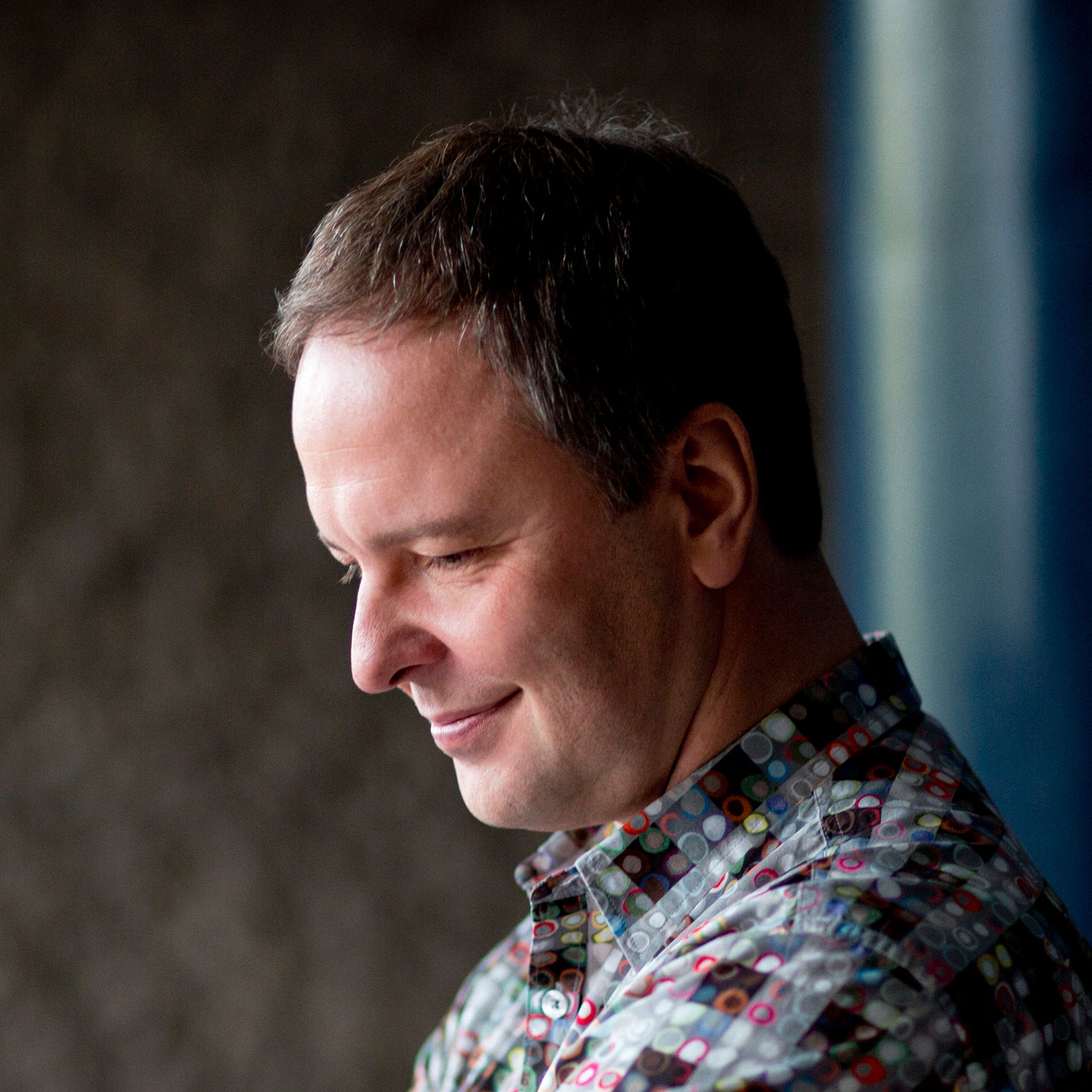
Photo: Benjamin Ealovega
Photo: Benjamin Ealovega
Sakari Oramo began his career as a violinist and was leader of the Finnish Radio Symphony Orchestra. He is currently Chief Conductor of the BBC Symphony Orchestra, Honorary Conductor of the Finnish Radio Symphony Orchestra and Conductor Laureate of the Royal Stockholm Philharmonic Orchestra (of which he was Chief Conductor and Advisor, 2008–21). From 1998 to 2008 he was Music Director of the City of Birmingham Symphony Orchestra.
This season marks his eighth with the BBC SO, with which he champions new and rarely performed works alongside established highlights of the repertoire. Among his guest appearances this season are engagements with the Berlin Philharmonic, Vienna Symphony, Finnish Radio Symphony and NDR Elbphilharmonie orchestras.
He is a regular at the BBC Proms, where he conducts a typically wide variety of works, often with the BBC Symphony Chorus. He has conducted the Last Night of the Proms on five occasions.
His recordings have won many accolades, including a BBC Music Magazine Award for Nielsen’s Symphonies Nos. 1 and 3 with the Royal Stockholm Philharmonic Orchestra, a Gramophone Award for Rued Langgaard’s Symphonies Nos. 2 and 6, and an ICMA Award for Busoni’s Piano Concerto with Kirill Gerstein and the Boston Symphony Orchestra. Other recent releases include orchestral works by Sibelius, Rachmaninov’s Piano Concertos Nos. 2 and 3 with Yevgeny Sudbin and a disc of music by Florent Schmitt, all with the BBC Symphony Orchestra.
Vilde Frang violin

Photo: Marco Borggreve
Photo: Marco Borggreve
Born in Norway, Vilde Frang was engaged by Mariss Jansons at the age of 12 to appear with the Oslo Philharmonic. In 2016 she made her debut with the Berlin Philharmonic under Sir Simon Rattle, returning during the 2017–18 season.
Other leading orchestras with which she has collaborated include the Royal Concertgebouw Orchestra, Amsterdam, Orchestre de Paris, Budapest Festival Orchestra, Staatskapelle Dresden, Leipzig Gewandhaus Orchestra and Cleveland Orchestra.
This season she is Artist in Residence with the Royal Stockholm Philharmonic Orchestra and a Focus Artist with the Tonhalle Orchestra, Zurich. She will also appear with the Los Angeles and Radio France Philharmonic orchestras, San Francisco and Vienna Symphony orchestras, Chamber Orchestra of Europe and Deutsche Kammerphilharmonie Bremen.
Her recital performances have taken her to leading venues and series in Boston, Brussels, London, New York, Vancouver and Vienna, and she appears at leading festivals including those of Lockenhaus, Lucerne, Prague, Salzburg, Verbier and the BBC Proms.
She has recorded concertos by Bartók, Britten, Korngold, Mozart, Nielsen, Prokofiev, Sibelius and Tchaikovsky, as well as discs of chamber music. Among the prizes these have attracted are a Diapason d’Or, Edison Award, German Record Critics’ Award, Grand Prix du Disque and Gramophone Award.
BBC Symphony Orchestra
The BBC Symphony Orchestra has been at the heart of British musical life since it was founded in 1930. It plays a central role in the BBC Proms at the Royal Albert Hall, performing at the First and Last Night each year in addition to regular appearances throughout the Proms season with the world’s leading conductors and soloists.
The BBC SO performs an annual season of concerts at the Barbican in London, where it is Associate Orchestra. Its commitment to contemporary music is demonstrated by a range of premieres each season, as well as Total Immersion days devoted to specific composers or themes. Highlights this autumn include the season-opening concert conducted by Sakari Oramo including music by Brahms and Ruth Gipps; a concert conducted by Principal Guest Conductor Dalia Stasevska featuring the devised work Concerto No.1: SERMON by Davóne Tines, combining music and poetry in a unique examination of racial injustice; children’s author Jacqueline Wilson reading from her bestselling books in a family concert; the world premiere of Up for Grabs by composer and Arsenal fanatic Mark-Anthony Turnage; and the BBC Symphony Chorus’s highly anticipated return to the Barbican stage in December.
The vast majority of performances are broadcast on BBC Radio 3 and a number of studio recordings each season are free to attend. These often feature up-and-coming new talent, including members of BBC Radio 3’s New Generation Artists scheme. All broadcasts are available for 30 days on BBC Sounds and the BBC SO can also be seen on BBC TV and BBC iPlayer and heard on the BBC’s online archive, Experience Classical.
The BBC Symphony Orchestra and Chorus – alongside the BBC Concert Orchestra, BBC Singers and BBC Proms – also offer enjoyable and innovative education and community activities and take a leading role in the BBC Ten Pieces and BBC Young Composer programmes.
Chief Conductor
Sakari Oramo
Günter Wand
Conducting Chair
Semyon Bychkov
Principal Guest
Conductor Designate
Dalia Stasevska
Conductor Laureate
Sir Andrew Davis
First Violins
Stephen Bryant leader
Jeremy Martin
Jenny King
Celia Waterhouse
Colin Huber
Shirley Turner
Ni Do
Molly Cockburn
Zanete Uskane
Tom Aldren
James Wicks
Ruth Ehrlich
Kate Cole
Second Violins
Heather Hohmann
Dawn Beazley
Daniel Meyer
Vanessa Hughes
Danny Fajardo
Rachel Samuel
Tammy Se
Caroline Cooper
Victoria Hodgson
Lucica Trita
Maya Bickel
Caroline Bishop
Adrian Dunn
Violas
Yukiko Ogura
Philip Hall
Joshua Hayward
Nikos Zarb
Audrey Henning
Michael Leaver
Peter Mallinson
Matthias Wiesner
Zoe Matthews
Cellos
Susan Monks
Tamsy Kaner
Marie Strom
Mark Sheridan
Clare Hinton
Sarah Hedley-Miller
Michael Atkinson
Augusta Harris
Morwenna Del Mar
Double Basses
Nicholas Bayley
Richard Alsop
Anita Langridge
Michael Clarke
Beverley Jones
Cathy Elliott
Flutes
Daniel Pailthorpe
Tomoka Mukai
Piccolo
Kathleen Stevenson
Oboes
Alison Teale
Imogen Smith
Cor Anglais
Jennifer Brittlebank
Clarinets
James Burke
Jonathan Parkin
Bass Clarinet
Thomas Lessels
Bassoons
Julie Price
Claire Webster
Lully Bathurst
Contrabassoon
Steven Magee
Horns
Martin Owen
Michael Murray
Andrew Antcliff
Nicholas Hougham
Mark Wood
Daniel Curzon
Alexei Watkins
Trumpets
Philip Cobb
Joseph Atkins
Bruce Knockles
Tony Cross
Trombones
Helen Vollam
Dan Jenkins
Bass Trombone
Robert O’Neill
Tuba
Sam Elliott
Timpani
Christopher Hind
Percussion
Alex Neal
Joe Cooper
Harp
Louise Martin
The list of players was correct at the time of publication

