Tadaaki Otaka conducts Britten & Elgar
Friday 24/3/2023, 7.30pm
Brangwyn Hall, Swansea
Saturday 25/3/2023, 7.30pm
St David’s Hall, Cardiff


Elizabeth Maconchy
Nocturne for Orchestra 7’
Benjamin Britten
Violin Concerto 31’
INTERVAL: 20 minutes
Edward Elgar
Symphony No. 2 53’
Simone Lamsma violin
Tadaaki Otakaconductor


The concert in Cardiff is being recorded by BBC Radio 3 for future broadcast in BBC Radio 3 in Concert. It will be available for 30 days after broadcast via BBC Sounds, where you can also find podcasts and music mixes. Visit bbc.co.uk/now for more information on future performances.
Introduction

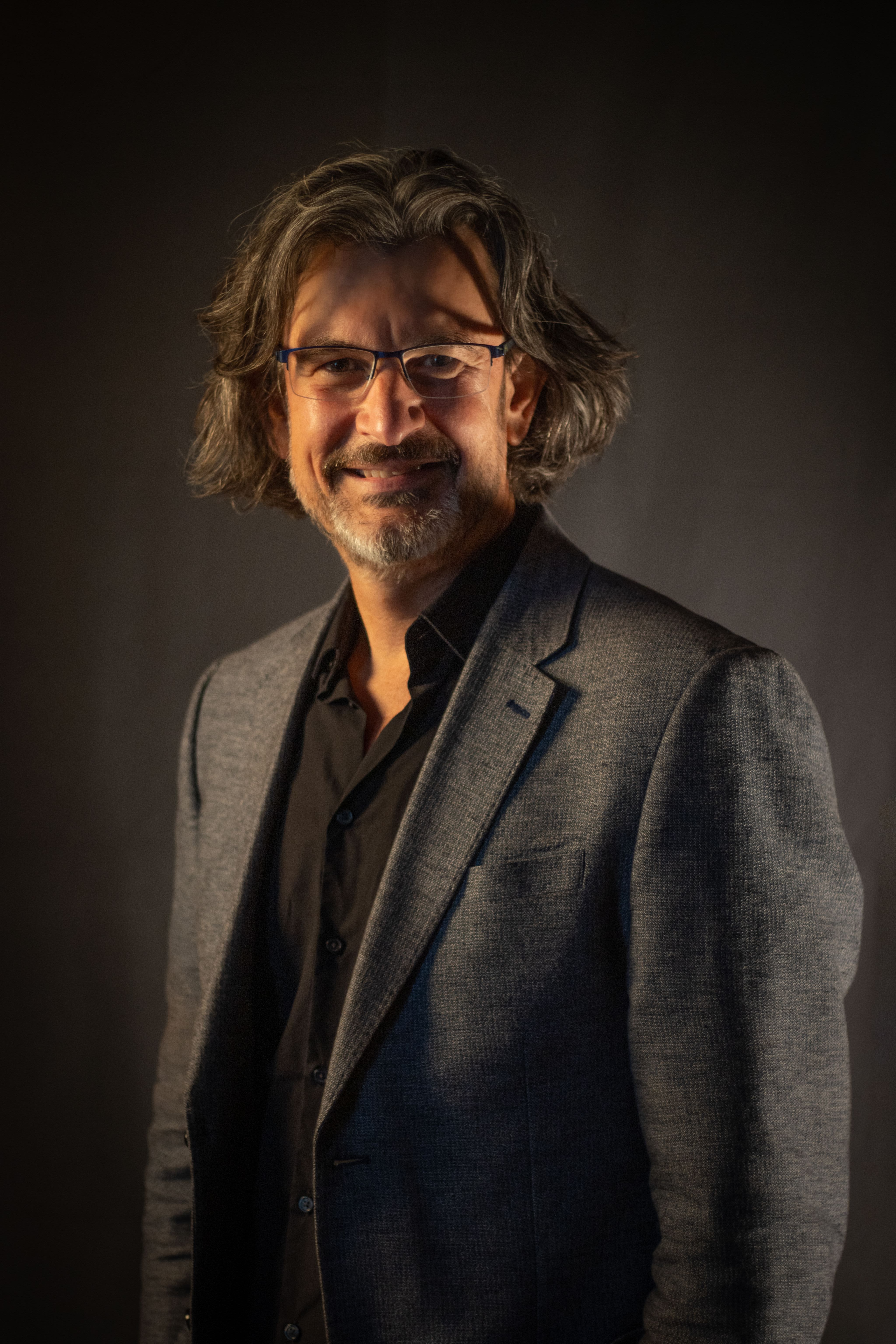
We’re delighted to welcome back for tonight’s concert our much-loved Conductor Laureate Tadaaki Otaka for a varied programme of British music.
The first half features works by two composers born just six years apart. Elizabeth Maconchy is today primarily remembered for her string quartets. She wrote for orchestra far less frequently, so her Nocturne is particularly treasurable for that reason, and demonstrates Maconchy’s typical blend of intimacy and edginess. Britten’s Violin Concerto was one of the first pieces to establish his international reputation, and in it the composer takes an established form and makes it his own, demanding much of the soloist, while largely eschewing overt virtuosity. Taking up the challenge tonight is the young Dutch violinist Simone Lamsma.
We finish with the Second Symphony of a composer particularly close to Tadaaki Otaka’s heart – Elgar. It’s a work whose emotional ambiguity perplexed some early audiences, but it has long since been recognised as a masterpiece.
Enjoy!
Matthew Wood
Head of Artistic Production
Please respect your fellow audience members and those listening at home. Turn off all mobile phones and electronic devices during the performance. Photography and recording are not permitted.
Elizabeth Maconchy (1907–94)
Nocturne for Orchestra (1950)

Central to Elizabeth Maconchy’s output is a magnificent chain of 13 string quartets. There are larger-scale works, including two symphonies (both of which she later withdrew), but even when she wrote for a full symphony orchestra, as in this Nocturne for Orchestra, something of the intimacy, subtlety and feeling for inner dialogue that shines out in her chamber music remains essential here too. Maconchy wrote the Nocturne in 1950, at a time when many were striving to put the horrors of the still-recent Second World War behind them. But, as an active socialist, Maconchy was keenly aware that injustice and human suffering don’t just go away after purported ‘victories’. And, having studied in Prague in the 1930s, she was more sensitive than many on this island to the dreadful events in Eastern Europe and their worrying political consequences. Maconchy’s immersion in the music of the Hungarian modernist Béla Bartók had also sharpened and darkened her own expressive powers, giving them a distinctly mid 20th-century edginess.
Like the slightly earlier orchestral Nocturne by the Polish composer Andrzej Panufnik (another great Bartók admirer), Maconchy’s Nocturne for Orchestra is full of the ethereal and voluptuous magic of night, heightened here by the delicate use of harp and celesta. But, also like the Panufnik, it is haunted by something more troubling, registered by distant thunder-like bass drum rolls and menacing brass figures. Rarefied beauty coexists with a sense of uneasy watchfulness. The threat remains potential, never quite centre-stage, but the ending is strangely unresolved – the potential is real enough.
Programme note © Stephen Johnson
Website: https://britishmusiccollection.org.uk/composer/elizabeth-maconchy
Benjamin Britten (1913–76)
Violin Concerto, Op. 15 (1938–9, rev. 1965)

1 Moderato con moto –
2 Vivace – Cadenza –
3 Passacaglia: Andante lento
Simone Lamsma violin
Benjamin Britten was only 25 when he completed his Violin Concerto in 1939, shortly after moving to the USA. But he was already an experienced composer with a growing international reputation. As yet there was little indication that it would be in opera that he would really make his name; instead, it must have seemed to many that orchestral concert music was the way ahead for this phenomenally gifted young composer. The Violin Concerto demonstrates how much Britten had absorbed from the orchestral works of Mahler and Prokofiev. It also shows him thinking more ambitiously than before in terms of form and expression, particularly in the powerful and spacious Passacaglia finale
Britten had mixed feelings about Beethoven, and his Violin Concerto begins with a possibly half-ironic tribute to the German master. Like Beethoven’s Violin Concerto, Britten’s opens with a figure for solo timpani, here answered not by a foursquare march theme but by languorous sighs from strings. A more sinister dance episode follows, but eventually the opening returns, with the timpani’s original motif now transformed with virtuoso panache by the violin.
A wild, driven scherzo follows without a break, caustically brilliant at first, but with a much more soulful, folk-like violin theme at its heart. Then comes a touch of grotesque genius: accelerating violin phrases become rapid skittering figures for two piccolos, while from the depths a slow theme rises ominously on tuba, foreshadowing the finale theme. The violin’s solo cadenza – showy at first, but with a growing note of anguish – eventually rises stratospherically as soft trombones intone the Passacaglia theme itself, heavy with sadness and foreboding. As in the magnificent passacaglias of J. S. Bach, variations are built up above repetitions of a theme in the bass, rather like the 12-bar bass in jazz. Britten’s variations traverse a wide range of moods and characters; but, after a noble orchestral climax, the slow coda is unmistakably elegiac, the violin’s final trills hovering poignantly between major and minor.
Programme note © Stephen Johnson
Further Listening: Vilde Frang; Frankfurt Radio Symphony Orchestra/James Gaffigan (Warner Classics 2564600921)
Further Reading: Benjamin Britten: A Biography Humphrey Carpenter (Faber)
INTERVAL: 20 minutes
Edward Elgar (1857–1934)
Symphony No. 2 in E flat major, Op. 63 (1910–11)

1 Allegro vivace e nobilmente
2 Larghetto
3 Rondo: Presto
4 Moderato e maestoso
Edward Elgar was a complicated man, and no work reveals more of his enigmatic, multi-faceted personality than his Second Symphony. Letters and comments to friends show he was aware that composing it was an act of self-revelation, so the failure of its premiere in 1911 was a cruel disappointment. Both the audience reaction and the reviews were, on the whole, cool – though one anonymous critic accused the Second Symphony of ‘pessimism and rebellion’. Perhaps the problem was partly that the new symphony defied Edwardian England’s expectations of its unofficial composer laureate. Unlike the hugely successful First Symphony (1907–8) and Violin Concerto (1910), it doesn’t end in ringing affirmation, and the four movements are full of surprising, even unsettling changes in mood and character. The words from Shelley which Elgar chose to head the score – ‘Rarely, rarely comest thou, Spirit of Delight!’ – can be read in different ways: does the symphony capture that ‘delight’, or is it ultimately an expression of regret that real joy comes so ‘rarely’?
At first, the answer seems clear enough: repeated notes on strings surge upwards into a confidently striding theme. This builds to two magnificently extrovert climaxes, but then something strange emerges: quiet harp-chimes introduce a weirdly voluptuous, mostly hushed central section. ‘I have written the most extraordinary passage’, Elgar wrote, ‘a sort of malign influence wandering thro’ the summer night in the garden.’ Energetic life reasserts itself again as the main ideas return, leading to a brilliant conclusion; but we haven’t heard the last of that ‘malign influence’.
Given the symphony’s dedication ‘To the memory of His late Majesty King Edward VII’, it was generally supposed that the noble, funeral march-like second movement was an expression of lamentation for the late King, but it’s also possible to hear it as an elegy for the Edwardian age and the hope so many (Elgar included) had invested in it. When the march theme returns after a grand, impassioned climax, Elgar does something strikingly original: an oboe plays a counterpoint as though it were following a different, freer beat – imagine a news camera suddenly homing in on one grief-stricken face amid vast crowds of mourners.
After this, the energetic, dancing Rondo promises refreshing contrast, but demonic forces are at work here. Eventually throbbing, pounding drums, building steadily, announce the return of the ‘malign influence’ theme from the first movement: first on strings, then bellowed out by brass. Elgar compared this to some horrific lines in Tennyson’s poem Maud, the cry of a dead man cast into a shallow grave beneath a roadway:
And the hoofs of the horses beat, beat,
The hoofs of the horses beat,
Beat into my scalp and brain.
At first the finale’s ambling, rhythmically repetitive first theme appears strangely low key, until a noble second idea enters, seemingly marking a return to the First Symphony’s ‘massive hope’. But there is no triumphant final peroration. Eventually a hush descends, and the symphony’s opening theme glides gracefully through opulent orchestral textures. Yet there is something poignant about the way the radiance fades – in Shelley’s words, ‘Rarely, rarely comest thou …’
Programme note © Stephen Johnson
Further Listening: BBC Symphony Orchestra/Edward Gardner (Chandos CHSA5197)
Further Reading: Elgar the Music Maker Diana McVeagh (Boydell)
Help us Improve Our Online Programmes.
Please take this 5-minute survey and let us know what you think of these notes.
Programme Survey
Biographies
Tadaaki Otaka conductor

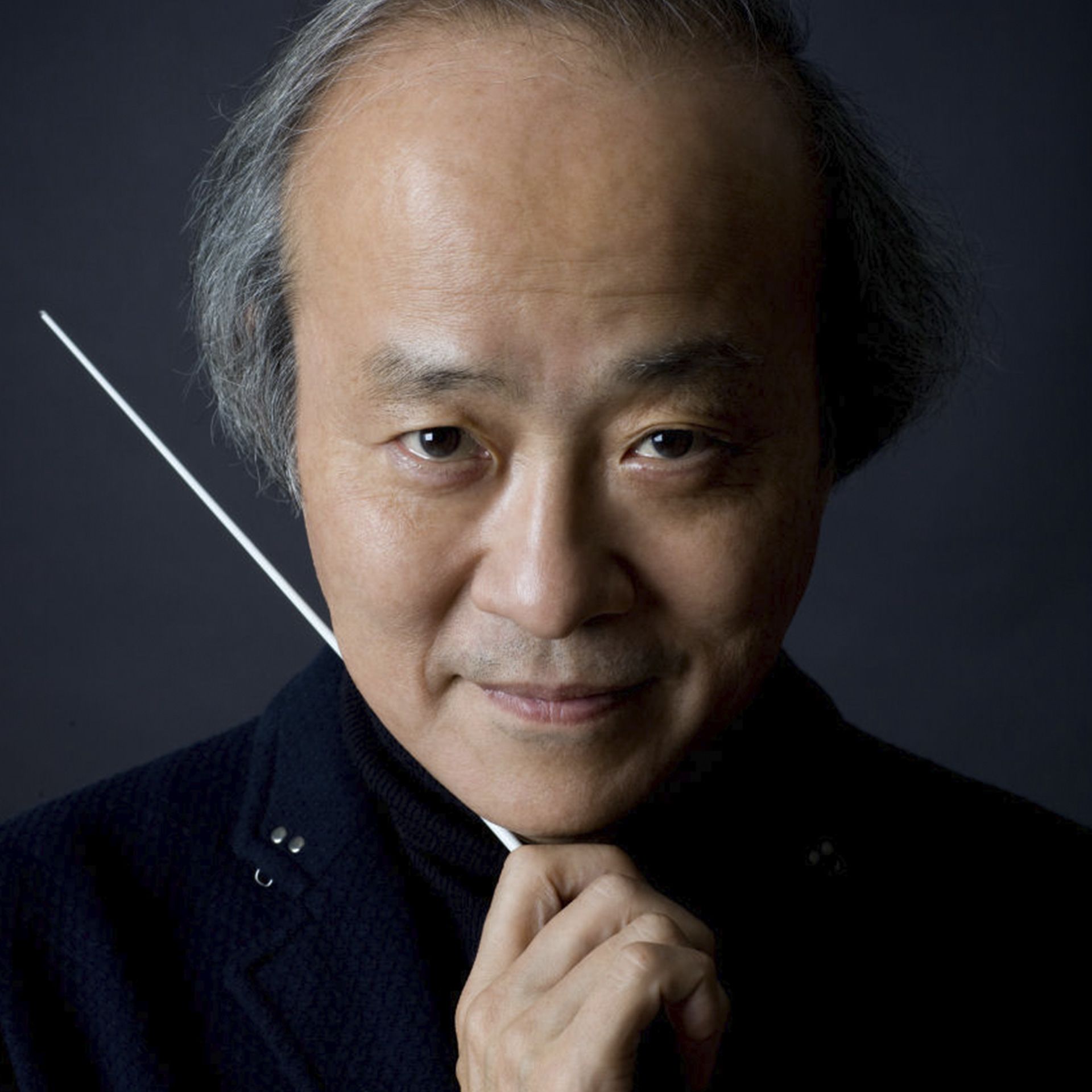
Photo: Martin Richardson
Photo: Martin Richardson
Japanese-born Tadaaki Otaka has been Music Director of the Osaka Philharmonic Orchestra since 2018 and, following a distinguished tenure as Principal Conductor of BBC National Orchestra of Wales, became its Conductor Laureate. He also holds the titles of Permanent Conductor of the NHK Symphony, Conductor Laureate of the Tokyo Philharmonic Orchestra, Honorary Guest Conductor of the Yomiuri Nippon Symphony Orchestra and Honorary Conductor Laureate of the Kioi Hall Chamber Orchestra Tokyo. He has enjoyed a close association with the Sapporo Symphony Orchestra for four decades.
As well as conducting extensively in Japan, he is also a highly regarded teacher of young conductors. He combines these activities with regular European visits and recent BBC NOW highlights include appearances at the BBC Proms.
In the field of opera, in addition to his work with the New National Theatre Tokyo, he has conducted Peter Grimes, Fidelio, Die Fledermaus, Tosca, Tannhäuser, Carmen, Der Freischütz and Salome.
He has conducted many premieres, including works by Japanese composers such as Matsumura, Takemitsu and Miyoshi, and his discography includes many celebrated recordings with BBC NOW and Camerata Tokyo.
His awards include the Suntory Music Award, a CBE and the Elgar Society’s Elgar Medal, to mark a compelling record of conducting the composer’s works overseas. His reputation as an outstanding interpreter of a broad range of repertoire, including Mahler, Bruckner, Shostakovich, Richard Strauss, Walton and Elgar, led to the Royal Welsh College of Music & Drama conferring on him an Honorary Fellowship in 1993; he also holds an Honorary Doctorate from the University of Wales. In 2021 he was awarded the Order of the Rising Sun, Gold Rays with Rosette by the Japanese government.
Simone Lamsma violin
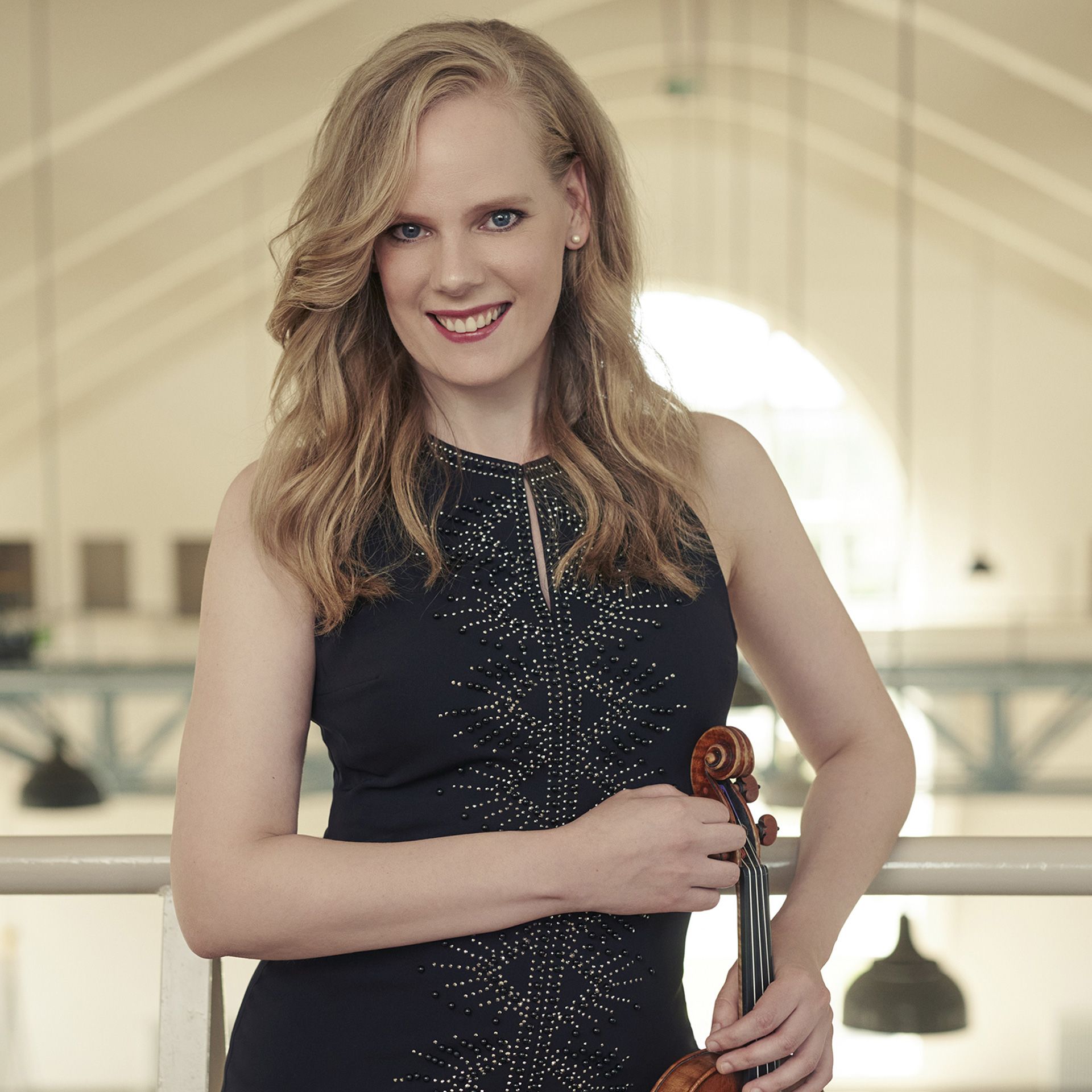
Photo: Otto van den Toorn
Photo: Otto van den Toorn
Dutch violinist Simone Lamsma is making a name for herself among fellow musicians, audiences and critics.
She has a repertoire of over 60 violin concertos and has performed with many of the world’s leading orchestras.
Highlights this season include debuts with the Los Angeles Philharmonic, Beethoven-Orchester Bonn and Gulbenkian Orchestra; her ongoing residency with the Oregon Symphony Orchestra; returns to the Cincinnati, Frankfurt Radio and MDR Symphony orchestras, Orchestre National d’Île de France, Orchestre Philharmonique du Luxembourg and BBC National Orchestra of Wales; and a tour with the NDR Philharmonie under Jonathon Heyward. She will also premiere a piece by Mathilde Wantenaar with the Netherlands Radio Philharmonic at the Amsterdam Concertgebouw.
Her discography includes a highly acclaimed disc of Shostakovich’s First Violin Concerto and Sofia Gubaidulina’s In tempus praesens with the Netherlands Radio Philharmonic under James Gaffigan and Reinbert de Leeuw, as well as repertoire ranging from Mendelssohn to Janáček.
She began studying the violin at the age of 5 and moved to the UK aged 11 to study at the Yehudi Menuhin School. She made her professional solo debut with the North Netherlands Orchestra aged 14, continuing her studies at the Royal Academy of Music in London. In 2019 she was made a Fellow of the Royal Academy of Music.
She plays the ‘Mlynarski’ Stradivarius (1718), on generous loan to her by an anonymous benefactor.
BBC National Orchestra of Wales
For over 90 years, BBC National Orchestra of Wales has played an integral part in the cultural landscape of Wales, occupying a distinctive role as both broadcast and national symphony orchestra. Part of BBC Wales and supported by the Arts Council of Wales, it has a busy schedule of live concerts throughout Wales and the rest of the UK. The orchestra is an ambassador of Welsh music and champions the works of contemporary composers.
It performs annually at the BBC Proms and biennially at the BBC Cardiff Singer of the World competition, and can be heard regularly across the BBC: on Radio 3, Radio Wales and Radio Cymru, as well as providing the soundtracks for some of your favourite television programmes.
Highlights of this season include the Elemental Explorations concerts in Brecon and Newport with Nil Venditti, Disney’s Fantasia in concert, Britten and Elgar with the orchestra’s much-loved Conductor Laureate Tadaaki Otaka, an all-new Gaming concert with gaming music legend Eímear Noone and a CoLaboratory concert with the sensational cellist Abel Selaocoe.
Alongside its busy schedule of live concerts, BBC NOW works closely with schools and music organisations throughout Wales, regularly delivering workshops, side-by-side performances and young composer initiatives to inspire and encourage the next generation of performers, composers and arts leaders and make music accessible to all. To find out more visit bbc.co.uk/bbcnow
Patron
HM King Charles III KG KT PC GCB
Principal Conductor
Ryan Bancroft
Conductor Laureate
Tadaaki Otaka CBE
Composer-in-Association
Gavin Higgins
Composer Affiliate
Sarah Lianne Lewis
First Violins
Lesley Hatfield leader
Martin Gwilym-Jones sub-leader
Cecily Ward
Terry Porteus
Suzanne Casey
Carmel Barber
Kerry Gordon-Smith
Anna Cleworth
Juan Gonzalez
Ruth Heney
Ilze Abola
Tamaki Mott
Claudia Fuller
Emma Menzies
Second Violins
Anna Smith *
Ros Butler
Sheila Smith
Vickie Ringguth
Joseph Williams
Michael Topping
Katherine Miller
Beverley Wescott
Sellena Leony
Patrycia Mynarska
Jane Sinclair
Gary George-Veale
Violas
Garfield Jackson ‡
Alex Thorndike
Tetsuumi Nagata
Peter Taylor
Ania Leadbeater
Robert Gibbons
Catherine Palmer
Laura Sinnerton
Anna Growns
Charley Lake
Cellos
Alice Neary *
Keith Hewitt #
Jessica Feaver
Nina Kiva
Carolyn Hewitt
Rachel Ford
Alistair Howes
Laura MacDonald
Double Basses
David Stark *
Daniel Vassallo
Christopher Wescott
Richard Gibbons
Antonia Bakewell
Emma Prince
Flutes
Fiona Kelly ‡
John Hall
Elizabeth May
Piccolos
Elizabeth May ‡
John Hall
Oboes
Steve Hudson *
Amy McKean †
Sarah-Jayne Porsmoguer
Cor Anglais
Sarah-Jayne Porsmoguer †
Clarinets
Nick Carpenter ‡
Hannah Morgan
Natalie Harris
Lenny Sayers
Bass Clarinet
Lenny Sayers †
Bassoons
Jarosław Augustyniak *
Rosemary Cow ‡
Laura Vincent
Contra-Bassoon
David Buckland †
Horns
Tim Thorpe *
Meilyr Hughes
Neil Shewan †
William Haskins
John Davy
Trumpets
Philippe Schartz *
Robert Samuel
Ryan Linham
Trombones
Donal Bannister *
Simon Wills
Bass Trombone
Darren Smith †
Tuba
Daniel Trodden †
Timpani
Steve Barnard *
Percussion
Chris Stock *
Mark Walker †
Phil Girling
Andrea Porter
Harps
Valerie Aldrich-Smith †
Jane Lister
Celesta
Catherine Roe Williams
* Section Principal
† Principal
‡ Guest Principal
# Assistant Principal
The list of players was correct at the time of publication
Director Lisa Tregale
Orchestra Manager Vicky James
Assistant Orchestra Manager Nick Olsen
Orchestra Coordinator, Operations Kevin Myers
Business Coordinator Caryl Evans
Head of Artistic Production Matthew Wood
Artists and Projects Manager Eleanor Phillips
Orchestra Librarian Eugene Monteith **
Producer Mike Sims
Broadcast Assistant Jacob Perkins
Head of Marketing and Audiences Sassy Hicks
Marketing Coordinator Amy Campbell +
Digital Producer Yusef Bastawy
Social Media Coordinator Harriet Baugh
Education Producers Beatrice Carey, Rhonwen Jones **
Audio Supervisors Simon Smith, Andrew Smillie
Production Business Manager Lisa Blofeld
Stage and Technical Manager Steven Brown +
Assistant Stage and Technical Manager Dave Rees
BBC Wales Apprentices Josh Gill, Analese Thomas-Strachan, Jordan Woodley
+ Green Team member
** Diversity & Inclusion Forum