The American Dream
Thursday 20/4/23, 7.30pm
Friday 21/4/23, 7.30pm


Charles Ives
Central Park in the Dark (9’) Cardiff only
Charles Ives
The Unanswered Question (6’)
Karol Szymanowski
Violin Concerto No. 1 (26’)
INTERVAL (20’)
John Adams
Harmonielehre (45’)
Ryan Bancroft conductor
Bomsori Kimviolin


The concert in Cardiff is being broadcast live in BBC Radio 3 in Concert; the concert in Swansea is being recorded by BBC Radio 3 for future broadcast in Afternoon Concert. They will be available for 30 days after broadcast via BBC Sounds, where you can also find podcasts and music mixes. Visit bbc.co.uk/now for more information on future performances.
Welcome

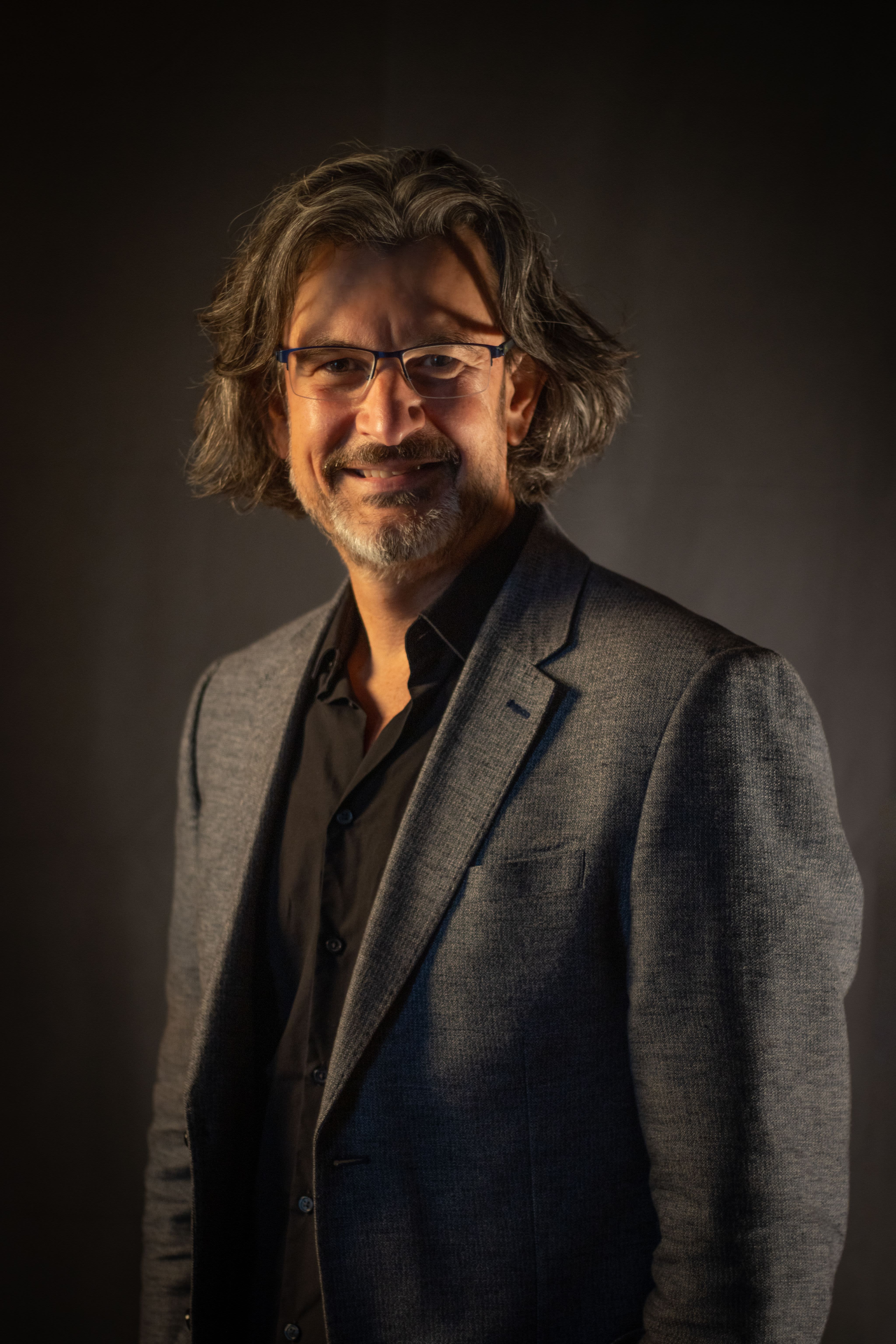
For tonight’s concert, we’re delighted to be joined once again by our Principal Conductor Ryan Bancroft. He oversees a stunningly varied programme with a focus on America.
Charles Ives was one of music’s great iconoclasts and New York plays a starring role in the work that launches our Cardiff programme – Central Park in the Dark, a potent evocation of the city at night. Its companion piece, The Unanswered Question, poses profound questions about the cosmos, with Ives producing otherworldly music including an evocative solo trumpet. We finish with John Adams’s Harmonielehre, a work that brings together fin de siècle Vienna, a 13th-century mystic and Adams’s own young daughter, the whole underpinned by a characteristic driving energy.
In between, we dive into the headily perfumed world of Szymanowski, with his First Violin Concerto tonight performed by Bomsori Kim.
Enjoy!
Matthew Wood
Head of Artistic Production
Please respect your fellow audience members and those listening at home. Turn off all mobile phones and electronic devices during the performance. Photography and recording are not permitted.
Charles Ives (1874–1954)
Central Park in the Dark (1906–c09, rev. c1936)

Packed with innovative and experimental Ivesian trademarks, Central Park in the Dark was conceived as a companion to The Unanswered Question. Originally titled ‘A Contemplation of Nothing Serious’, it was composed in 1906 but, as with a lot of Ives’s output, was not first performed until much later: the premiere was given by Juilliard graduate students on 11 May 1946.
In scoring it for string orchestra, two pianos and a small selection of wind, brass and percussion, Ives sought to present ‘a picture-in-sounds of the sounds of nature and of happenings that men would hear some 30 or so years ago (before the combustion engine and radio monopolised the earth and air), when sitting on a bench in Central Park on a hot summer night’.
Slow-moving chromatic strings provide the foundation, capturing what Ives called the ‘silent darkness’ through a 10-bar phrase repeated 10 times at the same speed throughout. Above this he juxtaposes an extraordinary collection of musical snippets and sounds to reflect the feeling of being enveloped by the noisy nocturnal life of the city. Flashes of popular song, ragtime, a Sousa march, parades and more are layered on top of each other in an accelerating collage that reaches a thrilling cacophonous climax before falling silent. Ultimately, only the darkness remains.
Further Listening: New York Philharmonic/Leonard Bernstein (DG 4791512)
Further Reading: Charles Ives: A Life with Music Jan Swafford (Norton)
Charles Ives
The Unanswered Question (1908, rev. c1930–5)
It is to the cosmos that Ives turned for The Unanswered Question, one of his most widely performed works today. Reflecting on the very nature of existence, it earlier bore the titles ‘A Contemplation of a Serious Matter’ or ‘The Unanswered Perennial Question’. Premiered alongside its companion piece Central Park in the Dark on 11 May 1946, the two stand in stark contrast: the ‘unserious’ earthly urban world of Central Park a far cry from the ‘Cosmic Landscape’ (another of Ives’s titles) of unanswered questions.
Time becomes irrelevant in this celestial exploration, which sees the chamber orchestra divided into three parts. Strings form the backdrop with ever-present and gradually shifting consonant chords representing ‘The Silences of the Druids – Who Know, See and Hear Nothing’. Across the otherworldly space they conjure, a solo trumpet plaintively asks ‘The Perennial Question of Existence’. It rings out repeatedly, each time the same and calling for an answer. A quartet of flutes provide a dissonant response, ‘The Invisible Answer’ that never satisfies but gradually gets faster and more agitated until it gives in and mocks the very question it sought to address. Untroubled, the strings continue as the trumpet asks the question one last time. Unanswered, it surrenders to the ‘Undisturbed Solitude’. As fellow American experimentalist Henry Cowell noted, we are left with nothing but ‘the eternal music of the spheres’.
Further Listening: New York Philharmonic/Leonard Bernstein (DG 4791512)
Karol Szymanowski (1882–1937)
Violin Concerto No. 1, Op. 35 (1916)

Vivace assai –
Tempo comodo –
Andantino –
Vivace scherzando –
Poco meno –
Allegretto –
Vivace (Tempo I)
Bomsori Kim violin
Composed in the summer and autumn of 1916, Syzmanowski’s First Violin Concerto is one of the central works of his mature middle period. Written for his friend, the celebrated violinist Paweł Kochański, it was reportedly inspired by the poem ‘May Night’, a sensuous and fantastical text by symbolist writer Tadeusz Miciński. Featuring Pan, European and Middle Eastern mythology, ecstatic and erotic love, together with a delight in nature, it is the feeling and mood of Miciński’s dream-like evocation – rather than any literal interpretation – on which Szymanowski drew for the concerto.
Szymanowski shunned the conventional three-part structure of most violin concertos, instead presenting a continuous line of thought, with one idea rhapsodically unfolding into another in a single movement. Varying in mood but punctuated by intoxicating climaxes, the seamlessness of the result belies a tightly controlled approach, with some themes recurring but many emerging and then dissolving, never to be heard again. Szymanowski’s influences are clear: his passion for French Impressionism and Russian harmonic and orchestral developments (notably early Scriabin) come to the fore, with richly chromatic writing and Orientalist tropes sitting alongside moments looking back to German Romanticism.
Still, it is perhaps the orchestral writing that defines the work. Every instrument is exploited for its expressiveness and colour, and above a detailed and shimmering orchestral soundscape the solo violin soars, often in its upper register. Its relationship to the orchestra varies – sometimes it is a calming presence; sometimes it acts independently – but a major break comes with the cadenza, a virtuosic display leading into the most sensual and hedonistic of orchestral climaxes. This is the sound of pleasure and ecstasy. It eventually recedes into an exquisite and poised concluding passage, ending with a whispered, playful flourish.
Szymanowski was delighted: ‘I am very happy with the whole thing – again a new, different music, but at the same time, a bit of a return to the old.’ The premiere was to be given by Kochański in St Petersburg under Alexander Siloti; however, events in Russia intervened and the piece finally received its premiere on 1 November 1922 in Warsaw. Józef Oziniński was the soloist, as Kochański was by then based in the US, but Szymanowski wrote to his old friend about the performance: ‘It was so magical that people here were completely transfixed.’ He was unequivocal: ‘It is my greatest triumph!’
Programme notes © Sophie Redfern
Further Listening: Nicola Benedetti; London Symphony Orchestra/Daniel Harding (DG 9870577)
Further Reading: Karol Szymanowski: His Life and Work Alistair Wightman (Ashgate)
INTERVAL: 20 minutes
John Adams (Born 1947)
Harmonielehre (1985)

Part 1 [untitled]
Part 2 The Anfortas Wound
Part 3 Meister Eckhardt and Quackie
For all that John Adams’s music captures the spirit of the time when it was written, it is the music of the past that haunts Harmonielehre. The title stems from a 1911 music theory treatise by Arnold Schoenberg – translatable as ‘harmony lesson’ or ‘theory of harmony’ – and dedicated to the memory of Gustav Mahler. Fin de siècle Vienna then is the reference point, with allusions to its leading composers colliding with Adams’s own pulsating minimalism across three expansive movements. Emerging from a creative block that left Adams in ‘the blackest of moods’, Harmonielehre was, for him, a ‘45-minute symphony … a statement of belief in the power of tonality at a time when I was uncertain about its future’. It premiered under Edo de Waart with the San Francisco Symphony on 21 March 1985, and quickly received further performances.
Making full use of large orchestral forces, the first movement was inspired by a dream. Looking across San Francisco Bay, Adams saw a tanker ‘of immense power and gravity and mass … it suddenly took off like a rocket ship with an enormous force of levitation.’ The result was the colossal opening chords which launch the piece, a statement of intent struck out in E minor. While the motors turn in the outer sections, the heart of the movement features rich, weaving chromatic lines. Adams has described it as ‘full of Sehnsucht’ (yearning), and nods to early Schoenbergian lyricism are readily apparent.
The slow second movement builds on the tale of Anfortas, a mythical king also found (as Amfortas) in Wagner’s Parsifal. Sustaining a wound that never heals and leaves him impotent, Anfortas symbolises illness and a sickness deep within. Musically, Adams evokes the bleak landscape of Sibelius’s Fourth Symphony in this often hazy and languorous meditation. Sibelius is not the only musical reference, though: a painful cry from Mahler’s unfinished 10th Symphony is what ultimately proves shattering.
The bright, flickering textures of ‘Meister Eckhardt and Quackie’ herald a different mood. With a title bringing together the 13th-century German mystic Eckhardt von Hochheim – who saw God in all – and Adams’s own young daughter Emily, nicknamed Quackie, this is another dream-inspired movement. Here ‘Quackie … rides upon Meister Eckhardt’s shoulder as they glide among the heavenly bodies.’ This curious and whimsical combination finds an outlet in the kinetic patterns rippling under reaching and twisting melodic gestures. Finally, as the end draws near, Adams pits competing keys against each other, with the winner closing out the work in a resplendent and glorious wall of sound.
Programme note © Sophie Redfern
Further Listening: San Francisco Symphony/Michael Tilson Thomas (SFS Media SFS0053)
Further Reading: Hallelujah Junction: Composing an American Life John Adams (Faber)
Website: https://www.earbox.com
Help us Improve Our Online Programmes.
Please take this 5-minute survey and let us know what you think of these notes.
Programme Survey
Biographies
Ryan Bancroft conductor


Photo: Benjamin Ealovega
Photo: Benjamin Ealovega
Ryan Bancroft grew up in Los Angeles and first came to international attention in April 2018, when he won both First Prize and Audience Prize at the prestigious Malko Competition for Young Conductors in Copenhagen. Since September 2021 he has been Principal Conductor of BBC National Orchestra of Wales. Following his first visit to work with the Tapiola Sinfonietta, he was invited to become its Artist-in-Association from the 2021–22 season. Last year he was announced as Chief Conductor Designate of the Royal Stockholm Philharmonic Orchestra and will take up the position next September.
He has made debuts with a number of leading European orchestras, including the Philharmonia, London and Rotterdam Philharmonic, BBC, Danish National and Swedish Radio Symphony orchestras, Toulouse Capitole Orchestra, RAI Turin and Ensemble Intercontemporain. In North America he has worked with the Baltimore, Houston and Toronto Symphony orchestras and this season makes debuts with the Dallas Symphony and Minnesota Orchestra. He also appears for the first time at Suntory Hall with the New Japan Philharmonic and Midori, at the Royal Festival Hall with the Philharmonia and Sir Stephen Hough and at the Royal Concertgebouw with the Netherlands Philharmonic. He also returns to the City of Birmingham, Gothenburg and Malmö Symphony orchestras.
He has a passion for contemporary music and has performed with Amsterdam’s Nieuw Ensemble, assisted Pierre Boulez in a performance of his Sur incises in Los Angeles, premiered works by Sofia Gubaidulina, Cage, Tenney and Anne LeBaron, and has worked closely with improvisers such as Wadada Leo Smith and Charlie Haden. He returns to work with the Ensemble Intercontemporain later this month.
He studied at the California Institute of the Arts, Royal Conservatoire of Scotland and in the Netherlands.
Bomsori Kim violin

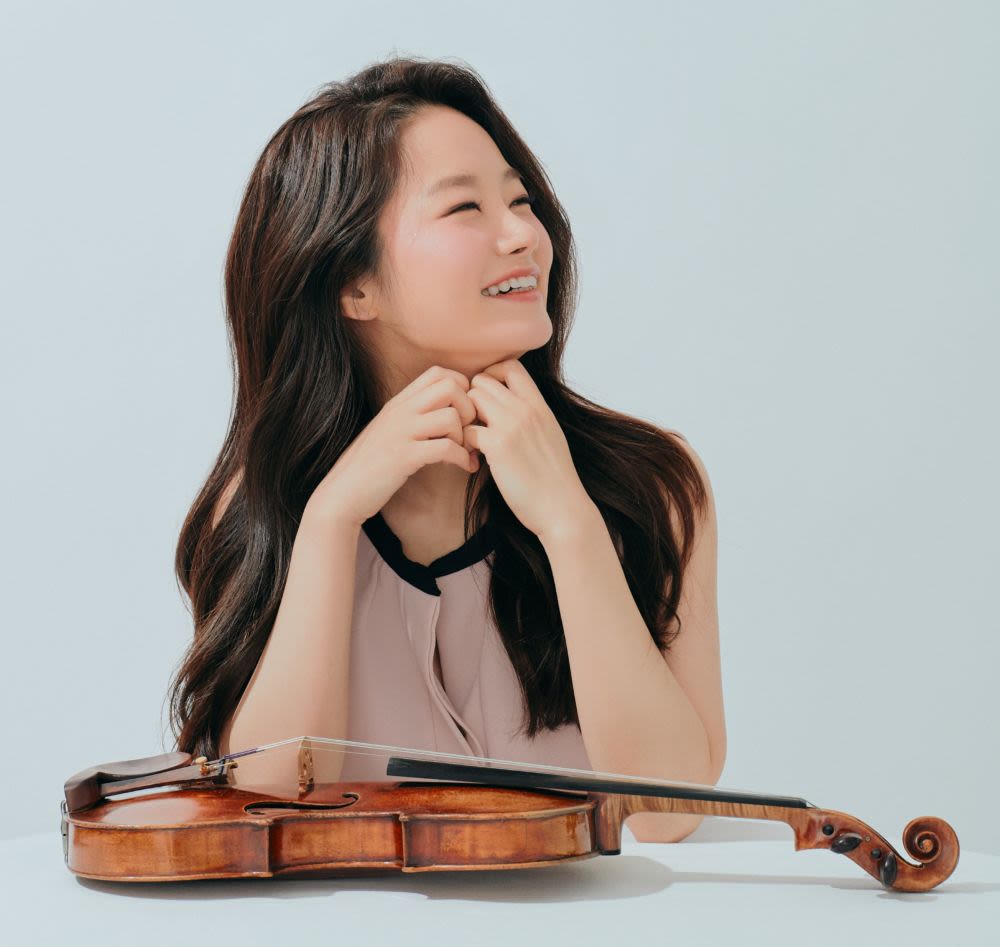
Photo: Kyutai-Shim
Photo: Kyutai-Shim
Bomsori Kim was born in South Korea and studied at Seoul National University and the Juilliard School in New York.
In 2021 she signed an exclusive recording contract and released the album Violin on Stage. Other recent highlights include concerts with the New York Philharmonic, Danish National, Frankfurt Radio, San Francisco, Singapore and Tokyo Symphony orchestras and Tonkünstler Orchestra, a residency at the Rheingau Festival, appearances at the Gstaad Menuhin Festival with which she commenced a five-year residency as Menuhin’s Heritage Artist in 2021 and a tour of the USA with the Wrocław Philharmonic, performing Szymanowski’s First Violin Concerto.
She made her New York Philharmonic debut in 2019, giving the American premiere of Tan Dun’s violin concerto Fire Ritual.
She has worked with leading conductors, including Fabio Luisi, Jaap van Zweden, Andrey Boreyko, Jacek Kaspszyk, Marin Alsop, Pablo Heras-Casado, Hannu Lintu, Sakari Oramo, John Storgårds and Giancarlo Guerrero.
Her competition successes include prizes at the 62nd ARD International Music Competition, Tchaikovsky Competition, Queen Elisabeth Competition, Sibelius Competition and the 15th International Henryk Wieniawski Violin Competition. She received the 2018 Young Artist Award from the Korean Ministry of Culture, Sports and Tourism, and the Korean Music Association’s 2019 Young Artist Award.
Her award-winning discography includes music by Fauré, Debussy, Szymanowski, Chopin, Wieniawski and Shostakovich.
She performs on the Guarneri del Gesù c1725 ‘ex-Moller’, on extended loan through the Samsung Foundation of Culture of Korea and The Stradivari Society of Chicago, Illinois.
BBC National Orchestra of Wales
For over 90 years, BBC National Orchestra of Wales has played an integral part in the cultural landscape of Wales, occupying a distinctive role as both broadcast and national symphony orchestra. Part of BBC Wales and supported by the Arts Council of Wales, it has a busy schedule of live concerts throughout Wales and the rest of the UK. The orchestra is an ambassador of Welsh music and champions the works of contemporary composers.
It performs annually at the BBC Proms and biennially at the BBC Cardiff Singer of the World competition, and can be heard regularly across the BBC: on Radio 3, Radio Wales and Radio Cymru, as well as providing the soundtracks for some of your favourite television programmes.
Highlights of this season include the Elemental Explorations concerts in Brecon and Newport with Nil Venditti, Disney’s Fantasia in concert, Britten and Elgar with the orchestra’s much-loved Conductor Laureate Tadaaki Otaka, an all-new Gaming concert with gaming music legend Eímear Noone and a CoLaboratory concert with the sensational cellist Abel Selaocoe.
Alongside its busy schedule of live concerts, BBC NOW works closely with schools and music organisations throughout Wales, regularly delivering workshops, side-by-side performances and young composer initiatives to inspire and encourage the next generation of performers, composers and arts leaders and make music accessible to all. To find out more visit bbc.co.uk/bbcnow
Patron
HM King Charles III KG KT PC GCB
Principal Conductor
Ryan Bancroft
Conductor Laureate
Tadaaki Otaka CBE
Composer-in-Association
Gavin Higgins
Composer Affiliate
Sarah Lianne Lewis
First Violins
Lesley Hatfield leader
Nick Whiting associate leader
Martin Gwilym- Jones sub-leader
Cecily Ward
Terry Porteus
Suzanne Casey
Anna Cleworth
Marie-Noëlle Richard •
Kerry Gordon-Smith
Juan Gonzalez
Carmel Barber
Jane Sinclair
Ilze Abola
Gary George Veale
Second Violins
Anna Smith *
Ruth Heney
Lydia Caines
Joseph Williams
Olivier Chauvet •
Sheila Smith
Katherine Miller
Beverley Wescott
Sellena Leony
Vickie Ringguth
Michael Topping
Greta Papa
Violas
Rebecca Jones *
Alex Thorndike #
Tetsuumi Nagata
Lowri Thomas
Anne-Marie Lemeunier •
Laura Sinnerton
Catherine Palmer
Ania Leadbeater
Robert Gibbons
Sharada Mack
Cellos
Alice Neary *
Keith Hewitt #
Raphael Lang
Rachel Ford
Alistair Howes
Carolyn Hewitt
Sarah Berger
Kathryn Graham
Double Basses
Lynda Houghton ‡
Daniel Vassallo
Christopher Wescott
Manuel Jouen •
Richard Gibbons
Thea Sayers
Emma Prince
Mike Chaffin
Flutes
Harry Winstanley ‡
John Hall †
Lindsey Ellis
Elizabeth May
Piccolos
Lindsey Ellis †
John Hall
Elizabeth May
Oboes
Steve Hudson *
Amy McKean †
Sarah-Jayne Porsmoguer
Cor Anglais
Sarah-Jayne Porsmoguer †
Clarinets
Nick Carpenter ‡
Christine Fourrier •
Alison Lambert
Lenny Sayers
bass clarinets
Lenny Sayers †
Alison Lambert
E flat clarinet
Christine Fourrier •
Bassoons
Jarosław Augustyniak *
Pascal Thirot •
Jo Shewan
David Buckland
Contra-Bassoon
David Buckland †
Horns
Tim Thorpe *
Meilyr Hughes
Neil Shewan †
William Haskins
John Davy
Trumpets
Philippe Schartz *
Robert Samuel
William Morley
Stéphane Michel •
Fabien Bollich • (Principal for Szymanowski)
Trombones
Donal Bannister*
Tom Berry
Bass Trombone
Darren Smith †
Tubas
Daniel Trodden †
Andy Cresci
Timpani
Steve Barnard *
Percussion
Chris Stock *
Mark Walker †
Phil Girling
Andrea Porter
Harps
Valerie Aldrich-Smith †
Jane Lister
Piano
Catherine Roe Williams
Chris Williams
Celesta
Chris Williams
* Section Principal
† Principal
‡ Guest Principal
# Assistant Principal
The list of players was correct at the time of publication
Director Lisa Tregale
Orchestra Manager Vicky James
Assistant Orchestra Manager Nick Olsen
Orchestra Coordinator, Operations Kevin Myers
Business Coordinator Caryl Evans
Orchestra Administrator Eleanor Hall
Head of Artistic Production Matthew Wood
Artists and Projects Manager Victoria Massocchi
Orchestra Librarian Eugene Monteith **
Producer Mike Sims
Broadcast Assistant Jacob Perkins
Head of Marketing and Audiences Sassy Hicks
Marketing Coordinator Amy Campbell +
Digital Producer Yusef Bastawy
Social Media Coordinator Harriet Baugh
Education Producers Beatrice Carey, Rhonwen Jones **
Audio Supervisors Simon Smith, Andrew Smillie
Production Business Manager Lisa Blofeld
Stage and Technical Manager Steven Brown +
Assistant Stage and technical manager Dave Rees
BBC Wales Apprentices Josh Gill, Analese Thomas-Strachan, Jordan Woodley
+ Green Team member
** Diversity & Inclusion Forum