
Visions of Italy
Friday 15/9/23, 7.30pm
Theatr Brycheiniog, Brecon


FerruccioBusoni
Eine Lustspiel-Ouvertüre 8’
Grace Williams
Violin Concerto 21’
INTERVAL: 20 minutes
Vincenzo Bellini
Norma – overture 6’
Felix Mendelssohn
Symphony No. 4 in A major, ‘Italian’ 27’
Geneva Lewis violin
Nil Venditticonductor


The concert in Newport is being recorded by BBC Radio 3 for future broadcast inAfternoon Concert.
Introduction
A warm welcome to the start of BBC National Orchestra of Wales’s new season, in which we luxuriate in the warmth of Italy. Nil Venditti makes a welcome return to the orchestra, and the concert begins with an overture that sees the great Italian pianist-composer Busoni in unusually playful mood. The overture that launches the second half – that for Bellini’s Norma – is a good deal darker, as befits this operatic tragedy about warring Romans and Druids in ancient Gaul.
Just a couple of years after Bellini’s Norma, Mendelssohn was completing his Fourth Symphony, a paean to all things Italian, a work that is unusual in the way its structure moves from the bucolic to the darkly intense.
We are closer to home for the concerto on the programme: Grace Williams’s Violin Concerto, a work that is now getting the exposure it so richly deserves and for which we’re delighted to welcome as soloist current BBC Radio 3 New Generation Artist Geneva Lewis.
Enjoy!
Please respect your fellow audience members and those listening at home. Turn off all mobile phones and electronic devices during the performance. Photography and recording are not permitted.
Ferruccio Busoni (1866–1924)
Eine Lustspiel-Ouvertüre (‘A Comedy Overture’)
(1897, rev. 1904)

Ferruccio Busoni was best known in his lifetime as a brilliant pianist, and he is primarily remembered today for his magnificent piano transcriptions of works by other composers, especially J. S. Bach, whom he revered. But Busoni’s original compositions have always had their devoted advocates, and in recent years they’ve become more widely known and admired, especially the adventurous, at times innovative works of his last two decades, which can open doors on strange new worlds.
A very different kind of world is opened up in Busoni’sEine Lustspiel-Ouvertüre, which was written in 1897 and revised in 1904. Busoni doesn’t seem to have had any particular comedy drama in mind when he composed it; instead, he looks back with late Romantic eyes on the wonderful, irresistibly vital overtures of Mozart, particularly the overture to The Marriage of Figaro. Eine Lustspiel-Ouvertüre shares some of the bustling excitement of its Mozartian model, along with its feeling of anticipation – fun as it is, this is only a prelude to something even better. But, unlike the Mozart, Busoni’s overture takes a turn into more shadowy territory at its heart. The opening themes return, and with them something of the exuberance of the first section, but it’s clear that this comedy isn’t one that turns its back completely on the darker side of life.
Programme note © Stephen Johnson
Grace Williams (1906–77)
Violin Concerto (1950)

1 Liricamente
2 Andante sostenuto –
3 Allegro con spirito
Geneva Lewis violin
Grace Williams’s Violin Concerto was premiered on 30 March 1950 by the Welsh violinist Granville Jones and the BBC Welsh Orchestra, conducted by Mansel Thomas, in a concert broadcast live on the BBC’s Welsh Home Service.
Williams had been based in London during the war but in 1947 she took the decision to return home to Barry. She took on a number of different musical jobs and became the first British female composer to write music for a feature film when she provided the score for Blue Scar in1949.
In the same year Williams told her friend Enid Parry that she longed to compose a Violin Concerto that could express the ‘lyricism’ that had been building up within her during previous months. That powerful impulse determined the shape of the piece. In contrast to the usual quick–slow–quick movement pattern, her concerto opens with a slow movement, which is followed by a central slow movement and a quick finale.
The opening Liricamente (lyrically) movement takes the form of an extended rhapsody. There are episodes of yearning intensity – including the soloist’s cadenza – the lyrical and romantic impetus of this movement always remaining clear.
In contrast, the Andante sostenuto is serene and contemplative. A phrase from the Welsh hymn-tune Yr Hen Dderby (‘The Old Derby’) is used as the movement’s point of departure, a tune Williams had used in her score for Blue Scar, although this particular sequence was edited out in the film’s final version. Soloist and orchestra incant, elaborate and develop aspects of the tune, creating an enchanting musical landscape.
The spell is broken by the concluding Allegro movement, which follows without a break. Dramatic in tone, it contains witty exchanges between soloist and orchestra, and a brilliant solo cadenza. Even in this brisk finale, however, the overall lyrical ethos of the concerto is not entirely dispelled.
Programme note © Rhiannon Mathias
INTERVAL: 20 minutes
Vincenzo Bellini (1801–35)
Norma (1831) – overture

Bellini’s opera Norma got off to a shaky start at its premiere at Milan’s La Scala opera house in 1831. ‘Fiasco! Fiasco! Solemn fiasco!’ Bellini wrote in anguish to his composer friend Francesco Florimo. But then came one of the most surprising reversals in all opera history. For the second night, the theatre was full, and Norma seemed to go down much better. Before long it was a roaring success, delighting audiences all over Europe. Today, the beautiful Act 1 aria ‘Casta diva’ (‘Chaste goddess’), which had left the singer Giuditta Pasta deeply unimpressed during rehearsal, is one of the most famous of all Italian opera arias, known and loved even by people who’ve never set foot in an opera house.
The plot of Norma is a classic grand opera tale of a love triangle, set in Roman-occupied Gaul, that goes horribly wrong and ends with the self-sacrificial death of both the heroine and her lover on a blazing pyre. It’s the job of the overture to set the scene and get the audience in the mood for what is to come. Bellini’s concise, gripping example does this brilliantly, as well as anticipating some of the opera’s leading melodies. As it rushes to its exhilarating conclusion, it’s easy to imagine the curtain going up, and the deliciously tragic drama beginning to unfold.
Programme note © Stephen Johnson
Help Us Improve Our Online Programmes.
Please take this 5-minute survey and let us know what you think of these notes.
Programme Survey
Felix Mendelssohn (1809–47)
Symphony No. 4 in A major, Op. 90, ‘Italian’ (1833)
1 Allegro vivace
2 Andante con moto
3 Con moto moderato
4 Saltarello: Presto
Mendelssohn’s Fourth Symphony came about from his travels through Europe between 1829 and 1831, in the tradition of a Grand Tour, in which a wealthy young man completed his education by ticking off the cultural highlights of Europe. He began – unconventionally – with a three-week visit to Scotland in 1829, which inspired both his Hebrides Overture (also known as Fingal’s Cave) and his ‘Scottish’ Symphony (No. 3). But, encouraged by the eminent writer Johann Wolfgang von Goethe, whom Mendelssohn counted as a friend, and his composition teacher Carl Friedrich Zelter, he set off for the more traditional destination of Italy in October 1830. He spent 10 months in the country, making his way from Venice to Naples via Bologna, Florence and Rome, then back home again through Genoa and Milan.
If his Scottish trip had been about brooding landscapes, swirling mists and blood-soaked history, his Italian trip, as he wrote home to his parents, was about light, sunshine and happiness: ‘This is Italy! And now has begun what I have always thought to be the supreme joy in life. And I love it.’
He devoted time during his travels to planning what he called, in a letter to his sister Fanny, ‘the jolliest piece I have ever done’, completing his ‘Italian’ Symphony back home in Berlin on 13 March 1833. It was an immediate success at its premiere in London two months later.
Mendelssohn described the symphony as ‘blue sky in A major’, and optimism is certainly encapsulated in the first movement’s bounding opening theme, though its central development section brings in somewhat darker, more unpredictable material.
The slow second movement was inspired by religious processions that Mendelssohn watched in Rome: it contrasts a noble melody in the woodwind and violas with a plodding bass line, fading away at its conclusion as if the procession has moved into the distance.
Following an elegant third-movement minuet (complete with distant horn calls in its gently martial trio section), Mendelssohn closes with a finale that blends two breathless Italian dances: the Roman saltarello and the Neapolitan tarantella.
The ‘Italian’ is one of very few symphonies in the repertoire that begins in the bright positivity of the major and ends in the more serious minor. The finale’s whirling energy, however, alongside a melancholy memory of the symphony’s opening melody just before the end, ensures a propulsive, somewhat delirious conclusion to the piece.
Programme note © David Kettle
You may also like:
/9/23, 7.30pm
Antony Hermus Conducts …
Friday 22/9/23, 7.00pm
BBC Hoddinott Hall, Cardiff
Saturday 23/9/23, 3.00pm
Hafren, Newtown
Wagenaar Overture‘Cyrano de Bergerac’
Mozart Oboe Concerto
Sibelius Symphony No. 2
Antony Hermus conductor
Steven Hudson oboe
MELLIFLUOUS | JOYOUS | VIVACIOUS
Vibrant, charismatic and energetic Dutch conductor Antony Hermus joins BBC NOW in Cardiff and Newtown this September with a varied programme of Wagenaar, Mozart and Sibelius.
A particular favourite of Hermus, Johan Wagenaar’s musical portrait Cyrano de Bergerac was written in 1905 and is deeply romantic in style. Heroism, elegant yearning and astonishing harmony meld with joy, humour and satire in this depiction of Cyrano, and the music displays a direct and endlessly tuneful spirit. BBC NOW’s Principal Oboe, Steven Hudson, steps out of the orchestra and into the solo spot in Mozart’s Oboe Concerto, before we explore a symphony popular the world over, Sibelius’s masterly Second Symphony.
CoLaboratory: Fiona Monbet
Thursday 19/10/23, 7.30pm
BBC Hoddinott Hall, Cardiff
Ibert Divertissement
Satie La belle excentrique
Tailleferre Petite Suite
Milhaud Le boeuf sur le toit
Bernstein Three Dance Episodes from ‘On the Town’
Monbet Suite for Orchestra and Jazz Trio world premiere
Fiona Monbet violin/director
Zacharie Abraham double bass
Auxane Cartigny piano
Philippe Maniez drum kit
VIBRANT | INTIMATE | ENTRANCING
Fusing American jazz and traditional folk with her trademark French flair, violinist and composer Fiona Monbet joins BBC NOW in our first CoLaboratory of the 2023/24 season.
Her programme opens with a set of pieces inspired by French burlesque of the 1920s and 1930s, whose composers – Jacques Ibert, Erik Satie, Germaine Tailleferre and Darius Milhaud – all had one thing in common: alongside their more traditional compositions, they were all great early film music writers, so it is no wonder their music is so vivid and pleasantly picturesque.
For the second half we leave France and voyage to the jazz-drenched streets of New York and to another brilliant film composer, Leonard Bernstein, with his ‘Three Dance Episodes’ from On the Town, before the world premiere of Fiona Monbet’s new work for violin, double bass, piano, drum kit and orchestra.
With BBC Hoddinott Hall set up in cabaret style, bring your drink in and enjoy this concert up close and personal.
Scheherazade
Saturday 11/11/23, 7.30pm
St David’s Hall, Cardiff
Dukas The Sorcerer’s Apprentice
Grieg Piano Concerto
Rimsky-Korsakov Scheherazade
Lionel Bringuier conductor
Zee Zee piano
MAGICAL | CAPTIVATING | DAZZLING
This concert is imbued with an air of magic, kicking off with The Sorcerer’s Apprentice byDukas. Remarkable musical storytelling depicts an enchanted broom and the chaos that ensues. Truly spellbinding!
From the unmistakable introduction to the original quality of its writing, it’s easy to understand why Grieg’s Piano Concerto is considered such a masterpiece; with its dazzling virtuosity and strong Norwegian identity, the composer’s affinity with folk song is ever present. Then Rimsky-Korsakov takes up the mantle with music of seduction and adventure in Scheherazade,his version of A Thousand and One Nights. This dazzlingly opulent work is full of colour, rhythmic vitality and flavours of the Orient.
American Explorations
Friday 3/5/24, 7.30pm
The Riverfront, Newport
Saturday 4/5/24, 7.30pm
BBC Hoddinott Hall, Cardiff
Barber Adagio for Strings
Barber Violin Concerto
Ives Symphony No. 2
Ryan Bancroft conductor
Benjamin Baker violin
EMOTIVE | INFLUENTIAL | DAZZLING
Join us for a celebration of American classical music with our LA-born Principal Conductor Ryan Bancroft this May! Popular the world over, Barber’s Adagio for Strings is one of the most recognisable pieces in the orchestral repertoire and probably his best-known work – used in film and television, as well as having a poignant association through its use at President Franklin Roosevelt’s funeral and following the assassination of JFK.
Less well-known, but equally dazzling, is Barber’s Violin Concerto. Written in the 1930s when atonality was vying for attention, the traditional melodies, rhythms, harmonies and orchestration of Barber’s music were met with enthusiasm. Expansive and at times moody themes dominate, with hints of orientalism, folk and Russian grittiness, while syncopation and distinctive counter-rhythms drive an exciting narrative and virtuosity prevails at every turn. To perform the solo role we’re thrilled to welcome the charismatic violinist Benjamin Baker.
Ryan Bancroft continues his exploration of the music of Charles Ives with his Second Symphony. Famous for quoting well-known American melodies, this symphony is his first major work which fully explores this borrowing, blended with European influences – a snapshot of the coming-together of his childhood and adult life.
Biographies
Nil Venditticonductor

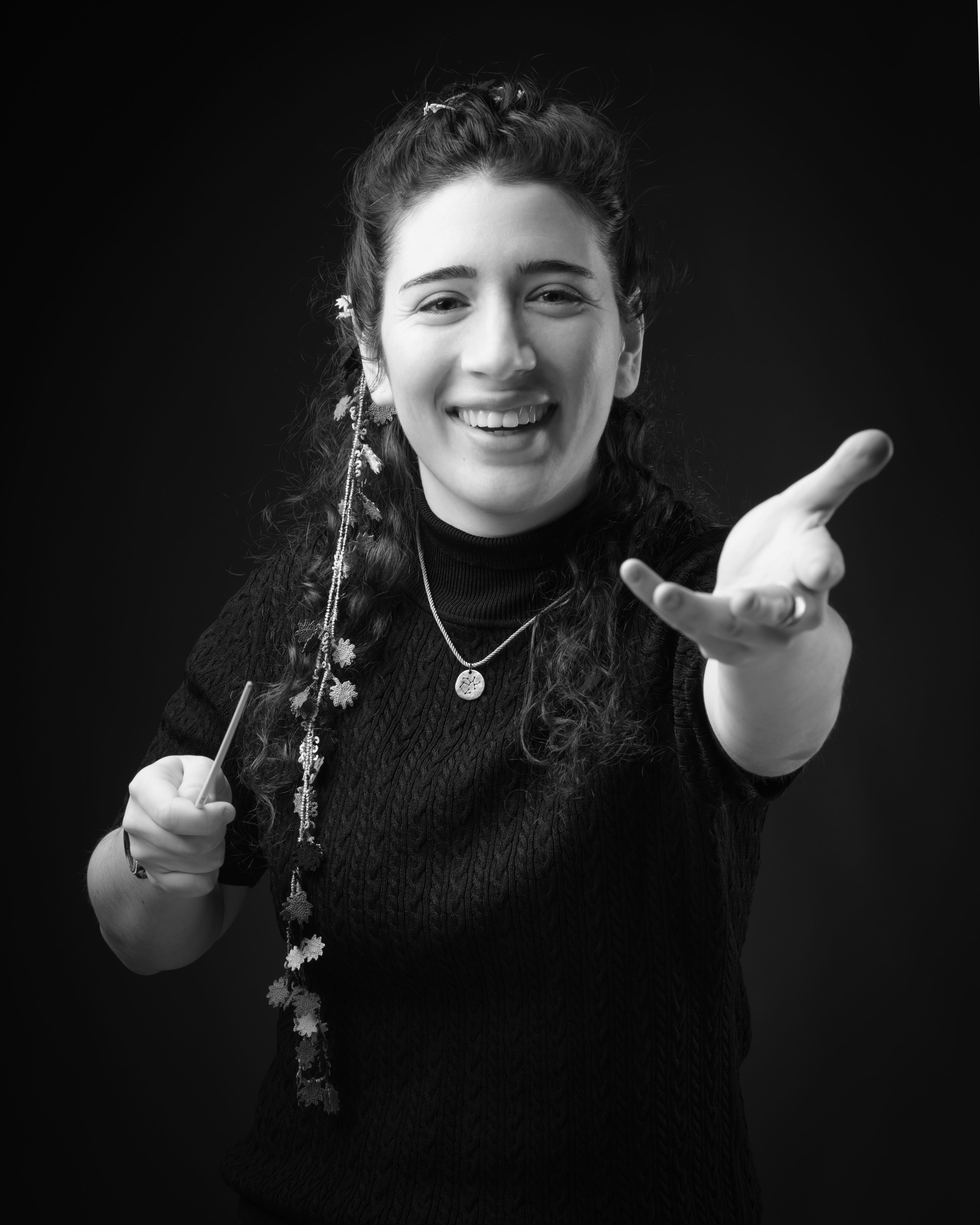
Photo: Alessandro Bertani
Photo: Alessandro Bertani
Italian-Turkish conductor Nil Venditti is fast establishing relationships with leading orchestras and ensembles around the world. Highlights from recent seasons include collaborations with the Paris Opera Orchestra, Deutsche Kammerphilharmonie Bremen, Dresden Philharmonic, Castilla y León Symphony Orchestra, Zurich Tonhalle Orchestra, Stuttgart Chamber Orchestra and Irish National Opera, as well as Orchestra della Toscana, of which she was Principal Guest Conductor from June 2020 to May 2022.
This season she makes debuts with the Konzerthaus Berlin, BBC, Hiroshima, Lahti and Tyrolean Symphony orchestras, Tapiola Sinfonietta, Royal Swedish Opera and Nagoya and Royal Philharmonic orchestras. She continues her relationships with tonight’s orchestra, as well as the Royal Liverpool Philharmonic Orchestra and Royal Northern Sinfonia, and returns to Stuttgart Opera.
She has a strong affinity for Haydn, Mozart, Mendelssohn and Beethoven, and is expanding into Romantic repertoire. Her interest in contemporary programming has seen her focus on the works of Fazil Say, Fabien Waksman, Lepo Sumera and Caroline Shaw. In the opera house her repertoire ranges from Mozart to Peter Maxwell Davies.
She is a champion of finding inclusive experiences for new audiences, conducting Nicola Campogrande’s Concerto for Audience and Orchestra and Irish National Opera’s first virtual reality community opera Out of the Ordinary.
Nil Venditti trained in conducting at the Zurich Univerrsity of the Arts under the guidance of Johannes Schlaefli, as well as attending the Conducting Academy associated with the Pärnu Music Festival under Paavo Järvi, Neeme Järvi and Leonid Grin. This followed studies in Italy in cello and conducting.
Geneva Lewis violin

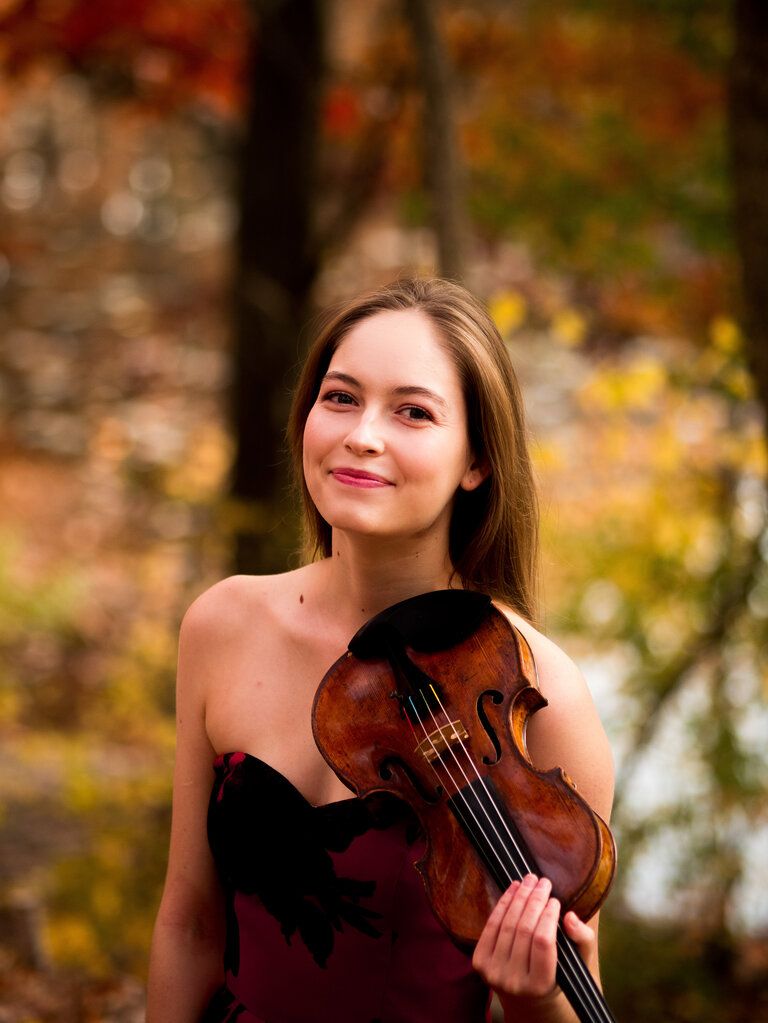
Photo: Motti Fang-Bentov
Photo: Motti Fang-Bentov
New Zealand-born violinist Geneva Lewis has forged a reputation as a musician whose performances speak from and to the heart. She is a current BBC Radio 3 New Generation Artist and is also the recipient of a 2022 Borletti–Buitoni Trust Award and a 2021 Avery Fisher Career Grant, among other awards.
Since her solo debut aged 11 with the Pasadena POPS, she has performed with orchestras including the Orpheus Chamber Orchestra, Auckland Philharmonia, North Carolina Symphony and Sarasota Orchestra. Last month she made her BBC Proms debut with BBC National Orchestra of Wales and Jaime Martín. Highlights of this season include further performances with BBC NOW and debuts with the BBC and BBC Scottish Symphony orchestras, Orchestre National de Bordeaux Aquitaine and Kremerata Baltica, with which she performs Schnittke’s Concerto grosso No.1 with Gidon Kremer.
As a chamber musician she has collaborated with prominent musicians such as Jonathan Biss, Glenn Dicterow, Miriam Fried, Kim Kashkashian, Gidon Kremer, Marcy Rosen, Sir András Schiff and Mitsuko Uchida, and she has performed in venues and festivals such as London’s Wigmore Hall, the Amsterdam Concertgebouw, Marlboro Music Festival, Kronberg Festival, Philadelphia Chamber Music Society, Ravinia and Chamberfest Cleveland.
She studied with Miriam Fried at the New England Conservatory and, before that, with Aimée Kreston at the Colburn School of Performing Arts.
Geneva Lewis currently performs on a composite violin by Giovanni Battista Guadagnini, c.1776 generously on loan from a charitable trust.
BBC National Orchestra of Wales
For over 90 years, BBC National Orchestra of Wales has played an integral part in the cultural landscape of Wales, occupying a distinctive role as both broadcast and national symphony orchestra.
Part of BBC Wales and supported by the Arts Council of Wales, it has a busy schedule of live concerts throughout Wales, the rest of the UK and the world.
The orchestra is an ambassador of Welsh music and champions contemporary composers and musicians; its concerts can be heard regularly across the BBC – on Radio 3, Radio Wales and Radio Cymru.
BBC NOW works closely with schools and music organisations throughout Wales and regularly undertakes workshops, side-by-side performances
and young composer initiatives to inspire and encourage the next generation of performers, composers and arts leaders.
The orchestra is based at BBC Hoddinott Hall in Cardiff Bay, where its purpose-built studio not only provides the perfect concert space, but also acts as a broadcast centre, from where its livestreamed concerts and pre-recorded content are presented as part of its popular Digital Concert Series.
For all information please visit the BBC National Orchestra and Chorus of Wales's website:
bbc.co.uk/now
Patron
HM King Charles III KG KT PC GCB
Principal Conductor
Ryan Bancroft
Conductor Laureate
Tadaaki Otaka CBE
Composer-in-Association
Gavin Higgins
Composer Affiliate
Sarah Lianne Lewis
First Violins
Nick Whiting leader
Martin Gwilym-Jones sub-leader
Fiona McCapra
Terry Porteus
Suzanne Casey
Anna Cleworth
Juan Gonzalez
Zanete Uskane
Ruth Heney
Alejandro Trigo
Emilie Godden
Carmel Barber
SecondViolins
Emma Parker ‡
Ros Butler
Sheila Smith
Roussanka Karatchivieva
Vickie Ringguth
Joseph Williams
Ilze Abola
Michael Topping
Lydia Caines
Katherine Miller
Violas
Rebecca Jones *
Tetsuumi Nagata
Catherine Palmer
Robert Gibbons
Laura Sinnerton
Ania Leadbeater
Natalia Solis Paredes
Annie-May Page
Cellos
Hannah Sloane‡
Keith Hewitt #
Jessica Feaver
Rachel Ford
Carolyn Hewitt
Alistair Howes
DoubleBasses
David Stark *
Alexander Jones #
Christopher Wescott
Richard Gibbons
Flutes
Matthew Featherstone *
John Hall †
Lindsey Ellis
Piccolo
Lindsey Ellis †
Oboes
Catriona MacKinnon ‡
Amy McKean †
Sarah-Jayne Porsmoguer
Cor anglais
Sarah-Jayne Porsmoguer †
Clarinets
Robert Plane ‡
Lenny Sayers
Bassoons
Jarosław Augustyniak *
Jo Shewan
Horns
Neil Shewan †
Meilyr Hughes
John Davy
Tom Findlay
Ed Lockwood
Trumpets
Philippe Schartz *
Robert Samuel
Trombones
Donal Bannister*
Stephen Turton
Bass Trombone
Darren Smith †
Tuba
Oliver Browne
Timpani
Christina Slominska ‡
Percussion
Phil Hughes ‡
Phil Girling
Harp
Valerie Aldrich-Smith †
* Section Principal
† Principal
‡ Guest Principal
# Assistant String Principal
The list of players was correct at the time of publication
Director Lisa Tregale
Orchestra Manager Vicky James
Assistant Orchestra Manager Nick Olsen
Orchestra Coordinator, Operations Kevin Myers
Business Coordinator Caryl Evans
Orchestra Administrator Eleanor Hall
Head of Artistic Production Matthew Wood
Artists and Projects Manager Eleanor Phillips
Orchestra Librarian Eugene Monteith **
Producer Mike Sims
Broadcast Assistant Jacob Perkins
Head of Marketing and Audiences Sassy Hicks
Marketing Coordinator Amy Campbell +
Digital Producer Yusef Bastawy
Social Media Coordinator Harriet Baugh
Education Producers Beatrice Carey, Rhonwen Jones **
Audio Supervisors Simon Smith, Andrew Smillie
Production Business Manager Lisa Blofeld
Stage and Technical Manager Steven Brown +
Assistant Stage and Technical Manager Josh Mead
BBC Wales Apprentices Analese Thomas-Strachan, Jordan Woodley
+ Green Team member
** Diversity & Inclusion Forum