
Handel’s Messiah
Tuesday 7 December, 7.00pm


George Frideric Handel
Messiah*159'
There will be one interval of 20 minutes after Part 1
Rhian Lois Soprano
Helen Charlston Mezzo-soprano
Hiroshi Amako Tenor
Matthew Brook Bass
BBC National Orchestra of Wales (Lesley Hatfield leader)
BBC National Chorus of Wales (Adrian Partington artistic director)
John Butt conductor
* For downloadable text, click here


This concert is being recorded by BBC Radio 3 for broadcast on 16 December in ‘Radio 3 in Concert’. It will be available to stream or download for 30 days after broadcast via BBC Sounds, where you can also find podcasts and music mixes. Visit bbc.co.uk/now for more information on future performances.
Tonight’s programme
A very warm welcome to tonight’s concert, which features a single masterpiece: Handel’s Messiah. It’s a work so central to the repertoire that it’s easy to forget that it was written at a time when Handel’s stock was not exactly high. He’d left London with his tail between his legs, his last opera season having foundered. And it was to Dublin that he went, taking the score of Messiah with him.
It was a revolutionary work in several respects: drawing exclusively on passages from the Bible, Handel made the most of his experience as an opera composer in creating a compelling drama, with the chorus taking an unusually central role. To the mix, this most cosmopolitan of figures added a full gamut of national styles, from the French-style overture via the chorale tradition of his native Germany to the Italianate ‘Pastoral Symphony’.
It’s hardly surprising that the earliest audiences were enraptured and no doubt tonight we will be similarly transported, with Baroque authority John Butt leading BBC National Chorus and Orchestra of Wales and a gifted line-up of soloists.
Thank you for joining us.
Lisa Tregale
Director
Please respect your fellow audience members and those listening at home. Turn off all mobile phones and electronic devices during the performance. Photography and recording are not permitted.
George Frideric Handel (1685–1759)
Messiah (1741, rev. 1743–59)


Though Handel is particularly renowned for his English oratorios, the genre didn’t become his bread and butter until relatively late in his composing career. In fact, until the 1730s, his main preoccupation was Italian opera. However, Handel’s ambitions for the opera genre were hindered by increasing production costs and shifting audience tastes. A failure to obtain enough subscribers for the 1738 opera season at the King’s Theatre prompted the composer to turn to the oratorio genre.
Oratorios had much in common with operas in terms of musical forms, styles and ideas, so Handel didn’t have to fundamentally change his compositional language. However, they attracted a wider audience by virtue of being in English and relying on biblical material, hence appealing to the Protestant middle classes who sometimes found the language and subject matter of operas inaccessible. As unstaged works designed for the concert hall, there were also fewer financial overheads. Thus the late 1730s and early 1740s saw Handel compose a stream of outstanding oratorios, including Saul, Israel in Egypt and his most famous work, Messiah, which was premiered in Dublin with great success.
Messiah is set to a text compiled by Charles Jennens and portrays Jesus Christ as the true Messiah promised by the Hebrew prophets, telling the story through the Old Testament texts that prophesy his coming and the New Testament gospels that tell of his mission, ending with the final glorification of Christ in heaven.
Though using modest forces, Messiah is grand in scope and is cast in three parts, lasting some two and a half hours. Handel’s ability to keep an audience captivated throughout is no doubt due to the extraordinary variety contained within the work.
In Part 1 the first vocal number is a beautifully lyrical tenor recitative ‘Comfort ye, my people’. It features a gently pulsating string accompaniment, like a heartbeat that underpins the soloist. By contrast, the uncertain opening of the mezzo aria ‘But who may abide the day of his coming?’ gives way to a stormy central section set to the words ‘For he is like a refiner’s fire’, with the strings playing an agitated tremolo. Famous choruses in this part include ‘For unto us a child is born’, with its sprightly tone and joyful message
Part 2 opens with a sombre chorus, ‘Behold the lamb of God’; its rhythm is reminiscent of majestic overtures in the French style. A tender aria for mezzo follows, ‘He was despised’, once more with a stormy central section. The crowning glory of Part 2 is the ever-popular ‘Hallelujah’ chorus, scored for the whole ensemble and featuring much musical imitation between the vocal parts, creating the effect of glorifying Jesus’s name in all corners of heaven and earth.
In Part 3 a solo trumpet has its moment of glory in the bass aria ‘The trumpet shall sound’, and the work concludes with a grand choral setting of the word ‘Amen’.
Programme note © Aditya Chander
Aditya Chander read Music at Magdalene College, Cambridge, and received a Master’s degree in Music, Science and Technology from Stanford University, California.
Help us Improve Our Online Programmes.
Please take this 5-minute survey and let us know what you think of these notes.
Programme Survey
Biographies
John Butt conductor

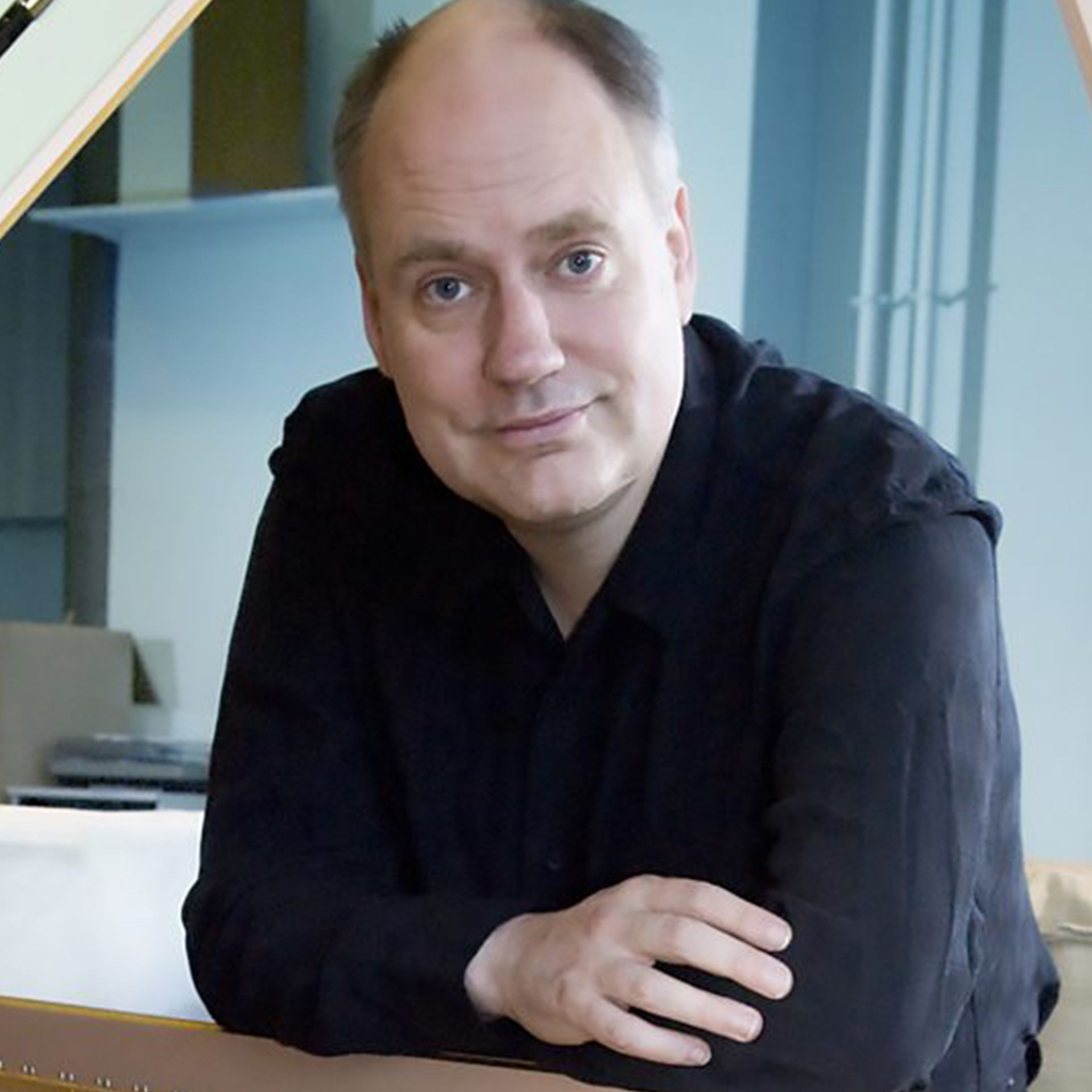
John Butt is Gardiner Professor of Music at the University of Glasgow, musical director of the Dunedin Consort and a Principal Artist with the Orchestra of the Age of Enlightenment. He is the author of five monographs centring around Bach, the Baroque and the concepts of historical performance practice, while his recent work gravitates towards music and modernity, listening cultures and embodied musical experience, music and film.
Highlights of his discography include solo keyboard recordings and Gramophone Award-winning accounts with the Dunedin Consort of Messiah and Mozart’s Requiem. His most recent releases include Handel’s Samson and Bach cantatas.
He has made multiple appearances at the BBC Proms and Edinburgh Festival with the Dunedin Consort, most recently at the latter with Errollyn Wallen’s new opera, Dido’s Ghost. He has also appeared as a guest conductor with the Scottish Chamber Orchestra, City of London Sinfonia, BBC and Stavanger Symphony orchestras, Rotterdam Philharmonic Orchestra, Hallé, Orchestra of the 18th Century, The English Concert, Portland Baroque Orchestra, Music of the Baroque, Academy of St Martin in the Fields and the Irish Baroque Orchestra.
In 2013 he received an OBE and the Medal of the Royal College of Organists.
Rhian Lois soprano
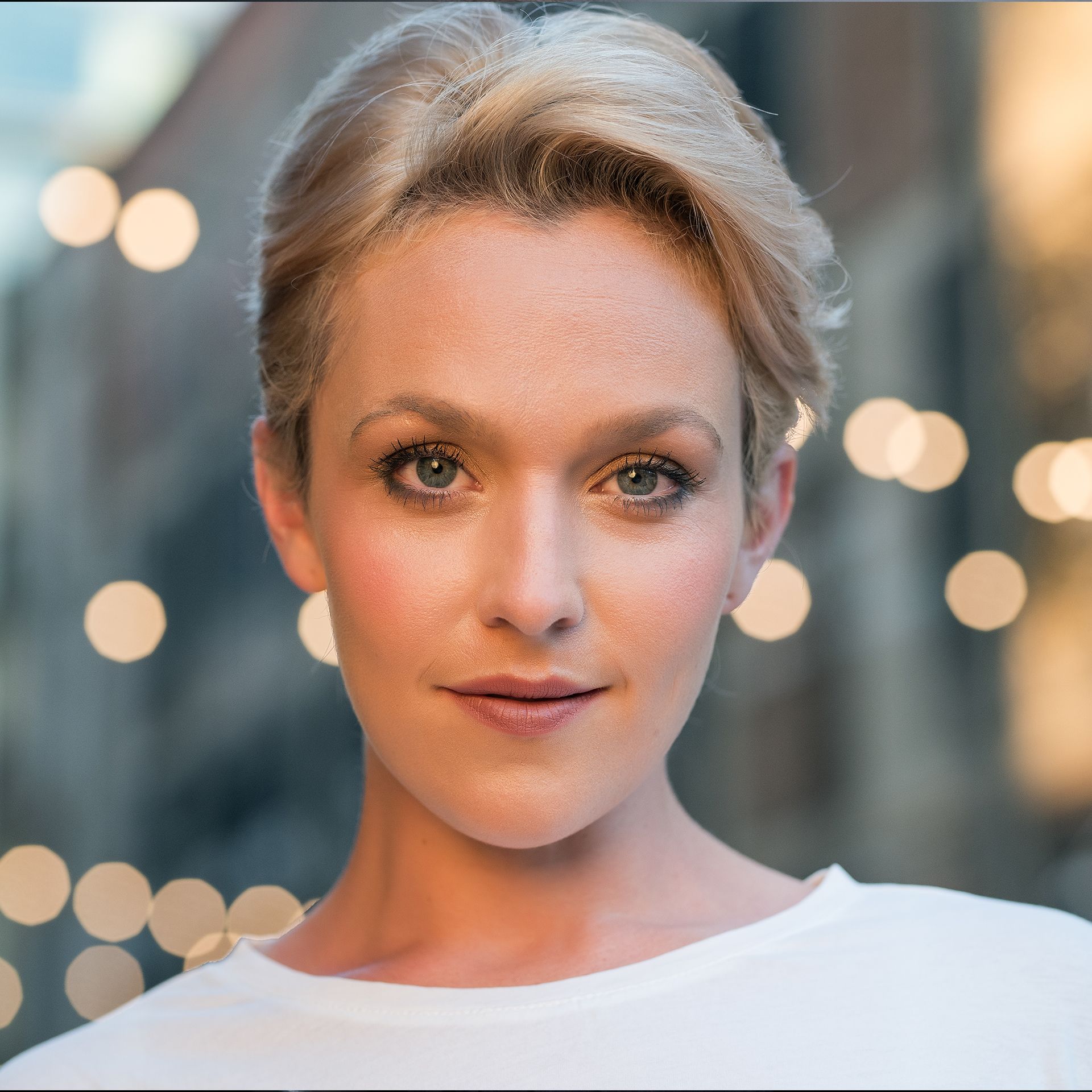
Photo: Alecsandra Raluca Dragoi
Photo: Alecsandra Raluca Dragoi
Welsh soprano Rhian Lois is a graduate of the Royal Welsh College of Music & Drama, Royal College of Music and National Opera Studio.
This season she returns to English National Opera as Janine/Ofwarren (Poul Ruders’s The Handmaid’s Tale) and makes her house debut at Theater Magdeburg.
Highlights last season include debuts with Opera Glassworks and Garsington Opera and appearances with Scottish Opera. She has also appeared at the Royal Opera House’s Linbury Theatre, London’s Alexandra Palace, St Petersburg’s Mariinsky Theatre, Santa Fe Opera, Grand Théâtre de Genève, Nevill Holt Opera and Welsh National Opera, among many others.
On the concert stage, she has performed at the International Opera Awards Foundation, the Enescu Festival, London’s Royal Festival Hall, Symphony Hall, Birmingham, and the Barbican’s Milton Court. Her repertoire includes works by Handel, Mendelssohn, Mozart and Stravinsky.
Her discography includes Britten’s The Turn of the Screw conducted by John Wilson and the Incidental Music to Mendelssohn’s A Midsummer Night’s Dream with Edward Gardner.
Helen Charlston mezzo-soprano

Photo: Ben McKee
Photo: Ben McKee
Helen Charlston won First Prize at the 2018 Handel Singing Competition and was a finalist in the Hurn Court Opera Competition, and the Grange Festival International Singing Competition. She was a ‘Rising Star’ of the Orchestra of the Age of Enlightenment (2017–19) and a 2018 City Music Foundation Artist. This year she joined Les Arts Florissants’ Le Jardin des Voix academy and became a member of BBC Radio 3’s New Generation Artists scheme.
Recent and forthcoming highlights include the premiere of The Isolation Songbook with Michael Craddock and Alexander Soares, appearances with the Royal Liverpool Philharmonic Orchestra, Adelaide, Seattle and Western Australian Symphony orchestras and Gabrieli Consort & Players, as well as solo recitals at the York Early Music, London Handel, Korčula Baroque, Leicester International and Fitzrovia festivals.
Last year she premiered the role of Anna in Tom Smail’s new opera Blue Electric. Other operatic roles include Messenger and Proserpina (L’Orfeo), First Witch (Dido and Aeneas), Olga (Eugene Onegin), Florence Pike (Albert Herring), Ino (Semele), Sara (Jonathan Dove’s Tobias and the Angel) and Dinah (Trouble in Tahiti). She also created the title-role in the premiere of Dido Is Dead by Rhiannon Randle.
She is the former head chorister of St Albans Abbey Girls Choir and was a choral scholar at Trinity College, Cambridge.
Hiroshi Amako tenor
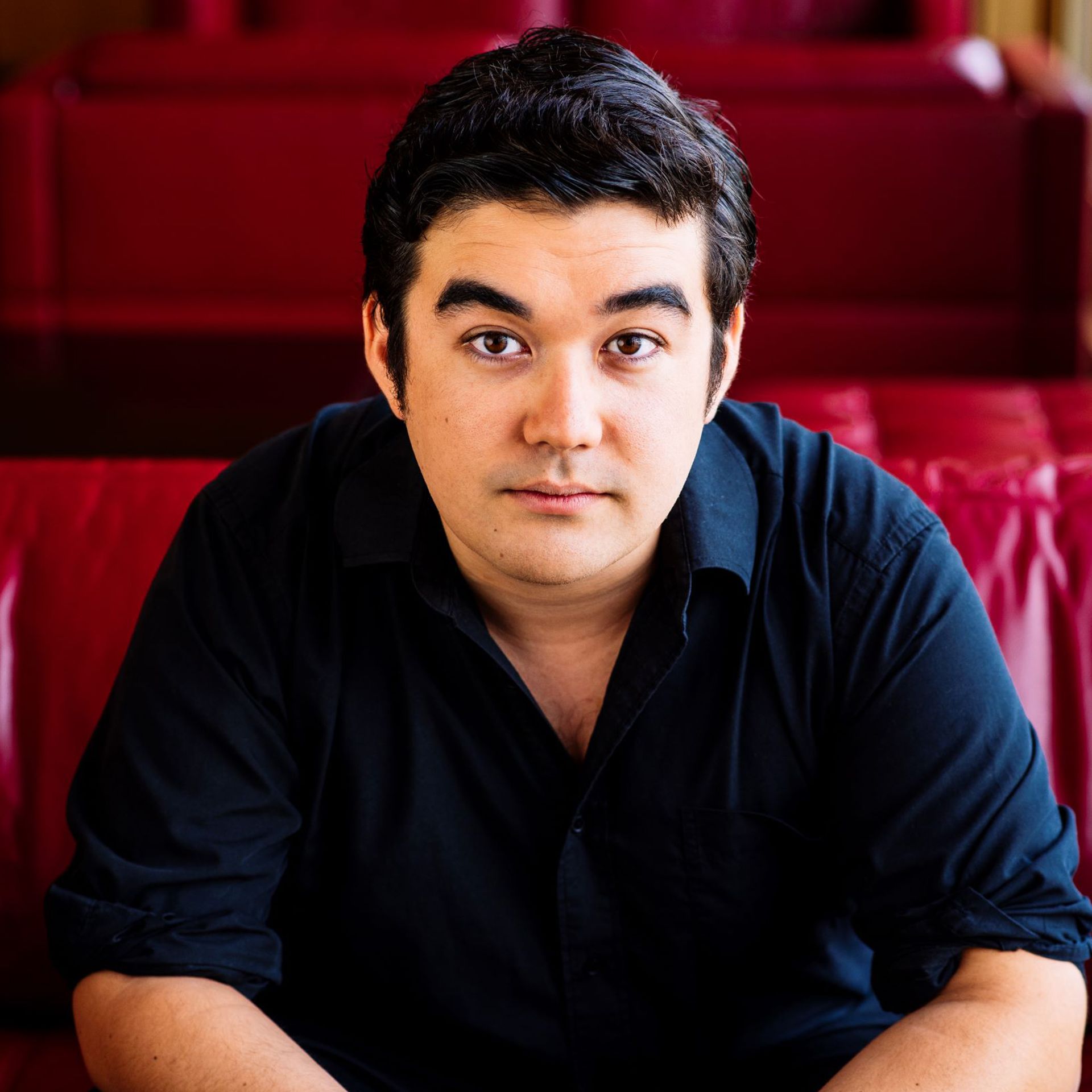
Photo: Niklas Marc Heinecke
Photo: Niklas Marc Heinecke
Japanese-Welsh tenor Hiroshi Amako moved to North Wales at the age of 8 and initially studied violin and piano. He read Music at Trinity College, Cambridge, where he was a choral scholar, and later pursued vocal studies at the Royal Academy of Music and the International Opera Studio at Hamburg State Opera, where he sang roles such as Abdallo (Nabucco) and Borsa (Rigoletto), as well as creating the role of Göbbels (Johannes Harneit’s IchundIch). Since last season he has been a member of the Opera Studio at the Vienna State Opera, where he has sung roles such as Liberto (L’incoronazione di Poppea), Faninal’s Major Domo (Der Rosenkavalier), Count Almaviva (Der Barbier für Kinder) and Belmonte (Die Entführung ins Zauberreich).
He has worked with leading conductors, including Kent Nagano, Paolo Carignani, Philippe Jordan, Pablo Heras-Casado, Ton Koopman and Stephen Layton, among others..
He also appears regularly on the concert stage and is a keen recitalist; he won the third International Helmut Deutsch Song Competition, and has performed at the Wigmore Hall and the Oxford Lieder Festival. Concert highlights include Mendelssohn’s Elijah with the City of Birmingham Symphony Orchestra, Bach’s St Matthew Passion with the Auckland Philharmonia Orchestra and St John Passion with the Orchestra of the Age of Enlightenment.
Matthew Brook bass
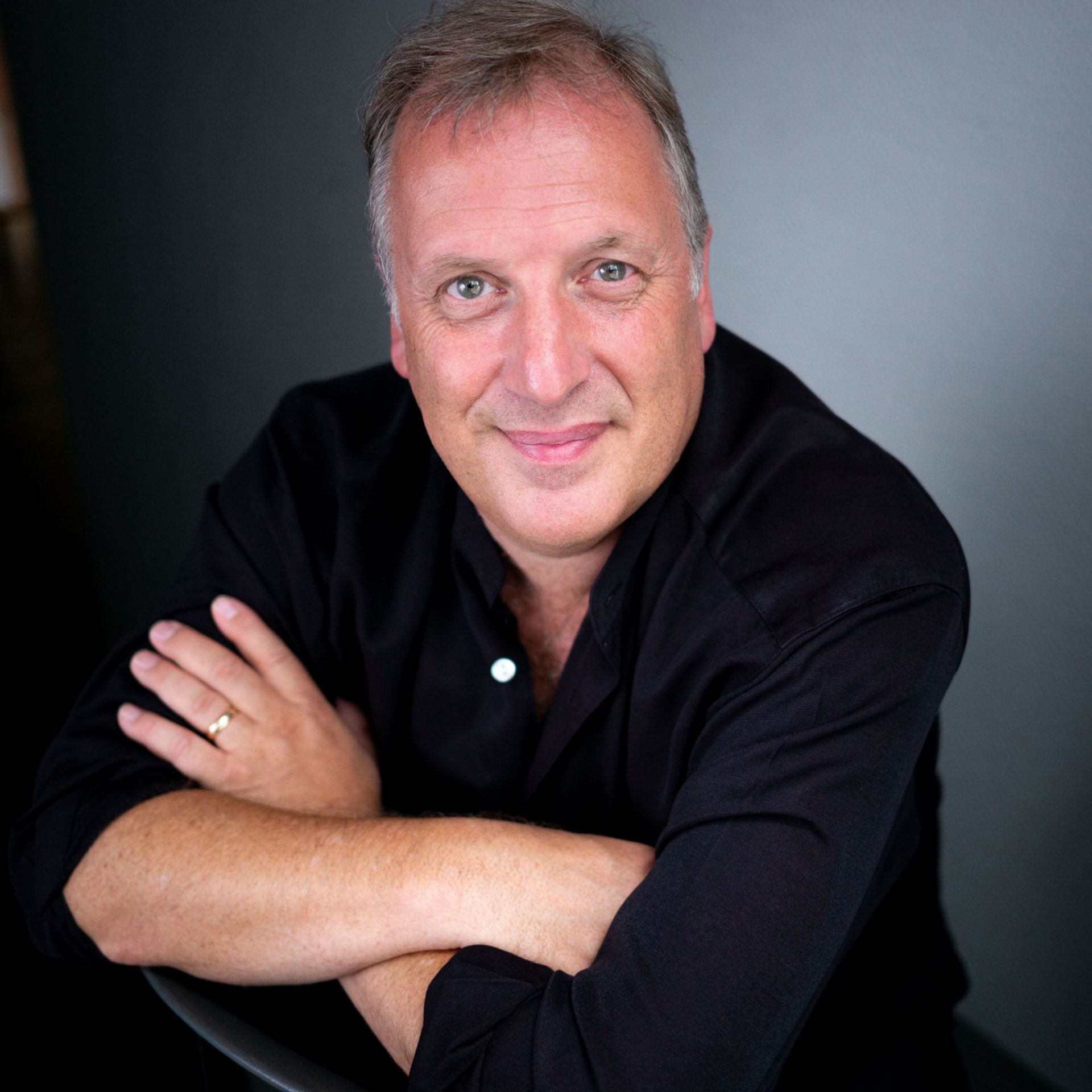
Photo: Gerard Collett
Photo: Gerard Collett
Matthew Brook studied at the Royal College of Music and has appeared as a soloist throughout Europe, Australia, North and South America and the Far East.
He has worked with leading conductors, including Harry Christophers, Sir Mark Elder, Sir John Eliot Gardiner, Richard Hickox, Charles Mackerras and Christophe Rousset.
In the opera house he has performed roles in works by Bernstein, Bizet, Britten, Handel, Janáček, Menotti, Monteverdi, Mozart, Purcell, Rameau, Rossini, Vaughan Williams and Walton.
This season he performs a recital programme with Iain Burnside titled ‘View from the Villa’ at the Lammermuir Festival; Messiah with Music of the Baroque in Chicago and on tour in Europe with the Academy of Ancient Music; Pilate in Bach’s St John Passion with Les Violons du Roy in Quebec; and Lodovico (Otello) for Grange Park Opera.
His award-winning discography includes works by J. S. Bach, Handel and Gilbert and Sullivan.
In the concert hall his repertoire includes Bach sacred choral works, Beethoven’s Symphony No. 9, Berlioz’s The Childhood of Christ, Brahms’s A German Requiem, Elgar’s The Dream of Gerontius, Haydn’s The Seasons and Harmoniemesse, Mendelssohn’s Elijah and Nielsen’s Third Symphony.
BBC National Chorus of Wales
BBC National Chorus of Wales is one of the leading mixed choruses in the UK and, while preserving its amateur status, it works to the highest professional standards under Artistic Director, Adrian Partington. Based at BBC Hoddinott Hall in Cardiff Bay, the chorus, which was formed in 1983, works regularly alongside BBC National Orchestra of Wales, as well as performing concerts in its own right. It is made up of over 120 singers: a mix of amateur choristers alongside students from both the Royal Welsh College of Music & Drama and Cardiff University.
Highlights this season include tonight’s Messiah and a much-delayed performance of Bach’s St Matthew Passion conducted by Harry Bicket, as well as Walton’s Coronation Te Deum and Stravinsky’s Mass.
The chorus appears annually at the BBC Proms; recent highlights include Mozart’s Requiem from memory with Nathalie Stutzmann, Mahler’s Eighth Symphony under Thomas Søndergård and BBC Proms in the Park performances.
It is committed to promoting Welsh and contemporary music and in 2016 gave only the second-ever performance of Grace Williams’s Missa Cambrensis, 45 years after its premiere; it has also premiered works by many composers, including a performance of Kate Whitley’s Speak Out.
The chorus can be heard on BBC Radio 3, BBC Radio Wales and BBC Radio Cymru. It recently featured on Paul Mealor’s soundtrack for BBC Wales’s Wonders of the Celtic Deep, a socially distanced recording made between lockdowns.
Artistic Director
Adrian Partington
Accompanist
Christopher Williams
Chorus Manager
Caroline Richards
Sopranos
Verity-Belle Atkinson
Eve Bennett
Grace Curtis
Nataliya Gorban
Sarah Jane Griffiths
Charlotte Hardy
Claire Hardy
Jessica Harris
Francesca Ignall
Vanessa John-Hall
Chloe Jones
Amy Kilmister
Cathy Mirtle
Joanna Osborn
Angharad Phillips
Liz Phillips
Anwen Pike
Rhiannon Pooley
Helen Thomas
Rosie Evans
Sally Glanfield
Dee Cooke
Daisy Cooksley
Anna Davies
Nicole Dickie
Emily Hopkins
Rhiannon Humphreys
Victoria Illsley
Julie Jones
Mags Lake
Lizzie Linney
Elinor Lloyd
Shakira Mahabir
Gwen Mouncher
Maisie O’Shea
Mel Taylor
Caroline Thomas
Hannah Thomas
Hannah Williams
Caitlin Ellis
Caitlin Hockley
Altos
Ceri-Ann Absalom
Alex Butler
Rhian Pullen
Liz Coleman
Alison Davies
Catherine Duffy
Giselle Dugdale
Georgina Dunn
Heledd Evans
Rachel Farebrother
Kathrin Hammer
Annette Hecht
Yvonne Higginbottom
Naomi Hitchings
Emilia Hubbard
Rhian Humphreys
Lisa May
Josie Nemeth
Sarah Willmott
Sara Peacock
Heather Price
Emily Pugh
Erika Rawnsley
Emma Rees
Kate Reynolds
Sian Schutz
Rosamund Spinnler-Badham
Emma Thorpe
Vicki Westwell
Julie Wilcox
Cerys Thomas
Tenors
Rhys Archer
William Collins
Keith Davies
Tom Lazell
James Lawson
Chris McGowan
Richard Shearman
Richard Wilcox
Michael Wilmott
Nick Wilmott
Philip Holtam
Roland George
Deryck Webb
Basses
Ben Anthony
Peter Cooke
David Davies
Ethan Davies
Jeff Davies
Stuart Hogg
David Hopkins
Emyr Wynne Jones
Geraint Jones
Lucas Maunder
Owen McCarthy
David McLain
Gareth Nixon
Mike Osborn
Benjamin Pinnow
Jez Piper
David Stephens
Claurindo Diakiesse
Nick Perfect
The list of singers was correct at the time of publication
BBC National Orchestra of Wales
For over 90 years, BBC National Orchestra of Wales has played an integral part in the cultural landscape of Wales, occupying a distinctive role as both broadcast and national symphony orchestra. Part of BBC Wales and supported by the Arts Council of Wales, it performs a busy schedule of live concerts throughout Wales, the rest of the UK and the world. The orchestra is an ambassador of Welsh music and champions contemporary composers and musicians.
The orchestra performs annually at the BBC Proms and biennially at the BBC Cardiff Singer of the World competition, and its concerts can be heard regularly across the BBC: on Radio 3, Radio Wales and Radio Cymru.
BBC NOW works closely with schools and music organisations throughout Wales and regularly undertakes workshops, side-by-side performances and young composer initiatives to inspire and encourage the next generation of performers, composers and arts leaders.
During the recent lockdowns, BBC NOW has continued to record and film behind closed doors at BBC Hoddinott Hall and has produced videos, soundtracks and weekly digital concerts that have been seen by 14 million people globally, including an extremely popular video of the Doctor Who soundtrack. Plans for the orchestra include live-streamed concerts and events, tours to different communities throughout Wales and education and community development schemes to include everyone in music-making. To find out more visit bbc.co.uk/bbcnow
Patron
HRH The Prince of Wales KG KT PC GCB
Principal Conductor
Ryan Bancroft
Conductor Laureate
Tadaaki Otaka CBE
Composer-in-Association
Gavin Higgins
Composer Affiliate
Sarah Lianne Lewis
First Violins
Lesley Hatfield Leader
Nick Whiting + **Associate Leader
Martin Gwilym-Jones †
Gwenllian Hâf MacDonald
Terry Porteus
Suzanne Casey
Anna Cleworth
Robert Bird
Second Violins
Jane Sinclair #
Ros Butler
Beverley Wescott
Sellena Leony
Vickie Ringguth
Michael Topping
Violas
Rebecca Jones *
Peter Taylor
Ania Leadbeater
James Drummond
Cellos
Alice Neary *
Jessica Feaver **
Raphael Lang
Double Basses
Marcel Becker ‡
Joe Cowie
Oboes
Steve Hudson *
Penny Smith
Bassoons
Lawrence O’Donnell ‡
Jo Shewan
Trumpets
Philippe Schartz *
Corey Morris
Timpani
Phil Hughes ‡
* Section Principal
† Principal
‡ Guest Principal
# Assistant Principal
The list of players was correct at the time of publication
Director Lisa Tregale +
Orchestra Manager Zoe Poyser +
Assistant Orchestra Manager Vicky James **
Orchestra Coordinator, Operations Kevin Myers
Orchestra Administrator Rhonwen Jones **
Head of Artistic Production Matthew Wood
Artists and Projects Manager Victoria Massocchi
Orchestra Librarian Eugene Monteith **
Producer Mike Sims
Broadcast Assistant Emily Preston **
Head of Marketing and Audiences Sassy Hicks +
Marketing Coordinators Amy Campbell +, Caroline Richards **
Digital Producer Yusef Bastawy
Education Producer Beatrice Carey
Chorus Manager and Outreach Coordinator Osian Rowlands **
Audio Supervisors Andrew Smillie, Simon Smith
Production Business Manager Lisa Blofeld
+ Green Team member
** Diversity & Inclusion Forum


