
Women’s Words and Voices with the BBC Concert Orchestra
Wednesday 9 March 2022, 7.30pm


Shirley Thompson
Wildfire 5’
Hannah Kendall
The Spark Catchers 10’
David Knotts
The Alabaster Chambers (Concerto for Guitar and Orchestra) 23’
world premiere
INTERVAL: 20 minutes
Debbie Wiseman
Wilde – suite 5’
George Fenton
Shadowlands – suite 7’
Rachel Portman
Emma – end titles 4’
Bryce Dessner
Voy a dormir – four poems by Alfonsina Storni 21’
European premiere
Kelley O’Connor, the advertised mezzo-soprano, has had to withdraw from tonight’s performance. The BBC Concert Orchestra is grateful to Tara Venditti for taking her place at short notice.
Tara Vendittimezzo-soprano
Craig Ogdenguitar
Bramwell Tovey conductor
Nina Wadia presenter


This concert is being recorded for future broadcast on Radio 3 and BBC Four. It will be available for 30 days after broadcast via BBC Sounds, where you can also find podcasts and music mixes.
Help us Improve Our Online Programmes.
Please take this 5-minute survey and let us know what you think of these notes.
Programme Survey
Tonight the BBC Concert Orchestra’s Principal Conductor, Bramwell Tovey, leads us in a programme featuring contemporary classical music, much of it written and inspired by women composers and poets.
Emily Dickinson has long been an influence on David Knotts and early in his career he set her poem ‘I shall keep singing!’ to music. Now this admiration finds expression in a concerto composed for star guitarist Craig Ogden, who plays the work for an audience for the first time this evening.
Grammy Award-winning mezzo-soprano Tara Venditti performs a song-cycle specially written for her by Bryce Dessner: Voy a dormir is a setting of four poems by the trailblazing Argentine writer c
We also celebrate some of the trailblazing female composers in film music, including excerpts from Debbie Wiseman’s soundtrack for Wilde, and Rachel Portman’s score for Emma.
Shirley Thompson (born 1958)
Wildfire (2006)


Wildfire is taken from a scene in the opera Sacred Mountain: Incidents in the Life of Queen Nanny of the Maroons. The opera relates the adventures of the 18th-century military and spiritual leader of the Windward Maroons – descendants of the formerly enslaved Africans in Jamaica – who is frequently compared to Boudicca, the ancient warrior queen. The opera frames a psychological insight into the life of Queen Nanny, where the orchestra portrays the emotional turbulence of the protagonist with the highs and lows of her life as a military strategist and leader. In this scene, Queen Nanny garners her forces to withstand an attack from an enemy and she sends out coded musical messages to her allies. The messages are spreading like ‘wildfire’.
The highly dense orchestral texture containing many musical lines represents the steamy, tropical landscape of the opera, creating a magical realism similar to that experienced in the literary works of Gabriel García Márquez. The instrumental writing is idiosyncratic, challenging the technique of each performer to the fullest while maintaining a fierce unity of an ensemble. Sacred Mountain: Incidents in the Life of Queen Nanny of the Maroons was the first in my Heroines of Opera series for solo singer, speaker, dance, video and orchestra – focusing on iconic women in history who have been mostly overlooked in mainstream historical narratives. This innovative series overturns the operatic convention of presenting women in morally weak roles or as femmes fatales, creating several striking 21st-century roles for the modern singer.
Programme note © Shirley Thompson.
Hannah Kendall(born 1984)
The Spark Catchers (2017)
Lemn Sissay’s incredibly evocative poem The Spark Catchers is the inspiration behind this work. I was drawn to its wonderful dynamism, vibrancy and drive. I also liked that Sissay was commissioned to write the poem for the London 2012 Olympics and that it is permanently etched into one of the electrical transformer points at the Olympic Park, a place where the whole world gathered to support and celebrate exceptional talent. Specific words and phrases from the text have established the structure of the piece and informed the contrasting musical characteristics created within its main components.
The opening ‘Sparks and Strikes’ section immediately creates vigour and liveliness, with the piccolo and violins setting up a swelling rhythmic drive, interjected by strong strikes from the rest of the ensemble. This momentum continues into ‘The Molten Madness’, maintaining the initial kinetic energy, while also producing a darker and brooding atmosphere introduced in the bass lines. A broad and soaring melodic line in the horns and first violins overlays the material, moving into a majestic episode led by the full string section, accentuated by valiant calls in the woodwind, brass and percussion and culminating in a sudden pause. A lighter variation of the opening rhythmic material in the clarinets, harp and strings follows, creating a feeling of suspense. The texture builds up through a jazzy figure led by the brass, leading to powerful and surging interplay between the flutes, oboes and violins.
The lighter, clearer and crystalline ‘Beneath the Stars/In the Silver Sheen’ section follows. Quiet and still, it is distinguished by its gleaming delicacy through long interweaving lines, high pitch range and thin textures. An illuminating strike, underpinned by the glockenspiel and harp, signifies the climax of this section. Subsequently, the opening zest comes back again through dance-like material that culminates in ‘The Matchgirls’ March’, with its forceful and punchy chords. The Spark Catchers ends with a coda-like section, which carries over the power of the ‘March’ while also incorporating variations on musical motifs from ‘Sparks and Strikes’ and ‘The Molten Madness’, finally concluding in a sparkling flourish.
Programme note © Hannah Kendall
David Knotts (born 1972)
The Alabaster Chambers (Concerto for Guitar and Orchestra) (2020–21)
world premiere
1 Opening
2 Herbarium
3 Safe
4 Himmaleh
Craig Ogdenguitar
Ihave always been fascinated by the poet Emily Dickinson, whose life is as intriguing as her poetry. Many of her poems remained unpublished at the time of her death and, owing to a family lawsuit, a large collection of manuscripts remained locked in a box for some 30 years. The Alabaster Chambers reflects on both her writing and some of the circumstances surrounding her life.
The first movement imagines the opening of the box of poems: string glissandos (slides) imitate the creaking hinges while repeated bell sounds evoke the passing of time. The solo guitar emerges as the voice of the poet, at times playful, at times serious.
From this dark, interior soundscape, the second movement moves outdoors. As well as being a writer, Dickinson was a keen horticulturalist and gardener: a comprehensive herbarium of pressed specimens exists from her student days and the garden and conservatory at her home in Amherst, Massachusetts, provided a constant source of inspiration. Dickinson’s preoccupation with death and the passing of time is reflected in many of her poems. The third movement, entitled ‘Safe’, is the heart of this concerto and is a meditation on one such poem, which imagines the peaceful sleep of the departed – Safe in their Alabaster Chambers, according to its title – while the years pass, ‘Soundless as Dots, on a Disc of Snow’. The guitar melodies are echoed by the horn and accompanied by low strings and wind.
In later years, Dickinson became increasingly reclusive, but the microscopic and interior world of many of her verses is often contrasted with a pioneering sense of adventure. ‘Himmaleh’ is a variant of ‘Himalaya’ and the snow-covered mountain range occurs in some of her poems. In ‘I can wade Grief’, the poet suggests that through the challenge of grief we can find our greatest strength and carry the Himalayas like a giant. This last movement is a virtuoso tour de force, the orchestra evoking the snow-covered mountain range and the soloist embodying an intrepid traveller who, beset with grief, finds the strength to stride out on an epic adventure.
The Alabaster Chambers was commissioned by Jill Lebor in memory of her husband, Stan Lebor (1934–2014)
Programme note © David Knotts
INTERVAL: 20 minutes
Debbie Wiseman (born 1963)
Wilde – suite (1997, arr. 2002)
Oscar Wilde was obsessed with beauty, and so my main aim for the score to Wilde (1997, directed by Brian Gilbert and starring Stephen Fry in the title-role) was to underline this obsession by using melody as a vital ingredient throughout. Wilde put up a pretence at Victorian ‘normality’ by marrying Constance Lloyd and fathering two children, but could not deny his true sexuality, and so this melody ebbs and flows to reflect the turmoil this inner conflict caused in his mind.
In composing the Constance theme, I wanted to emphasise her strength of character, her unfailing loyalty to Wilde, and finally – when the truth about her husband emerged – her bravery as her life unravelled. His lover, Lord Alfred Douglas (known as Bosie), conversely, had a tremendous hold over Oscar; the inspiration for their music was the incredible passion and madness of their relationship, and, most importantly, the very real love that Oscar felt for Bosie.
The concert suite combines these main themes of the score and I hope that, even without the visual images from the film, the doomed love affair and ultimate tragedy of Oscar Wilde, played so memorably in the film by Stephen Fry, are brought back to life.
Programme note © Debbie Wiseman
George Fenton (born 1949)
Shadowlands (1993) – suite
Of the five films that composer George Fenton scored for Sir Richard Attenborough, Shadowlands was the director’s favourite. Screenwriter William Nicholson had already turned the story of the unexpected relationship between C. S. Lewis, the devoutly Christian author of the Narnia books and notoriously strait-laced Oxford don, and Joy Davidman, an American Jewish poet from the Bronx, into a highly successful BBC TV drama and then a stage play. Attenborough’s 1993 film version heightened and strengthened the material, not least via Fenton’s rich yet beautifully restrained music.
Given that the story tackles Joy’s death from cancer, one might expect a score of overwhelming sadness in predominantly minor keys. But Fenton went in the opposite direction, using major keys to reflect the overwhelming love between the characters, which initially causes Lewis to question his faith but ultimately transcends death and loss.
Scored for strings, woodwind, horn and harp, Fenton’s brief, three-movement suite opens with the introduction to Lewis’s buttoned-up character before moving seamlessly into the ‘Drive to the hotel’, a lilting waltz that rises and falls with quiet yearning. That segues into the end credits sequence, which builds in subtle, almost Elgarian emotional intensity over a cushion of sound in the lower strings.
Programme note © David Benedict
David Benedict is an arts writer and broadcaster. He is currently writing the authorised biography of Stephen Sondheim for Random House and Pan Macmillan.
Rachel Portman (born 1960)
Emma (1996) – end titles
This is the music from the end titles of the 1996 film adaptation of Jane Austen’s Emma, starring Gwyneth Paltrow. The score won an Academy Award – the first time a female composer had won an Oscar. The piece features the main theme from the film and is written for an orchestra of strings, woodwind, light brass and harp.
The music starts with a joyous wedding celebration from the end of the story, where Emma Woodhouse finally marries her Mr Knightley (and Mrs Elton comments to camera, ‘There’s a shocking lack of satin’) and then the music gives way to Emma’s main theme. This is the melody that I wove throughout the score in various guises, but here it is in its most resolved and complete form as the story concludes with deep satisfaction.
Programme note © Rachel Portman
Bryce Dessner (born 1976)
Voy a dormir – four poems by Alfonsina Storni
European premiere
Bryce Dessner (born 1976)
Voy a dormir – four poems by Alfonsina Storni
European premiere
1 Yo en el fondo del mar
2 Dulce tortura
3 Faro en la noche
4 Voy a dormir
Tara Vendittimezzo-soprano
Voy a dormir (I am going to sleep) is a compact suite of four songs for mezzo-soprano and orchestra setting poetry by the Argentine writer Alfonsina Storni (1892–1938). Born in Switzerland, Storni moved to Argentina at the age of 4. Throughout her brief life she worked as an actress, teacher, journalist and playwright. Today she is most celebrated for her work as a poet and her writings are prized for the way they use modernist idioms and forms to explore themes of eroticism and feminism with a luminous personal intensity. The poem ‘Voy a dormir’, the fourth of the four poems in the suite and also the source of its title, holds an especially poignant place in Storni’s life and work. Understood to be her last poem, it was written in October 1938 after she had received a diagnosis of breast cancer. Shortly after she sent the poem off to a newspaper for publication, she was found drowned in the ocean near Mar de Plata, and it is presumed that she decided to take her own life.
The four poems of Voy a dormir represent different facets of Storni’s innovative poetic style, and Dessner uses a range of vocal and orchestral effects to bring the texts to life musically. The short verses of ‘Yo en el fondo del mar’ (‘Me at the bottom of the sea’) describe an imaginary journey through the deep-blue sea, in which the speaker encounters a golden fish, an octopus and even mermaids. Triplet and sextuplet figures in the orchestra provide an undulating counterpoint to the steadier rhythms in the vocal part.
The spare musical textures of ‘Dulce tortura’ capture the anxious tension of the poem, a meditation on the contradictory emotions, or ‘sweet torture’, of erotic love. In the brief ‘Faro en la noche’ (‘Lighthouse in the night’) the speaker is immersed not in the ocean, as she was at the start, but staring out into its vast expanses. The setting of the final song, ‘Voy a dormir’, places special emphasis on the three words that serve as the poem’s title, using them as an initial point of repose midway through the song and allowing them to return at the end.
Composer’s note
I have long had an interest in Spanish and South American literature, which was my second major at Yale University, yet this was my first experience setting a Spanish text to music. Mezzo-soprano Kelley O’Connor and I worked collaboratively on choosing the poems and we were both deeply moved by the beauty and power of Storni’s words, as well as the struggles of her life.
BBC Concert Orchestra
Thursday 5 May 2022, 7.30pm
Mari Samuelsen performs Philip Glass
The dynamic Norwegian violinist performs Philip Glass's Violin Concerto No. 1.


Biographies
Bramwell Tovey conductor

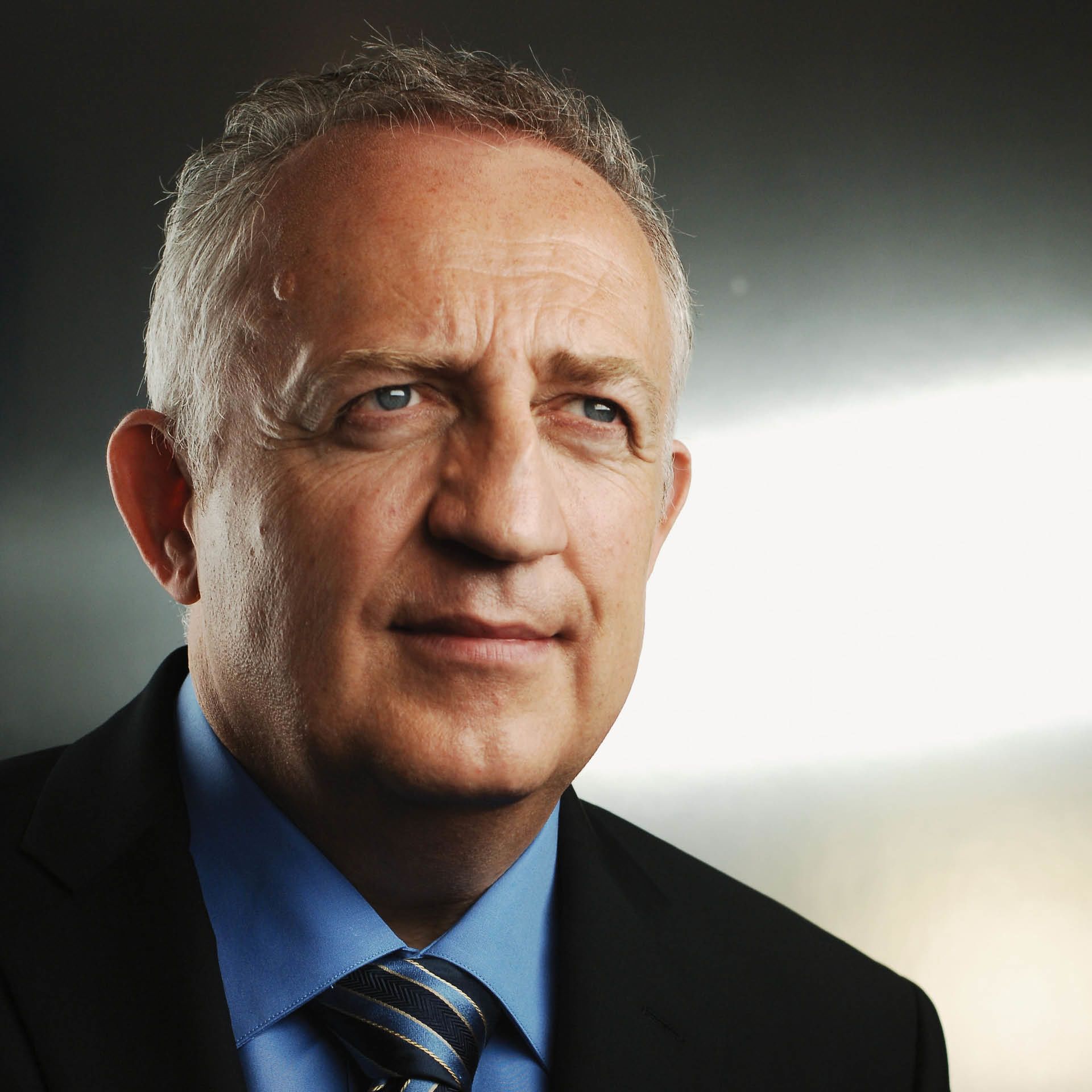
Photo: Tyler Boye
Photo: Tyler Boye
Bramwell Tovey is Principal Conductor and Artistic Director of the BBC Concert Orchestra and Artistic Advisor of the Rhode Island Philharmonic; he was recently appointed Principal Guest Conductor of the Orchestre Symphonique de Québec. Following an 18-year tenure as Music Director of the Vancouver Symphony Orchestra, he is now the orchestra’s Music Director Emeritus. Engagements in recent seasons have included a gala concert with Emanuel Ax and the Rhode Island Philharmonic, an appearance at the BBC Proms with the BBC Concert Orchestra and concerts with the New York Philharmonic at the Bravo! Vail festival in Colorado and the Los Angeles Philharmonic at the Hollywood Bowl.
In 2003 he won a JUNO Award for his Requiem for a Charred Skull. His trumpet concerto Songs of the Paradise Saloon was commissioned by the Toronto Symphony for principal trumpet Andrew McCandless and has since been performed by Alison Balsom in Los Angeles, Philadelphia and London. His song-cycle Ancestral Voices, addressing the issue of reconciliation, was composed for mezzo-soprano Marion Newman and premiered in 2017. A recording of his opera The Inventor, commissioned by Calgary Opera, features the original cast and the Vancouver SO.
Bramwell Tovey was the recipient of the Oskar Morawetz 2015 Prize for Excellence in Music Performance. He won the Prix d’Or of the Académie Lyrique Française for his recording of Jean Cras’s opera Polyphème with the Luxembourg Philharmonic. In 2013 he was appointed an honorary Officer of the Order of Canada for services to music.
Nina Wadia presenter

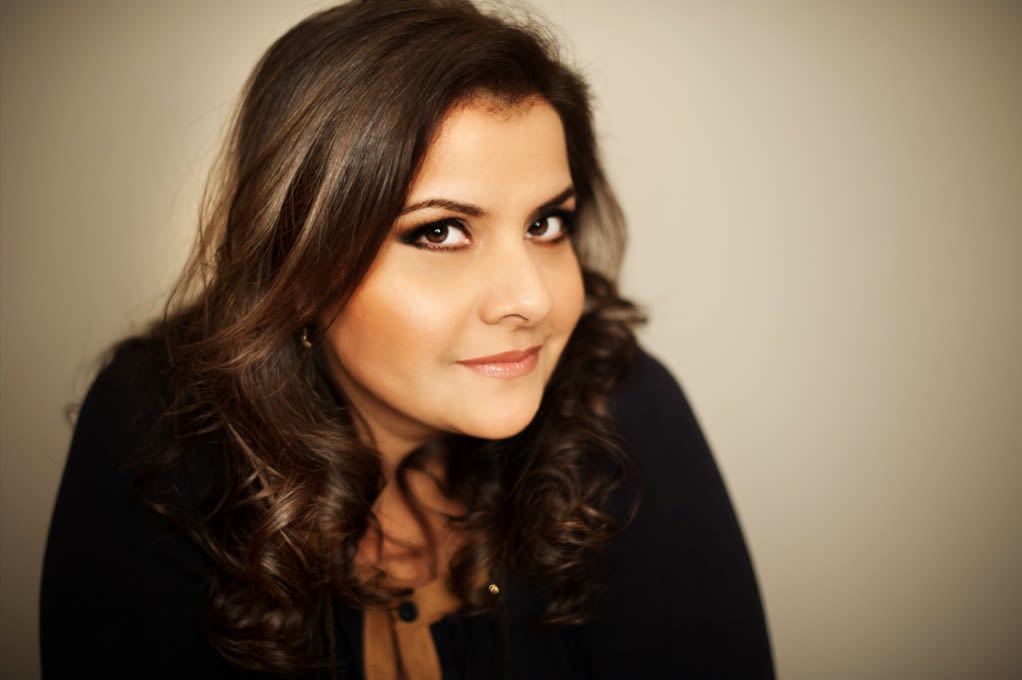
Nina Wadia is an award-winning actress known for her appearances in the TV series Goodness Gracious Me and her role as Zainab Masood in BBC One’s EastEnders, for which she has won Best Comedy Performance and Best Onscreen Partnership at the British Soap Awards.
She began her career in theatre and has starred in a range of productions including the Tony Award-winning The Vagina Monologues, as well as in Macbeth alongside Mark Rylanceand Michael Frayn’s Matchbox Theatre at the Hampstead Theatre.
Recent television credits include Too Close, Death in Paradise, MAXXX, Still Open All Hours with David Jason, the YouTube science-fiction drama series Origin and Holby City.
Nina Wadia's film credits include Code 46 with Tim Robbins, Sixth Happiness, Bend It Like Beckham, I Can’t Think Straight, the Bollywood hit Namaste London and Strangeways Here We Come, which she also produced.
More recently she starred in Aladdin featuring Will Smith, and in A Street Cat Named Bob with Luke Treadaway, as well as in the film’s sequel, A Gift From Bob.
Forthcoming projects include the Netflix series The Sandman based on the Neil Gaiman comic book series, appearing alongside Tom Sturridge and Gwendoline Christie, series 2 of The Hitmen and Stephen Merchant’s series The Offenders.
She has hosted The One Show, The Wright Stuff, Remembrance Day Ceremonies and is currently a regular presenter on BBC’s Sunday Morning Live. Her comedy sketch series Lockdown Mutha is on social media platforms.
Craig Ogden guitar
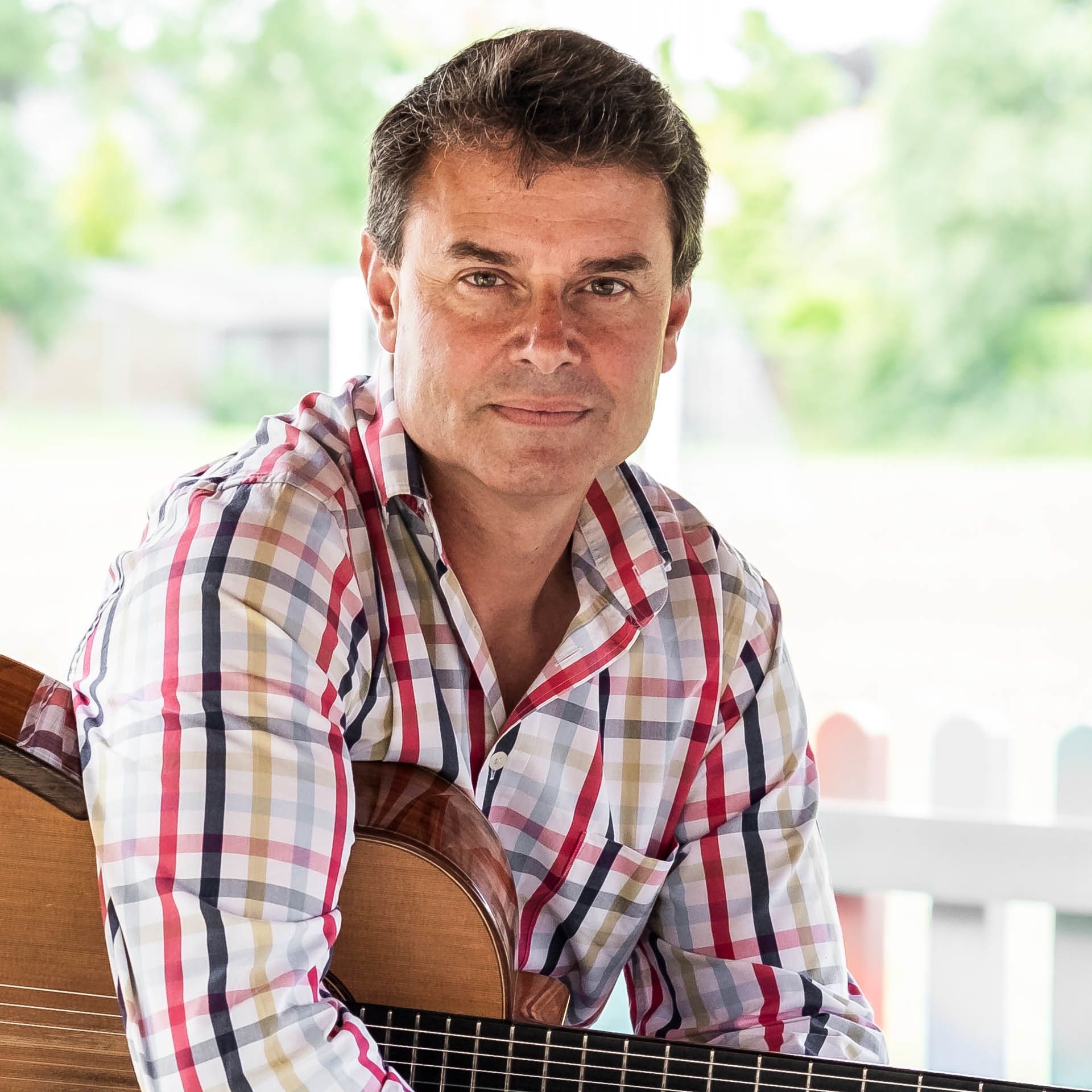
Craig Ogden studied the guitar from the age of 7 and percussion from the age of 13. In 2004 he became the youngest instrumentalist to receive a Fellowship Award from the Royal Northern College of Music in Manchester. He has performed concertos with many of the world’s leading orchestras and numerous composers have written works specially for him. In 2017 he gave the world premiere of Andy Scott’s Guitar Concerto with the Northern Chamber Orchestra, followed by the Australian premiere in Perth. In 2019, he gave the world premiere, with Miloš Milivojević, of David Gordon’s Il filo, a double concerto for guitar and accordion.
He appears regularly as soloist and chamber musician at major venues, collaborating with ensembles such as the Nash Ensemble, Carducci String Quartet and London Tango Quintet, of which he is a regular member. He performed in the concert series devoted to Sir Michael Tippett at the Wigmore Hall and has given several concerts at the Australian Festival of Chamber Music.
He is one of the UK's most recorded guitarists and his most recent albums are a solo recital disc, Craig Ogden in Concert, and a new arrangement of Bach’s ‘Goldberg’ Variations with violinist David Juritz and cellist Tim Hugh. He frequently records for film and has presented programmes for BBC Radio 3, BBC Northern Ireland and ABC Classic in Australia.
Craig Ogden is Director of Guitar at the Royal Northern College of Music, Adjunct Fellow of the University of Western Australia, Associate Artist at The Bridgewater Hall in Manchester and Director of the Dean & Chadlington Summer Music Festival.
Tara Venditti mezzo-soprano
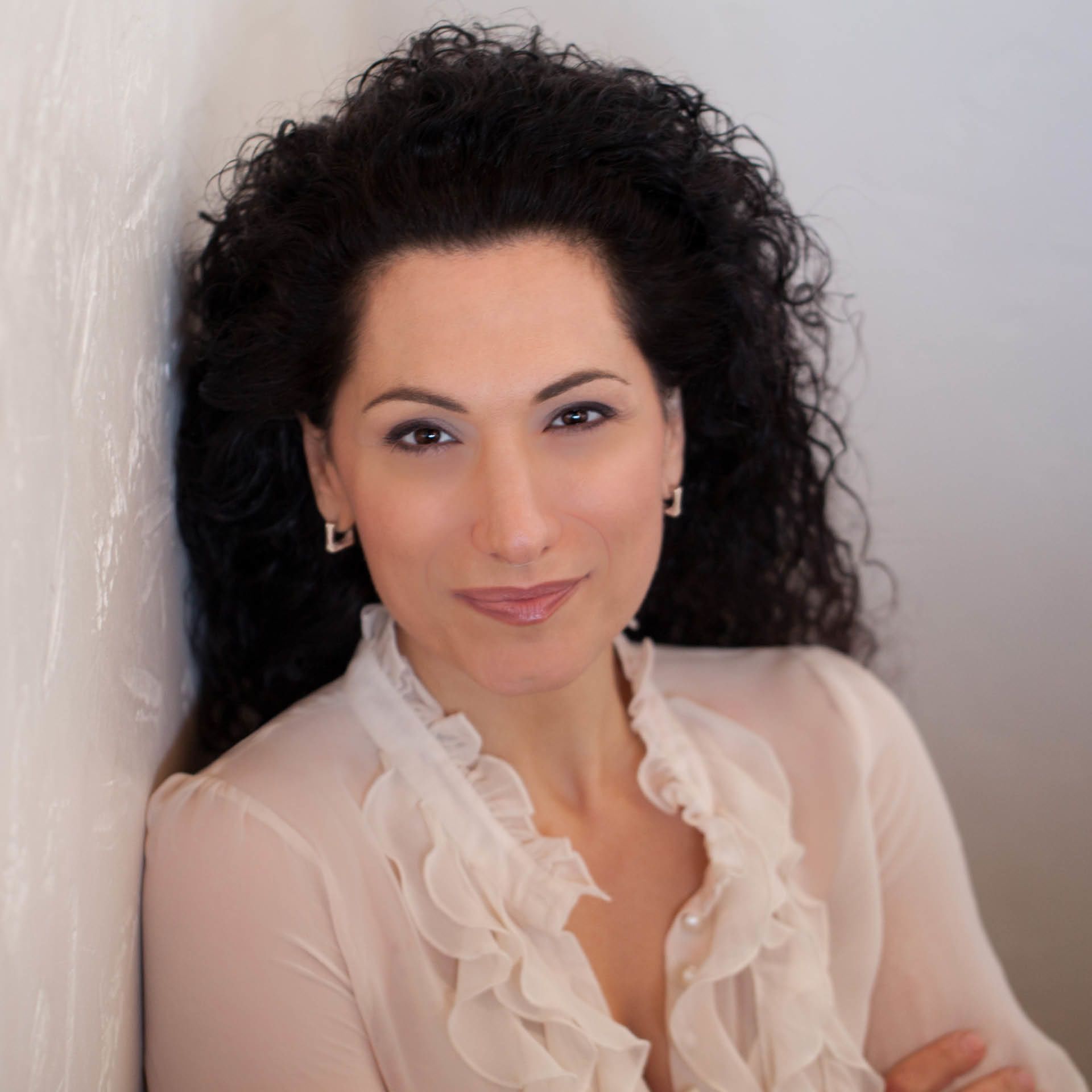
American mezzo-soprano Tara Venditti has been praised for performances in a wide-ranging repertoire spanning over four centuries. She studied at the Oberlin Conservatory of Music, Ohio, and at the Manhattan School of Music before joining the Staatstheater Nürnberg, where she took roles in operas by composers ranging from Gluck to Poulenc and from Rossini to Wagner.
Recent engagements include company debuts with Florida Grand Opera (the title-role in Carmen)and Sarasota Opera (her role debut as Isabella in L’Italiana in Algeri), as well as her first appearance with the Théâtre du Châtelet as Fosca (Sondheim’s Passion).
She has performed the role of Carmen more than 100 times, including for Opera Holland Park and Kentucky Opera, and with the Wuhan Philharmonic Orchestra, as well as in Bremen, Darmstadt, Freiburg, Mainz and Münster.
She has appeared with La Scala, Milan, as Frasquita (Carmen) under Gustavo Dudamel, the Royal Opera, Covent Garden, in the title-role of Handel’s Tamerlano under Ivor Bolton, and with companies including the Opéra National de Lyon, Theater Bielefeld, Glimmerglass Opera, Opera Memphis, Opera Birmingham (Alabama), Center for Contemporary Opera (New York), American Music Theater Festival and Connecticut Grand Opera.
A champion of new music, Tara Venditti has given a number of world premieres and is especially known for performances of works by Kurt Weill, including The Rise and Fall of the City of Mahagonny.
She teaches at the University of Music and Performing Arts Graz and gives masterclasses worldwide, while maintaining a private teaching studio of internationally working singers.
BBC Concert Orchestra
The mission of the BBC Concert Orchestra is to bring inspiring musical experiences to everyone, everywhere, with the ensemble’s versatility as the key. The orchestra can be heard on BBC Radio 2’s Sunday Night Is Music Night and for BBC Radio 3 it explores a wide selection of music, ranging from classical to contemporary. The orchestra has performed on many soundtracks, including Blue Planet and Serengeti for BBC One, as well as on George the Poet’s award-winning podcast for BBC Sounds. In February it performed for the BBC One and BBC Radio 2 national celebration of musical theatre, Musicals: The Greatest Show.
The orchestra appears annually at the BBC Proms and is an Associate Orchestra at the Southbank Centre. Along with its regular engagements throughout the UK, the orchestra tours internationally – most recently performing in Malta for the BBC Radio 2 broadcast It’s a Kind of Magic – The Queen Story.
The BBC Concert Orchestra offers enjoyable and innovative education and community activities and takes a leading role in BBC Ten Pieces, the BBC Young Composer competition and the recently launched BBC Open Music programme.
Principal Conductor
Bramwell Tovey
Principal Guest Conductor
Anna-Maria Helsing
Conductor Laureate
Barry Wordsworth
Composer in Residence
Dobrinka Tabakova
First Violins
Charles Mutter
Rebecca Turner
Peter Bussereau
Chereene Price
Lucy Hartley
Cormac Browne
Juan Gonzalez
Rustom Pomeroy
Second Violins
Michael Gray
Matthew Elston
Marcus Broome
David Beaman
Daniel Mullin
Sarah Freestone
Robin Martin
Violas
Timothy Welch
Nigel Goodwin
Helen Knief
Mike Briggs
Judit Kelemen
Cellos
Miwa Rosso
Matthew Lee
Josephine Abbott
Ben Rogerson
Double Basses
Dominic Worsley
Andrew Wood
Stacey-Ann Miller
Aaron Barrera-Reyes
Flutes
Ileana Ruhemann
Nicola Summerscales
Sophie Johnson
Piccolo
Sophie Johnson
Oboes
Gareth Hulse
Victoria Walpole
Cor Anglais
Victoria Walpole
Clarinets
Nicholas Carpenter
Derek Hannigan
Bass Clarinet
Derek Hannigan
Bassoons
Luke Tucker
Jane Gaskell
Horns
Paul Gardham
Tom Rumsby
Mark Johnson
David Wythe
Trumpets
David McCallum
John Blackshaw
Trombones
Tom Berry
Mike Lloyd
David Stewart
Timpani
Marney O’Sullivan
Percussion
Alasdair Malloy
Stephen Whibley
Richard Cartlidge
Karen Hutt
Harp
Ruby Aspinall
Piano/Celesta
Caroline Jaya- Ratnam
The list of players was correct at the time of publication