
Romance and Revolution
9 & 10 June 2022, 7.30pm
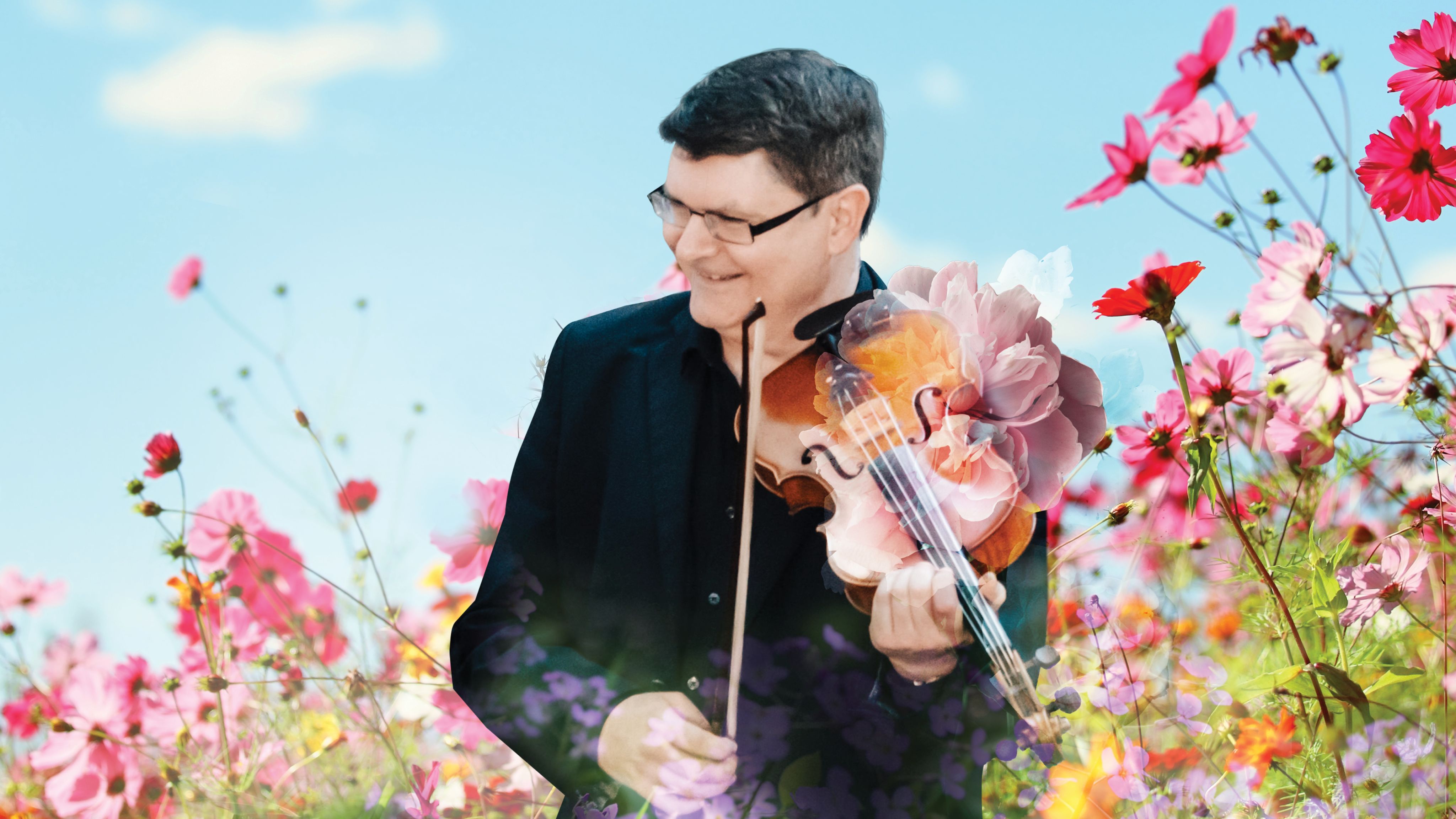

William Walton
Cello Concerto 30’
INTERVAL: 20 minutes
Dmitry Shostakovich
Symphony No. 10 in E minor 57’
Steven Isserliscello
Ryan Bancroft conductor


The concert in St David’s Hall is being recorded by BBC Radio 3 for future broadcast in ‘Afternoon Concert’. It will be available to stream or download for 30 days after broadcast via BBC Sounds, where you can also find podcasts and music mixes. Visit bbc.co.uk/now for more information on future performances.
Introduction
This evening’s concert marks the end of our main season here in Wales (though there is a further concert at BBC Hoddinott Hall on 23 June). We’re delighted to welcome back our Principal Conductor Ryan Bancroft for two mighty masterpieces.
William Walton’s Cello Concerto is one of the undisputed gems of the repertoire, filled with lyricism and passion in equal measure. When writing the piece, the composer sought the advice of the great cellist Gregor Piatigorsky, to whom it is dedicated. Tonight’s soloist, Steven Isserlis, is an artist who has very much made the concerto his own, both in the concert hall and in the recording studio.
Shostakovich’s 10th Symphony dates from just four years before the Walton concerto. Yet it occupies a completely different sound-world – not surprising, perhaps, given the ultra-repressive regime under which Shostakovich was living at the time. Only after Stalin’s death did he dare unveil a work that is as tautly written and powerful as anything he composed, but at whose heart lies an emotional ambiguity that has led to myriad interpretations.
Thank you for joining us. I hope you enjoy the concert and look forward to welcoming you back next season, which will be launched in July.
Lisa Tregale Director
Please respect your fellow audience members and those listening at home. Turn off all mobile phones and electronic devices during the performance. Photography and recording are not permitted.
William Walton (1902–83)
Cello Concerto (1955–6)
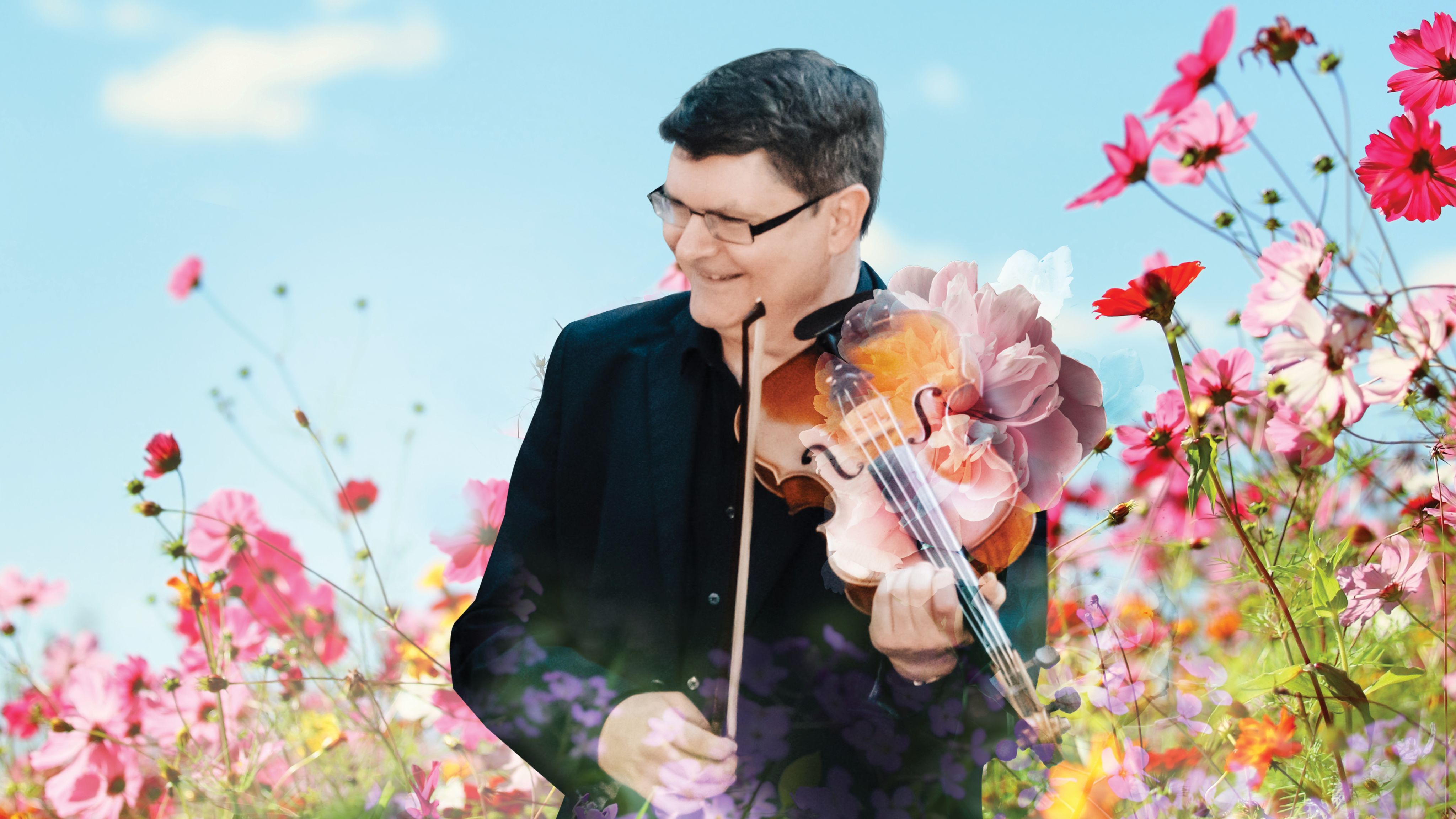
1 Moderato
2 Allegro appassionato
3 Tema ed improvvisazioni [Theme and Improvisations]
Steven Isserlis cello
According to the romantic view of musical history, the truly original composer initially shocks everyone with his or her challenging novelty, only to be vindicated later by posterity. But in the second half of the 20th century the process began to turn on its head. William Walton’s Cello Concerto is a prime example. Walton had been hailed as a provocative modernist in his youth, but with time he’d revealed himself as a tender-hearted romantic, much more inclined to enchant and seduce than his contemporaries Benjamin Britten and Michael Tippett. At the concerto’s Boston premiere in 1957, one critic grumbled that there was nothing in it that would ‘alarm an elderly aunt’, while another accused Walton of creative ‘stagnation’. But its dedicatee, the outstanding cellist Gregor Piatigorsky, predicted that in time it would be taken up by cellists all over the world. It turned out that he was right.
Piatigorsky was also a great help to Walton during the composition process. The two men worked closely together, mostly by letter, and Piatigorsky’s very encouraging (but not always uncritical) comments were a major morale-booster. But Walton held out against the cellist’s urging on one point: Piatigorsky wanted a more rousing, showy ending, but the composer eventually decided to keep his hushed, mysteriously luminous coda, and in time performers and commentators have come to agree with him. There is a special quality of colour and atmosphere in this concerto, for many reflecting the moods of the Italian island of Ischia where Walton had made his final home. For the German cellist Daniel Müller-Schott, it reflects the ‘golden rays of the sun, the different colours of [the island’s] light, the blue tones of the sea and the scent of the saltwater’ with ‘rare immediacy.’ That’s nowhere more the case than in the magical ending.
As with Walton’s pre-war violin and viola concertos, this one is cast in three movements. The Cello Concerto begins with shimmering orchestral textures, a glowing vibraphone chord and soft tick-tock figures on plucked strings, above which the cello sings a long, heartfelt melody. Passion mounts in the slightly more animated central section, but this subsides into a beautifully engineered return of the first theme, the tick-tock figures now on woodwind.
On the surface the second movement seems a fairly typical Waltonian firework display, but impassioned lyricism keeps pushing its way to the foreground.
The finale then presents us with a theme on muted cello, with a sparing accompaniment; then, after a dark, ruminative cello solo, this theme is subjected to four highly contrasted ‘improvisations’, the second and fourth being impressive display pieces for unaccompanied cello. (Piatigorsky’s input was particularly helpful here.) At the end, however, the concerto’s first theme returns, now with added liquid harp and celesta. This time the cello’s arching lyricism falls steadily at the end, down to the instrument’s bottom string (C), and it is with this sound, slowly fading, that the work ends.
INTERVAL: 20 minutes
Dmitry Shostakovich (1906–75)
Symphony No. 10 in E minor, Op. 93 (1953)
1 Moderato
2 Allegro
3 Allegretto
4 Andante – Allegro
Dmitry Shostakovich wrote his 10th Symphony at one of the lowest points of his rollercoaster career. Having been elevated to national hero status after the triumph of the wartime ‘Leningrad’ Symphony (No. 7, 1941), and still feted after the much darker Eighth appeared two years later, he had then disgraced himself with his half-lightweight, half-darkly satirical Ninth Symphony in 1945 – not by any stretch the heroic choral Ninth the Soviet press had led everyone to expect. Its alleged failure was cited when Shostakovich was viciously denounced at the First Congress of the Union of Composers in 1948.
Shostakovich soon came to realise that, for the moment at least, ‘serious’ composition had to be for the desk drawer only. Listening to the 10th Symphony, it isn’t hard to see why he thought it wise to hold the score back. For much of its length the piece is sombre in character. Grief and rage well up unmistakably in the first movement’s powerful central climax and throughout the torrential second, while the third is full of the kind of tart, enigmatic humour which had recently earned him stinging rebuke.
But when the 10th Symphony was heard for the first time, nine months after Stalin’s death in March 1953, what struck many critics was how magnificently sustained it was as a musical argument. For all its brooding, sometimes harrowing intensity, the first movement is structured with skilful inevitability, poignant lyricism fused with intricate, almost Bachian counterpoint unparalleled in Shostakovich’s earlier symphonic works. Most of the time the orchestral palette is used sparingly, which means that highlighted sonorities stand out: solo clarinet intoning the first main theme after the dark strings-only introduction, low flute in the second theme and the unforgettable sound of two softly intertwining piccolos in the coda.
The volcanic but remarkably compact Allegro second movement is an outpouring of molten fury, but it’s also tremendously exciting – the thrill of cathartic release?
Then in the shadowy, dance-like Allegretto we hear two motifs of particular cryptic significance. The four-note motif introduced by high woodwind with percussion spells out the notes D–E flat–C–B, which in German notation represents D–Ess–C–H, i.e. Shostakovich’s own initials (D. Sch). The striking solo horn figure that interrupts the dance ingeniously spells out the name of one of Shostakovich’s students, Elmira Nazirova, with whom he was in love at that time – the feeling, apparently, was not reciprocated.
Initially the finale’s slow introduction brings us back to wintry introspection. Then suddenly a trailing flute figure is transformed into a perky Allegro dance, all high-kicking major-key energy, with D–S–C–H returning in massive unison at the climax. This motif persists towards the end (high horns, then pounding timpani), sounding through the manic dance music. Whether this represents triumph or something much darker and more equivocal is left to the listener to judge.
Programme notes © Stephen Johnson
Stephen Johnson is the author of books on Bruckner, Wagner, Mahler and Shostakovich, and a regular contributor to ‘BBC Music Magazine’. For 14 years he was a presenter of BBC Radio 3’s ‘Discovering Music’. He now works both as a freelance writer and as a composer.
Help us Improve Our Online Programmes.
Please take this 5-minute survey and let us know what you think of these notes.
Programme Survey
Biographies
Ryan Bancroft conductor

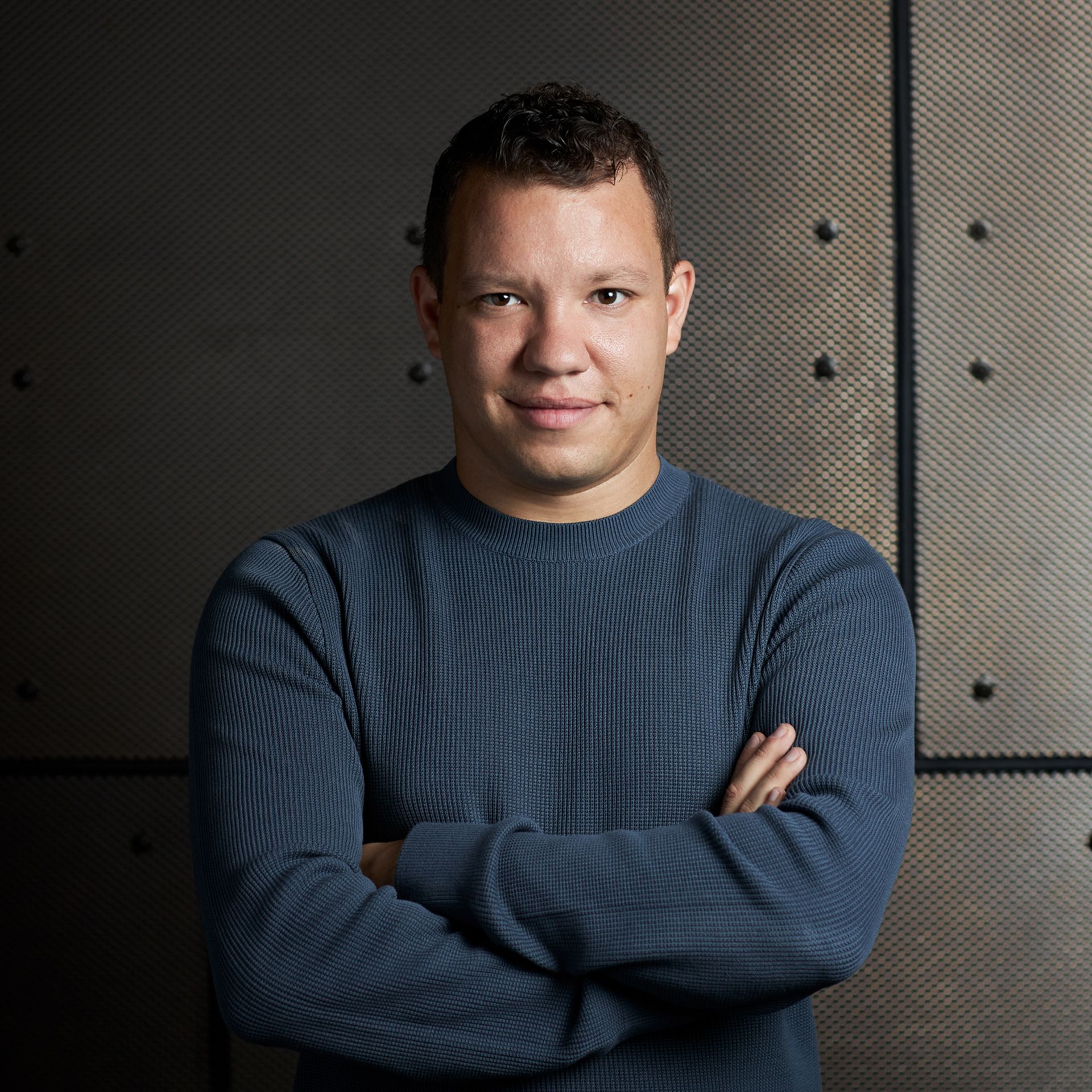
Photo: Benjamin Ealovega
Photo: Benjamin Ealovega
Ryan Bancroft grew up in Los Angeles and first came to international attention in April 2018, when he won both First Prize and Audience Prize at the prestigious Malko Competition for Young Conductors in Copenhagen. In September 2019 it was announced that he had been appointed Principal Conductor of the BBC National Orchestra of Wales. This role began in the 2020–21 season. Following his first visit to work with the Tapiola Sinfonietta, he was invited to become its Artist-in-Association from this season.
He has made debuts with leading international orchestras, including the Atlanta, BBC, Cincinnati, City of Birmingham, Danish National, RAI National, Swedish Radio and Toronto Symphony orchestras, the Rotterdam and Royal Stockholm Philharmonic orchestras and Norwegian National Opera Orchestra. Recent and forthcoming debuts include concerts with the Baltimore, Gothenburg and Iceland Symphony orchestras and Ensemble Intercontemporain.
He has a passion for contemporary music and has performed with Amsterdam’s Nieuw Ensemble, assisted Pierre Boulez in a performance of his Sur Incises in Los Angeles, premiered works by Sofia Gubaidulina, Cage, Tenney and Anne LeBaron, and has worked closely with improvisers such as Wadada Leo Smith and Charlie Haden.
He studied at the California Institute of the Arts, Royal Conservatoire of Scotland and in the Netherlands.
Steven Isserlis cello

Photo: Satoshi Aoyagi
Photo: Satoshi Aoyagi
British cellist Steven Isserlis enjoys a uniquely varied career as a soloist, chamber musician, educator, author and broadcaster. He appears with the world’s leading orchestras and conductors, and gives recitals in major musical centres. As a chamber musician, he has curated concert series for many prestigious venues and festivals, including London’s Wigmore Hall, New York’s 92nd St Y and the Salzburg Festival.
He has a strong interest in historical performance, working with many period-instrument orchestras and giving recitals with harpsichord and fortepiano. He is also a keen exponent of contemporary music and has given many premieres of new works by composers including John Tavener, Thomas Adès, György Kurtág, Heinz Holliger and Jörg Widmann.
His award-winning discography includes works by J. S. and C. P. E. Bach, Beethoven, Brahms, Elgar, Haydn and Walton.
Since 1997 he has been Artistic Director of the International Musicians Seminar at Prussia Cove, Cornwall. His two books for children have been translated into many languages; his latest book, about the Bach Cello Suites, was published in 2021.
His honours include a CBE, the Schumann Prize of the City of Zwickau, the Piatigorsky Prize and the Wigmore Medal. He plays the ‘Marquis de Corberon’ Stradivarius of 1726, on loan from the Royal Academy of Music.
BBC National Orchestra of Wales
For over 90 years, BBC National Orchestra of Wales has played an integral part in the cultural landscape of Wales, occupying a distinctive role as both broadcast and national symphony orchestra. Part of BBC Wales and supported by the Arts Council of Wales, it performs a busy schedule of live concerts throughout Wales, the rest of the UK and the world. The orchestra is an ambassador of Welsh music and champions contemporary composers and musicians.
The orchestra performs annually at the BBC Proms and biennially at the BBC Cardiff Singer of the World competition, and its concerts can be heard regularly across the BBC: on Radio 3, Radio Wales and Radio Cymru.
BBC NOW works closely with schools and music organisations throughout Wales and regularly undertakes workshops, side-by-side performances and young composer initiatives to inspire and encourage the next generation of performers, composers and arts leaders.
During the recent lockdowns, BBC NOW has continued to record and film behind closed doors at BBC Hoddinott Hall and has produced videos, soundtracks and weekly digital concerts that have been seen by 14 million people globally, including an extremely popular video of the Doctor Who soundtrack. Plans for the orchestra include live-streamed concerts and events, tours to different communities throughout Wales and education and community development schemes to include everyone in music-making. To find out more visit bbc.co.uk/bbcnow
Patron
HRH The Prince of Wales KG KT PC GCB
Principal Conductor
Ryan Bancroft
Conductor Laureate
Tadaaki Otaka CBE
Composer-in-Association
Gavin Higgins
Composer Affiliate
Sarah Lianne Lewis
First Violins
Lesley Hatfield Leader
Nick Whiting Associate Leader + **
Martin Gwilym- Jones †
Gwenllian Hâf MacDonald
Terry Porteus
Richard Newington
Carmel Barber
Kerry Gordon-Smith
Gary George-Veale
Anna Cleworth
Ruth Heney
Caroline Heard
James Wicks
Paul Mann
Second Violins
Anna Smith *
Jane Sinclair
Ros Butler
Sheila Smith
Vickie Ringguth
Joseph Williams
Michael Topping
Katherine Miller
Beverley Wescott
Sellena Leony
Barbara Zdziarska
Veronica Marziano
Violas
Rebecca Jones *
Alex Thorndike #
Tetsuumi Nagata
Peter Taylor
Catherine Palmer
Laura Sinnerton
Ania Leadbeater
Robert Gibbons
Dáire Roberts
Lowri Thomas
Cellos
Alice Neary *
Keith Hewitt #
Jessica Feaver **
Sandy Bartai
Carolyn Hewitt
Rachel Ford
Alistair Howes
Katy Cox
Aoife Burke
Double Basses
David Stark *
Rupert Ring
Christopher Wescott
Richard Gibbons
Claire Whitson
Albert Dennis
Mike Chaffin
Flutes
Matthew Featherstone *
John Hall
Fiona Slominska
Piccolos
Fiona Slominska
John Hall
Oboes
Steve Hudson *
Amy McKean
Sarah-Jayne Porsmoguer
Cor anglais
Sarah-Jayne Porsmoguer †
Clarinets
Han Kim
Lenny Sayers
Elizabeth Jordan
Bass Clarinet
Lenny Sayers + **
Bassoons
Jarosław Augustyniak *
Gareth Humphreys
David Buckland
Contrabassoon
David Buckland †
Horns
Neil Shewan †
Meilyr Hughes
John Davy
William Haskins
Neil Mitchell
Trumpets
Philippe Schartz *
Robert Samuel
Ryan Linham
Ed Burfield
Trombones
Donal Bannister *
Simon Wills
Bass Trombone
Darren Smith †
Tuba
Daniel Trodden †
Timpani
Steve Barnard *
Percussion
Chris Stock *
Mark Walker †
Phil Girling
Phil Hughes
Harp
Valerie Aldrich-Smith †
Celesta
Catherine Roe Williams
* Section Principal
† Principal
‡ Guest Principal
# Assistant Principal
The list of players was correct at the time of publication
Director Lisa Tregale +
Orchestra Manager Zoe Poyser +
Assistant Orchestra Manager Vicky James **
Orchestra Administrator Nick Olsen
Orchestra Coordinator, Operations Kevin Myers
Business Coordinator Caryl Evans
Head of Artistic Production Matthew Wood
Artists and Projects Manager Eleanor Phillips
Orchestra Librarian Eugene Monteith **
Producer Mike Sims
Broadcast Assistant Emily Preston **
Head of Marketing and Audiences Sassy Hicks
Marketing Coordinator Amy Campbell +
Digital Producer Yusef Bastawy
Education Producers Beatrice Carey, Rhonwen Jones **
Audio Supervisors Simon Smith, Andrew Smillie
Production Business Manager Lisa Blofeld
Stage and Technical Manager Steven Brown
Assistant Stage and Technical Manager Dave Rees
+ Green Team member
** Diversity & Inclusion Forum


