
Season Closing Concert
Thursday 1/6/23, 7.30pm
St David’s Hall, Cardiff
Friday 2/6/23, 7.30pm
Brangwyn Hall, Swansea


Grace Williams
Concert Overture 7’
Wolfgang Amadeus Mozart
Symphony No. 39 29’
INTERVAL: 20 minutes
Richard Strauss
Don Quixote 38’
Ryan Bancroftconductor
Alice Nearycello
Rebecca Jonesviola


The concert in Cardiff is broadcast live by BBC Radio 3 in Radio 3 in Concert; the concert in Swansea is being recorded by BBC Radio 3 for future broadcast in Afternoon Concert. They will be available for 30 days after broadcast via BBC Sounds, where you can also find podcasts and music mixes. Visit bbc.co.uk/now for more information on future performances.

The performance of the Grace Williams Concert Overture is made possible with funding from the ABO Trust’s Sirens programme, a 10-year initiative to support the performance and promotion of music by historical women composers.
Welcome

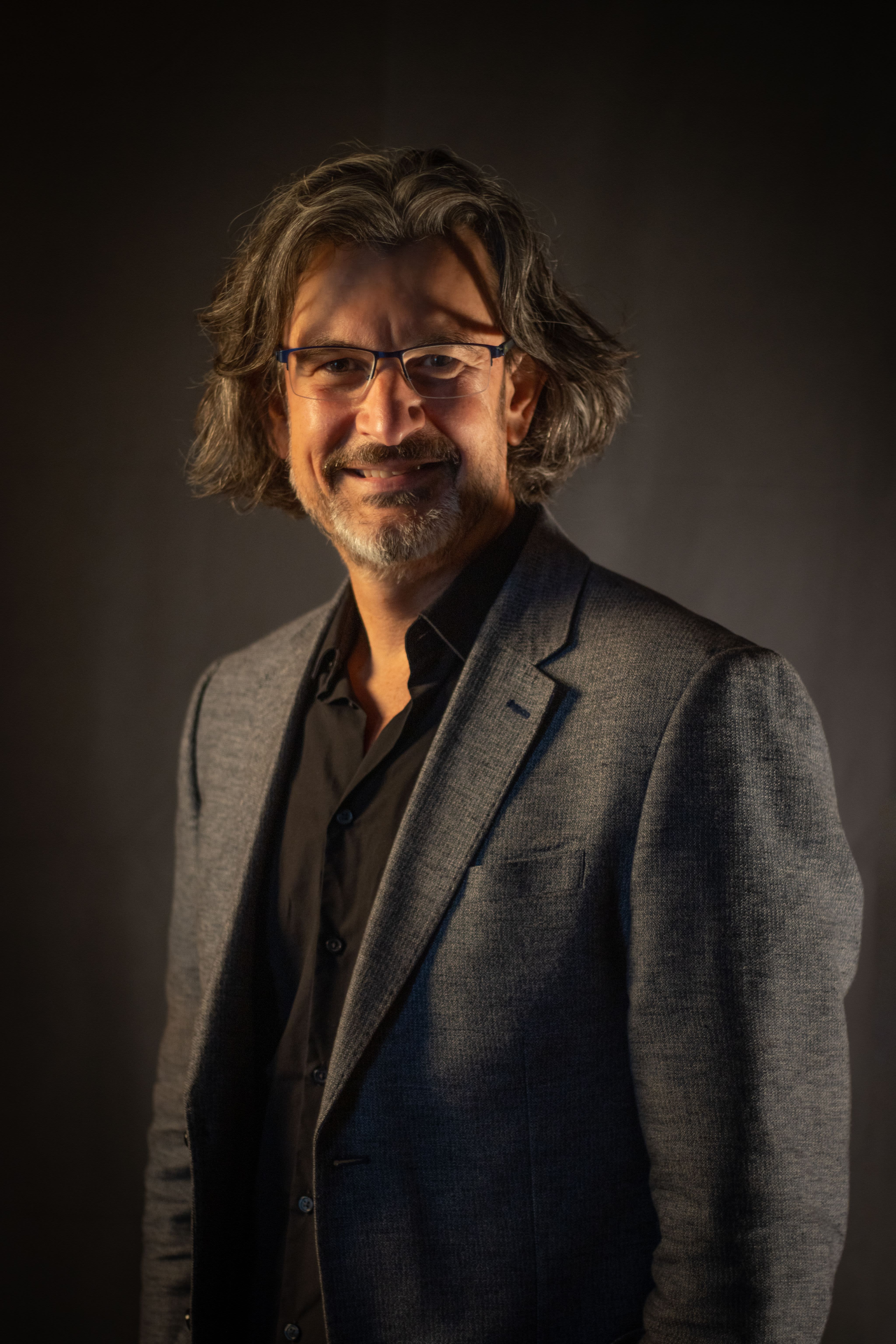
For tonight’s season finale we’re delighted to welcome back Principal Conductor Ryan Bancroft for an aptly celebratory programme.
We begin on home turf with the Concert Overture by Grace Williams, her earliest surviving orchestral piece, and one in which her manifold gifts are already much in evidence.
Mozart’s Symphony No. 39 is the first of his final triptych and in it we see his absolute mastery at work, from the pomp of the introduction, as characterful as any opera overture, to the heady dancing energy of the last movement.
The concert finishes in a mood of irrepressible high spirits too, with Richard Strauss’s Don Quixote; based on Miguel de Cervantes’ novel, this tells the wild exploits of its deluded hero, a role taken by cello, and Don Quixote’s long-suffering servant Sancho Panza, played by viola; tonight these roles are taken by BBC NOW’s Principals Alice Neary and Rebecca Jones.
Enjoy!
Matthew Wood
Head of Artistic Production
Please respect your fellow audience members and those listening at home. Turn off all mobile phones and electronic devices during the performance. Photography and recording are not permitted.
Grace Williams (1906–77)
Concert Overture (1932)

Barring the overture Hen Walia (1930) and a four-movement Suite for Orchestra (1932), Williams’s Concert Overture is the first of her orchestral works to have survived. Written for a competition held by The Daily Telegraph in 1932–3 in which it was subsequently ‘highly commended’, it followed its two predecessors in being premiered (in 1935) at the National Eisteddfod by the London Symphony Orchestra. No records of further performances exist – perhaps because the composer herself later seemingly destroyed any original orchestral parts. (Evidence of this event can be seen both on the manuscript score itself, dismissed as ‘not worth performing’, and in Williams’s diary, which records 10 May 1951 – when she destroyed a number of her manuscript scores – as a ‘DAY OF DESTRUCTION’.)
Unlike Hen Walia, the Concert Overture uses no traditional melodies and has no discernible programme. Virtuosic from the outset and seldom deviating from the opening Allegro con brio tempo or subsequent Agitato di molto (‘Very agitated’) and similar, it shares aspects of its musical language with others of Grace Williams’s works of the 1930s and 1940s – in which the composer’s biographer, Malcolm Boyd, has observed that ‘tonality is often extremely elusive’. Nevertheless, it is finely crafted and as representative of Williams’s early style as better-known works such as Penillion and the Trumpet Concerto are of her later scores.
Programme note © Graeme Cotterill
Further Reading: Grace Williams (Composers of Wales) Malcolm Boyd (Univ of Wales Press)
Wolfgang Amadeus Mozart (1756–91)
Symphony No. 39 in E flat major, K543 (1788)

1 Adagio – Allegro
2 Andante con moto
3 Menuetto and Trio
4 Allegro
The first of Mozart’s final three symphonies is the least familiar, though it is the one for which we have the earliest hint of a report of a performance – a ‘large symphony in E flat major’ given at a memorial concert for Mozart in Hamburg in February 1792. (At that time, ‘large symphony’ did not signify length but rather that trumpets and drums had been added to the standard Classical orchestra.) In 1806 a critic declared it ‘well enough known to permit the assumption that the reader knows it by heart’, but its fame has long been eclipsed by the greater fascination later ages felt for the ‘Romantic’ flavour of No. 40 and the catchy nickname (the ‘Jupiter’) and star-turn brilliance of No. 41. Yet No. 39 is no less representative of Mozart’s genius, and generally more lyrical than the other two, its melodiousness combining with an earthy solidity and strength, as well as a touch of autumnal melancholy.
The first movement opens with an imposing introduction whose ominous drums, downward violin scales and pressing dissonances offer a strong jolt of foreboding. The dark mood is soon dispelled here, however, by the arrival of the main body of the movement, an Allegro that masterfully juxtaposes vigorously energetic passages for full orchestra with liltingly and gently stated violin melodies.
The Andante con moto begins with strings alone in a peaceful theme whose padding progress is twice interrupted by emotional minor-key outbursts aided by the winds, the second more anguished than the first. Both times, however, the pastoral mood of the opening recovers the upper hand.
The Menuetto gains an aristocratic swagger from the return of the trumpets and drums, and encloses a rustic Trio whose melody, introduced by a pair of clarinets, is apparently based on a traditional Ländler tune.
The symphony ends with a finale that has rightly been compared to Haydn, both for its perky and irrepressible main theme and for the wit and playfulness with which Mozart presents it in many guises and aspects.
Programme note © Lindsay Kemp
Further Listening: Scottish Chamber Orchestra/Charles Mackerras (Linn CKD308)
Further Reading: Mozart: The Reign of Love Jan Swafford (Faber)
INTERVAL: 20 minutes
Richard Strauss (1864–1949)
Don Quixote, ‘Fantastic variations on a theme of knightly character’, Op. 35 (1896–7)

1 Introduction: While reading knightly tales, Don Quixote sinks into madness and decides to become a knight
2 Theme: Don Quixote, the Knight of the Woeful Countenance
3 (Theme) Sancho Panza
4 Variation 1: The adventure with the windmills
5 Variation 2: The victorious battle with the army of the Emperor Alifanfaron [the battle with the sheep]
6 Variation 3: Conversation between the knight and his squire
7 Variation 4: Adventure with the pilgrims
8 Variation 5: The knight’s vigil
9 Variation 6: The encounter with Dulcinea
10 Variation 7: The ride through the air
11 Variation 8: The voyage on the enchanted boat
12 Variation 9: The contest with the two magicians
13 Variation 10: Duel with the Knight of the Bright Moon
14 Finale
Alice Neary cello
Rebecca Jones viola
Richard Strauss began his tone-poem Don Quixote in 1896, just after he’d finished his epic Also sprach Zarathustra (‘Thus Spake Zarathustra’), a musical response to the concept of the spiritually heroic ‘Superman’ developed by the philosopher Friedrich Nietzsche. But Strauss’s Zarathustra ends in dark ambiguity – just as Nietzsche’s manically affirmative writing career had ended in madness. Significantly, Don Quixote is based on the adventures of a deluded, would-be superman, famously portrayed by the Spanish writer Miguel de Cervantes. And, while Strauss’s Zarathustra is largely a joke-free zone, his Don Quixote is full of pomposity-deflating humour. Some listeners find it just too outrageous – especially the notorious Variation 2, in which the brass section imitate bleating sheep.
All the same, Don Quixote isn’t just a ragbag of fantastical effects. The marrying of a broadly classical theme-and-variations scheme to the story of Don Quixote and his adventures is worked out with great skill – you could call it ‘Variations on an Obsession’. At the same time Strauss draws on elements of the Romantic concerto, giving a prominent role to a solo cello, representing the noble but crazed Don Quixote, shadowed by solo viola (augmented by bass clarinet and tenor tuba), standing for his earthy, eminently sane servant Sancho Panza.
Before we hear the ‘theme of knightly character’, standing for Don Quixote himself, there’s a substantial Introduction, presenting several important themes. Here we find Don Quixote gradually losing his grip on reality as he reads of chivalrous deeds. Next, the solo cello enters with a rugged theme representing Don Quixote, ‘the Knight of the Woeful Countenance’, followed by the comic alter-ego, Sancho Panza (on the aforementioned tenor tuba, bass clarinet and a slightly querulous viola).
The pair set forth, encountering windmills (high fluttering flutes and violin trills) which Don Quixote believes to be giants, whom he attempts to fight, disastrously. Then come encounters with sheep (rasping muted brass, flutter-tongued), which the Don again attacks, and chanting religious pilgrims. A bizarre little dance in five-time (woodwind and tambourine) introduces the crude country girl Quixote believes to be his ideal love, Dulcinea. Variation 7 brings the spectacular climax: astride a wooden horse, Quixote believes that he is flying through the air. (Swirling woodwind, harps and high strings, plus wind-machine.) Eventually the ‘Knight of the Bright Moon’ (one of the Don’s friends in disguise) easily defeats him, and the bittersweet Finale depicts Quixote’s painful disillusionment and death. But there’s a touch of wry humour at the very end – Sancho Panza’s final verdict?
Programme note © Stephen Johnson
Further Listening: Tabea Zimmermann; Jean-Guihen Queyras; Gürzenich-Orchester Köln/François-Xavier Roth (Harmonia Mundi HMM902370)
Further Reading: Richard Strauss: Man, Musician, Enigma Michael Kennedy (CUP)
Help us Improve Our Online Programmes.
Please take this 5-minute survey and let us know what you think of these notes.
Programme Survey
Biographies
Ryan Bancroft conductor

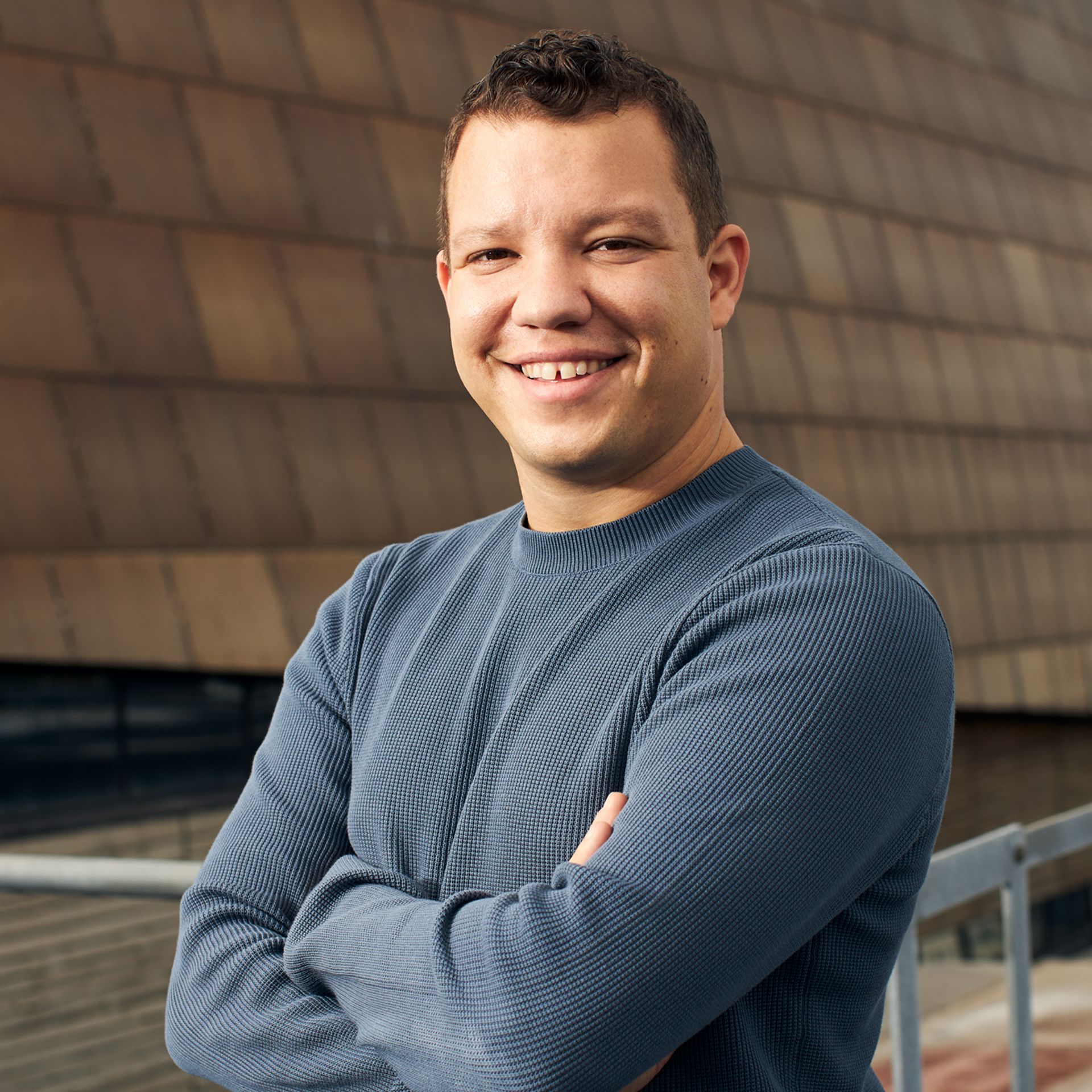
Photo: Benjamin Ealovega
Photo: Benjamin Ealovega
Ryan Bancroft grew up in Los Angeles and first came to international attention in April 2018, when he won both First Prize and Audience Prize at the prestigious Malko Competition for Young Conductors in Copenhagen. Since September 2021 he has been Principal Conductor of BBC National Orchestra of Wales. Following his first visit to work with the Tapiola Sinfonietta, he was invited to become its Artist-in-Association from the 2021–22 season. Last year he was announced as Chief Conductor Designate of the Royal Stockholm Philharmonic Orchestra and will take up the position
this September.
He has made debuts with a number of leading European orchestras, including the Philharmonia, London and Rotterdam Philharmonic, BBC, Danish National and Swedish Radio Symphony orchestras, Toulouse Capitole Orchestra, RAI Turin and Ensemble Intercontemporain. In North America he has worked with the Baltimore, Houston and Toronto Symphony orchestras and this season makes debuts with the Dallas Symphony and Minnesota Orchestra. He also appears for the first time at Suntory Hall with the New Japan Philharmonic and Midori, at the Royal Festival Hall with the Philharmonia and Sir Stephen Hough and at the Royal Concertgebouw with the Netherlands Philharmonic. He also returns to the City of Birmingham, Gothenburg and Malmö Symphony orchestras.
He has a passion for contemporary music and has performed with Amsterdam’s Nieuw Ensemble, assisted Pierre Boulez in a performance of his Sur incises in Los Angeles, premiered works by Sofia Gubaidulina, Cage, Tenney and Anne LeBaron, and has worked closely with improvisers such as Wadada Leo Smith and Charlie Haden. He returned to work with the Ensemble Intercontemporain in April.
He studied at the California Institute of the Arts, Royal Conservatoire of Scotland and in the Netherlands.
Alice Neary cello
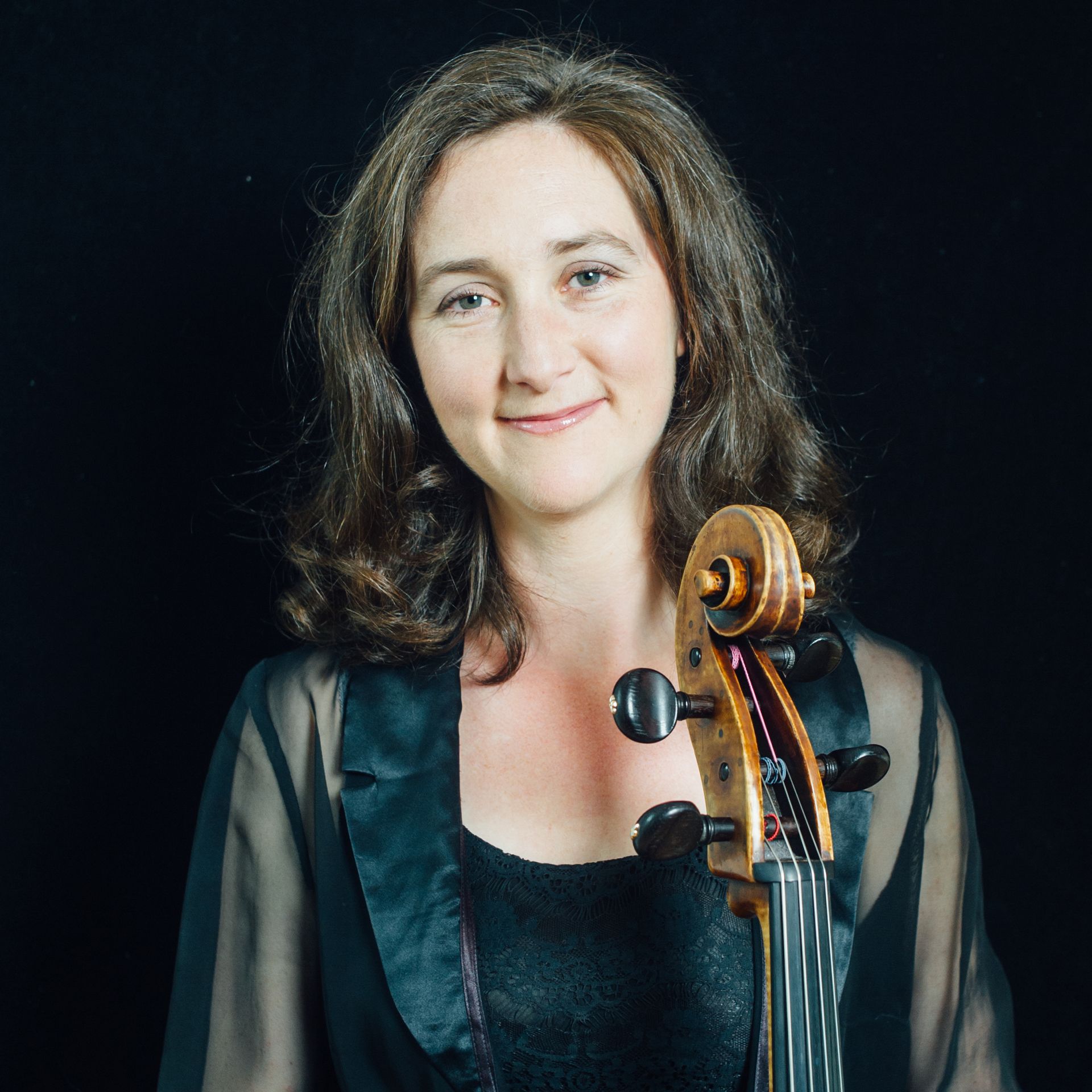
Alice Neary enjoys a varied performing career as a chamber musician, soloist and Principal Cello of BBC National Orchestra of Wales. Her festival performances include BBC Proms chamber series, Malboro, Bath, Santa Fe (USA) and Lofoten. Recent performances include concertos by Honegger and Cheryl Frances-Hoad with BBC NOW and the IMS Prussia Cove’s 50th-anniversary concert at Wigmore Hall.
She was a member of the Gould Piano Trio from 2001 to 2018, recording over 25 CDs with them, as well as premiering new works by Sir James MacMillan and Mark Simpson.
She has appeared as guest cellist with numerous groups, including the Nash Ensemble, Ensemble 360 and the Endellion, Elias, Callino and Heath Quartets. She collaborates with pianists Benjamin Frith, Viv McLean, Robin Green and Daniel Tong.
Plans for next season include a Beethoven sonata cycle with Viv McLean and appearances at the Marlboro and New Zealand’s At the World’s Edge festivals.
She studied with Ralph Kirshbaum at the Royal Northern College of Music and, as a Fulbright scholar, with Timothy Eddy at Stony Brook, USA. She won the 1998 Pierre Fournier Award, making her debut at Wigmore Hall the following year.
She has previously taught cello at the RNCM and Royal College of Music and is now based in her home town of Cardiff, where she is a fellow at the Royal Welsh College of Music & Drama. She and her husband David Adams founded the Penarth Chamber Music Festival in 2014.
Alice Neary plays a cello by Alessandro Gagliano of 1710.
Rebecca Jones viola
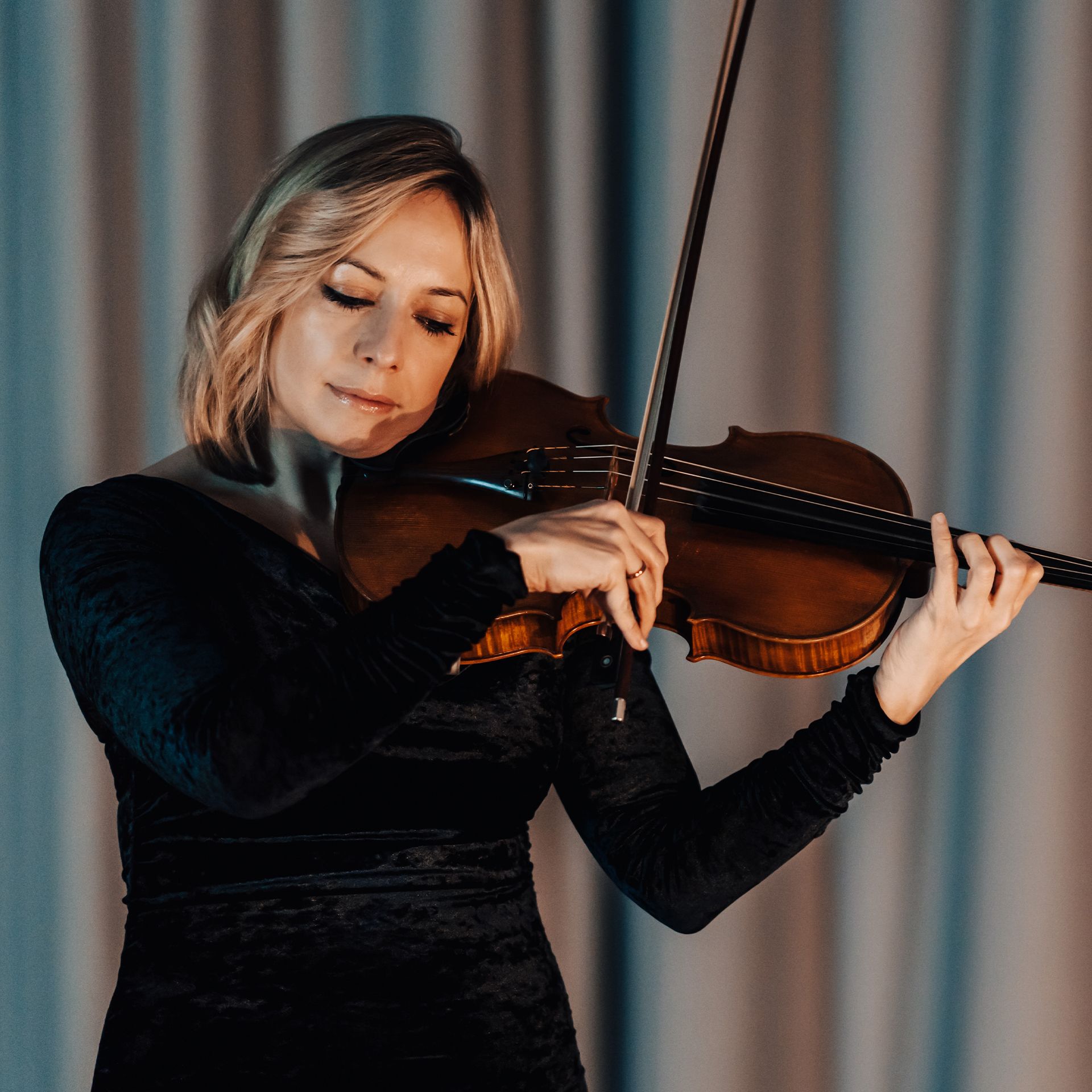
Photo: James Fear
Photo: James Fear
Rebecca Jones moved to Cardiff to take up the post of Principal Viola of BBC National Orchestra of Wales after freelancing in London for many years. She was Assistant Principal Viola of the City of London Sinfonia and continues to play guest principal with many UK orchestras, including the London Symphony Orchestra, Scottish Chamber Orchestra and the period-instrument group Arcangelo, performing Bach’s Sixth Brandenburg Concerto with the last of these at Wigmore Hall.
She is a frequent session musician and has toured with Adele, Bjørk and Stereophonics. She is also a long-time member of the Callino Quartet, which has played at Wigmore Hall; has twice been resident at the Banff Centre in Canada, where the group also met and collaborated with Arcade Fire; and spent a week in New York with the contemporary specialists the Kronos Quartet, culminating in a concert at Carnegie Hall.
She studied in Manchester, first at Chetham’s School of Music and then at the Royal Northern College of Music, followed by postgraduate work with Thomas Riebl at the Mozarteum University in Salzburg.
BBC National Orchestra of Wales
For over 90 years, BBC National Orchestra of Wales has played an integral part in the cultural landscape of Wales, occupying a distinctive role as both broadcast and national symphony orchestra. Part of BBC Wales and supported by the Arts Council of Wales, it has a busy schedule of live concerts throughout Wales and the rest of the UK. The orchestra is an ambassador of Welsh music and champions the works of contemporary composers.
It performs annually at the BBC Proms and biennially at the BBC Cardiff Singer of the World competition, and can be heard regularly across the BBC: on Radio 3, Radio Wales and Radio Cymru, as well as providing the soundtracks for some of your favourite television programmes.
Highlights of this season include the Elemental Explorations concerts in Brecon and Newport with Nil Venditti, Disney’s Fantasia in concert, Britten and Elgar with the orchestra’s much-loved Conductor Laureate Tadaaki Otaka, an all-new Gaming concert with gaming music legend Eímear Noone and a CoLaboratory concert with the sensational cellist Abel Selaocoe.
Alongside its busy schedule of live concerts, BBC NOW works closely with schools and music organisations throughout Wales, regularly delivering workshops, side-by-side performances and young composer initiatives to inspire and encourage the next generation of performers, composers and arts leaders and make music accessible to all. To find out more visit bbc.co.uk/bbcnow
Patron
HM King Charles III KG KT PC GCB
Principal Conductor
Ryan Bancroft
Conductor Laureate
Tadaaki Otaka CBE
Composer-in-Association
Gavin Higgins
Composer Affiliate
Sarah Lianne Lewis
First Violins
Lesley Hatfield leader
Nick Whiting associate leader
Martin Gwilym-Jones sub-leader
Cecily Ward
Terry Porteus
Carmel Barber
Kerry Gordon-Smith
Anna Cleworth
Juan Gonzales
Ruth Heney
Daniel Joseph
Yuriko Matsuda
Rebecca Totterdell
Zanete Uskane
Anya Birchall
Tamaki Mott
Second Violins
Anna Smith *
Emre Egin
Ros Butler
Sheila Smith
Vickie Ringguth
Joseph Williams
Michael Topping
Beverley Wescott
Sellena Leony
Lydia Caines
Ilze Abola
Jane Sinclair
Anna Fletcher
Anna Szabo
Laura Riley
Georgina Leo
Violas
Rebecca Jones
Alex Thorndike
Tetsuumi Nagata
Peter Taylor
Ania Leadbeater
Laura Sinnerton
Robert Gibbons
Catherine Palmer
Lydia Abell
Amir Liberson
Carl Hill
Lucy Theo
Cellos
Reinoud Ford ‡
Raphael Lang
Keith Hewitt #
Sandy Bartai
Carolyn Hewitt
Rachel Ford
Alistair Howes
Kathryn Graham
Jacky Phillips
Thomas Rann
Double Basses
David Stark
Alexander Jones
Christopher Wescott
Richard Gibbons
Emma Prince
Thea Sayers
Ben Havinden-Williams
Mike Chaffin
Flutes
Thomas Hancox ‡
John Hall †
Lindsey Ellis
Piccolo
Lindsey Ellis †
Oboes
Steve Hudson *
Amy McKean †
Cor Anglais
Sarah-Jayne Porsmoguer †
Clarinets
Peter Sparks ‡
Jillian Allan
E Flat Clarinet
Jillian Allan
Bass Clarinet
Lenny Sayers †
Bassoons
Jarosław Augustyniak *
Lois Au
Laura Vincent
Contra-Bassoon
David Buckland †
Horns
Tim Thorpe *
Meilyr Hughes
Neil Shewan †
John Davy
Neil Mitchell
Max Garrard
Hugh Seenan
Trumpets
Philippe Schartz *
Robert Samuel
Dean Wright
Trombones
Donal Bannister*
Fernando Martin
Jake Durham
Bass Trombone
Darren Smith †
Tuba
Daniel Trodden †
Timpani
Steve Barnard *
Percussion
Chris Stock *
Mark Walker †
Harp
Valerie Aldrich-Smith †
* Section Principal
† Principal
‡ Guest Principal
# Assistant Principal
The list of players was correct at the time of publication
Director Lisa Tregale
Orchestra Manager Vicky James
Assistant Orchestra Manager Nick Olsen
Orchestra Coordinator, Operations Kevin Myers
Business Coordinator Caryl Evans
Orchestra Administrator Eleanor Hall
Head of Artistic Production Matthew Wood
Artists and Projects Manager Eleanor Phillips
Orchestra Librarian Eugene Monteith **
Producer Mike Sims
Broadcast Assistant Jacob Perkins
Head of Marketing and Audiences Sassy Hicks
Marketing Coordinator Amy Campbell +
Digital Producer Yusef Bastawy
Social Media Coordinator Harriet Baugh
Education Producers Beatrice Carey, Rhonwen Jones **
Audio Supervisors Simon Smith, Andrew Smillie
Production Business Manager Lisa Blofeld
Stage and Technical Manager Steven Brown +
Assistant Stage and Technical Manager Dave Rees
BBC Wales Apprentices Josh Gill, Analese Thomas-Strachan, Jordan Woodley
+ Green Team member
** Diversity & Inclusion Forum