Haydn’s ‘Nelson’ Mass
Thursday 6/4/23, 7.30pm


Jean-Féry Rebel
Les Élémens – Chaos 7’
Henry Purcell
King Arthur – suite 27’
INTERVAL: 20 minutes
Joseph Haydn
‘Nelson’ Mass 42’
Anna Dennissoprano
Hilary Summers contralto
Rupert Charlesworthtenor
Edward Hawkinsbass
BBC National Chorus of Wales
Christian Curnynconductor


The concert is being broadcast live by BBC Radio 3 in Radio 3 in Concert. It will be available for 30 days after broadcast via BBC Sounds, where you can also find podcasts and music mixes. Visit bbc.co.uk/now for more information on future performances.
Introduction

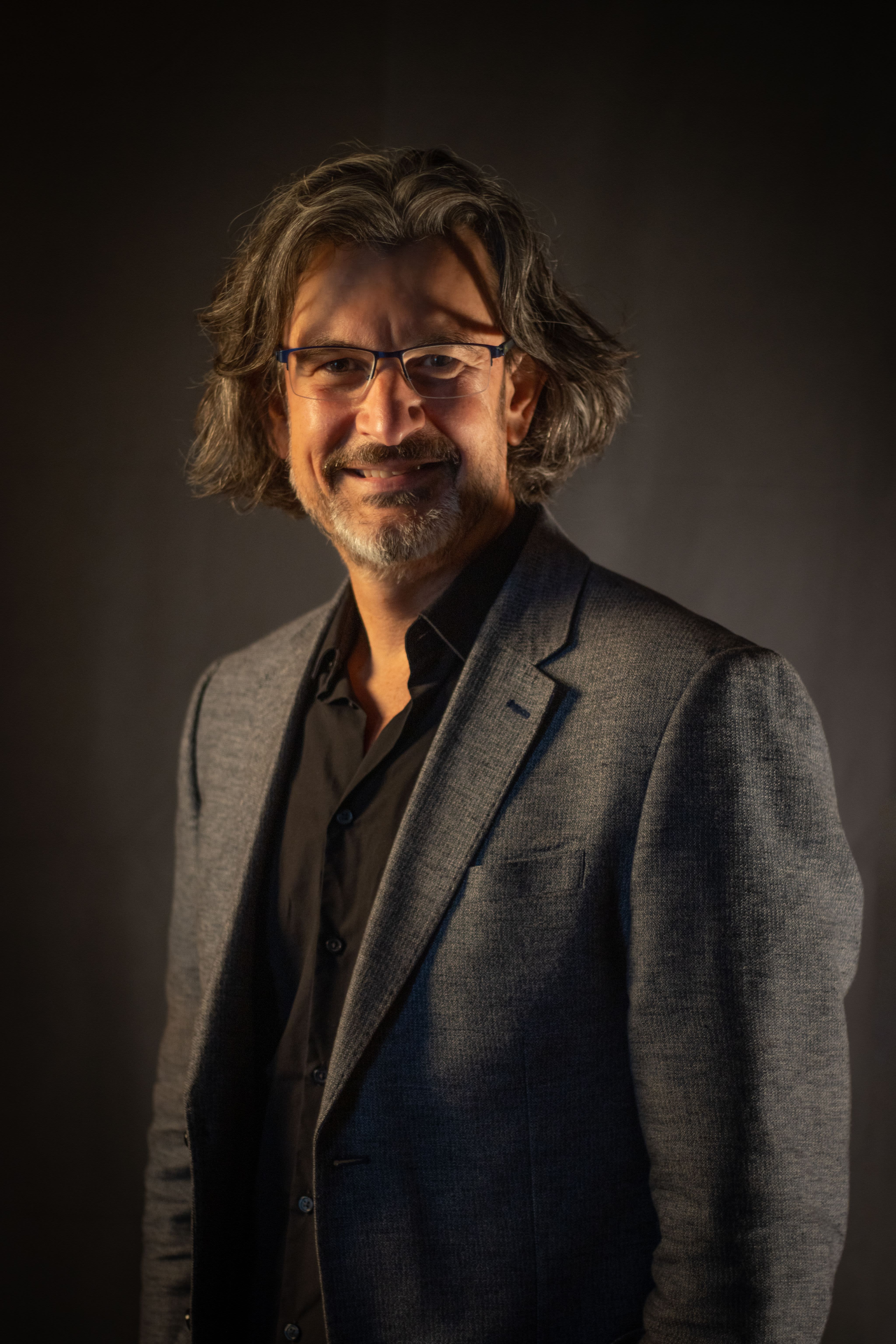
For tonight’s concert we’re delighted to welcome Christian Curnyn, a conductor with a particular passion for Baroque and Classical repertoire.
We begin with one of the most dramatic overtures in all music, a gloriously anarchic representation of primordial chaos by French Baroque composer Jean-Féry Rebel. This was originally designed for a ballet; Henry Purcell offers drama of a different kind in King Arthur, a work that blends spoken word and music and which ranges from the witty to the sublime, the latter beautifully illustrated by its most famous number, ‘Fairest isle’.
For the second half we move to Haydn at the peak of his mature powers, and his ‘Nelson’ Mass, a work that is by turns solemn, prayerful and ultimately exuberant. Joining the orchestra is an outstanding line-up of soloists and, of course, BBC National Chorus of Wales.
Enjoy!
Matthew Wood
Head of Artistic Production
Please respect your fellow audience members and those listening at home. Turn off all mobile phones and electronic devices during the performance. Photography and recording are not permitted.
Jean-Féry Rebel (1666–1747)
Les Élémens (1737–8) – Chaos

The last work of Jean-Féry Rebel – an establishment figure in 1730s Versailles – was a ballet entitled Les Élémens (‘The Elements’) premiered in 1737. Initially in nine movements, it depicted the elements that were believed to make up the whole of creation: Earth, Air, Fire and Water.
However, before the natural world attained its order, all was turmoil. The four elements, later to be so distinct and separate, were tangled up together and fighting for primacy. For the second performance of Les Élémens Rebel composed an additional movement, an overture aptly named ‘Chaos’.
‘Chaos’ begins with a cluster chord of violently clashing notes, unlike any other music of the period. It was a daring divergence from the conventional rules of harmony that would govern Western music until the 20th century.
The opening cacophony continues with a driven, pulsing rhythm that seems to prefigure another remarkable ballet score: Stravinsky’s The Rite of Spring, composed nearly 200 years later. Like this work, Rebel’s opening music has a primal intensity, reflecting the elemental quality of its subject.
The individual elements then begin to emerge. Fire is represented by vigorous quick chords and flurries in the strings, while the theme representing Water has graceful falling scales overlapping each other in the violins and flutes. Air is represented by bird-like flute trills that float above the texture, while measured bass crotchets suggest the plodding of feet on the solid Earth.
As the elements, in Rebel’s words, ‘try to get free of each other’, they are heard in different combinations, with the chaos diminishing over the overture’s seven short sections. Finally, after a brief reminder of the opening dissonance, the Earth theme takes over, before order finally prevails.
Programme note © Helen Cocks
Further Listening: Ensemble Pygmalion/Raphaël Pichon (Harmonia Mundi HMM902288)
Henry Purcell (1659–95)
King Arthur (1691) – suite

1 First Music: Overture
2 Second Music: Aire
3 ‘How blest are shepherds’
4 Second Act Tune: Aire
5 ‘How happy the lover’
6 Act 5: Song Tune – ‘Fairest isle’
7 ‘You say, ’tis love’
8 Grand Dance (Chaconne)
Anna Dennissoprano
Rupert Charlesworthtenor
Edward Hawkinsbass
BBC National Chorus of Wales
After attending a performance of Henry Purcell’s Dioclesian in 1690, poet and dramatist John Dryden declared that he had ‘at last found an English-man equal with the best abroad’. Later that same year Dryden invited the young composer to collaborate, and their King Arthur was premiered in 1691.
The only one of Purcell’s so-called ‘semi-operas’ – the term now used to describe a distinctive English hybrid of spoken theatre and masque – to be purpose-built by its dramatist, King Arthur has a fluidity and a cohesion that set it apart. The story of warring Saxons and Britons may not have the picturesque appeal of the Shakespeare-inspired Fairy Queen, but the dramatic thrust of the work – propelled by some of Purcell’s most inventive music – makes for a much more satisfying whole.
What is most striking about the score for King Arthur is its variety. Elaborate arioso (‘You say, ’tis love’), courtly verse-anthems (‘How blest are shepherds’) and a stately Overture sit alongside country dances, pseudo-folk songs, drinking songs and the massive passacaglia ‘How happy the lover’, in which an extended sequence of vocal numbers and choruses unfolds over a seamless chain of orchestral variations.
The effect is bewildering, but consciously so. Much of the ironic distance of John Dryden’s text is reflected in Purcell’s quick-change styles, which take delight in subverting one another. The opera’s greatest song – the elegantly patriotic ‘Fairest isle’ – takes on a new spirit when juxtaposed with the bawdy ‘Your hay it is mow’d’.
The result is a nationalist drama with its tongue firmly in its cheek. Noble soldiers need wine to give them Dutch courage, and bestial Pagans sing elegant hymns to their multiple gods. Arcadian shepherdesses warn of the very practical dangers of too much Arcadian love-making, and a heroic King cannot see what his blind beloved has no difficulty discerning. For the first time in semi-opera we see music and words working together, not just alongside one another, to weave this complicated and very human tapestry of a nation’s character and identity.
Programme note © Alexandra Coghlan
Further Listening: Soloists; Les Arts Florissants/William Christie (Erato 4509 98535-2)
Further Reading: Purcell Peter Holman (Ashgate)
INTERVAL: 20 minutes
Joseph Haydn (1732–1809)
Missa in angustiis, ‘Nelson’ Mass (1798)

1 Kyrie
2 Gloria
3 Credo
4 Sanctus
5 Benedictus
6 Agnus Dei
Anna Dennissoprano
Hilary Summerscontralto
Rupert Charlesworthtenor
Edward Hawkinsbass
BBC National Chorus of Wales
Despite being established in the last years of the 18th century as Europe’s most famous and venerable composer, in his late sixties Haydn was still full of adventure. In London he had heard Handel’s oratorios performed on a giant scale in Westminster Abbey, and had drawn from them the inspiration to compose two rich and uplifting oratorios of his own, The Creation and The Seasons. And in his principal remaining duty for his employers, the Esterházys – the unpromising one of composing a Mass to mark the nameday each September of Prince Nikolaus II’s wife – he found a new vehicle for his boundless creative energy and, between 1796 and 1802, produced six sacred masterpieces of truly symphonic breadth.
The Missa in angustiis is the third of these six Masses, composed just after The Creation in July and August 1798. Haydn’s own Latin title means ‘Mass in difficult circumstances’, and no doubt refers to the war-gripped condition in which Austria then found itself, with many of its territories occupied by the armies of Napoleon. A dark-hued, at times even fearfully sombre aspect is one of the work’s most striking features, and cannot have failed to turn its first listeners’ minds to thoughts of war. Yet, if it did, there is also music here of a cheerfulness and celebratory optimism that must have struck just as resonant a chord within them, for only a few days before the first performance the news had reached Vienna of Admiral Nelson’s unexpected and audacious destruction of the French fleet at Aboukir.
When Nelson visited the Esterházys at Eisenstadt two years later (swapping a watch for one of Haydn’s old pens), this Mass was performed especially for him, thereby acquiring its now more familiar nickname of the ‘Nelson’ Mass. Above all, however, this is a work that achieves greatness on its own terms, showing the kind of compositional skill and lively effusiveness that only Haydn could have managed in the period between the death of Mozart and the rise of Beethoven.
Among its delights are a stupendous fugue at the end of the Gloria on the words ‘in gloria Dei Patris’, quickly followed by a 78-bar canon (sopranos and tenors followed by altos and basses) to open the Credo; a ravishingly warm and soothing Largo movement at ‘Et incarnatus est’; and an Agnus Dei that sees no problem in ending the work by following a serious and substantial slow introduction with fugal music of unashamed gaiety.
Haydn’s late Masses have sometimes been criticised for their supposed frivolity, yet in the wide-ranging contrasts of the ‘Nelson’ Mass there could be no truer demonstration not only of this unassuming sexagenarian’s deep and abiding faith, but also of his grateful awareness of his own talents.
Programme note © Lindsay Kemp
Further Listening: Soloists; Collegium Musicum 90/Richard Hickox (Chandos CHAN0640)
Further Reading: Haydn Richard Wigmore (Faber)
Help us Improve Our Online Programmes.
Please take this 5-minute survey and let us know what you think of these notes.
Programme Survey
Biographies
Christian Curnyn conductor


Photo: Eric Richmond
Photo: Eric Richmond
Christian Curnyn is widely recognised as one of the UK’s leading conductors of Baroque and Classical repertoire. He founded the Early Opera Company in 1994 and they appear regularly at Wigmore Hall and St John’s Smith Square for the London Festival of Baroque Music. They have also performed at the BBC Proms and the Cheltenham, Spitalfields, York Early Music and Kilkenny festivals.
In the UK he appears regularly at English National Opera and has also conducted at Opera North, Garsington Opera, Scottish Opera, Grange Park Opera and the Royal Opera, Covent Garden.
In Europe and beyond he has worked with Landestheater Salzburg, Frankfurt Opera, Komische Oper Berlin, Stuttgart Opera, Teatro Nacional de São Carlos, Theater Basel, Opera Australia, New York City Opera, Glimmerglass Opera and Chicago Opera Theater.
Recent and forthcoming highlights include concerts with the Orchestra of the Age of Enlightenment, Budapest Festival Orchestra, Royal Scottish National Orchestra and at the Komische Oper Berlin; Acis and Galatea with the Early Opera Company for the Buxton Festival; a new production of Handel’s Orlando for Oper Halle, which will also celebrate the Halle Festival’s centenary; Semele with Akademie für Alte Musik Berlin and Opera Collective Ireland; and a return to Covent Garden for Alcina. With the Early Opera Company he also conducts concerts at Wigmore Hall, St John’s Smith Square, Amsterdam Concertgebouw and in Bruges, as well as releasing their recording of Amadigi.
His extensive and award-winning discography includes highly acclaimed accounts of Handel’s Partenope, Semele, Il Trionfo del Tempo, Flavio, Serse and Acis and Galatea, Eccles’s The Judgement of Paris and Britten’s realisation of The Beggar’s Opera.
Anna Dennis soprano
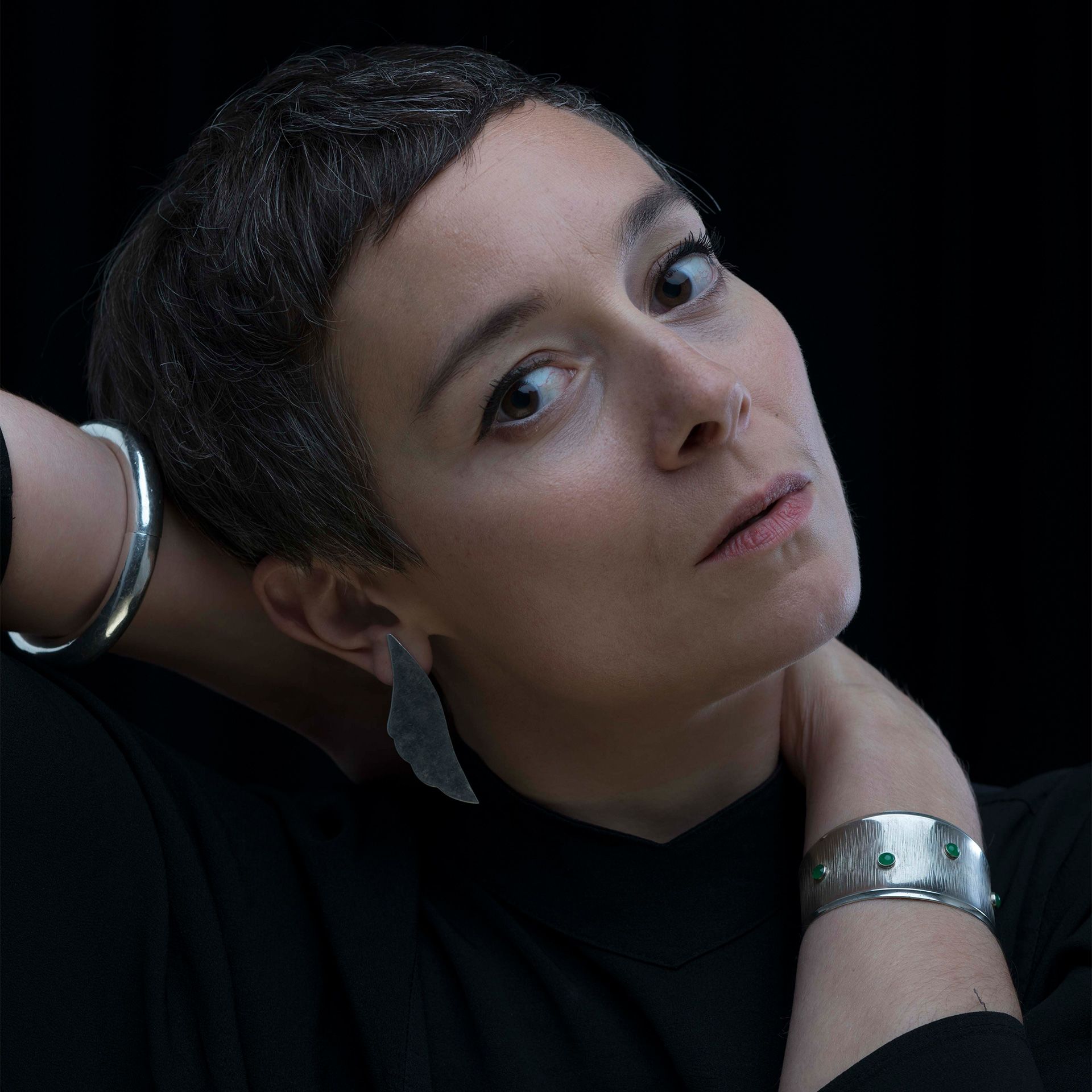
Anna Dennis has appeared at leading international venues, including the Berlin Philharmonie, New York’s Lincoln Center, Sydney Opera House and at the BBC Proms.
Recent operatic highlights have included the title-role in Tom Coult’s Violet at last year’s Aldeburgh Festival; Florinda (Handel’s Rodrigo) and Emira (Siroe) at the Göttingen Handel Festival; Lucy Schmeeler and Claire (Bernstein’s On the Town) at Japan’s Hyogo Performing Arts Centre; Paride (Gluck’s Paride ed Elena) at Nuremberg Opera House; Katherine Dee (Damon Albarn’s Dr Dee) for English National Opera; Bersi (Andrea Chénier) for Opera North; Ilia (Idomeneo) for Birmingham Opera Company; and Strawberry Seller and Strolling Player (Britten’s Death in Venice) at La Scala, Milan.
Highlights this year include Purcell’s The Fairy Queen at Drottningholm, conducted by Franceso Corti, and ‘Masque of Might’ with Opera North, a production of Purcell’s music devised by Sir David Pountney and conducted by Harry Bicket.
Her recordings include Mårten Jansson’s Requiem Novum, Kastalsky’s Requiem for Fallen Brothers, King Arthur, Rameau’s Anacréon, Monteverdi’s Il ritorno d’Ulisse in patria, Siroe, Rodrigo, Joshua, a disc of Elena Langer’s music, titled Landscapewith Three People, and Sweeter than Roses, a Purcell recital with Julian Perkins.
Anna Dennis received this year’s Royal Philharmonic Society Award in the Singer category.
Hilary Summers contralto
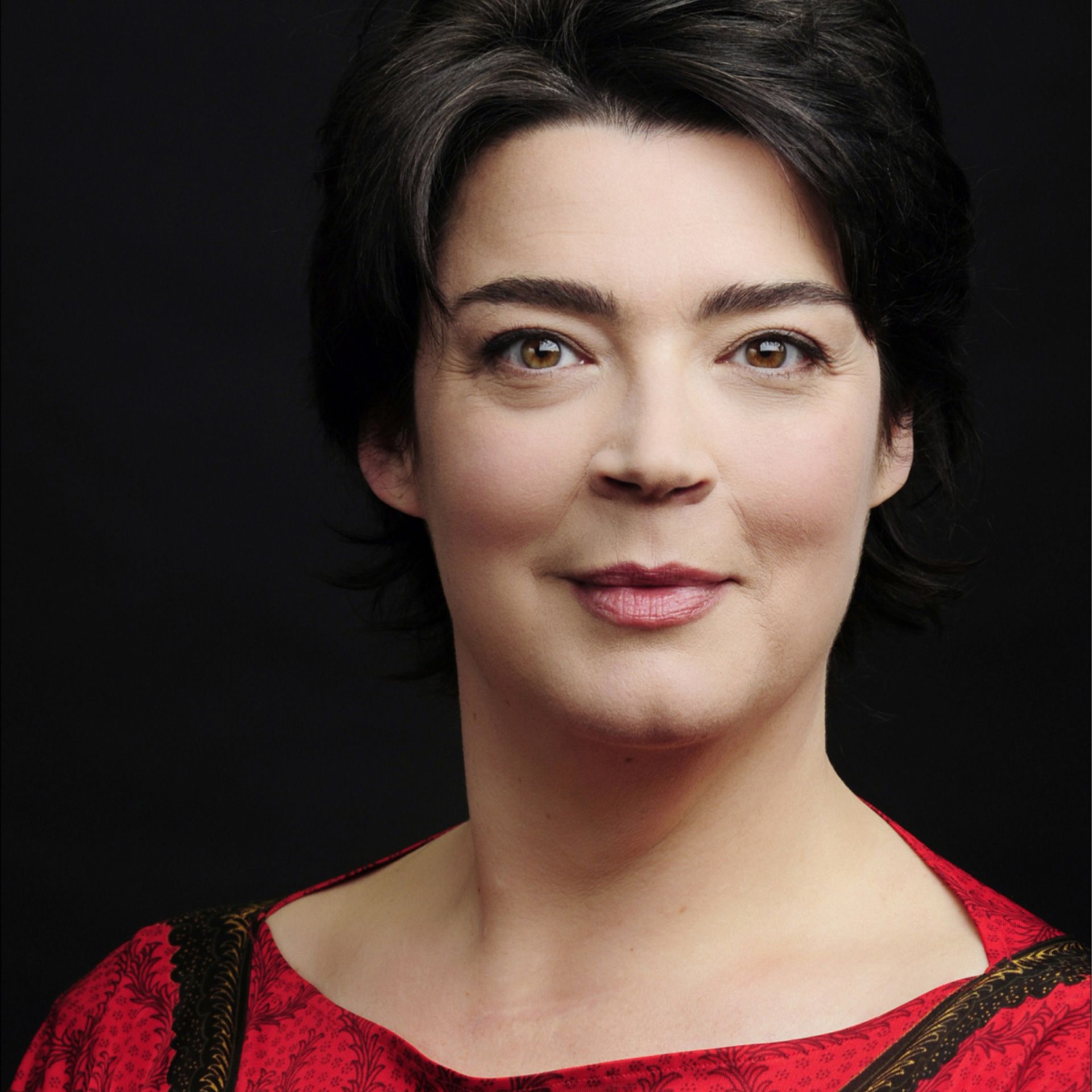
Photo: Claire Newman Williams
Photo: Claire Newman Williams
Born in South Wales, Hilary Summers is one of the world’s few genuine contraltos and has made over 40 CDs spanning works from the early Baroque to the present day. She has sung in most of the major concert halls and opera houses of the world.
Contemporary music forms an important strand in her activities and her operatic world premieres include the role of Stella (Carter’s What Next?) for Berlin Staatsoper, Madame Irma (Peter Eötvös’s Le balcon) at the Aix-en-Provence Festival, Miss Prism (Gerald Barry’s The Importance of Being Earnest) with the Los Angeles Philharmonic and White Queen, Dormouse and Cook (Gerald Barry’s Alice’s Adventures Under Ground). Most recently she created the role of Nell (György Kurtág’s Endgame) at La Scala, Milan to great acclaim. She also enjoys a close relationship with Michael Nyman, who has written many works for her.
She worked closely with Pierre Boulez from 2004, winning a Grammy Award for her recording of his Le marteau sans maître, a piece she performed worldwide.
She is also in demand in Baroque repertoire, working with leading conductors, including William Christie and Christian Curnyn.
Recent highlights include filming a DVD of Alice’s Adventures Under Ground for Irish National Opera; singing the roles of Little Buttercup (HMS Pinafore) for English National Opera and Cornelia (Giulio Cesare) at the Palau in Barcelona; and recording Amadigi with the Early Opera Company under Curnyn, which was released last autumn.
Next season she reprises the role of Nell for Opera Ballet Flanders, gives concert performances of Dido and Aeneas and Charpentier’s Actéon with the Early Opera Company, sings in Handel’s Silla in Japan with Europa Galante and undertakes a French tour of Mendelssohn’s Die erste Walpurgisnacht with Insula Orchestra.
Rupert Charlesworth tenor

Rupert Charlesworth enjoys a busy career in the opera house and the concert hall.
This season he sings Bob Boles (Peter Grimes) at Theater an der Wien, Oronte (Alcina) at Opéra de Paris, Melot (a concert performance of Tristan and Isolde)at Opéra de Lyon and Celidoro (Scarlatti’s I portentosi) in Potsdam.
In the past two seasons he has appeared at Glyndebourne as Beurrefondu (Offenbach’s In the Market for Love); Damon (Acis and Galatea) with Opera North; and Jonathan (Saul) with Theater an der Wien. In the 2019–20 season he joined the ensemble of the Hanover Staatsoper, singing Tamino (The Magic Flute); Narraboth (Salome) and Oronte. In concert he has performed Bach’s Christmas Oratorio with North Netherlands Symphony Orchestra and Messiah with La Cetra Barockorchester Basel.
His other operatic roles include Laertes (Brett Dean’s Hamlet), Marzio (Mitridate), Emilio (Partenope), Dancing Master (Ariadne auf Naxos), Lysander (A Midsummer Night’s Dream), Lucano and Soldier 1 (L’incoronazione di Poppea) and First Armed Man (The Magic Flute).
On the concert platform he has worked with many highly regarded conductors, including Laurence Cummings, Ottavio Dantone, Tõnu Kaljuste, Nicholas Kraemer, Marc Minkowski, Daniel Reuss and Jean-Christophe Spinosi.
He read Music at King’s College London and studied singing at the Royal Academy of Music. He was an Academy Laureate of the 2011 Aix-en-Provence Festival and won the Jury and Audience Prizes at both the 2013 Handel Singing Competition and the 2014 Cesti International Competition.
Edward Hawkins bass

Born in London, Edward Hawkins read Music at King’s College London, also studying trumpet at the Royal Academy of Music with Ian Wilson. He only started singing in his late twenties, but quickly began to develop a professional career, studying with Russell Smythe and Gary Coward. In 2015 he became a member of the Glyndebourne Chorus, with which he appeared in various critically acclaimed productions, including performances at the BBC Proms and worldwide cinema broadcasts.
Recent and future engagements include Somnus (Semele) for Opera Collective Ireland; Claudio (Agrippina), Achilla (Giulio Cesare), General Polkan (The Golden Cockerel) and Bach’s St John Passion for English Touring Opera; and covering several roles for Glyndebourne. During the pandemic he filmed two staged song-cycles by Shostakovich – Romances on Verses by English Poets and Suite on Verses by Michelangelo Buonarroti – for ETO.
Previous engagements have included the Doctor and Banquo (Macbeth) and the Voice of Neptune (Idomeneo) for ETO, Banquo for Duchy Opera at Cornwall’s Minack Theatre, Luka (The Bear), Long Tom (Merrie England), Sergeant Merrill (The Yeomen of the Guard) and Polyphemus (Acis and Galatea).
BBC National Chorus of Wales
BBC National Chorus of Wales is one of the leading mixed choruses in the UK and, while preserving its amateur status, works to the highest professional standards under Artistic Director, Adrian Partington.
Based at BBC Hoddinott Hall in Cardiff Bay, the chorus, formed in 1983, works regularly alongside BBC National Orchestra of Wales, as well as performing concerts in its own right. It is made up of over 150 singers: a mix of amateur choristers alongside students from both the Royal Welsh College of Music & Drama and Cardiff University.
Recent highlights include a six-day tour to Rennes for four performances of Mozart’s Requiem with the Orchestre Symphonique de Bretagne, a much-delayed performance of Bach’s St Matthew Passion with Harry Bicket and annual engagements at the BBC Proms, with recent appearances including Vaughan Williams’s A Sea Symphony with Andrew Manze, Mozart’s Requiem from memory with Nathalie Stutzmann and Mahler’s Eighth Symphony under former BBC NOW Principal Conductor Thomas Søndergård.
This season sees the chorus perform Fauré’s Requiem and Messiaen’s O sacrum convivium under Ludovic Morlot, Haydn’s ‘Nelson’ Mass under Christian Curnyn and Stanford’s Elegiac Ode and Te Deum under Adrian Partington.
The chorus is committed to promoting Welsh and contemporary music and in 2016 gave the first revival of Grace Williams’s Missa Cambrensis, 45 years after its premiere. It has premiered works by a wide range of composers, including a special performance of Kate Whitley’s Speak Out, setting the words of Malala Yousafzai’s 2013 UN speech.
The chorus can be heard on BBC Radio 3, BBC Radio Wales and BBC Radio Cymru, and recently featured in Paul Mealor’s soundtrack for BBC Wales’s Wonders of the Celtic Deep.
Soprano 1
Charlotte Amodeo
Jessica Baber
Eve Bennett
Beth Bradfield
Bethan M. Evans
Sally Glanfield
Sarah Jane Griffiths Claire Hardy
Vanessa John-Hall
Lucie Jones
Joanna Leighton
Eleanor Moore
Rosie Moore
Joanna Osborn
Maisie O’Shea
Elizabeth Phillips
Ellen Steward
Helen Thomas
Soprano 2
Dee Cook
Angela Contestabile
Emily Hopkins
Rhiannon Humphreys
Victoria Illsley
Pippa Johnson
Julie Jones
Margaret Lake
Devon Macadam-Sutton
Niamh Pragnell Toal
Chloe Riordan
Melanie Taylor
Caroline Thomas
Hannah Williams
Alto 1
Ceri-Ann Absalom
Anna Beresford
Catherine Bradfield
Yasmin Browne
Alison Davies
Catherine Duffy
Giselle Dugdale
Rachel Farebrother
Kathrin Hammer
Emilia Hubbard
Rhian-Carys Jones
Lisa May
Sara Peacock
Heather Price
Rhian Pullen
Kate Reynolds
Zozi Sookanadenchetty
Jessica Williams
Alto 2
Alex Butler
Heledd Evans
Annette Hecht
Yvonne Higginbottom
Mattina Keith
Sian Schutz
Julie Wilcox
Sarah Willmott
Tenor 1
Keith Davies
Philip Holtam
Tom Lazell
Huw Llywelyn
Nicholas Willmott
Tenor 2
Rhys Archer
Mike Ennis
Roland George
Peter Holmes
Owen Parsons
Richard Shearman
Richard Wilcox
Michael Willmott
Bass 1
Peter Cooke
David Davies
Ethan Davies
James Garland
Rafael Grigoletto
David Hopkins
Lucas Maunder
Owen McCarthy
Jez Piper
Neil Schofield
Miles Smith
David Stephens
Allan Waters
Alun Williams
Daniel Williams
Emyr Wynne Jones
Bass 2
Jeffrey Davies
Lyndon Davies
Joseff Morris
Gareth Nixon
Mike Osborn
The list of singers was correct at the time of going to press.
BBC National Orchestra of Wales
For over 90 years, BBC National Orchestra of Wales has played an integral part in the cultural landscape of Wales, occupying a distinctive role as both broadcast and national symphony orchestra. Part of BBC Wales and supported by the Arts Council of Wales, it has a busy schedule of live concerts throughout Wales and the rest of the UK. The orchestra is an ambassador of Welsh music and champions the works of contemporary composers.
It performs annually at the BBC Proms and biennially at the BBC Cardiff Singer of the World competition, and can be heard regularly across the BBC: on Radio 3, Radio Wales and Radio Cymru, as well as providing the soundtracks for some of your favourite television programmes.
Highlights of this season include the Elemental Explorations concerts in Brecon and Newport with Nil Venditti, Disney’s Fantasia in concert, Britten and Elgar with the orchestra’s much-loved Conductor Laureate Tadaaki Otaka, an all-new Gaming concert with gaming music legend Eímear Noone and a CoLaboratory concert with the sensational cellist Abel Selaocoe.
Alongside its busy schedule of live concerts, BBC NOW works closely with schools and music organisations throughout Wales, regularly delivering workshops, side-by-side performances and young composer initiatives to inspire and encourage the next generation of performers, composers and arts leaders and make music accessible to all. To find out more visit bbc.co.uk/bbcnow
Patron
HM King Charles III KG KT PC GCB
Principal Conductor
Ryan Bancroft
Conductor Laureate
Tadaaki Otaka CBE
Composer-in-Association
Gavin Higgins
Composer Affiliate
Sarah Lianne Lewis
First Violins
Lesley Hatfield leader
Nick Whiting associate leader
Martin Gwilym-Jones sub-leader
Gabby Painter
Terry Porteus
Anna Cleworth
Kerry Gordon-Smith
Emilie Godden
Second Violins
Anna Smith *
Ros Butler
Vickie Ringguth
Lydia Caines
Michael Topping
Ilze Abola
Katherine Miller
Beverley Wescott
Violas
Rebecca Jones *
Peter Taylor
Catherine Palmer
Robert Gibbons
Laura Sinnerton
Ania Leadbeater
Cellos
Alice Neary *
Keith Hewitt #
Jessica Feaver
Rachel Ford
Double Basses
David Stark *
Daniel Vassallo
Flutes
Michael Cox ‡
John Hall †
Oboes
Steve Hudson *
Amy McKean †
Cor Anglais
Amy McKean
Bassoons
Steve Marsden ‡
David Buckland
Trumpets
Philippe Schartz *
Robert Samuel
Corey Morris
Timpani
Phil Hughes
Harpsichord/Chamber Organ
David Ponsford
Theorbo
Toby Carr
* Section Principal
† Principal
‡ Guest Principal
# Assistant Principal
The list of players was correct at the time of publication
Director Lisa Tregale
Orchestra Manager Vicky James
Assistant Orchestra Manager Nick Olsen
Orchestra Coordinator, Operations Kevin Myers
Business Coordinator Caryl Evans
Head of Artistic Production Matthew Wood
Artists and Projects Manager Eleanor Phillips
Orchestra Librarian Eugene Monteith **
Producer Mike Sims
Broadcast Assistant Jacob Perkins
Head of Marketing and Audiences Sassy Hicks
Marketing Coordinator Amy Campbell +
Digital Producer Yusef Bastawy
Social Media Coordinator Harriet Baugh
Education Producers Beatrice Carey, Rhonwen Jones **
Audio Supervisors Simon Smith, Andrew Smillie
Production Business Manager Lisa Blofeld
Stage and Technical Manager Steven Brown +
Assistant Stage and Technical Manager Dave Rees
BBC Wales Apprentices Josh Gill, Analese Thomas-Strachan, Jordan Woodley
+ Green Team member
** Diversity & Inclusion Forum