
Fauré Requiem with Ludovic Morlot
Saturday 11/2/2023, 7.30pm
Brangwyn Hall, Swansea
Sunday 12/2/2023, 3.00pm
St David's Hall, Cardiff


Johannes Brahms
Violin Concerto 38’
INTERVAL: 20 minutes
Oliver Messiaen
O sacrum convivium 4’
Gabriel Fauré
Requiem 36’
James Ehnes violin
Rhian Lois soprano
Neal Davies bass-baritone
BBC National Chorus of Wales
Ludovic Morlotconductor


The concert in Swansea is being broadcast live on BBC Radio Cymru; the concert in Cardiff is being recorded by BBC Radio 3 for future broadcast in Radio 3 in Concert. They will be available for 30 days after broadcast via BBC Sounds, where you can also find podcasts and music mixes. Visit bbc.co.uk/now for more information on future performances.
Introduction

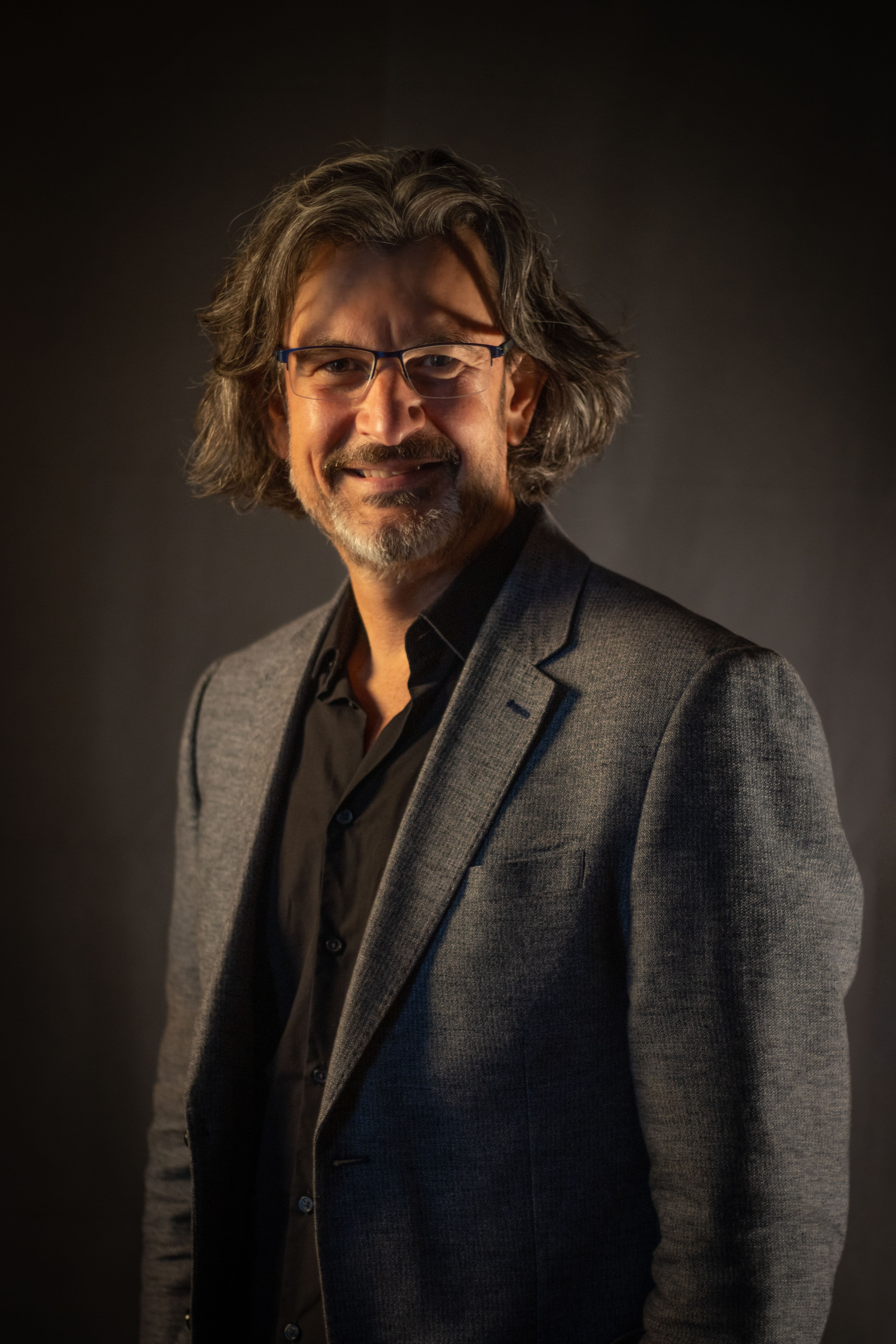
For today’s concert we welcome back our superb chorus to perform alongside the wonderful BBC National Orchestra of Wales under the direction of Ludovic Morlot.
On the first half of the programme is one of the greatest of all violin concertos – that by Brahms – which follows in the tradition of Beethoven in being strikingly symphonic in tone, with the soloist very much integrated into the musical argument. To play it is the great Canadian violinist James Ehnes.
For the choral second half we turn to France, beginning with O sacrum convivium, Messiaen’s only motet, which is filled with the glistening sonorities so typical of his style. There are glistening sonorities aplenty in Fauré’s ethereal Requiem too, for which we’re delighted to welcome as soloists Rhian Lois and Neal Davies.
Enjoy!
Matthew Wood
Head of Artistic Production
Please respect your fellow audience members and those listening at home. Turn off all mobile phones and electronic devices during the performance. Photography and recording are not permitted.
Johannes Brahms (1833–97)
Violin Concerto in D major, Op. 77 (1878)

1 Allegro non troppo (cadenza: Joachim)
2 Adagio
3 Allegro giocoso, ma non troppo vivace
James Ehnes violin
Johannes Brahms was a 19-year-old unknown when he met Hungarian violin virtuoso and composer Joseph Joachim, just 21 but already making waves across Europe. Despite the mismatch in their reputations, the pair became mutual admirers, trusted collaborators and fast friends. It was Joachim who introduced Brahms to Robert and Clara Schumann, a landmark meeting (and not just because Brahms would later fall in love with Clara). It was Joachim to whom Brahms turned for advice on composition. And it was Joachim for whom Brahms eventually wrote his sole Violin Concerto, informed by his friend’s technical guidance.
Brahms positions soloist and orchestra as near equals, subverting expectations that the orchestra is just there to provide ballast for the soloist’s flights of virtuosic fancy. After its premiere, conducted by Brahms himself in Leipzig on New Year’s Day 1879, the pianist-conductor Hans von Bülow is supposed to have said that this is a concerto ‘not for but against the violin’ (the remark is also attributed to Joseph Hellmesberger, conductor of the work’s Viennese premiere) – but time has been kinder to it, and it’s now a staple of the Romantic violin repertoire.
The huge first movement threatens to overwhelm all that follows, not least when it’s performed with the fearsome cadenza Joachim wrote for it (as we hear it today); but Brahms assures a soft landing with a second-movement Adagio that grows from unassuming beginnings (its theme unexpectedly stated by the oboe) to expansive, enveloping warmth. All dug-in double-stops and Gypsy flair, the closing Allegro is as close as Brahms gets to letting down his hair.
Programme note © Will Fulford-Jones
Further Listening: Janine Jansen; Orchestra dell’Accademia Nazionale di Santa Cecilia/Sir Antonio Pappano (Decca 4788412)
Further Reading: Brahms Malcolm MacDonald (OUP)
INTERVAL: 20 minutes
Olivier Messiaen (1908–92)
O sacrum convivium (1937)

BBC National Chorus of Wales
Despite his devout Catholicism, Olivier Messiaen felt his music was too complex to be performed in a liturgical context. He wrote only one motet intended to be sung during the Catholic Mass. O sacrum convivium was composed in 1937 and first performed on 17 February 1938 at the Sainte Trinité Church where the composer was organist. The Latin text, possibly by St Thomas Aquinas and an inspiration for many Renaissance composers, describes the joy of Holy Communion.
This short motet is in a favourite key of Messiaen’s – F sharp major, which he associated with ‘superhuman love’. It is scored for four-part unaccompanied choir and is full of rich, chromatic harmonies. While there are moments of passionate intensity, the music is predominantly contemplative.
Further Listening: Choir of St John’s College, Cambridge/Andrew Nethsingha (Chandos CHAN10842)
Further Reading: A Messiaen Companion Peter Hill (Faber)
Gabriel Fauré (1845–1924)
Requiem, Op. 48 (1887–93, orch. 1900)

1 Introitus and Kyrie
2 Offertoire
3 Sanctus
4 Pie Jesu
5 Agnus Dei
6 Libera me
7 In Paradisum
Rhian Lois soprano
Neal Daviesbass-baritone
BBC National Chorus of Wales
Gabriel Fauré’s Requiem is one among several remarkable 19th-century settings of the Requiem Mass. The composer began writing it in 1887, possibly in response to his father’s death. Its original five-movement version was scored for choir, soprano/treble soloist, organ and a chamber sized orchestra without brass, woodwind or violins (bar one soloist in the ‘Sanctus’). The premiere took place on 16 January 1888 at Paris’s La Madeleine church, where Fauré was organist. As the venue did not permit female singers, boy trebles replaced sopranos.
A second version, with the orchestra expanded to include brass, was performed at the Madeleine on 21 January 1893. This contained two new movements featuring baritone solos: the ‘Offertoire’ and ‘Libera me’. The final, full-orchestral version was prepared during 1899 and 1900 at the suggestion of the composer’s publisher Julien Hamelle, and was intended for concert rather than liturgical use. The premiere took place in Lille on 6 May 1900, followed by a Paris performance at the Trocadéro on 12 July as part of the Exposition Universelle. Both featured a mixed-voice choir and soprano soloist, which Fauré seems to have preferred in a concert context.
In mood, the piece is very different from the dramatic, passionate Requiem settings by, say, Hector Berlioz (1837), Giuseppe Verdi (1874) or Antonín Dvořák (1891). Unlike these composers, Fauré omits the ‘Dies irae’, ‘Tuba mirum’ and ‘Lacrimosa’ with their bleak visions of the Last Judgement, and ends with the optimistic ‘In Paradisum’ from the Order of Burial. Fauré was an agnostic who never lost his respect for religion: he considered that the work expressed his perception of death as ‘a happy deliverance, an aspiration towards happiness above, rather than as a painful experience’.
Melodic beauty and emotional restraint are the Requiem’s key characteristics. Striking features of the first three movements include the imposing unisons that open the solemn ‘Introitus’, the chant-like baritone solo in the pensive ‘Hostias’ section of the ‘Offertoire’ and the dialogue between voices and violins in the dreamy ‘Sanctus’ with its contrastingly fanfare-like ‘Hosanna’. The ‘Pie Jesu’ is an exquisitely simple soprano solo; the expansive ‘Agnus Dei’ contains a brief reminiscence of the work’s opening. The penultimate movement, ‘Libera me’, strikes a rare note of disquiet through its funereal baritone solo and dramatic choral outbursts. But calm is soon restored in the concluding ‘In Paradisum’, where ethereal high voices, organ, harp and strings conjure up a serene vision of heaven.
Programme notes © Kate Hopkins
Further Listening: Grace Davidson; William Gaunt; London Symphony Orchestra Chamber Ensemble; Tenebrae/Nigel Short (LSO Live LSO0728)
Further Reading: Gabriel Fauré: A Musical Life Jean-Michel Nectoux (CUP)
Help us Improve Our Online Programmes.
Please take this 5-minute survey and let us know what you think of these notes.
Programme Survey
Biographies
Ludovic Morlot conductor

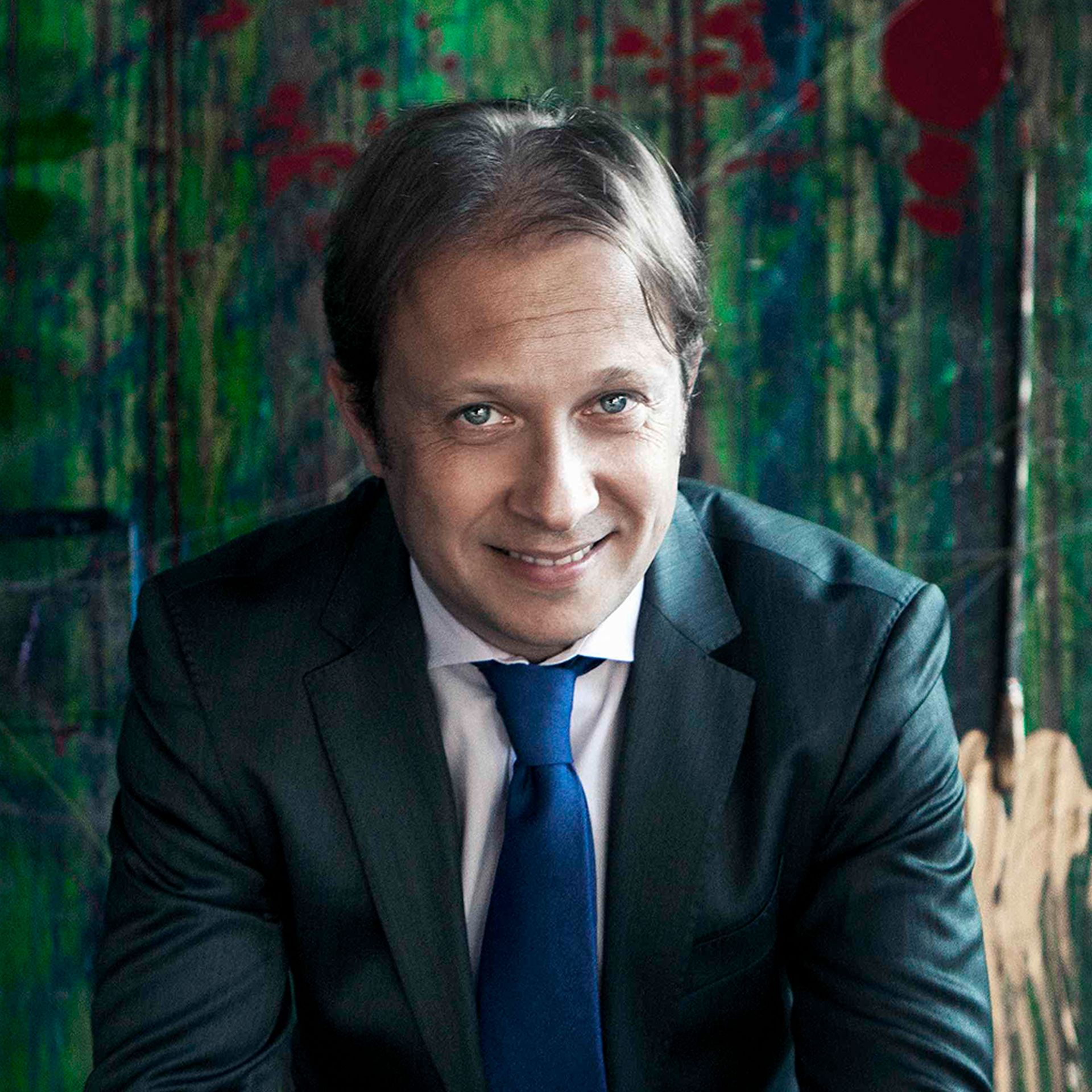
Photo: Lisa-Marie Mazzucco
Photo: Lisa-Marie Mazzucco
Ludovic Morlot became Music Director of the Barcelona Symphony Orchestra in September last year and will conduct for a minimum of 11 weeks a season with the orchestra.
His élan, elegance and intensity on stage have endeared him to audiences and orchestras worldwide. During his eight years as Music Director of the Seattle Symphony Orchestra he pushed the boundaries of traditional concert programming, winning several Grammys.
He is now Conductor Emeritus in Seattle, and in 2019 he was appointed Associate Artist of the BBC Philharmonic, with which he has had a close relationship over many years. He was Artistic Director of the National Youth Orchestra of China (2017 21) and Chief Conductor of La Monnaie (2012–14).
He has conducted the Royal Concertgebouw Orchestra, Berlin, Czech, London, Los Angeles and New York Philharmonic orchestras, Boston and Chicago Symphony orchestras, Dresden Staatskapelle and Budapest Festival Orchestra, among many others.He has also appeared extensively in Asia and Australasia, notably with the Seoul Philharmonic and the Melbourne and Yomiuri Nippon Symphony orchestras. Festival appearances have included the BBC Proms, Wien Modern, Edinburgh and Aspen.
He has a strong commitment to supporting emerging talent and regularly conducts students at the Colburn Conservatory. In 2021 he sat on the jury of the Leeds International Piano Competition and conducted students at the Royal Academy in London and at the New England Conservatory in Boston, as well as making his annual visit to the Aspen Festival.
He originally trained as a violinist, before studying conducting at the Pierre Monteux School in the USA, and then in London at the Royal Academy and subsequently at the Royal College of Music. He is Affiliate Professor at the University of Washington School of Music in Seattle and a Visiting Artist at the Colburn School in Los Angeles.
James Ehnes violin
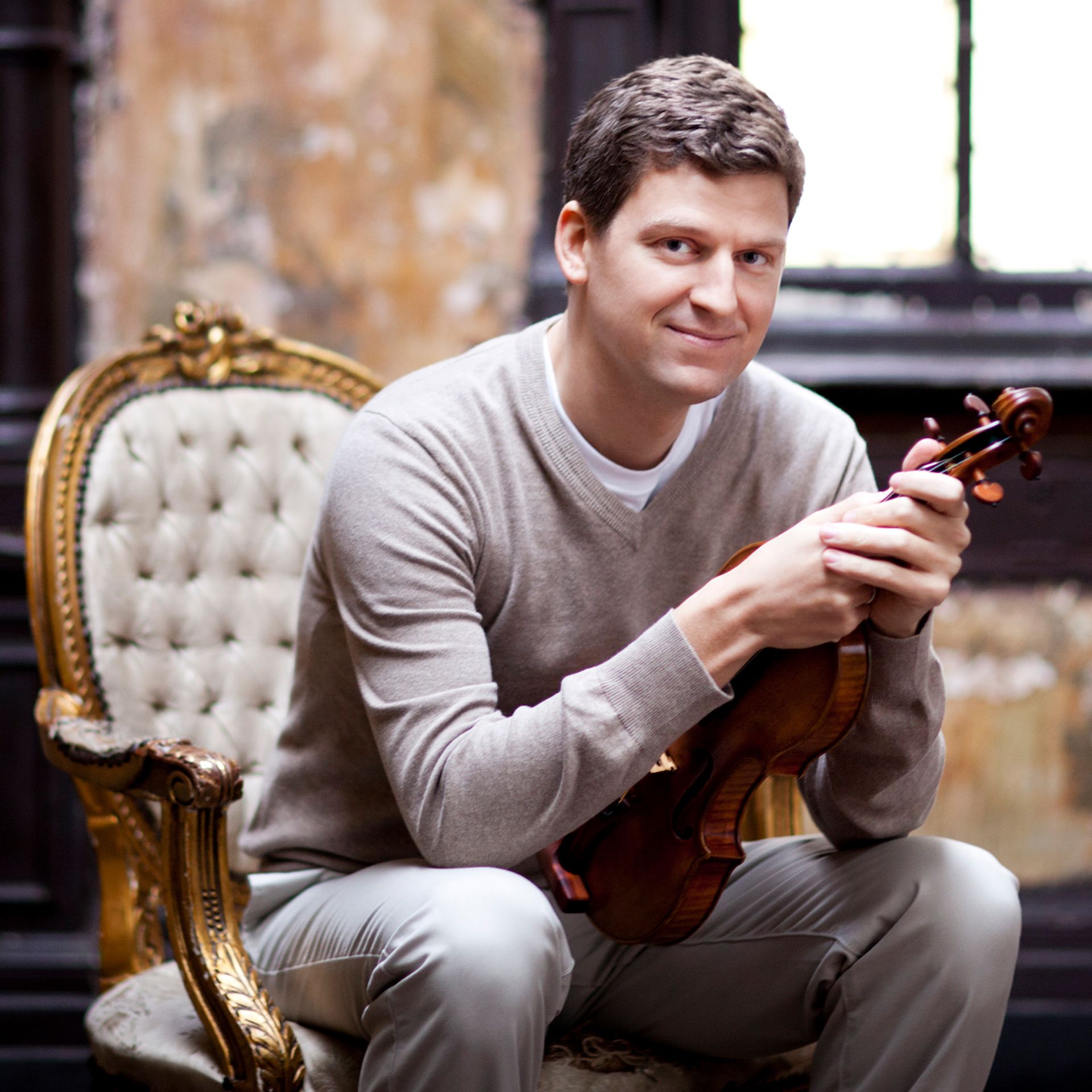
Photo: Benjamin Ealovega
Photo: Benjamin Ealovega
James Ehnes has established himself as one of the most sought-after musicians on the international stage. His combination of virtuosity, lyricism and unfaltering musicality have led to regular appearances at the world’s most celebrated concert halls.
Recent highlights include concerts with the Met Orchestra at Carnegie Hall, Leipzig Gewandhaus Orchestra, London, NHK and San Francisco Symphony orchestras and Munich Philharmonic. This season he continues as Artist-in-Residence with the National Arts Centre of Canada.
Alongside his concerto work, he maintains a busy recital schedule, performing regularly at Wigmore Hall, Carnegie Hall, Symphony Center Chicago and Amsterdam Concertgebouw, as well as at the Ravinia, Montreux, Verbier, Dresden and Aix-en Provence festivals. A devoted chamber musician, he is the leader of the Ehnes Quartet and the Artistic Director of the Seattle Chamber Music Society.
He has an extensive discography and has won many awards, including two Grammys, three Gramophone Awards and 11 Juno Awards. In 2021 he was announced as the recipient of the Artist of the Year at the Gramophone Awards, which celebrated his most recent contributions to the recording industry, including a lockdown project entitled ‘Recitals from Home’.
James Ehnes began violin studies at the age of five, became a protégé of the noted Canadian violinist Francis Chaplin aged nine, and made his orchestral debut aged 13. He continued his studies with Sally Thomas at the Meadowmount School of Music and the Juilliard School, winning the Peter Mennin Prize for Outstanding Achievement and Leadership in Music upon his graduation in 1997. He is a Member of the Order of Canada and the Order of Manitoba, a Fellow of the Royal Society of Canada and an honorary fellow of the Royal Academy of Music, where he is a visiting professor.
He plays the ‘Marsick’ Stradivarius of 1715.
Rhian Lois soprano
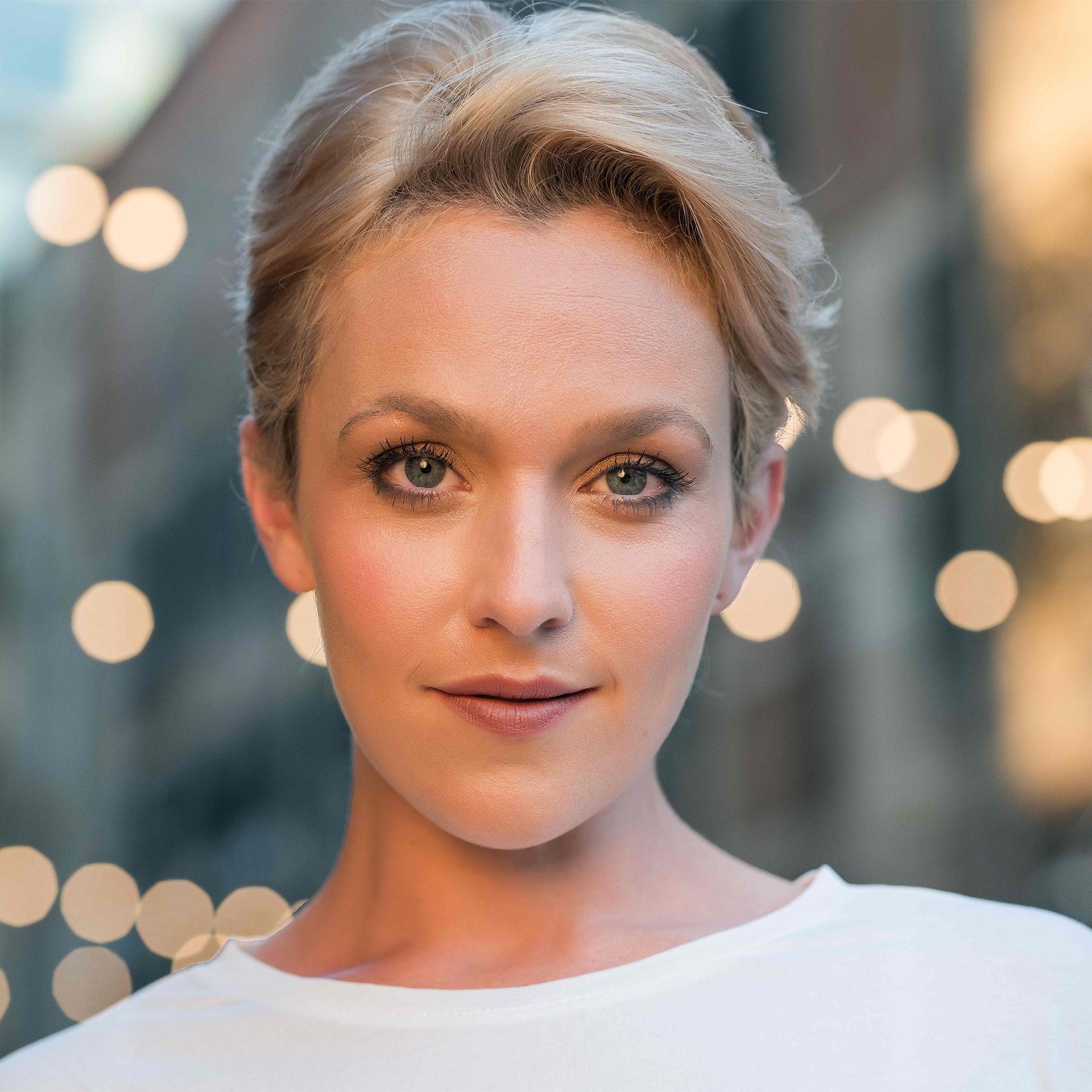
Photo: Alecsandra Raluca Dragoi
Photo: Alecsandra Raluca Dragoi
Welsh soprano Rhian Lois has become known for her versatility across a range of repertoire. This season she makes notable house debuts including Gretel (Hansel and Gretel) for Hamburg State Opera and Pamina (The Magic Flute) for Montpellier Opera, as well as her role debut as Juliette (Die tote Stadt) for English National Opera. Highlights on the concert platform include returns to BBC National Orchestra of Wales for today’s concert and, in May, Stanford’s Te Deum and Elegiac Ode.
Recent highlights include Janine/Ofwarren (Poul Ruders’s The Handmaid’s Tale) for ENO; Angelica (Elena Langer’s Figaro Gets a Divorce) at Theater Magdeburg; Governess (The Turn of the Screw), filmed with OperaGlass Works; Gretel and Musetta (La bohème) for Scottish Opera; Oriana (Amadigi) for Garsington Opera; Jerusha (Gerald Barry’s The Intelligence Park) in the Royal Opera House’s Linbury Theatre; Max (Where the Wild Things Are) for Shadwell Opera and at the work’s Russian premiere at the Mariinsky Theatre; and Nannetta (Falstaff) at the Grange Festival, among others.
On the concert stage, she has performed at the International Opera Awards Foundation and the Enescu Festival.
On the concert platform her repertoire ranges from Handel and Mozart, via Mendelssohn and Brahms, to Stravinsky.
She is a graduate of the Royal Welsh College of Music & Drama, Royal College of Music and National Opera Studio.
Neal Davies bass-baritone
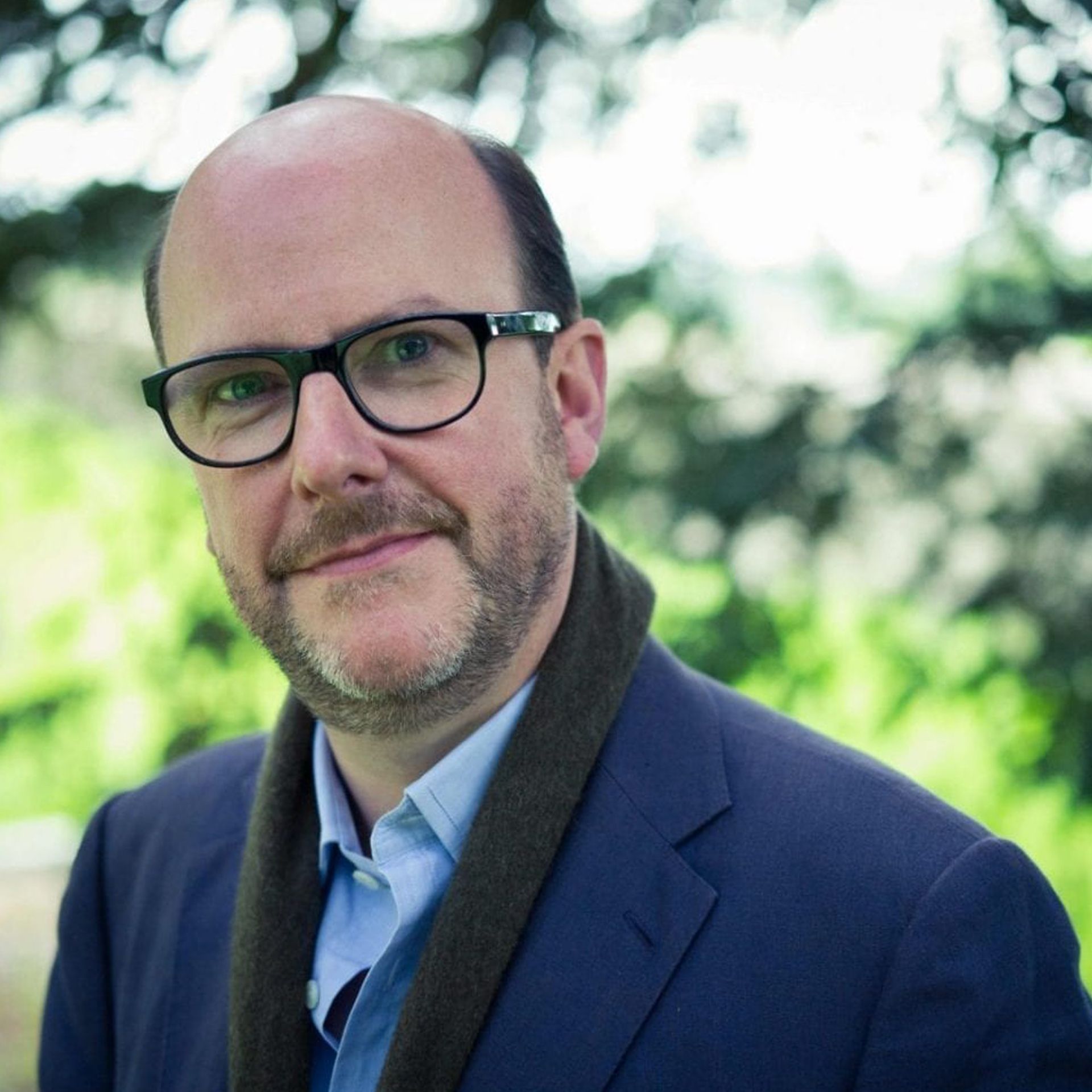
Neal Davies studied at King’s College, London, and the Royal Academy of Music and won the Lieder Prize at the 1991 Cardiff Singer of the World competition.
In the opera house this season he sings Zebul (Jephtha) with Music of the Baroque under Dame Jane Glover; Sergeant (The Yeomen of the Guard) for English National Opera; and Papageno (The Magic Flute) for Welsh National Opera. On the concert stage he sings Messiah with the National Symphony Orchestra of Washington DC under Fabio Biondi; Vaughan Williams’s Dona nobis pacem with the MDR Radio Orchestra under Howard Arman; Beethoven’s Christ on the Mount of Olives with the Bergen Philharmonic under Sir Mark Elder; Handel’s Ode for the Birthday of Queen Anne with Bernard Labadie and Les Violons du Roy; and a Scottish tour of Bach’s St Matthew Passion with the Dunedin Consort.
Last season saw a return to ENO and a recording for Scottish Opera. On the concert platform he sang Ariodate (Serse) on tour with The English Concert; The Creation with the Royal Scottish National Orchestra; Mozart’s Requiem in Tokyo; Messiah with Les Violons du Roy; and a European concert tour of Israel in Egypt with the Freiburger Barockorchester.
Recent appearances have included Peter Grimes with the Bergen Philharmonic, Theodora with Arcangelo at the Vienna Konzerthaus, a tour of Beethoven’s Ninth Symphony with the Hallé, and the Edinburgh Festival and BBC Proms. His wide ranging discography has garnered awards from Gramophone and BBC Music Magazine, as well as a Grammy.
BBC National chorus of Wales
BBC National Chorus of Wales is one of the leading mixed choruses in the UK and, while preserving its amateur status, works to the highest professional standards under Artistic Director, Adrian Partington.
Based at BBC Hoddinott Hall in Cardiff Bay, the chorus, formed in 1983, works regularly alongside BBC National Orchestra of Wales, as well as performing concerts in its own right. It is made up of over 150 singers: a mix of amateur choristers alongside students from both the Royal Welsh College of Music & Drama and Cardiff University.
Recent highlights include a six-day tour to Rennes for four performances of Mozart’s Requiem with the Orchestre Symphonique de Bretagne, a much-delayed performance of Bach’s St Matthew Passion with Harry Bicket and annual engagements at the BBC Proms, with recent appearances including Vaughan Williams’s A Sea Symphony with Andrew Manze, Mozart’s Requiem from memory with Nathalie Stutzmann and Mahler’s Eighth Symphony under former BBC NOW Principal Conductor Thomas Søndergård.
This season sees the chorus perform Fauré’s Requiem and Messiaen’s O sacrum convivium under Ludovic Morlot, Haydn’s ‘Nelson’ Mass under Christian Curnyn and Stanford’s Elegiac Ode and Te Deum under Adrian Partington.
The chorus is committed to promoting Welsh and contemporary music and in 2016 gave the first revival of Grace Williams’s Missa Cambrensis, 45 years after its premiere. It has premiered works by a wide range of composers, including a special performance of Kate Whitley’s Speak Out, setting the words of Malala Yousafzai’s 2013 UN speech.
The chorus can be heard on BBC Radio 3, BBC Radio Wales and BBC Radio Cymru, and recently featured in Paul Mealor’s soundtrack for BBC Wales’s Wonders of the Celtic Deep.
Soprano 1
Elizabeth Aitken
Jess Baber
Eve Bennett
Anwen Boyce
Bethan M. Evans
Sally Glanfield
Claire Hardy
Vanessa John-Hall
Rebecca Jolliffe
Lucie Jones
Katherine Meredith
Rosie Moore
Maisie O’Shea
Joanna Osborn
Angharad Phillips
Elizabeth Phillips
Rhiannon Pooley
Ellen Steward
Morgan Summers
Helen Thomas
Hannah Willman
Soprano 2
Kate Bidwell
Angela Contestabile
Dee Cooke
Emily Hopkins
Rhiannon Humphreys
Victoria Illsley
Pippa Johnson
Julie Jones
Margaret Lake
Rosanna Lowe
Devon Macadam-Sutton
Lucy Paterson
Marie Quemerais
Melanie Taylor
Niamh Pragnell Toal
Katherine Woolley
Alto 1
Ceri-Ann Absalom
Nicole Dickie
Catherine Duffy
Rachel Farebrother
Kathrin Hammer
Naomi Hitchings
Emilia Hubbard
Rhian-Carys Jones
Shanta Miller
Sara Peacock
Rhian Pullen
Kate Reynolds
Amy Roberts
Elizabeth Rowland
Zozi Sookanadenchetty
Vicki Westwell
Alto 2
Alex Butler
Heledd Evans
Annette Hecht
Yvonne Higginbottom
Mattina Keith
Sian Schutz
Julie Wilcox
Sarah Willmott
Tenor 1
William Collins
Philip Holtam
Huw Llywelyn
Orlando Vas
Nicholas Willmott
Tenor 2
Mike Ennis
Roland George
Sam Proll
Richard Shearman
Richard Wilcox
Michael Willmott
Bass 1
Peter Cooke
John Davies
Billy Donaghy
James Garland
Rafael Grigoletto
David Hopkins
Emyr Wynne Jones
Geraint Jones
Lucas Maunder
Owen McCarthy
Jez Piper
Joseph Pitkethly
Miles Smith
David Stephens
Allan Waters
Daniel Williams
Bass 2
Jeffrey Davies
Stephen Hamnett
Stuart Hogg
Joseff Morris
Gareth Nixon
Mike Osborn
Nick Perfect
The list of singers was correct at the time of publication
BBC National Orchestra of Wales
For over 90 years, BBC National Orchestra of Wales has played an integral part in the cultural landscape of Wales, occupying a distinctive role as both broadcast and national symphony orchestra. Part of BBC Wales and supported by the Arts Council of Wales, it has a busy schedule of live concerts throughout Wales and the rest of the UK. The orchestra is an ambassador of Welsh music and champions the works of contemporary composers.
It performs annually at the BBC Proms and biennially at the BBC Cardiff Singer of the World competition, and can be heard regularly across the BBC: on Radio 3, Radio Wales and Radio Cymru, as well as providing the soundtracks for some of your favourite television programmes.
Highlights of this season include the Elemental Explorations concerts in Brecon and Newport with Nil Venditti, Disney’s Fantasia in concert, Britten and Elgar with the orchestra’s much-loved Conductor Laureate Tadaaki Otaka, an all-new Gaming concert with gaming music legend Eímear Noone and a CoLaboratory concert with the sensational cellist Abel Selaocoe.
Alongside its busy schedule of live concerts, BBC NOW works closely with schools and music organisations throughout Wales, regularly delivering workshops, side-by side performances and young composer initiatives to inspire and encourage the next generation of performers, composers and arts leaders and make music accessible to all. To find out more visit bbc.co.uk/bbcnow
Patron
HM King Charles III KG KT PC GCB
Principal Conductor
Ryan Bancroft
Conductor Laureate
Tadaaki Otaka CBE
Composer-in-Association
Gavin Higgins
Composer Affiliate
Sarah Lianne Lewis
First Violins
Lesley Hatfield leader
Nick Whiting associate leader
Martin Gwilym-Jones sub-leader
Cecily Ward
Terry Porteus
Suzanne Casey
Carmel Burgess
Anna Cleworth
Juan Gonzalez
Zhivko Georgiev
Zanete Uskane
Haim Choi
Gary George-Veale
Paul Mann
Second Violins
Anna Smith *
Ruth Heney
Ros Butler
Vickie Ringguth
Joseph Williams
Michael Topping
Katherine Miller
Beverley Wescott
Sellena Leony
Lydia Caines
Claudia Fuller
Veronica Marziano
Violas
Garfield Jackson ‡
Alex Thorndike #
Tetsuumi Nagata
Peter Taylor
Ania Leadbeater
Robert Gibbons
Catherine Palmer
Laura Sinnerton
Natalia Solis Paredes
Amir Liberson
Cellos
Alice Neary *
Keith Hewitt #
Jessica Feaver
Sandy Bartai
Carolyn Hewitt
Rachel Ford
Alistair Howes
Katy Cox
Double Basses
David Stark *
Danny Vassallo
Christopher Wescott
Richard Gibbons
Emma Prince
Evangeline Tang
Flutes
Harry Winstanley ‡
John Hall
Oboes
Steve Hudson *
Alec Harmon
Clarinets
Han Kim *
Lenny Sayers
Bassoons
Paul Boyes ‡
Louise Watson
Horns
Tim Thorpe *
Tom Taffinder
Neil Shewan †
Lucy Smith
Trumpets
Philippe Schartz *
Robert Samuel
Trombones
Donal Bannister *
Karapet Harutyunyan
Bass Trombone
Darren Smith †
Timpani
Phil Hughes
Harp
Valerie Aldrich-Smith †
Organ
Gregory Drott
* Section Principal
† Principal
‡ Guest Principal
# Assistant Principal
The list of players was correct at the time of publication
Director Lisa Tregale +
Orchestra Manager Vicky James **
Assistant Orchestra Manager Nick Olsen
Orchestra Coordinator, Operations Kevin Myers
Business Coordinator Caryl Evans
Head of Artistic Production Matthew Wood
Artists and Projects Manager Eleanor Phillips
Orchestra Librarian Eugene Monteith **
Producer Mike Sims
Broadcast Assistant Jacob Perkins
Head of Marketing and Audiences Sassy Hicks +
Marketing Coordinator Amy Campbell +
Digital Producer Yusef Bastawy
Social Media Coordinator Harriet Baugh
Education Producers Beatrice Carey, Rhonwen Jones **
Audio Supervisors Simon Smith, Andrew Smillie
Production Business Manager Lisa Blofeld
Stage and Technical Manager Steven Brown
Assistant Stage and Technical Manager Dave Rees
BBC Wales Apprentices Josh Gill, Analese Thomas-Strachan, Jordan Woodley
+ Green Team member
** Diversity & Inclusion Forum