
Dancing & Deities
Thursday 21/11/24, 7.30pm
BBC Hoddinott Hall, Cardiff


Respighi
La boutique fantasque – suite21’
INTERVAL: 20 minutes
Rossini
Stabat mater 60’
Nil Venditticonductor
Olivia Boen soprano
Teresa Iervolino mezzo-soprano
Levy Sekgapanetenor
Ashley Riches bass-baritone
BBC National Chorus of Wales
Julie DoyleBSL Interpreter


This concert is being broadcast live by BBC Radio 3 in Radio 3 in Concert, and filmed for future release in the BBC NOW Digital Concert Series; it will be available for 30 days after broadcast via BBC Sounds, where you can also find podcasts and music mixes.
Introduction

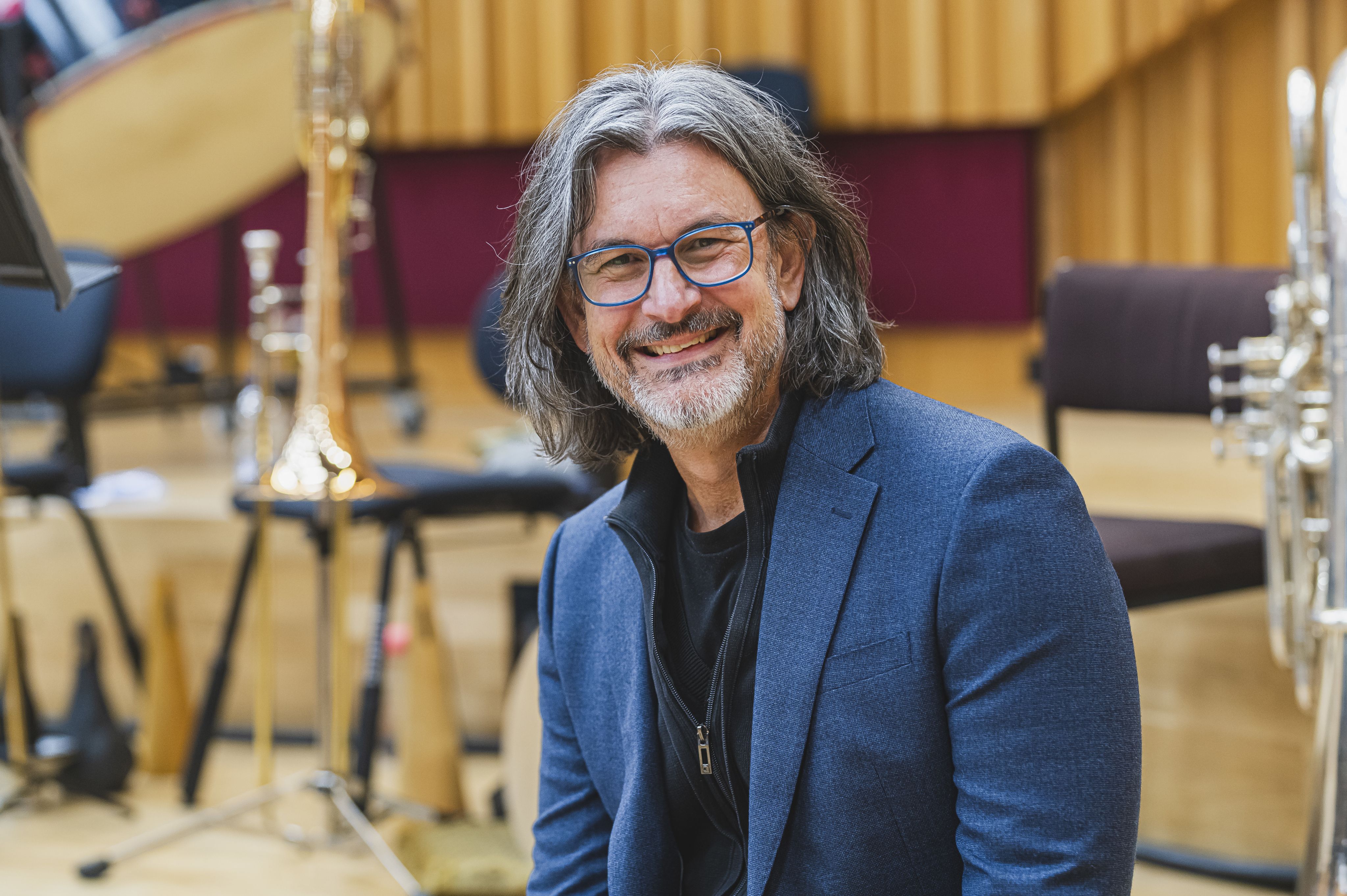
Photo: Kirsten McTernan
Photo: Kirsten McTernan
For tonight’s concert we’re delighted to welcome back Nil Venditti, who made such an impact earlier this season. She celebrates her Italian roots with pieces by Respighi and Rossini, though it’s the latter who underpins everything on the programme.
Respighi was one of music’s great borrowers, and his La boutique fantasque was originally written as a one-act ballet – from which we hear the suite this evening – based on a selection of miniatures penned by Rossini after he’d retired from the stage. To these simple originals Respighi injects an unerring sense of orchestral colour, underlining the character of each number with considerable charm.
Rossini’s Stabat mater is a work that effortlessly melds his experience in the opera house – in its sheer drama and masterly writing for voices – with a large orchestra designed to exploit the dramatic immediacy of its text, which depicts Mary, mother of Jesus, weeping at the cross. To perform it tonight, we’re delighted to welcome four outstanding soloists, together with the forces of BBC National Chorus of Wales.
Enjoy!
Matthew Wood
Head of Artistic Planning and Production
Please respect your fellow audience members and those listening at home. Turn off all mobile phones and electronic devices during the performance. Photography and recording are not permitted.
Ottorino Respighi(1879–1936)
La boutique fantasque (1918) – suite

1 Overture
2 Tarantella
3 Mazurka
4 Danse cosaque [Cossack Dance]
5 Can-can
6 Valse lente [Slow Waltz]
7 Nocturne
8 Galop
‘Radishes’; ‘Dried Figs’; ‘Butter’; ‘Castor Oil’: not a peculiarly unappetising menu, but just some of the whimsical titles Rossini gave the ‘little trifles’ that made up his collection of musical divertissements The Sins of Old Age. Scored principally for piano, or voice and piano, these 150 short works (composed between 1857 and 1868) are salon music – always elegant, often tongue in cheek, mouthfuls of pure musical pleasure.
They were also a fertile musical hunting-ground for Ottorino Respighi. Tasked with writing a score for Diaghilev and the Ballets Russes – for a one-act ballet by Léonide Massine titled La boutique fantasque (‘The Magic Toyshop’) – the composer set about capitalising on the success of his recent Ancient Airs and Dances (1917) with another rummage through the musical dressing-up box of the past. Alighting on Rossini’s vivid, characterful miniatures, he swiftly set about redesigning them into 20th-century shapes and styles, with the help of an orchestra whose generous percussion section includes bass and side drums, xylophone and celesta.
Massine’s plot is a fairytale fantasy. In a French toyshop (whose 1860s décor was inspired by Toulouse-Lautrec) a toymaker shows off his famous dancing dolls. A pair of can-can dancers catch everyone’s eye: one is sold to an American family, the other to Russians. But the dolls are in love, and rather than be separated, they hatch a plan to escape …
Pizzicato strings and percussion set the magical scene in a lively curtain-raiser, before the sequence of dances begins. A frenzied Tarantella, in which woodwind and brass toss the melody wildly back and forth to the ever-present accompaniment of a tambourine, is up first. A courtly Mazurka is danced by four dolls dressed as playing cards, while a Cossack Dance brings swaggering Russian flair, as well as a graceful central waltz. The irrepressible, whirling Can-can supplies the central set-piece before the shop closes for the day.
But after hours the action continues. As the clock strikes ten, the dolls mourn, first in a Slow Waltz, and then a lyrical Nocturne. The Suite closes with a vivacious Galop as we watch the two dolls escape to freedom.
Programme note © Alexandra Coghlan
INTERVAL: 20 minutes
Gioachino Rossini(1792–1868)
Stabat mater(1832–41)
1 Stabat mater dolorosa
2 Cujus animam
3 Quis est homo
4 Pro peccatis
5 Eja, Mater
6 Sancta Mater
7 Fac, ut portem
8 Inflammatus
9 Quando corpus morietur
10 In sempiterna saecula. Amen
Olivia Boensoprano
Teresa Iervolino mezzo-soprano
Levy Sekgapanetenor
Ashley Riches bass-baritone
BBC National Chorus of Wales
‘Have I written truly sacred music, or just bad music? I was born for opera buffa, as you well know …’ Gioachino Rossini knew his strengths. For a short but intensely prolific career the Italian composer had produced hit after hit for Europe’s opera houses, all hungry for his brand of breezy, brilliantly virtuosic comedy, and later for Grand Opera. But in 1830 at just 37 years old, after writing some 40 operas in just 20 years, he abruptly retired from the stage.
Whether it was ill health or the prospect of prosperous comfort that drove the decision, Rossini was not entirely idle. His final two decades yielded a different kind of repertoire: chamber works (principally The Sins of Old Age) as well as a new seam of religious music.
While Rossini’s Petite messe solennelle (1863) is the best-known product of this late period of creativity, the earlier Stabat mater shares its theatricality, its unabashedly operatic drama (just listen to the thunderous chords, and the arresting silences that follow, announcing the opening of the epic final Amen). And why not? The text – a 13th-century hymn to the Virgin, describing Mary’s suffering at the foot of the cross – is confronting in its emotional and physical directness, refusing to look away from either the whips and scourges, the agony of Christ’s sword-pierced side, or from his mother’s tears, her pain as she watches her son’s death.
The work’s genesis was a difficult one. Commissioned in 1831, Rossini made a start on the Stabat mater the following year, completing movements 1 and 5 to 9. But, slowed by illness and – perhaps – disinclination, the composer asked Giovanni Tadolini to complete the remaining music in time for its Holy Week premiere in Madrid. It was to be the only performance of a work that remained unfinished business for Rossini, who later decided to revisit it, filling in the ‘missing’ movements.
It was not a decision driven solely by artistic motives. Publication rights and fees were big business – especially for a retired composer. A second ‘premiere’ and the chance to take full financial possession of the work drove a complicated sequence of law suits. Rossini eventually won, and the Stabat mater in its final form was premiered in Paris’s Théâtre Italien in 1842, conducted by none other than Gaetano Donizetti.
The piece is scored for large forces, including double wind, four horns, three trombones, timpani and a quartet of vocal soloists, and onlycomes gradually into focus. It’s as if we approach the scene – a mother, head bowed, at the foot of the cross – from a distance. The opening movement starts low in the orchestra, a series of rising phrases beckoning us closer, before revealing the horrifying scene in a stomach-lurching crash of brass. Hushed chorus and soloists join, mirroring the move from whispered uncertainty to full-throated anguish.
The next three movements – all later additions – put the soloists to the fore. The tenor laments Christ’s wounded side in the heroic ‘Cujus animam’ – one of Rossini’s great arias, and a favourite recital showpiece. Soprano and mezzo soloists come together in ‘Quis est homo’, joining Mary’s weeping in an expansive duet, before violence returns in the bass-baritone’s stormy ‘Pro peccatis’ in which the soloist repeatedly attempts to calm an unsettled orchestra.
‘Eja, Mater’ is the first of two unaccompanied movements (‘Quando corpus’ the second) – a striking texture for the opera composer, and one that shows Rossini’s knowledge of early choral repertoire, and sees him experimenting with different effects: soloist and massed forces, solo quartet, imitative polyphony.
Horns and clarinet introduce the mezzo’s lyrical ‘Fac, ut portem’, before flames flicker and clouds darken in the soprano-led ‘Inflammatus’. Rossini saves his coup de grâce for the sombre final ‘Amen’: a spectacular double fugue, proof (if any were still required) that the reigning king of opera buffa was no slouch when it came to good old-fashioned counterpoint, capable of serving God and theatre in a single musical gesture.
Programme note © Alexandra Coghlan
Text
Stabat mater
1 Chorus and Soloists
Stabat mater dolorosa
Juxta crucem lacrymosa,
Dum pendebat Filius
2 Tenor
Cujus animam gementem,
Contristatam et dolentem,
Pertransivit gladius.
O quam tristis et afflicta
Fuit illa benedicta
Mater Unigeniti!
Quae moerebat et dolebat
Et tremebat, cum videbat
Nati poenas inclyti.
3 Soprano and Mezzo-soprano
Quis est homo qui non fleret
Christi Matrem si videret
In tanto supplicio?
Quis non posset contristari
Piam Matrem contemplari
Dolentem cum Filio?
4 Bass-baritone
Pro peccatis suae gentis
Vidit Jesum in tormentis
Et flagellis subditum.
Vidit suum dulcem natum
Morientem desolatum
Dum emisit spiritum.
5 Bass-baritone and Chorus
Eja, Mater, fons amoris,
Me sentire vim doloris
Fac ut tecum lugeam.
Fac ut ardeat cor meum
In amando Christum Deum
Ut sibi complaceam.
6 Soloists
Sancta Mater, istud agas,
Crucifixi fige plagas,
Cordi meo valide.
Tui nati vulnerati,
Tam dignati pro me pati,
Poenas mecum divide.
Fac me vere tecum flere,
Crucifixo condolere,
Donec ego vixero.
Juxta crucem tecum stare,
Te libenter sociare,
In planctu desidero.
Virgo virginum praeclara,
Mihi jam non sis amara,
Fac me tecum plangere.
7 Mezzo-soprano
Fac, ut portem Christi mortem,
Passionis fac consortem,
Et plagas recolere.
Fac me plagis vulnerari,
Cruce hac inebriari,
Ob amorem Filii.
8 Soprano and Chorus
Inflammatus et accensus
Per te, Virgo, sim defensus,
In die judicii.
Fac me cruce custodiri
Morte Christi praemuniri
Confoveri gratia.
9 Chorus and Soloists
Quando corpus morietur,
Fac ut animae donetur
Paradisi gloria.
10 Chorus
In sempiterna saecula.
Amen.
Translation
The grieving mother stood
weeping by the cross
where hung her son.
Her spirit groaning,
saddened and grieving
a sword has pierced.
O how sad and afflicted
was that blessed
mother of the only-begotten!
Who mourned and grieved
and trembled, when she saw
the punishment of her glorious son.
Who is the man that would not weep
if he saw the mother of Christ
in such torment?
Who could fail to feel sorrow
to regard the merciful mother
grieving with her son?
For the sins of his people
she saw Jesus in torment
and submitted to the scourge.
She saw her sweet offspring
forlorn in dying
as he yielded up his spirit.
Ah, mother, fountain of love,
to feel the force of grief
grant that I may mourn with you.
Grant that my heart may burn
in loving Christ, God,
that I may please him.
Holy Mother, grant me
that I fix the wounds of the crucified
firmly to my heart.
Of your wounded son
who deigned to suffer for me
let me share the pain.
Let me truly weep with you,
grieve over the crucified,
as long as I live.
To stand by the cross,
willingly to join with you
in mourning I desire.
Virgin glorious among virgins,
be not now harsh with me,
make me to weep with you.
Let me bear Christ’s death,
let me share his passion
And revere his blows.
Let me be wounded by his blows,
to be drunk with this cross
out of love for your son.
So fired and consumed with flames,
through you, Virgin, may I be defended,
in the day of judgement.
Let me be guarded by the cross,
strengthened by the death of Christ
cherished by grace.
When the body shall die,
grant that my soul be given
the glory of Paradise.
In all eternity.
Amen.
Help Us Improve Our Online Programmes.
Please take this 5-minute survey and let us know what you think of these notes.
Programme Survey
You may also like:
La voix humaine
Thursday 30/01/25, 7.30pm
BBC Hoddinott Hall, Cardiff
Ravel Ma mère l’Oye
Poulenc La voix humaine
Jaime Martín conductor
Danielle de Niese soprano
THEATRICAL | VIVID | BREATHTAKING
Principal Guest Conductor Jaime Martín leads us in a programme of French gems, starting with a celebration of the 150th anniversary of Ravel’s birth. His luscious, magical, enchanting and playful score to the ballet Ma mère l’Oye is based on characters from classic fairy tales, from Sleeping Beauty and Little Ugly to Tom Thumb and Beauty and the Beast.
After the interval, opera star Danielle de Niese makes her debut with BBC NOW as Elle in a semi-staged performance of Poulenc’s powerful one-act opera La voix humaine. During a phone call from her lover, grief and denial lead to outrage and despair as he calls off their relationship – the timeless theme of unrequited love playing out before our very eyes.
Missa solemnis
Thursday 10/4/25, 7.30pm
Llandaff Cathedral, Cardiff
Friday 11/4/25, 7.30pm
Brangwyn Hall, Swansea
Beethoven Missa solemnis
Andrew Manzeconductor
Carolyn Sampson soprano
Sophie Harmsen mezzo-soprano
Ed Lyon tenor
Darren Jeffery bass
BBC National Chorus of Wales
MAGNIFICENT | REVERENTIAL | WORLD-CLASS
Standing as a monument among sacred choral works, Beethoven’s Missa solemnis is a Mass setting of immense weight and scale. In it, lofty grandeur and heavenward serenity dance with angular leaping figures; violent dynamic contrasts weave through the delicately orchestrated massed forces; and a searching quality reflective of the composer’s own faith – that of looking beyond our understanding at a numinous God – is never far from the surface.
Beethoven regarded the Missa solemnis as his greatest work, and it is surely a ‘bucket list’ piece for all music lovers. With an acclaimed line-up of soloists stepping up alongside the BBC National Orchestra and Chorus of Wales, this is a performance not to be missed.
Biographies
Nil Venditticonductor

Alessandro Bertani
Alessandro Bertani
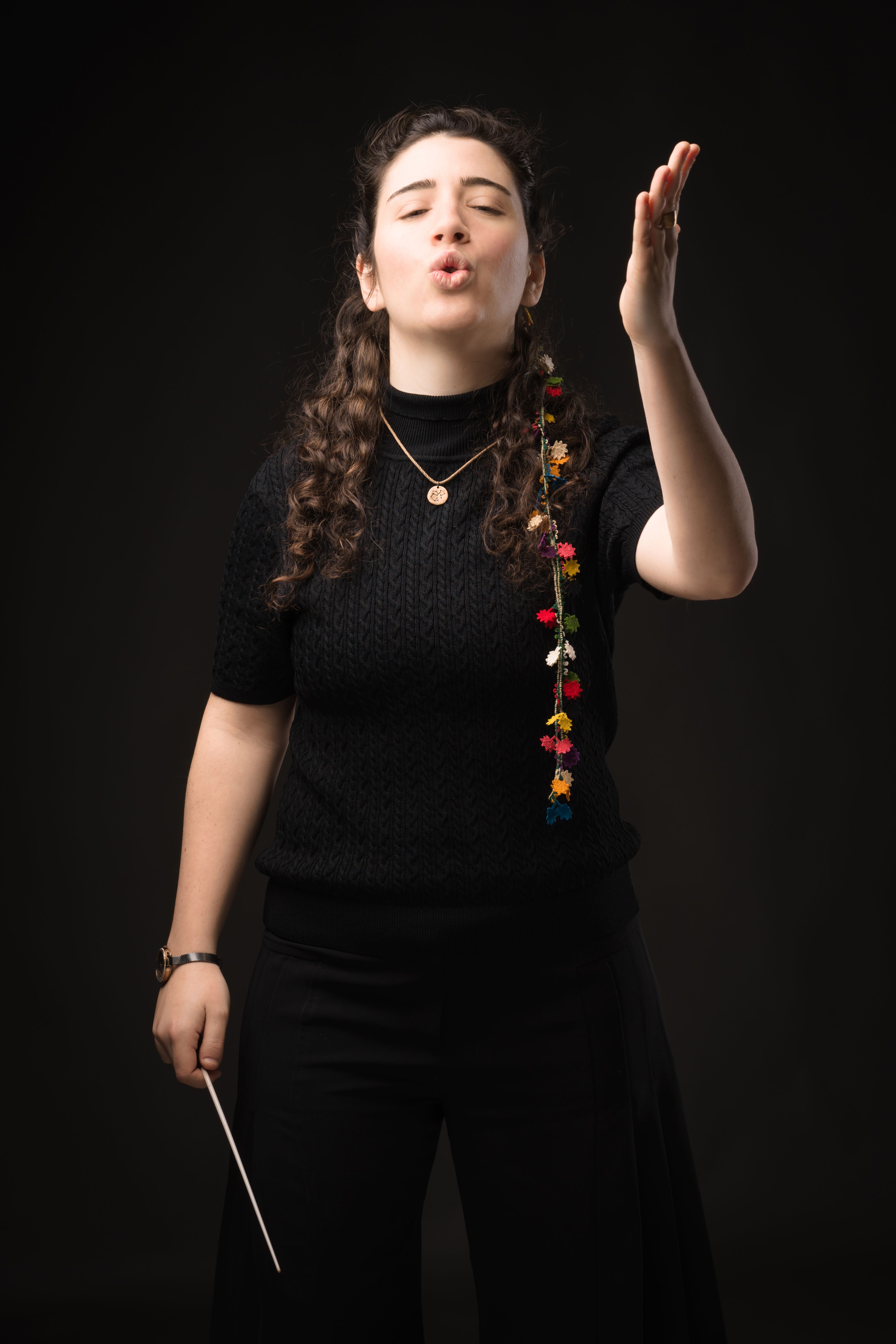
Italian-Turkish conductor Nil Venditti is fast establishing relationships with important orchestras and ensembles around the world, including the Royal Northern Sinfonia, of which she became Principal Guest Conductor this season.
The 2024/25 season sees her debuts with the Finnish Radio Symphony Orchestra, Arctic, Borusan Istanbul and BBC Philharmonic orchestras, as well as orchestras in Aalborg, Tenerife, the Balearic Islands, Wuppertal and Bochum. She performs twice with the Royal Northern Sinfonia and returns to the Stuttgart Chamber Orchestra for concerts at the Vienna Musikverein and in Bregenz, as well as the Royal Philharmonic Orchestra, BBC, Hamburg and Helsingborg Symphony orchestras, Deutsche Kammerphilharmonie Bremen and Real Filharmonía de Galicia.
Last season she made debuts with the Konzerthausorchester Berlin, BBC, Hiroshima and Lahti Symphony orchestras, Nagoya and Royal Philharmonic orchestras and Royal Swedish Opera (for a new production of Don Giovanni), among others. She made debuts at the BBC Proms and Schleswig-Holstein Festival and returned to the Royal Liverpool Philharmonic Orchestra, Royal Northern Sinfonia and Stuttgart Opera.
She combines a strong affinity for Classical and early Romantic repertoire with a particular interest in Turkish and Italian composers. She continues to make her mark in the opera house, having conducted operas from Mozart’s Così fan tutte to Peter Maxwell Davies’s The Lighthouse.
Nil Venditti studied conducting at the Zürcher Hochschule der Künste under the guidance of Johannes Schlaefli, as well as attending the Conducting Academy of the Pärnu Festival under Paavo Järvi, Neeme Järvi and Leonid Grin. In Italy, she studied cello with Francesco Pepicelli.
Teresa Iervolinomezzo-soprano

Michele Monasta
Michele Monasta
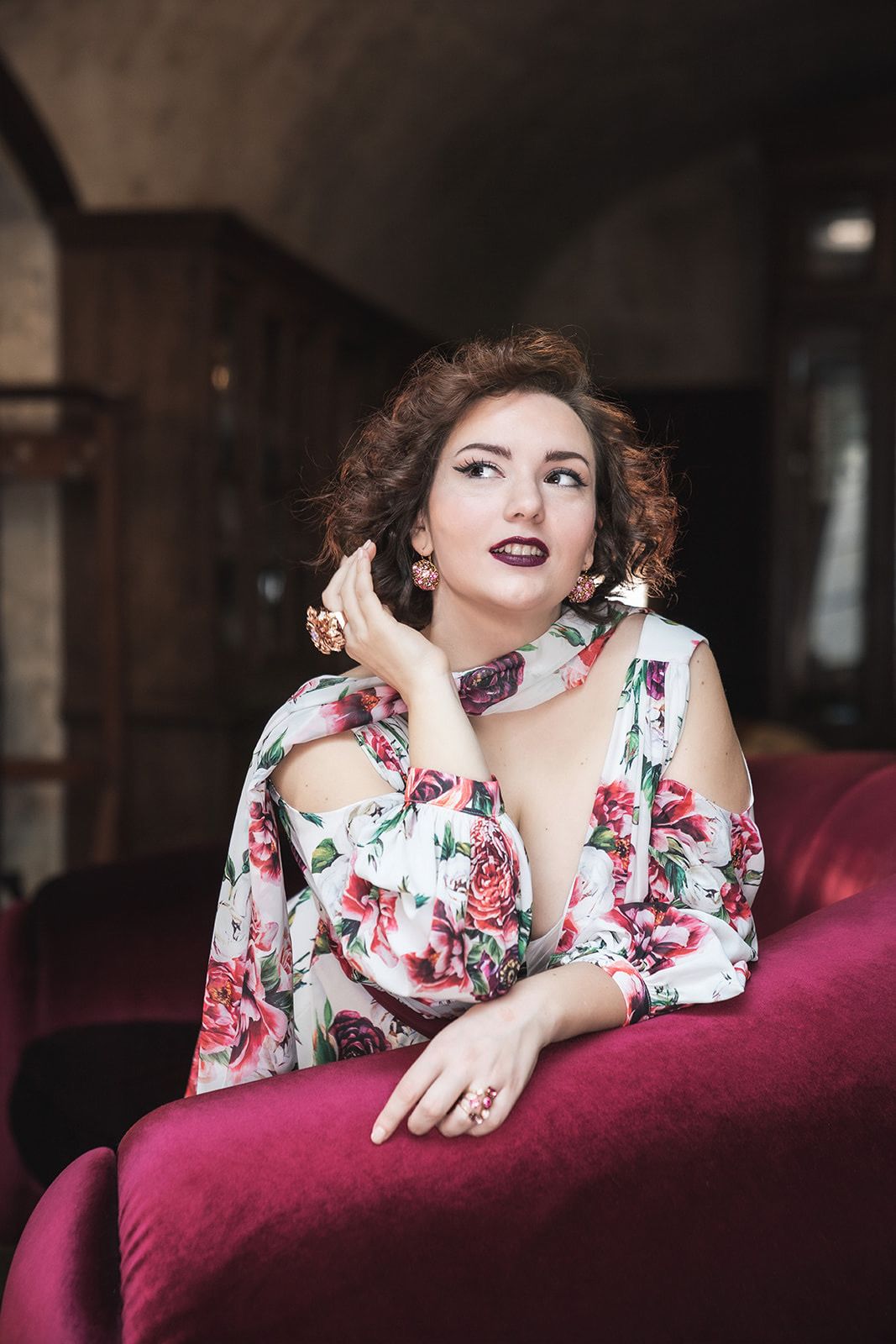
Teresa Iervolino is today sought after in the fields of bel canto and Baroque music. She is the recipient of several prizes and in 2012 launched her international career when she made her debut at the Ravenna Festival as Isabella (L’italiana in Algeri), a role she also performed in Palermo, Nancy and at the Beaune Festival.
She regularly collaborates with leading conductors, including Riccardo Chailly, Sir Antonio Pappano, Daniel Harding, Fabio Luisi, Roberto Abbado, Alberto Zedda, Christophe Rousset, Jean-Christophe Spinosi, Ivor Bolton, Donato Renzetti, Carlo Rizzi, Marc Minkowski, Stefano Montanari, Andrea Marcon, Ottavio Dantone, Alessandro De Marchi, Gabriele Ferro, Antonino Fogliani, Marco Armiliato, Daniel Oren, Daniele Rustioni and Riccardo Frizza.
Recent successes include the title-role in Tancredi at the Beaune Festival; Mistress Quickly (Falstaff) with the Orchestre de Paris and at Madrid’s Teatro Real; Adalgisa (Norma) in Salerno, Madrid and Seoul; Arsace (Rossini’s Semiramide) and the title-role in Rinaldo at La Fenice in Venice; the title-role in Orlando furioso at the Teatro Filarmonico in Verona; and Ernestina(L’equivoco stravagante) at the Rossini Opera Festival in Pesaro, as well as Messiah in Athens, Beethoven’s Symphony No. 9 at the MITO Festival in Turin and Rossini’s Petite messe solennelle in Geneva.
She has an extensive discography which ranges from Handel and Leo to Mercadante and Rossini.
Future engagements include Madama Butterfly and Giulio Cesare at the Liceu in Barcelona; Lucrezia Borgia at Rome Opera; Madama Butterfly with the Berliner Philharmoniker under Kirill Petrenko in Baden-Baden and Berlin; Alcina in Versailles; andRossini's Stabat mater with the Accademia Nazionale di Santa Cecilia under Myung-Whun Chung in Rome and at the Vienna Konzerthaus.
Levy Sekgapane tenor

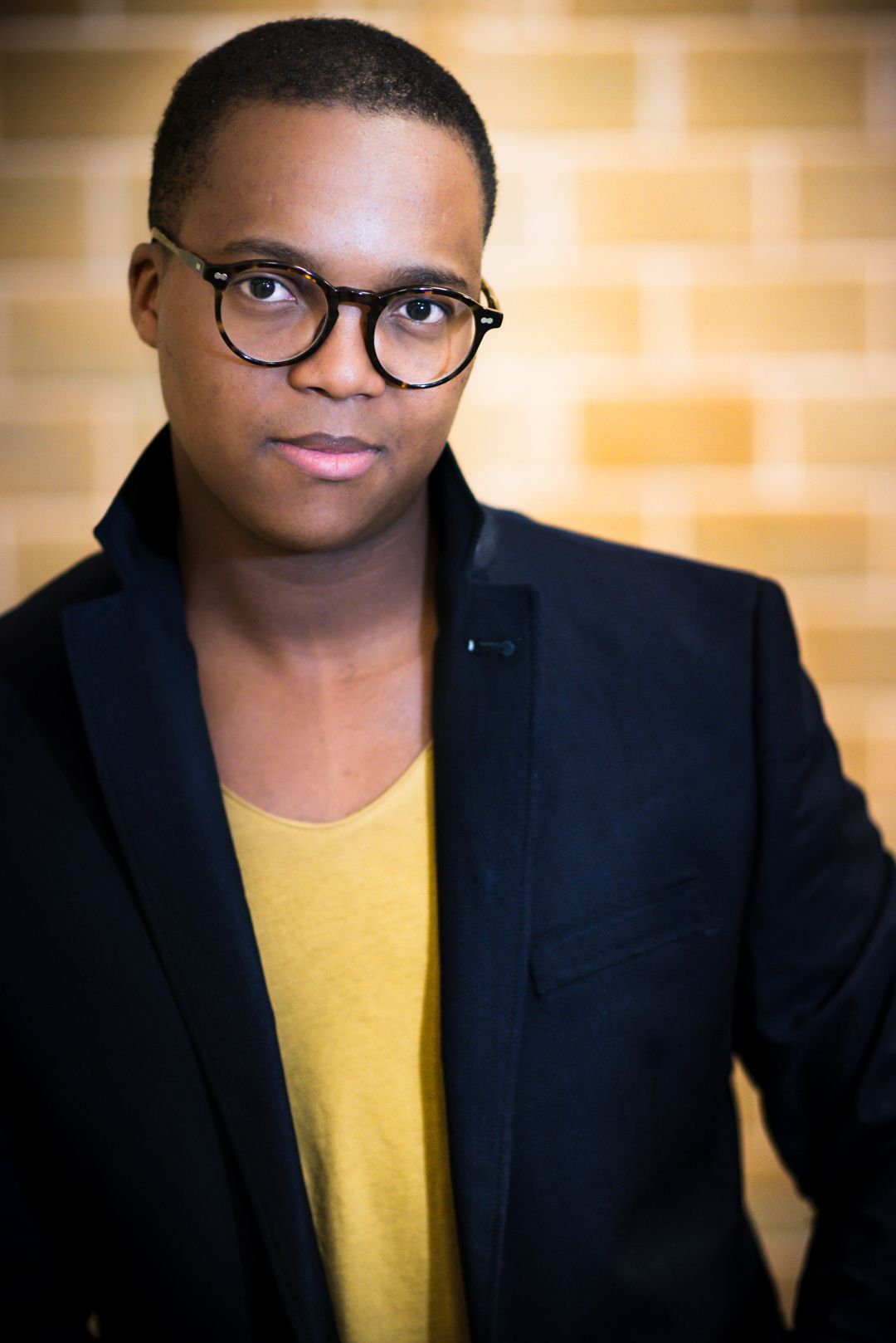
Born in Kroonstad, South Africa, Levy Sekgapane studied under Kamal Khan and Hanna van Niekerk at the South African College of Music at the University of Cape Town. In 2015 he spent a year as a member of the Youth Ensemble at the Dresden Semperoper. In the past few years he has developed two signature roles: the Count (Il barbiere di Siviglia), which he has sung at Glyndebourne, Opéra national de Paris, Vienna State Opera, Deutsche Oper Berlin and Opéra national de Bordeaux; and Don Ramiro (La Cenerentola), which he has performed at Munich State Opera, Hamburg State Opera, Los Angeles Opera and Zurich Opera.
Highlights of this season include his return to La Monnaie, Brussels, for Jonah (The Time of Our Singing); Handel’s Messiah in Madrid; Mozart’s Requiem at the Liceu, Barcelona; and the title-role in Mitridate in his debut with Opéra Montpellier. At Opéra national de Paris he will reprise the role of the Count and will sing Lindoro (L’italiana in Algeri) at Théâtre des Champs-Élysées.
In recent seasons, he has sung in I puritani at Théâtre des Champs-Élysées, Rossini’s Otello at Frankfurt Opera, La sonnambula in Munich and Les pêcheurs de perles at Cape Town Opera.
Other highlights of his career to date include his debut at the Hamburg Elbphilharmonie in its first New Year’s Eve gala concert under the baton of James Conlon; and roles in Adina at the Rossini Opera Festival in Pesaro, Enrico di Borgogna at the Donizetti Festival in Bergamo, Idomeneo at the Salzburg Festival and L’elisir d’amore at Wiesbaden State Theatre.
Levy Sekgapane won first prizes at the International Belvedere Competition and Monserrat Caballé Competition (both 2015) and Operalia (2017). In 2019 he released an album of Rossini arias.
Ashley Riches bass-baritone

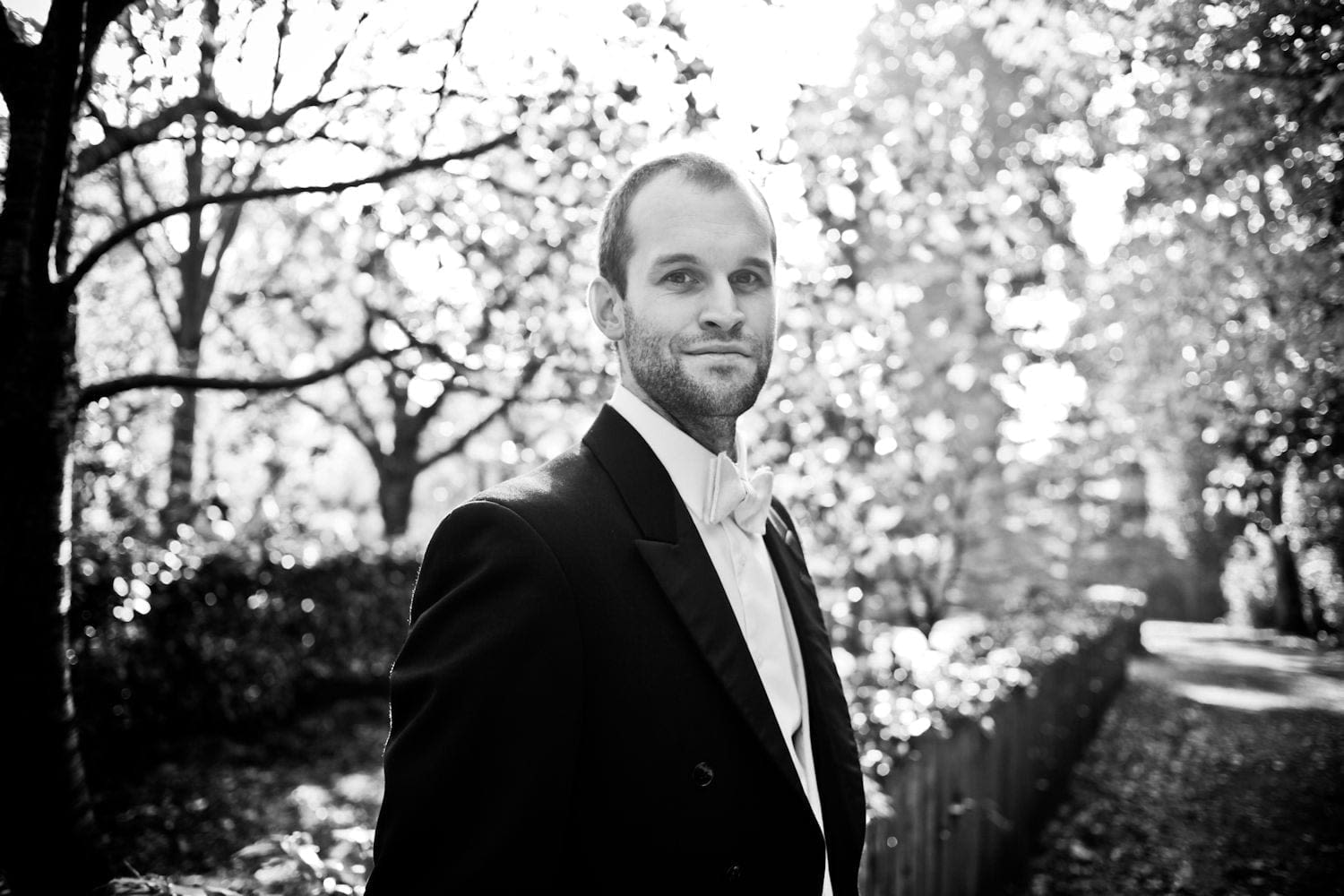
Bass-baritone Ashley Riches studied at King’s College, Cambridge, and the Guildhall School of Music & Drama. He was a Jette Parker Young Artist at the Royal Opera House and a BBC Radio 3 New Generation Artist.
He is known for his versatility and this season includes Berlioz’s L’enfance du Christ with the Wrocław Philharmonic and Paul McCreesh, Bach’s St John Passion with The English Concert and Harry Bicket and Puccini’s La Rondine with the London Symphony Orchestra and Sir Antonio Pappano.
Last season he returned to the Royal Opera House as Roucher (Andrea Chénier); sang the role of the River King (Wallace’s Lurline) with the RTÉ National Symphony Orchestra and Péter Halász; Beethoven’s Missa solemnis with David Afkham in Madrid; Verdi’s Requiem with the City of Birmingham Symphony Orchestra and Kazuki Yamada; Handel’s Messiah in concert at Glyndebourne and at the BBC Proms; and Purcell’s King Arthur with McCreesh in Lyon and Lausanne.
An accomplished recitalist, Ashley Riches has collaborated with pianists including Graham Johnson, Iain Burnside, Julius Drake, Joseph Middleton, Anna Tilbrook, James Baillieu, Simon Lepper, Gary Matthewman and Sholto Kynoch. He released his debut solo recital disc, A Musical Zoo, in 2021. His discography also includes King Arthur with the Gabrieli Consort & Players under McCreesh (which won BBC Music Magazine’s Recording of the Year in 2020), Wonderful Town with the London Symphony Orchestra under Sir Simon Rattle and, most recently, Handel’s La resurrezione with The English Concert under Bicket.
BBC National Orchestra of Wales
For over 90 years, the BBC National Orchestra of Wales, the only professional symphony orchestra in Wales, has played an integral part in the cultural landscape of the country, occupying a distinctive role as both a broadcast and national orchestra, and serving as an ambassador of Welsh culture, regularly performing music created in Wales and championing Welsh composers and artists.
Part of BBC Cymru Wales and supported by the Arts Council of Wales, BBC NOW performs a busy schedule of concerts and broadcasts, working with acclaimed conductors and soloists from across the world, including its Principal Conductor, the award-winning Ryan Bancroft.
The orchestra is committed to working in partnership with community groups and charities, taking music out of the concert hall and into settings such as schools and hospitals to enable others to experience and be empowered by music. It undertakes workshops, concerts and side-by-side performances to inspire and encourage the next generation of performers, composers and arts leaders, and welcomes thousands of young people and community members annually through its outreach and education projects.
BBC NOW performs annually at the BBC Proms and biennially at the BBC Cardiff Singer of the World competition, and its concerts can be heard regularly across the BBC – on Radio 3, Radio Wales and Radio Cymru. On screen, music performed by BBC NOW can be heard widely across the BBC and other global channels, including the soundtrack and theme tune for Doctor Who, Planet Earth III, Prehistoric Planet, The Pact and Children in Need.
Based at BBC Hoddinott Hall, Cardiff Bay, BBC NOW utilises a state-of-the-art recording studio with a camera system for livestreams and TV broadcasts to bring BBC NOW’s music to a broader audience across Wales and the world. For more information about BBC NOW please visit bbc.co.uk/now
Patron
HM King Charles III KG KT PC GCB
Principal Conductor
Ryan Bancroft
PrincipalGuest Conductor
Jaime Martín
Conductor Laureate
Tadaaki Otaka CBE
Composer-in-Association
Gavin Higgins
First Violins
Nick Whiting leader
Gwenllian Hâf MacDonald
Terry Porteus
Suzanne Casey
Alejandro Trigo
Juan Gonzalez
Anna Cleworth
Žanete Uškāne
Ruth Heney
Carmel Barber
Emilie Godden
Gary George-Veale
Emma Menzies
Caroline Heard
Second Violins
Anna Smith *
Sheila Smith
Katherine Miller
Beverley Wescott
Michael Topping
Vickie Ringguth
Lydia Caines
Joseph Williams
Roussanka Karatchivieva
Elizabeth Whittam
Catherine Fox
Grace Shepherd
Violas
Rebecca Jones *
Alex Thorndike #
Tetsuumi Nagata
Peter Taylor
Anna Growns
Laura Sinnerton
Robert Gibbons
Catherine Palmer
Lowri Taffinder
Lydia Abell
Cellos
Rosie Biss
Michael Atkinson
Jessica Feaver
Sandy Bartai
Keith Hewitt
Alistair Howes
Carolyn Hewitt
Rachel Ford
Double Basses
Alexander Jones #
Elen Roberts
Christopher Wescott
Evangeline Tang
Richard Gibbons
Callum Duggan
Flutes
Matthew Featherstone *
John Hall †
Lindsey Ellis
Piccolo
Lindsey Ellis †
Oboes
Steve Hudson *
Alec Harman
Amy McKean †
Cor anglais
Amy McKean
Clarinets
Nicholas Carpenter *
Lenny Sayers
Bassoons
Jarosław Augustiniak *
Ruby Collins
Horns
Neil Shewan †
Meilyr Hughes
John Davy
James Mildred
Michael Gibbs
Trumpets
Corey Morris †
Robert Samuel
Martin McHale
Trombones
Donal Bannister *
Dafydd Thomas
Bass Trombone
Darren Smith †
Tuba
Daniel Trodden †
Timpani
Steve Barnard *
Percussion
Phil Girling
Phil Hughes
Andrea Porter
Sam Jowett
Harry Lovell-Jones
Harp
Elen Hydref
Celesta
Catherine Roe Williams
* Section Principal
† Principal
‡ Guest Principal
# Assistant String Principal
The list of players was correct at the time of publication
Director Lisa Tregale
Orchestra Manager Liz Williams
Assistant Orchestra Manager Nick Olsen **
Orchestra Personnel ManagerKevin Myers
Business Coordinator Georgia Dandy
Orchestra Administrator Eleanor Hall +
Head of Artistic Planning and ProductionMatthew Wood
Artists and Projects Manager Victoria Massocchi **
Orchestra Librarian Naomi Roberts
Producer Mike Sims
Broadcast Assistantvacancy
Head of Marketing and Audiences Sassy Hicks
Marketing Coordinator Amy Campbell-Nichols +
Digital Producer Yusef Bastawy **
Social Media Coordinator Harriet Baugh
Education Producers Beatrice Carey, Rachel Naylor maternity cover
Audio Supervisors Simon Smith, Andrew Smillie
Production Business Manager Lisa Blofeld
Stage and Technical Manager Steven Brown +
Assistant Stage and Technical Manager Josh Mead +
+ Green Team member
** Diversity & Inclusion Forum
BBC National Chorus of Wales
Made up of over 120 singers, BBC National Chorus of Wales is one of the leading mixed symphony choruses in the UK and, while preserving its amateur status, works to the highest professional standards under its Artistic Director, Adrian Partington. Comprising a mix of amateur singers alongside students from the Royal Welsh College of Music & Drama and Cardiff University, the chorus, based at BBC Hoddinott Hall in Cardiff Bay, works regularly alongside BBC National Orchestra of Wales, as well as giving concerts in its own right.
Recent highlights include performances of Poulenc’s Stabat mater and the world premiere of Alexander Campkin’s Sound of Stardust alongside BBC Cardiff Singer of the World Audience Prize winner Julieth Lozano Rolong and choral conductor Sofi Jeannin, Shostakovich’s 13th Symphony under the baton of Principal Conductor Ryan Bancroft and Karl Jenkins’s Dewi Sant in his 80th birthday year. It also makes annual appearances at the BBC Proms, with recent performances including Verdi’s Requiem, John Adams’s Harmonium with Ryan Bancroft and Vaughan Williams’s A Sea Symphony with Andrew Manze.
This season sees the chorus perform Handel’s Messiah with early-music specialist John Butt, Beethoven’s monumental Missa solemnis at Llandaff Cathedral and in Swansea with Andrew Manze, and its annual carol concert and a concert of Brahms with Ryan Bancroft.
The chorus is committed to promoting Welsh and contemporary music, and gave the second-ever performance of Grace Williams’s Missa Cambrensis, 45 years after its premiere, a recording of which is released in 2025. It has also premiered works by many composers, including a special performance of Kate Whitley’s Speak Out, a setting of the words of Malala Yousafzai’s 2013 UN speech.
The chorus can be heard on BBC Radio 3, BBC Radio Wales and BBC Radio Cymru, and recently featured in Paul Mealor’s soundtrack for BBC Wales’s Wonders of the Celtic Deep.
BBC National Chorus of Wales
Artistic Director Adrian Partington
Accompanist Chris Williams
Vocal Coach Gail Pearson
Soprano 1
Elizabeth Aitken
Beth Bradfield
Eve Carey
Logan Clark
Charlotte Crane
Bethan M. Evans
Sally Glanfield
Darcie Hamilton
Kylie Hansen
Claire Hardy
Megan Hastings
Francesca Ingall
Vanessa John-Hall
Rebecca Jolliffe
Lucie Jones
Rachael Leary
Leora Molnar
Joanna Osborn
Elizabeth Phillips
Ellen Steward
Helen Thomas
Hannah Willman
Soprano 2
Megan Allen
Kate Bidwell
Sarah Clinch
Denise Cooke
Isabel D’Avanzo
Esme Daniell-Greenhalgh
Cerys Herbert-Stott
Isabel Jackson
Margaret Lake
Carolyn Lee
Lucy Paterson
Kensey Petschow
Chloe Riordan
Imogen Rowe
Melanie Taylor
Florence Waddington
Hannah Williams
Alto 1
Grace Barrett
Catherine Bradfield
Catherine Duffy
Anna Eldred
Rachel Farebrother
Kathrin Hammer
Naomi Hitchings
Rhian-Carys Jones
Shanta Miller
Lily Pearson
Bethany Piper
Heather Price
Avery Rabbitt
Amy Roberts
Sarah Roberts
Zozi Sookanadenchetty
Cerys Thomas
Vicki Westwell
Jessica Williams
Alto 2
Yasmin Browne
Alex Butler
Charley Davies
Heledd Evans
Annette Hecht
Yvonne Higginbottom
Cerian Rolls
Sian Schutz
Julie Wilcox
Tenor 1
Oli Bourne
Roland George
Andrew Lunn
Andrew Morris
Carwyn Whomsley
Nicholas Willmott
Tenor 2
Rhys Archer
Orin Daniel
Joshua Dicken
Michael Enis
Rory McIver
Owen Parsons
Sam Proll
Deryck Webb
Richard Wilcox
Michael Willmott
Bass 1
Noah Boneham-Hill
Peter Cooke
David Davies
John Davies
Rafael Grigoletto
Emyr Wynne Jones
Geraint Jones
Morgan Jones
Benjamin Pinnow
Jez Piper
Joseph Pitkethly
Neil Schofield
David Stephens
Andrew Watt
Alun Williams
Daniel Williams
Bass 2
Jeffrey Davies
Lyndon Davies
Stuart Hogg
David McLain
Joseff Morris
Mike Osborn
David Rodgers
The list of singers was correct at the time of publication