

Last Night of the Proms 2023


Richard Strauss Don Juan 18’
Max Bruch Kol nidrei 10’
Roxanna Panufnik Coronation Sanctus
world premiere of orchestral version 2’
James B. Wilson 1922
BBC commission: world premierec6’
William Walton Coronation Te Deum 10’
Richard Wagner Tannhäuser – ‘Dich, teure halle‘ 3’
Pietro Mascagni Cavalleria rusticana – Easter Hymn; Intermezzo 11’
Giuseppe Verdi Macbeth – ‘Nel dì della vittoria … Vieni! t’affretta!’ 8’
INTERVAL: 20 minutes
Laura Karpman Higher. Further. Faster. Together. (Main Theme from ‘The Marvels’) world premiere c3’
Samuel Coleridge-Taylor, orch. Simon ParkinDeep River 5’
firstperformance of this arrangement at the Proms 3’
Emmerich Kálmán The Gypsy Princess – ‘Heia, heia, in den Bergen ist mein Heimatland’ 3’
Heitor Villa-Lobos Bachianas brasileiras No. 5 – Ária (Cantilena) 6’
arr. Henry Wood Fantasia on British Sea-Songs (with additional numbers arr. Bob Chilcott and Gareth Glyn) 13’
concluding with:
Thomas Arne, arr. Malcolm SargentRule, Britannia! 3’
Edward Elgar Pomp and Circumstance March No. 1 8’
Parry,orch. ElgarJerusalem 2’
arr. Benjamin Britten The National Anthem 2’
Trad., arr. Paul Campbell Auld Lang Syne 2’
Lise Davidsen soprano
Sheku Kanneh-Mason cello
BBC Singers Nicholas Chalmers chorus-master
BBC Symphony Chorus Neil Ferris chorus-master
BBC Symphony Orchestra Igor Yuzefovich leader
Marin Alsop conductor


This concert is broadcast live by BBC Radio 3 and by BBC Two (first half) and BBC One (second half). You can listen on BBC Sounds, and watch on BBC iPlayer for 12 months.
Tonight at the Proms
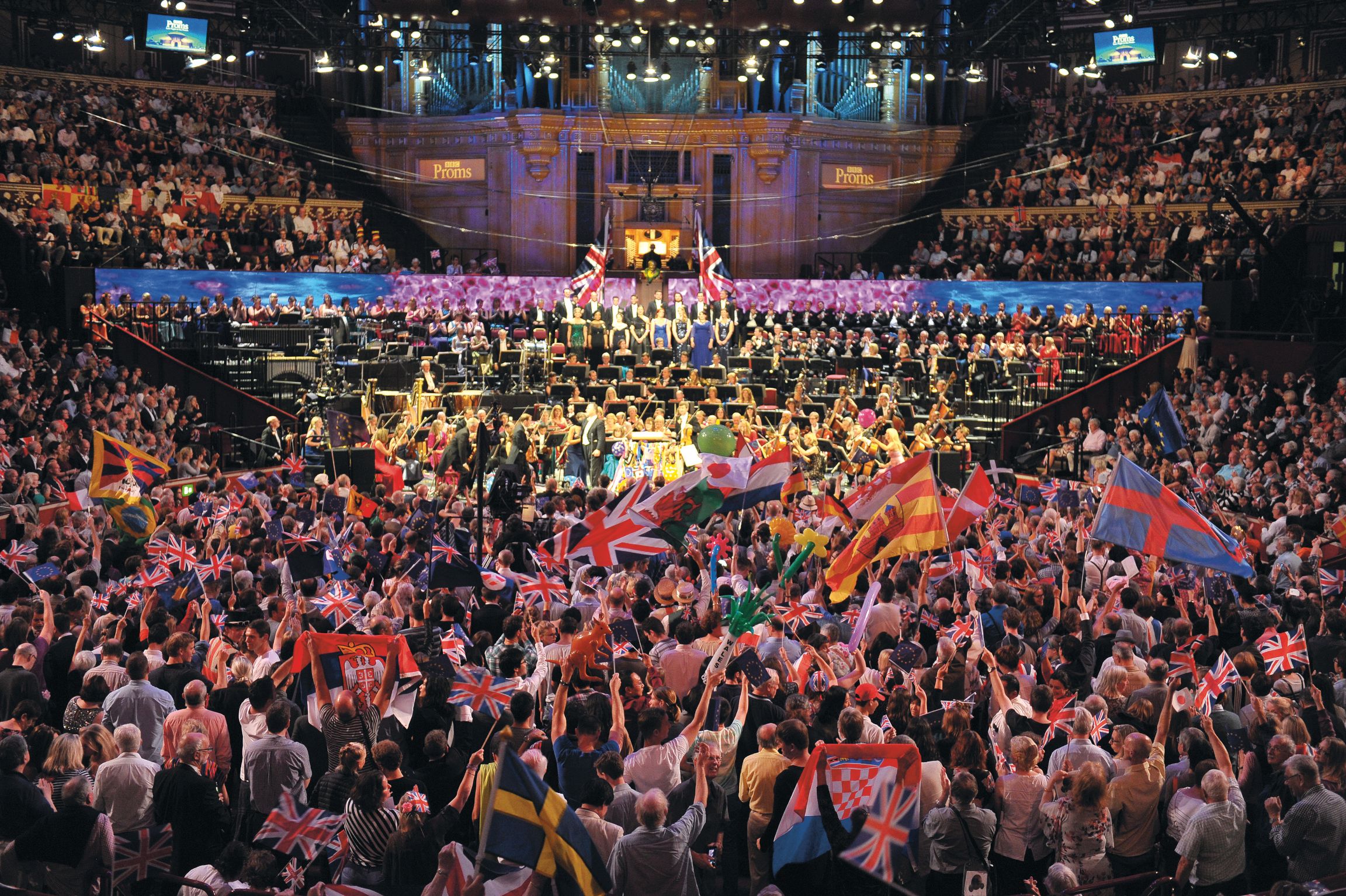
The Last Night of the Proms is a musical party like no other – this year especially so after the cancellation of 2022’s final three Proms following the passing of Queen Elizabeth II.
The past eight weeks have seen adventures in Northern Soul and Portuguese fado; tributes to Bollywood icon Lata Mangeshkar and soul legend Stevie Wonder; and Poulenc’s French Revolutionary opera Dialogues of the Carmelites and the UK premiere of nonagenarian György Kurtág’s first opera, Endgame. Last week, Sir Simon Rattle conducted his final concert as Music Director of the London Symphony Orchestra.
Under Marin Alsop – returning for her third Last Night – the combined forces of the BBC Symphony Orchestra, BBC Singers and BBC Symphony Chorus are joined by star performers soprano Lise Davidsen and cellist Sheku Kanneh-Mason for a send-off to the 2023 season that reminds us of coronations old and new in pieces by William Walton and Roxanna Panufnik.
Enjoy the party, and see you next year at the world’s greatest classical music festival!
(Image: Chris Christodoulou/BBC)

Richard Strauss(1864–1949)
Don Juan – tone-poem after Nikolaus Lenau, Op. 20 (1888–9)


Southern light and the love of his life played vital roles in shaping Richard Strauss’s first unqualified orchestral masterpiece. The 24-year-old composer jotted down initial ideas for Don Juan in 1888 in a church cloister in Italy. (The ‘land where the lemon trees bloom’ had already inspired the highly individual ‘symphonic fantasia’ Aus Italien, premiered earlier that year.) He had just fallen in love with one of his singing pupils, Pauline de Ahna, whom he later married. So, while Strauss would never savour the thousandfold conquests of the fictional seducer, he had at least some experience with which to flavour the first of many passionate love scenes in his music.
Strauss was to come to know Mozart’s Don Giovanni (focusing on the same central character) intimately during his conducting years at the Munich Court Opera and later cited it as an illustration of his favourite composer’s astonishing emotional range. His model, however, was not Mozart’s version of the Spanish legend that culminates in the statue of the murdered Commendatore dragging the atheistical libertine down to hell. Instead he turned to fragments of a German verse-drama by Nikolaus Lenau, first published in 1851, a year after the poet’s death. Here the idealistic protagonist’s pursuit of the perfect moment ends in a duel; Don Juan dies because victory has come to seem as meaningless as everything else in his existence. Strauss reflects this in the last of the Lenau quotations he placed at the head of the score – ‘the fuel is all consumed and the hearth is cold and dark’ – as well as in the surprising final bars of his tone-poem, one of the few works in the repertoire to start in a brilliant major key and end in the minor. Although Strauss deprives the audience of a chance to roar its delight, it was the sheer flamboyance of Don Juan that impressed at the Weimar premiere conducted by the composer on 11 November 1889. To his father, one of many musical conservatives who pleaded for ‘less outward glitter and more content’, he wrote proudly of the ‘immense glow and sumptuousness’ of the sound.
•••
After a wayward fanfare, the violins characterise Don Juan’s energetic genius with a high-leaping theme of irresistible ardour. Two very different love affairs appear in contrasting episodes: the first an ardent bedroom scene swiftly consummated, only to bring the first of many dissatisfactions in its wake; the second suggesting a more vulnerable victim in one of the most limpid oboe solos ever written, underpinned by muted horns and strings discreetly writhing in a theme already announced as a passionate introduction to this latest conquest. But our hero is not to be detained and, in a masterstroke to kindle our sympathy, Strauss gives him a new and noble melody emblazoned by the four horns. Don Juan passes through a carnival, has his first brush with death – bringing with it ghostly memories of the past – and strides onwards to the apogee of his career, with the horn theme raised aloft. He pauses expectantly, as if to ask, ‘Where next?’; the answer is a rapier thrust, which swiftly brings the work shuddering to its shock conclusion.
Programme note © David Nice
David Nice is a writer, lecturer and broadcaster who contributes regularly to BBC Music Magazine. He also reviews for theartsdesk.com. The first volume of his Prokofiev biography was published in 2003.
Placing of the chaplet
Before tonight’s second half, the bust of Proms founder-conductor Henry Wood (upstage, centre) will be decorated with a chaplet. This honour is normally performed during the Last Night performance by two Promenaders. The bust, recovered from the ruins of the bombed-out Queen’s Hall (the original home of these concerts) in 1941, stands onstage throughout the Proms season and is kindly loaned each year by the Royal Academy of Music.
Max Bruch (1838–1920)
Kol nidrei (1880)

Sheku Kanneh-Masoncello
Kol nidrei, subtitled ‘Adagio on Two Hebrew Melodies’, is one of Bruch’s best-known works. It was partly inspired by the composer’s long-standing association with Cantor Abraham Lichtenstein, with whom he had worked in Berlin. Through Lichtenstein, Bruch became familiar with the haunting melody of ‘Kol nidrei’, traditionally sung in the synagogue on the eve of Yom Kippur (the Day of Atonement). His transcription faithfully projects what his biographer Christopher Fifield describes as the melody’s contrasting elements of ‘remorse, resolve and triumph’ by breaking it up into a sequence of almost breathless three-note patterns in the solo cello as it engages in increasingly impassioned dialogue with the orchestra.
This opening storm subsides with the introduction of an entirely new and wonderfully heartfelt melody in the major key. This is initially announced by the orchestra with prominent harp arpeggios before being taken up by the cello, which spins a long lyrical line that eventually brings the music to a calm and reflective conclusion. Here Bruch, who was at the time conductor of the Liverpool Philharmonic, quotes directly from the middle section of British-Jewish composer Isaac Nathan’s arrangement of ‘O! weep for those that wept by Babel’s stream’, which also formed the basis of one of Bruch’s Three Hebrew Songs composed at roughly the same time.
Kol nidrei received its first performance at a concert in Liverpool in 1881 with Bruch conducting and Robert Hausmann as soloist.
Programme note © Erik Levi
Erik Levi is a writer, broadcaster and visiting professor in Music at Royal Holloway, University of London. He is author of the books Music in the Third Reich (Palgrave Macmillan, 1996) and Mozart and the Nazis: How the Third Reich Abused a Cultural Icon (Yale UP, 2010) and co-editor with David Fanning of The Routledge Handbook to Music under German Occupation, 1938–1945 (2019).
Roxanna Panufnik (born 1968)
Coronation Sanctus (2023)
world premiere of orchestral version

BBC Singers
Coronation Sanctus was commissioned for the coronation of King Charles III at Westminster Abbey on 6 May. Originally written for double choir and organ, the version with orchestra that we hear tonight was commissioned by the Choral Arts Society of Washington DC at the instigation of Marin Alsop, who has included it in tonight’s Prom.
For the original version, I was delighted to be given a very detailed brief by Westminster Abbey Organist and Master of the Choristers Andrew Nethsingha – a once-in-a-lifetime commission. He wanted this part of the service to be festive and glittering, in contrast to the more meditative Mass movements that appeared either side of it.
The piece starts a little mysteriously, with an atmosphere of awe and wonderment as Isaiah describes his vision of heaven. The music quickly builds and finishes ecstatically, with organ fanfares that, in the orchestral version, become more numerous with their flamboyantly colourful harmonies.
Coronation Sanctus was first performed, at the coronation, by the choirs of Westminster Abbey and His Majesty’s Chapel Royal, St James’s Palace, with girl choristers from Truro Cathedral Choir and Methodist College, Belfast, an octet from the Monteverdi Choir and organist Peter Holder.
I am hugely honoured and deeply grateful to His Majesty King Charles III for the original commission, and to Andrew Nethsingha and Canon Mark Birch for their invaluable guidance during the creative process.
Programme note © Roxanna Panufnik
Coronation Sanctus was commissioned on behalf of The King by the Dean and Chapter of Westminster for the Coronation of King Charles III and Queen Camilla. This version for choir and orchestra was commissioned by The Choral Arts Society of Washington DC, made possible by Caryn Fraim and Tad Czyzewski.
James B. Wilson(born 1990)
1922 (2022)
BBC commission: world premiere
Commissioned for last year’s Last Night of the Proms, which was abandoned following the death of Queen Elizabeth II, 1922 celebrates a moment of innovation. In that year the first BBC broadcast was sent. Since that point, this technology has become invaluable to us. We now have access to such riches of experience, information, news, storytelling, music – and much more. And it is through the universality of technology and social media that, on an individual level, we share our thoughts and experiences. We are part of an all-encompassing broadcasting culture.
1922 takes a bird’s-eye view of the BBC’s first 100 years; it races forwards with the energy and innovation we have borne witness to. It is exuberant and, at heart, it’s a celebration.
•••
The piece begins with that initial moment of creation – a fizz of static – and then music pours out, like water from a burst dam: a cloud of sounds that race away at an incredible speed.
1922 is dedicated to my grandmother, who passed away while I was writing the final few bars. At 99 years of age, she almost reached her own centenary.
Programme note © James B. Wilson
William Walton(1902–83)
Coronation Te Deum (1952)

BBC Singers
BBC Symphony Chorus
In February 1952 Walton was working on his opera Troilus and Cressida, at his home on the Italian island of Ischia, when the news reached him of the death of King George VI, at whose coronation in 1937 Walton’s orchestral march Crown Imperial had been premiered (although originally commissioned by the BBC for the crowning of Edward VIII, before his abdication).
As the nation’s sadness at the King’s death began to be overlaid by thoughts of the forthcoming coronation of Queen Elizabeth II, Walton was keen to demonstrate once again his mastery of the art of composing for state occasions. He became even keener when he discovered that Benjamin Britten, the object of his (usually) friendly rivalry, was composing an opera – Gloriana, on the life of Queen Elizabeth I – for the coronation festivities.
In September 1952, during one of his regular visits to England, Walton met Sir William McKie, the organist of Westminster Abbey and Director of Music for the coronation service planned for 2 June 1953. Walton agreed to compose a new coronation march (Orb and Sceptre) and also a Coronation Te Deum. Always the thorough professional, he asked for precise details of the number and layout of the choir, orchestra and Kneller Hall Trumpeters, and looked over the Abbey himself to keep in his mind’s eye just where all these performers would be positioned. With the necessary royal and ecclesiastical approval secured, composition could then begin.
Besides Walton’s inside knowledge of choral singing (he had been a chorister at Oxford’s Christ Church Cathedral), the Coronation Te Deum demonstrates its composer’s orchestral brilliance and his flair for ceremonial style. The forces involved are suitably large: two mixed choruses, two semi-choruses, organ, orchestra and optional military brass. Meanwhile Walton also maximised the opportunities for quiet contrast suggested by the text.
•••
The Coronation Te Deum begins with shouts of praise from the choir, complete with joyful orchestral injections and answering phrases on the organ. At ‘To thee Cherubim and Seraphim’, bold, swinging modulations lead to the semi-choruses’ quieter ‘Holy, holy’, then a rousing climax at ‘the Majesty of thy Glory’, and gentler material for ‘The glorious company of the Apostles’, with strings and harp adding serene commentary.
Brass fanfares introduce ‘Thou art the King of Glory, O Christ’ and a more reflective central section, before the opening music returns for ‘O Lord, save thy people’. Then, at the final statement of ‘Let me never be confounded’, the lavish splendour suddenly falls away to leave a trumpet call hinting at the Day of Judgement. The quiet and memorable ending reminds us that, even on such a rightly happy occasion, a moment of reflection also has its place.
Programme note © Malcolm Hayes
Malcolm Hayes is a composer, writer, broadcaster and music journalist. He contributes regularly to BBC Music Magazine and edited The Selected Letters of William Walton. His BBC-commissioned Violin Concerto was performed at the Proms in 2016.
Richard Wagner(1813–83)
Tannhäuser(1842–5) – ‘Dich, teure Halle’
Lise Davidsensoprano
‘Dich, teure Halle’ gives us our first glimpse of Elisabeth, the heroine of Wagner’s opera Tannhäuser. First staged in Dresden in 1845, Tannhäuser draws on medieval Germanic legends to tell the story of a minstrel-knight who has been led astray by Venus, the goddess of love, but, having tired of a life of only pleasure, has torn himself away from her realm. He returns to the Wartburg Castle and to his former love, Elisabeth, who, it transpires, will award the prize in a song competition. Tannhäuser, still distracted by memories of Venus, sings of lust and passion, and in doing so offends the court so gravely that he is banished and ordered to make a pilgrimage to Rome. In the end, the Pope cannot save his soul, but the love of Elisabeth can. Tannhäuser thus follows one of Wagner’s favourite themes: that of female self-sacrifice leading to male (or indeed universal) redemption.
The aria ‘Dich, teure Halle’ starts as the curtain rises on Act 2. Following an orchestral introduction that captures her agitated exuberance, Elisabeth stands in the Wartburg’s Hall of Song for the first time since Tannhäuser left, and the memory of her sadness during his absence is eclipsed by music expressing her joy and confidence in his return.
Programme note © Erica Jeal
Erica Jeal is a music critic for The Guardian and Deputy Editor of Opera magazine.
Pietro Mascagni(1863–1945)
Cavalleria rusticana (1889)

1 Easter Hymn
2 Intermezzo
Lise Davidsen soprano
BBC Singers
BBC Symphony Chorus
With the first performance of Cavalleria rusticana (‘Rustic Chivalry’) at the Teatro Costanzi in Rome on 17 May 1890, a new epoch began in Italian opera. The work’s 26-year-old composer, Pietro Mascagni, had been a fellow student of Puccini at the Milan Conservatory but had left without completing his course, joining an operetta company instead as double-bass player and conductor.
Stranded by the company after the manager disappeared with the takings, he was slowly building a career as a local musician in Cerignola in Apulia when, in 1889, he decided to enter a competition for new one-act operas instigated by the publisher Edoardo Sonzogno. His entry, Cavalleria rusticana, won and went on to establish itself as a permanent addition to the operatic repertoire.
It was among the first of a new genre known as verismo, meaning ‘realism’, and following its overwhelming success at its premiere, and then both nationally and internationally, it strongly influenced other Italian composers, as well as many further afield.
Mascagni’s opera was based on a play by the Sicilian writer Giovanni Verga derived from his own short story of the same title. Inspired by the French novelist Zola, Verga’s own literary vocation focused on documenting the lives of the poor in communities familiar to him in his native area.
Following suit, Mascagni’s work deliberately moved away from the concerns of regal or noble characters to present everyday tragedies concerning the inhabitants of Italian rural or urban working-class communities.
Set in a small Sicilian village, Cavalleria rusticana tells how Santuzza, seduced and abandoned by her former lover Turiddu (and consequently excommunicated), takes revenge on him by informing Alfio – husband of Turiddu’s current lover, Lola – of what is going on under his very nose.
•••
The Easter Hymn is sung as the villagers celebrate Christ’s resurrection on Easter Sunday. Offstage are heard the voices of the church choir, while onstage local people, including Santuzza, raise their voices in a hymn of praise.
Not long after this inspiring piece Santuzza, goaded beyond endurance by Turiddu’s indifference, informs Alfio of his wife’s affair. Played with the curtain up and to an empty stage, the Intermezzo follows. Midway in the action, it seems to distance itself from the violent passions of the drama it intersects.
Programme note © George Hall
George Hall writes widely on classical music and opera for such publications as The Stage, Opera, Opera Now and BBC Music Magazine. He also co-edited The Proms in Pictures (BBC Books, 1995) with Matías Tarnopolsky.
Giuseppe Verdi(1813–1901)
Macbeth (1846–7) – ‘Nel dì della vittoria … Vieni! t’affretta!’
Lise Davidsensoprano
Andrew Rupp baritone
Giuseppe Verdi’s search for striking librettos drew him repeatedly to Shakespeare – ‘one of my favourite poets,’ he once claimed. ‘I have had him in my hands since my earliest childhood and I read and re-read him continually.’
Three of his finest operas are directly derived from Shakespeare: Macbeth (1847, revised 1865), Otello (1887) and Falstaff (1893). Although he also had a libretto for an operatic King Lear drawn up, Verdi did not set it.
Premiered at the Teatro della Pergola, Florence, in 1847, Macbeth was based on a play the composer admired inordinately. ‘The tragedy is one of the greatest human creations!,’ he wrote to his librettist, Francesco Piave. ‘If we can’t do something great with it, let us at least try to do something out of the ordinary.’
In this distillation of Shakespeare’s original, Lady Macbeth receives and reads a letter from her husband informing her of the strange prophecies made to him by the witches. Fearing her husband’s lack of resolve in following the ruthless path to power that lies ahead, she bids him come so that she can give him sufficient courage to become King of Scotland.
Then, learning that the present King – Duncan – will arrive shortly to spend a night at the Macbeths’ castle, she calls on the agents of Hell to support her and her husband in the assassination she plans.
Programme note © George Hall
INTERVAL: 20 minutes
Laura Karpman(born 1959)
Higher. Further. Faster. Together. (Main Theme from ‘The Marvels’) (2022)
world premiere

Sheku Kanneh-Mason cello
BBC Singers
BBC Symphony Chorus
Feminist superheroes are the inspiration behind Higher. Further. Faster. Together. This is the main theme for the film The Marvels, due for release in November, for which I have written the music. In the film, being a powerful superhero is not a solo act but part of a collaboration. In my experience, teamwork is what always gets the hardest jobs done, from taking down a villain, to fighting for equality and opportunity.
On the soundtrack, Higher. Further. Faster. Together. opens with solo viola, a sound that is mournful but powerful, but for tonight, I was thrilled to arrange the part for Sheku Kanneh-Mason, who will be taking us to a higher, other-worldly register! Metallic instruments then present a broken theme that never quite lands. The choir begins to chant a newly constructed language based on the words ‘Athena’ (Goddess of wisdom and war), ‘Artemis’ (Goddess of wild animals, the hunt and vegetation) and ‘Persephone’ (Queen of the Underworld).
The strings then come in with a very long, rhythmically driven build-up. Our superheroes are summoning their powers and their energy, almost willing heroism to emerge. Finally, the main theme bursts through with the French horns playing the epic sound of empowerment and dynamic collaboration. We march towards an ending that appears not quite complete: bright, shiny, optimistic, but not yet resolved, because there is still so much more work to be done …
Programme note © Laura Karpman
Samuel Coleridge-Taylor(1875–1912) orch. Simon Parkin (born 1956)
Deep River (1905, orch. 2022)
first performance of this arrangement at the Proms
Sheku Kanneh-Masoncello
Composed originally for solo piano, Samuel Coleridge-Taylor’s 24 Negro Melodies, Op. 59 (1905), draw inspiration from African, Caribbean and African American folk songs. This collection was published at a time when Jim Crow segregation was in full swing and blackface minstrelsy was one of the dominant forms of mainstream entertainment, not only in the US but also in Europe. Defiantly, Coleridge-Taylor took the word ‘Negro’ and restored pride and power with a body of works that celebrated the ingenuity of diverse folk cultures across the African continent and diaspora.
‘Deep River’ (No. 10 in the set) is based on a spiritual and is one of the collection’s most enduring works. Coleridge-Taylor’s score includes an excerpt from the lyrics: ‘Deep River, my home is over Jordan, / Deep River, Lord I want to cross over into campground.’ Rippling gestures on E major chords open the music, as if evoking water. The spiritual melody then enters, stoic and unhurried. There are two contrasting sections: a short and pensive episode that begins in C sharp minor, and an extended jubilant passage, signalled by a shift to E minor. The solo and chamber renderings of ‘Deep River’ by the Kanneh-Masons have been a hit with modern audiences, and now the work finds new expression in this version for solo cello, harp and strings.
Programme note © Samantha Ege
Samantha Ege is a musicologist and concert pianist, as well as a Research Fellow at the University of Southampton. She is the author of the forthcoming South Side Impresarios: How Race Women Transformed Chicago’s Classical Music Scene. She has recorded several albums, featuring piano music by Florence Price, Margaret Bonds and Samuel Coleridge-Taylor. Her next album highlights piano concertos by women who composed in the 19th and 20th centuries.
Emmerich Kálmán (1882–1953)
The Gypsy Princess (1915) – ‘Heia, heia, in den Bergen ist mein Heimatland’

Lise Davidsen soprano
BBC Singers
BBC Symphony Chorus
From the distant Carpathian Mountains, a cry from the heart. The singer is the beautiful Sylva Varescu, known to her fans as the Gypsy Princess, and she’s a supreme performer of the famous Hungarian folk dance – first slow and sultry, then fast and furious – known as the csárdás. Sylva is the star of Budapest’s Orpheum cabaret, a haunt of bohemians and off-duty princes. And we’re hearing the flamboyant opening number of an operetta from 1915 by Emmerich Kálmán: a world in which illusion is stronger than reality (and definitely more fun), and social norms are up for grabs – until, of course, love finally conquers all.
Kálmán’s Die Csárdásfürstin (‘The Gypsy Princess’) took Vienna by storm during the First World War, then crossed the Atlantic to Broadway too, where its translator, P. G. Wodehouse, declared that ‘the Kálmán score was not only the best that gifted Hungarian ever wrote, but about the best anybody ever wrote’. Sylva’s song – moving from the slow (lassú) opening to the headlong friss of a traditional Hungarian csárdás – tells us exactly where we are, but also sets the terms of the drama to come. ‘When a Magyar girl falls in love with you, don’t play games.’ All that folkloric passion is just a performance … isn’t it? The words might tease, but the music never lies.
Programme note © Richard Bratby
Richard Bratby writes on music and culture for The Spectator, Gramophone, Bachtrack and the Birmingham Post and is a passionate operetta enthusiast. His book Refiner’s Fire: The Academy of Ancient Music and the Historical Performance Revolution will be published next month.
Heitor Villa-Lobos (1887–1959)
Bachianas brasileiras No. 5 (1938–45) – Ária (Cantilena)
Lise Davidsen soprano
Sheku Kanneh-Mason cello
Early in his career Heitor Villa-Lobos travelled across Brazil ‘collecting’ popular and folk music, feeding what would be a lifelong curiosity about the music of his home country. He also had another enduring fascination: the music of J. S. Bach. The affinity he saw between the two inspired some of his most distinctive music.
Between 1930 and 1945 he composed nine Bachianas brasileiras – loosely, ‘Brazilian pieces in the style of Bach’ – in which he sought to fuse Brazilian lyricism with Bach’s harmonic and contrapuntal rigour. No. 5 is scored for a solo singer and eight cellos.
We hear the first of No. 5’s two movements tonight. Like most of the Bachianas brasileiras, it has twin titles, each nodding to one side of its mixed heritage: it is called both Ária (as Bach might have named it) and Cantilena (‘chant’ or ‘singsong’). The wistful poem at the centre of the song is gone in a flash, the harmonies sliding away from underneath the singer’s chant-like tune; the heart of the song, though, is in the long, sultry, wordless melody we hear before and after.
Programme note © Erica Jeal
Arr. Henry Wood(1869–1944)
Fantasia on British Sea‑Songs (1905)
with additional numbers arranged by Bob Chilcott* (born 1955) and Gareth Glyn†(born 1951)

1 The Saucy Arethusa
2 Tom Bowling –
3 Hornpipe: Jack’s the Lad
4 Londonderry Air (Danny Boy)*
5 The Skye Boat Song* (BBC Singers only)
6 Ar lan y môr (Beside the sea)†
7 See, the conqu’ring hero comes –
8 Rule, Britannia! (Thomas Arne, arr. Malcolm Sargent)
Lise Davidsensoprano
BBC Singers
BBC Symphony Chorus
with audience participation (for words, see below)
Henry Wood could have been describing himself when he declared his business partner, impresario Robert Newman, was a man who ‘always had an eye on the main chance’. In 1905 they both seized the opportunity to mark the centenary of the Battle of Trafalgar with a nautically themed musical extravaganza. Wood admitted he’d gone ‘the whole hog on a “sea business” programme’ for their special matinee Promenade concert on 21 October, which climaxed with his newly arranged Fantasia for Orchestra on British Sea-Songs.
Wood programmed it in succeeding years, ‘just to see how it would go’, and by the mid-1920s the Fantasia had become a Last Night fixture. It marked the start of a transformation of the season finale from a lighter evening of shorter numbers into a set ‘ritual’, in which a serious first half was followed by an increasingly nostalgic second. One year, Wood deigned to think that they’d ‘had enough of it’ and left the Fantasia off the programme, but the following Monday there were ‘so many letters of protest and disappointment’ that Wood ‘resolved never to omit it again’.
Commemorating Nelson’s triumph over the French and Spanish navies and the Admiral’s death aboard HMS Victory, Wood’s original arrangement began with a series of six meticulously researched bugle calls used to convey orders on a naval warship, including the ‘Admiral’s Salute’. The remaining parts of the Fantasia charted the course of a battle and the triumphant return home from the perspective of a British sailor.
Wood was a practical musician, one who revised and adapted works to suit available forces and occasions, so it is with no disrespect to him that the Fantasia has recently become something of a flexible compendium. It is regularly modified to include other British songs – sometimes in arrangements by hands other than Wood’s. In that spirit, we bypass the bugles and ‘The Anchor’s Weighed’, and launch straight into ‘The Saucy Arethusa’, which recounts an engagement in the English Channel on 17 June 1778 between HMS Arethusa and the French warship Belle Poule.
It’s unlikely that Wood’s Prommers shed the now-customary mock tears when the original cellist, Jacques Renard, performed the solo in ‘Tom Bowling’, but there’s no doubting the heartache behind Charles Dibdin’s song, written in the late 1780s in memory of his brother Thomas, a captain who perished at sea.
Next, the action is back on deck, for a sailor’s hornpipe – ‘Jack’s the Lad’ – and the annual reminder that ‘Old Timber’ (as Wood was affectionately known) had a mischievous sense of humour:
The younger Promenaders thoroughly enjoy their part in it. They stamp their feet in time to the hornpipe – that is until I whip up the orchestra in a fierce accelerando which leaves behind all those whose stamping technique is not of the very first quality. I like to win by two bars, if possible, but sometimes have to be content with a bar and a half.
This year, three national songs are inserted at this point in the proceedings to reflect the truly British nature of the Last Night. First, to Ireland, and Bob Chilcott’s arrangement of a song whose origins lie in the mists of time. The first recorded mention of what would become known as the ‘Londonderry Air’ was from the pen of Miss Jane Ross of Limervady in 1855, and it was subsequently immortalised by F. E. Weatherly’s lyrics ‘Danny Boy’. Across the water to Scotland, and the Jacobite lament, ‘The Skye Boat Song’, traces a fleeing Bonnie Prince Charlie on his way to the Isle of Skye, following his defeat at the Battle of Culloden in 1746. Like ‘Danny Boy’, this Gaelic rowing song was also in fact written to words by an Englishman, Sir Harold Boulton, in the 1880s; his collaborator Annie MacLeod adapted the tune long known as ‘The Cuckoo in the Grove’. This lilting arrangement, together with the pipe-infused ‘Londonderry Air’, was specially arranged by Chilcott for the Last Night in 2005 and dedicated to the BBC Singers. This year the trio is completed by Gareth Glyn’s tender take on the traditional Welsh love song, ‘Ar lan y môr’ (Beside the sea).
Wood’s sailor then makes a victorious return to the strains of George Frideric Handel’s ‘See, the conqu’ring hero comes’. Originally written for Joshua, the hit chorus became synonymous with Judas Maccabaeus after Handel inserted it into a revised version of the oratorio, which commemorated the Duke of Cumberland’s victorious homecoming from the Battle of Culloden in 1746.
Wood concluded his Fantasia with an orchestral rendition of ‘Rule, Britannia!’, from Thomas Arne’s 1740 patriotic masque Alfred. But tonight this finale is performed in the popular arrangement made by the real showman of the Last Night podium, Malcolm Sargent, whose version restored Arne’s vocal soloist and martial introduction.
Programme note © Hannah French
Hannah French is a BBC Radio 3 presenter and the author of Sir Henry Wood: Champion of J. S. Bach (Boydell & Brewer, 2019).
Soprano
When Britain first at Heavn’s command
Arose from out the azure main,
This was the charter of the land,
And guardian angels sang this strain:
Choirs and audience
Rule, Britannia! Britannia, rule the waves:
Britons never will be slaves.
Soprano
Still more majestic shalt thou rise,
More dreadful, from each foreign stroke;
As the loud blast that tears the skies,
Serves but to root the native oak.
Choirs and audience
Rule, Britannia! Britannia, rule the waves:
Britons never will be slaves.
Soprano
The Muses, still with freedom found,
Shall to thy happy coast repair.
Blest Isle! With matchless beauty crown’d,
And manly hearts to guard the fair.
Choirs and audience
Rule, Britannia! Britannia, rule the waves:
Britons never will be slaves.
atrrib. James Thomson (1700–48)
Edward Elgar(1857–1934)
Pomp and Circumstance March No. 1 in D major (‘Land of Hope and Glory’) (1901)
BBC Singers
BBC Symphony Chorus
with audience participation (for words, see below)
For many years it was fashionable to regard Elgar – on the flimsy evidence of his moustachioed Edwardian looks, and a more credible record of writing stirring marches for ceremonial occasions – as the musical embodiment of the British Empire. After all, in a magazine interview of 1904 he declared, ‘I have something of the soldier in me.’ But in earlier remarks about his successful Imperial March, written in 1897 for Queen Victoria’s Diamond Jubilee, the composer stated pragmatically that ‘I know that there are a lot of people who like to celebrate events with music. To these people I have given tunes. Is that wrong?’
In 1901 Elgar knew that he had another hit theme on his hands, confiding to his young friend Dora Penny (‘Dorabella’ of the ‘Enigma’ Variations): ‘I’ve got a tune that will knock ’em – knock ’em flat.’ The tune in question was the central trio section of the Pomp and Circumstance March No. 1 in D major, premiered with its A minor sibling (No. 2) on 19 October 1901 at the Philharmonic Hall, Liverpool, with the Liverpool Orchestral Society; although it was originally thought to have been conducted by the work’s dedicatee, Alfred Rodewald, recent research confirms that the composer himself was in charge of the first performance. The title comes from Shakespeare’s Othello: ‘Farewell … Pride, pomp, and circumstance of glorious war!’. Elgar’s prediction for his epic tune proved correct: at a further performance a few days after the premiere, Proms founder-conductor Henry Wood had to give an unprecedented double encore to satisfy a crowd who had ‘risen and yelled’.
Artists often talk about launching a work into the world, where it finds a life of its own. But Pomp and Circumstance March No. 1 was a gift that kept on giving for Elgar: at the instigation of the contralto Clara Butt, in 1902 Elgar incorporated the trio section of the march into the final movement of his Coronation Ode, composed for the coronation of King Edward VII. The words were by A. C. Benson, a poet and master at Eton; subsequent modifications to the text at publisher Boosey’s request allowed ‘Land of Hope and Glory’ to become the standalone piece that is now an indispensable part of the Last Night of the Proms rituals.
Programme note © Graeme Kay
Choirs and audience
Land of Hope and Glory,
Mother of the Free,
How shall we extol thee
Who are born of thee?
Wider still and wider
Shall thy bounds be set;
God, who made thee mighty,
Make thee mightier yet.
Arthur Christopher Benson (1862–1925)
Hubert Parry(1848–1918), orch. Edward Elgar
Jerusalem (1916, orch. 1922)

BBC Singers
BBC Symphony Chorus
with audience participation (for words, see below)
Jerusalem is an extremely artful piece of composition. The text is by William Blake (1757–1827) and is contained in the preface to his epic Milton: A Poem in Two Books, written between 1804 and 1810. The music follows the words closely, the text describing a perfect musical arc through the climactic points of each verse (‘Was Jerusalem builded here?’ and ‘Till we have built Jerusalem’) then down again to the ‘dark Satanic mills’ and ‘in England’s green and pleasant land’.
Ironically, the music for both verses shares a problem with ‘God Save the King’ – it ends on a falling phrase, one of the reasons why the UK national anthem is thought to be a bit pedestrian. But Parry solves this by adding a short tail-piece, or coda, that finishes on a high.
Blake’s poem lay undisturbed for much of the 19th century. In 1916 poet laureate Robert Bridges included it in an anthology, The Spirit of Man, which was intended to fortify readers’ spirits at a time when the world was facing destruction and slaughter on a wholly unprecedented scale. It therefore made perfect sense for Bridges to ask Parry to set Milton’s text to music for a meeting of Fight for Right, a nascent movement intended to boost morale among Britain’s beleaguered soldiers.
Initially reluctant because of the ultra-patriotic tone of Fight for Right’s campaign, Parry overcame his reservations, eventually telling his former student Walford Davies, its first conductor: ‘Here’s a tune for you, old chap. Do what you like with it.’
Jerusalem was an instant hit. In November 1916 Parry orchestrated it, and in 1922, four years after his death in 1918, Edward Elgar, who admired Parry, made the lush and luxurious orchestral arrangement that is usually heard today; Elgar’s version was premiered that year at the first Leeds Festival to take place after the war.
The conductor Malcolm Sargent introduced Jerusalem to the Proms in the 1950s. It is now a staple, alongside ‘Rule, Britannia!’, ‘Land of Hope and Glory’ and ‘Auld Lang Syne’, of the audience participation element in the Last Night festivities.
Programme note © Graeme Kay
Choirs and audience
And did those feet in ancient time
Walk upon England’s mountains green?
And was the Holy Lamb of God
On England’s pleasant pastures seen?
And did the Countenance Divine
Shine forth upon our clouded hills?
And was Jerusalem builded here
Among these dark Satanic mills?
Bring me my bow of burning gold!
Bring me my arrows of desire!
Bring me my spear! O clouds unfold!
Bring me my Chariot of Fire!
I will not cease from mental fight;
Nor shall my sword sleep in my hand
Till we have built Jerusalem
In England’s green and pleasant land.
William Blake (1757–1827)
arr. Benjamin Britten(1913–76)
The National Anthem (arr. 1961, rev 1967)
BBC Singers
BBC Symphony Chorus
with audience participation (verse 2 only; for words, see below)
As a piece of music, the UK National Anthem is something to be performed dutifully and respectfully. But we might be forgiven for looking a little enviously across the Channel to the rabble-rousing Marseillaise of France or the gloriously operatic Il canto degli Italiani for an anthem that really sets the pulses racing. The remarkable thing about Britten’s arrangement is that it achieves precisely this effect, through a highly daring and dramatic compositional scheme which is effectively realised in a piece which lasts less than three minutes.
Written in 1961 for the Leeds Festival, Britten’s arrangement is described by publishers Boosey & Hawkes as ‘conceived as a single crescendo, building powerfully from a simple pianissimo opening to a resounding fortissimo close’.
After a hushed opening chord and drum roll, the mostly unaccompanied chorus intones the first verse pianissimo, in varied harmonies – exactly the opposite of what one might expect to convey words that are a supplication for, and exclamation about, royal glory. Then a chain of rising orchestral scales ushers in the brass, snare drum and a substantial upward key-change as the chorus surges into verse two, the energy of both the singing and fanfares intensifying towards the twice-repeated (with added cymbal crashes) ‘God save the King’.
In all, Britten composed four works for the royal family; this National Anthem arrangement was associated with the opening in 1967 of both the Queen Elizabeth Hall in London, and Snape Maltings Concert Hall in Suffolk (the latter being the home of Britten’s Aldeburgh Festival).
Programme note © Graeme Kay
Choirs only
God save our gracious King!
Long live our noble King!
God save the King!
Send him victorious,
Happy and glorious,
Long to reign over us,
God save the King!
Choirs and audience
Thy choicest gifts in store
On him be pleased to pour,
Long may he reign;
May he defend our laws
And ever give us cause
To sing with heart and voice:
God save the King!
God save the King!
God save the King!
Trad., arr. Paul Campbell (born 1981)
Auld Lang Syne (arr. 2018)

BBC Singers
BBC Symphony Chorus
with audience participation (for words, see below)
Over 50 years before Malcolm Sargent created the Last Night we recognise today, spontaneous renditions of Auld Lang Syne began to be sung at the close of the Proms season. For Henry Wood’s Prommers, entertained by a single group of orchestral musicians night after night for more than two months, this most nostalgic of songs marked a fitting way to bid farewell to their ‘auld acquaintance’.
With its three-word title that translates literally as ‘old long since’, it’s a song with roots in Scottish days of yore. Whether it originated as a ballad about a faithless lover or as a country wedding dance tune, we have Robert Burns to thank for preserving lyrics he transcribed from ‘an old man’s singing’, before adding his own verses.
Tonight we hear the song in a version prepared for the 2018 Last Night by Belfast-born composer-arranger Paul Campbell. No stranger to the BBC Proms, he has frequently collaborated with John Wilson in reconstructing MGM scores. Campbell has also arranged Robert Burns’s songs Ae fond kiss and My love is like a red, red rose for Scottish violinist Nicola Benedetti.
Programme note © Hannah French
Should auld acquaintance be forgot,
And never brought to mind?
Should auld acquaintance be forgot,
And days o’ lang syne?
For auld lang syne, my dear,
For auld lang syne,
We’ll tak a cup of kindness yet
For auld lang syne.
For auld lang syne, my dear,
For auld lang syne,
We’ll tak a cup of kindness yet
For auld lang syne.
Robert Burns (1759–96)
Biographies
Marin Alsop conductor

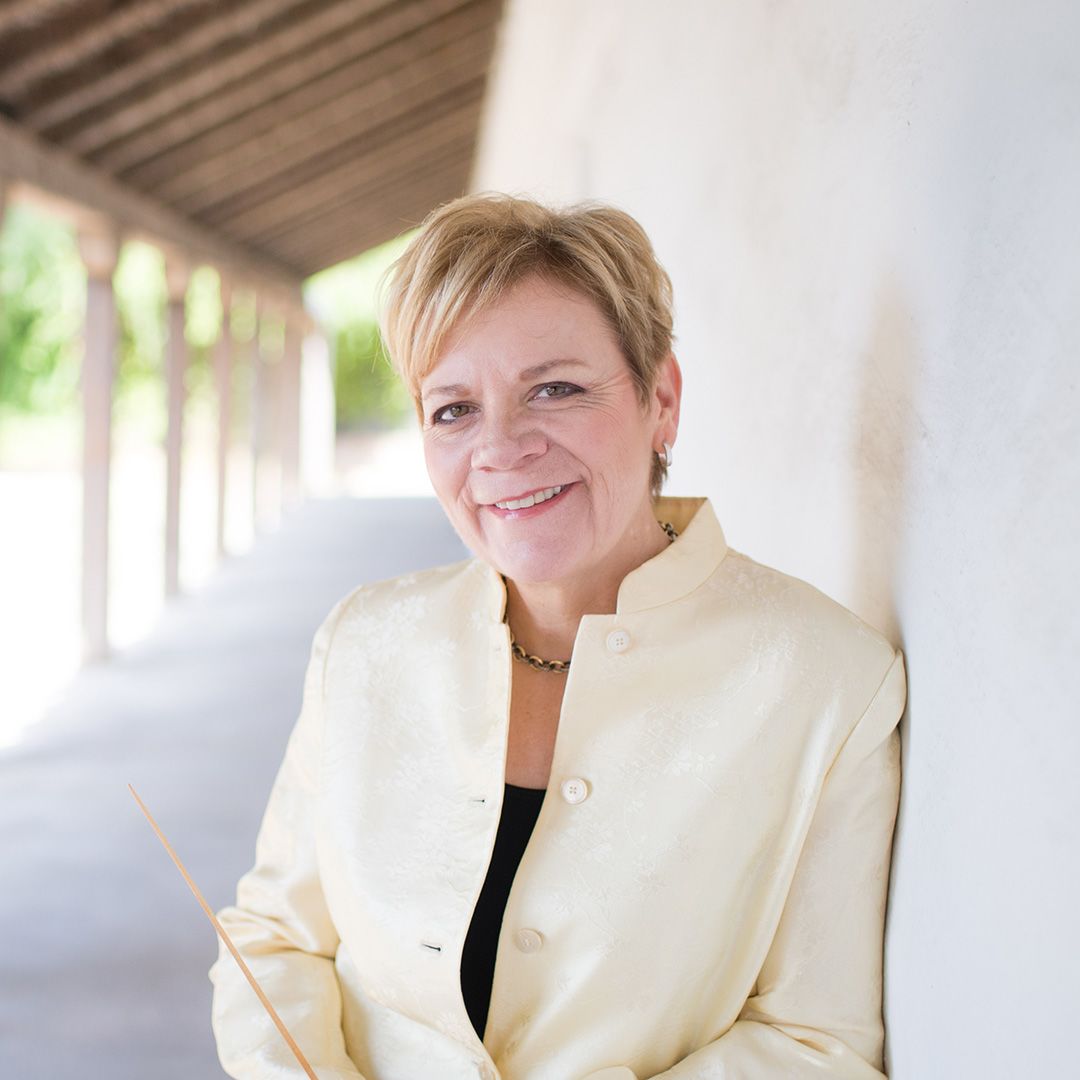
Image: Adriane White
Image: Adriane White
Marin Alsop studied at the Juilliard School in her native New York before becoming one of the last conducting pupils of Leonard Bernstein. She was Principal Conductor of the Bournemouth Symphony Orchestra (2002–8), Music Director of the Baltimore Symphony Orchestra (2007–21) and Principal Conductor of the São Paulo Symphony Orchestra (2012–19). Since 2019 she has been Chief Conductor of the Vienna Radio Symphony Orchestra. She is also Chief Conductor and Curator of the Ravinia Festival, Chicago Symphony Orchestra’s summer residency. In September she becomes Artistic Director and Chief Conductor of the Polish National Radio Symphony Orchestra as well as Principal Guest Conductor of London’s Philharmonia Orchestra.
She regularly appears with the Cleveland Orchestra, Philadelphia Orchestra, NDR Elbphilharmonie Orchestra, Orchestra of the Age of Enlightenment, and the Budapest Festival and Royal Concertgebouw orchestras. Next season she returns to Deutsches Symphonie-Orchester Berlin, São Paulo Symphony Orchestra and Baltimore Symphony Orchestra, as well as making her debuts at the Metropolitan Opera, New York, and Theater an der Wien.
Her extensive discography includes symphony cycles of Brahms with the London Philharmonic Orchestra, Dvořák with the Baltimore SO and Prokofiev with the São Paulo SO. The film The Conductor (Tribeca Film Festival 2021) maps her progessional and private lives, including previously unseen footage with her mentor Leonard Bernstein. In 2002 she founded the Taki Concordia Conducting Fellowship, which has produced a number of today’s outstanding young women conductors.
Lise Davidsen soprano
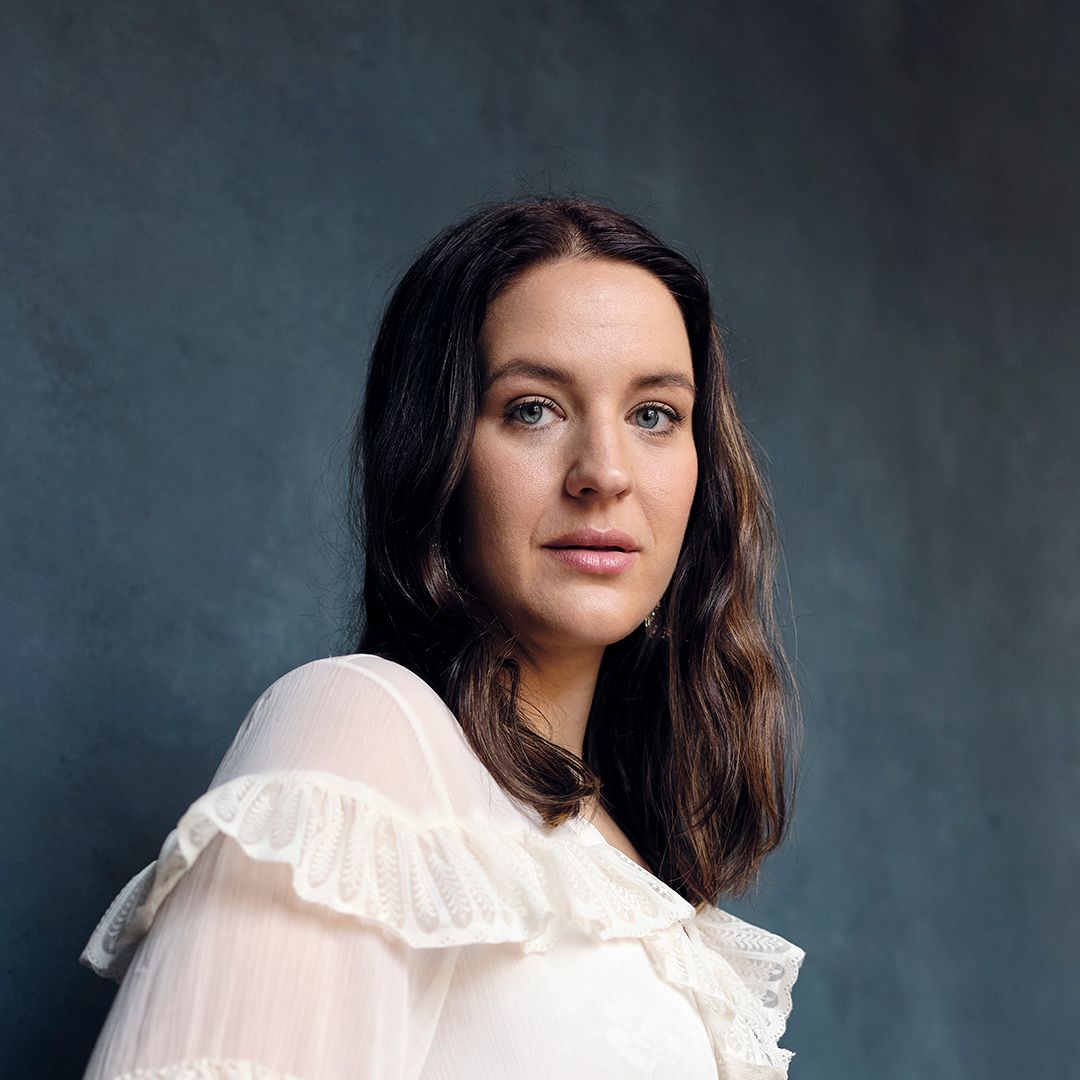
Norwegian soprano Lise Davidsen won the Operalia competition in 2015 and has since made a series of high-profile international debuts.
Recent highlights include three major role debuts: the Marschallin (Der Rosenkavalier) at the Metropolitan Opera, New York, Giorgetta (Il tabarro) at the Liceu in Barcelona and Elisabetta (Don Carlo) with the Royal Opera, Covent Garden, where she also appeared as Elisabeth (Tannhäuser). This season she was Artist-in-Residence at the Bergen Festival, with performances including the title-role in Tosca (her role debut), Verdi’s Requiem, masterclasses and a song recital. She sang Elisabeth at the Berlin State Opera and made concert appearances in Paris, Amsterdam, Athens and Barcelona, as well as at the Verbier Festival.
Engagements in the new season include role and house debuts for Chicago Lyric Opera in the title-role in Jenůfa and for the Paris Opéra in the title-role in Salome; her debut as Leonora (The Force of Destiny) for the Metropolitan Opera and in concert with Norwegian National Opera; Giorgetta and Liza (The Queen of Spades) for Bavarian State Opera; Wagner’s Wesendonck-Lieder at Carnegie Hall, New York; and recitals at the Metropolitan Opera, Wigmore Hall and in Barcelona, Madrid, Vienna and Salzburg.
Lise Davidsen’s discography includes Der Freischütz and Fidelio under Marek Janowski, two solo orchestral recitals, Grieg songs with pianist Leif Ove Andsnes and Sibelius’s Luonnotar with the Bergen Philharmonic Orchestra under Edward Gardner.
Sheku Kanneh-Masoncello
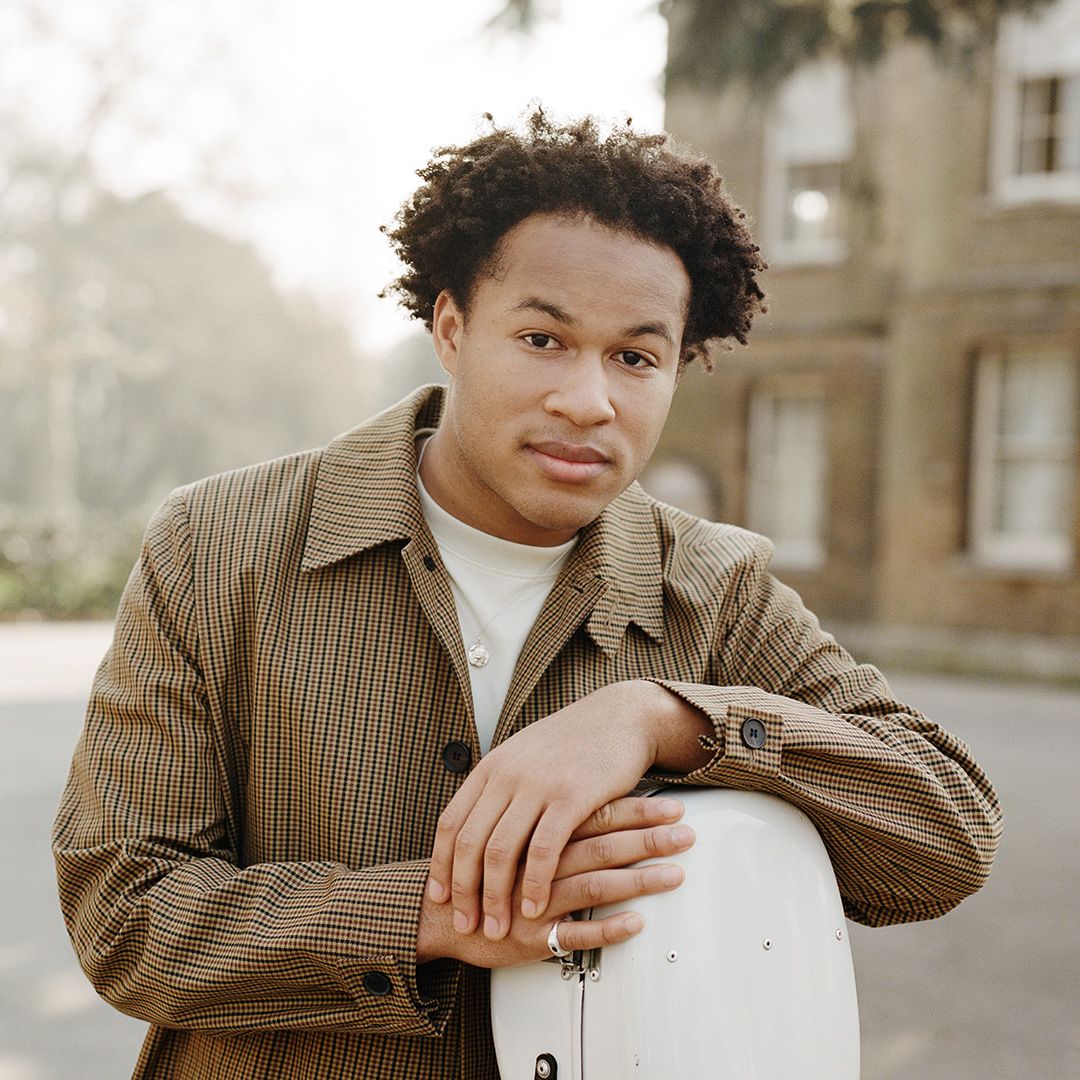
Image: Ollie Ali
Image: Ollie Ali
Sheku Kanneh-Mason came to attention as winner of the 2016 BBC Young Musician competition, the first Black musician to take the title, and became a household name in 2018 after performing at the wedding of the Duke and Duchess of Sussex. He studied with Hannah Roberts at the Royal Academy of Music and in May 2022 was appointed the Academy’s first Menuhin Visiting Professor of Performance Mentoring.
The forthcoming season brings national and international performances and tours with many of the world’s most celebrated orchestras and conductors. With his sister, pianist Isata, he appears in recital in Japan, Singapore and South Korea, in addition to an extensive European recital tour. He will also perform a series of duo recitals with guitarist Plínio Fernandes as well as continuing his solo cello recital tour in the USA and Canada. He returns to Antigua as an ambassador for the Antigua & Barbuda Youth Symphony Orchestra. He is a committed ambassador to three personally selected charities: Music Matters, Future Talent and the Type 1 diabetes funding organisation JDRF.
His 2020 album Elgar reached No. 8 in the overall Official UK Album Chart, making him the first cellist ever to reach the UK Top 10. His latest album, Song, released last year, showcases his playing in a variety of arrangements and collaborations.
Sheku Kanneh-Mason was appointed MBE in the 2020 New Year Honours. He plays a Matteo Goffriller cello from 1700.
BBC Symphony Orchestra
For over 90 years the BBC Symphony Orchestra has been a driving force in the musical landscape, championing contemporary music in its performances of newly commissioned works and giving voice to rarely performed and neglected composers. It plays a central role in the BBC Proms, performing regularly throughout each season, including the First and Last Nights.
Highlights of this summer’s Proms have included the First Night with Principal Guest Conductor Dalia Stasevska, Mahler’s Third and Seventh Symphonies with Chief Conductor Sakari Oramo and concerts conducted by Jules Buckley and Semyon Bychkov.
The BBC SO is Associate Orchestra at the Barbican, where its distinctive annual season of concerts includes Total Immersion days devoted to a single composer or theme. Sakari Oramo launches the 2023/24 season with Mahler’s Fifth Symphony. Themes of voyage and storytelling run through the season, which includes Stravinsky’s The Firebird and Ravel’s Shéhérazade, and world and UK premieres by Detlev Glanert, Tebogo Monnakgotla, Outi Tarkiainen and Lotta Wennäkoski. Most of the orchestra’s performances are broadcast on BBC Radio 3 and regular studio concerts are free to attend.
The BBC Symphony Orchestra and Chorus – alongside the BBC Concert Orchestra, BBC Singers and BBC Proms – offer innovative education and community activities and take a lead role in the BBC Ten Pieces and BBC Young Composer programmes, including work with schools, young people and families in East London ahead of the BBC SO’s move in 2025 to its new home at London’s East Bank cultural quarter in the Queen Elizabeth Olympic Park, Stratford.
Chief Conductor Sakari Oramo
Principal Guest Conductor Dalia Stasevska
Günter Wand Conducting Chair Semyon Bychkov
Conductor Laureate Sir Andrew Davis
Creative Artist in Association Jules Buckley
First Violins
Igor Yuzefovich leader
Cellerina Park
Philip Brett
Jeremy Martin
Jenny King
Celia Waterhouse
Colin Huber
Ni Do
James Wicks
Stuart McDonald
Charlotte Reid
Ruth Schulten
Zanete Uskane
Will Hillman
Thea Spiers
Lulu Fuller
Second Violins
Heather Hohmann
Dawn Beazley
Rose Hinton
Daniel Meyer
Vanessa Hughes
Patrick Wastnage
Danny Fajardo
Lucy Curnow
Tammy Se
Caroline Cooper
Victoria Hodgson
Lucica Trita
Nihat Agdach
Gareth Griffiths
Violas
Rachel Roberts
Philip Hall
Joshua Hayward
Nikos Zarb
Audrey Henning
Natalie Taylor
Michael Leaver
Carolyn Scott
Mary Whittle
Peter Mallinson
Matthias Wiesner
Linda Kidwell
Cellos
Rebecca Gilliver*
Tamsy Kaner*
Graham Bradshaw*
Mark Sheridan
Clare Hinton*
Michael Atkinson*
Morwenna
Del Mar*
Auriol Evans
Domitille Jordan
Jane Lindsay
Double Basses
Nicholas Bayley
Richard Alsop
Michael Clarke
Beverley Jones
Josie Ellis
Elen Pan
Alice Kent
Emma Prince
Flutes
Michael Cox
Tomoka Mukai
Daniel Pailthorpe
Piccolo
Diomedes Demetriades
Oboes
Tom Blomfield
Imogen Smith
Cor Anglais
Imogen Davies
Clarinets
Richard Hosford
Jonathan Parkin
Bass Clarinet
Thomas Lessels
Bassoons
Julie Price
Graham Hobbs
Contrabassoon
Steven Magee
Horns
Nicholas Korth
Michael Murray
Mark Wood
Nicholas Hougham
Eleanor Blakeney
Finlay Bain
Alexei Watkins
Trumpets
Niall Keatley
Joseph Atkins
Martin Hurrell
Kaitlin Wild
Trombones
Helen Vollam
Dan Jenkins
Ryan Hume
Euphonium
Duncan Wilson
Bass Trombone
Robert O’Neill
Tuba
Jon Riches
Timpani
Antoine Bedewi
Percussion
David Hockings
Alex Neal
Fiona Ritchie
Joe Cooper
Owen Gunnell
Joe Richards
Harps
Sally Pryce
Anneke Hodnett
Celesta
Elizabeth Burley
Organ
Richard Pearce
* soloist in Villa-Lobos
The list of players was correct at the time of being published
Acting Co-Director/Planning Manager Tom Philpott
Acting Co-Director/Orchestra Manager Susanna Simmons
Orchestra Personnel Manager Murray Richmond
Orchestra and Tours Assistant Indira Sills-Toomey
Concerts Manager Marelle McCallum
Tours Manager Kathryn Aldersea
Music Libraries Manager Mark Millidge
Orchestral Librarian Julia Simpson
Planning Co-ordinators Naomi Faulkner, Zara Siddiqi
Choruses Manager Wesley John
Chief Producer Ann McKay
Assistant Producer Ben Warren
Senior Stage Manager Rupert Casey
Stage Manager Michael Officer
Senior Commercial, Rights and Buisness Affairs Executive Ashley Smith
Business Accountant Nimisha Ladwa
BBC London Orchestras Marketing and Learning
Head of Marketing, Publications and Learning Kate Finch
Communications Manager Jo Hawkins
Publicist Freya Edgeworth
Marketing Manager
Sarah Hirons
Marketing Executives
Jenny Barrett
Alice White
Senior Learning Project Managers (Job Share)
Lauren Creed, Melanie Fry
Learning Project Managers
Sian Bateman
Laura Mitchell
Chloe Shrimpton
Assistant Learning Managers
Catherine Humphrey
Elisa Mare
STEP Trainees
Dylan Barrett-Chambers
Sofia Heu
BBC Singers
The BBC Singers has held a unique place at the heart of the UK’s choral scene for almost 100 years and has collaborated with many of the world’s leading composers, conductors and soloists.
The choir is based at the BBC’s Maida Vale Studios, where it rehearses and records for Radio 3. It also presents an annual series of concerts at Milton Court Concert Hall, performs free concerts in London and appears at major festivals.
It promotes a 50:50 gender policy for composers whose music it performs, and champions composers from all backgrounds. Recent concerts and recordings include music by Soumik Datta, Joanna Marsh, Cecilia McDowall, Sun Keting and Roderick Williams, and recent collaborations have featured Laura Mvula, Clare Teal, South Asian dance company Akademi and world music fusion band Kabantu.
The BBC Singers appears annually at the BBC Proms. The 2023 season has seen the group perform at the First Night, as well as a concert with Sir Simon Rattle, an evening with Jon Hopkins and the BBC Symphony Orchestra & Chorus and, two nights ago, a Prom with Chief Conductor Sofi Jeannin performing two recent BBC commissions.
The BBC Singers also offers a wide programme of innovative learning activities working with schools, colleges/universities and community groups.
Chief Conductor
Sofi Jeannin
Principal Guest Conductors
Bob Chilcott
Owain Park
Artists in Association
Anna Lapwood
Abel Selaocoe
Composer in Association
Roderick Williams
Associate Conductor, Learning
Nicholas Chalmers
Sopranos
Alice Gribbin
Rebecca Lea
Helen Neeves
Olivia Robinson
Emma Tring
Altos
Margaret Cameron
Ciara Hendrick
Jessica Gillingwater
Katherine Nicholson
Tenors
Peter Davoren
Stephen Jeffes
Jonathan
Maxwell-Hyde
Tom Raskin
Basses
Francis Brett
Charles Gibbs
Jamie W. Hall
Edward Price
Andrew Rupp
The list of singers was correct at the time of being published
Choral Manager and Co-Director Rob Johnston
Producer and Co-Director Jonathan Manners
Assistant Choral Manager Eve Machin
Assistant Producer Charlotte Parr
Tours Manager Kathryn Aldersea
Librarian Naomi Anderson
BBC Symphony Chorus
Founded in 1928, the BBC Symphony Chorus is one of the UK’s leading choirs. It performs, records and broadcasts a distinctive range of large-scale choral music with the BBC Symphony Orchestra and internationally acclaimed conductors and soloists.
The chorus’s early performances included Mahler’s Symphony No. 8, Stravinsky’s Persephone and Walton’s Belshazzar’s Feast and, under Director Neil Ferris, this commitment to contemporary music remains at the heart of its performances today.
In addition to the First and Last Nights, appearances at this year’s BBC Proms have included Walton’s Belshazzar’s Feast with the BBC Symphony Orchestra under Klaus Mäkelä, Beethoven’s Symphony No. 9 with the BBC Scottish Symphony Orchestra under Ryan Wigglesworth and Rachmaninov’s The Bells with the Hallé under Sir Mark Elder. In the first part of the BBC SO’s forthcoming 2023/24 season at the Barbican, the chorus gives the London premiere of Ryan Wigglesworth’s Magnificat, alongside soprano Sophie Bevan.
Most of the chorus’s performances are broadcast on BBC Radio 3, for which it also appears in special studio recordings. The chorus has also made a number of commercial recordings, including a Grammy-nominated release of Holst’s First Choral Symphony and a Gramophone Award-winning disc of Elgar’s The Dream of Gerontius conducted by Sir Andrew Davis.
Forthcoming releases include premiere recordings of Vaughan Williams’s The Future and The Steersman conducted by Martin Yates and Tippett’s A Child of Our Time conducted by Davis.
President
Sir Andrew Davis
Chorus Director
Neil Ferris
Chorus Deputy Director
Grace Rossiter
Accompanist
Paul Webster
Chorus Manager
Wesley John
Vocal Coach
Katie Thomas
Language Coaches
Norbert Meyn
Francesca Orlando
Sopranos
Karen Benny
Lydia Burling-Smith
Stella Bracegirdle
Georgia Cannon
Katharine Chadd
Louise Clegg
Jenna Clemence
Erin Cowburn
Tanya Cutts
Natalie Dalcher
Josceline Dunne
Lizzie Fletcher
Jane Heath
Samantha Hopkins
Lizzie Howard
Karan Humphries
Jacqueline Hunt
Valerie Isitt
Emily Jacks
Helen Jeffries
Margaret Jones
Rei Kozaki
Christine Leslie
Sue Lowe
Katie Masters
Bridget McNulty
Ellie Parker
Kaja Pecnik
Rebecca Rimmington
Nicola Robinson
Cosima Rodriguez-Broadbent
Hannah Savignon-Smythe
Madelon Shaw
Maxine Shearer
Nathalie Slim
Sheila Wood
Altos
Stella Baylis
Hannah Bishay
Kirsty Carpenter
Joanna Dacombe
Danniella Downs
Elizabeth
Hampshire
Kate Hampshire
Mary Hardy
Teresa Howard
Ruth James
Ruth Marshall
Cecily Nicholls
Regina Ohak
Charlotte Senior
Hilary Sillis
Mary Simmonds
Elisabeth Storey
Jayne Swindin
Helen Tierney
Deborah Tiffany
Yajie Ye
Tenors
Christopher Ashton
Xander Bird
Andrew Castle
David Halstead
Stephen Horsman
Simon Lowe
Simon Naylor
Jim Nelhams
Panos Ntourntoufis
Philip Rayner
Fionn Robertson
Richard Salmon
Greg Satchell
David Willcock
Jon Williams
Jonathan Williams
Basses
Mike Abrams
Malcolm Aldridge
Tim Bird
Vicente Chavarria
David England
Quentin Evans
Jonathan Forrest
Tom Fullwood
Mark Graver
Richard Green
Alan Hardwick
Alex Hardy
Alan Jones
Peter Kellett
Tim Miles
Mark Parrett
Simon Potter
Richard Steedman
Joshua Taylor
Robin Wicks
The list of singers was correct at the time of being published
