Let All the World in Every Corner Sing
Friday 22/3/24, 7.30pm
BBC Hoddinott Hall, Cardiff


José Maurício Nunes Garcia
Overture ‘Zemira’7’
Johann Sebastian Bach
Cantata No. 82, ‘Ich habe genug’24’
INTERVAL: 20 minutes
Joseph Haydn
Symphony No. 26, ‘Lamentatione’17’
Ralph Vaughan Williams
Five Mystical Songs20’
Harry Bicketconductor
Julien Van Mellaerts baritone
BBC National Chorus of Wales


The concert is being recorded by BBC Radio 3 for future broadcast in Radio 3 in Concert; it will be available for 30 days after broadcast via BBC Sounds, where you can also find podcasts and music mixes. The Garcia, Bach and Haydn are being filmed for future release in the BBC NOW Digital Concert Series.
Introduction
A warm welcome to tonight’s concert, in which Harry Bicket conducts BBC National Orchestra and Chorus of Wales. The first composer on the programme – the Brazilian José Maurício Nunes Garcia– may not be a household name, but there’s no doubting the passionate conviction of his Zemira Overture. All the remaining pieces conjure the spirit of Easter. Bach’s Cantata No. 82, ‘Ich habe genug’, is one of his most famous, a sublime work for soloist and small ensemble that explores the Lutheran ideal of finding peace in death, aided on this occasion by the warm baritonal tones of Julien Van Mellaerts.
Haydn’s Symphony No. 26 has a more oblique relationship with Eastertide, but there are clues in the way the composer quotes ancient chant melodies, in its driving minor key and the nickname – ‘Lamentatione’.
Vaughan Williams’s Five Mystical Songs, which tonight we hear in their version for baritone, chorus and orchestra, reach back in time in their settings of texts by George Herbert. The composer might have described himself as ‘cheerfully agnostic’, but there’s no doubting the sincerity of the resulting settings, illuminating the words with great sensitivity.
Enjoy!
Matthew Wood
Head of Artistic Planning and Production
Please respect your fellow audience members and those listening at home. Turn off all mobile phones and electronic devices during the performance. Photography and recording are not permitted.
José Maurício Nunes Garcia(1767–1830)
Overture ‘Zemira’(1803)

José Maurício Nunes Garcia was born in Rio de Janeiro to biracial parents, both children of slaves, and ordained as a priest in 1792. Despite an apparently patchy musical training, his talent was obvious, and he was appointed music director at his home-city cathedral in 1798. By the time the Portuguese court was forced by Napoleon into exile in Brazil in 1808, Garcia was the country’s leading composer and was immediately put in charge of the royal chapel by the Prince Regent (later João VI). His health declined from around 1816 onwards, and the return of the court to Portugal without him in 1821 further limited his professional activities in his final years.
Though he was known for a while as a popular and fashionable piano improviser, his compositional output consists overwhelmingly of sacred music (including 19 Masses), but a handful of orchestral scores also survives. Tonight’s ‘overture’ is an enigma, as no Zemira opera by Garcia is known (though a libretto of that name was set in the 1790s by at least three well-known Italian composers). The earliest score offers no explanation, but does carry a note describing the piece as an ‘overture or introduction expressing lightning and thunderstorms’, which suggests that it may have been a piece of generic incidental music for a play or other species of musico-dramatic work, perhaps now lost.
Programme note © Lindsay Kemp
Johann Sebastian Bach (1685–1750)
Cantata No. 82, ‘Ich habe genug’(1727)
1 Aria: Ich habe genug
2 Recitative: Ich habe genug
3 Aria: Schlummert ein, ihr matten Augen
4 Recitative: Mein Gott! wenn kömmt das schöne: Nun!
5 Aria: Ich freue mich auf meinen Tod
Julien Van Mellaerts baritone
When, in 1723, Bach took up the position of Kantor of the Thomasschule in Leipzig, he was stepping into one of the leading church music posts in Protestant Germany. His duties included organising music for Sunday and special services at the city’s four main churches, at the two biggest of which – St Thomas’s and St Nicholas’s – the focal point was a cantata for voices and instruments to be performed after the Gospel reading and, by its choice of text, reflect upon and illuminate it.
Ich habe genug was his cantata for the Feast of the Purification of the Virgin (2 February) 1727, whose Gospel for the day is the Biblical episode in which the infant Jesus is presented at the Temple, whereupon the aged Israelite Simeon recognises him as the long-awaited Messiah and declares himself ready for death. His words are the famous lines beginning (in the King James Version) ‘Lord, now lettest thou thy servant depart in peace’, but they are not directly quoted in the cantata, which instead makes them the starting-point for a classically Lutheran meditation on death as a release from life’s travails. It was a subject to which Bach often returned, but never with such persuasive power as in this piece, which – suffused with the complex state of mind that the organist and Bach scholar Albert Schweitzer described as ‘nostalgia for death’ – shows us how to die well and move towards a blissful afterlife, arriving there comforted and purified.
Written for a solo bass with a small orchestra of strings plus a beautiful obbligato part for oboe, its opening aria establishes a mood of almost exhausted resignation as the intertwining lines of oboe and singer stroke the soul in a way that only Bach can. The words ‘Ich habe genug’ (It is enough) form a refrain in this first aria, and the recitative that follows continues the idea, as it invites the listener to join with Simeon in relinquishing the world. But it is in ‘Schlummert ein, ihr matten Augen’ (Close in sleep, you weary eyes) that the sweet repose of death is most fully embraced in one of Bach’s finest arias, a lullaby of surpassing warmth and tenderness. After another recitative has bidden the world ‘good night’, a gaily dancing final aria anticipates death with unequivocal happiness.
Programme note © Lindsay Kemp
Text
Aria
Ich habe genug.
Ich habe den Heiland, das Hoffen der Frommen,
Auf meine begierigen Arme genommen;
Ich habe genug!
Ich hab ihn erblickt,
Mein Glaube hat Jesum ans Herze gedrückt;
Nun wünsch ich, noch heute mit Freuden
Von hinnen zu scheiden.
Recitative
Ich habe genug.
Mein Trost ist nur allein,
Dass Jesus mein und ich sein eigen möchte sein.
Im Glauben halt ich ihn,
Da seh ich auch mit Simeon
Die Freude jenes Lebens schon.
Lasst uns mit diesem Manne ziehn!
Ach! möchte mich von meines Leibes Ketten
Der Herr erretten;
Ach! wäre doch mein Abschied hier,
Mit Freuden sagt ich, Welt, zu dir:
Ich habe genug.
Aria
Schlummert ein, ihr matten Augen,
Fallet sanft und selig zu!
Welt, ich bleibe nicht mehr hier,
Hab ich doch kein Teil an dir,
Das der Seele könnte taugen.
Hier muss ich das Elend bauen,
Aber dort, dort werd ich schauen
Süssen Frieden, stille Ruh.
Recitative
Mein Gott! wenn kömmt das schöne: Nun!
Da ich im Friede fahren werde
Und in dem Sande kühler Erde
Und dort bei dir im Schosse ruhn?
Der Abschied ist gemacht,
Welt, gute Nacht!
Aria
Ich freue mich auf meinen Tod,
Ach, hätt’ er sich schon eingefunden.
Da entkomm ich aller Not,
Die mich noch auf der Welt gebunden.
Translation
Aria
It is enough.
I have taken the Saviour, the hope of the devout,
Into my longing arms;
It is enough!
I have gazed on him,
My faith has pressed Jesus to my heart;
I would now, even today, gladly
Leave this world.
Recitative
It is enough.
My hope is this alone:
That Jesus should be mine and I his.
In faith I cling to him
And, like Simeon, I already see
The joy of that life beyond.
Let us depart with this man!
Ah! If the Lord would only free me
From the bondage of my body;
Ah! If only my departure were nigh,
With joy I’d say to you, O world:
It is enough.
Aria
Close in sleep, you weary eyes,
Fall soft and blissfully to!
World, I shall dwell no longer here,
Since I have no share in you,
That might avail my soul.
Here it is misery that I must tend,
But there, there I shall behold
Sweet peace, silent repose.
Recitative
My God! when will you utter that fair word: Now!
When shall I journey in peace
And rest in the soil of cool earth
And there at your bosom too?
My leave is taken,
O world, good night!
Aria
I look forward to my death,
Ah, would that it were already here.
Then shall I escape all the affliction
That confined me here on earth.
Translation © Richard Stokes
INTERVAL: 20 minutes
Joseph Haydn (1732–1809)
Symphony No. 26 in D minor, ‘Lamentatione’ (1768)
1 Allegro assai con spirito
2 Adagio
3 Minuet and Trio
The decade from the mid-1760s to the mid-1770s was a momentous one in Haydn’s career, a period in which his status changed from that of the unknown, newly appointed Kapellmeister to Prince Nikolaus Esterházy to recognition as one of Europe’s finest musical minds. His symphonies at this time in particular often had a new and very different message from their predecessors, apparently seeking to convey something more urgent than the ceremonial, diverting or just plain occasional norm of the day.
The opening movement of No. 26, composed in 1768, opens in the emotive minor-key style known as Sturm und Drang (‘storm and stress’), with pulsing syncopations over a striding bass-line being countered by quiet sighs from strings and horns. Yet it is the subsequent inclusion of ecclesiastical plainchant melodies that gives the piece its unifying character. Haydn had used chant melodies in symphonies before, but here the first two movements both use ones that would have been familiar to many Austrian listeners from their centuries-old use in Latin Passion plays. This, clearly, was a symphony for performance in Holy Week, perhaps in church.
The first chant melody appears as the first movement’s second theme, sounded out by oboe and second violins, but partially concealed by the first violins’ line, which lightly dances over the top; later, when the theme reappears in the major key, a horn is added to reinforce its message, and the movement ends in the same urgent mood in which it began.
The chant for the slow second movement is one associated with another Holy Week text, the Lamentations of Jeremiah, and is stated right from the off, again on second violins and oboe accompanied by elaborate and graceful counter-melodies from the first violins. The mood is sombre and dignified but, when the horns again join in the chant towards the end, it is transformed to one of radiance and benediction.
There are no evident chant references in the Minuet, though its emotional restlessness – sometimes stern, sometimes consoling – may suggest some kind of dramatic intent. Unusually, this is where the symphony ends; there is no conventional finale. Perhaps Haydn wanted to leave the resolution of the Passion story for Easter Sunday.
Programme note © Lindsay Kemp
Ralph Vaughan Williams (1872–1958)
Five Mystical Songs (1906, rev. 1910–11)
1 Easter
2 I got me flowers
3 Love bade me welcome
4 The Call
5 Antiphon
Julien Van Mellaerts baritone
BBC National Chorus of Wales
Vaughan Williams began composing Five Mystical Songs in 1906, but reworked them considerably in 1910–11. The intervening years were hugely significant for Vaughan Williams’s development: he composed works which today are among his most popular (including A Sea Symphony and Fantasia on a Theme of Thomas Tallis) and steeped himself in ‘Englishness’ by editing the English Hymnal and collecting folk song. In the same period he sought an extra nuance to his musical language, believing – as he put it himself – ‘a little French polish’ would benefit his composition. To that end, he travelled to Paris and studied with Maurice Ravel for a fruitful three months in 1907–8. The works which followed immediately after shimmer with this new polish.
These multiple strands of influence feed into the Five Mystical Songs, which premiered at the Three Choirs Festival in 1911, Vaughan Williams somewhat nervously at the helm. The text is by George Herbert, one of the 17th century’s most distinguished metaphysical poets. Vaughan Williams, who at most was ‘cheerfully agnostic’, nonetheless responded to the rhetorical grace of Herbert’s verse, as well as to its rhythmic quality (such as the lilting groups of threes in the ‘The Call’, structured like an elegant acrostic). The French influence is most strongly felt in the meditative third song, with its lyrical charm and gently rocking, delicately orchestrated accompaniment.
The songs exist in various performing formats, including solo baritone and piano, but the collective, cumulative power of the choir and orchestral version perhaps best serves Herbert’s direct invitation to communion (most strongly expressed in the final song). At times the choir intones wordlessly while the soloist delivers the text; at others, the chorus and soloist gently punt phrases back and forth to each other. In ‘Antiphon’ the choir takes centre stage for a rambunctious finale: a forceful, singable surge of choral power, perhaps influenced by the explosion of choral sound in A Sea Symphony. Not surprisingly, the songs were well-received at the premiere, with reviewers responding both to the sincerity of Herbert’s verse and to the intuitive, direct appeal to the senses found in Vaughan Williams’s personal and continually evolving language.
Programme note © Lucy Walker
Text
1 Easter
Rise heart; thy Lord is risen. Sing his praise
Without delayes,
Who takes thee by the hand, that thou likewise
With him may’st rise;
That, as his death calcined thee to dust,
His life may make thee gold, and much more, just.
Awake, my lute, and struggle for thy part
With all thy art.
The crosse taught all wood to resound his name,
Who bore the same.
His stretched sinews taught all strings, what key
Is best to celebrate this most high day.
Consort both heart and lute, and twist a song
Pleasant and long:
Or since all musick is but three parts vied
And multiplied,
O let thy blessed Spirit bear a part,
And make up our defects with his sweet art.
2 I got me flowers
I got me flowers to straw thy way;
I got me boughs off many a tree:
But thou wast up by break of day,
And brought’st thy sweets along with thee.
The Sunne arising in the East,
Though he give light, and th’East perfume;
If they should offer to contest
With thy arising, they presume.
Can there be any day but this,
Though many sunnes to shine endeavour?
We count three hundred, but we misse:
There is but one, and that one ever.
3 Love bade me welcome
Love bade me welcome: yet my soul drew back,
Guiltie of dust and sinne.
But quick-ey’d Love, observing me grow slack
From my first entrance in,
Drew nearer to me, sweetly questioning
If I lack’d anything.
A guest, I answer’d, worthy to be here:
Love said, You shall be he.
I the unkinde, ungratefull? Ah, my deare,
I cannot look on thee.
Love took my hand, and smiling did reply,
Who made the eyes but I?
Truth Lord, but I have marr’d them: let my shame
Go where it doth deserve.
And know you not, sayes Love, who bore the blame?
My deare, then I will serve.
You must sit down, sayes Love, and taste my meat:
So I did sit and eat.
4 The Call
Come, my Way, my Truth, my Life:
Such a Way, as gives us breath:
Such a Truth, as ends all strife:
Such a Life, as killeth death.
Come, my Light, my Feast, my Strength:
Such a Light, as shows a feast:
Such a Feast, as mends in length:
Such a Strength, as makes his guest.
Come, my Joy, my Love, my Heart:
Such a Joy, as none can move:
Such a Love, as none can part:
Such a Heart, as joyes in love.
5 Antiphon
Let all the world in ev’ry corner sing,
My God and King.
The heavens are not too high,
His praise may thither flie;
The earth is not too low,
His praises there may grow.
Let all the world in ev’ry corner sing,
My God and King.
The Church with psalms must shout,
No doore can keep them out;
But above all, the heart
Must bear the longest part.
Let all the world in ev’ry corner sing,
My God and King.
from The Temple by George Herbert (1593–1633)
Help Us Improve Our Online Programmes.
Please take this 5-minute survey and let us know what you think of these notes.
Programme Survey
You may also like:
Enigma Variations
Thursday 11/4/24, 7.30pm
BBC Hoddinott Hall, Cardiff
Friday 12/4/24, 7.30pm
Brangwyn Hall, Swansea
Grace Williams Sea Sketches
Mathias Harp Concerto
Elgar ‘Enigma’ Variations
Tadaaki Otaka conductor
Catrin Finch harp
DEPICTIVE | UNMISTAKABLE | ELEGANT
Although written in London, it is a longing for the seas of Barry that inspired Grace Williams’s surging musical seascape – Sea Sketches. An unmistakable Welshness also pervades William Mathias’s Harp Concerto, in the way that the harp is introduced as an accompanying instrument, reflecting its traditional role within Welsh music, before assuming a more soloistic position, and in quoting the Welsh song ‘Dadl Dau’ in its closing movement. To play it, we’re delighted to welcome Welsh harp sensation, and BBC NOW regular, Catrin Finch.
Striking a balance between the light-hearted and the noble, Elgar’s ‘Enigma’ Variations is an ingenious collection of musical sketches of his friends and an astute self-portrait – an enigma hidden within the score as each variation is tagged with the initials of the friends’ nicknames. To conduct we’re delighted to welcome back our much-loved Conductor Laureate Tadaaki Otaka.
Stardust and Souls
LIVESTREAM and BSL Interpretation
Thursday 18/4/24, 7.30pm
BBC Hoddinott Hall, Cardiff
Alexander Campkin Sounds of Stardust world premiere
Dani Howard Percussion Concerto world premiere
Poulenc Stabat mater
Sofi Jeannin conductor
Dame Evelyn Glennie percussion
Julieth Lozano soprano
BBC National Chorus of Wales
ETHEREAL | ATMOSPHERIC | MYSTERIOUS
To conduct a concert featuring two world premieres and a gem of the choral repertoire, we’re delighted to welcome back the inimitable Sofi Jeannin alongside the BBC National Orchestra and Chorus of Wales, Dame Evelyn Glennie and BBC Cardiff Singer of the World Audience Prize-winner Julieth Lozano for an evening of musical exploration and discovery.
First a world premiere from Alexander Campkin: his Sounds of Stardust. Dame Evelyn Glennie, percussionist extraordinaire, takes to the stage for the world premiere of Dani Howard’s new percussion concerto, before we celebrate Poulenc’s sacred vocal masterpiece. The Stabat mater was written in response to the death of his close friend, the artist Christian Bérard, and it embraces both light and dark – a true representation of the composer’s devout Catholicism, yet witty and effervescent personality.
Bartók’s Concerto for Orchestra
Thursday 9/5/24, 7.30pm
BBC Hoddinott Hall, Cardiff
Friday 10/5/24, 7.30pm
Brangwyn Hall, Swansea
Caroline Shaw The Observatory UK premiere
Ravel Piano Concerto in G major
Bartók Concerto for Orchestra
Giancarlo Guerrero conductor
Sergio Tiempo piano
COLOURFUL | DYNAMIC | ENTHRALLING
Caroline Shaw’s The Observatory (which receives its UK premiere) was inspired by a trip to the Griffin Observatory near the Hollywood Bowl; it explores in sound new ways of looking at the universe, melding old and new with chaos and clarity, in a tantalising stream of consciousness.
Ravel’s atmospheric Piano Concerto, a rich mix of lyricism, evocative orchestration and virtuoso piano writing, is performed by the inimitable Sergio Tiempo as he makes his debut with BBC NOW. The virtuosity continues in Bartók’s brilliant, folk-inflected Concerto for Orchestra, which closes this breathtaking programme, conducted by the illustrious Grammy Award-winning Costa Rican conductor Giancarlo Guerrero.
Biographies
Harry Bicketconductor

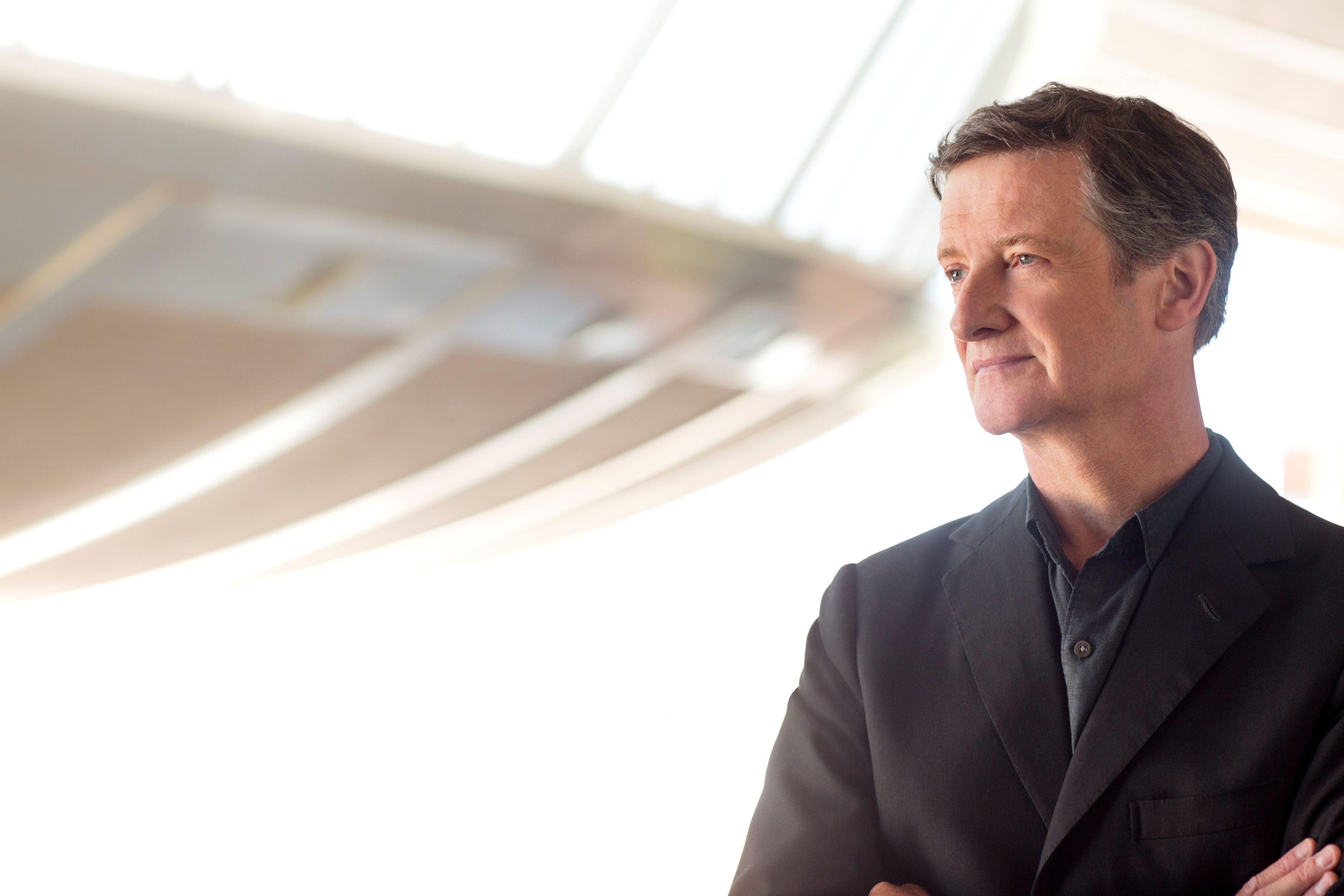
Photo: Dario Acosta
Photo: Dario Acosta
Born in Liverpool, Harry Bicket studied at the Royal College of Music and the University of Oxford, where he was Organ Scholar at Christ Church. He is an Honorary Member of the Royal Academy of Music and was awarded an OBE in the 2022 Queen’s birthday honours.
He is especially renowned for his interpretation of Baroque and Classical repertoire. Since 2007 he has been Artistic Director of The English Concert, with whom he has recently embarked on a project to record all of Handel’s works as an online resource for all.
Since 2013 he has been Chief Conductor of Santa Fe Opera and in 2018 became its Music Director. He has conducted operas by Beethoven, Berlioz, Bernstein, Bizet, Britten, Debussy, Handel, Monteverdi and Mozart. This season he returns to Opera North and Opéra de Paris. He is also a regular guest at the Metropolitan Opera, New York, and has conducted at the Bavarian State Opera, Munich, Liceu, Barcelona, Theater an der Wien, Opéra de Bordeaux, Royal Opera House, Covent Garden, English National Opera, Scottish Opera, Welsh National Opera and Glyndebourne.
He regularly conducts North American orchestras, including the Boston, Chicago, Cincinnati, Detroit, Houston, Indianapolis, San Francisco and Seattle Symphony orchestras, Los Angeles and New York Philharmonic orchestras, Los Angeles and St Paul Chamber orchestras, Orchestra of St Luke’s, NACO Ottawa, Cleveland Orchestra and Minnesota Orchestra. Elsewhere, he has conducted repertoire ranging from Bach to Britten with the Bavarian Radio, BBC Scottish, RTÉ National and Tokyo Symphony orchestras, Israel, Monte Carlo, Oslo, Prague, Rotterdam and Royal Stockholm Philharmonic orchestras, Royal Northern Sinfonia and Scottish Chamber Orchestra.
He is a prolific recording artist and has made numerous recordings with The English Concert, most recently Handel’s Rodelinda, La Resurrezione and Serse, to critical acclaim.
Julien Van Mallaerts baritone

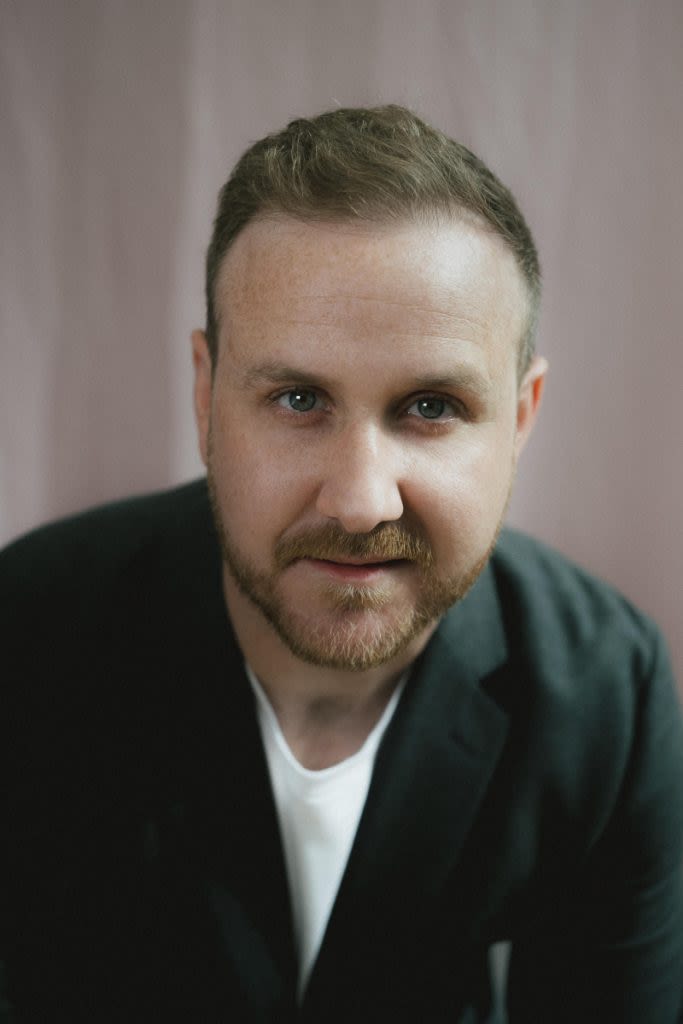
Photo: Benjamin Reason
Photo: Benjamin Reason
Julien Van Mellaerts won the Wigmore Hall/Kohn Foundation International Song Competition, the Kathleen Ferrier Awards and both the Maureen Forrester Prize and the German Lied Award at the Montreal International Music Competition; he represented New Zealand at Cardiff Singer of the World 2019.
Highlights of his operatic career have included Duke of Nottingham (Roberto Devereux) for Badisches Staatstheater Karlsruhe and Chelsea Opera Group, Silvio (Pagliacci) for Israeli Opera, Masetto (Don Giovanni) and the title-role in The Marriage of Figaro for Salzburg Mozartwoche, Masetto and Papageno (The Magic Flute) at the Verbier Festival and Count Almaviva (The Marriage of Figaro) for Opera Holland Park. With the Royal Ballet he appeared alongside Zenaida Yanowsky in Elizabeth at the Barbican.
He has given recitals at festivals in New Zealand, Austria and Northern Ireland, as well as in concert halls in London, Berlin and Madrid.
Current engagements include the title-role in Wozzeck for Orchestra Wellington, Frédéric (Lakmé) for Chelsea Opera Group, Oreste (Iphigénie en Tauride) for Opéra national de Lorraine, Guglielmo (Così fan tutte) for New Zealand Opera, Schaunard (La bohème) for Israeli Opera and Frank (Edgar) for Opera Holland Park. He is also co-curator of Opera in Song to be presented at Opera Holland Park this summer.
His recordings include works by Barber, Handel, Russell Pascoe and Stanford, as well as two song recitals.
BBC National Orchestra of Wales
For over 90 years, BBC National Orchestra of Wales has played an integral part in the cultural landscape of Wales, occupying a distinctive role as both broadcast and national symphony orchestra. Part of BBC Wales and supported by the Arts Council of Wales, it has a busy schedule of live concerts throughout Wales, the rest of the UK and the world.
The orchestra is an ambassador of Welsh music and champions contemporary composers and musicians; its concerts can be heard regularly across the BBC – on Radio 3, Radio Wales and Radio Cymru.
BBC NOW works closely with schools and music organisations throughout Wales and regularly undertakes workshops, side-by-side performances and young composer initiatives to inspire and encourage the next generation of performers, composers and arts leaders.
The orchestra is based at BBC Hoddinott Hall in Cardiff Bay, where its purpose-built studio not only provides the perfect concert space, but also acts as a broadcast centre from where its live-streamed concerts and pre-recorded content are presented as part of its popular Digital Concert Series.
For further information please visit the BBC National Orchestra and Chorus of Wales’s website: bbc.co.uk/now
Patron
HM King Charles III KG KT PC GCB
Principal Conductor
Ryan Bancroft
Conductor Laureate
Tadaaki Otaka CBE
Composer-in-Association
Gavin Higgins
Composer Affiliate
Sarah Lianne Lewis
First Violins
Lesley Hatfield leader
Gwenllian Hâf MacDonald
Terry Porteus
Suzanne Casey
Emilie Godden
Carmel Barber
Ruth Heney
Anna Cleworth
Rebecca Totterdell
Žanete Uškāne
SecondViolins
Anna Smith *
Dmitry Khakhamov
Sheila Smith
Vickie Ringguth
Joseph Williams
Michael Topping
Beverley Wescott
Roussanka Karatchivieva
Violas
Catherine Marwood ‡
Peter Taylor
Daire Roberts
Lydia Abell
Robert Gibbons
Anna Growns
Cellos
Alice Neary *
Raphael Lang
Sandy Bartai
Rachel Ford
Alistair Howes
Double Basses
David Stark *
Alexander Jones #
Gabriel Rodrigues
Flutes
Amy Yule ‡
John Hall †
Oboes
Steve Hudson *
Amy McKean †
Clarinets
Nick Carpenter *
Lenny Sayers
Bassoons
Jarosław Augustiniak *
Jo Shewan
Horns
Neil Shewan †
Meilyr Hughes
John Davy
Jenny Cox
Alexander Harris
Trumpets
Philippe Schartz *
Robert Samuel
Trombones
Donal Bannister*
Jake Durham
Bass Trombone
Darren Smith †
Tuba
Matt Lait
Timpani
Steve Barnard *
Harp
Valerie Aldrich-Smith †
Chamber Organ
Gregory Drott
* Section Principal
† Principal
‡ Guest Principal
# Assistant String Principal
The list of players was correct at the time of publication
Director Lisa Tregale
Orchestra Manager appointment in progress
Assistant Orchestra Manager Nick Olsen
Orchestra Personnel ManagerKevin Myers
Business Coordinator Caryl Evans
Orchestra Administrator Eleanor Hall +
Head of Artistic Planning and ProductionMatthew Wood
Artists and Projects Manager Victoria Massocchi **
Orchestra Librarian Eugene Monteith
Producer Mike Sims
Broadcast Assistant Kate Marsden
Head of Marketing and Audiences Sassy Hicks
Marketing Coordinator Amy Campbell-Nichols +
Digital Producer Yusef Bastawy
Social Media Coordinator Harriet Baugh
Education Producers Beatrice Carey, Rhonwen Jones **
Audio Supervisors Simon Smith, Andrew Smillie
Production Business Manager Lisa Blofeld
Stage and Technical Manager Steven Brown +
Assistant Stage and Technical Manager Josh Mead
BBC Wales Apprentice Jordan Woodley
+ Green Team member
** Diversity & Inclusion Forum
BBC National Chorus of Wales
BBC National Chorus of Wales is one of the leading mixed choruses in the UK and, while preserving its amateur status, works to the highest professional standards under Artistic Director Adrian Partington.
Based at BBC Hoddinott Hall in Cardiff Bay, the chorus, which celebrates its 40th birthday this season, regularly works alongside BBC National Orchestra of Wales, as well as giving concerts in its own right. Made up of over 120 singers, the chorus comprises a mix of amateur choristers alongside students from both the Royal Welsh College of Music & Drama and Cardiff University.
Recent highlights include performances of Fauré’s Requiem and Messiaen’s rarely performed O sacrum convivium with Ludovic Morlot, Haydn’s ‘Nelson’ Mass with renowned early-music specialist Christian Curnyn and a CD of Sir Karl Jenkins’s Dewi Sant in his 80th birthday year, plus annual engagements at the BBC Proms – with recent appearances including John Adams’s Harmonium with Principal Conductor Ryan Bancroft, Vaughan Williams’s A Sea Symphony with Andrew Manze and Mozart’s Requiem from memory with Nathalie Stutzmann.
The 2023–24 season sees the chorus perform Vaughan Williams’s Five Mystical Songs with Harry Bicket, Karl Jenkins’s Dewi Sant to mark St David’s Day, Poulenc’s Stabat mater and the world premiere of Alexander Campkin’s Sounds of Stardust alongside BBC Cardiff Singer of the World Audience Prize-winner Julieth Lozano, plus the basses perform Shostakovich’s gritty 13th Symphony under the baton of Ryan Bancroft.
Committed to promoting Welsh and contemporary music, BBC National Chorus of Wales gave the second-ever performance of Grace Williams’s Missa Cambrensis, 45 years after its premiere, which it has just recorded for CD release later this year, and has premiered works by many composers, including a special performance of Kate Whitley’s Speak Out, set to the words of Malala Yousafzai’s 2013 UN Speech.
The Chorus can be heard on BBC Radio 3, BBC Radio Wales and BBC Radio Cymru, and recently featured in Paul Mealor’s soundtrack for BBC Wales’s Wonders of the Celtic Deep.
BBC National Chorus of Wales
Artistic Director Adrian Partington
Accompanist Chris Williams
Soprano 1
Jessica Rose Baber
Logan Clark
Phoebe Dry
Sarah Jane Griffiths
Claire Hardy
Caitlin Hockley
Vanessa John-Hall
Rebecca Jolliffe
Lucie Jones
Katherine Meredith
Angharad Phillips
Elizabeth Phillips
Zoha Sohail
Helen Thomas
Charlotte Town
Jo Westaway
Hannah Willman
Soprano 2
Kate Bidwell
Dee Cooke
Katelyn Da Costa
Rhianwen Hallows
Emily Hopkins
Rhiannon Humphreys
Victoria Illsley
Izzy Jackson
Julie Jones
Carolyn Lee
Rosie Moore
Hannah Soares
Melanie Taylor
Caroline Thomas
Hannah Williams
Alto 1
Ceri-Ann Absalom
Anna Eldred
Rachel Farebrother
Kathrin Hammer
Naomi Hitchings
Sara Peacock
Kate Reynolds
Zozi Sookanadenchetty
Julie Ellen Thornton
Vicki Westwell
Alto 2
Alex Butler
Darcy Cole
Yvonne Higginbottom
Max Keith
Sian Schutz
Julie Wilcox
Tenor 1
Oli Bourne
Roland George
Tom Lazell
Nick Willmott
Tenor 2
Mike Ennis
Peter Holmes
Rory McIver
Owen Parsons
Richard Wilcox
Bass 1
Peter Cooke
John Davies
Rafael Grigoletto
David Hopkins
Jack Irwin
Geraint Jones
Emyr Wynne Jones
Jez Piper
Neil Schofield
Miles Smith
Bass 2
Jeff Davies
Lyndon Davies
Joshua Eatough
Oliver Hodgson
Stuart Hogg
David Hutchings
Joseff Morris
The list of singers was correct at the time of publication