
Elegant Romantics
Thursday 3/4/25, 7.30pm
BBC Hoddinott Hall, Cardiff
Friday 4/4/25, 7.30pm
Theatr Brycheiniog, Brecon


Fanny Mendelssohn
Overture 10’
Edward Elgar
Cello Concerto 30’
INTERVAL: 20 minutes
Johannes Brahms
Symphony No. 4 39’
Simone Menezes conductor
Bryan Cheng cello
BBC Hoddinott Hall is certified by EcoAudio and we’re proud to be supporting the BBC in becoming a more sustainable organisation. For more information on the BBC’s net-zero transition plan and sustainability strategy please visit https://www.bbc.co.uk/aboutthebbc/documents/bbc-net-zero-transition-plan-2024.pdf




The concert in Cardiff is being recorded by BBC Radio 3 for future broadcast in Classical Live; it will be available for 30 days after broadcast via BBC Sounds, where you can also find podcasts and music mixes.
Introduction

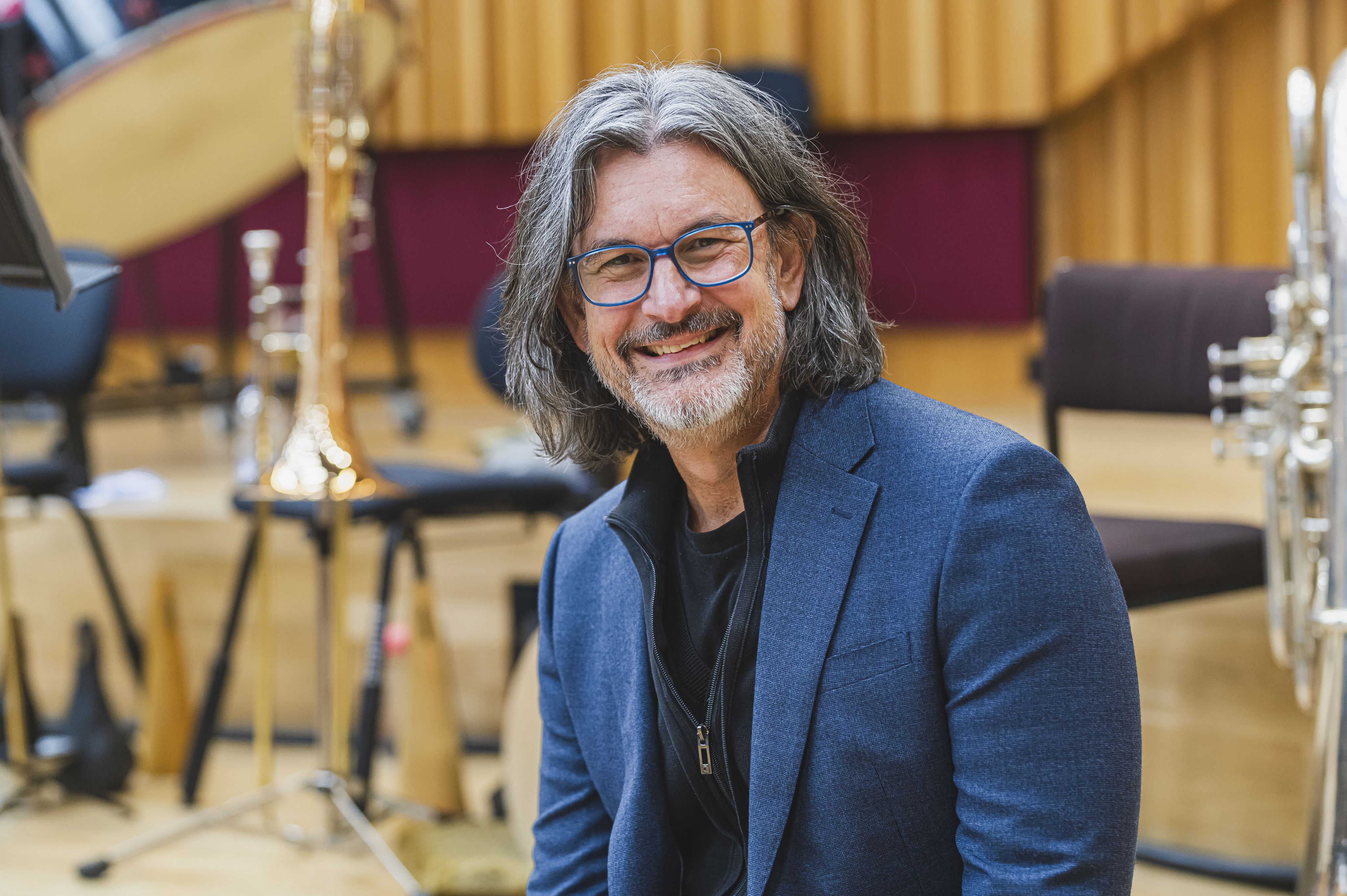
Photo: Kirsten McTernan
Photo: Kirsten McTernan
Welcome to tonight’s concert, for which we’re delighted to welcome Italo-Brazilian conductor Simone Menezes for an evening of Romantic masterpieces.
We begin with a piece that deserves to be much better known – Fanny Mendelssohn’s Overture in C major, her only foray into symphonic repertoire and a work of such strength and character we can only lament there is not much more to savour.
The up-and-coming cellist Bryan Cheng makes his debut with BBC NOW in a work that needs little introduction – Elgar’s Cello Concerto. It’s a piece that glows with sombre beauty and high passion, its many moments of virtuosity always at the service of the music.
To end, Brahms’s last symphony, his Fourth, a piece over which he laboured hard and was doubtful as to its reception, especially as it stands in such contrast to the easeful Third. But what he gave his audiences was a piece full of tension, of drama and symphonic mastery that is emotionally overwhelming.
Enjoy!
Matthew Wood
Head of Artistic Planning and Production
Please respect your fellow audience members and those listening at home: mobile phones may be kept on but on silent and with the brightness turned down; other electronic devices should be switched off during the performance. Photography and recording are not permitted.
Fanny Mendelssohn (1805–47)
Overture in C major(1830–32)

Through their childhood in Berlin, the siblings Fanny and Felix Mendelssohn shared musical education at the highest level. Yet while Felix embarked upon a meteoric career, their father instructed the 14-year-old Fanny that for a woman, music must remain an ‘ornament’ to domestic life. Felix, too, discouraged Fanny from publishing her works – except for some printed under his name.
Fanny’s husband, the artist Wilhelm Hensel, happily took a different view: each morning he placed a sheet of blank manuscript paper on her desk. Songs, piano pieces and some extremely fine chamber music poured from her pen, amounting to some 400 works. Tragically, she had just found the courage to begin publishing them under her own name when she died of a stroke, aged 41. Felix suffered a similar fate six months later.
The Overture in C is her only purely orchestral work and dates from 1830–32, written for performance in the family’s glittering salon. Two years after its premiere, Fanny conducted a second performance herself. ‘Had I not been so shy, and embarrassed with every stroke, I would have been able to conduct reasonably well,’ she told Felix. ‘It was great fun to hear the piece for the first time in two years and find everything the way I remembered. People seemed to like it – they were very kind, praised me, criticised a few impractical passages, and will return next Saturday. Thus I took part in an unexpected pleasure.’
Opening with a slow, triple-metre introduction, the overture then launches into a fizzing 4/4 Allegro with a dramatic flourish on the violins. It is in sonata form, contrasting an extrovert theme with a lyrical one. The woodwind become almost a group of soloists, and magical atmospheres are vividly conjured with string tremolandos in the development section. The work lay unpublished until as recently as 1994. Better late than never.
Programme note © Jessica Duchen
Edward Elgar (1857–1934)
Cello Concerto in E minor, Op. 85
(1918–19)
1 Adagio – Moderato –
2 Lento – Allegro molto
3 Adagio
4 Allegro – Moderato – Allegro, ma non troppo
Bryan Cheng cello
‘Iam lonely now and do not see music in the old way and cannot believe I shall complete any new work … Ambition I have none,’ wrote Elgar, little more than a year after completing his Cello Concerto in E minor. The concerto would become his last major work. With the exception of some small pieces of chamber music and a handful of transcriptions, Elgar wrote little of any consequence in the last 14 years of his life, though he began work on a whole array of new scores that were then abandoned: a Piano Concerto, a Third Symphony and an opera among them. His enthusiasm for composing had died along with his wife, Alice, who passed away just six months after the Cello Concerto was premiered.
Alice’s death had not come as a surprise. In the months leading up to it, Elgar described how she ‘seemed to be fading away before one’s very eyes’. But, as her health diminished, so Elgar’s musical persona became more introspective. Having written almost nothing during the war years, 1918–19 yielded four of the most beautiful – and distinctive – works of his career. His Violin Sonata, String Quartet and Cello Concerto (all in E minor) and Piano Quintet in A minor were marked by their newly contemplative style, which Alice declared ‘wonderful’. The critics admired the new Elgar, too, although the premiere of the Cello Concerto, given by the London Symphony Orchestra at Queen’s Hall in October 1919, was nearly a disaster. With too much rehearsal time apparently having been given over to the other works on the programme, a reviewer for The Observer wrote: ‘Never, in all probability, has so great an orchestra made so lamentable an exhibition of itself … The work itself is lovely stuff, very simple – that pregnant simplicity that has come upon Elgar’s music in the last couple of years – but with a profound wisdom and beauty underlying its simplicity.’
In contrast to his Violin Concerto of 1907–10, which is grand, impassioned and – in Elgar’s own words – ‘too emotional’, the Cello Concerto is solemn, reflective and altogether more wistful. This is not a virtuoso concerto in any traditional sense, though it is still the soloist who carries the weight of the narrative. Here, the cellist is part-performer and part-narrator, opening the work with a bold piece of recitative that begins as a cry of anguish before quickly fading into melancholy. The orchestra, too, is pared back, its gentle echoes and hushed accompaniment never eclipsing the soloist’s wandering lines. While there are flashes of grandeur and even of lightness, notably in the scurrying second movement and the march-like finale, these moments seem to pass all too quickly, either swept away by another idea or undercut by a note of sadness. This is Elgar in a deep and thoughtful mode, unburdening himself as though he were afloat on a sea of improvisation.
Programme note © Jo Kirkbride
INTERVAL: 20 minutes
Johannes Brahms (1833–97)
Symphony No. 4 in E minor, Op. 98(1884–5)
1 Allegro non troppo
2 Andante moderato
3 Allegro giocoso
4 Allegro energico e passionato
Johannes Brahms liked teasing his friends – especially when they started prodding him with questions about what he was currently writing. Sometimes he was wickedly misleading, but at others this really rather shy and sensitive man may well have let slip anxieties about his newest efforts – and that does seem to have been the case with the Fourth Symphony. Writing to the conductor Hans von Bülow from the Austrian Alpine resort of Mürzzuschlag in 1885, Brahms wondered – only half-jokingly – if the weather hadn’t had a negative effect on the music: ‘I’m afraid it takes after the climate in these parts – the cherries don’t get ripe here; you wouldn’t eat them!’ The same image turns up in a letter to another close confidante, Elisabeth von Herzogenberg: ‘In the field of work I’m speaking of cherries that don’t grow ripe and sweet to the taste – if you don’t like the thing, don’t hesitate to say so.’
That might help explain why some of Brahms’s closest musical friends found the Fourth Symphony hard to like on first hearing. Hans von Bülow’s initial report to his concert agent was tight-lipped: ‘Brahms Fourth, E minor, seems to be difficult, very.’ Perhaps part of the problem was that it was so different from Brahms’s previous major work, the Third Symphony. Tender, intimate, ultimately calm, the Third was full of things that were ‘ripe and sweet to the taste’. In contrast the Symphony No. 4 was often nervously impassioned, unsettlingly ambiguous, at times even harsh in colour (those sour cherries again). And the last movement was unlike anything Brahms had created before: a taut, rigorously constructed set of variations on a stark chordal theme blared out by winds, moving with grim inevitability towards a dark minor-key conclusion. Despite its many beautiful moments, this was a symphony that seemed to offer – in the biblical phrase – ‘naught for your comfort’.
But sour cherries can be delicious in the right context, tragedy exhilarating, even uplifting – and that, it would seem, is how many people now respond to Brahms’s Fourth. Some have found hints of a ‘dark saying’ in the symphony, and for those who like to seek out meanings behind or within the notes, Brahms provided some delicately planted clues. The first movement, for instance, is haunted by eerie pre-echoes of the third of his Four Serious Songs: ‘Oh death, oh death, how bitter you are.’ Ever prone to depression, Brahms was always haunted by thoughts of death, and those thoughts intensified as he entered his fifties – as they do for many of us. The middle two movements appear to offer consolation, even the possibility of joy (the vigorous, march-like third movement is marked ‘giocoso’, or ‘joyous’), but the theme of the finale is taken from one of J. S. Bach’s most sombre church cantatas, Nach dir, Herr, verlanget mich, BWV150 (‘My soul longs for thee, O Lord’). Yet there is something thrilling about this music: not resigned but defiant and full of life. Perhaps the nearest equivalent in words comes in Dylan Thomas’s magnificent poem ‘Fern Hill’: ‘Time held me green and dying / Though I sang in my chains like the sea.’
Programme note © Stephen Johnson
Help Us Improve Our Online Programmes.
Please take this 5-minute survey and let us know what you think of these notes.
Programme Survey
You may also like:
Missa solemnis
Thursday 10/4/25, 7.30pm
Llandaff Cathedral, Cardiff
Friday 11/4/25, 7.30pm
Brangwyn Hall, Swansea
Beethoven Missa solemnis
Andrew Manzeconductor
Carolyn Sampson soprano
Sophie Harmsen mezzo-soprano
Ed Lyon tenor
Darren Jeffery bass
BBC National Chorus of Wales
MAGNIFICENT | REVERENTIAL | WORLD-CLASS
Standing as a monument among sacred choral works, Beethoven’s Missa solemnis is a Mass setting of immense weight and scale. In it, lofty grandeur and heavenward serenity dance with angular leaping figures; violent dynamic contrasts weave through the delicately orchestrated massed forces; and a searching quality reflective of the composer’s own faith – that of looking beyond our understanding at a numinous God – is never far from the surface.
Beethoven regarded the Missa solemnis as his greatest work, and it is surely a ‘bucket list’ piece for all music lovers. With an acclaimed line-up of soloists stepping up alongside the BBC National Orchestra and Chorus of Wales, this is a performance not to be missed.
Songs of Destiny
BSL Interpretation
Friday 20/6/25, 7.30pm
BBC Hoddinott Hall, Cardiff
Brahms Serenade No. 2
Brahms Schicksalslied
Stravinsky Symphony of Psalms
Ryan Bancroft conductor
BBC National Chorus of Wales
EXQUISITE | FERVENT | PICTORIAL
If historically serenades were intended as music for entertainment, then Brahms has most definitely excelled in his Serenade No. 2. This early work oozes Brahmsian character from the outset with its lilting warmth, lively cross rhythms, and plenteous melody to charm the listener.
Similarly characteristic, but more brooding in nature is Brahms’s heady setting of the poem Schicksalslied by Friedrich Hölderlin. In two verses contrasting the lives of the eternally blissful with those subjected to cruel fate, Brahms moves between the light and airy versus the tempestuous. Stravinsky, by contrast, uses modes reminiscent of traditional Gregorian chant, paired with fugal writing and ecstatic dance motifs, to portray the text of psalms in a pure work of genius, his Symphony of Psalms! To conduct BBC National Orchestra and Chorus of Wales in their final concert of the Cardiff season we’re delighted to welcome back Principal Conductor, Ryan Bancroft.
Biographies
Simone Menezesconductor

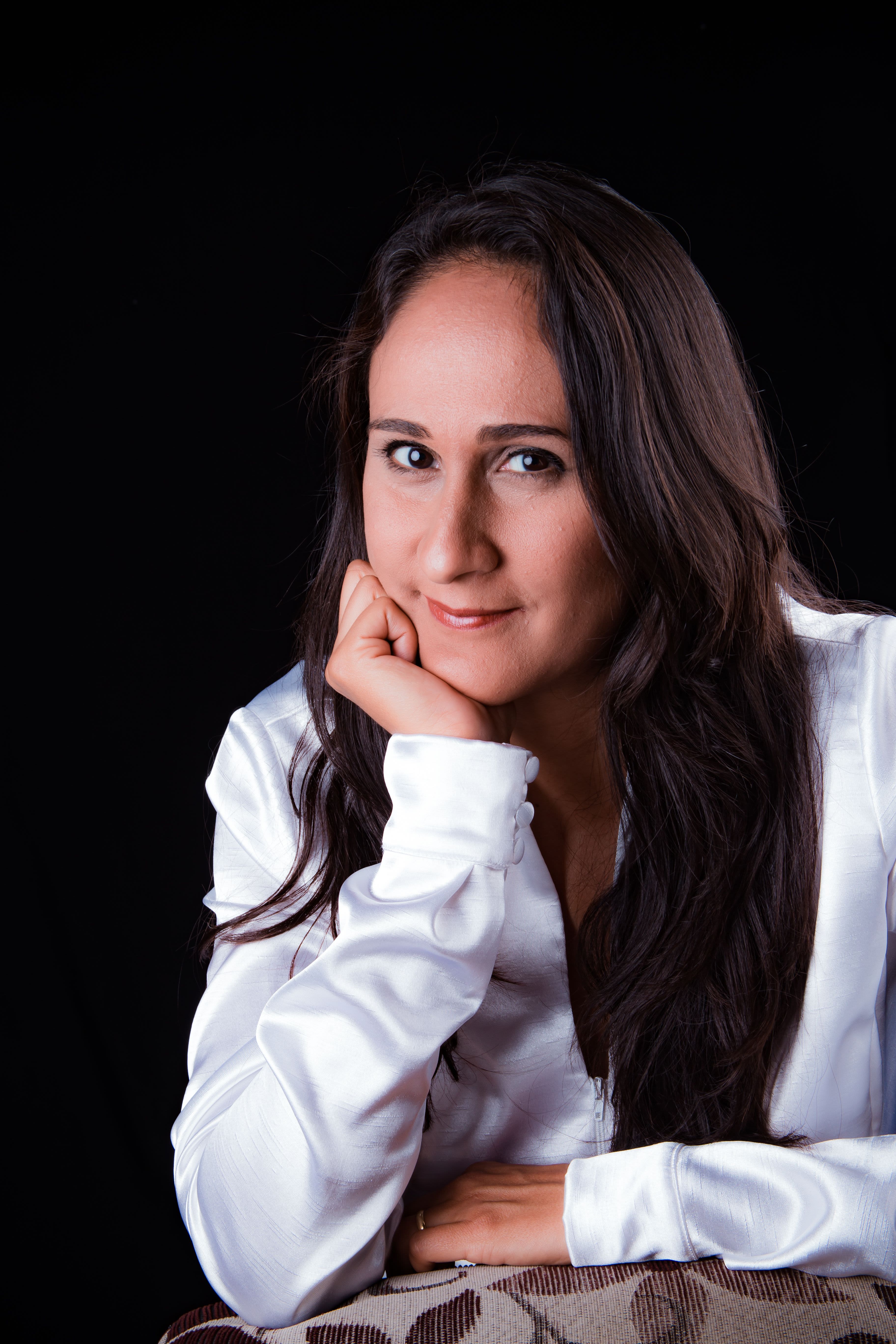
Simone Menezes is celebrated for her artistic excellence, musical and intellectual depth and acclaimed recordings.
She has worked with some of the world’s most prestigious orchestras, including the Los Angeles Philharmonic, BBC Scottish, Detroit, Frankfurt Radio, Osaka and São Paulo Symphony orchestras, Philharmonia Orchestra, Orchestra dell’Accademia Nazionale di Santa Cecilia and Vienna Chamber Orchestra. She has also partnered with distinguished soloists and composers, including Fazıl Say, Gautier Capuçon, Thomas Adès and Philippe Hersant. She has conducted over 20 world premieres.
She has been highly praised for leading both traditional orchestral performances and multidisciplinary projects. Her recordings have garnered critical acclaim, including a project to record the complete works of Maurice Ravel, of which the first album has recently been released.
Among her innovative projects is the award-winning documentary Metanoia – featuring music by Puccini, Pärt and Bach – which won an award at the 2023 International Classical Music Awards.
Another major project is Amazônia, a concert combining the work of renowned photographer Sebastião Salgado with music by Philip Glass and Villa-Lobos; it has been presented at concert halls worldwide, as well as made into an acclaimed recording. Last year she premiered a celebrated interpretation of Scheherazade at the Boulez Saal in Berlin; this was developed during an artistic residency and featured a collaboration with actress Golshifteh Farahani, as well as a recording. This year she presents Four Elements with the Osaka Philharmonic Orchestra, which includes the world premiere of Fazıl Say’s Piano Concerto.
An Italo-Brazilian artist, Simone Menezes studied in São Paulo, Paris and London, and was mentored by Paavo Järvi. She enjoyed a major career in Brazil before moving to Europe in 2017. She also leads Ensemble K, a group founded in 2019 with the aim of blending classical traditions with bold, forward-looking projects.
Bryan Cheng cello

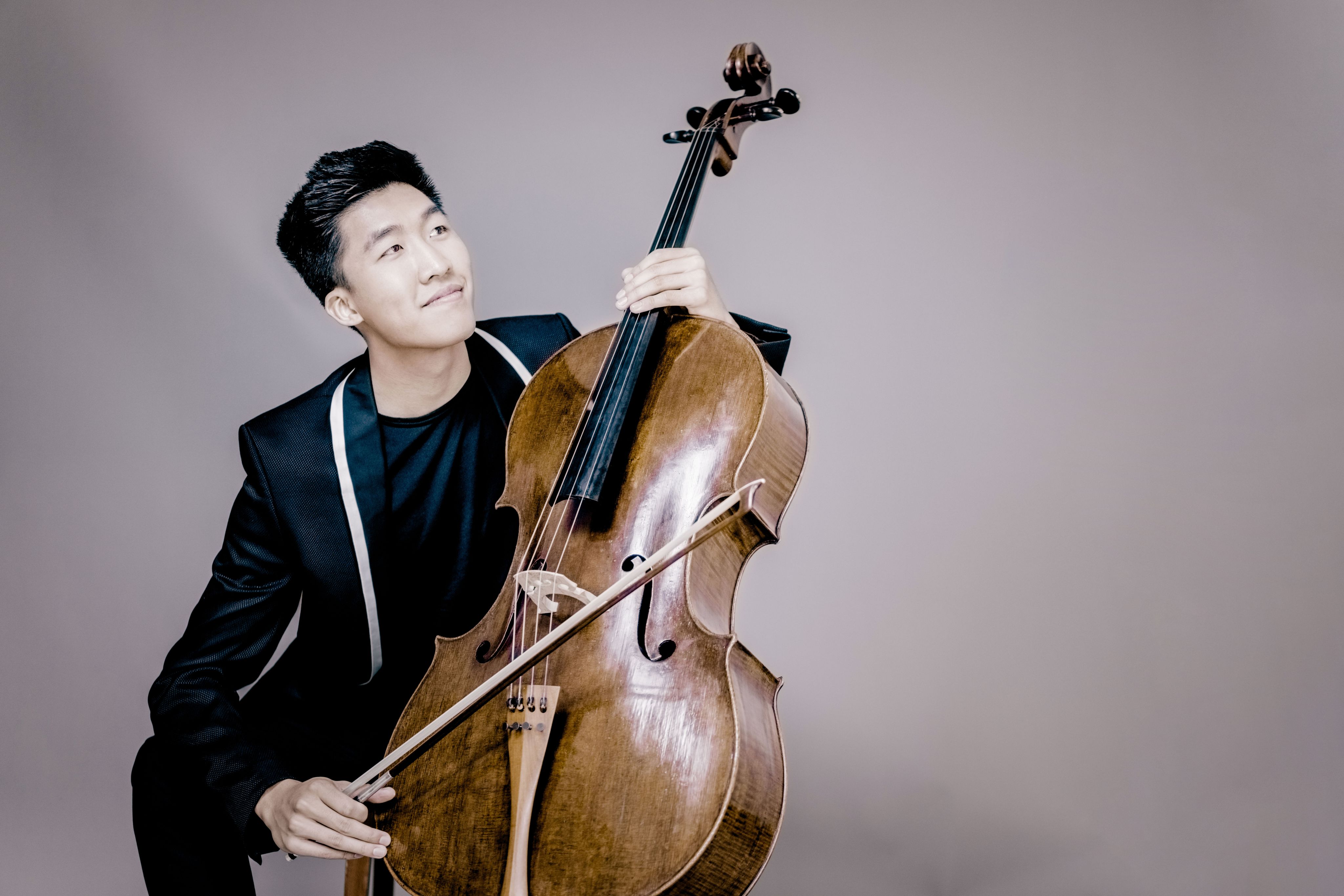
Andrej Grilc
Andrej Grilc
Following recent prize-winning successes at some of the world’s most prestigious international competitions, including Queen Elisabeth, Geneva and Paulo, Canadian-born, Berlin-based cellist Bryan Cheng has established himself as a compelling young artist on the classical music scene.
This season he makes debuts with the Ankara Presidential, Bochum, Frankfurt Radio and Greensboro Symphony orchestras, Orchestre Métropolitain, Orquesta Reino de Aragón, Tampere Philharmonic Orchestra and Stuttgart Chamber Orchestra, in works by Elgar, Haydn, Saint-Saëns, Tchaikovsky and Mason Bates.
Recent highlights include appearances with the Deutsches Symphonie-Orchester Berlin, Brussels, Calgary, Helsinki and Slovak Philharmonic orchestras, Orchestre de la Suisse Romande, National Arts Centre Orchestra Ottawa and the Antwerp, India, Montreal and National Taiwan Symphony orchestras. He has collaborated with celebrated conductors, including Stéphane Denève, Martyn Brabbins, Susanna Mälkki, Alpesh Chauhan, Matthias Pintscher, Dalia Stasevska, Daniel Raiskin, Christian Arming, Yan-Pascal Tortelier, Giordano Bellincampi, Jonathan Darlington, Joshua Weilerstein and Laurence Equilbey.
He was appointed Artist-in-Residence with the Banatul Philharmonic Orchestra of Timișoara for the city’s period as European Capital of Culture in 2023/24; he continues the residency this season with orchestral and chamber concerts.
Bryan Cheng made his Carnegie Hall recital debut at age 14, his Elbphilharmonie debut aged 20 with the Deutsche Kammerphilharmonie Bremen, and in 2022 was the first cellist to be awarded the Prix Yves Paternot in recognition of the Verbier Festival Academy’s most promising and accomplished musician. He is the 2023 recipient of the Canada Council for the Arts’ Virginia Parker Prize, the nation’s highest honour for young musicians.
He has released four critically acclaimed albums: Russian Legends (2019), Violonchelo del fuego (2018),Violoncelle français (2016) and, most recently, Portrait (2023).
Bryan Cheng plays the c.1696 ‘Bonjour’ Stradivari cello, generously on loan from the Canada Council Musical Instrument Bank, as a winner of its 2018 and 2023 competitions.
BBC National Orchestra of Wales
For over 90 years, the BBC National Orchestra of Wales, the only professional symphony orchestra in Wales, has played an integral part in the cultural landscape of the country, occupying a distinctive role as both a broadcast and national orchestra, and serving as an ambassador of Welsh culture, regularly performing music created in Wales and championing Welsh composers and artists.
Part of BBC Cymru Wales and supported by the Arts Council of Wales, BBC NOW performs a busy schedule of concerts and broadcasts, working with acclaimed conductors and soloists from across the world, including its Principal Conductor, the award-winning Ryan Bancroft.
The orchestra is committed to working in partnership with community groups and charities, taking music out of the concert hall and into settings such as schools and hospitals to enable others to experience and be empowered by music. It undertakes workshops, concerts and side-by-side performances to inspire and encourage the next generation of performers, composers and arts leaders, and welcomes thousands of young people and community members annually through its outreach and education projects.
BBC NOW performs annually at the BBC Proms and biennially at the BBC Cardiff Singer of the World competition, and its concerts can be heard regularly across the BBC – on Radio 3, Radio Wales and Radio Cymru. On screen, music performed by BBC NOW can be heard widely across the BBC and other global channels, including the soundtrack and theme tune for Doctor Who, Planet Earth III, Prehistoric Planet, The Pact and Children in Need.
Based at BBC Hoddinott Hall, Cardiff Bay, BBC NOW utilises a state-of-the-art recording studio with a camera system for livestreams and TV broadcasts to bring BBC NOW’s music to a broader audience across Wales and the world. For more information about BBC NOW please visit bbc.co.uk/now
Patron
HM King Charles III KG KT PC GCB
Principal Conductor
Ryan Bancroft
PrincipalGuest Conductor
Jaime Martín
Conductor Laureate
Tadaaki Otaka CBE
Composer-in-Association
Gavin Higgins
First Violins
Shana Douglas
Terry Porteus
Kerry Gordon-Smith
Ruth Heney **
Anna Cleworth
Žanete Uškāne
Carmel Barber
Alejandro Trigo
Amy Fletcher
Gary George-Veale
Paul Mann
Jane Sinclair
Second Violins
Anna Smith *
Ros Butler
Sheila Smith
Vickie Ringguth
Beverley Wescott
Roussanka Karatchivieva
Katherine Miller
Lydia Caines **
Michael Topping
Joseph Williams
Liz Whittam
Frances Richards
Violas
Lydia Abell
Robert Gibbons
Lowri Taffinder
Daire Roberts
Cellos
Reinoud Ford ‡
Jessica Feaver
Keith Hewitt
Carolyn Hewitt
Rachel Ford
Alistair Howes
Katy Wright
Double Basses
Christopher Wescott
Richard Gibbons
Emma Prince
Ayse Osman
Hannah Turnbull
Flutes
Piccolo
Oboes
Amy McKean †
Clarinets
Will White
Bassoons
Rhiannon Carmichael
David Buckland
Contrabassoon
David Buckland †
Horns
Meilyr Hughes
Neil Shewan †
Tom Taffinder
Alexander Harris
Trumpets
Ben Jarvis
Trombones
Dafydd Thomas †
Bass Trombone
Tuba
Timpani
Percussion
* Section Principal
† Principal
‡ Guest Principal
# Assistant String Principal
The list of players was correct at the time of publication
Director Lisa Tregale
Orchestra Manager Liz Williams
Assistant Orchestra Manager Nick Olsen **
Orchestra Personnel ManagerKevin Myers
Business Coordinator Georgia Dandy **
Orchestra Administrator Eleanor Hall +**
Head of Artistic Planning and ProductionMatthew Wood
Artists and Projects Manager Victoria Massocchi **
Orchestra Librarian Naomi Roberts **
Producer Mike Sims
Broadcast Assistant Emily Preston
Head of Marketing and Audiences Sassy Hicks
Marketing Coordinator Amy Campbell-Nichols +
Digital Producer vacancy
Social Media Coordinator Harriet Baugh
Education Producers Beatrice Carey, Rachel Naylor maternity cover
Audio Supervisors Simon Smith, Andrew Smillie
Production Business Manager Lisa Blofeld
Stage and Technical Manager vacancy
Assistant Stage and Technical Manager Josh Mead +
+ Green Team member
** Diversity & Inclusion Forum