
Musical Painting, Impressions & Intrigue
Thursday 8/1/26, 7.30pm
BBC Hoddinott Hall, Cardiff


Anders Hillborg
Exquisite Corpse 15’
Dmitry Shostakovich
Cello Concerto No. 2 in G major 33’
INTERVAL: 20 minutes
Jean Sibelius
Lemminkäinen Suite 50’
Ryan Bancroft conductor
Alban Gerhardt cello
BBC Hoddinott Hall is certified by EcoAudio and we’re proud to be supporting the BBC in becoming a more sustainable organisation. For more information on the BBC’s net-zero transition plan and sustainability strategy please visit https://www.bbc.co.uk/aboutthebbc/documents/bbc-net-zero-transition-plan-2024.pdf




This concert is being recorded by BBC Radio 3 for future broadcast in In Concert; it will be available for 30 days after broadcast via BBC Sounds, where you can also find podcasts and music mixes.
Introduction
In tonight’s concert, the first of the new year, we welcome back Principal Conductor Ryan Bancroft for a programme of music that takes us from Scandinavia to Russia. We begin in Sweden with Anders Hillborg’s deliciously subversive Exquisite Corpse. It takes its inspiration (and its title) from a collage technique used by Surrealist artists and writers which juxtaposes unlike with unlike to startling effect; Hillborg takes a similar approach, referencing both his own music and that of others.
Subversion is also in plentiful supply in Shostakovich’s Cello Concerto No. 2, which is tonight performed by the great Alban Gerhardt. He’s an artist who is very much in tune with its wide-ranging moods, from resignation to fury, with a good dose of mockery thrown in.
We end in Finland with Sibelius’s Lemminkäinen Suite, a set of tone-poems in which the composer headily brings to life scenes from the Finnish epic, the Kalevala.
Enjoy!
Lisa Tregale
Director
Please respect your fellow audience members and those listening at home: mobile phones may be kept on but on silent and with the brightness turned down; other electronic devices should be switched off during the performance. Photography and recording are not permitted.
Anders Hillborg (born 1954)
Exquisite Corpse(2002)

If you’ve played the parlour game Consequences, you’ll be familiar with the idea of passing pieces of paper round a group so that everyone’s contributions are jumbled together to form an amusingly incongruous story. This was the process used by Surrealists in what came to be called ‘exquisite corpse’. Words or images were added together, resulting in bizarre juxtapositions, as in the eponymous example: ‘The exquisite corpse shall drink the new wine.’ The concept – that each collage would reveal inner connections – was outlined by Surrealism founder André Breton, and became popular with writer Henry Miller and artists Joan Miró and Man Ray.
Swedish composer Anders Hillborg drew upon this visual technique for Exquisite Corpse. The piece is not a collective effort, nor is it random, but its relationship with the original game is clear, resulting in a bold assemblage of musical fragments. One of the more deeply embedded references is to Sibelius’s Seventh Symphony, which is not surprising given that both Exquisite Corpse and the Sibelius work were commissioned by the Royal Stockholm Philharmonic.
Hillborg explains that he tried to ‘consciously combine disparate material from my own pieces as well as from other composers… there’s a chord from [Stravinsky’s] Petrushka, there’s a style quotation from Ligeti’. He intended ‘to leave these different parts alone, and not do transitions between them, but of course I couldn’t resist’. Yet he emphasises that the ‘exquisite corpse’ idea is there to help the creative artist and is not an end in itself: ‘it’s of course not important that the piece should reflect the Cadavre exquis process. All these tricks that we use to liberate our creativity are often precisely just that.’
Programme note © Joanna Wyld
Dmitry Shostakovich (1906–75)
Cello Concerto No. 2 in G major, Op. 126 (1966)
1 Largo
2 Allegretto
3 Allegretto
Alban Gerhardtcello
This concerto was written more than a decade after the death of Stalin, leaving us uncertain whether the tragedy that unfolds in the music is personal or historical. It was premiered on the composer’s 60th birthday (25 September 1966), with Mstislav Rostropovich as the soloist. Ill health had already left Shostakovich frail, and images of death seem to haunt every corner of this work.
The concerto begins with a sombre cello monologue that gradually increases in emotional intensity. Instead of entering dramatically, the orchestra begins to sketch its own lines around the soloist. After a long outpouring of emotion, the cello ends its peroration on a long note as the orchestra sets out on a new course. The new music is gently mocking at first, but as so often happens in Shostakovich, the smile turns into a snarl, the music becoming ever more raucous and brutal, leading us to a great climax at which the cello’s despairing shrieks alternate with timpani strokes.
Even by the standard of Shostakovich’s trademark sarcasm, the second movement stands out for its ability to create something disturbingly grotesque from banal beginnings. The composer uses a simple tune from the 1920s that originated in Odessa, the Black Sea port and resort town. The three syllables of the song’s title, ‘Bublichki’, refer to a bagel-like snack; a three-note motif imitates the cries of the street vendors. We know that Shostakovich had this tune in mind at the time, thanks to an account of a parlour game in which he jokingly nominated ‘Bublichki’ as his all-time favourite melody.
The opening of the finale lifts us out of the nightmare with a call to action, in the form of an urgent fanfare that draws an immediate response from the cello. But the confidence soon dissipates, and the rest of the Allegretto vacillates in mood and style. Eventually, the intimations of brutality heard in the preceding movements come to infect the finale. At the climax we hear a terrifying statement of the ‘Bublichki’ tune that must count as one of the most powerful and heart-rending moments in the whole of Shostakovich’s oeuvre. The sombre mood returns, and something like a clockwork toy emerges in the percussion, a device which Shostakovich revived for the close of his last symphony, the 15th, to represent the ineluctable passing of time.
Programme note © Marina Frolova-Walker
INTERVAL: 20 minutes
Jean Sibelius (1865–1957)
Lemminkäinen Suite, Op. 22 (1895–6, rev. 1897 and 1939)
1 Lemminkäinen and the Maidens of the Island
2 The Swan of Tuonela
3 Lemminkäinen in Tuonela
4 Lemminkäinen’s Return
The Lemminkäinen Suite is a set of tone-poems: four symphonic works inspired by the adventures of the Finnish mythological demi-god Lemminkäinen. Sibelius wove his own composite narrative from the Finnish national epic, the Kalevala, which is itself stitched together from the many variants of folk songs, spells and tales collected in Eastern Finland. Printed programmes with Sibelius’s extracts of Kalevala verse were handed out at the suite’s premiere on 13 April 1896.
‘Lemminkäinen and the Maidens of the Island’ opens with a sonority that’s familiar to us: the dissonant chords at the opening of Sibelius’s Fifth Symphony, composed decades later. These chords are prescient in more ways than one. They punctuate the introduction to the movement – a passage of slow-moving string textures and woodwind nature calls – and resound at moments of structural importance. In this movement, the libertine-like Lemminkäinen sails to an island and seduces its young women in a whirling folk dance with rustic lower string drones. When his desire is sated, he leaves them, despite their weeping, and continues on his journey. The opening chords are resolved emphatically at the movement’s conclusion.
Lemminkäinen is set three supposedly impossible tasks to win the ‘maid of the North’. For the last one, he must travel to the desolate island of Tuonela – the afterlife in Finnish mythology – to shoot the supernatural swan that glides on the raging black river surrounding its shores. ‘The Swan of Tuonela’ begins with a chord that resonates across a total of 17 different muted string parts in a huge four-octave crescendo. A solo cor anglais melody is subtly transformed throughout the piece against shifting string textures: suspended chords, shimmering tremolos, pizzicatos and, towards the end, ethereal harmonics with rustling col legno (tapping the strings with the wood of the bow). After a jubilant passage of horn calls, the strings lead a funeral march in the closing section. The cor anglais enters for a final procession as Lemminkäinen is cut into a thousand pieces by a vengeful herdsman and scattered into the river.
In the third movement, Lemminkäinen’s mother senses that her son has gone astray and hurries to the black waters of Tuonela. Sombre waves of tremolo strings gradually coalesce to form the backdrop for fragments of the previous movement’s melodies and violently piercing brass chords. At the core of the work is a gentle lullaby for solo cello. According to Sibelius, ‘the cradle song … is maternal love’: Lemminkäinen’s mother rakes the pieces of her son from the underworld river and lulls him back to life with magical incantations.
Following Lemminkäinen’s resurrection, he conjures horses from his sorrows and rides south to the shores, islands and moorings of his home. This, the shortest movement, ends the suite with a triumphant flourish, heroically transforming minor-key thematic fragments into major-key fanfares.
Programme note © Sarah Moynihan
Help Us Improve Our Online Programmes.
Please take this 5-minute survey and let us know what you think of these notes.
Programme Survey
You may also like:
If you’ve enjoyed the concert today, bring friends and family and come along to this forthcoming concert. As an existing audience member, you can buy tickets for it for £7 using promotion code NOWYOU when buying online.
BBC NOW – NOW!
Thursday 19/2/26, 7.30pm
BBC Hoddinott Hall, Cardiff
Isabella Gellis Valedictions UK premiere
Deborah Pritchard Trombone Concerto ‘Light Circle’ UK premiere
Juste Janulyte Confluere for chamber orchestraUK premiere
Hannah Eisendle AzinheiraUK premiere
Katherine Balch musica pyralisUK premiere
Jack Sheen conductor
Peter Moore trombone
CONTEMPORARY | ILLUMINATING | UNIQUE
Feel the thrill of discovery as BBC NOW – NOW! bursts back this spring with five dazzling UK premieres in one unforgettable night. Immerse yourself in Isabella Gellis’s enchanting Valedictions, Deborah Pritchard’s radiant Trombone Concerto ‘Light Circle’ with star soloist Peter Moore, and Juste Janulyte’s shimmering Confluere. Experience the sheer energy of Hannah Eisendle’s Azinheira and the magical nocturnal world of Katherine Balch’s musica pyralis. Led by rising conductor Jack Sheen in his BBC NOW debut, this is your chance to witness the future of music – live, bold, and breathtaking. Don’t miss it!
Book tickets for just £7 using promotion code NOWYOU https://www.bbc.co.uk/events/evr6gw
Biographies
Ryan Bancroft conductor

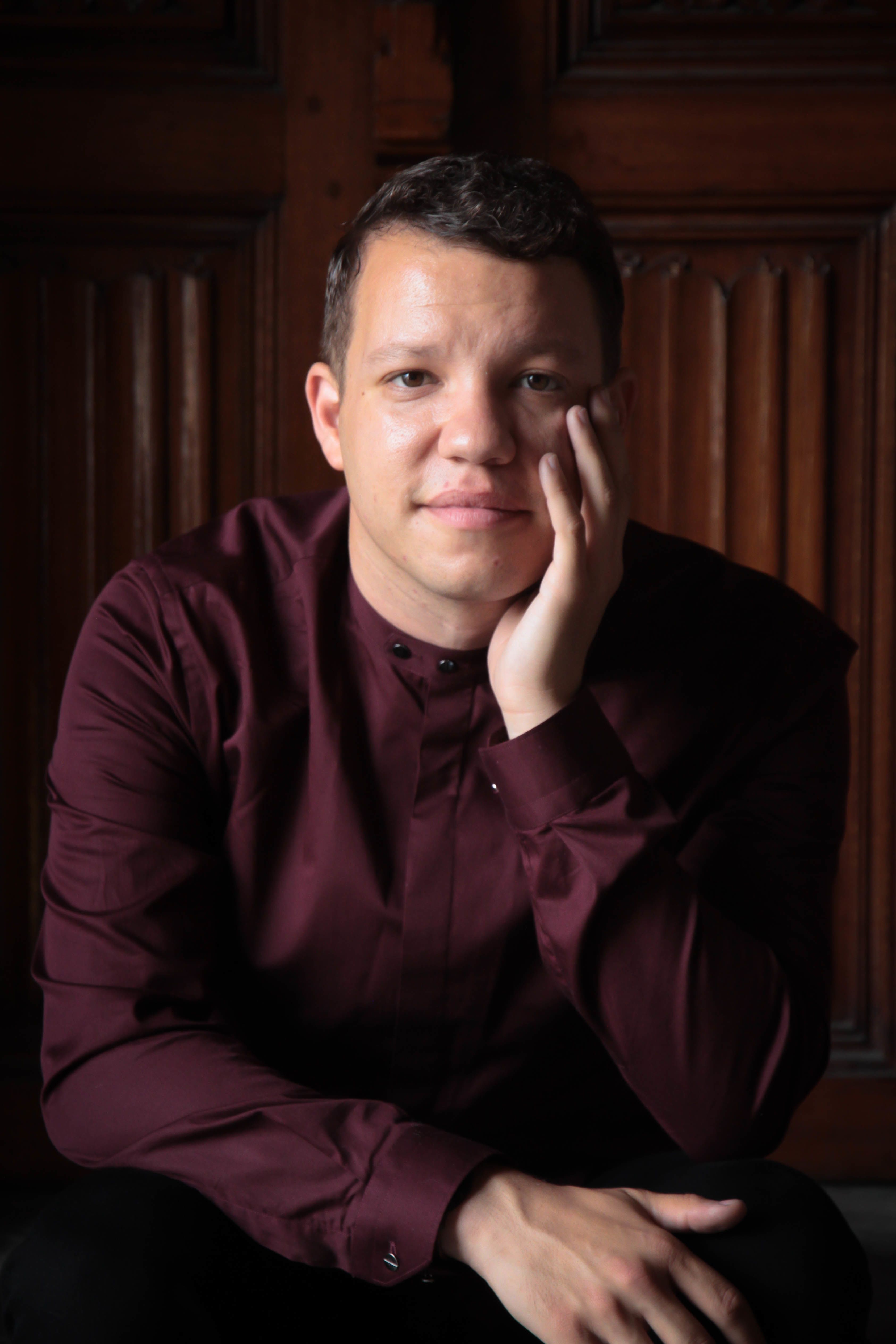
Ryan Bancroft grew up in Los Angeles and first came to international attention in 2018, when he won both First Prize and Audience Prize at the Malko Competition for Young Conductors in Copenhagen. Since September 2021 he has been Principal Conductor of BBC National Orchestra of Wales. He is also Artist-in-Association with the Tapiola Sinfonietta and, since September 2023, has been Chief Conductor of the Royal Stockholm Philharmonic Orchestra.
After beginning his tenure as Chief Conductor in Stockholm with the orchestra’s first performance of Sven-David Sandström’s The High Mass, his second season included performances of Mahler and Bruckner symphonies, alongside world premieres by Chrichan Larson and Zacharias Wolfe, and collaborations with renowned soloists including Leif Ove Andsnes, Maxim Vengerov and Víkingur Ólafsson.
This season he has made debuts with the Boston and Finnish Radio Symphony orchestras, Deutsches Symphonie-Orchester Berlin at the Berlin Philharmonie and the WDR Symphonieorchester in Cologne.
Ryan Bancroft has a passion for contemporary music and has performed with Amsterdam’s Nieuw Ensemble, assisted Pierre Boulez in a performance of his Sur incises in Los Angeles, premiered works by Sofia Gubaidulina, John Cage, James Tenney and Anne LeBaron, and has worked with improvisers such as Wadada Leo Smith and Charlie Haden. He studied at the California Institute of the Arts, Royal Conservatoire of Scotland and in the Netherlands.
Alban Gerhardtcello

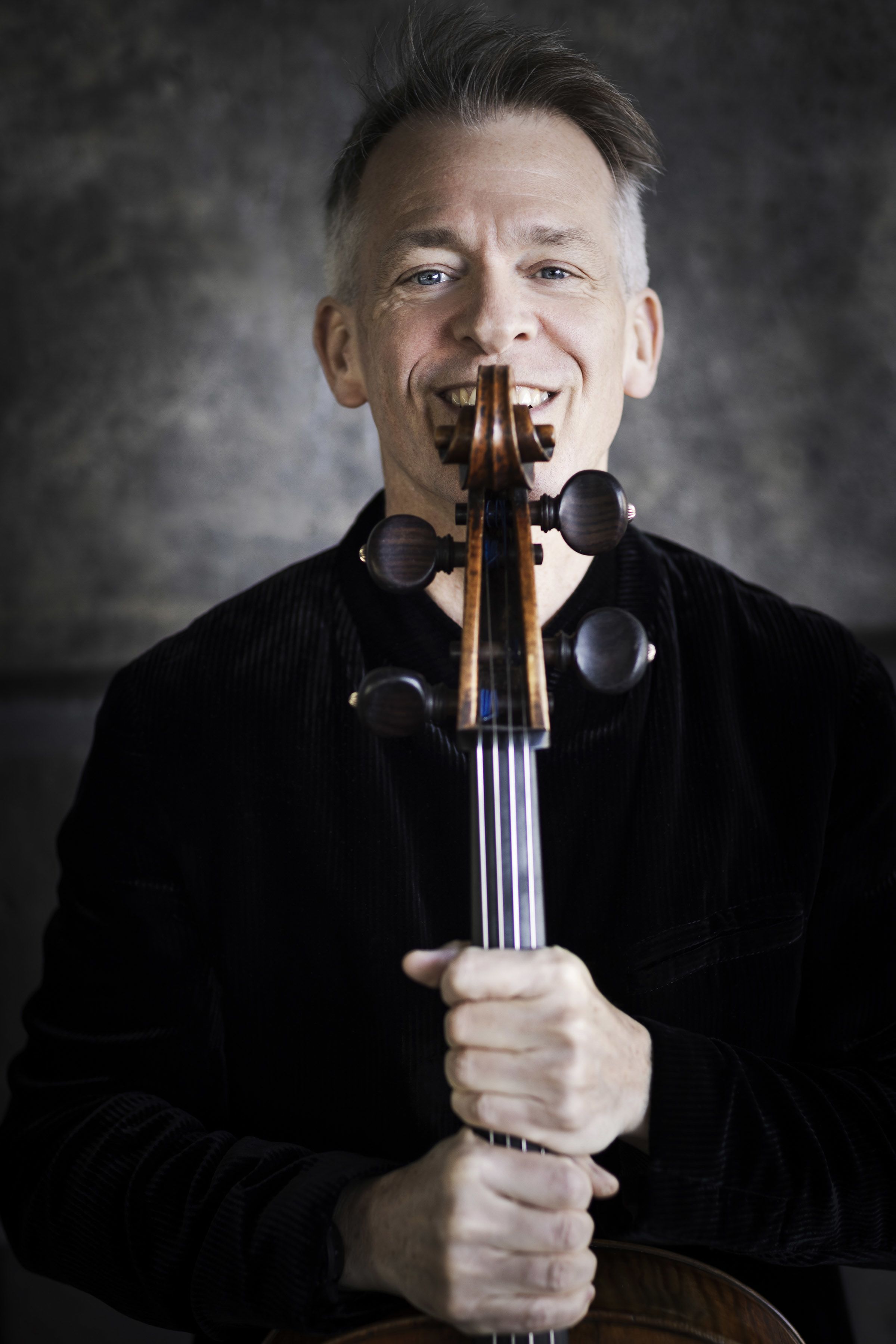
Benjamin Ealovega
Benjamin Ealovega
Alban Gerhardt has gained recognition as one of the world’s most versatile cellists, highly regarded for his technical mastery, profound musicality and artistic curiosity.
Notable orchestral collaborators include the Royal Concertgebouw Orchestra, all the British and German radio orchestras, Berliner Philharmoniker, Zurich Tonhalle Orchestra, Orchestre National de France, Orquesta Nacional de España, Cleveland Orchestra, Philadelphia Orchestra, Chicago Symphony Orchestra and the New York Philharmonic. He has worked with leading conductors such as Christoph von Dohnányi, Kurt Masur, Klaus Mäkelä, Christian Thielemann, Simone Young, Susanna Mälkki, Vladimir Jurowski and Andris Nelsons.
This season he collaborates with the Boston Symphony Orchestra, National Symphony Orchestra, Washington, Munich and Warsaw Philharmonic orchestras, the Hallé and Paris Chamber Orchestra.
He is a keen chamber musician and regularly performs with pianists Steven Osborne and Alexei Volodin, the Alliage Saxophone Quintet and new collaboration partner, accordionist Ksenija Sidorova. This season he appears at the Santa Catalina Festival, on tour around the UK with Steven Osborne, in Seoul and Shanghai and at New York’s 92NY for the complete Bach Cello Suites; he was also Artistic Curator of the 2025 Schumann Festival in Düsseldorf.
His extensive, award-winning discography ranges from Bach, via the Shostakovich concertos to Unsuk Chin’s Cello Concerto, which was written for him.
Recent highlights include appearing as Artist-in-Focus at the 2024 Aldeburgh Festival and as the Duisburg Philharmonic’s Artist-in-Residence.
He is also passionate about outreach, performing in schools, hospitals and young offender institutions.
Alban Gerhardt plays a Matteo Gofriller cello dating from 1710.
BBC National Orchestra of Wales
For over 90 years, the BBC National Orchestra of Wales, the only professional symphony orchestra in Wales, has played an integral part in the cultural landscape of the country, occupying a distinctive role as both a broadcast and national orchestra, and serving as an ambassador of Welsh culture, regularly performing music created in Wales and championing Welsh composers and artists.
Part of BBC Cymru Wales and supported by the Arts Council of Wales, BBC NOW performs a busy schedule of concerts and broadcasts, working with acclaimed conductors and soloists from across the world, including its Principal Conductor, the award-winning Ryan Bancroft.
The orchestra is committed to working in partnership with community groups and charities, taking music out of the concert hall and into settings such as schools and hospitals to enable others to experience and be empowered by music. It undertakes workshops, concerts and side-by-side performances to inspire and encourage the next generation of performers, composers and arts leaders, and welcomes thousands of young people and community members annually through its outreach and education projects.
BBC NOW performs annually at the BBC Proms and biennially at the BBC Cardiff Singer of the World competition, and its concerts can be heard regularly across the BBC – on Radio 3, Radio Wales and Radio Cymru. On screen, music performed by BBC NOW can be heard widely across the BBC and other global channels, including the soundtrack and theme tune for Doctor Who, Planet Earth III, Prehistoric Planet, The Pact and Children in Need.
Based at BBC Hoddinott Hall, Cardiff Bay, BBC NOW utilises a state-of-the-art recording studio with a camera system for livestreams and TV broadcasts to bring BBC NOW’s music to a broader audience across Wales and the world. For more information about BBC NOW please visit bbc.co.uk/now
Patron
HM King Charles III KG KT PC GCB
Principal Conductor
Ryan Bancroft
PrincipalGuest Conductor
Jaime Martín
Composer-in-Association
Gavin Higgins
First Violins
Tom Aldren
Gwenllian Hâf MacDonald
Cecily Ward
Terry Porteus
Suzanne Casey
Juan Gonzalez
Emilie Godden
Alejandro Trigo
Carmel Barber
Ruth Heney **
Anna Cleworth
Kerry Gordon-Smith
Žanete Uškāne
Second Violins
Anna Smith *
Kirsty Lovie #
Sheila Smith
Joseph Williams
Beverley Wescott
Roussanka Karatchivieva
Katherine Miller
Lydia Caines **
Michael Topping
Vickie Ringguth
Laurence Kempton
Elizabeth Whittam
Violas
Alex Thorndike #
Tetsuumi Nagata
Peter Taylor
Catherine Palmer
Anna Growns
Lydia Abell
Laura Sinnerton
Lowri Taffinder
Robert Gibbons
Cellos
Miwa Rosso
Jessica Feaver
Sandy Bartai
Keith Hewitt
Alistair Howes
Rachel Ford
Carolyn Hewitt
Kathryn Graham
Double Basses
David Stark *
Alexander Jones #
Owen Nicolaou
Christopher Wescott
Emma Prince
Phoebe Clarke
Matthew Featherstone *
John Hall †
Lindsey Ellis
Piccolo
Oboes
Sam Baxter
Amy McKean
Cor anglais
Amy McKean
Clarinets
William White
Lenny Sayers **+
Bass Clarinet
Lenny Sayers †**+
Contrabass Clarinet
Steve Morris
Bassoons
Jarosław Augustyniak *
Jo Shewan
David Buckland
Contrabassoon
David Buckland †
Meilyr Hughes
Mark Alder Bennett
Flora Bain
John Davy
Trumpets
Robert Samuel
Corey Morris †
Trombones
Bass Trombone
Tuba/Cimbasso
Timpani
Percussion
Rebecca Celebuski
Andrea Porter
Rhydian Griffiths
Sarah Mason
Harp
Elen Hydref
Piano
Catherine Roe Williams
* Section Principal
The list of players was correct at the time of publication
Director Lisa Tregale
+ Green Team member
Keep up to date with BBC National Orchestra of Wales
Listen to our BBC Radio 3 broadcasts via the BBC Sounds app. Visit our website and follow us on Facebook and Instagram
To help us improve our online concert programmes, please take this 5-minute survey
Produced by BBC Proms Publications