
Symphonie fantastique
Friday 1 April 2022, 7.30pm


Édith Canat de Chizy
Omen UK premiere18’
Ralph Vaughan Williams, arr. Vaughan Williams/Joseph Cooper
Concerto for Two Pianos in C major 26’
INTERVAL: 20 minutes
Hector Berlioz
Symphonie fantastique 55’
Noriko Ogawa piano
Kathryn Stott piano
Jordan de Souza conductor


This concert is being broadcast live by BBC Radio 3 in ‘Radio 3 in Concert’. It will be available for 30 days after broadcast via BBC Sounds, where you can also find podcasts and music mixes.
Help us Improve Our Online Programmes.
Please take this 5-minute survey and let us know what you think of these notes.
Programme Survey
Paths and trajectories are the inspiration for French composer Édith Canat de Chizy's 2006 piece Omen. The starting point was Van Gogh’s Wheatfield with Crows, possibly the artist’s last painting before he took his own life – abruptly bring that particular path to a close. Its shimmering surface detail contrasts with Vaughan Williams’s Concerto for Two Pianos, an arrangement of the composer’s earlier solo Piano Concerto. Tonight’s soloists, tackling a work that remains technical challenging even for four hands, are longtime collaborators Noriko Ogawa and Kathryn Stott.
One of the earliest symphonies to carry a narrative element, and one of the most colourful, Berlioz’s Symphonie fantastique reveals a musical imagination fuelled by the composer’s love for the Irish actress Harriet Smithson. Whether in its elegant ball scene and depiction of pastoral idyll, or its violent execution and grotesque witches’ dance, the work creates a heady orchestral whirl, painted in kaleidoscopic colours.
Édith Canat de Chizy (born 1950)
Omen (2006)
UK premiere


The starting point for this piece was Van Gogh’s painting Wheatfield with Crows, one of the very last he painted before his death from suicide on 29 July 1890, an image that has often been considered a harbinger of this desperate gesture. This painting immediately reminded me of the French verses by Rainer Maria Rilke, Les quatrainsvalaisans (‘Valaisian Quatrains’, paying homage to the Swiss canton of Valais):
Paths that lead nowhere,
between two meadows,
as if detoured from their end
by design,
paths that often
have nothing ahead of them
other than pure space
and the season.
These verses in turn suggested the title of philosopher Martin Heidegger’s collection Holzwege (published in English as Off the Beaten Track). Here Heidegger talks about the metaphysical dimension of poetry, especially in Rilke’s work.
Similarly, music has a metaphysical dimension, in my view. In this respect, Omen involves a whole network of connections that presents a synthesis of my approach. The allusion to Van Gogh’s painting, first, places this score in the line of those that were inspired by painting, such as my viola concerto Les rayons du jour (2005), centred on the universe of the painter Nicolas de Staël.
Then there is the very figure of Van Gogh himself: his spiritual journey, just like De Staël’s, makes him one of those ‘comets’ from another world about whom the poet Marina Tsvetaeva speaks. The title Omen evokes the mysterious and fatal destiny of this visionary painter.
This idea of ‘trajectory’ or ‘path’ is another of the themes that are dear to me: Omen is in three parts and traces the route of Les quatrains valaisans:1: Paths, 2: Nowhere, 3: Pure space.
Writing for orchestra remains my preferred medium of expression for the scope it offers in organising the sound-space and in blending the instrumental timbres. In this work the orchestra becomes a universe of movement specific to the idea of spinning (the mobile/immobile contrast has been another axis of my work for some time) which, in Van Gogh’s painting – with the flight of crows, the inverted sky, the blaze of the wheatfield – has an eminently dramatic, and premonitory, significance.
Programme note © Édith Canat de Chizy
Édith Canat de Chizy
Édith Canat de Chizy’s music has won a string of awards, and in 2005 she became the first female composer to be elected to the French Académie des Beaux-Arts. Her instrument is the violin and much of her impeccably crafted, often searingly beautiful music – occupying a territory between atonality and modality – is for ensembles of string instruments. She studied at the Paris Conservatoire with the French-Spanish composer Maurice Ohana, whose single-minded fusion of microtonality, aleatoric (chance) processes and a language developed from Debussyan Impressionism left a lasting mark upon her own style. Her grounding in art, archaeology and philosophy, which she studied at the Sorbonne in parallel with her Conservatoire training, as well as research into electroacoustic techniques, also informs her compositional processes, in which structure and movement are guiding principles. Choral music forms another essential strand in her output; a work such as the large-scale Messe de l’Ascension (1996) is a vivid example of her sensitivity to text and her imaginative exploitation of vocal techniques. In 2016 Canat de Chizy’s achievements were honoured with the award of the Prix du Président de la République.
Profile © BBC
Ralph Vaughan Williams (1872–1958) arr. Vaughan Williams/Joseph Cooper (1912–2001)
Concerto for Two Pianos in C major (1926–31, arr. 1946)


1 Toccata –
2 Romanza –
3 Fuga chromatica con finale alla tedesca
Noriko Ogawa piano
Kathryn Stott piano
Between the Fantasia for Piano and Orchestra (1896–1902) and the Tuba Concerto (1954), Vaughan Williams composed a range of works for soloist and orchestra that occupy positions in the modern repertoire from beloved to neglected. Pieces such as The Lark Ascending (1914) and the Oboe Concerto (1944), both imbued with the composer’s penchant for lyrical, bucolic beauty, now lie at the heart of the concerto repertoire, while the fiendish, almost prohibitive difficulty of the original Piano Concerto (1926–31) singles it out as a rarity in both the composer’s output and the concert repertoire.
In 1942, almost 10 years after conducting the premiere on 1 February 1933 with the BBC Symphony Orchestra, Adrian Boult lamented that ‘the work (very stupidly as it was written for Harriet Cohen) was laid out for a pianist of the Busoni calibre, and though she made a very valiant effort, she could get nowhere near the spirit of it or even the notes in many passages’. Consequently the Piano Concerto thereafter gathered dust, having quickly acquired a reputation for being too demanding. Rather than abandoning it altogether, however, Vaughan Williams was persuaded to arrange the solo part for two pianos, most notably by the husband-and-wife piano duo Cyril Smith and Phyllis Sellick in their search for a two-piano work for the St Cecilia’s Day Royal Concert on 22 November 1946. And so, with the assistance of the pianist Joseph Cooper (who will be remembered by some as host of the BBC TV music quiz show Face the Music), the concerto underwent significant revision.
Boult’s suggestion that the original solo version of the concerto required a pianist of extraordinary expertise is right and, even in its revised form, Vaughan Williams’s score still stretches the technical ability and versatility of its two soloists. The jaunty, aggressively percussive punch of the ‘Toccata’ leads into a subdued ‘Romanza’, imbued throughout with snatches of a tantalisingly fragmented melody that never seems to reach its full rhapsodic potential, before the energetic thrust of the opening returns in the ‘Fuga chromatica’. In stark contrast, a brief, mysterious ‘Finale alla tedesca’ (‘Finale in the German style’) brings the work to an introvertedly subtle close.
Programme note © Andrew H. King
Andrew H. King is a specialist in British music with a particular emphasis on opera, song and the life and music of Granville Bantock. He is a co-founder of Retrospect Opera, a trustee of the Sir George Dyson Trust and a committee member of the Carl Rosa Trust.
Ralph Vaughan Williams
Unlike Elgar before him, Ralph Vaughan Williams received a traditional musical education at the Royal College of Music in London, but he also studied abroad – in Berlin with Bruch and in Paris with Ravel. Soon after his return came the Fantasia on a Theme by Thomas Tallis (1910) and A Sea Symphony (1903–9). He was active as a collector of folk music and edited The English Hymnal (1906). After completing his second symphony, A London Symphony (1911–13), he joined the army. As well as choral works such as Sancta civitas (1923–5) and Serenade to Music (1938), he wrote a Mass and made many choral arrangements of English folk songs. Apart from The Lark Ascending (1914) for violin and orchestra, his concerto-type works – for viola (Flos campi), piano, oboe and tuba – remain rarely performed. After the death of his first wife he remarried aged 80, and he produced two more symphonies before his death.
Profile by Edward Bhesania © BBC
INTERVAL: 20 MINUTES
Hector Berlioz (1803–69)
Symphonie fantastique(1830, rev. 1831–45)


1 Daydreams – Passions: Largo – Allegro agitato e appassionato assai
2 A Ball: Allegro non troppo
3 Scene in the Country: Adagio
4 March to the Scaffold: Allegretto non troppo
5 Dream of a Witches’ Sabbath: Larghetto – Allegro
The title-page of Berlioz’s manuscript score reads: ‘Episode in the Life of an Artist: Fantastic Symphony in Five Parts’. Written by a young composer in the grip of an infatuation with the Irish actress Harriet Smithson, this programmatic symphony is one of the most dazzling and enduring musical manifestations of an obsession. Cast in five movements (like its famous predecessor, Beethoven’s 'Pastoral’ Symphony), it was composed in 1830 and first performed on 5 December that year, at which point Berlioz and Smithson had still not met. Berlioz’s contemporaries had divergent reactions: Mendelssohn hated it (‘utter foolishness, contrived passions’) while his friend Schumann wrote a thoughtful article on the work; Liszt – who attended the premiere – was unhesitating in describing Berlioz as a genius; and Wagner called the Symphonie fantastique ‘a marvel without precedent’.
The innovations of this ‘marvel’ are many, particularly in terms of orchestration: at the time, no other composer had included harps, a cor anglais, multiple timpanists and tubular bells in a symphony. Even more remarkable is Berlioz’s unconventional treatment of standard instruments: violins rattling out rhythms with the wood of their bows in the ‘Witches’ Sabbath’, slithering woodwind glissandos in the slow introduction to the same movement, or placing the first oboe offstage at the start of the ‘Scene in the Country’. The writing for timpani is extraordinary, in terms not only of the quantity of players (four are required for the rumbling chords at the end of the ‘Scene in the Country’) but also of the quality of sound: Berlioz specified the types of sticks needed to play any given passage, and even asked for the timpani to be muffled at the start of the ‘March to the Scaffold’. Few, if any, composers had put so much imagination into finding new orchestral sonorities before, let alone in a symphony.
This would have amounted to nothing more than a fascinating novelty had not the music itself also been utterly memorable. Berlioz later had doubts about the detailed narrative of the symphony printed in the programme at the premiere, preferring listeners to concentrate on the musical substance. As Saint-Saëns wrote in 1921, ‘If the programme, with its exaggerated Romanticism, has passed out of fashion, the musical work is still as youthful and astounding as on its first day.’
The symphony is unified by an idée fixe (a returning ‘fixed idea’) introduced on the violins straight after the slow introduction to the first movement. It appears in all five movements, its treatment increasingly grotesque as the work progresses. Berlioz said that it represented the Artist’s vision of his beloved – and the musical progress of the idée fixe might have suggested to him that any relationship in real life with Harriet Smithson was unlikely to end well (they finally met – and married – in 1833; it was an unhappy relationship and they separated in 1843). In the first movement the idée fixe functions as the main subject of a large-scale symphonic Allegro, while in ‘A Ball’ – a waltz – it floats effortlessly above the rest of the orchestra. But in the ‘Scene in the Country’ it appears in one of the more agitated episodes, and in the ‘March to the Scaffold’ it is cut off in mid-phrase – the moment in the Artist’s nightmare when he is executed (for the murder of his beloved) – followed by an inspired moment of macabre humour, as pizzicato (plucked) strings depict his head rolling into a basket.
After a slow introduction, in the Witches’ Sabbath the idée fixe is transformed into a wild dance. The subsequent arrival of the Dies irae is both thrilling and ominous, reaching an apotheosis when this ancient funeral plainchant is heard in a triumphantly ghoulish combination with the Witches’ dance.
Programme note © Nigel Simeone
Nigel Simeone is a musicologist and critic. He has published several books on 20th-century composers and conductors including Janáček, Bernstein, Messiaen and Charles Mackerras. His latest project is a study of the musical friendship between Vaughan Williams and Adrian Boult.
Hector Berlioz
A pupil of Jean-François Le Sueur and Antoine Reicha at the Paris Conservatoire, Hector Berlioz encapsulated the essence of the Romantic artist. Head-strong, with a turbulent emotional life (his obsession with the Irish actress Harriet Smithson, whom he later married, was the impetus for his Symphonie fantastique), he was strongly drawn to literature, writing works inspired by Shakespeare (Romeo and Juliet, Beatrice and Benedict, as well as a fantasia on The Tempest and an overture on King Lear), Goethe (The Damnation of Faust) and Byron (Harold in Italy). His epic opera The Trojans, based on Virgil's Aeneid, represents the pinnacle of the French grand opera tradition. He was regarded as one of the leading conductors of his day and wrote criticism throughout his career. Among his writings is a valuable treatise on orchestration.
Profile by Edward Bhesania © BBC
Coming up at the Barbican
Friday 8 April 2022, 7.30pm
Romantics in Exile – with Sakari Oramo and Nicola Benedetti
Sakari Oramo conducts a forgotten symphony overflowing with passion and Nicola Benedetti plays the violin concerto that stole the movies’ greatest tunes.
Book tickets


Biographies
Jordan de Souza conductor

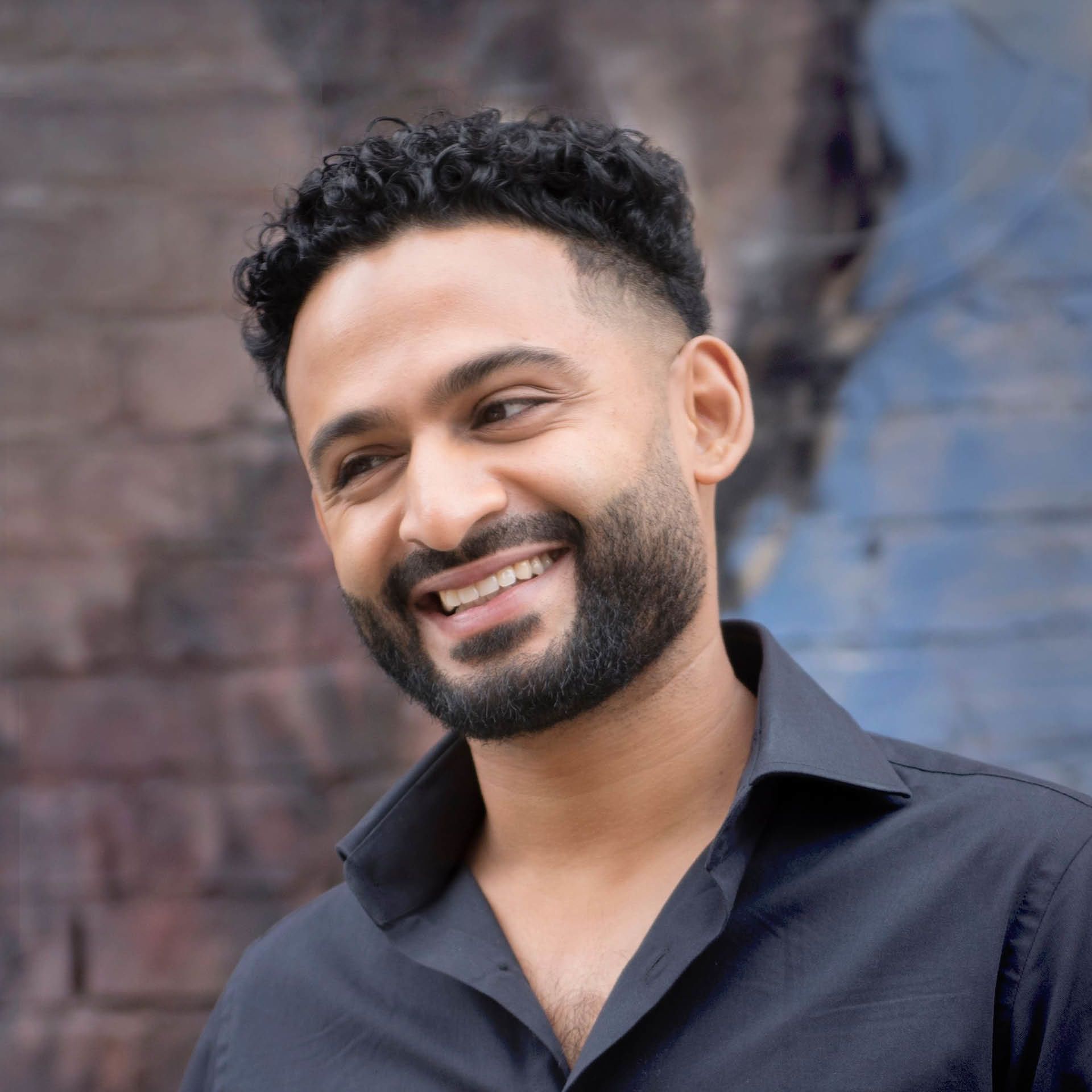
Born in Toronto, Jordan de Souza studied conducting at McGill University, Montreal, where he joined the music faculty after graduating. During this time he was also Conductor in Residence of Tapestry Opera in Toronto.
He made his debut with the Canadian Opera Company in 2015, conducting The Marriage of Figaro. The following year he was invited to join the staff of the Komische Oper Berlin, later becoming Kapellmeister, during which time he collaborated with director Barrie Kosky on critically acclaimed new productions of Pelléas and Mélisande, La bohème, Candide and Weinberger’s Frühlingsstürme.
Recent highlights include The Magic Flute for the Bavarian State Opera, Der Rosenkavalier for Garsington Opera, Rigoletto for Houston Grand Opera, Daniel Catán’s Florencia en el Amazonas for Chicago Lyric Opera and Don Giovanni for the Zurich Opera House
This season he conducts The Flying Dutchman for the Mannheim National Theatre and and a new production of La bohème for the Glyndebourne Festival. Further ahead, he returns to Chicago Lyric Opera and appear in productions for the Theater an der Wien, Dutch National Opera, Cologne Opera and the Deutsche Oper Berlin, as well as conducting concerts with the Philharmonia Orchestra and Montreal Symphony Orchestra.
Noriko Ogawa piano
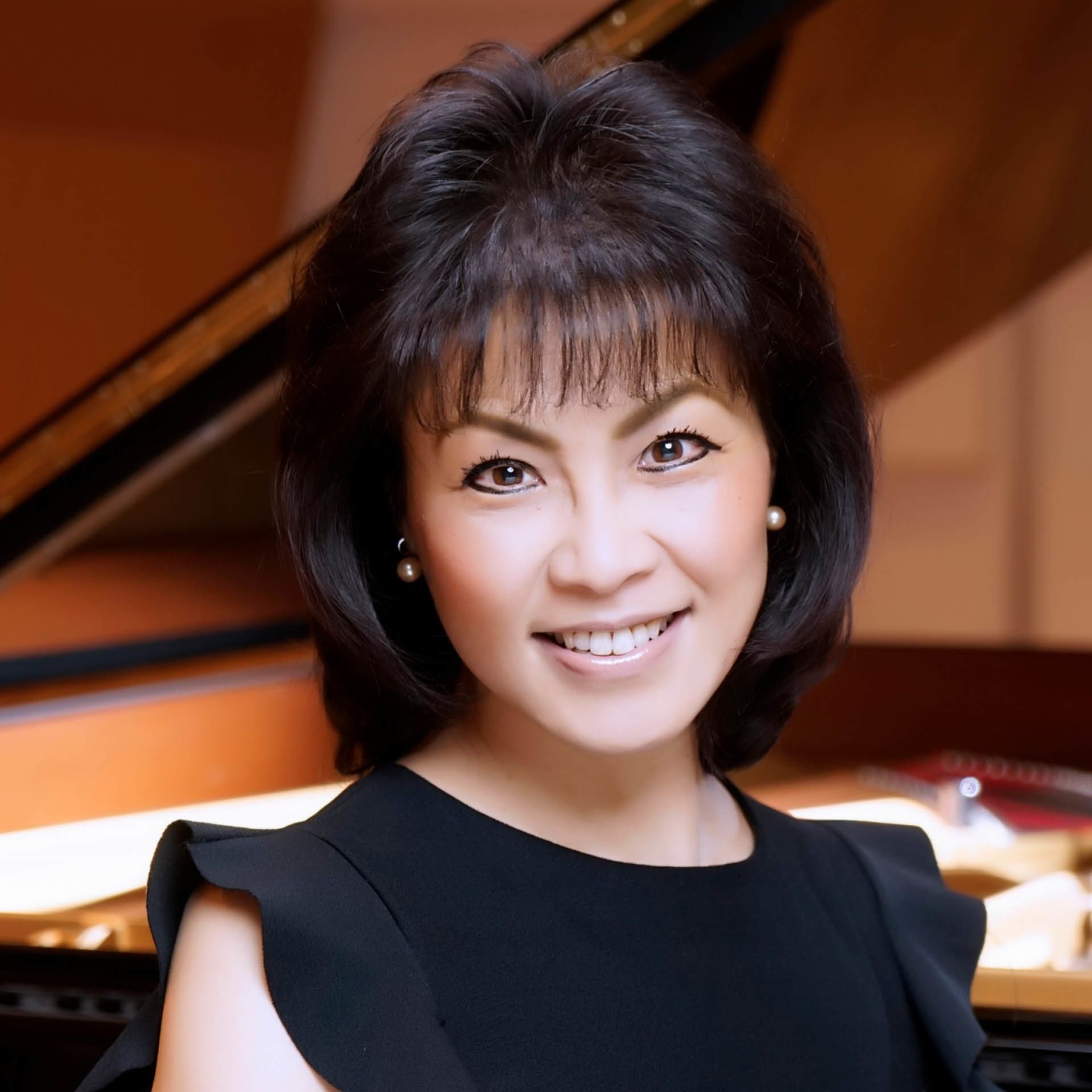
Photo: A. Muto
Photo: A. Muto
Noriko Ogawa has appeared worldwide in recital and concerto performances since becoming a prize-winner of the Leeds International Piano Competition in 1987
Recent highlights include a New Year Concert with the Tokyo Metropolitan Orchestra, Beethoven’s Piano Concerto No. 5 with the Tokyo Symphony Orchestra and Beethoven’s Piano Concerto No. 3 with the Hiroshima Symphony Orchestra.
In addition to her busy performing and teaching commitments, Noriko Ogawa regularly judges at international competitions: recent and forthcoming adjudication projects include work with the Cleveland International Piano Competition, Leeds International Piano Competition, International Edvard Grieg Competition in Norway, BBC Young Musician of the Year, ARD International Music Competition in Germany, the Honens International Piano Competition in Canada and the Scottish International Piano Competition. In 2018 she was appointed Chairperson of the jury for the 10th Hamamatsu International Piano Competition and in the same year was elected to the board of the World Federation of International Music Competitions.
Noriko Ogawa’s discography of over 30 titles ranges from Mozart and Rachmaninov to Alexander Tcherepnin, Vagn Holmboe and Yoshihiro Kanno. She has also recorded works by Takemitsu, Mussorgsky’s Pictures at an Exhibition and the complete solo piano works of Debussy and Satie
She founded Jamie’s Concerts, a series for autistic children and parents, and is a Cultural Ambassador for the National Autistic Society.
Kathryn Stott piano
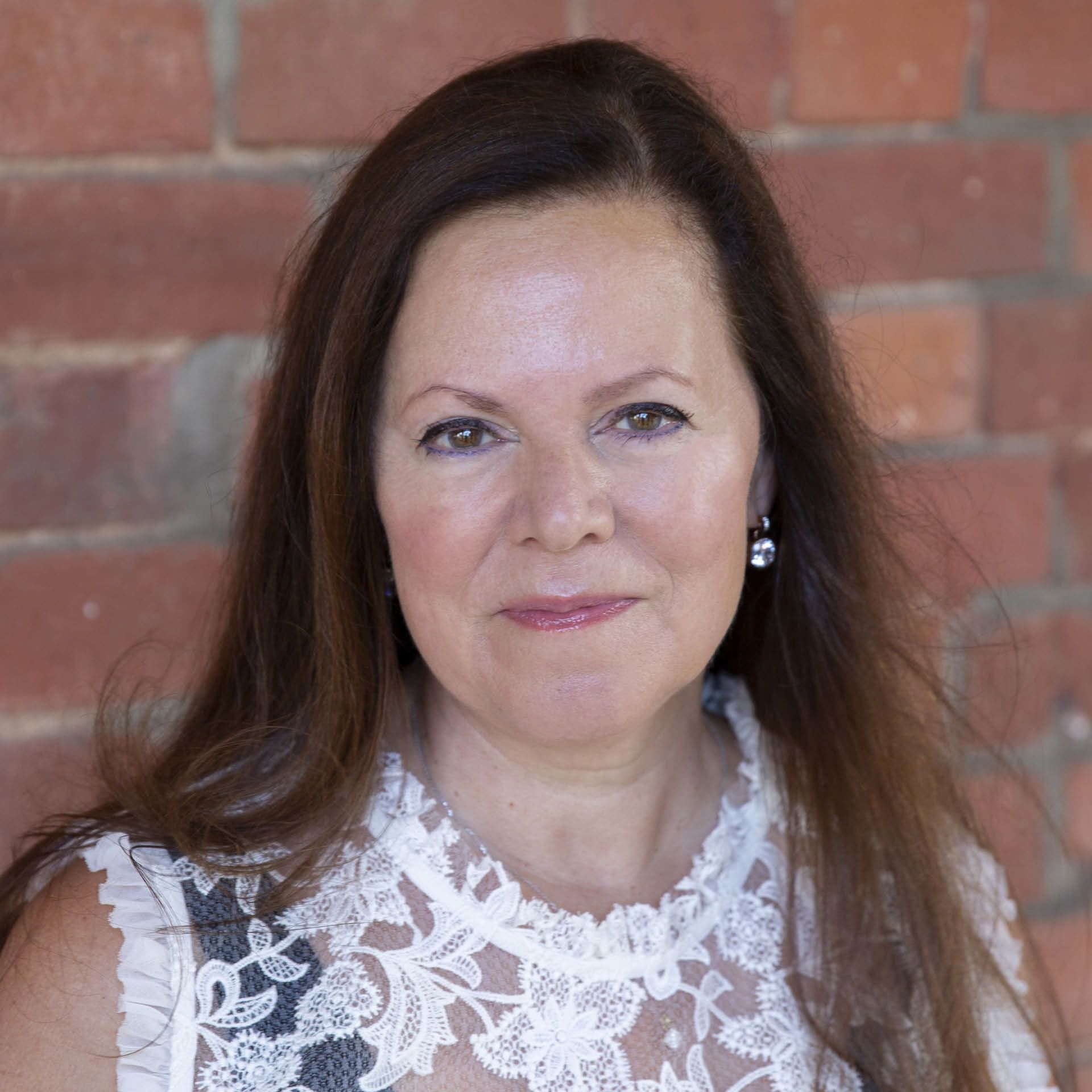
Photo: Jacqui Ferry
Photo: Jacqui Ferry
Born in Lancashire, Kathryn Stott studied at the Yehudi Menuhin School and the Royal College of Music. She has performed around the world since becoming a prize-winner at the Leeds International Piano Competition in 1978. Highlights include appearances at the BBC Proms and extensive tours of Australasia, Asia and the USA.
Among her diverse collaborators are cellist Giovanni Sollima, bandoneon player J. P. Jofre and violinist Janine Jansen. She has also enjoyed a long-standing collaboration with cellist Yo-Yo Ma spanning over 35 years. Their latest disc together, recorded during the Covid-19 pandemic in 2020, is Songs of Comfort and Hope, a selection ranging from popular and folk to jazz and classical music.
With a keen interest in contemporary music, Kathryn Stott has had many works written especially for her. Her love of tango and other Latin American music is reflected in her collaboration with Yo-Yo Ma and leading South American musicians on the Grammy Award-winning Soul of the Tango and its successor, Obrigado Brazil.
Kathryn Stott was appointed Chevalier dans l’Ordre des Arts et des Lettres by the French government. She was Artistic Director of the Australian Festival of Chamber Music from 2018 to 2021 and currently also teaches at the Royal Northern College of Music in Manchester.
BBC Symphony Orchestra
The BBC Symphony Orchestra has been at the heart of British musical life since it was founded in 1930. It plays a central role in the BBC Proms at the Royal Albert Hall, performing at the First and Last Night each year in addition to regular appearances throughout the Proms season with the world’s leading conductors and soloists.
The BBC SO performs an annual season of concerts at the Barbican in London, where it is Associate Orchestra. Its commitment to contemporary music is demonstrated by a range of premieres each season, as well as Total Immersion days devoted to specific composers or themes.
Highlights of the current season include concerts conducted by Sakari Oramo with music by Beethoven, Brahms, Ruth Gipps, Dora Pejačević, Sibelius and others; performances with Principal Guest Conductor Dalia Stasevska, including the devised work Concerto No. 1: SERMON by Davóne Tines, combining music and poetry in a unique examination of racial justice; children’s author Jacqueline Wilson reading from her best-selling books in a family concert; the world premiere of Up for Grabs by composer and Arsenal fanatic Mark-Anthony Turnage; the BBC Symphony Chorus’s return to the Barbican stage for a Christmas concert; a performance with Jules Buckley and Canadian singer-songwriter Patrick Watson; the BBC Symphony Chorus’s return to the Barbican stage for performances including live accompaniment of Vaughan Williams’s score to the film Scott of the Antarctic; a concert celebrating the 100th anniversary of the BBC; and two Total Immersion days, one focusing on music composed in the camps and ghettos of Nazi-occupied Europe and one featuring the music of Frank Zappa. Guest conductors include Alpesh Chauhan, John Storgårds, Jukka-Pekka Saraste, Jordan de Souza and Nathalie Stutzmann.
The vast majority of performances are broadcast on BBC Radio 3 and a number of studio recordings each season are free to attend. These often feature up-and-coming new talent, including members of BBC Radio 3’s New Generation Artists scheme. All broadcasts are available for 30 days on BBC Sounds and the BBC SO can also be seen on BBC TV and BBC iPlayer and heard on the BBC’s online archive, Experience Classical.
The BBC Symphony Orchestra and Chorus – alongside the BBC Concert Orchestra, BBC Singers and BBC Proms – also offer enjoyable and innovative education and community activities and take a leading role in the BBC Ten Pieces and BBC Young Composer programmes.
Chief Conductor
Sakari Oramo
Principal Guest Conductor
Dalia Stasevska
Günter Wand Conducting Chair
Semyon Bychkov
Conductor Laureate
Sir Andrew Davis
Creative Artist in Association
Jules Buckley
First Violins
Stephen Bryant
Jeremy Martin
Jenny King
Celia Waterhouse
Colin Huber
Shirley Turner
Ni Do
Molly Cockburn
Elizabeth Partridge
Zanete Uskane
Will Hillman
Tom Aldren
Tina Jacobs
Clare Hoffman
Second Violins
Heather Hohmann
Dawn Beazley
Rose Hinton
Vanessa Hughes
Danny Fajardo
Tammy Se
Caroline Cooper
Victoria Hodgson
Lucica Trita
Sarah Thornett
Maya Bickel
Shelley van Loen
Edward Barry
Sali Wyn Ryan
Violas
David Aspin
Philip Hall
Joshua Hayward
Nikos Zarb
Audrey Henning
Natalie Taylor
Michael Leaver
Carolyn Scott
Mary Whittle
Peter Mallinson
Matthias Wiesner
Lowri Thomas
Cellos
Graham Bradshaw
Mark Sheridan
Clare Hinton
Sarah Hedley-Miller
Michael Atkinson
Augusta Harris
Sebastian van Kuijk
Ben Chappel
Sophie Gledhill
Chantel Woodhouse
Double Basses
Nicholas Bayley
Richard Alsop
Anita Langridge
Michael Clarke
Beverley Jones
Josie Ellis
Elen Pan
Lewis Reid
Flutes
Michael Cox
Tomoka Mukai
Piccolo
Jane Mitchell
Oboes
John Roberts
Imogen Smith
Offstage Oboe
Helen Clinton
Cor Anglais
Jess Mogridge
Clarinets
James Burke
Emma Burgess
Bass Clarinet
Thomas Lessels
Bassoons
Julie Price
Lully Bathurst
Joanna Stark
Contrabassoon
Steven Magee
Horns
Martin Owen
Michael Murray
Andrew Antcliff
Nicholas Hougham
Mark Wood
Trumpets
Christian Barraclough
Joseph Atkins
Trombones
Byron Fulcher
Dan Jenkins
Bass Trombone
Robert O'Neill
Tuba
Sam Elliott
Jon Riches
Timpani
Christopher Hind
Jeremy Cornes
Grahame King
Percussion
David Hockings
Alex Neal
Fiona Ritchie
Joe Cooper
Oliver Lowe
Stefan Beckett
Harps
Louise Martin
Anneke Hodnett
Piano
Elizabeth Burley
The list of players was correct at the time of publication