Romantic Rhapsodies
Thursday 7/11/24, 7.30pm
Brangwyn Hall, Swansea


Felix Mendelssohn
Violin Concerto in E minor26’
INTERVAL: 20 minutes
Anton Bruckner
Symphony No. 4 ‘Romantic’70’
Jaime Martínconductor
Ellinor D’Melon violin


The concert is being recorded by BBC Radio 3 for future broadcast in Classical Live; it will be available for 30 days after broadcast via BBC Sounds, where you can also find podcasts and music mixes.
Introduction

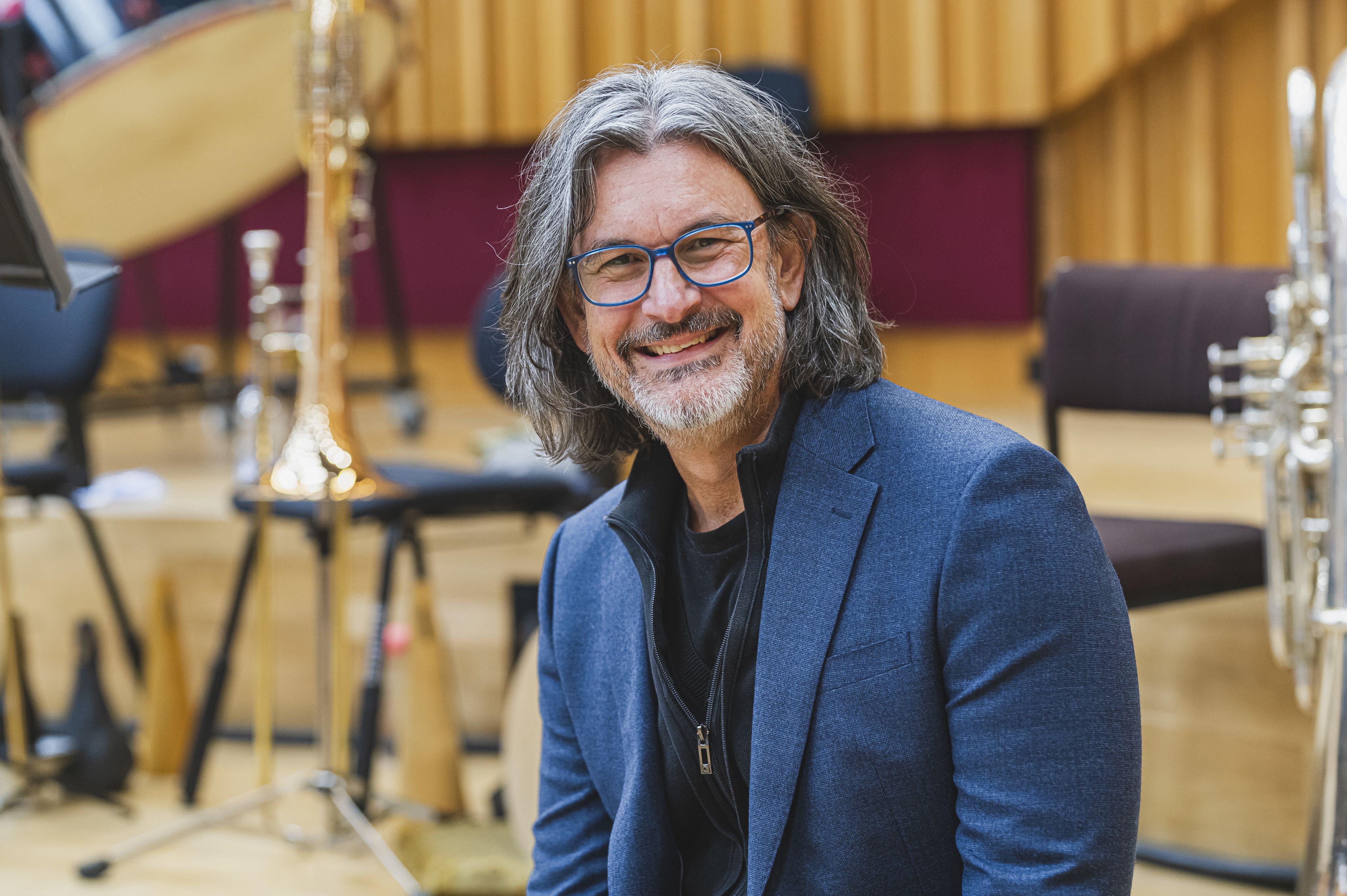
Photo: Kirsten McTernan
Photo: Kirsten McTernan
Welcome to tonight’s concert, which finds our Principal Guest Conductor Jaime Martín directing two very different masterpieces of the Romantic era.
Mendelssohn’s Violin Concerto in E minor is a piece that unfolds so effortlessly that it’s easy to forget that he laboured over it for six years, conscious of creating something innovative in terms of its musical structure, while at the same time finding a crystalline beauty that owes something to Mozart. To perform it tonight we’re delighted to welcome a rising star in the violin world, Ellinor D’Melon.
Bruckner – the bicentenary of whose birth we’re celebrating this year – was also conscious of creating something new in the symphony he named the ‘Romantic’. This may be down to the fact that it’s so clearly pictorial, from the opening horn calls, drawing us into a woodland scene, to the funeral march-tread of the slow movement. It’s a symphony that unfolds on a typically Brucknerian scale, the closing moments offering a sense of jubilation that is all the more powerful for being hard-won.
Enjoy!
Matthew Wood
Head of Artistic Planning and Production
Please respect your fellow audience members and those listening at home. Turn off all mobile phones and electronic devices during the performance. Photography and recording are not permitted.
Felix Mendelssohn(1809–47)
Violin Concerto in E minor, Op. 64 (1838–44)

1 Allegro molto appassionato –
2 Andante –
3 Allegretto non troppo – Allegro molto vivace
Ellinor D’Melonviolin
Mendelssohn was one of the most remarkable child prodigies in history. He made his first public appearance at the piano aged nine. By his early teens he had already written a dozen string symphonies for performance within Berlin’s private concert circle and in 1822, aged 13, he composed his first Violin Concerto in D minor, dedicating it to his violin teacher and lifelong friend, Eduard Rietz. When and where the work was first performed is not clear, however, as the manuscript was forgotten after Mendelssohn’s death and was not seen again until Yehudi Menuhin came across it in 1951. Even now, this early concerto rarely gets exposure on the concert platform – it is Mendelssohn’s second violin concerto, composed some 20 years later, that gets all the glory.
It would take Mendelssohn some six years to hone and perfect his Violin Concerto in E minor, which was finally published and premiered in 1844. For many listeners, this is Mendelssohn’s ‘only’ concerto for the violin, since its fame and popularity have far eclipsed the Concerto in D minor. But even though the E minor Concerto is evidence of a far more mature composer, departing from traditional Classical models in many areas, it takes a surprising amount of inspiration from its predecessor – not least in its elegant, Mozartian poise and grace.
That the concerto took so long for Mendelssohn to complete is thanks in part to his determination to introduce several ground-breaking formal innovations. The E minor Concerto’s most significant departure from previous models was to link the three movements into one continuous work – a feature that freed up the concerto’s strict three-movement design and would be imitated by many of his successors during the second half of the 19th century. Mendelssohn’s decision to write his own cadenza for the first movement – although not completely unheard of – also became far more common in the years that followed, while his unusual decision to place it before the recapitulation would be copied by the likes of Sibelius and Tchaikovsky in their own violin concertos. But perhaps Mendelssohn’s greatest innovation was to invert the concerto’s opening so that it is the soloist – instead of the orchestra – who introduces the opening theme. This structural shift would set the tone for a new era of Romanticism, in which the newly inward-looking artist became the focus of attention, and the concerto itself became a dazzling new showcase.
Programme note © Jo Kirkbride
INTERVAL: 20 minutes
Anton Bruckner(1824–96)
Symphony No. 4 in E flat major, ‘Romantic’(1874–6, rev. 1878/80)
1 Bewegt, nicht zu schnell [Lively, not too fast]
2 Andante, quasi Allegretto
3 Scherzo: Bewegt [Lively] – Trio: Nicht zu schnell. Keinesfalls schleppend [Not too fast. But on no account dragging] – Scherzo
4 Finale: Bewegt, doch nicht zu schnell [Lively, but not too fast]
The title is definitely Bruckner’s, so in what way is his Fourth Symphony ‘Romantic’? His symphonies are all products of the Romantic era, however much they may owe to the counterpoint of Palestrina and Bach or to the architecture of the splendid cathedrals in which Bruckner (a brilliant organist and a devout Roman Catholic) worked and found sanctuary. But for many the Fourth Symphony does have a special power to evoke moods or mental pictures, especially the kind associated with German (or Austro-German) Romantic art and literature.
The opening – solo horn calling softly through quietly shimmering string tremolandos – is clearly spacious woodland music, recalling Weber’s national classic Der Freischütz or the so-called ‘Forest Murmurs’ from Wagner’s Siegfried. What this beginning also reveals is Bruckner’s new-found confidence as a symphonist. From the initial horn theme, through the long following crescendo to the arrival of the second main theme, fortissimo, on heavy brass, the music flows forwards like a great river. The horn theme returns twice in its original form: about two-thirds of the way through, touchingly embellished by flute, and at the very end of the movement, where it sounds out thrillingly on massed horns.
Bruckner’s slow movements tend to be profound, songful meditations but this one is more like a funeral march or a nocturnal procession. The English composer Hugh Wood (1932–2021) compared it tellingly to a big Central European forest, in which it’s possible to see considerable distances between the trunks of high-arching trees and to gain the impression that however fast your pace, you’re not really moving at all. There are moments of mesmerising stillness, in which woodwinds and horns call to each other like distant birds. Eventually this movement builds to a magnificent, Wagnerian climax but the splendour soon fades, leaving just the bare march rhythm on timpani with lamenting phrases on horn, viola and clarinet.
The Scherzo is sometimes nicknamed ‘The Hunt’, but there’s something cosmic about this music, as though the horses were careering across the skies rather than pounding the earth. The central Trio section is a delicious contrast: a cosy, rustic slow Ländler (country cousin of the sophisticated Viennese waltz). The Scherzo is heard again, in full, then begins the longest and most exploratory of the four movements, the Finale.
Arriving at this movement’s final form caused Bruckner a lot of trouble, and there is evidence that he wasn’t satisfied even after he’d completed his second revision (1880). There seems to be a consensus that, although there are splendid ideas, there are passages in which Bruckner momentarily seems to lose his way. But Bruckner is attempting something radically new here: not a fast classical finale but a huge summing up that contrasts dramatic assertion with moments of uncertainty or with meditative calm. Patience will ultimately be rewarded. The final long crescendo, beginning in minor-key darkness with the first theme sounding softly through shimmering strings, is one of Bruckner’s most thrilling symphonic summations, ending in a blaze of major-key glory. Somehow, looking back, it all seems to make sense.
Programme note © Stephen Johnson
Help Us Improve Our Online Programmes.
Please take this 5-minute survey and let us know what you think of these notes.
Programme Survey
You may also like:
Folk Tales & Fabled Love
Saturday 11/1/25, 3.00pm
BBC Hoddinott Hall, Cardiff
Sunday 12/1/25, 3.00pm
Brangwyn Hall, Swansea
Janáček The Cunning Little Vixen – suite
Martinů Cello Concerto No. 1
Stravinsky Petrushka(1947 version)
Antony Hermus conductor
Laura van der Heijden cello
ENCHANTING | STRIKING | FOLKY
Start your musical journey this January with Janáček’s operatic tragicomedy The Cunning Little Vixen. With short and pithy symphonic pantomime sections, inventively orchestrated to give each character their own rhythmic motif, this folksy suite is laden with lush harmony and a mood firmly drenched in nature and love.
The gifted young cellist Laura van der Heijden returns to BBC NOW with a performance of Martinů’s First Cello Concerto, by turns athletic, folky and impassioned, before conductor Antony Hermus assumes the role of puppet-master in Stravinsky’s ballet Petrushka. In it, Petrushka, the rebellious jester, falls in love with a Ballerina, who falls in love with the Moor in this tragic folk tale. Its power lies in the way Stravinsky conjures the dancing, despairing puppet through ingenious rhythm and orchestration.
Fireworks of Passion
Thursday 20/3/25, 7.30pm
BBC Hoddinott Hall, Cardiff
Friday 21/3/25, 7.30pm
Brangwyn Hall, Swansea
Grace Williams Penillion
Bruch Violin Concerto No. 1
Rachmaninov Symphony No. 3
Tadaaki Otaka conductor
Eldbjørg Hemsing violin
FIERY | IMPASSIONED | RICH
Quasi-improvisatory melodies weave with rhythmic drive, reminiscent of harp-accompanied folk songs, in Grace William’s Penillion, forming the potent opener to a concert with BBC NOW’s much-loved Conductor Laureate Tadaaki Otaka.
Soaring melody and fiendishly tricky virtuosity combine in Bruch’s passionate First Violin Concerto. From soloistic fireworks to rich orchestral backdrop there’s little wonder this concerto remains a favourite with soloists and audiences alike; to perform we’re delighted to welcome back violin sensation Eldbjørg Hemsing. Rachmaninov’s Third Symphony is similarly passionate, striking climaxes giving way to soulful solos, forceful marches to thunderous celebration, all based on one musical motif skilfully transformed and developed throughout.
Biographies
Jaime Martínconductor

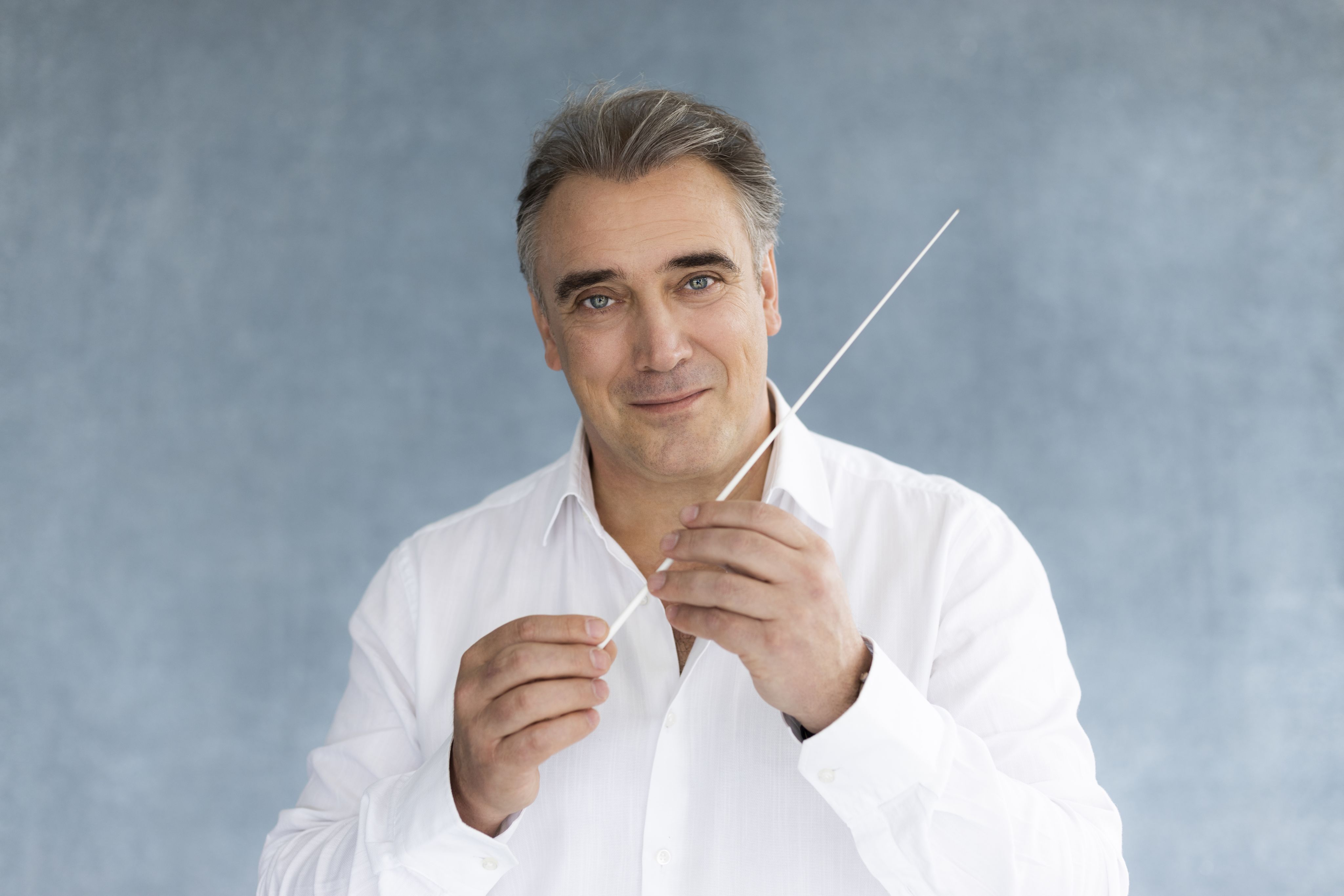
Paul Marc Mitchell
Paul Marc Mitchell
Spanish conductor Jaime Martín is Chief Conductor of the Melbourne Symphony Orchestra, Music Director of the Los Angeles Chamber Orchestra and Principal Guest Conductor of the BBC National Orchestra of Wales. He was Chief Conductor of the National Symphony Orchestra of Ireland (2019–24), Principal Guest Conductor of the Spanish National Orchestra (2022–24) and Artistic Director and Principal Conductor of the Gävle Symphony Orchestra (2013–22).
Recent highlights include acclaimed debuts with the Dallas and Indianapolis Symphony orchestras and the Dresden Philharmonic, a UK tour with the Gävle Symphony and his debut as a conductor at last year’s BBC Proms. Last season he made his debut with the Budapest Festival Orchestra and returned to the Royal Stockholm Philharmonic Orchestra, Castile and León, Colorado, Galicia and Queensland Symphony orchestras and BBC National Orchestra of Wales.
Jaime Martín’s debut recording with the Melbourne Symphony Orchestra (songs by Debussy and Richard Strauss with Siobhan Stagg) was released earlier this year. He has recorded Mozart’s wind concertos with the London Symphony Orchestra, a series of Brahms recordings with the Gävle SO, a disc of choral works with the Eric Ericson Chamber Choir, as well as most recently works by Swedish composer Melcher Melchers.
Before turning to conducting full-time in 2013, he was principal flute of the Royal Philharmonic Orchestra, Chamber Orchestra of Europe, English National Opera and London Philharmonic Orchestra.
Ellinor D’Melonviolin


Ellinor D’Melon was born to Cuban parents in Jamaica and started to learn the violin at the age of two. Today, still only in her early twenties, she is making her mark on the musical world.
She has been a prizewinner at major competitions, including first prizes at theInternational Karol Lipiński , Henryk Wieniawski and Novosibirsk violin competitions. She increasingly performs with prominent international orchestras, including the Gävle, Navarra and RTÉ National Symphony orchestras, Mariinsky Theatre Orchestra, Galicia, St Petersburg and Sofia Philharmonic orchestras, Moscow Virtuosi and Orquestra de Cadaqués. She has performed in prestigious halls, notably the Berlin Philharmonie, Mariinsky Theatre Concert Hall, Madrid National Auditorium, Royal Concertgebouw, Cologne Philharmonie, Tonhalle Zurich, Sala Verdi Milano, and Gdańsk Baltic Hall.
Her growing list of collaborators includes Zubin Mehta, Vladimir Spivakov, Jaime Martín, Michail Jurowski, James Feddeck and Jan Latham Koenig. Recent and forthcoming highlights include debuts with the Royal Philharmonic Orchestra, Orquesta Sinfónica del Principado de Asturias, Orquesta Sinfónica de Castilla y León, Orquesta y Coro Nacionales de España and Norrlandsoperan Symphony Orchestra, her UK recital debut at the Royal Albert Hall’s Elgar Room and appearances at the Verbier, Gstaad and Schleswig-Holstein festivals.
Additional highlights include performances of Bach’s Double Concerto alongside Anne-Sophie Mutter and a chamber concert with Fazil Say at the Tsinandali Festival. Since 2011 she has studied with Zakhar Bron at the Reina Sofía School of Music, where she previously held the Helena Revoredo and Albéniz Foundation Scholarships. She also joined the Zakhar Bron Academy in 2013.
Ellinor D’Melon plays a Giovanni Battista Guadagnini violin from 1743, on kind loan from an anonymous donor.
BBC National Orchestra of Wales
For over 90 years, the BBC National Orchestra of Wales, the only professional symphony orchestra in Wales, has played an integral part in the cultural landscape of the country, occupying a distinctive role as both a broadcast and national orchestra, and serving as an ambassador of Welsh culture, regularly performing music created in Wales and championing Welsh composers and artists.
Part of BBC Cymru Wales and supported by the Arts Council of Wales, BBC NOW performs a busy schedule of concerts and broadcasts, working with acclaimed conductors and soloists from across the world, including its Principal Conductor, the award-winning Ryan Bancroft.
The orchestra is committed to working in partnership with community groups and charities, taking music out of the concert hall and into settings such as schools and hospitals to enable others to experience and be empowered by music. It undertakes workshops, concerts and side-by-side performances to inspire and encourage the next generation of performers, composers and arts leaders, and welcomes thousands of young people and community members annually through its outreach and education projects.
BBC NOW performs annually at the BBC Proms and biennially at the BBC Cardiff Singer of the World competition, and its concerts can be heard regularly across the BBC – on Radio 3, Radio Wales and Radio Cymru. On screen, music performed by BBC NOW can be heard widely across the BBC and other global channels, including the soundtrack and theme tune for Doctor Who, Planet Earth III, Prehistoric Planet, The Pact and Children in Need.
Based at BBC Hoddinott Hall, Cardiff Bay, BBC NOW utilises a state-of-the-art recording studio with a camera system for livestreams and TV broadcasts to bring BBC NOW’s music to a broader audience across Wales and the world. For more information about BBC NOW please visit bbc.co.uk/now
Patron
HM King Charles III KG KT PC GCB
Principal Conductor
Ryan Bancroft
PrincipalGuest Conductor
Jaime Martín
Conductor Laureate
Tadaaki Otaka CBE
Composer-in-Association
Gavin Higgins
First Violins
Lesley Hatfield leader
Martin Gilyn-Jones sub-leader
Gwenllian Hâf MacDonald
Terry Porteus
Suzanne Casey
Carmel Barber
Kerry Gordon-Smith
Alejandro Trigo
Juan Gonzalez
Anna Cleworth
Žanete Uškāne
Ruth Heney
Amy Fletcher
Zhivko Georgiev
Second Violins
Anna Smith *
Will Hillman
Ros Butler
Sheila Smith
Michael Topping
Lydia Caines
Vickie Ringguth
Katherine Miller
Joseph Williams
Gary George-Veale
Laurence Kempton
Violas
Rebecca Jones *
Peter Taylor
Catherine Palmer
Lydia Abell
Laura Sinnerton
Lowri Thomas
Robert Gibbons
Ania Leadbeater
Dáire Roberts
Lucy Theo
Cellos
Joely Koos ‡
Raphael Lang
Sandy Bartai
Rachel Ford
Alistair Howes
Carolyn Hewitt
Keith Hewitt
Kathryn Graham
Double Basses
David Stark *
Alex Jones #
Christopher Wescott
Fabian Galeana
Ruohua Li
Imogen Fernando
Flutes
Matthew Featherstone *
John Hall †
Oboes
James Hulme ‡
Amy McKean †
Clarinets
Nicholas Carpenter *
Beth Crouch
Bassoons
Jarosław Augustiniak *
Laura Vincent
Horns
Tim Thorpe *
Meilyr Hughes
Neil Shewan †
Flora Bain
John Davy
Trumpets
Philippe Schartz *
Robert Samuel
Corey Morris †
Tim Barber
Trombones
Donal Bannister *
Dafydd Thomas
Jake Durham
Bass Trombone
Darren Smith †
Tuba
Daniel Trodden †
Timpani
Steve Barnard *
* Section Principal
† Principal
‡ Guest Principal
# Assistant String Principal
The list of players was correct at the time of publication
Director Lisa Tregale
Orchestra Manager Liz Williams
Assistant Orchestra Manager Nick Olsen **
Orchestra Personnel ManagerKevin Myers
Business Coordinator Georgia Dandy
Orchestra Administrator Eleanor Hall +
Head of Artistic Planning and ProductionMatthew Wood
Artists and Projects Manager Victoria Massocchi **
Orchestra Librarian Naomi Roberts
Producer Mike Sims
Broadcast Assistantvacancy
Head of Marketing and Audiences Sassy Hicks
Marketing Coordinator Amy Campbell-Nichols +
Digital Producer Yusef Bastawy **
Social Media Coordinator Harriet Baugh
Education Producers Beatrice Carey, Rachel Naylor maternity cover
Audio Supervisors Simon Smith, Andrew Smillie
Production Business Manager Lisa Blofeld
Stage and Technical Manager Steven Brown +
Assistant Stage and Technical Manager Josh Mead +
+ Green Team member
** Diversity & Inclusion Forum