
Symphonic Dances
Thursday 11/5/23, 7.30pm
St David’s Hall, Cardiff
Friday 12/5/23, 7.30pm
Brangwyn Hall, Swansea


Anna Clyne
Masquerade 5’
Pyotr Ilyich Tchaikovsky
Piano Concerto No. 1 32’
INTERVAL: 20 minutes
Sergey Rachmaninov
Symphonic Dances 35’
Daniel Ciobanu piano
James Feddeckconductor


The concert in Cardiff is being recorded by BBC Radio 3 for broadcast on 17th May in Radio 3 in Concert. It will then be available for 30 days after broadcast via BBC Sounds, where you can also find podcasts and music mixes. Visit bbc.co.uk/now for more information on future performances.
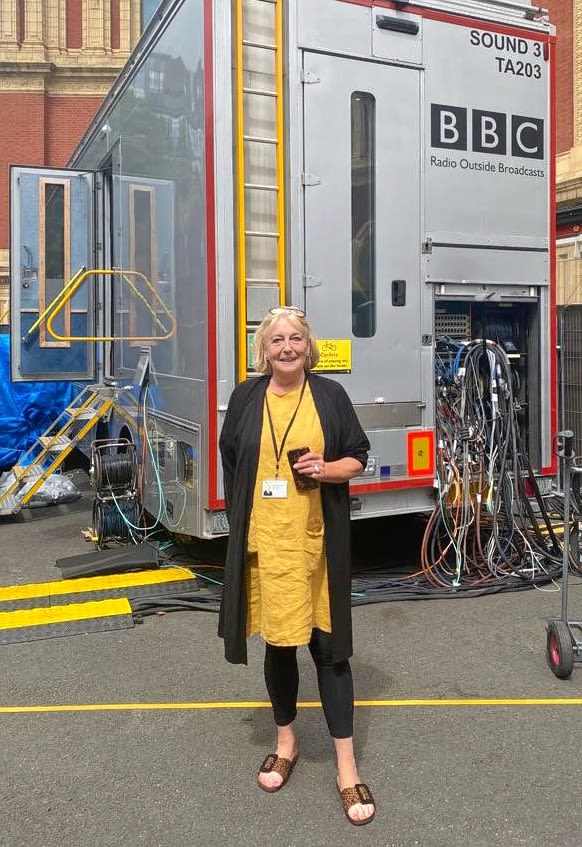
A Dedication to Nicola
Tonight’s concert is dedicated to our beloved friend and colleague Nicola Heywood Thomas (May 1955–April 2023) as a celebration of her life and work.
Presenting for BBC National Orchestra and Chorus of Wales since 1994, Nicola welcomed millions of people to our concerts and broadcasts with her distinctive voice and familiar face.
Her unique knowledge and style thrilled, educated and entertained concert-hall audiences and listeners around the world via BBC Radio 3, Radio Wales, and BBC Sounds.
Her friendship, creativity and passion will be greatly missed.

Welcome

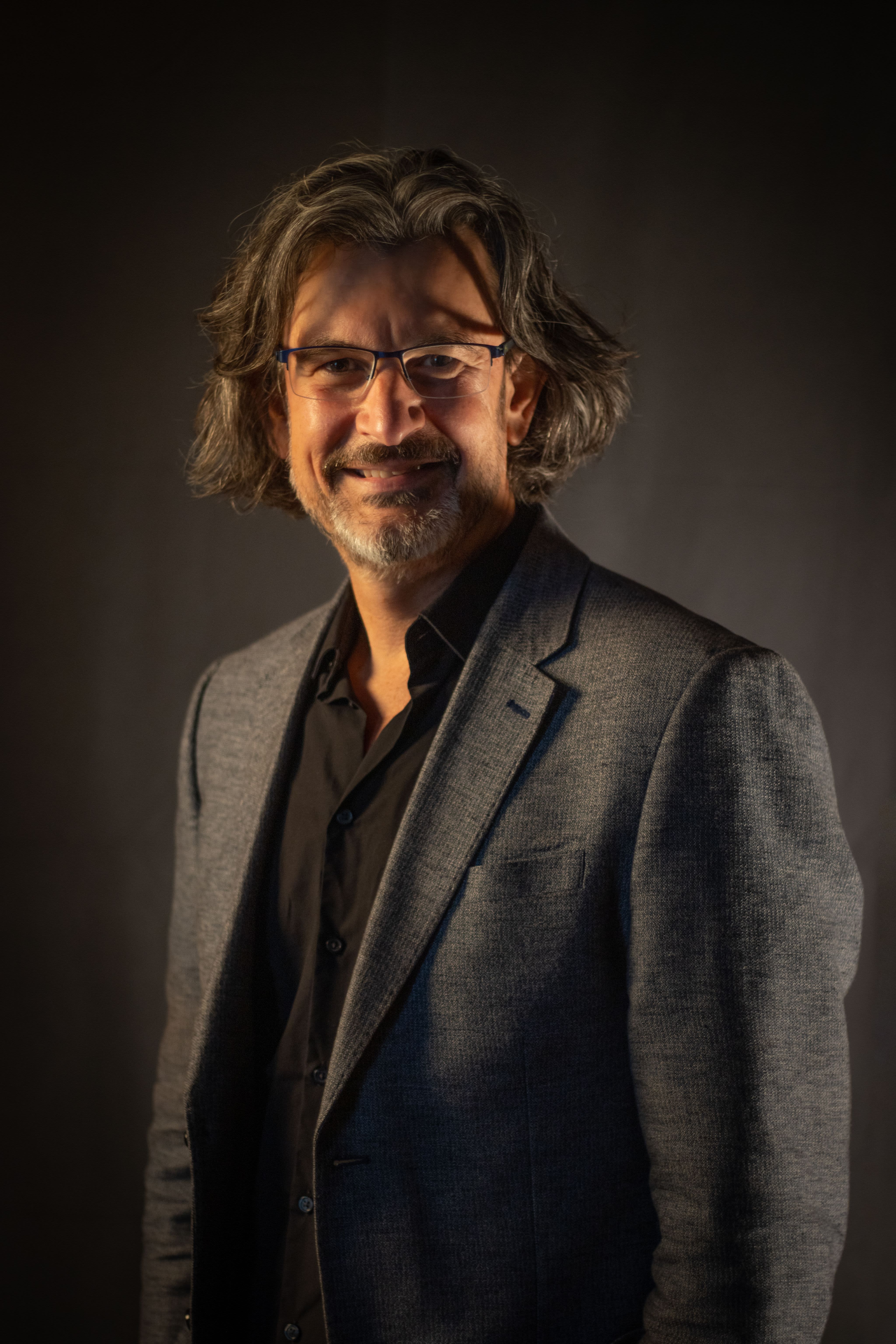
For tonight’s concert, we’re delighted to welcome conductor James Feddeck, who is making his debut with BBC NOW.
We begin in exhilarating fashion with Anna Clyne’s Masquerade, a piece originally written for the Last Night of the Proms; it may draw on the past for inspiration but its sound-world is entirely contemporary.
Rachmaninov’s final completed work, his Symphonic Dances, closes the evening. It’s full of the composer’s characteristically piquant instrumental colours, underpinned by an irresistible rhythmic verve; it’s little surprise that there were plans to turn it into a ballet.
In between comes Tchaikovsky’s First Piano Concerto, a work that combines virtuosity and abundant songfulness. Tonight’s soloist is the gifted Romanian pianist Daniel Ciobanu.
Enjoy!
Matthew Wood
Head of Artistic Production
Please respect your fellow audience members and those listening at home. Turn off all mobile phones and electronic devices during the performance. Photography and recording are not permitted.
Anna Clyne (born 1980)
Masquerade (2013)

Masquerade was composed for the Last Night of the Proms and is dedicated by Anna Clyne to ‘the Prommers’. She writes:
‘Masquerade draws inspiration from the original mid-18th-century promenade concerts held in London’s pleasure gardens. As is true of the BBC Proms today, these concerts were a place where people from all walks of life mingled to enjoy a wide array of music. Other forms of entertainment ranged from the sedate to the salacious, with acrobatics, exotic street entertainers, dancers, fireworks and masquerades. I am fascinated by the historic and sociological courtship between music and dance. Combined with costumes, masked guises and elaborate settings, masquerades created an exciting, yet controlled, sense of occasion and celebration. It is this that I wish to evoke in Masquerade.'
‘The work derives its material from two melodies. For the main theme, I imagined a chorus welcoming the audience and inviting them into their imaginary world. The second theme is an old English country dance melody and drinking song, “Juice of Barley”, which first appeared in John Playford’s 1695 edition of The English Dancing Master.’
Programme note © Anna Clyne
Further Listening: BBC Symphony Orchestra/Marin Alsop (Avie AV2434)
Website: https://www.annaclyne.com
Pyotr Ilyich Tchaikovsky (1840–93)
Piano Concerto No.1 in B flat minor, Op. 23 (1874–5, rev. 1879)

1 Allegro non troppo e molto maestoso – Allegro con spirito
2 Andantino semplice – Prestissimo – Tempo I
3 Allegro con fuoco
Daniel Ciobanu piano
Tchaikovsky began working on what would become his First Piano Concerto in the autumn of 1874. As was typical of his work process, he drafted the work in fits and starts, complaining in several letters to his brother Modest that work was ‘going with much difficulty and rather badly … It’s coming along – but very poorly.’ Yet by the turn of the year Tchaikovsky had finished a rough version, which he played for the virtuoso pianist-composer Nikolay Rubinstein, to whom he hoped to dedicate the piece. Rubinstein was sharply critical, and the wounded composer point-blank refused to change a single note. Instead, Tchaikovsky sent the piece to eminent pianist-conductor Hans von Bülow. He responded with much more enthusiasm and happily accepted the dedication. In October 1875 Bülow premiered the concerto in Boston to a rapturous reception. A few years later, Rubinstein changed his mind about the piece and added it to his performance repertoire. The vindicated composer admitted to being ‘very, very pleased’ by Rubinstein’s decision.
Tchaikovsky adapted several pre-existing songs in the music for the concerto. The main melodic theme in the first movement comes from a Ukrainian folk song that Tchaikovsky claimed to have heard performed by a blind street singer in Kyev.
In the second movement Tchaikovsky used the refrain of a song from a French vaudeville that he and his brother loved to sing together during the early 1870s. In the finale he employed another popular Ukrainian folk song as well as a Russian folk song that he had arranged in his 1869 collection of Fifty Russian Folk Songs.
These melodies are all linked despite their different origins, and help to hold the concerto as a whole together. But Tchaikovsky hides this connection under a spontaneous, lyrical manner, making the work sound as if it had been improvised rather than carefully and painstakingly planned. It is perhaps this rhapsodic nature that Rubinstein disliked – such a free-sounding piece was unusual for a concerto of this period. Yet Tchaikovsky’s fantasia-like approach and soaring melodies make this piece one of the most popular piano concertos of all time, and one of the composer’s favourites among his works for the instrument.
Programme note © Margaret Frainier
Further Listening: Martha Argerich; Berliner Philharmoniker/Claudio Abbado (DG E4498162)
Further Reading: Tchaikovsky: The Man and His Music David Brown (Faber)
INTERVAL: 20 minutes
Sergey Rachmaninov (1873–1943)
Symphonic Dances, Op. 45 (1940)

1 Non allegro
2 Andante con moto
3 Lento assai
Rachmaninov’s Symphonic Dances was his last-completed work. He’d fled Russia following the 1917 Revolution, at first living precariously between Switzerland and the USA, before settling permanently in America in 1936, where he initially had to rely on exhausting performance tours to support his family. He admitted: ‘When I left Russia, I left behind the desire to compose: losing my country, I lost myself also.’ But it didn’t last long. In late 1940 he shocked his friend, the conductor Eugene Ormandy, with a letter: ‘Last week I finished a new symphonic piece, which I naturally want to give first to you and your orchestra. It is called Fantastic Dances. I am beginning the orchestration.’
Those Fantastic Dances were soon renamed, and Rachmaninov also dropped his original movement titles – ‘Noon’, ‘Twilight’ and ‘Midnight’ – before the Symphonic Dances were premiered by Ormandy and the Philadelphia Orchestra on 3 January 1941. And, unusually for Rachmaninov, this is indeed dance music through and through, as its fierce focus on rhythm makes abundantly clear. Inspiration had perhaps come following choreographer Michel Fokine’s reimagining of the composer’s Rhapsody on a Theme of Paganini as a ballet in 1939. The two men discussed turning the Symphonic Dances into a dance work: Fokine was keen, but died suddenly in 1942 before the project could get going.
However, with its three substantial movements, the piece is also a symphony in all but name – or perhaps, with its showcasing of individual instrumental colours (from a crooning saxophone to a clattering xylophone), more of a concerto for orchestra.
Furthermore, Rachmaninov used the Symphonic Dances to sum up his own achievements as a composer, quoting several of his pieces in what he perhaps guessed might be his farewell to composition. Near the end of the dramatic first movement, for example, strings sing a Russian chant-like melody over glittering accompaniment on piano, harp and glockenspiel. This is a theme from Rachmaninov’s First Symphony, a reference intended to remain secret – the composer believed that the symphony’s score had been destroyed following its disastrous 1897 premiere.
The second movement is a fantastical waltz that evokes an uneasy atmosphere with its strange, dream-like harmonies.
The dramatic third movement seems to describe nothing less than mankind’s struggle for life, in a battle between the Dies irae plainsong from the Latin Requiem Mass, representing death, and a Russian Orthodox melody from Rachmaninov’s own Vespers, which may represent resurrection. Its propulsive rhythms build inexorably to a resolutely triumphant climax.
Programme note © David Kettle
Further Listening: Bavarian Radio Symphony Orchestra/Mariss Jansons (BR Klassik 900154)
Further Reading: Rachmaninoff and His World ed. Philip Ross Bullock (Univ. of Chicago Press)
Help us Improve Our Online Programmes.
Please take this 5-minute survey and let us know what you think of these notes.
Programme Survey
Biographies
James Feddeck conductor

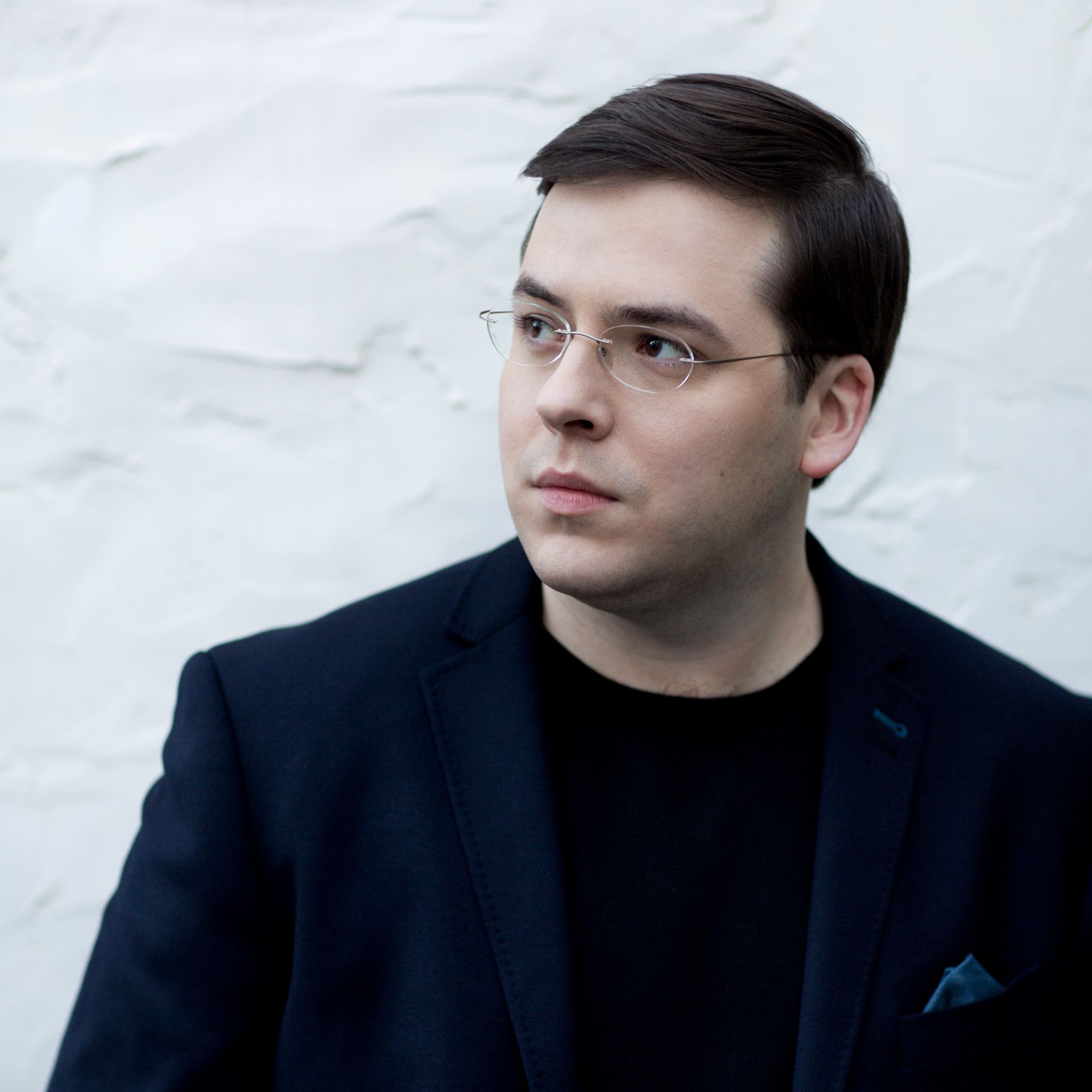
Photo: Benjamin Ealovega
Photo: Benjamin Ealovega
James Feddeck is Principal Conductor of Orchestra I Pomeriggi Musicali di Milano. Alongside his orchestral and operatic engagements in Milan this season, he makes return visits to the Orchestre National de Belgique, Orchestre National de Lille and the Residentie Orkest, as well as making his debut with BBC National Orchestra of Wales.
He was born in New York and has appeared extensively in North America, including with the Cleveland Orchestra and Chicago, Dallas, Detroit, Montreal, Oregon, San Francisco, Seattle and Toronto Symphony orchestras. He has also conducted many of Europe’s leading orchestras, such as the Orchestre national de France, Deutsches Symphonie-Orchester Berlin, Royal Scottish National Orchestra, Barcelona, BBC, BBC Scottish, City of Birmingham and Vienna Radio Symphony orchestras, BBC, Helsinki, Royal Liverpool, Stockholm and Warsaw Philharmonic orchestras, Staatskapelle Weimar and the Hallé. He has also undertaken successful visits to Australasia with the New Zealand Symphony Orchestra and Auckland Philharmonia.
He has performed with many of the world’s leading soloists, including Pierre-Laurent Aimard, Rudolf Buchbinder, Gautier Capuçon, Ellinor D’Melon, James Ehnes, Martin Fröst, Marc-André Hamelin, Gary Hoffman, Steven Isserlis, Vadym Kholodenko, Yo-Yo Ma, Truls Mørk, Midori, Daniel Müller-Schott, Javier Perianes, Fazıl Say and Arabella Steinbacher.
His discography includes music by Georg Schumann with the Deutsches Symphonie-Orchester Berlin and by Terry Riley and Dane Rudhyar with the Cleveland Orchestra and Calder Quartet.
James Feddeck studied at the Oberlin Conservatory of Music and was Assistant Conductor of the Cleveland Orchestra. He was a winner of the Solti Conducting Award and the Aspen Conducting Prize.
Daniel Ciobanu piano
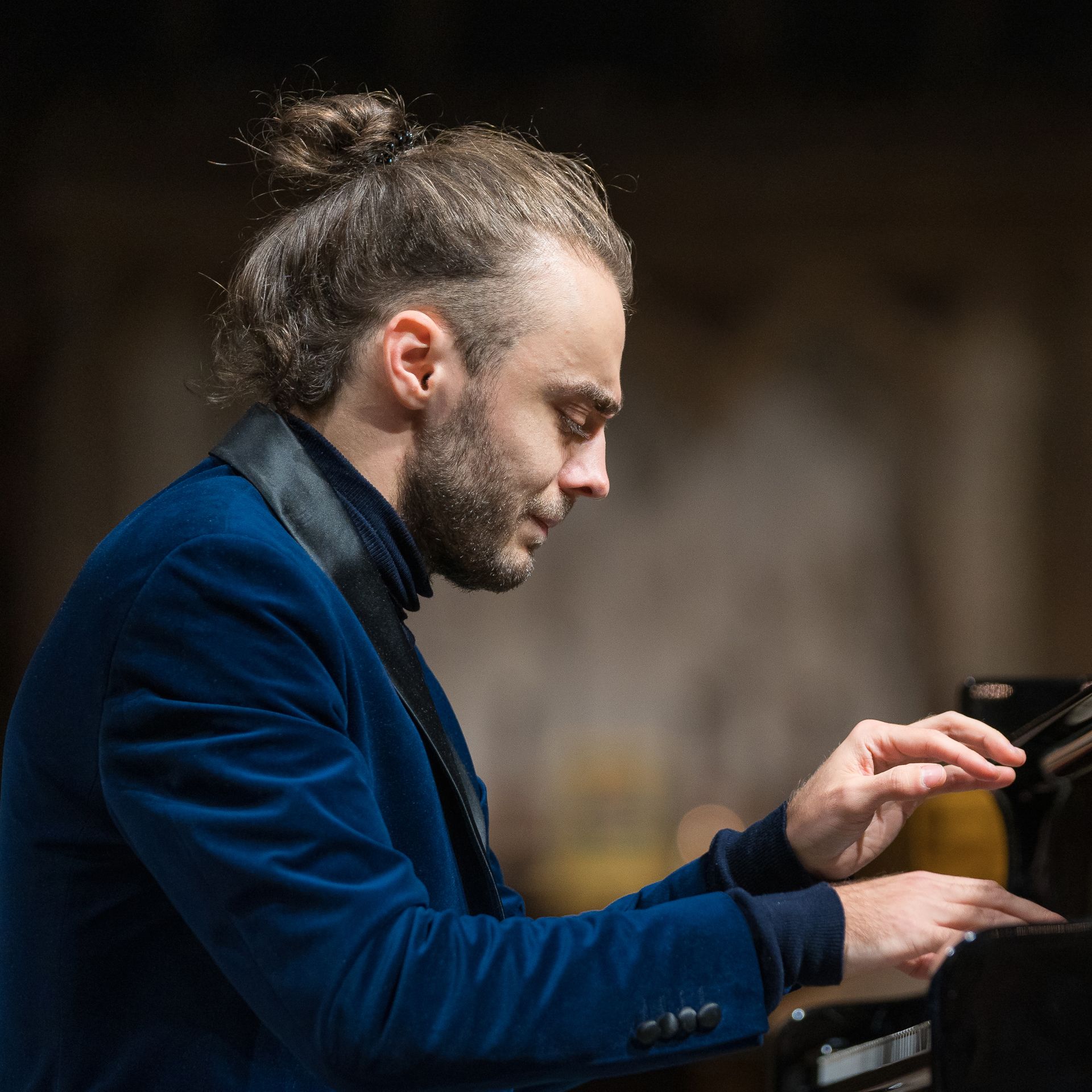
Photo: Alex Coman
Photo: Alex Coman
The Romanian pianist Daniel Ciobanu first attracted international acclaim at the 2017 Arthur Rubinstein Competition in Tel Aviv, where he won both the Silver Medal and the Audience Prize.
He subsequently appeared at Carnegie Hall, Hamburg Elbphilharmonie, Leipzig Gewandhaus, Berlin Konzerthaus, St John’s Smith Square and at the Enescu Festival in Bucharest, as well as touring to Japan, China, Taiwan, South Africa and Brazil.
He has appeared with leading orchestras all over the world, including the Zurich Tonhalle Orchestra, BBC, Israel and Royal Philharmonic orchestras, Konzerthausorchester Berlin, Deutsche Kammerphilharmonie Bremen and Royal Scottish National Orchestra. He has also performed at the Schleswig-Holstein and Lucerne festivals.
He has given recitals in venues such as the Southbank Centre’s Royal Festival Hall, Vienna Konzerthaus (with Julian Rachlin), Munich Gasteig, Salzburg Mozarteum, Auditorium de Radio France, Salle Cortot, Teatro Massimo Palermo, Bucharest Athenaeum, Warsaw Philharmonic, Teatro Municipal in Rio de Janeiro, Bronfman Auditorium in Tel Aviv and the Taipei National Concert Hall.
In the 2020–21 season he was the first ever Artist-in-Residence with the George Enescu Philharmonic in Bucharest.
In 2020 he released his first CD, featuring works by Prokofiev, Debussy, Liszt and Enescu, which was warmly acclaimed.
In 2017 he founded the Neamt Music Festival in his home town of Piatra Neamt in Romania, an event that brings together classical music and other art forms.
BBC National Orchestra of Wales
For over 90 years, BBC National Orchestra of Wales has played an integral part in the cultural landscape of Wales, occupying a distinctive role as both broadcast and national symphony orchestra. Part of BBC Wales and supported by the Arts Council of Wales, it has a busy schedule of live concerts throughout Wales and the rest of the UK. The orchestra is an ambassador of Welsh music and champions the works of contemporary composers.
It performs annually at the BBC Proms and biennially at the BBC Cardiff Singer of the World competition, and can be heard regularly across the BBC: on Radio 3, Radio Wales and Radio Cymru, as well as providing the soundtracks for some of your favourite television programmes.
Highlights of this season include the Elemental Explorations concerts in Brecon and Newport with Nil Venditti, Disney’s Fantasia in concert, Britten and Elgar with the orchestra’s much-loved Conductor Laureate Tadaaki Otaka, an all-new Gaming concert with gaming music legend Eímear Noone and a CoLaboratory concert with the sensational cellist Abel Selaocoe.
Alongside its busy schedule of live concerts, BBC NOW works closely with schools and music organisations throughout Wales, regularly delivering workshops, side-by-side performances and young composer initiatives to inspire and encourage the next generation of performers, composers and arts leaders and make music accessible to all. To find out more visit bbc.co.uk/bbcnow
Patron
HM King Charles III KG KT PC GCB
Principal Conductor
Ryan Bancroft
Conductor Laureate
Tadaaki Otaka CBE
Composer-in-Association
Gavin Higgins
Composer Affiliate
Sarah Lianne Lewis
First Violins
Lesley Hatfield leader
Nick Whiting associate leader
Martin Gwilym-Jones sub-leader
Terry Porteus
Suzanne Casey
Carmel Barber
Kerry Gordon-Smith
Juan Gonzalez
Ruth Heney
Gary George-Veale
Patrycja Mynarska
Jane Sinclair
Barbara Zdziarska
Amy Fletcher
Second Violins
Anna Smith *
Ros Butler
Sheila Smith
Katherine Miller
Beverley Wescott
Joseph Williams
Sellena Leony
Michael Topping
Lydia Caines
Vickie Ringguth
Ilze Abola
Laurence Kempton
Violas
Rebecca Jones *
Alex Thorndike #
Tetsuumi Nagata
Peter Taylor
Robert Gibbons
Ania Leadbeater
Catherine Palmer
Laura Sinnerton
Sarah Greene
Anna Growns
Cellos
Alice Neary *
Keith Hewitt #
Raphael Lang
Kathryn Graham
Carolyn Hewitt
Rachel Ford
Alistair Howes
Sarah Berger
Double Basses
David Stark *
Daniel Vassallo
Christopher Wescott
Richard Gibbons
Elen Roberts
Antonia Bakewell
Flutes/ Piccolos
Fiona Kelly ‡
Elizabeth May
Lindsey Ellis
Oboes
Steve Hudson *
Amy McKean †
Sarah-Jayne Porsmoguer
Cor Anglais
Sarah-Jayne Porsmoguer †
Clarinets
Nick Carpenter ‡
Emily Wilson
Jennie Joy Porton
Lenny Sayers
Bass Clarinet
Lenny Sayers †
Saxophone
Jennie Joy Porton
Bassoons
Jarosław Augustyniak *
Alex Davidson
David Buckland
Contra-Bassoon
David Buckland †
Horns
Tim Thorpe *
Meilyr Hughes
Neil Shewan †
William Haskins
Dave Ransom
Trumpets
Philippe Schartz *
Robert Samuel
Ben Jarvis
Trombones
Donal Bannister*
Simon Baker
Bass Trombone
Darren Smith †
Tuba
Mike Levis ‡
Timpani
Steve Barnard *
Percussion
Chris Stock *
Mark Walker †
Andrea Porter
Phil Hughes
Rhydian Griffiths
Harp
Valerie Aldrich-Smith †
Piano/Celesta
Catherine Roe Williams
* Section Principal
† Principal
‡ Guest Principal
# Assistant Principal
The list of players was correct at the time of publication
Director Lisa Tregale
Orchestra Manager Vicky James
Assistant Orchestra Manager Nick Olsen
Orchestra Coordinator, Operations Kevin Myers
Business Coordinator Caryl Evans
Orchestra Administrator Eleanor Hall
Head of Artistic Production Matthew Wood
Artists and Projects Manager Eleanor Phillips
Orchestra Librarian Eugene Monteith **
Producer Mike Sims
Broadcast Assistant Jacob Perkins
Head of Marketing and Audiences Sassy Hicks
Marketing Coordinator Amy Campbell +
Digital Producer Yusef Bastawy
Social Media Coordinator Harriet Baugh
Education Producers Beatrice Carey, Rhonwen Jones **
Audio Supervisors Simon Smith, Andrew Smillie
Production Business Manager Lisa Blofeld
Stage and Technical Manager Steven Brown +
Assistant Stage and Technical Manager Dave Rees
BBC Wales Apprentices Josh Gill, Analese Thomas-Strachan, Jordan Woodley
+ Green Team member
** Diversity & Inclusion Forum