
Jamie Phillips conducts BBC NOW
Saturday 6 November 2021, 7.45pm

Grace Williams
Penillion (17’)
Ralph Vaughan Williams
The Lark Ascending (13’)
INTERVAL: 20 minutes
Béla Bartók
Romanian Folk Dances (13’)
Carl Nielsen
Symphony No. 6 (31’)
Madeleine Mitchell violin
BBC National Orchestra of Wales
Jamie Phillips conductor


This concert is being broadcast live on BBC Radio Cymru and being recorded for future broadcast on BBC Radio 3’s Afternoon Concert, after which it will be available to stream or download for 30 days via BBC Sounds, where you can also find podcasts and music mixes. Visit bbc.co.uk/now for more information on future performances.
The second half of the concert is also being filmed for future release in the BBC NOW Digital Concert Series.
Introduction
Welcome to tonight’s concert at BBC Hoddinott Hall, the second of two in which BBC NOW is joined by conductor Jamie Phillips and violinist Madeleine Mitchell, who tonight performs Vaughan Williams’s haunting The Lark Ascending.
Folk song provides varied inspiration for two of the works on the programme – Grace Williams’s Penillion, which takes a traditional Welsh improvisatory song genre and reimagines it for orchestra, while Bartók’s Romanian Dances draw on the folk music of Eastern Europe to vivid effect.
To end, Carl Nielsen’s final symphony, a work whose title – Sinfonia semplice (Simple Symphony) – gives little hint of the sheer richness of invention within it.
Please respect your fellow audience members and those listening at home. Turn off all mobile phones and electronic devices during the performance. Photography and recording are not permitted.
Grace Williams (1906–77)
Penillion (1955)


1 Moderato cantando
2 Allegro con fuoco
3 Andante con tristeza
4 Allegro agitato
Traditional penillion features improvised verses sung in Welsh, generally accompanied by a harp. Grace Williams explores the spirit of the genre in her orchestral piece of that name, written in 1955 for the National Youth Orchestra of Wales, rather than simply using traditional Welsh tunes to create picture-postcard ‘local colour’. In fact none of the melodies in this remarkable four-movement work are folk songs – Williams composed them all herself. The influence of her teacher, Ralph Vaughan Williams, was important here. He was a pioneering folk-song collector and his earlier works often include themes that either are traditional or sound as though they could be. But with time his understanding deepened, so that it wasn’t so much the tunes themselves but the way they’d grown and developed – the ‘variants’ that sprang from them – that left its imprint deep within his music.
Grace Williams’s Penillion takes an equally original approach: in the first and third movements in particular, she weaves quasi-improvisatory melodies around a rhythmically simple accompaniment, often coloured by harp. Ingeniously she creates the effect that these melodic lines are free-floating, or at least semi-detached from the accompaniment – an effect quite different from what you’d normally expect in Western classical music. These two meditative, lyrical movements are contrasted with the rousing, warlike second (con fuoco means ‘with fire’) and the vigorous dance music of the agitato (‘agitated’) finale – though even that dies away at the end. There is a deep, rich vein of melancholy in Penillion, recalling not only some of the nation’s most haunting folk songs, but also the great Welsh minor-key hymn tunes, such as ‘Jesus, lover of my soul’. If this is what Vaughan Williams called ‘national music’, it is so in profound and multifaceted ways – ways that can speak beyond national borders.
Further Listening: Royal Philharmonic Orchestra/Charles Groves (Lyrita SRCD323)
Further Reading:Lutyens, Maconchy, Williams and Twentieth-Century British Music: A Blest Trio of Sirens Rhiannon Mathias (Routledge)
Ralph Vaughan Williams (1872–1958)
The Lark Ascending (1914, Rev. 1920)


Madeleine Mitchell violin
A gorgeous, soft-toned evocation of the song of the lark, of the countryside above which it soars in flight, and of the folk songs and folk communities that once formed the cultural heart of the nations of the British Isles – surely this is pure pastoral nostalgia, a rose-tinted evocation of an innocent rural paradise that never really was? But, as a left-leaning folk-song collector, Vaughan Williams had first-hand experience of rural life and knew of its darker sides. More to the point, when he wrote The Lark Ascending in 1914, his country was on the brink of a catastrophic war, one whose impact his close friend Gustav Holst was already anticipating in his terrifying ‘Mars’, from The Planets. By the time The Lark was premiered, first in a piano version in 1920, then with full orchestra in 1921, Vaughan Williams had experienced the horror of that war to the full as a medical orderly in the trenches.
How relevant is this to the music? For some, The Lark Ascending is pure airborne joy; but, for others, there’s something achingly poignant about it too – as though the composer is painfully aware of the terrible fragility of everything he depicts: the rural life that would soon be just a memory, its young men who would soon be slaughtered, and the bird itself – free, ecstatic, but finally disappearing for ever. Is this a celebration or an elegy?
Further Listening: James Ehnes; Royal Liverpool Philharmonic Orchestra/Andrew Manze (Onyx ONYX4212)
Further Reading: Vaughan Williams: Composer, Radical, Patriot: a Biography Keith Alldritt (Robert Hale)
Website: https://rvwsociety.com
INTERVAL: 20 minutes
Béla Bartók (1881–1945)
Romanian Folk Dances (1915, Orch. 1917)

1 Joc cu bâtă [Stick Dance]
2 Brâul
3 Pe loc [In One Spot]
4 Buciumeana [Dance of Buchum]
5 Poargă românească [Romanian Polka]
6 Mărunţel [Fast Dance]
In music, 20th-century modernism has tended to be portrayed as an urban phenomenon, a product of big, noisy, overwhelming but exciting cities rather than the quiet, traditionally minded countryside. But one of the century’s outstanding musical innovators, Béla Bartók, found the inspiration for his bold steps forward in the vibrant, thrillingly ‘uncultivated’ folk music of his native Hungary and in the Balkan countries to the south.
Some of the music he created from these intoxicating sources can still be challenging for listeners even today, but works such as his Romanian Folk Dances have become firm favourites. Though in this case the tunes are all traditional, Bartók’s settings bring out something of the strong flavour of the originals in ways that ‘straight’ transcriptions never could. Bartók composed these dances for solo piano in 1915 in a manner simple enough for competent young players to manage, but this was not the end of the story: his violinist friend Zoltán Székely made his own arrangement for violin and piano and, two years after completing them, Bartók himself reworked the Dances for small orchestra – the version we hear tonight.
Further Listening: Budapest Festival Orchestra/Iván Fischer (Philips 4761799)
Further Reading: Béla Bartók David Cooper (Yale UP)
Carl Nielsen (1865–1931)
Symphony No. 6, ‘Sinfonia Semplice’ (1924–6)

1 Tempo giusto
2 Humoreske: Allegretto
3 Proposta seria: Adagio
4 Tema con variazioni: Allegro – Allegretto un poco
Carl Nielsen began work on his last symphony in the summer of 1924, at the north Danish seaside resort of Skagen. It was, he announced, to have ‘a different character than my others: more charming, smooth’. There would be something of the delightful conversational character of the recent Wind Quintet: ‘I think through the instruments – as though I had crept inside them.’ The symphony would have a title, Sinfonia semplice (‘Simple Symphony’), reflecting its ‘entirely idyllic character’.
But it turned out very differently. Was Nielsen simply deluding himself? There had been plenty of pain in his life in the recent past: physically in the series of heart attacks that had increasingly robbed him of his strength; mentally in the collapse of his marriage and of his nationalist-humanist beliefs in the wake of the First World War. The symphony’s opening, with its cheery glockenspiel chimes and jog-trotting folk-like main theme, seems to live up to Nielsen’s initial plan; but very soon notes of anguish begin to be heard: little jabs on strings and woodwind and plaintive falling violin lines as the glockenspiel tries to restart the jog-trotting theme. Anxiety grows throughout the first movement, until trumpets, trombones and tuba pile in through tearing string figures, building to a ferociously dissonant climax. Eventually the movement ends in sad resignation – or is it perplexity?
The ‘Humoreske’ that follows is in weird contrast: jerky puppet-dances are punctuated by derisive yawns on solo trombone. Then comes ‘Proposta seria’ (‘A serious proposition’). ‘Serious’ it certainly is, but it’s enigmatic too: nobly tragic string figures contrast with hopeless meandering on muted violins and later woodwind. A kind of peace is achieved; but then the finale’s savage fun and games begin: a half-folksy, half-snide bassoon theme is treated to a kaleidoscope of crazed variations, manic one moment, desperately sad the next. The variation near the end for tuba, bass drum and xylophone feels like a vision of what Nielsen himself called ‘bony death’. ‘But I want to defy death,’ Nielsen told a friend. Simple it may not be, but somehow the spirit of humour survives – right through to the symphony’s very last note.
Programme notes © Stephen Johnson
Further Listening: Danish Radio Symphony Orchestra/Herbert Blomstedt (Warner Classics 5008292)
Further Reading:Carl Nielsen: Symphonist Robert Simpson (Kahn & Averill)
Website: http://www.carlnielsen.dk/gb/
Biographies
Jamie Phillips conductor


Photo: Sim Canetty-Clarke
Photo: Sim Canetty-Clarke
Jamie Phillips is in demand as a guest conductor and recently conducted the Philharmonia, Arnhem, London, Oslo, Royal and South Netherlands Philharmonic orchestras, Antwerp, Odense and Polish National Radio Symphony orchestras, Vienna Tonkünstler Orchestra, Lausanne and Munich Chamber orchestras, Camerata Salzburg and the Orchestre National d’Île-de-France.
He enjoys a close association with the Hallé: following his successful appointment as Assistant Conductor (aged 20), the orchestra created the title of Associate Conductor for him and he returns to conduct subscription concerts in May. Other highlights this season include engagements with the Bournemouth Symphony Orchestra, German Radio, North West German, Royal and Württemberg Philharmonic orchestras and the Glyndebourne Tour orchestra.
His repertoire ranges from the Baroque to the present day, and his discography includes works by Tarik O’Regan and Helen Grime; last year he released a disc of 11 new works inspired by Bach’s Goldberg Variations.
While at the Royal Northern College of Music, he was a semi-finalist in the 2011 Besançon Competition and came second in the 2012 Nestlé Salzburg Festival Young Conductors Award. In 2016 he received a Dudamel Fellowship from the Los Angeles Philharmonic.
Madeleine Mitchell violin
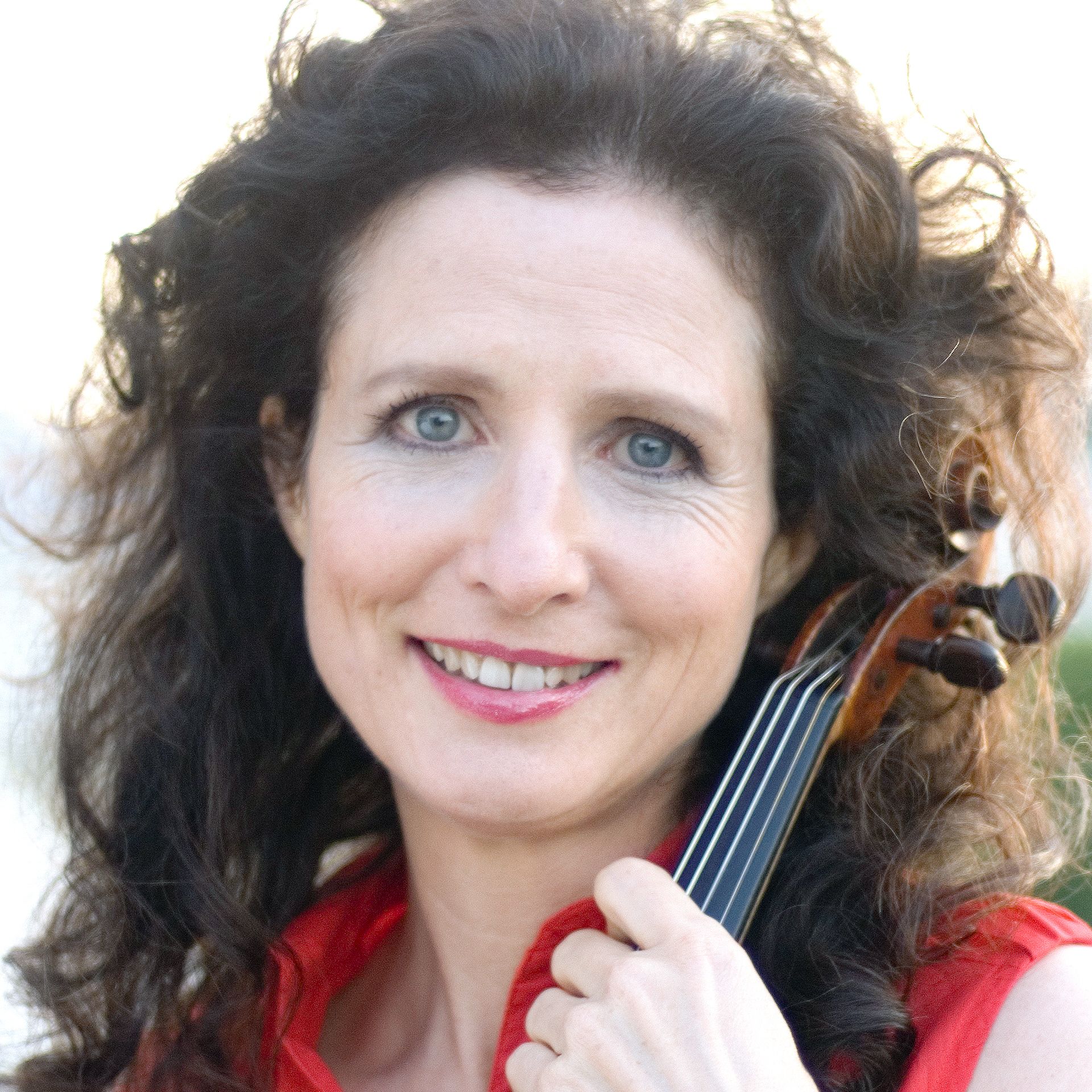
Madeleine Mitchell has appeared as a soloist and chamber musician in some 50 countries in a wide range of repertoire.
Major venues at which she has performed include Lincoln Center, New York, London’s Wigmore Hall and Southbank Centre, Seoul Centre for the Arts and Sydney Opera House. She has appeared with leading orchestras, including the Royal and St Petersburg Philharmonic orchestras, Czech Radio Symphony Orchestra and the BBC ensembles. Current and future highlights include a tour to Japan and a return to the USA.
Her acclaimed discography includes works written for her by composers such as Guto Puw, Sir James MacMillan and Howard Blake. She recently released a disc of Grace WiIliams’s chamber music, which has been warmly received.
In 1997 she devised the Red Violin festival under Yehudi Menuhin’s patronage, the first international celebration exploring the fiddle across the arts, which took place throughout Cardiff.
This year she received an award from the Royal Philharmonic Society’s Enterprise Fund.
BBC National Orchestra of Wales
For over 90 years, BBC National Orchestra of Wales has played an integral part in the cultural landscape of Wales, occupying a distinctive role as both broadcast and national symphony orchestra. Part of BBC Wales and supported by the Arts Council of Wales, it performs a busy schedule of live concerts throughout Wales, the rest of the UK and the world. The orchestra is an ambassador of Welsh music and champions contemporary composers and musicians.
The orchestra performs annually at the BBC Proms and biennially at the BBC Cardiff Singer of the World competition, and its concerts can be heard regularly across the BBC: on Radio 3, Radio Wales and Radio Cymru.
BBC NOW works closely with schools and music organisations throughout Wales and regularly undertakes workshops, side-by-side performances and young composer initiatives to inspire and encourage the next generation of performers, composers and arts leaders.
During the recent lockdowns, BBC NOW has continued to record and film behind closed doors at BBC Hoddinott Hall and has produced videos, soundtracks and weekly digital concerts that have been seen by 14 million people globally, including an extremely popular video of the Doctor Who soundtrack. Plans for the orchestra include live-streamed concerts and events, tours to different communities throughout Wales and education and community development schemes to include everyone in music-making. To find out more visit bbc.co.uk/bbcnow
Patron
HRH The Prince of Wales KG KT PC GCB
Principal Conductor
Ryan Bancroft
Conductor Laureate
Tadaaki Otaka CBE
Composer-in-Association
Gavin Higgins
Composer Affiliate
Sarah Lianne Lewis
First Violins
Lesley Hatfield Leader
Martin Gwilym-Jones †
Gwenllian Haf MacDonald
Terry Porteus
Suzanne Casey
Anna Cleworth
Carmel Barber
Robert Bird
Juan Gonzalez
Anna Szabo
Richard Newington
Gary George-Veale
Second Violins
Anna Smith *
Jane Sinclair #
Sheila Smith
Vickie Ringguth
Joseph Williams
Michael Topping
Katherine Miller
Beverley Wescott **
Sellena Leony
Elizabeth Whittam
Violas
Rebecca Jones *
Alex Thorndike #
Tetsuumi Nagata
Peter Taylor
Ania Leadbeater
Robert Gibbons
Catherine Palmer
Nancy Johnson
Cellos
Alice Neary *
Keith Hewitt #
Jessica Feaver **
Alistair Howes
Rachel Ford
Kathryn Graham
Double Basses
David Stark *
Ben Burnley
Christopher Wescott
Richard Gibbons
Flute
Matthew Featherstone *
Flute/Piccolo
Lindsey Ellis †
Oboes
Steve Hudson *
Amy McKean
Oboe/Cor Anglais
Sarah-Jayne Porsmoguer †
Clarinets
Maura Marinucci ‡
Lenny Sayers + **
Bassoons
David Buckland
Joanna Shewan
Horns
Tim Thorpe *
Meilyr Hughes
Neil Shewan †
William Haskins
Tom Taffinder
Trumpets
Andy Everton †
Emily Ashby
Trombones
Donal Bannister*
Jake Durham
Bass Trombone
Darren Smith †
Tuba
Daniel Trodden † **
Timpani
Christina Slominska ‡
Percussion
Mark Walker †
Phil Huhes
Rhydian Griffiths
Graham Bradley
Harp
Valerie Aldrich-Smith †
* Section Principal
† Principal
‡ Guest Principal
# Assistant Principal
The list of players was correct at the time of publication
Director Lisa Tregale +
Orchestra Manager Zoe Poyser +
Assistant Orchestra Manager Vicky James **
Orchestra Coordinator, Operations Kevin Myers
Orchestra Administrator Rhonwen Jones **
Head of Artistic Production Matthew Wood
Artists and Projects Manager Victoria Massocchi
Orchestra Librarian Eugene Monteith **
Producer Mike Sims
Broadcast Assistant Emily Preston **
Head of Marketing and Audiences Sassy Hicks
Marketing Coordinators Amy Campbell +, Caroline Richards **
Digital Producer Yusef Bastawy
Education Producer Beatrice Carey
Chorus Manager and Outreach Coordinator Osian Rowlands **
Audio Supervisors Andrew Smillie, Simon Smith
Production Business Manager Lisa Blofeld
+ Green Team member
** Diversity & Inclusion Forum


