
Sir Andrew Davis’s Half Century
Friday 18 February 2022, 7.30pm


Alban Berg
Piano Sonata, Op. 1 (orch. Andrew Davis) 10’
Violin Concerto 27’
INTERVAL: 20 minutes
Sergey Rachmaninov
Vocalise 7’
Symphonic Dances 35’
James Ehnesviolin
BBC Symphony Orchestra
Sir Andrew Davisconductor


This concert is being broadcast live by BBC Radio 3 in ‘Radio 3 in Concert’. It will be available for 30 days after broadcast via BBC Sounds, where you can also find podcasts and music mixes.
Help us Improve Our Online Programmes.
Please take this 5-minute survey and let us know what you think of these notes.
Programme Survey
Welcome to tonight’s concert, which has a particularly celebratory air as we mark the 50th anniversary of the collaboration between the BBC Symphony Orchestra and Sir Andrew Davis, its Conductor Laureate as well as President of the BBC Symphony Chorus.
He is without question one of the most beloved among today’s conductors, as well as one of the most respected, acclaimed by audiences and musicians alike for his engagement with music in a wide range of styles and genres, and for his infectious enthusiasm, whether unveiling a new work or leading the party that is the Last Night of the Proms, as he did on many occasions during his time as Chief Conductor of the BBC SO from 1989 to 2000.
That engagement with music spills through into his own arrangements, as we’ll hear today with his orchestration of Berg’s lushly intense Piano Sonata. That’s one of Berg’s earliest acknowledged works, and counterpointing that is the Violin Concerto, his last completed masterpiece, which is tonight played by Canadian superstar James Ehnes.
Rachmaninov is another composer particularly close to Sir Andrew’s heart, and the Symphonic Dances, a concerto for orchestra in all but name, conclude the evening. Prefacing this is the achingly beautiful Vocalise in Rachmaninov’s own orchestration. Happy Anniversary, Sir Andrew!
Alban Berg (1885–1935), orch. Sir Andrew Davis (born 1944)
Piano Sonata, Op. 1 (publ. 1910)


In October 1904 the 19-year-old Alban Berg spotted a newspaper advert in which someone called Arnold Schoenberg was offering composition lessons. With his interest piqued, he took along a few of his student pieces. Immediately spotting his talent, Schoenberg quickly signed him up. Over the course of the six years that Berg was Schoenberg’s student, he became a devoted acolyte and a lifelong friend.
Berg’s sole Piano Sonata dates from this period, and it bears all the hallmarks of the searching, forward-looking style, but one with its roots embedded firmly in the traditions of the past, that Schoenberg demanded from his pupils. Berg originally intended it as the first part of a traditional, multi-movement work, but admitted to Schoenberg that he hadn’t come up with any ideas for subsequent movements. His teacher’s judgement was that he’d probably said everything he wanted to say: it remained a single, 10-minute movement.
The Sonata is a Janus-like piece that looks back to the heavily perfumed harmonic richness of late Mahler and early Schoenberg, while also gazing firmly ahead to Berg’s own later style and works such as his Lyric Suite and even his Violin Concerto, which we hear next. With its densely woven lines, and themes in a perpetual state of flux and transformation, it almost demands to be experienced on a broader canvas, which Sir Andrew Davis has enabled with his orchestration.
Programme note © David Kettle
David Kettle is an Edinburgh-based writer and editor who contributes regularly to The Scotsman, The Daily Telegraph, The List and The Strad.
Alban Berg
Berg had written many songs before he came to the attention of Arnold Schoenberg – the father of the Second Viennese School and pioneer of serialism. Berg’s early works under Schoenberg’s watchful eye – the Op. 1 Piano Sonata and the Seven Early Songs, completed in his early twenties – already pointed to a post-Romantic musical language, and an intense, sensitive character. After his atonal String Quartet (1910) he moved to larger forces in the Altenberg Lieder (1912), which caused a riot at its premiere. Following the war he won an international reputation with his first opera Wozzeck, while his Chamber Symphony, written for Schoenberg’s 50th birthday, incorporated serial techniques and hidden ciphers referring to the Second Viennese School Schoenberg–Berg–Webern alliance. Berg would continue his use of serialism in the Lyric Suite (1925–6) for string quartet, the opera Lulu (completed after his death and first performed in its entirety as recently as 1979), and in the Violin Concerto, but often not as rigorously as Schoenberg and Webern.
Profile by Edward Bhesania © BBC
Edward Bhesania is Editorial Manager, BBC Proms Publications, and reviews for The Stage and The Strad. He has written for The Observer, Country Life, The Tablet and International Piano.
Alban Berg
Violin Concerto (1935)
1 Andante (Prelude) – Allegretto (Scherzo) –
2 Allegro (Cadenza) – Adagio (Chorale Variations)
James Ehnes violin
If Berg’s Piano Sonata stands as his Op. 1 (it was actually his only work to gain an opus number), his 1935 Violin Concerto was the final piece he completed, and indeed serves as something of a requiem, for the composer himself, and for the daughter of close friends.
Manon Gropius was the first-born child of Alma Mahler (née Schindler) and her second husband, Bauhaus founder and architect Walter Gropius. Manon was an aspiring actress, and died suddenly of polio in April 1935 at the age of just 18. Berg knew the family well, and was devastated by the death.
He’d been commissioned by American violinist Louis Krasner to write a concerto and was determined that the new piece should serve as a memorial for Manon, eventually dedicating it ‘to the memory of an angel’. Krasner’s initial idea was for a heartfelt work using pioneering serial methods – in which a piece’s music is derived from a single, egalitarian ordering of the 12 notes of the chromatic scale (all the black and white notes on a keyboard) – that would genuinely capture an audience’s imagination. Berg’s conception of a concerto of high emotion and deep tragedy, and one conveyed through the strict stipulations of serialism, seemed like the ideal response to Krasner’s demands. And what he produced has every right to stake its claim as the most expressive, immediately accessible piece of serial music in the repertoire.
Berg achieved this remarkable expressiveness by loosening some of the rigours of serialism to admit some old-fashioned consonant tonality. His ordering of notes (or ‘row’, in serialist jargon) is actually a succession of familiar major chords, plus a final four notes that correspond precisely with the opening of one of Bach’s most austere, despairing chorales, ‘Es ist genug’ (‘It is enough’). Indeed, Berg quotes Bach explicitly in the concerto’s second movement, first in the violin’s solo line, then using four clarinets to do a passable impression of a rural church organ.
From the start, Berg conceived his Violin Concerto as an instrumental requiem for Manon, with its four sections – divided across two movements – depicting her birth, her short life, her death and finally her transfiguration as she soars heavenward via Berg’s ever-ascending row. Even more tragically, however, the piece would also serve as Berg’s own requiem. While he was composing it at his summer retreat on the Wörthersee in Austria, he was stung by a wasp on his back and – in the days before antibiotics – suffered months of painful infection before finally succumbing to septicaemia on Christmas Eve 1935.
Programme note © David Kettle
INTERVAL: 20 MINUTES
Sergey Rachmaninov (1873–1943)
Vocalise, Op. 34 No. 14 (1912, orch. 1915)


Sergey Rachmaninov was already a celebrated international figure when he wrote his Vocalise in 1912, his Second Piano Concerto and Second Symphony having provoked ovations across the world. But in contrast with these grand, public utterances, the Vocalise has great intimacy and tenderness, and was originally conceived as the last of his 14 Songs, Op. 34, for the Russian soprano Antonina Nezhdanova. She initially balked at the composer’s decision to leave the song wordless, but he reassured her: ‘What need is there of words, when you will be able to convey everything better and more expressively than anyone could with words by your voice and interpretation?’
The Vocalise’s bittersweet melody (which many have speculated may be based on the sombre Dies irae plainchant quoted by the composer in so many of his other works) became so popular that countless arrangements have been made, for just about every conceivable instrumental combination. It was Rachmaninov’s publishers who suggested he create his own orchestral version in 1915: he duly obliged, bestowing its original vocal melody on the orchestral violins throughout.
Programme note © David Kettle
Sergey Rachmaninov
Sergey Rachmaninov entered the stage as a remarkable, once-in-a-century pianist, a gifted conductor and a composer whose first opera was blessed by Tchaikovsky. He seemed to have it all, but the failed premiere of his ambitious First Symphony in 1897 was a terrible setback that plunged him into a lengthy bout of depression and affected his confidence for the rest of his life. He emerged a winner, writing piano concertos, solo piano works, operas and songs that won him a wide popular following both in Russia and internationally. After the Bolshevik Revolution of 1917, when his country estate was ransacked, he emigrated from Russia and reinvented himself as a full-time touring pianist, only occasionally setting aside time to compose. Despite the condescension of the critics, who dismissed him as a relic of the past and his popularity as a passing fad, his music has stood the test of time. His work often took on a second life in popular culture, when it was taken up in film scores and pop songs. Rachmaninov’s melodies flowed from sources in Russian folk and liturgical music but have become internationally recognisable symbols of deep human passion.
Profile © Marina Frolova-Walker
Marina Frolova-Walker is Professor of Music History at the University of Cambridge and a fellow of Clare College, Cambridge. She is the author of Russian Music and Nationalism from Glinka to Stalin and Stalin’s Music Prize: Soviet Culture and Politics.
Sergey Rachmaninov
Symphonic Dances, Op. 45 (1940)
1 Non allegro
2 Andante con moto
3 Lento assai
As earlier with Berg’s Violin Concerto, we leap to almost the end of Rachmaninov’s life for his Symphonic Dances, the final work he completed. He’d fled Russia following the 1917 Revolution, at first living precariously between Switzerland and the USA, before settling permanently in America in 1936, where he initially had to rely on exhausting performance tours to support his family. He admitted: ‘When I left Russia, I left behind the desire to compose: losing my country, I lost myself also.’ But it didn’t last long. In late 1940, he shocked his friend, conductor Eugene Ormandy, with a letter: ‘Last week I finished a new symphonic piece, which I naturally want to give first to you and your orchestra. It is called Fantastic Dances. I am beginning the orchestration.’
Those Fantastic Dances were soon renamed, and Rachmaninov also dropped his original movement titles – ‘Noon’, ‘Twilight’ and ‘Midnight’ – before the Symphonic Dances were premiered by Ormandy and the Philadelphia Orchestra on 3 January 1941. And, unusually for Rachmaninov, this is indeed dance music through and through, as its fierce focus on rhythm makes abundantly clear. Inspiration had perhaps come following choreographer Michel Fokine’s reimagining of the composer’s Rhapsody on a Theme of Paganini as a ballet in 1939. The two men discussed turning the Symphonic Dances into a dance work: Fokine was keen, but died suddenly in 1942 before the project could get going.
But, with its three substantial movements, the piece is also a symphony in all but name – or perhaps, with its showcasing of individual instrumental colours (from a crooning saxophone to a clattering xylophone), more of a concerto for orchestra.
Furthermore, Rachmaninov used the Symphonic Dances to sum up his own achievements as a composer, quoting several of his pieces in what he perhaps guessed might be his farewell to composition. Near the end of the dramatic first movement, for example, strings sing a Russian chant-like melody over glittering accompaniment on piano, harp and glockenspiel. This is a theme from Rachmaninov’s First Symphony, a reference intended to remain secret – the composer believed that the Symphony’s score had been destroyed following its disastrous premiere.
The second movement is a fantastical waltz that evokes an uneasy atmosphere with its strange, dream-like harmonies.
The dramatic third movement seems to describe nothing less than mankind’s struggle for life, in a battle between the Dies irae plainsong from the Latin Requiem Mass, representing death, and a Russian Orthodox melody from Rachmaninov’s own Vespers, which may represent resurrection. Its propulsive rhythms build inexorably to a resolutely triumphant climax.
Programme note © David Kettle
Coming up at the Barbican
Friday 25 February 2022, 7.30pm
Patrick Watson, Jules Buckley and the BBC Symphony Orchestra
An evening of music with Canada’s boutique singer-songwriter, reimagined with Jules Buckley and the BBC Symphony Orchestra.
Book tickets


Biographies
Sir Andrew Davis conductor

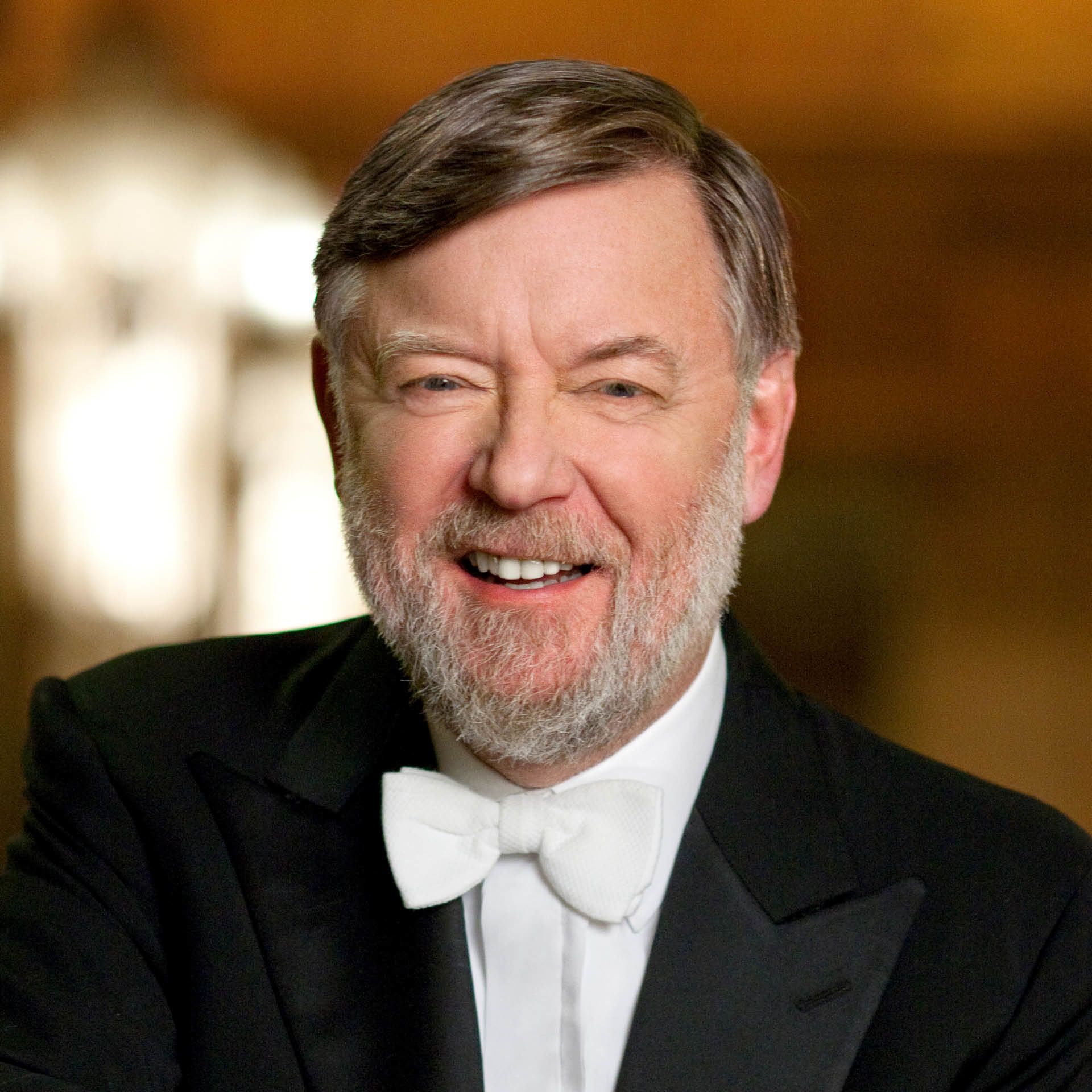
Photo: Dario Acosta Photography
Photo: Dario Acosta Photography
Sir Andrew Davis is one of today’s most sought-after and acclaimed conductors, with a career spanning 50 years. In that time he has been at the helm of some of the world’s most distinguished musical institutions, including the Lyric Opera of Chicago (Music Director and Principal Conductor, 2000–21), BBC Symphony Orchestra (Chief Conductor 1991–2004 and now Conductor Laureate), Glyndebourne Festival Opera (Music Director 1988–2000), Melbourne Symphony Orchestra (Chief Conductor 2013–19 and now Conductor Laureate), and the Toronto Symphony Orchestra (Principal Conductor 1975–88 and now Conductor Laureate), where he also served as Interim Artistic Director during 2020. In addition, he holds the title of Conductor Emeritus with the Royal Liverpool Philharmonic Orchestra and is also President of the BBC Symphony Chorus.
He has led performances at many of the world’s leading opera houses, among them the Metropolitan Opera, New York, La Scala, Milan, Royal Opera House, Covent Garden, Bayreuth Festival and the major companies of Munich, Paris, San Francisco and Santa Fe. In addition, he has appeared with virtually every other internationally prominent orchestra, including the Berlin and Rotterdam Philharmonic orchestras, Royal Concertgebouw Orchestra and all the major British orchestras.
This season he celebrates a 50-year partnership with the BBC Symphony Orchestra with tonight’s programme of Berg and Rachmaninov. The season also sees a return to the BBC Philharmonic, Toronto Symphony Orchestra and the Lyric Opera of Chicago, where he leads a concert of Beethoven’s Ninth Symphony. Other engagements include concerts with the Royal Scottish National Orchestra, LA Colburn School of Music, Rundfunk-Sinfonieorchester Berlin and the Baltimore Symphony Orchestra.
He has a vast and award-winning discography across a wide range of repertoire. Recent highlights include Massenet’s Thaïs with the Toronto Symphony Orchestra (which won a JUNO Award in 2021); the third volume in his project to record the complete orchestral works of Eugene Goossens with the Melbourne Symphony Orchestra; and orchestral works by Berlioz, Bliss and Elgar (which won a Diapason d’Or de l’Année in 2018). His lauded series of recordings with the BBC Symphony Orchestra and Chorus celebrating British composers was recently released as a 16-CD retrospective collection.
He was born in 1944 in Hertfordshire and was Organ Scholar at King’s College, Cambridge, before taking up conducting. His diverse repertoire ranges from Baroque to contemporary and spans the symphonic, operatic and choral worlds. As chief conductor, he has participated in the creation and premieres of new repertoire and new compositions, personally conducting a great number of them.
In 1992 he received a CBE, followed by a KBE in the 1999 New Year Honours List. He has also received an honorary doctorate from Knox College in Galesburg, Illinois.
James Ehnes violin
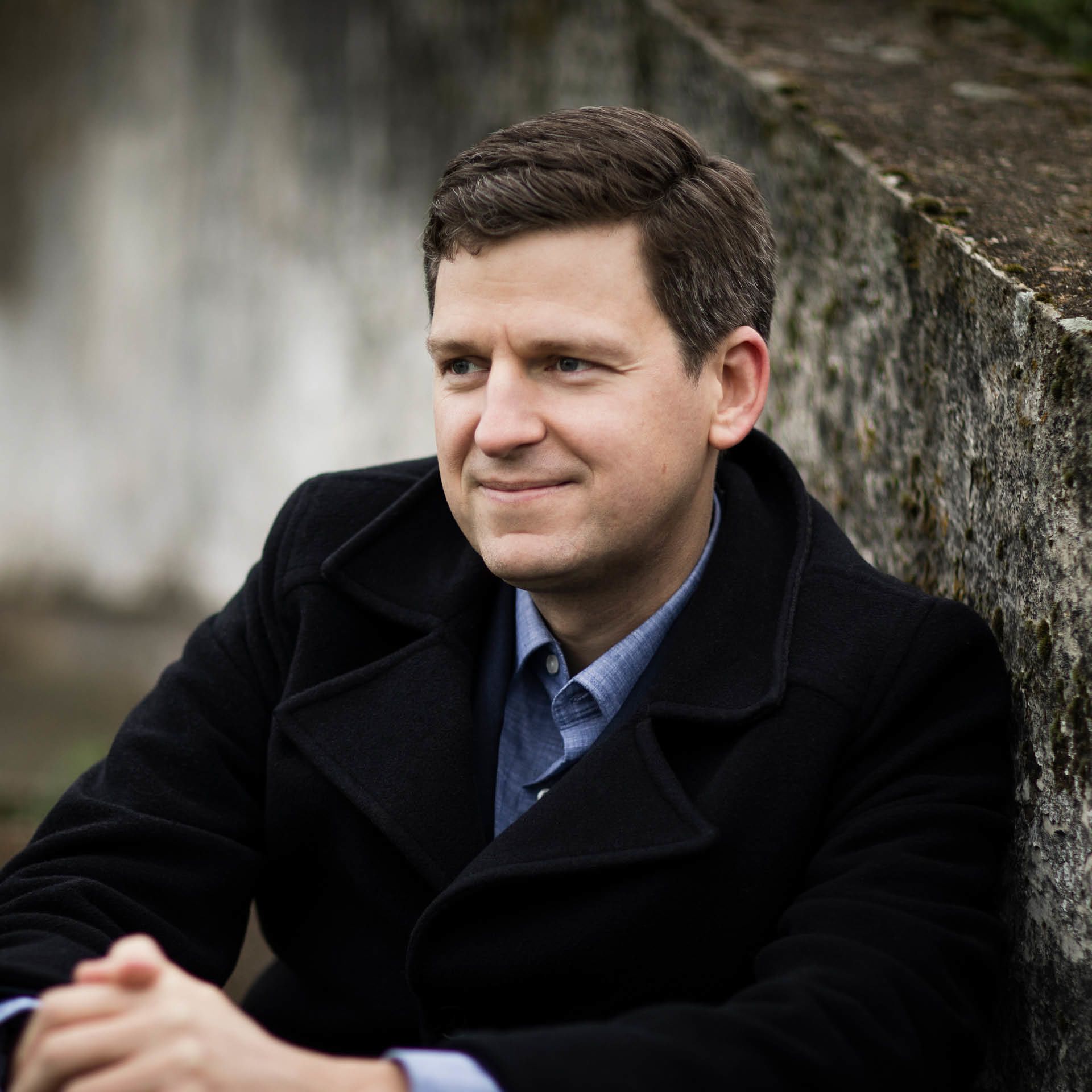
Photo: Benjamin Ealovega
Photo: Benjamin Ealovega
James Ehnes has established himself as one of the most sought-after violinists on the international stage, working regularly with many of the world’s leading conductors, including Vladimir Ashkenazy, Marin Alsop, Sir Andrew Davis, Stéphane Denève, Sir Mark Elder, Iván Fischer, Edward Gardner, Paavo Järvi, Juanjo Mena, Gianandrea Noseda, David Robertson and Sir Donald Runnicles. He has worked with prominent orchestras, including the Boston, Chicago, London, NHK and Vienna Symphony orchestras, Los Angeles, New York, Munich and Czech Philharmonic orchestras, the Cleveland, Philadelphia and Philharmonia orchestras and Deutsches Symphonie-Orchester Berlin.
He received the coveted Artist of the Year title at the 2021 Gramophone Awards which celebrated his recent contributions to the recording industry, including ‘Recitals from Home’, a new online recital series launched in response to the Covid pandemic and subsequent closure of concert halls.
Recent orchestral highlights include concerts with the Met Orchestra at Carnegie Hall under Noseda, Leipzig Gewandhausorchester under Alexander Shelley, San Francisco Symphony under Marek Janowski, Frankfurt Radio Symphony under Andrés Orozco-Estrada, London Symphony under Daniel Harding and Munich Philharmonic under Jaap van Zweden. This season he is Artist-in-Residence at the National Arts Centre of Canada.
Alongside his concerto work, he maintains a busy recital schedule, performing regularly at the Wigmore Hall, Carnegie Hall, Symphony Center Chicago and Amsterdam Concertgebouw, as well as at the Ravinia, Montreux, Chaise-Dieu and Verbier festivals. In 2016 he undertook a cross-Canada recital tour, performing in each of the country’s provinces and territories, to mark his 40th birthday.
As part of the 2020 Beethoven celebrations, he performed a complete cycle of the violin sonatas with Andrew Armstrong, which they subsequently recorded to great acclaim.
As a chamber musician, he has collaborated with leading artists, such as Leif Ove Andsnes, Inon Barnatan, Renaud Capuçon, Louis Lortie, Nikolai Lugansky, Yo-Yo Ma, Antoine Tamestit, Jan Vogler and Yuja Wang. In 2010 he established the Ehnes Quartet, with whom he has performed across Europe. He is also the Artistic Director of the Seattle Chamber Music Society.
He has an extensive discography and has won many awards, including a Grammy Award (2019) for his live recording of Aaron Jay Kernis’s Violin Concerto with the Seattle Symphony and Ludovic Morlot, and a Gramophone Award for his live recording of the Elgar Concerto with the Philharmonia Orchestra and Sir Andrew Davis.
He began violin studies at the age of five and made his orchestral debut with the Montreal Symphony Orchestra aged 13. He continued his studies at the Juilliard School. He is a Fellow of the Royal Society of Canada and in 2010 was appointed a Member of the Order of Canada. In 2017 he was awarded a Royal Philharmonic Society Award in the Instrumentalist category.
He plays the ‘Marsick’ Stradivarius of 1715.
BBC Symphony Orchestra
The BBC Symphony Orchestra has been at the heart of British musical life since it was founded in 1930. It plays a central role in the BBC Proms at the Royal Albert Hall, performing at the First and Last Night each year in addition to regular appearances throughout the Proms season with the world’s leading conductors and soloists.
The BBC SO performs an annual season of concerts at the Barbican in London, where it is Associate Orchestra. Its commitment to contemporary music is demonstrated by a range of premieres each season, as well as Total Immersion days devoted to specific composers or themes.
Highlights of the current season include concerts conducted by Sakari Oramo with music by Beethoven, Brahms, Ruth Gipps, Dora Pejačević, Sibelius and others; performances with Principal Guest Conductor Dalia Stasevska, including the devised work Concerto No. 1: SERMON by Davóne Tines, combining music and poetry in a unique examination of racial justice; children’s author Jacqueline Wilson reading from her best-selling books in a family concert; the world premiere of Up For Grabs by composer and Arsenal fanatic Mark-Anthony Turnage; the BBC Symphony Chorus’s return to the Barbican stage for a Christmas concert; a performance with Jules Buckley and Canadian singer-songwriter Patrick Watson; concerts celebrating the 100th anniversary of the BBC and a half-century of collaboration with Sir Andrew Davis; and two Total Immersion days, one focusing on music composed in the camps and ghettos of Nazi-occupied Europe and one featuring the music of Frank Zappa. Guest conductors include Alpesh Chauhan, Eva Ollikainen, Jukka-Pekka Saraste, Jordan de Souza and Nathalie Stutzmann.
The vast majority of performances are broadcast on BBC Radio 3 and a number of studio recordings each season are free to attend. These often feature up-and-coming new talent, including members of BBC Radio 3’s New Generation Artists scheme. All broadcasts are available for 30 days on BBC Sounds and the BBC SO can also be seen on BBC TV and BBC iPlayer and heard on the BBC’s online archive, Experience Classical.
The BBC Symphony Orchestra and Chorus – alongside the BBC Concert Orchestra, BBC Singers and BBC Proms – also offer enjoyable and innovative education and community activities and take a leading role in the BBC Ten Pieces and BBC Young Composer programmes.
Chief Conductor
Sakari Oramo
Principal Guest Conductor
Dalia Stasevska
Günter Wand Conducting Chair
Semyon Bychkov
Conductor Laureate
Sir Andrew Davis
Creative Artist in Association
Jules Buckley
First Violins
Igor Yuzefovich leader
Cellerina Park
Jeremy Martin
Jenny King
Celia Waterhouse
Shirley Turner
Ni Do
Henry Chandler
Zanete Uskane
Cassi Hamilton
Richard Milone
Laura Ayoub
Kalliopi Mitropoulou
Claire Sledd
Dawn Beazley
Daniel Meyer
Sebastian Canellis
Vanessa Hughes
Danny Fajardo
Rachel Samuel
Tammy Se
Caroline Cooper
Victoria Hodgson
Lucica Trita
Sarah Thornett
Maya Bickel
Violas
Edward Vanderspar
Philip Hall
Joshua Hayward
Nikos Zarb
Audrey Henning
Natalie Taylor
Michael Leaver
Carolyn Scott
Mary Whittle
Peter Mallinson
Matthias Wiesner
Tim Gill
Tamsy Kaner
Marie Strom
Mark Sheridan
Clare Hinton
Sarah Hedley Miller
Michael Atkinson
Augusta Harris
Morwenna Del Mar
Nicholas Bayley
Anita Langridge
Michael Clarke
Beverley Jones
Josie Ellis
Elen Pan
Flutes
Michael Cox
Tomoka Mukai
Piccolo
Kathleen Stevenson
Oboes
Alison Teale
Imogen Smith
Adrian Rowlands
Clarinets
Richard Hosford
Harry Penny
Thomas Lessels
Martin Robertson
Sarah Burnett
Joanna Stark
Simon Estell
Martin Owen
Michael Murray
Andrew Antcliff
Nicholas Hougham
Mark Wood
Trumpets
Niall Keatley
Joseph Atkins
Kaitlin Wild
Helen Vollam
Dan Jenkins
Robert O’Neill
Sam Elliott
Antoine Bedewi
Percussion
David Hockings
Fiona Ritchie
Christopher Hind
Stefan Beckett
Joe Cooper
Oliver Lowe
Louise Martin
Celesta
Elizabeth Burley
The list of players was correct at the time of publication