
American Explorations
Friday 3/5/24, 7.30pm
The Riverfront, Newport
Saturday 4/5/24, 7.30pm
BBC Hoddinott Hall, Cardiff


Samuel Barber
Adagio for Strings8’
Samuel Barber
Violin Concerto25’
INTERVAL: 20 minutes
Charles Ives
Symphony No. 237’
Ryan Bancroftconductor
Benjamin Baker violin


The concert in Cardiff is being recorded by BBC Radio 3 for future broadcast in Radio 3 in Concert; it will be available for 30 days after broadcast via BBC Sounds, where you can also find podcasts and music mixes.
Introduction
Welcome to tonight’s concert, for which we’re delighted to welcome back our Principal Conductor Ryan Bancroft.
In this all-American programme he presents the music of two seminal figures separated by a generation. We begin with Samuel Barber’s most famous work, his Adagio for Strings, which has become closely associated with national moments of collective mourning – hardly surprising given its powerful beauty.
From here we move to Barber’s Violin Concerto, a work originally intended for the virtuoso Iso Briselli, who had been a fellow student of Barber’s at the Curtis Institute in Philadelphia. Virtuosity and lyrical beauty are in perfect accord in a work that has become beloved of violinists the world over. Tonight we’re delighted to welcome the young New Zealand-born Benjamin Baker.
We finish with the Second Symphony of the great American maverick Charles Ives, the 150th anniversary of whose birth is being celebrated this year. His fellow composer Aaron Copland once declared: ‘It will be a long time before we take the full measure of Charles Ives.’ That may well be true but this symphony has an immediacy to it that is entirely compelling, weaving in American popular tunes to heady effect.
Enjoy!
Matthew Wood
Head of Artistic Planning and Production
Please respect your fellow audience members and those listening at home. Turn off all mobile phones and electronic devices during the performance. Photography and recording are not permitted.
Samuel Barber(1910–81)
Adagio for Strings(1936, arr. 1938)

There can be few more famous pieces with which to launch tonight’s all-American concert than Samuel Barber’s Adagio, dubbed the ‘world’s saddest music’, and indeed indelibly associated with moments of great emotion and upheaval. It was played at the funerals of Franklin Delano Roosevelt, Albert Einstein and Grace Kelly (among many others), and Jackie Kennedy arranged for Washington’s National Symphony Orchestra to play it to an empty hall following the assassination of her husband JFK in 1963, a recording of which became the unofficial anthem of the nation’s grief during the following weeks.
It began, however, and of course still exists as the slow movement of Barber’s Op. 11 String Quartet, where it separates two outer movements of great energy and complexity. It was conductor Arturo Toscanini who thought the Adagio would make a fine orchestral work, requesting one from the 26-year-old composer, and premiering it with the National Symphony Orchestra on a radio broadcast in 1938. In an America still reeling from the Great Depression, and with Europe hurtling ever closer to war, the heart-on-sleeve emotion of Barber’s Adagio – which unfolds as a series of slow, winding, chant-like melodies, rising to an impassioned climax – came at just the right moment to capture and console the public consciousness.
Programme note © David Kettle
Samuel Barber
Violin Concerto(1939, rev. 1948)
1 Allegro
2 Andante
3 Presto in moto perpetuo
Benjamin Baker violin
Not without reason did Samuel Barber sarcastically refer to the 1939 Violin Concerto as his ‘concerto del sapone’ (soap concerto). That slightly disparaging nickname was a reference not only to the product that had made the fortune of the piece’s commissioner – tycoon Samuel Simeon Fels, of Fels-Naptha soap fame – but also, perhaps, to the piece’s creation and premiere, which turned into something of a soap opera.
Fels and his wife Jennie had acted as surrogate US parents to the remarkable Odessa-born violin prodigy Iso Briselli, who was studying at Philadelphia’s Curtis Institute of Music – by chance, in the same year as Barber. By 1939 both Briselli and Barber had graduated and were establishing themselves professionally – Barber had in fact returned to the Institute as professor of composition. Fels was persuaded to ask the young composer to create a new concerto for Briselli, one that might showcase the violinist’s dazzling technique and profound musicality.
At first, things went well. Barber launched into composing the concerto on a trip to Europe in summer 1939. With war looming, though, his hasty return to the US meant a delay in completing it – though Briselli loved the work’s first two movements when he received them. But his teacher, Albert Meiff, didn’t, and took it upon himself to write to Fels, informing the businessman that the concerto would need a wholesale overhaul by someone who really knew the violin (in other words, himself). Even Briselli wondered, in retrospect, if the opening movements were showy enough, and requested something more virtuosic for the finale.
Things got worse, however, when Barber sent Briselli the showy concluding movement he’d created. The violinist wasn’t convinced, finding it too lightweight and out of kilter with the tone of the earlier movements. He requested a rewrite. Barber declined, explaining: ‘I could not destroy a movement in which I have complete confidence, out of artistic sincerity to myself.’ Briselli in turn declined to play the concerto, and the premiere was given instead by the established violinist Albert Spalding (who jumped at the opportunity) with the Philadelphia Orchestra in February 1941. Barber and Briselli remained friends, however, until the composer’s death in 1981.
Despite the shenanigans over its creation, Barber’s Violin Concerto quickly found a secure place in the violin repertoire. The soloist launches the richly Romantic opening movement with a profoundly lyrical main melody, later contrasted by a spikier theme introduced by a solo clarinet (which the violinist manages to avoid until almost the end of the movement). An oboe keens a long, chant-like melody above a cushion of string harmonies in the serene second movement, before the soloist leads us into stormier, more dissonant music. In the brief, breathless finale (about which you may feel Briselli had a point), the violinist skitters through an almost unstoppable melodic line, navigating Shostakovich-like grotesquerie to propel the piece to its dashing close.
Programme note © David Kettle
INTERVAL: 20 minutes
Charles Ives (1874–1954)
Symphony No. 2 (1897–1902)
1 Andante moderato
2 Allegro
3 Adagio cantabile
4 Lento maestoso –
5 Allegro molto vivace
The first performance of Ives’s Symphony No. 2 – given by conductor Leonard Bernstein and the New York Philharmonic – took place in February 1951, almost half a century after the composer had completed the work in 1902. By the time the symphony was premiered, Ives had completed his most radical, experimental pieces – from the cacophonous marching bands of Three Places in New England to the multi-layered, visionary complexity of the Fourth Symphony – though many remained unperformed. Even seven decades after his death in 1954, Ives’s music still sounds fresh and new to us today – sometimes shockingly so. It’s shot through with a rugged, stubborn, distinctively American individualism, as if Ives were forging his own path with little concern for popularity or recognition. That’s just as well: he got little of either during his lifetime. His colleague Aaron Copland wrote presciently in the mid-1940s: ‘It will be a long time before we take the full measure of Charles Ives.’ He wasn’t wrong.
The irony, however, is just that this is in fact a highly lyrical, easy-going, ‘respectable’ piece. Ives had written his First Symphony while studying at Yale with Horatio Parker, and had obediently followed his teacher’s stipulations that he should strictly adhere to European models: the result sounds a bit like Dvořák, a bit like Brahms, even a bit like Schubert at times. In his Second Symphony, however, Ives felt it was time to set off on his own, more individual path, retaining the traditional symphonic forms that Parker so admired, but filling them with music that was authentically American – including copious quotes from popular tunes, work songs, hymns, spirituals and more. While the results sound slightly subdued when compared with the wild, freewheeling imagination of some of his later pieces, the Second Symphony nonetheless takes a few initial, tentative steps towards what would become Ives’s all-embracing musical celebration of the richness of life and art. ‘The fabric of existence weaves itself whole,’ he later wrote. ‘You cannot set an art off in a corner and hope for it to have vitality, reality and substance.’
The first movement begins thoughtfully, with a somewhat Brahmsian melody on the cellos, but quickly moves into brisker music based around quotations from Stephen Foster’s popular song ‘Massa’s in de Cold Ground’ and fiddle tune ‘The Pigtown Fling’. Three quotations jostle for attention in the lively second movement: the joyful Civil War song ‘Wake Nicodemus’ (first announced by piping woodwind), the gospel hymn ‘Bringing in the Sheaves’ transformed into a jaunty march, and the college initiation song ‘Where, O Where are the Pea-Green Freshmen?’, slowed down for strings, flutes and oboes.
The hymns ‘Beulah Land’ and ‘America the Beautiful’ form the basis of the gentle, pastoral third movement, while the brief and serious fourth – launched by a horn summons – functions almost as an extended introduction to the finale. There, Ives weaves together snatches of ‘Camptown Races’, ‘Turkey in the Straw’ and ‘Columbia, the Gem of the Ocean’, flung back and forth across dashing, romping music that pushes forwards ever more urgently towards – well, you might be surprised by Ives’s very final gesture. Suffice it to say that even this is something of a quotation: the composer pointed out that at old-time dances the band’s fiddler would sign off with a loud, scraping dissonance, indicating that the music was done for the night. Ives conveys a similar message at the end of his Second Symphony – just on a grander scale.
Programme note © David Kettle
Help Us Improve Our Online Programmes.
Please take this 5-minute survey and let us know what you think of these notes.
Programme Survey
You may also like:
Bartók’s Concerto for Orchestra
Thursday 9/5/24, 7.30pm
BBC Hoddinott Hall, Cardiff
Friday 10/5/24, 7.30pm
Brangwyn Hall, Swansea
Caroline Shaw The Observatory UK premiere
Ravel Piano Concerto in G major
Bartók Concerto for Orchestra
Giancarlo Guerrero conductor
Sergio Tiempo piano
COLOURFUL | DYNAMIC | ENTHRALLING
Caroline Shaw’s The Observatory (which receives its UK premiere) was inspired by a trip to the Griffin Observatory near the Hollywood Bowl; it explores in sound new ways of looking at the universe, melding old and new with chaos and clarity, in a tantalising stream of consciousness.
Ravel’s atmospheric Piano Concerto, a rich mix of lyricism, evocative orchestration and virtuoso piano writing, is performed by the inimitable Sergio Tiempo as he makes his debut with BBC NOW. The virtuosity continues in Bartók’s brilliant, folk-inflected Concerto for Orchestra, which closes this breathtaking programme, conducted by the illustrious Grammy Award-winning Costa Rican conductor Giancarlo Guerrero.
A Little Night Music
Thursday 16/5/24, 7.30pm
BBC Hoddinott Hall, Cardiff
Fauré Pelléas et Mélisande – suite
Stephen McNeff The Celestial Stranger world premiere
Schoenberg Verklärte Nacht (1943 version)
Joana Carneiro conductor
Gavan Ring tenor
REVOLUTIONARY | PROFOUND | ILLUMINATING
Celestial, sparking lights glitter in this evening of ground-breaking music. Fauré’s suite from Pelléas et Mélisande opens in resplendent yet tumultuous style – the first musical setting of Maurice Maeterlinck’s play of the same name, which would inspire other composing greats, including Debussy, Sibelius and Schoenberg.
We move to more ethereal heights with the world premiere of Stephen McNeff’s The Celestial Stranger; then, 150 years since the birth of Schoenberg, we celebrate this radical composer with a performance of Verklärte Nacht (Transfigured Night), an early work that first made the name of a man who would change the course of musical history when he created dodecaphonic music, more commonly known as serialism. To conduct BBC NOW for the first time we welcome the wonderful Portuguese conductor Joana Carneiro.
Season Closing Concert
Thursday 6/6/24, 7.30pm
BBC Hoddinott Hall, Cardiff
Friday 7/6/24, 7.30pm
Brangwyn Hall, Swansea
Dvořák Cello Concerto
Jennifer Higdon Blue Cathedral
Dawson Negro Folk Symphony
Ryan Bancroft conductor
Alisa Weilerstein cello
INSPIRING | ICONIC | MULTIFARIOUS
Globally renowned cellist Alisa Weilerstein joins BBC NOW in this season-closing concert for one of the most beloved of all cello concertos. Melodic genius, irrepressible energy and a love of his native folk music radiate as Dvořák looks back on a life well lived, one of joy but also of deep loss. Similarly, intuitive musical invention, rich orchestration and an exploration of the cathedral ‘as a symbolic doorway into and out of this world’ form a platform for floating and contemplative other-worldly atmospheres in Jennifer Higdon’s Blue Cathedral.
Picture the scene: November 1934, Carnegie Hall and a brand-new symphony is unveiled, receiving rapturous applause from the audience and multiple bows from its unassuming composer. That composer was William Dawson, a 35-year-old African American man who had run away from home aged 13 to follow his dream of studying music; and the piece – the Negro Folk Symphony. With melodies that ooze both sensuousness and directness, Dawson set out to compose music that was ‘unmistakably not the work of a white man’ and found his inspiration in the African American folk music he had learnt as a small child growing up in the Deep South. Who better to conduct this expertly crafted and highly emotionally charged symphony than our American-born Principal Conductor Ryan Bancroft?
Biographies
Ryan Bancroftconductor

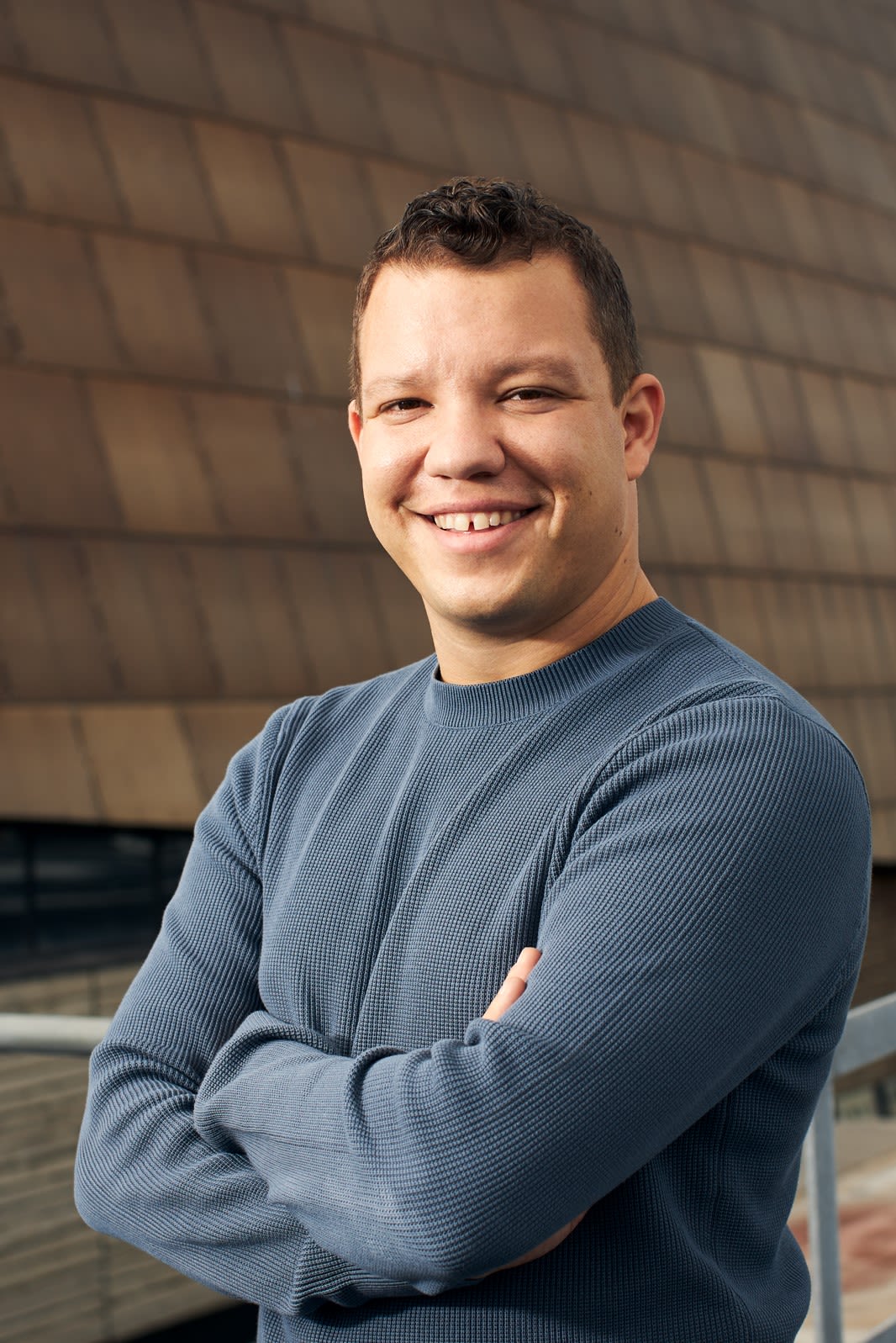
Photo: Benjamin Ealovega
Photo: Benjamin Ealovega
Ryan Bancroft grew up in Los Angeles and first came to international attention in April 2018, when he won both First Prize and Audience Prize at the prestigious Malko Competition for Young Conductors in Copenhagen. Since September 2021 he has been Principal Conductor of BBC National Orchestra of Wales. Following his first visit to work with the Tapiola Sinfonietta, he was invited to become its Artist-in-Association from the 2021/22 season. In September he became Chief Conductor of the Royal Stockholm Philharmonic Orchestra.
His new role as Chief Conductor in Stockholm saw him open the season with the orchestra’s first performance of Sven-David Sandström’s The High Mass and highlights include premieres of pieces by Daniel Börtz and Anders Hillborg, and concerts with Emanuel Ax and Seong-Jin Cho.
Last summer he made his Hollywood Bowl debut with the Los Angeles Philharmonic; this season he also makes debuts with the Cleveland Orchestra, San Francisco and Cincinnati Symphony orchestras, NDR Elbphilharmonie Orchestra, Orquesta Sinfónica de Castilla y León and Netherlands Radio Philharmonic Orchestra, as well as returning to the Toronto Symphony Orchestra and Philharmonia Orchestra.
He has a passion for contemporary music and has performed with Amsterdam’s Nieuw Ensemble, assisted Pierre Boulez in a performance of his Sur incises in Los Angeles, premiered works by Sofia Gubaidulina, John Cage, James Tenney and Anne LeBaron, and has worked closely with improvisers such as Wadada Leo Smith and Charlie Haden.
He studied at the California Institute of the Arts, Royal Conservatoire of Scotland and in the Netherlands.
Benjamin Baker violin

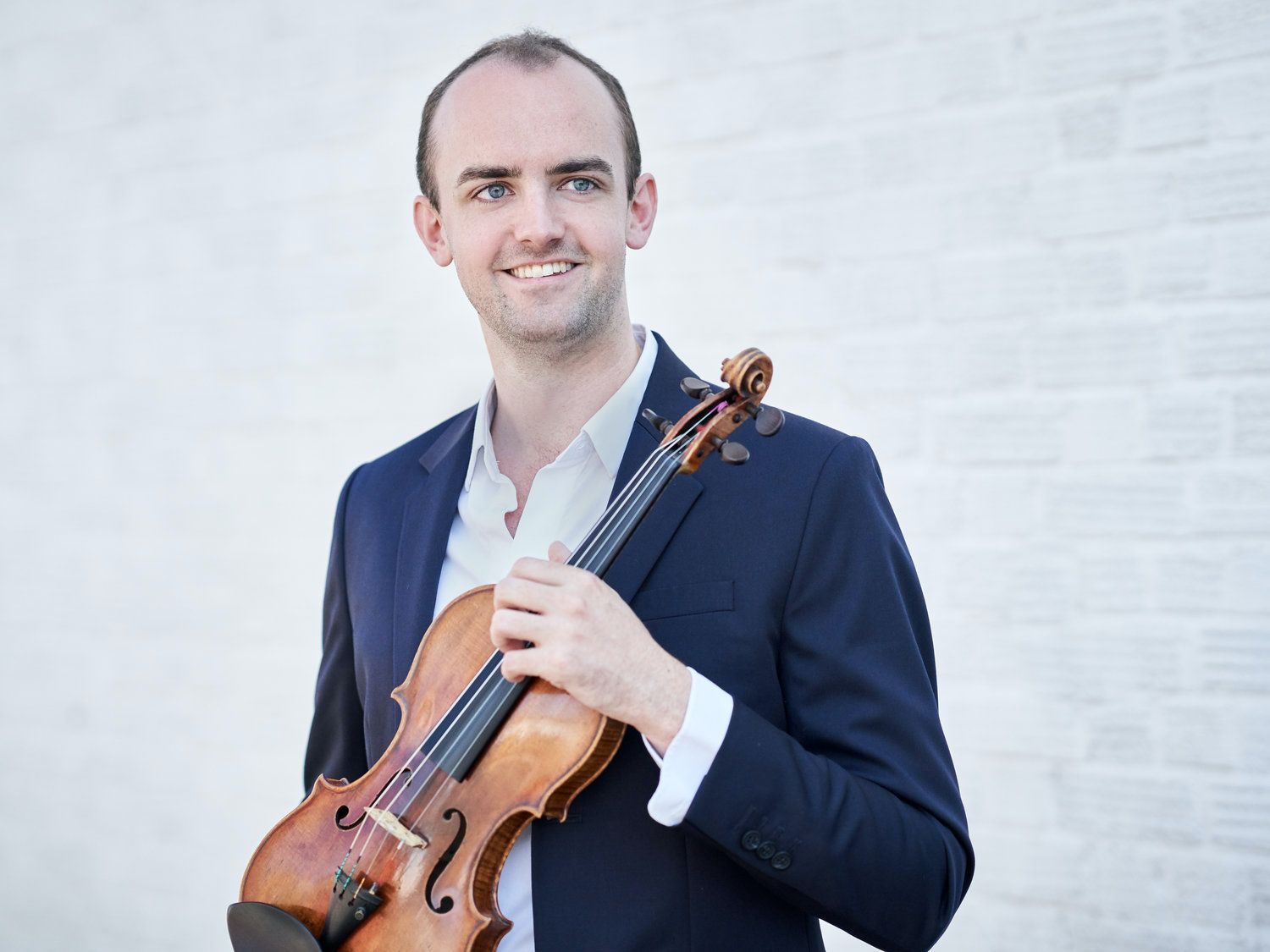
Photo: Kaupo Kikkas
Photo: Kaupo Kikkas
Since winning First Prize at the 2016 Young Concert Artists International Auditions in New York and Third Prize at the Michael Hill Competition in New Zealand, Benjamin Baker has established a strong international presence, in demand as a soloist and chamber musician.
Recent highlights include regular appearances at Wigmore Hall and on BBC Radio 3, debuts with the London Philharmonic Orchestra and Scottish Chamber Orchestra at the East Neuk Festival, as well as solo appearances with the Auckland Philharmonia and Christchurch Symphony Orchestra. Last year he returned to North America as soloist with the Fort Worth Symphony and Colorado Ballet orchestras, and to Merkin Concert Hall in New York.
This season he returns to New Zealand for his festival in Queenstown: At the World’s Edge, which he launched in 2021. Other highlights include concerts with the Mobile Symphony in Alabama, and, next season, the US premiere of Matthew Kaner’s Violin Concerto with the Amarillo Symphony Orchestra in Texas, a work he premiered in 2017 at St John’s Smith Square in London.
He has released three critically acclaimed CDs, 1942 and 1919: Coda with Daniel Lebhardt and a recital disc of Beethoven, Kreisler and Richard Strauss with Robert Thompson.
He is also sought after as a chamber musician and has taken part in festivals across Europe and the USA, including Pärnu, East Neuk, Cheltenham, Steirisches Kammermusik, Northern Chords, Bridgehampton and Caramoor’s Rising Stars series with Pamela Frank.
Benjamin Baker was born in New Zealand, studied at the Yehudi Menuhin School and Royal College of Music, where he was awarded the Queen Elizabeth the Queen Mother Rose Bowl. He was subsequently a Fellow at the Ravinia Festival’s Steans Music Institute in Chicago in 2016 and 2017.
Benjamin Baker plays on a 1694 Giovanni Grancino violin, on generous loan from a charitable trust.
BBC National Orchestra of Wales
For over 90 years, BBC National Orchestra of Wales has played an integral part in the cultural landscape of Wales, occupying a distinctive role as both broadcast and national symphony orchestra. Part of BBC Wales and supported by the Arts Council of Wales, it has a busy schedule of live concerts throughout Wales, the rest of the UK and the world.
The orchestra is an ambassador of Welsh music and champions contemporary composers and musicians; its concerts can be heard regularly across the BBC – on Radio 3, Radio Wales and Radio Cymru.
BBC NOW works closely with schools and music organisations throughout Wales and regularly undertakes workshops, side-by-side performances and young composer initiatives to inspire and encourage the next generation of performers, composers and arts leaders.
The orchestra is based at BBC Hoddinott Hall in Cardiff Bay, where its purpose-built studio not only provides the perfect concert space, but also acts as a broadcast centre from where its live-streamed concerts and pre-recorded content are presented as part of its popular Digital Concert Series.
For further information please visit the BBC National Orchestra and Chorus of Wales’s website: bbc.co.uk/now
Patron
HM King Charles III KG KT PC GCB
Principal Conductor
Ryan Bancroft
Conductor Laureate
Tadaaki Otaka CBE
Composer-in-Association
Gavin Higgins
Composer Affiliate
Sarah Lianne Lewis
First Violins
Lesley Hatfield leader
Nick Whiting associate leader
Gwenllian Hâf MacDonald
Terry Porteus
Suzanne Casey
Emilie Godden
Juan Gonzalez
Žanete Uškāne
Ruth Heney
Carmel Barber
Anna Cleworth
Rebecca Totterdell
Amy Fletcher **
Jane Sinclair**
SecondViolins
Anna Smith *
Iona McDonald
Ros Butler
Sheila Smith
Beverley Wescott
Vickie Ringguth
Katherine Miller
Roussanka Karatchivieva
Michael Topping
Lydia Caines
Joseph Williams
Ilze Abola
Violas
Yukiko Ogura ‡
Alex Thorndike #
Tetsuumi Nagata
Peter Taylor
Lydia Abell
Anna Growns
Robert Gibbons
Catherine Palmer
Daire Roberts
Lowri Taffinder
Cellos
Raphael Lang
Sandy Bartai
Carolyn Hewitt
Keith Hewitt
Alistair Howes
Rachel Ford
Tabitha Selley
Katy Cox
Double Basses
David Stark *
Alexander Jones #
Christopher Wescott
Richard Gibbons
Kornel Koncos
Richard Lewis **
Flutes
Matthew Featherstone *
John Hall †
Lindsey Ellis
Piccolo
Lindsey Ellis †
Oboes
Steve Hudson *
Amy McKean †
Clarinets
Nick Carpenter *
Emidio Andre Costa
Bassoons
Jarosław Augustiniak *
Florence Plane
David Buckland
Contrabassoon
David Buckland †
Horns
Tim Thorpe *
Meilyr Hughes
Neil Shewan †
Jack Sewter
John Davy
Trumpets
Philippe Schartz *
Robert Samuel
Trombones
Donal Bannister *
Jake Durham
Bass Trombone
Alan Swain
Tuba
Anders Swane
Timpani
Steve Barnard *
Percussion
Phil Girling
Phil Hughes
Piano
Catherine Roe Williams
* Section Principal
† Principal
‡ Guest Principal
# Assistant String Principal
** Cardiff only
The list of players was correct at the time of publication
Director Lisa Tregale
Orchestra Manager appointment in progress
Assistant Orchestra Manager Nick Olsen
Orchestra Personnel ManagerKevin Myers
Business Coordinator Caryl Evans
Orchestra Administrator Eleanor Hall +
Head of Artistic Planning and ProductionMatthew Wood
Artists and Projects Manager Victoria Massocchi **
Orchestra Librarian Eugene Monteith
Producer Mike Sims
Broadcast Assistant Kate Marsden
Head of Marketing and Audiences Sassy Hicks
Marketing Coordinator Amy Campbell-Nichols +
Digital Producer Yusef Bastawy
Social Media Coordinator Harriet Baugh
Education Producers Beatrice Carey, Rhonwen Jones **
Audio Supervisors Simon Smith, Andrew Smillie
Production Business Manager Lisa Blofeld
Stage and Technical Manager Steven Brown +
Assistant Stage and Technical Manager Josh Mead
BBC Wales Apprentice Jordan Woodley
+ Green Team member
** Diversity & Inclusion Forum


