Defeating the screwworm
In the 1950s, Edward Knipling pioneered the release of sterile screwworm flies, helping to launch one of the most successful pest eradication campaigns in history.
In the 1950s, scientist Edward Knipling began what would become one of the most successful eradication campaigns in history: the fight against the New World screwworm, a flesh-eating parasite that caused devastating injuries to livestock and wildlife across the Americas.
Edward Knipling proposed breeding and releasing millions of sterile male screwworm flies to prevent the insects from reproducing, an approach that became known as the sterile insect technique.
Using archive recordings from the Special Collections of the United States Department of Agriculture's National Agricultural Library, Gill Kearsley tells the story of how Edward's bold idea transformed pest control.
Witness History is a short BBC World Service podcast about history that takes you inside big moments from the past through first-hand testimony and archive. Each weekday, in around nine minutes, we revisit one moment that helped shape the world and hear it through the voice of someone who was there. Scientists, artists, campaigners, soldiers, leaders and everyday people tell their true stories.
When you subscribe to Witness History, you’ll be taken inside turning points in world affairs from West Africa’s fight back against Boko Haram in 2015 to the behind-closed-doors talks that led to the US-Cuba “thaw” and the surprise announcement of restored relations.
You’ll discover what it was like to experience disasters and how people recovered from them, including the Tabasco floods in Mexico, Portugal's worst train disaster, and the huge clean-up after the Chernobyl nuclear disaster.
You’ll explore culture and ideas too: Sweden’s Expedition Robinson, often credited as the first modern reality TV game show; the friendship between The Beatles’ George Harrison and Indian sitarist Ravi Shankar; and the night a tiger attack brought Las Vegas superstars Siegfried and Roy’s show to a sudden end.
And if you’re curious about inventions, we’ll tell you how air fryers, BlackBerry, YouTube, Alexa, GPS, superglue, the shopping cart (shopping trolley) and bubble tea were created.
If you’re new to Witness History, the appeal is simple: real voices, one strong true story, and a fresh way to understand today through events from history – all in the time it takes to enjoy a cup of tea or a walk around the block. Join millions of BBC World Service podcast listeners around the globe and enjoy the insight, context and detail Witness History will bring you.
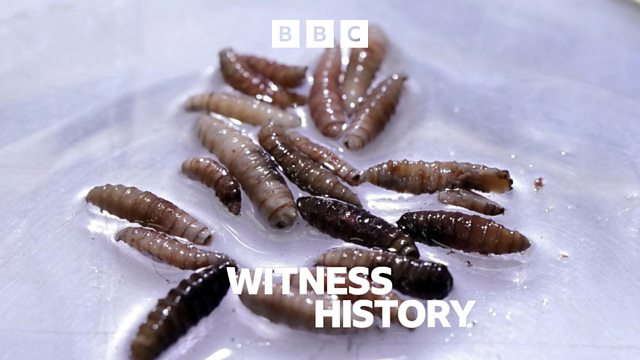
(Photo: Larvae of the screwworm fly. Credit: REUTERS/Enea Lebrun)
On radio

More episodes
Broadcasts
- Friday07:50GMTBBC World Service
- Friday11:50GMTBBC World Service
- Friday17:50GMTBBC World Service except East and Southern Africa, News Internet & West and Central Africa
- Friday21:50GMTBBC World Service East and Southern Africa & West and Central Africa only
- Saturday02:50GMTBBC World Service Online, Americas and the Caribbean, UK DAB/Freeview, News Internet & Europe and the Middle East only & Live News
Podcast
![]()
Witness History
The story of our times, told by the people who were there