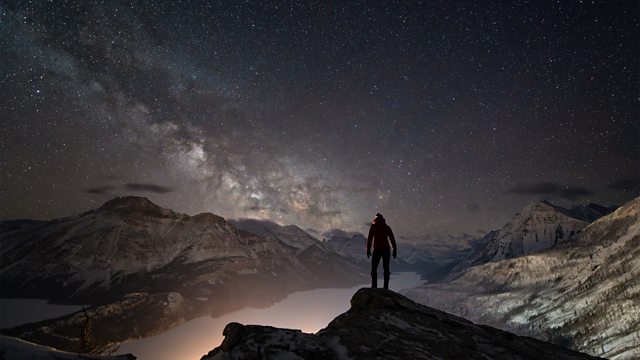
Licence to operate a space object
Astrophotographer Monika Deviat examines how the influx of satellites and light pollution is drastically altering our night skies and asks: why are we not fighting to protect it?
Since humans have been on earth, the sky at night has caused many to gaze upwards in astonishment. Beyond its beauty, celestial navigation guided humans across the seas, forming new trade routes and civilisations. The constellations also signalled when winter or summer was approaching so people would know when to sow their crops.
But for decades, the night sky has been changing dramatically. Thousands of satellites now blink in amongst the stars and planets, doubling in number in the past few years largely due to the existence of companies like SpaceX. As objects continue to be launched into space with sparse environmental regulations in place, astrophotographer Monika Deviat asks: what do we stand to lose?
With contributions from astronomer Radmila Topalović, astronomy professor and knowledge holder of the Euahlayi nation Ghillar, behavioural ecologist Cecilia Nilsson and lighting project manager at the Sea Turtle Conservancy, Rachel Tighe.
Presenter: Monika Deviat
Producer: Sasha Edye-Lindner
A Reduced Listening production for BBC World Service
(Photo: Monika's self portrait with the rising Milky Way on a mountain ridge in Waterton Lakes National Park, an international Dark Sky Park in Alberta, Canada. Credit: Monika Deviat Photography)
Last on

Broadcasts
- Thu 16 Jan 202502:32GMTBBC World Service
- Thu 16 Jan 202509:32GMTBBC World Service
- Thu 16 Jan 202520:06GMTBBC World Service Online, Americas and the Caribbean, UK DAB/Freeview & Europe and the Middle East only
- Thu 16 Jan 202521:06GMTBBC World Service except Online, Americas and the Caribbean, Europe and the Middle East & UK DAB/Freeview
- Sat 18 Jan 202517:32GMTBBC World Service News Internet
- Sat 18 Jan 202523:06GMTBBC World Service except East and Southern Africa & West and Central Africa
 Sun 19 Jan 202505:32GMTLive News
- Sun 19 Jan 202505:32GMTBBC World Service except East and Southern Africa
- Sun 19 Jan 202514:06GMTBBC World Service News Internet
- Sun 19 Jan 202523:32GMTBBC World Service East and Southern Africa
