Do tsunamis affect marine life?
Tsunamis cause huge destruction on land, but what’s it like for life under the waves? Anand Jagatia meets divers and researchers who search for the impact on marine life.
Tsunamis destroy buildings, habitats and danger to everything in its path on land. But how do they affect life under the water? That's what CrowdScience listener Alvyn wants to know, and presenter Anand Jagatia is searching beneath the waves for answers. Anand meets Professor Syamsidik who is learning about how tsuanami waves are formed to help protect against future disasters. He runs the Tsunami and Disaster Mitigation Research Center at Universitas Syiah Kuala, Indonesia. With him at this state-of-the-art lab is Dr David McGovern, expert in ocean and coastal modelling at London South Bank University. David tells Anand how the energy of a tsunami is spread across the entire water column. To explain the forces at play, Anand chats to Professor Emile Okal a seismologist from Northwestern University in the United States. Tsunami wave can move as fast as 800 kilometres an hour but, despite this, out at sea you might not notice it - but can the same be said for marine life? We follow the wave as it nears land and all that force is contracted and begins to show its might. Professor Suchana 'Apple' Chavanich from Chulalongkorn University, Thailand was one of the first people to swim off the Thai coast after the 2004 tsunami and remembers how coral reefs were battered.
In Japan, after the 2011 Tohoku Earthquake and Tsunami as the water retracted it pulled with it tons and tons of debris into the water. The fishing communities of the Sanriku Coast lost almost everything, their equipment was destroyed and the water was heavily polluted. Anand meets Hiroshi Sato who set up the Sanriku Volunteer Divers, a team of people who dragged the debris out of the water. One of them was diver and journalist Bonnie Waycott who tells her story of witnesses the destruction first hand and trying to rescue the fishing industry with Hiroshi. Finally, we learnt that the effect of modern tsunamis carries far further than people might have imagined. On the west coast of the United States Professor Samuel Chan is an expert in invasive species at Oregon State University. He explains how modern infrastructure is contributing to some incredible migrations. Presenter: Anand Jagatia Producer: Tom Bonnett Editor: Ben Motley
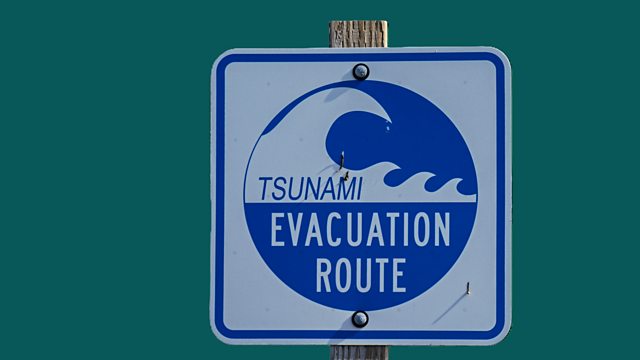
Photo: USA, California, Sonoma County, Bodega Bay, tsunami evacuation panel - stock photo Credit: Brigitte MERLE via Getty Images)
Last on
More episodes
Previous
Next
Featured
.
Broadcasts
- Fri 14 Nov 202520:32GMTBBC World Service Online, Americas and the Caribbean, UK DAB/Freeview & Europe and the Middle East only
- Fri 14 Nov 202521:32GMTBBC World Service except Online, Americas and the Caribbean, Europe and the Middle East & UK DAB/Freeview
- Mon 17 Nov 202502:32GMTBBC World Service except Americas and the Caribbean
- Mon 17 Nov 202505:32GMTBBC World Service Australasia, Americas and the Caribbean, South Asia & East Asia only
- Mon 17 Nov 202509:32GMTBBC World Service
- Mon 17 Nov 202513:32GMTBBC World Service Australasia, East and Southern Africa, News Internet & West and Central Africa only
Podcast
![]()
CrowdScience
Answering your questions about life, Earth and the universe

Related Content
