Greening the Hajj
What can Muslims do to reduce the enormous carbon footprint of the pilgrimage to Mecca?
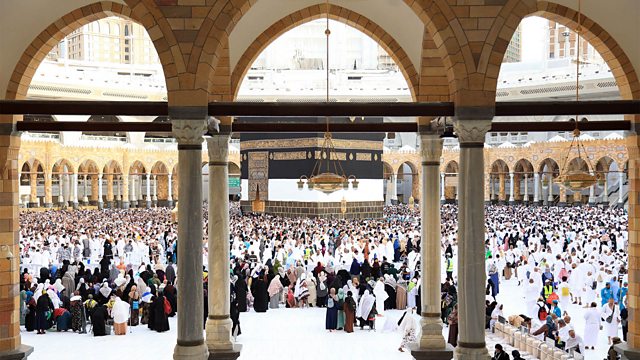
The Muslim pilgrimage to Mecca, the Hajj, attracted no fewer than two million pilgrims in 2023. But this pilgrim boom has an environmental downside - climate scientists are warning that the five-day Hajj alone, with its bargain flights, hotels, catering and local transport, produces over 1.8 million tonnes of greenhouse gases, roughly the amount New York City emits every two weeks.
Yet the Saudi government has plans to go much bigger still; by 2030, they want 30 million pilgrims a year to take part in the Hajj and Umrah, an optional version of the pilgrimage at other times of year. That's a full 10 million more than before the pandemic.
Zubeida Malik asks what the Saudi authorities, local groups and campaigners, religious scholars and the pilgrims themselves can do to reduce the environmental footprint of one of the largest religious gatherings on the planet.
Presenter: Zubeida Malik
Producer: Alex Strangwayes-Booth
A CTVC production for BBC World Service
(Photo: Muslims perform the Tawaf (circumambulation) around Kaaba, the holiest site in Islam, at al-Masjid al-Haram, for the start of the Hajj 2024 pilgrimage. Credit: EPA-EFE/REX/Shutterstock)
Last on

Broadcasts
- Thu 13 Jun 202401:32GMTBBC World Service
- Thu 13 Jun 202408:32GMTBBC World Service
- Thu 13 Jun 202419:06GMTBBC World Service except East and Southern Africa & West and Central Africa
- Sat 15 Jun 202416:32GMTBBC World Service News Internet
- Sat 15 Jun 202421:06GMTBBC World Service except East and Southern Africa & West and Central Africa
- Sun 16 Jun 202404:32GMTBBC World Service except Australasia & East and Southern Africa
- Sun 16 Jun 202413:06GMTBBC World Service News Internet
- Sun 16 Jun 202421:32GMTBBC World Service East and Southern Africa
