How Covid changed science, part 1
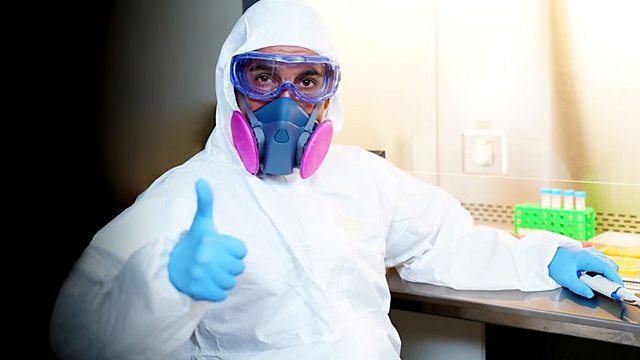
Devi Sridhar, Professor of Global Health at Edinburgh University, hears from scientists whose working lives have been affected, and in some cases revolutionised, by the pandemic.
Until 2020 developing a new drug took at least 15 years. Scientists by and large competed with each other, were somewhat secretive about their research and only shared their data once publication was secured. And the public and the press had no interest in the various early phases of clinical trials. An incremental scientific step possibly on the road to somewhere was simply not newsworthy. Face masks were the preserves of hypochondriacs in the Far East, with no scientific evidence base for their use.
Now the findings of research are published as soon as they are ready. Often they are being openly discussed in social media before they have been peer reviewed. The speed of research, collaboration between science and industry, and public perception of science are areas that have undergone incredible and likely permanent change.
Devi Sridhar, Professor of Global Health at Edinburgh University hears from scientists in a variety of fields, whose working lives and practices have been affected, in some cases revolutionised by the pandemic.
Last on

More episodes
Broadcasts
- Mon 22 Aug 202219:32GMTBBC World Service except East and Southern Africa & West and Central Africa
- Tue 23 Aug 202203:32GMTBBC World Service Australasia, South Asia & East Asia only
- Tue 23 Aug 202204:32GMTBBC World Service Americas and the Caribbean
- Tue 23 Aug 202208:32GMTBBC World Service
- Tue 23 Aug 202212:32GMTBBC World Service except East and Southern Africa, East Asia, South Asia & West and Central Africa
- Tue 23 Aug 202219:32GMTBBC World Service East and Southern Africa & West and Central Africa only
- Mon 29 Aug 202200:32GMTBBC World Service except Americas and the Caribbean
Space
The eclipses, spacecraft and astronauts changing our view of the Universe
The Curious Cases of Rutherford and Fry

A pair of scientific sleuths answer your perplexing questions. Ask them anything!
Podcast
![]()
Discovery
Explorations in the world of science.