How a worm helped explain human development
Adopted as a model animal for scientific research in 1963, the nematode worm c. elegans has enabled vital discoveries about human biology.
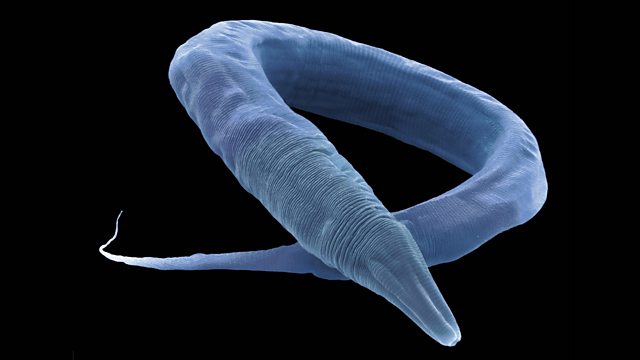
After the discovery of the double-helix structure of DNA in the 1950s, South African biologist Sydney Brenner was searching for a model animal to help him tease out the genes involved in human behaviour and human development from egg to adult. Brenner chose a tiny nematode worm called caenorhabditis elegans (c.elegans for short), whose biological clockwork can be observed in real time under a microscope through its transparent skin. The worm has since been at the heart of all sorts of discoveries about how our bodies work and fail. Sue Armstrong has been speaking to people who knew and worked with Sydney Brenner.
This programme is a Ruth Evans Production.
Photo: the c. elegans worm. Credit: Science Photo Library
Last on

Broadcasts
- Tue 13 Apr 202107:50GMTBBC World Service
- Tue 13 Apr 202111:50GMTBBC World Service
- Tue 13 Apr 202117:50GMTBBC World Service except East and Southern Africa & West and Central Africa
- Wed 14 Apr 202102:50GMTBBC World Service
Podcast
![]()
Witness History
The story of our times, told by the people who were there