Drug resistant malaria found in East Africa
The spread of resistance to one of the most important anti-malarials. Also, making COVID antivirals, how air pollution affects pregnancy, and studying crop health from space.
Since their discovery in the 1970s, artemisinin-based drugs have become the mainstay of treatment for malaria caused by the Plasmodium falciparum parasite. Researchers have identified artemisinin-resistant malaria parasites in Southeast Asia since the early 2000s, but now, there is evidence of resistance in Rwanda and Uganda. Dr Betty Balikagala of Juntendo University tells us how this resistance developed and what it means for managing malaria in Africa, which carries the greatest burden of malaria cases and deaths worldwide.
We hear from some of the scientists from COVID Moonshot, a non-profit, open-science consortium which has just received key funding to develop affordable antivirals to stop SARS-CoV-2 in its tracks.
Also on the programme, Dr Rakesh Ghosh from the University of California, San Francisco tells us how air pollution is contributing to 6 million preterm births globally each year, and Dr Catherine Nakalembe of the University of Maryland and Africa Lead for NASA Harvest returns to the programme as NASA/USGS launches Landsat 9.
Presenter: Roland Pease
Producer: Samara Linton
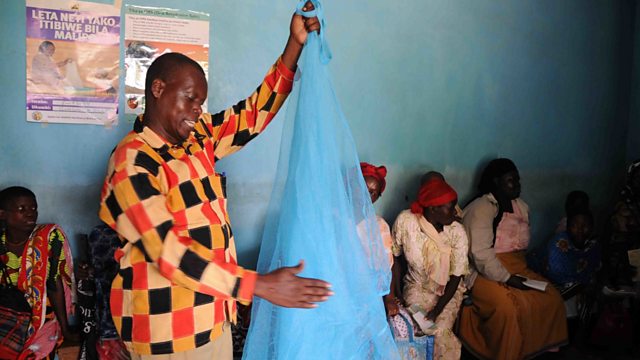
Image: Mosquito net demonstration in a community outreach centre in Kenya
Credit: Wendy Stone/Corbis via Getty Images
Last on

Broadcasts
- Thu 30 Sep 202119:32GMTBBC World Service
- Fri 1 Oct 202103:32GMTBBC World Service Australasia, South Asia & East Asia only
- Fri 1 Oct 202104:32GMTBBC World Service Americas and the Caribbean
- Fri 1 Oct 202108:32GMTBBC World Service
- Fri 1 Oct 202112:32GMTBBC World Service Australasia, Online, UK DAB/Freeview, News Internet & Europe and the Middle East only
- Sun 3 Oct 202101:32GMTBBC World Service Americas and the Caribbean & News Internet only
Podcast
![]()
Science In Action
The BBC brings you all the week's science news.