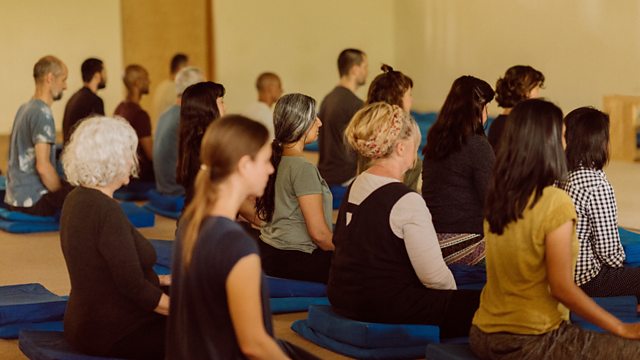
Vipassana: 240 hours of silence
Inside the world of vipassana meditation - 10 days of demanding, illuminating silence.
Vipassana, which means to see things as they really are, is one of India's most ancient techniques of meditation. It was taught by the Buddha more than 2,500 years ago as a universal remedy for universal ills. The practice died out in India, but survived in Burma, and is now a growing movement around the world.
To learn the technique students complete a 10-day silent retreat, which includes 10 hours of daily meditation. There is no eye contact, no communication, no exercise, no reading or writing, no technology. No distraction from the journey inwards. They must try to overcome the habit of reacting to sensation. By doing so, over 10 days students train themselves to stop reacting to the vicissitudes of life and experience the interconnectedness of all living things.
It is notoriously difficult, but what insights does it afford? What difficulties, both physical and emotional, are faced along the way? We hear the experiences of people who have made it through 240 hours of silence.
Vipassana was popularised by S.N. Goenka, who learnt the technique in Burma from his teacher, Sayagyi U Ba Khin, and in 1969 travelled to India to conduct the first Vipassana course in this tradition outside Burma. There are now around 200 Vipassana meditation centres around the world, attracting people from all walks of life. The course is free, and non-sectarian.
Producer: Eve Streeter
(Photo credit: Marc Sethi)
Last on

More episodes
Clip
![]()
Could you be silent for ten hours - for ten days?
Duration: 03:06
Broadcasts
- Fri 24 Jul 202001:32GMTBBC World Service
- Fri 24 Jul 202012:32GMTBBC World Service East and Southern Africa & West and Central Africa only
- Fri 24 Jul 202019:32GMTBBC World Service East and Southern Africa & West and Central Africa only
- Sun 26 Jul 202005:32GMTBBC World Service
- Sun 26 Jul 202010:32GMTBBC World Service except East and Southern Africa & West and Central Africa
- Sun 26 Jul 202016:32GMTBBC World Service News Internet
- Sun 26 Jul 202022:32GMTBBC World Service
- Fri 12 Feb 202106:32GMTBBC World Service Americas and the Caribbean
- Fri 12 Feb 202113:32GMTBBC World Service except Australasia, East Asia, News Internet & South Asia
- Sat 13 Feb 202122:32GMTBBC World Service except Americas and the Caribbean & Europe and the Middle East
- Sun 14 Feb 202110:32GMTBBC World Service except East and Southern Africa & West and Central Africa
- Sun 14 Feb 202117:32GMTBBC World Service News Internet
- Mon 15 Feb 202101:32GMTBBC World Service Australasia, News Internet, South Asia, Europe and the Middle East & East Asia only
- Mon 15 Feb 202110:32GMTBBC World Service East and Southern Africa & West and Central Africa only
Podcast
![]()
Heart and Soul
Personal approaches to religious belief from around the world.