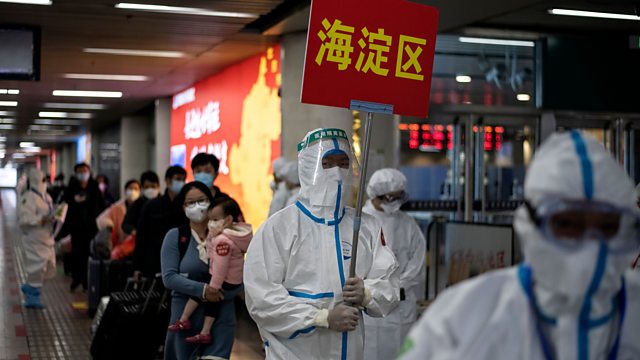
Reasons: The pandemic that changed the world
Why did world leaders fail to work together to prevent the spread of Covid-19? Ian Goldin, professor of globalisation and development at Oxford University, examines the impact.
Why did coronavirus strike so fast and so hard? There was plenty of warning that a pandemic was inevitable, but when a new virus emerged in a wet market in the Chinese city of Wuhan, the world proved powerless to prevent it spreading. The finger has been pointed in various directions: a failure by the Chinese authorities to communicate, a sluggish response from the World Health Organisation, an ignorance of history, and what Ian Goldin, professor of globalisation and development at Oxford University, has termed the ‘Butterfly Defect’ of globalisation. In this episode, Professor Goldin explores what he sees as the complacency of governments and a declining commitment to multilateralism as reasons for the new pandemic and its unprecedented economic consequences. He hears from, among others, IMF managing director Kristalina Georgieva; the man who identified the Ebola virus, Peter Piot; and the historian Margaret MacMillan.
Producer: Tim Mansel
Last on
More episodes
Previous
You are at the first episode
Broadcasts
- Wed 8 Jul 202001:32GMTBBC World Service
- Wed 8 Jul 202008:06GMTBBC World Service
- Wed 8 Jul 202012:32GMTBBC World Service East and Southern Africa & West and Central Africa only
- Wed 8 Jul 202014:06GMTBBC World Service except East and Southern Africa & West and Central Africa
- Wed 8 Jul 202019:06GMTBBC World Service except East and Southern Africa & West and Central Africa
- Wed 8 Jul 202019:32GMTBBC World Service East and Southern Africa & West and Central Africa only
- Sat 11 Jul 202016:32GMTBBC World Service News Internet
- Sun 12 Jul 202007:06GMTBBC World Service
The Documentary Podcast

Hear more documentaries from the BBC World Service
Podcast
![]()
The Compass
With ideas too big for a single episode, The Compass presents mini-series about society