Smoking and Covid-19
Smoking and Covid-19; tests for coronavirus; songs to encourage hand washing and social distancing; birthmarks
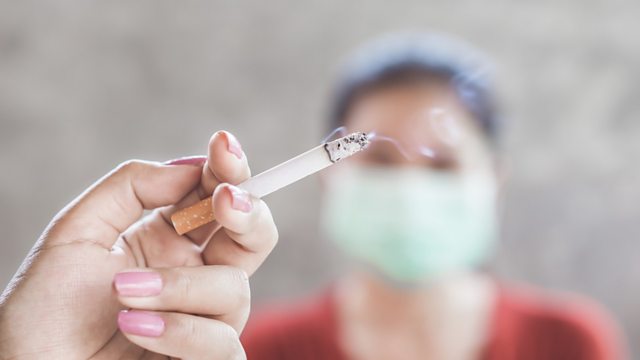
In the US the FDA warned that if you were a smoker and contracted the virus you might become sicker than non-smokers. But meanwhile a new French study suggested that smokers were less likely to get the virus, and that nicotine might even protect them from it – which all leaves smokers in a tricky position. Claudia Hammond explores this research with Linda Bauld, Professor of Public Health at the University of Edinburgh and Chair in Behavioural Research for Cancer Prevention at Cancer Research UK.
BBC Health Correspondent James Gallagher explains the pros and cons of the different kinds of tests for coronavirus and of the concept of immunity passports.
We’re all being told to wash our hands regularly and keep 2 metres apart. Fearing that not everyone responds to statements delivered in grave tones, some are turning to music and humour to get the message across. Reporter Sian Griffiths takes us on a virtual trot around the world in search of the lighter side of health messaging.
Listener Andrew asked the BBC a question about the origin of birthmarks and how common they are. The answer comes from plastic surgeon Mr Tobian Muir at the James Cook Hospital in Middlesbrough. One of his patients Danny Ancharski tells his story of having a life threatening birthmark removed.
Presenter: Claudia Hammond
Editor: Deborah Cohen
(Image: A woman smokes a cigarette near someone wearing a protective face mask. Photo credit: Doucefleur/Getty Images.)
Last on
More episodes
Previous
Broadcasts
- Wed 29 Apr 202019:32GMTBBC World Service
- Thu 30 Apr 202001:32GMTBBC World Service
- Thu 30 Apr 202006:32GMTBBC World Service
- Thu 30 Apr 202012:32GMTBBC World Service except East and Southern Africa & West and Central Africa
- Thu 30 Apr 202015:32GMTBBC World Service East and Southern Africa & West and Central Africa only
- Sat 2 May 202023:32GMTBBC World Service
Podcast
![]()
Health Check
Health issues and medical breakthroughs from around the world.