The power of celibacy
A virgin birth may be miraculous to us, but for some species it’s a winning evolutionary strategy. Lucy Cooke meets nature’s ultimate self-cloning sisters.
You might think that sex is essential for life, but you'd be wrong!
Lucy Cooke travels to the Hawaiian island of Oahu to meet a community of mourning geckos - self-cloning sisters who have done away with males altogether.
An array of reptiles, amphibians and fish, along with a host of spineless wonders, from snails to spiders, can reproduce without sex. It's what biologists call parthenogenesis, from the Greek meaning “virgin birth”.
Many, like the mourning gecko, make great “weed” species. They're explosive opportunists capable of rapidly colonising new territory, as they don’t need to waste energy finding a mate. But without the mixing up of genes, that sex with a male provides, they are less able to adapt and change.
So sex pays if you don’t want to go extinct.
Yet there is one self-cloning sister that defies that theory - the Bdelloid Rotifer. Living for millions of years and comprising over 450 species, these microscopic water dwelling creatures have conquered the planet. They get around the drawbacks of no sex, by stealing genes, and escape disease by desiccating and then coming back to life.
Producer: Beth Eastwood
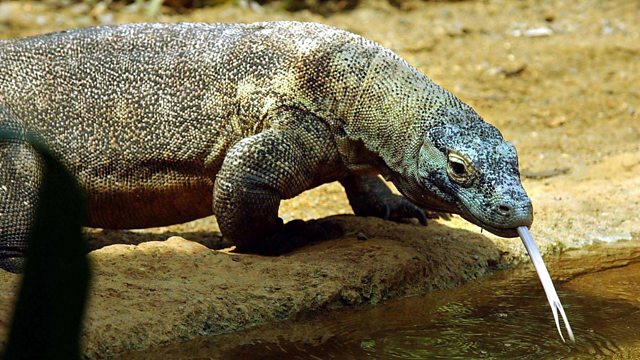
Picture: Female Komodo dragon at London Zoo, Credit: Matthew Fearn/PA
Last on

Clip
![]()
How a Komodo dragon’s ‘virgin birth’ shocked zoo keepers
Duration: 02:12
Broadcasts
- Mon 1 Feb 202120:32GMTBBC World Service Online, Americas and the Caribbean, UK DAB/Freeview, News Internet & Europe and the Middle East only
- Mon 1 Feb 202121:32GMTBBC World Service Australasia, South Asia & East Asia only
- Tue 2 Feb 202104:32GMTBBC World Service
- Tue 2 Feb 202111:32GMTBBC World Service
- Tue 2 Feb 202118:32GMTBBC World Service East and Southern Africa & West and Central Africa only
- Mon 8 Feb 202100:32GMTBBC World Service
Space

The eclipses, spacecraft and astronauts changing our view of the Universe
The Curious Cases of Rutherford and Fry

A pair of scientific sleuths answer your perplexing questions. Ask them anything!
Podcast
![]()
Discovery
Explorations in the world of science.