How are we evolving?
How are we changing genetically to adapt to modern lifestyles, modern medicine and our environment? And how might humans evolve in the future?
Medical intervention has disrupted natural selection in humans as many more children survive into adulthood than did a few centuries ago. And as our DNA continues to evolve, in order to adapt to our environment, how might human beings of the future be different from us? Anand Jagatia explores how some humans, over just a few thousand years, have adapted genetically to live at high altitudes of the Tibetan Himalayas or in the cold climates of Inuit Greenland.
Several Crowdscience listeners got in touch to ask about the ways in which humans might evolve in future but understanding how we’re adapting to modern ways of living is much harder to measure. So what adaptions do evolutionary biologists expect for the human race? How will IVF, gene-editing, mass migration and our constantly changing culture affect how we evolve?
Presenter: Anand Jagatia. Produced by Dom Byrne and Melanie Brown for BBC World Service
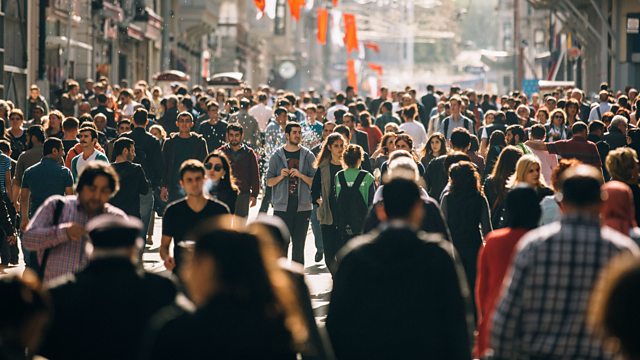
(Photo: People in a crowded street. Credit: Getty Images)
Last on

Clip
![]()
How Tibetans have evolved to live at high altitudes
Duration: 01:28

Broadcasts
- Fri 31 May 201919:32GMTBBC World Service except South Asia
- Sat 1 Jun 201923:32GMTBBC World Service
- Mon 3 Jun 201904:32GMTBBC World Service Online, UK DAB/Freeview, News Internet & Europe and the Middle East only
- Mon 3 Jun 201905:32GMTBBC World Service Australasia, Americas and the Caribbean & South Asia only
- Mon 3 Jun 201906:32GMTBBC World Service East and Southern Africa & East Asia only
- Mon 3 Jun 201910:32GMTBBC World Service West and Central Africa
- Mon 3 Jun 201913:32GMTBBC World Service Australasia
- Mon 3 Jun 201917:32GMTBBC World Service South Asia
Podcast
![]()
CrowdScience
Answering your questions about life, Earth and the universe