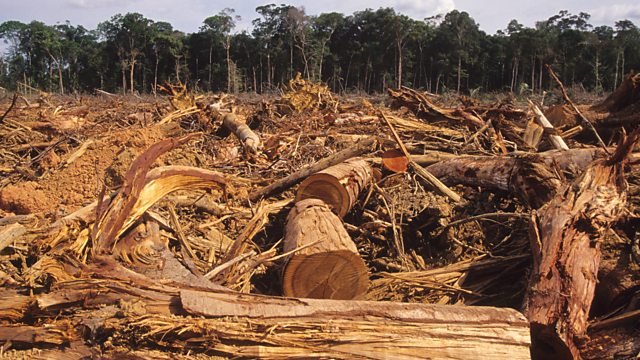
The tree detectives tackling illegal logging
Scientists are building a database to help them tell exactly where wood has come from, and are using it to tackle illegal logging and protect forests.
If you examine the atoms in a piece of wood, you can tell to the nearest 10km where it has come from. Environmental factors, such as the climate, affect trees as they grow and that signature remains in the wood after it is processed.
An international group of scientists is hoping to use this information to tackle illegal logging, which contributes to a loss of biodiversity and costs governments billions of dollars in lost revenues each year.
It’s thought that up to 30% of timber on the global market comes from illegally-sourced wood, and ends up as all sorts of items in shops around the world.
Now, stable isotope analysis is being used to identify the unique profile of these products. And when scientists find items don’t come from the place specified on the label, the information can be used to hold shops accountable.
We visit the wood archive at Kew Gardens and speak to experts using this technology to help stem the flow of illegally-smuggled timber and protect the planet’s endangered forests.
Presenter: Tom Colls
Reporter and Producer: Nicola Kelly
(Photo: Logging in the Amazon. Credit: Getty Images)
Last on

Broadcasts
- Tue 30 Apr 201902:06GMTBBC World Service Online, Europe and the Middle East & West and Central Africa only
- Tue 30 Apr 201903:06GMTBBC World Service UK DAB/Freeview
- Tue 30 Apr 201905:06GMTBBC World Service Australasia, Americas and the Caribbean & South Asia only
- Tue 30 Apr 201906:06GMTBBC World Service East and Southern Africa & East Asia only
- Tue 30 Apr 201913:06GMTBBC World Service Australasia
- Tue 30 Apr 201914:06GMTBBC World Service except Australasia
- Tue 30 Apr 201917:06GMTBBC World Service South Asia
- Tue 30 Apr 201919:06GMTBBC World Service except East and Southern Africa, South Asia & West and Central Africa
- Sun 5 May 201923:06GMTBBC World Service
People fixing the world on YouTube
Watch stories of people changing their world on the World Service English YouTube channel
