How America 'lost' China
After the end of WW2 the US feared its wartime ally, China, would become communist. As the country descended into civil war America sent General George Marshall to broker peace.
After the end of WW2 the US feared its wartime ally, China, would become communist. In 1946 after the end of Japanese occupation China returned to a civil war which had been fought on and off for years. America saw China as a future ally in business and politics and sent General George Marshall to broker peace between the nationalists and the communists. But just as the communist leader of the Soviet Union, Joseph Stalin, was advising the Chinese communist leader Mao Zedong to enter into a truce, the British leader Winston Churchill gave his famous speech about an 'iron curtain' descending over Europe and the Cold War began to take hold. Daniel Kurtz Phelan tells Claire Bowes about this largely forgotten pivotal moment in world history.
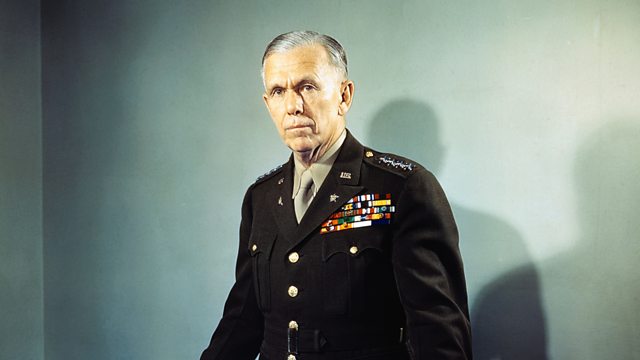
Photo: General George C. Marshall in the War Department in Washington DC in 1943 (Getty Images)
Archive material: Courtesy of the George C Marshall Foundation
Last on

Broadcasts
- Thu 13 Jun 201907:50GMTBBC World Service
- Thu 13 Jun 201911:50GMTBBC World Service
- Thu 13 Jun 201912:50GMTBBC World Service News Internet
- Thu 13 Jun 201915:50GMTBBC World Service Australasia
- Thu 13 Jun 201917:50GMTBBC World Service except Australasia, East and Southern Africa, South Asia & West and Central Africa
- Thu 13 Jun 201920:50GMTBBC World Service South Asia
- Fri 14 Jun 201902:50GMTBBC World Service UK DAB/Freeview
- Fri 14 Jun 201903:50GMTBBC World Service Australasia, Americas and the Caribbean, Online, East Asia & South Asia only
Podcast
![]()
Witness History
The story of our times, told by the people who were there